You can tell pretty quickly when a student is stuck between lessons and progress. The weather won't cooperate, the airplane slot is gone, and the one maneuver that still feels shaky is the exact one you need to repeat. That's where a simulator training center stops being a nice extra and becomes part of how pilots build real proficiency without burning fuel, chasing clear skies, or waiting for the next opening on the schedule.
For a new pilot, the value isn't just that the sim is cheaper. It's that the sim lets you rehearse the stuff you can't safely or efficiently practice in the airplane over and over again, especially instrument work, abnormal procedures, and decision-making under pressure. That's why simulator centers now sit inside a major global training market, with the flight simulator market valued at USD 6.21 billion in 2025 and projected to reach USD 8.59 billion by 2034, with North America accounting for 35.85% of the market in 2025 Research and Markets forecast.
Aviation has also treated simulators as core infrastructure for a long time, not a novelty. If you want a more unusual example of how immersive simulation is being used in travel and hospitality, the latest coverage from Virtual Tour Easy's latest articles shows how simulator-style experiences are reaching far beyond the flight school environment.
Table of Contents
- Beyond the Cockpit The Rise of Simulator Training
- Understanding Simulator Types and FAA Credits
- How Simulators Accelerate Every Pilot Rating
- Your First Session What to Expect
- How to Choose the Right Simulator Center
- Simulator Training at DuBois Aviation in Chino
- Beyond Training How to Buy an Airplane Safely
Beyond the Cockpit The Rise of Simulator Training
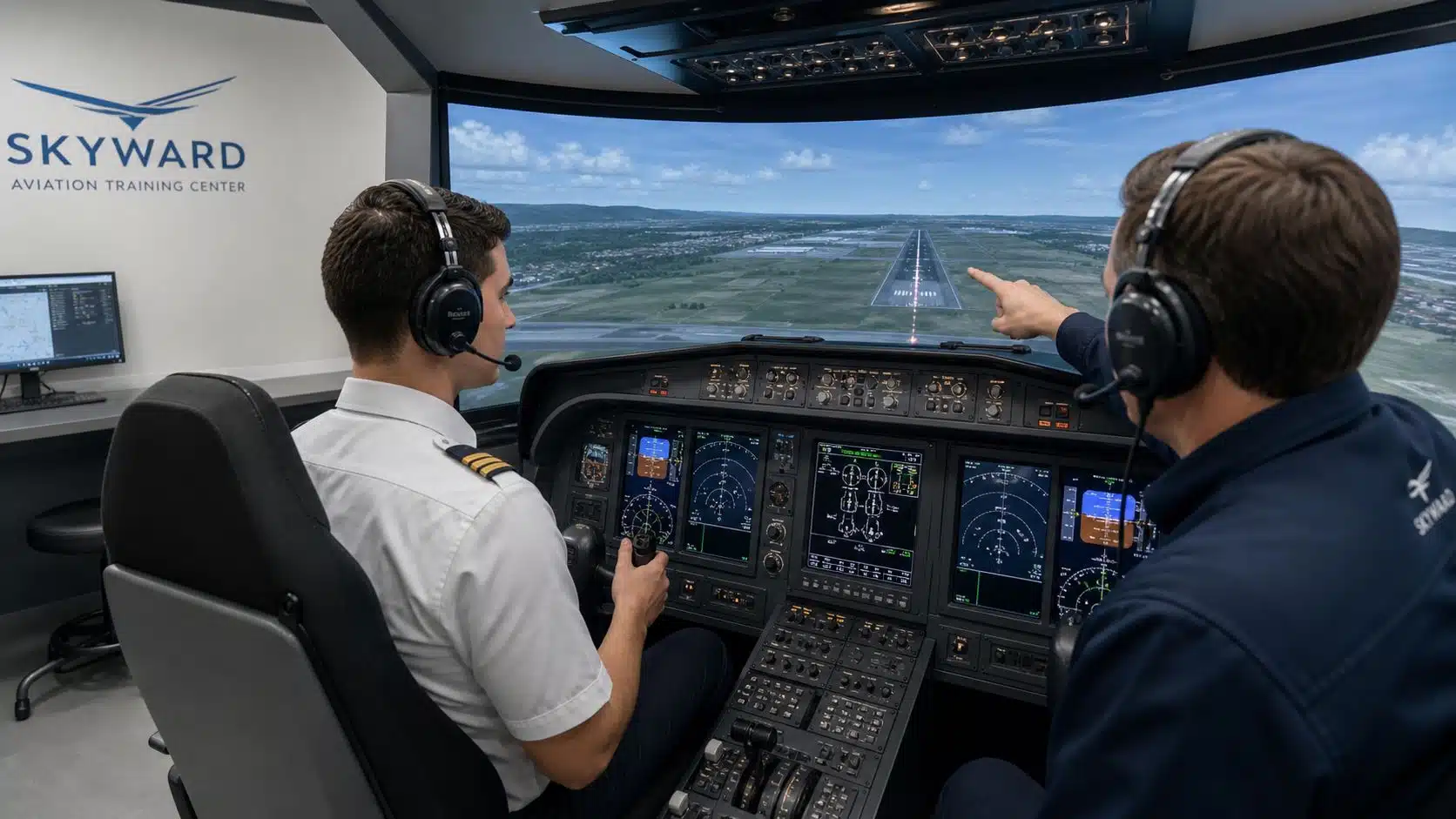
The first hard lesson for many students is not a steep turn or a short-field landing. It is an instrument approach on a low ceiling day, with busy radio traffic and no room for sloppy work. In the airplane, every repetition costs time and money, and weather can end the lesson before the work is complete. In a simulator training center, the instructor can stop the scenario, reset the winds, and run the same approach until the scan becomes automatic.
That repeatability is a key benefit. Simulators are useful when the goal is procedure, instrument discipline, or emergency handling, because they let a student make mistakes without turning each mistake into a costly flight lesson. A student can practice a missed approach, an engine-out flow, or a radio call sequence in a controlled setting, then bring that muscle memory to the airplane with less guesswork and less stress.
A good simulator session also shows where a pilot still hesitates. If a callout is late or a checklist flow breaks down, the instructor sees it right away and can reset the exercise before the habit becomes part of the pattern. That is harder to do in the air, where traffic, altitude, and fuel all keep moving.
Why the market keeps expanding
The growth in training simulators reflects a practical reality. The broader training simulators market was estimated to grow from USD 53.97 billion in 2025 to USD 61.84 billion in 2026, with a projection of USD 142.34 billion by 2032 and a 14.85% CAGR over that span Research and Markets forecast. That kind of growth does not happen around a niche training aid. It happens when schools, operators, and airlines keep finding that simulator time solves real training problems.
The industry is already established in day-to-day aviation training. A separate overview of commercial simulator use noted close to 1,500 simulation devices worldwide, with most of them being full-flight simulators FlightGlobal census. That matters because the higher-fidelity devices are the ones used for the most demanding work, including type ratings and emergency procedures.
A simulator is most valuable when the lesson has to be repeatable, exact, and safe.
For a student, that means the simulator is not replacing real flying. It is making actual flying count more. If you want a practical example of how a training provider can present that capability, see Virtual Tour Easy's latest articles for a look at another cockpit-style simulator experience, then compare that with a purpose-built training device like a Redbird flight simulator used for structured instruction. The difference between entertainment and training shows up fast once the focus shifts from novelty to proficiency.
Understanding Simulator Types and FAA Credits
A simulator session can save time and money, but only if you know what the device is approved to do. The FAA looks at the device level, the approval, and the training objective, not just whether the cockpit feels realistic. That distinction matters in real training, because a session can help you build skill without automatically counting the same way toward every rating.
BATDs, AATDs, and flight training devices
A Basic Aviation Training Device is the entry point. It works well for procedures, flows, and instrument scan work, especially when you want repetition without paying for flight time. An Advanced Aviation Training Device gives a richer environment, usually with more aircraft systems, better realism, and broader training value. A Flight Training Device sits further up the hierarchy, and a Full Flight Simulator is the most immersive version, the kind used for high-fidelity training and critical checks.
The practical difference is straightforward. BATDs help you learn the shape of the task, AATDs help you build consistency, and full-flight simulators help you train to the highest fidelity available in a ground-based device. A lesson on stall recovery, holding patterns, or abnormal procedures can produce very different value depending on the device and the approval behind it.
What counts and what doesn't
FAA guidance says an FSTD can be used for specific credit only when it is an approved device used under the applicable training rule FAA guidance summarized by Simulator.com. That means students need to ask the right question, not “Can I log simulator time?” but “Does this device qualify for the task and the rating I'm working on?”
Practical rule: match the device to the lesson, not the marketing label to the hope.
For a close look at a training-specific example, see DuBois Aviation's Redbird flight simulator page. The useful part is not the brand name. It is the fit between the device, the stage of training, and the approval level behind it.
How Simulators Accelerate Every Pilot Rating
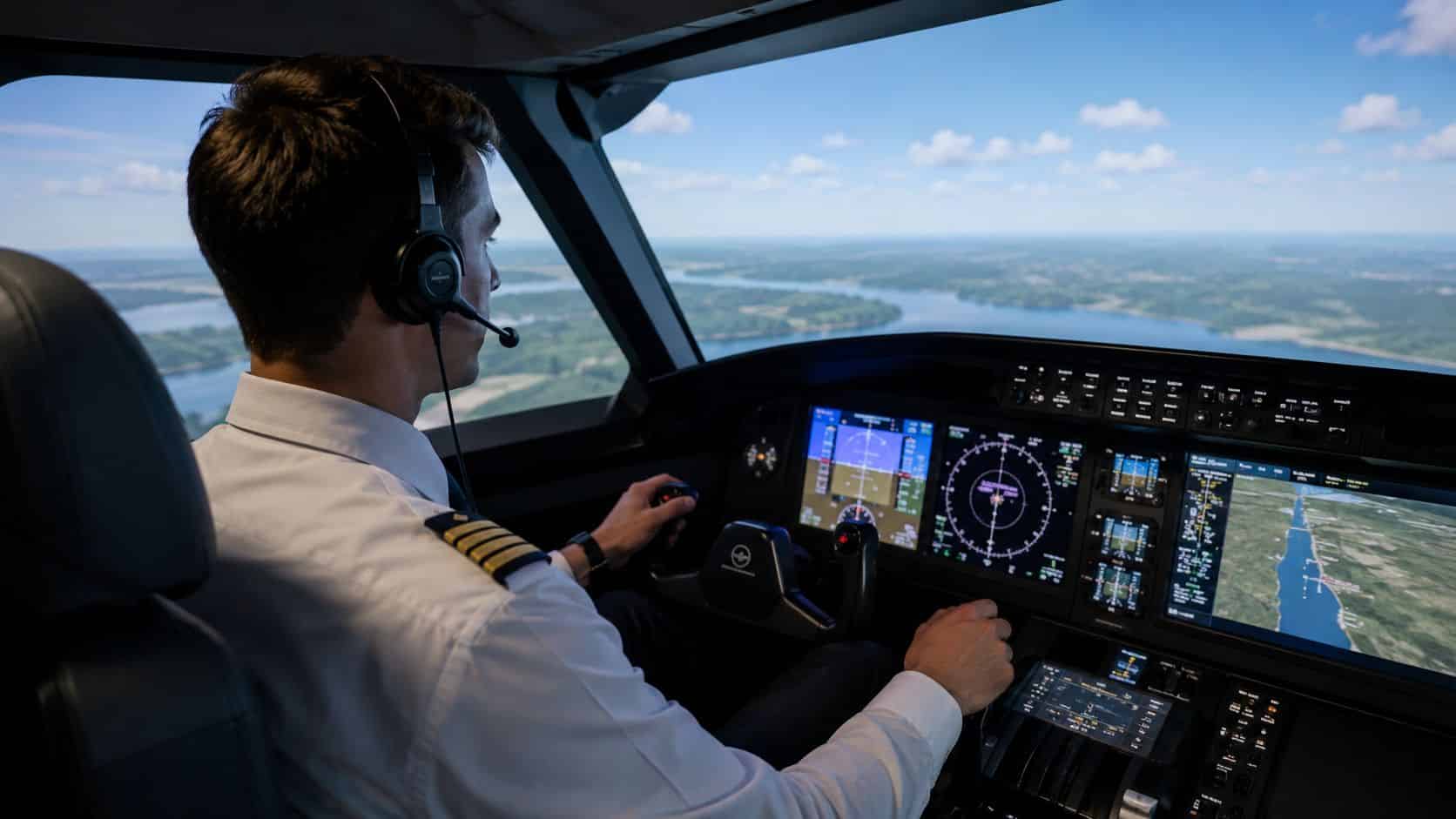
A simulator pays for itself when it removes the bottleneck in front of you. For one student, that bottleneck is basic airplane control. For another, it is holding an approach steady while workload rises. For a third, it is keeping procedures sharp between recurrent events.
Private and instrument training
Private pilots use the simulator to clean up maneuvers before they ever leave the ground. Slow flight, steep turns, pattern work, and radio flow all get easier when the student can repeat them without traffic, fuel burn, or maintenance delays. A key benefit is confidence. The first time you meet a task in the airplane should not also be the first time you understand it.
Instrument students get even more value. A simulator lets you fly approaches in any weather setup under the instructor's control, so you can rehearse intercepts, holds, missed approaches, and scan discipline until the panel starts to make sense under pressure. If you are working on that stage, a focused instrument rating simulator session gives you a place to build the habits that keep you ahead of the airplane instead of chasing it.
Commercial, multi-engine, and recurrent work
Commercial training leans harder on systems and decision-making. Complex checklists, abnormal scenarios, and procedure flows are easier to rehearse on the ground before you try to manage them in the airplane. That matters because commercial work asks for more than stick-and-rudder skill. It asks for judgment, pace, and the ability to stay organized when the plan changes.
Multi-engine training benefits in a different way. The simulator is useful for engine failure recognition and the workload spike that follows, because you can stop, review, and run the scenario again. In the airplane, the same lesson is limited by altitude, time, and risk. On the ground, the instructor can slow the sequence down, then build it back up until your response is correct and repeatable.
Recurrent training is where the economic trade-off becomes obvious. A simulator gives you a place to refresh proficiency without waiting for perfect weather or a long aircraft slot, and it is especially useful for emergency-focused practice that would be inefficient or risky in the air. The goal is not to avoid the airplane. It is to make every actual flight session more productive, because the mistakes were already exposed and corrected in the simulator.
What the industry's training footprint tells us
Industry reporting has shown how heavily simulator time is used across training pipelines, especially in airline and professional pilot programs. That scale matters for a student pilot too, because it reflects a basic training truth. Repetition on the ground is cheaper than repetition in the airplane, and the student who uses the simulator well usually arrives at the aircraft more prepared, more consistent, and easier to coach.
The idea is simple, but it changes outcomes. Use the airplane for the parts only the airplane can teach, and use the simulator for the parts that improve faster through repetition.
Your First Session What to Expect
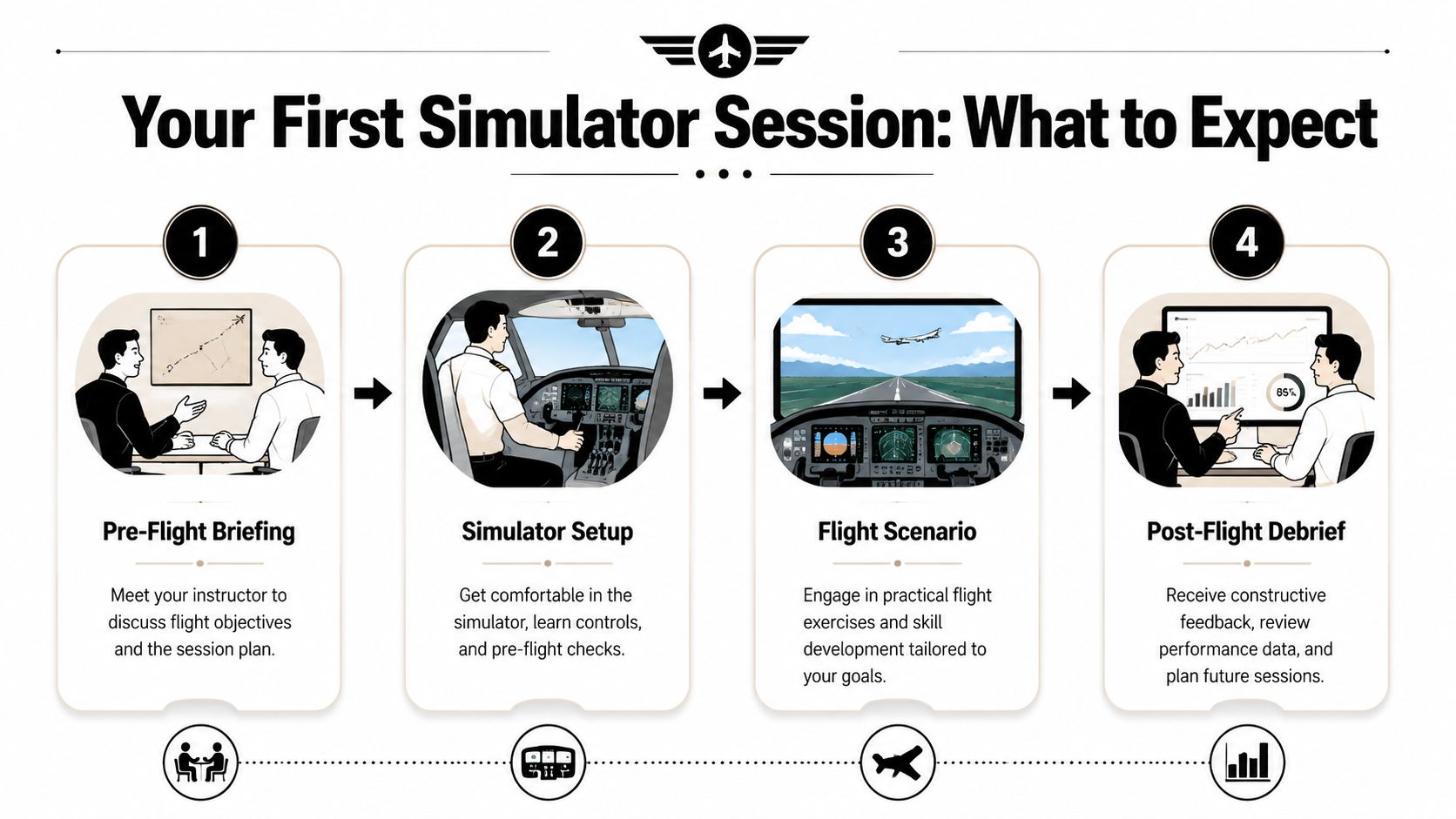
The first session usually starts on the ground, not in the device. A good instructor will define the objective before anyone powers up, because a simulator session without a goal turns into expensive wandering. If the lesson is instrument work, the briefing should spell out what you'll fly, what counts as success, and what you're supposed to review afterward.
What happens before the session
You'll usually talk through the aircraft setup, the weather scenario, and the decision points the instructor wants to see. That matters because simulation works best when the student knows the task and the instructor knows the baseline. If you're new, the first few minutes are often about learning the controls, the displays, and the flow of the device itself.
Then the session begins. A simulator can be frozen, repositioned, or reset in a way the airplane can't, so the instructor can build training around exact mistakes instead of waiting for them to happen again in the sky. That's one reason students often feel they got more out of a single simulator hour than they expected.
Why the debrief is the real payoff
A high-fidelity simulator training center relies on digital HD infrastructure, often 1080p, with at least four video feeds per scenario, plus event-stamped replay for detailed analysis OUP specification. That setup makes the debrief much more precise than a memory-based conversation after a flight.
In a strong debrief, the instructor can point to the exact moment a call was late, a cross-check broke down, or a procedure got skipped. The student sees the sequence, not just the criticism. That's the kind of feedback that changes habits.
If you want a training-school example of how that kind of experience is presented, the walkthrough at DuBois Aviation's simulated flight experience helps put the session structure in context.
The best debriefs don't just tell you what went wrong. They show you where the chain started to slip.
How to Choose the Right Simulator Center
Choosing a simulator training center isn't about finding the lowest hourly rate. It's about finding the place where the device, the instructor, and the syllabus line up with your current rating. If those three pieces don't match, you can spend money and still stall your progress.
Start with the device and the approval
Ask what kind of simulator it is, what it's approved for, and which lessons count toward your goal. FAA credit depends on the approval level and the training rule, so a device that's excellent for procedure practice may still be the wrong fit for your specific rating path. If you're pursuing instrument work, ask how the center uses the sim for holds, approaches, missed approaches, and abnormal procedures.
Judge the instructor and the scheduling
The best equipment won't fix weak instruction. You want an instructor who understands both the airplane and the sim, because simulator teaching works differently from airplane teaching. Good sim instructors know when to stop the scenario, when to let the student work through the problem, and when to debrief immediately.
Scheduling matters too. If the center can't fit your sessions around your flight lessons, the momentum breaks. A simulator is most effective when it's used close to the airplane lesson it supports, not weeks later after the details are gone.
Practical rule: a good simulator choice saves time twice, once in the session itself and again in the airplane afterward.
Use a simple checklist before you buy time
- Device fit: Confirm the simulator matches the rating or lesson you're pursuing.
- Approval clarity: Ask what FAA credit, if any, applies to your course objective.
- Instructor experience: Find out whether the instructor regularly teaches from the sim, not just in it.
- Debrief quality: Look for recorded review, scenario replay, and direct feedback.
- Schedule access: Make sure you can book sessions often enough to keep continuity.
- Location and workflow: A center near your flight operation can make blended training much easier.
A smart center gives you a path, not just a machine. That's the difference between training that feels busy and training that moves you toward your next rating.
Simulator Training at DuBois Aviation in Chino
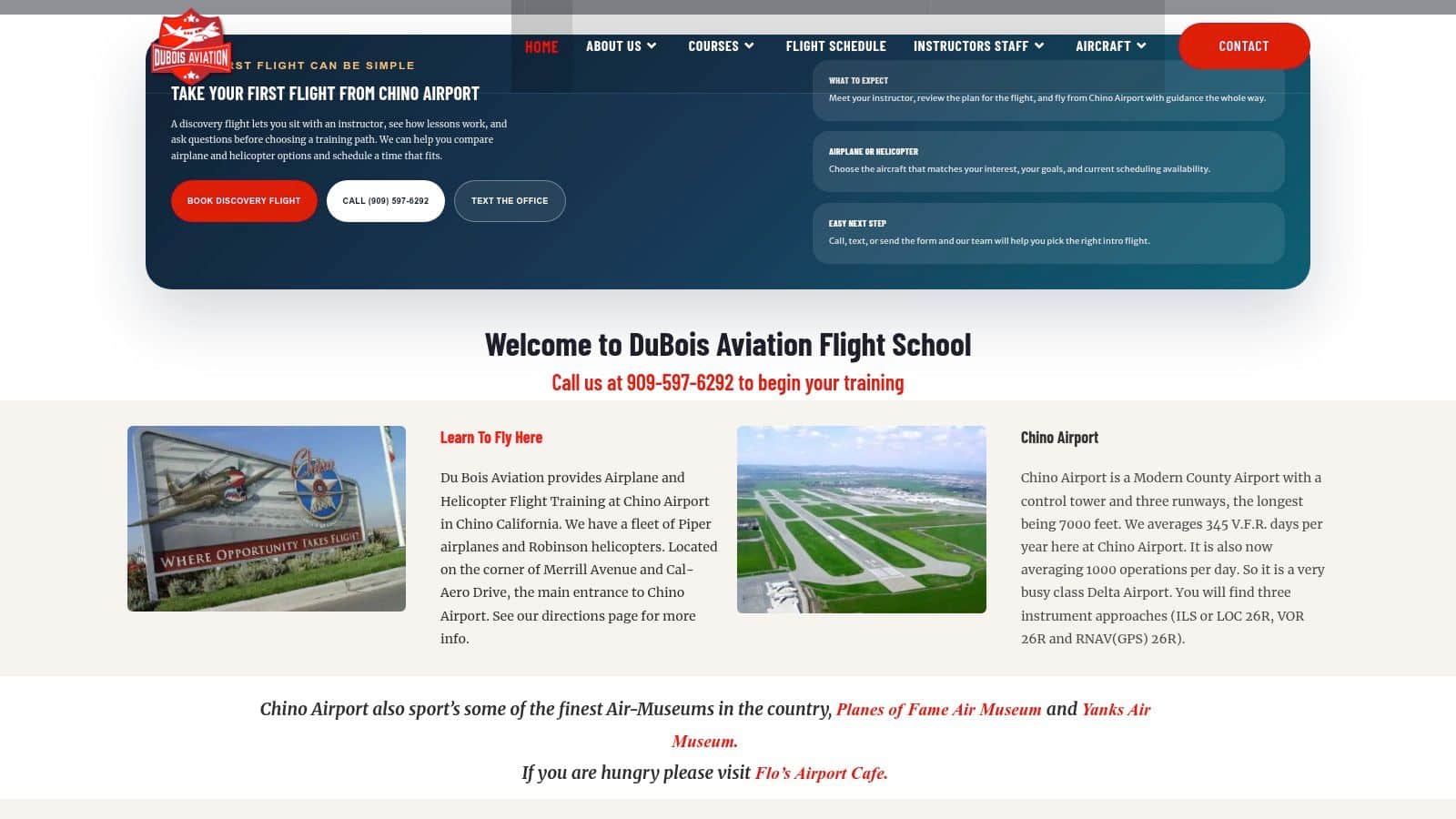
A simulator works best when it lives close to the rest of the training program. At Chino Airport (KCNO), that matters because students are already operating in a busy, towered environment with real radio work, multiple runways, and instrument approaches. A simulator session can reinforce exactly what the next aircraft lesson will demand, instead of feeling like a separate event with no carryover.
DuBois Aviation offers an in-house Gleim Virtual Cockpit® BATD simulator, which fits the practical side of early rating work and procedure rehearsal. That kind of device is useful for building rhythm before the airplane lesson, especially when the task is instrument scanning, workflow, or callout discipline. It also pairs naturally with the school's Private, Instrument, Commercial, and Multi-Engine training paths.
The value of an on-site simulator at a flight school is simple. Students can move from ground-based practice to aircraft work without losing the training thread, and instructors can keep the lesson focused on one goal at a time. That's especially useful at a towered airport, where real-world radio discipline and traffic flow show up from day one.
If you're training in Southern California, an on-site simulator makes the schedule easier to manage and the lesson easier to connect. That's the main reason it matters, not because simulation is flashy, but because it helps the airplane hours mean more.
Beyond Training How to Buy an Airplane Safely
A simulator student still needs the same discipline outside the cockpit. If you decide to buy an airplane, the airplane may look clean on the ramp, but the true risk sits in the logbooks, title history, and paperwork behind the sale. A safe purchase starts with an independent pre-purchase inspection, and the mechanic should be separate from the seller's mechanic so the evaluation stays objective Plane & Pilot buying guide.
The paper trail matters just as much. A title search and escrow service should be part of the deal, because ownership problems and liens can surface late in the process. One buying guide warns buyers never to wire money directly to a seller and recommends a written purchase agreement that spells out the aircraft details, total price, deposit amount, and inspection rights. It also notes that deposits are usually in the 5% to 10% range Flying 411 protection guide. Another guide says to use a title and escrow company and to get a title search even when the aircraft comes from a friend, because the history can still hide problems Flying 411 protection guide.
Financing and insurance need attention before closing. Buying guides recommend getting financing approval early and binding insurance so it takes effect on the day of closing, which keeps the aircraft covered the moment ownership changes hands Plane & Pilot tips guide. That same habit applies in training, plan the next step before you need it.
A smart buyer treats the process like a checklist, not a handshake. Start the conversation with a lender, an aviation underwriter, and an independent inspector before you get attached to a specific airplane or helicopter. That keeps the purchase grounded in facts, protects you from avoidable surprises, and lets you make the decision with the same discipline you want in the cockpit.