

Does a commercial pilot certificate qualify a pilot to teach, or does each instructor rating require a different set of credentials? A flight instructor rating is a federally regulated teaching qualification, not just the next level of flying proficiency. The path combines eligibility, instructional preparation, knowledge testing, endorsements, and a practical test. CFI, CFII, and MEI aren't interchangeable credentials, so the efficient sequence starts with the pilot's existing ratings and the kind of instruction they intend to provide.
Table of Contents
- Flight Instructor Rating Requirements at a Glance
- Prerequisites That Change by Rating and Training Route
- How to Earn the Initial CFI Certificate Step by Step
- Who Can Recommend You for the CFI Practical Test
- Practical Test Preparation and Common Mistakes
- Keeping Your Instructor Certificate Current
- Choose the Right Instructor Rating and Next Step
- Frequently Asked Questions About the Flight Instructor Rating
- How should a pilot choose between a Part 61 and Part 141 instructor course?
- What should an instrument-qualified commercial pilot work on first?
- Why are CFI, CFII, and MEI treated as separate gates?
- What should a pilot ask before enrolling in instructor training?
- How does an applicant judge practical-test readiness?
Flight Instructor Rating Requirements at a Glance
The requirements depend on the instructor rating sought. 14 CFR Part 61, Subpart H governs the qualification, and the current instructor limitations in §61.195 set boundaries on instructional privileges and on who may prepare an initial instructor applicant. A commercial certificate gives you flying privileges; the instructor certificate is a separate credential with its own eligibility, knowledge test, endorsement, and practical test requirements.
Two practical options worth comparing
These are specific products pilots commonly compare for this type of flying. Confirm compatibility with your aircraft and instructor before ordering.
 Premium ANR headsetLightspeed Zulu 4 ANR Aviation Headset - Dual GA PlugCheck current availability on Amazon (paid link)
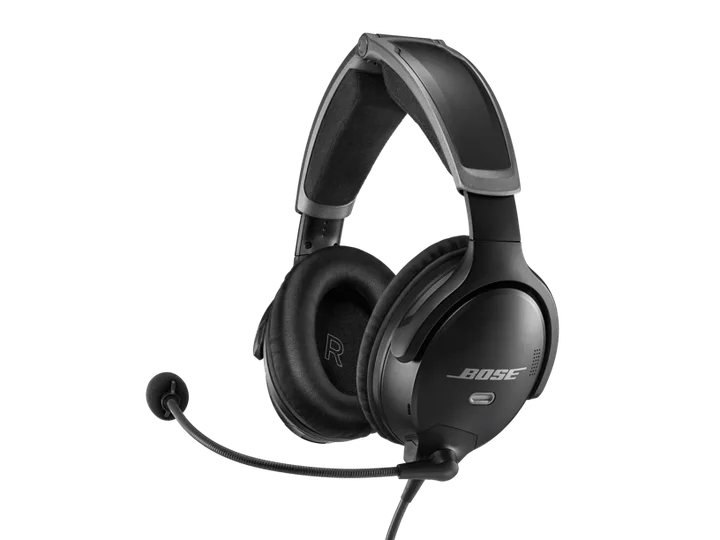 Premium headsetBose A30 Bluetooth Aviation Headset - Dual PlugCheck current availability on Amazon (paid link)
Flight instructor ratings compared by prerequisite
| Rating | Who it suits | Key prerequisite | Test or endorsement |
|---|---|---|---|
| Initial CFI (airplane) | Commercial or ATP pilots starting to teach | Appropriate commercial or ATP certificate and instrument qualification | Fundamentals of Instructing and airplane instructor knowledge tests, applicable endorsements, and practical test |
| CFII | Instructors adding instrument teaching privileges | Appropriate pilot instrument qualification and instructor preparation | Instrument instructor knowledge test and practical test, subject to applicable exemptions |
| MEI | Instructors adding multi-engine teaching privileges | Appropriate commercial or ATP multi-engine rating and applicable instrument qualification | Additional-rating training, endorsement, and practical test; don't assume a separate MEI written test applies |
| Rotorcraft CFI | Helicopter pilots preparing to teach | Commercial or ATP certificate with the appropriate rotorcraft category and class | Applicable instructional knowledge tests, endorsements, and practical test |
Use the table to identify the gate that applies to your target rating, then verify each item against your logbook and certificates. CFII and MEI are usually added after an initial CFI, but the sequence follows your existing ratings and instrument qualification. Each rating is its own gate, so a commercial pilot can sequence CFI, CFII, and MEI around the instrument requirement instead of treating them as one credential.
A commercial airplane pilot without the required instrument qualification must close that gap before qualifying for airplane instructor certification. Preparatory study can continue, but the order of the certification plan changes.
Separate eligibility from readiness
A school may recommend additional teaching practice after you complete the required training. That recommendation is a local proficiency decision; the federal minimums remain unchanged.
A useful self-check starts with the actual certificates and logbook:
- Pilot certificate: Identify whether you hold commercial or ATP privileges.
- Category and class: Record airplane, rotorcraft, single-engine, and multi-engine qualifications accurately.
- Instrument privileges: Identify the instrument qualification that applies to the intended instructor rating.
- Instructional background: Record any existing ground or flight instructor credentials.
Planning rule: Select the instructor rating first, then audit the prerequisites. Buying a course before you identify a missing qualification can create avoidable delays.
Before you enroll, open the current eCFR text for §61.195 and for the eligibility rule that applies to your target rating, then check the amendment date shown at the top of each section. That check tells you whether the requirements you are planning around are still in force.
Prerequisites That Change by Rating and Training Route
Which instructor rating are you trying to earn? That question drives the sequence, because CFI, CFII, MEI, and helicopter instructor privileges each have their own gates. A commercial pilot can often study broadly before qualifying to teach, but the certificate path should be built around the rating first, then the prerequisites. Airplane and helicopter applicants do not arrive at the same starting point, and an instructor adding a rating follows a different preparation path from an initial applicant.
The eligibility requirements in §61.183 require the appropriate commercial or ATP category and class qualifications, English proficiency, and the applicable instrument qualification for airplane or powered-lift instructor certification. A helicopter applicant should not assume that every airplane prerequisite transfers directly to the rotorcraft path. The practical effect is simple: choose the target rating, then check the certificate, category, class, instrument, and endorsement requirements that support it.
Part 61 versus an approved course
A Part 61 route centers on required training, demonstrated proficiency, and endorsements. A Part 141 route follows an approved course syllabus with prescribed training requirements.
Part 141 instructor course minimums
| Course | Ground training | Flight training | Note |
|---|---|---|---|
| Initial airplane, rotorcraft, or powered-lift instructor course | 40 hours | 25 hours | Course minimums establish the approved training baseline |
| Additional instructor rating course | 20 hours | Confirm the applicable approved syllabus | Ground minimum alone doesn't define the complete course |
The eligibility requirements in §61.183 do not replace the approved course requirements that govern a Part 141 syllabus. Before enrollment, the school should identify the governing course requirements and syllabus revision. Applicants should not substitute a general eligibility page for the approved course documentation.
An approved syllabus provides structure, but structure does not expose every weakness. A pilot who flies maneuvers precisely may still need substantial work explaining them. A confident classroom presenter may need more aircraft-based demonstration practice. I would treat both as separate teaching skills and schedule practice around the weaker one.
Sequence the rating around the real gates
Existing qualifications change the order of training. Prior teaching credentials may affect Fundamentals of Instructing testing requirements, while an existing instructor certificate can change the additional-rating testing path. A pilot missing the applicable instrument qualification should resolve that gap before treating airplane instructor certification as the next step.
That planning point matters when a pilot is still building the professional flying foundation. The commercial pilot training information gives context for that stage before committing to instructor preparation. Leave enrollment discussions with a written prerequisite list tied to the chosen rating, then build the schedule around the remaining gates rather than a proposed start date.
How to Earn the Initial CFI Certificate Step by Step
Every stage of initial instructor preparation should leave evidence behind: a completed study course, a lesson plan you can teach from, a maneuver flown to standard while you narrate it. Each gate is a checkpoint with its own evidence, and the certificate is issued on demonstrated instructional ability.

Complete the eligibility and testing gates
Confirm eligibility before building the schedule. Check category, class, instrument status and endorsements against your logbook before you book anything. The published §61.183 eligibility text sets a minimum age of 18, English-language requirements, and an authorized-instructor endorsement tied to the applicable areas of operation. A pilot certificate alone does not satisfy the remaining conditions.
Prepare for Fundamentals of Instructing. The standard initial pathway includes the FOI examination, subject to applicable exemptions. Tie learning theory to lesson delivery: recognize when a student is confused and give feedback that changes the next attempt. Memorized definitions pass an exam; practiced explanations survive a real student.
Pass the applicable instructor knowledge test and protect its timing. The FAA flight instructor testing guidance describes the knowledge-test window as generally beginning 24 months before the month of the practical test. A test taken 26 months before a planned checkride sits outside that window, and the applicant retests. Schedule the written only when the flight portion has a realistic date.
Turn preparation into teachable performance
Complete instructional training with a qualified recommending instructor. Practice lesson delivery, maneuver demonstrations, error recognition and risk management in the same lessons. The applicant explains the maneuver while keeping the airplane under control, and the explanation has to hold up when the maneuver goes wrong.
Obtain the required readiness endorsements. An endorsement reflects demonstrated competence across the applicable tasks. Attendance and a purchased package do not produce that evidence, and a weak teaching area found three flights from the end is harder to fix than one found early.
Coordinate the practical test and representative aircraft. Confirm the standards, aircraft suitability, records and required documents with the recommending instructor before finalizing arrangements. Know the systems, limitations and instructional decisions well enough to teach them from the right seat of the specific airplane you will fly.
Work the sequence in order: finish the prerequisite audit, book knowledge testing so the written stays inside the practical-test window, and build teaching practice into routine lessons. Put the checkride on the calendar when your instructor can point to specific tasks you have taught successfully.
If instrument or multi-engine instructor privileges come later, each arrives as its own gate with its own prerequisites and testing path, not an automatic extension of this one.
A lesson plan is a teaching aid, not a script. The applicant adapts when the student doesn't understand the first explanation.
Who Can Recommend You for the CFI Practical Test
Ask a prospective recommending instructor one question first: "Which of your last three initial instructor applicants did you prepare for the practical test, and what was their outcome?" The answer tells you whether you are speaking with someone who has run an applicant through the endorsement and checkride sequence, or someone whose experience sits mainly with primary students.
The recommending instructor prepares the applicant and signs the endorsements that support practical-test readiness. Qualification is a separate matter from teaching ability.
For the standard experience-based pathway, FAA guidance on initial instructor preparation describes holding the appropriate instructor certificate for at least 24 months and providing at least 200 hours of flight training for airplane, rotorcraft, or powered-lift preparation. Other qualifying provisions exist, so evaluate the arrangement against the applicable rule rather than a single résumé item.
Verify the training arrangement
Beyond that audit of certificate history and instructional experience, settle two items before training begins:
- Endorsement responsibility: Name the person who will assess readiness and sign each required endorsement, and confirm that person holds the privileges to do it.
- Handoff plan: Agree in advance how a change of instructor would be handled, including who re-evaluates the applicant before a new endorsement is signed.
A classroom-strong instructor who needs a second instructor for particular flight tasks or endorsements works perfectly well, provided the division of responsibility is settled before the first lesson.
Prevent an avoidable handoff
An unexpected instructor change doesn't invalidate completed training. It does require another instructor to evaluate the applicant before accepting responsibility for an endorsement, and that evaluation takes time, especially when the records show lesson attendance but little detail about instructional performance. Useful records identify the task taught, the applicant's teaching weaknesses, the corrective work assigned, and the next readiness objective.
Before the first lesson: Put the recommending instructor's qualification pathway and endorsement responsibilities into the training plan.
Ask how absences, aircraft changes, and examiner scheduling will be handled. Those arrangements don't substitute for instructor qualifications, but they keep a sound training plan from turning into a series of disconnected lessons.
Practical Test Preparation and Common Mistakes
The CFI practical test evaluates teaching as well as flying. A candidate must explain a task, demonstrate it, recognize errors, select an appropriate correction, and maintain control of the instructional situation.

For airplane preparation, mock lessons should be checked against the applicable FAA Flight Instructor Airman Certification Standards, rather than an attractive lesson-plan template alone. The guide to using FAA Airman Certification Standards in flight training provides a useful starting point for understanding standards-based preparation.
Rehearse the student's confusion
The following drills are recommendations, not additional federal requirements.
Start with a short steep-turns or slow-flight lesson. The recommending instructor can play a student who understands the entry procedure but misinterprets a control input, forcing the applicant to diagnose the misunderstanding instead of continuing a memorized presentation.
Next, introduce a distraction. A simulated student might fixate on the altimeter, lose the outside reference, or repeatedly correct the symptom rather than its cause.
The applicant's explanation should identify what changed, why it matters, and what action comes next. Long technical speeches aren't necessarily better teaching; a short explanation that leads to the correct student action is more useful.
For a high-on-final scenario, the discussion should emphasize recognizing the developing problem and making a safe decision, not inventing a universal recovery technique. Any in-flight demonstration must remain within aircraft limitations and the instructor's planned safety boundaries.
Review explanations as carefully as maneuvers
With agreement from everyone involved, recording a ground mock lesson can reveal rushed explanations, undefined terms, or answers that don't address the student's question. A written debrief works too: compare the lesson against the applicable standards and assign specific corrections.
Common preparation failures include:
- Flying without teaching: Performing the maneuver accurately while leaving the student unable to explain it.
- Practicing only demonstrations: Neglecting questions, interruptions, and corrective instruction.
- Starting instruction too late: Waiting until endorsement time to deliver complete lessons.
- Ignoring document timing: Failing to reconcile knowledge-test status with the practical-test schedule.
- Hiding weak oral subjects: Repeating comfortable lessons instead of drilling misunderstood regulations or systems.
Weak oral subjects need recurring practice with follow-up questions. An applicant who can locate the rule, explain its application, and acknowledge a limitation is better prepared than one relying on an isolated memorized answer.
If the test isn't passed, the recommended response is a targeted remedial plan based on the examiner's documented unsatisfactory areas. The applicant should coordinate with the recommending instructor and examiner, complete the necessary retraining and endorsements, and allow for additional aircraft, instructor, and examiner expenses.
Keeping Your Instructor Certificate Current
An instructor certificate doesn't provide unrestricted teaching privileges forever. Continuing qualification depends on satisfying the applicable recent-experience provisions, and certificate status shouldn't be confused with present authorization to instruct.
Under §61.197's recent-experience provisions, one pathway uses a 24-calendar-month period and requires endorsements for at least five applicants, with at least 80% passing on their first attempt. For that numerical test, four first-attempt passes among five applicants meets the threshold; three doesn't.
The cited publication is an archived edition. Instructors should check the current rule and applicable effective dates before relying on that pathway or selecting an alternative.
Track compliance without confusing it with proficiency
A first-attempt pass rate measures an outcome. It doesn't, by itself, establish how well an instructor teaches judgment, recognizes deteriorating student performance, or manages a difficult lesson.
Recommended school records include:
- Endorsement log: Identify the applicant, test, endorsement, and responsible instructor.
- Practical-test results: Record outcomes accurately rather than reconstructing them near a deadline.
- Recent-experience status: Maintain the relevant completion and deadline information.
- Standardization reviews: Evaluate teaching technique and procedural consistency separately from legal eligibility.
Students benefit from knowing whether a planned instructor transition or recent-experience deadline could interrupt training. The useful question is whether the instructor has a documented compliance plan, not whether the certificate merely looks current.
Review specialized teaching skills
Instrument instructors should review approach instruction, avionics management, and explanations of workload control. Commercial instructors should revisit maneuver teaching and the distinction between satisfactory performance and understanding.
Multi-engine instructors should review aircraft-specific systems, demonstration planning, and instructional risk management. These are proficiency recommendations, not claims that every review item constitutes a separate regulatory currency requirement.
The CFI refresher course information can support planning discussions, but any selected course or activity must satisfy the instructor's applicable compliance pathway. A refresher is most useful when it addresses actual teaching gaps rather than serving only as a deadline reminder.
Choose the Right Instructor Rating and Next Step
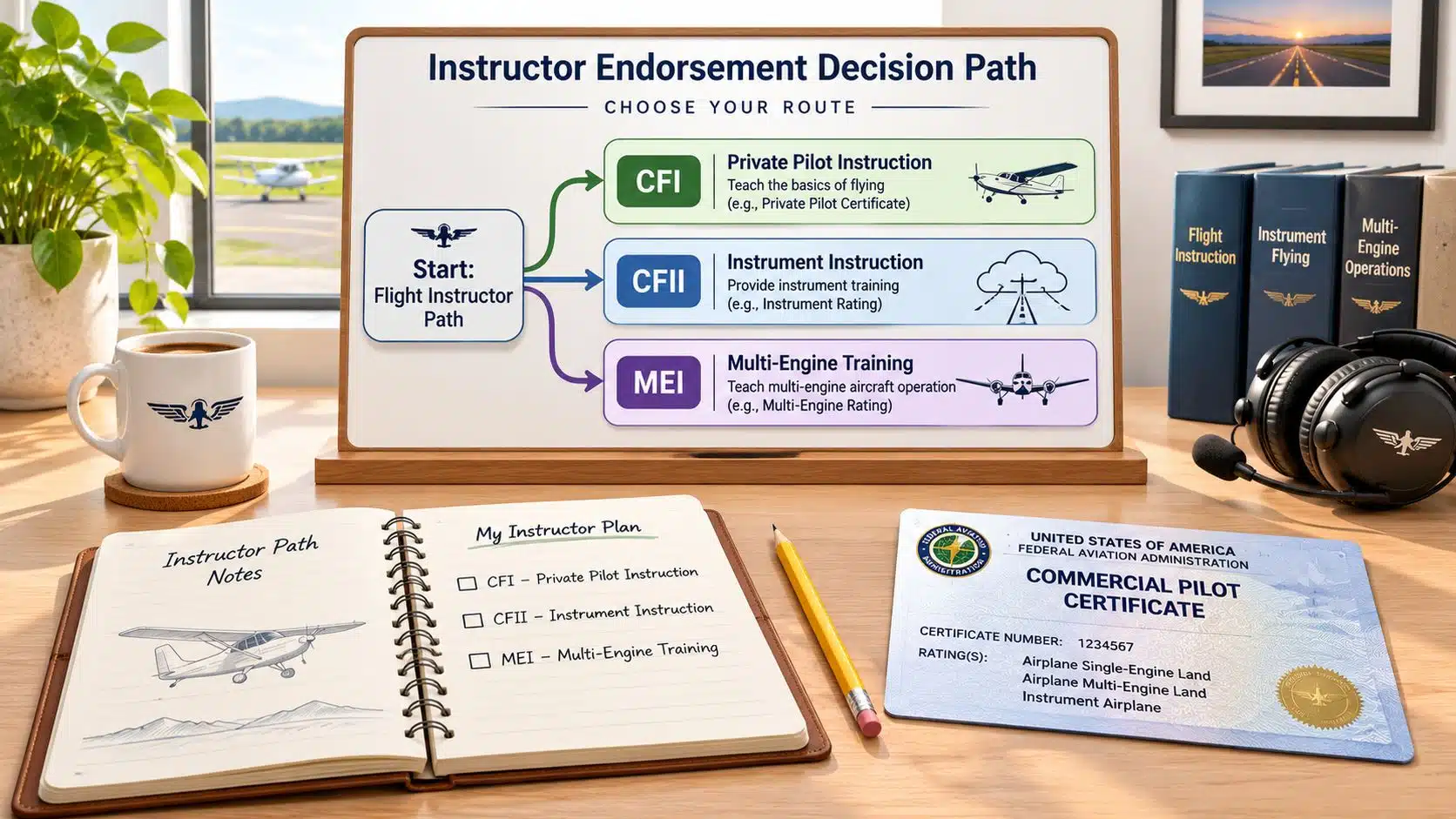
What should the next instructor rating do for the teaching work you want? The best choice matches existing qualifications and intended teaching work. CFI, CFII, and MEI are separate gates with their own prerequisites, so a commercial pilot can sequence them around the instrument requirement instead of treating them as one credential. A plan tied to real teaching goals builds useful instructional confidence instead of leaving a pilot qualified only on paper.
| Intended work | Sensible planning direction | Issue to resolve first |
|---|---|---|
| Teach primary airplane students | Initial airplane CFI | Underlying qualifications and readiness to teach basic flying |
| Teach instrument students | Instrument instructor rating | Instrument qualifications and ability to teach procedures clearly |
| Teach multi-engine flying | Multi-engine instructor rating | Appropriate multi-engine credentials and aircraft-specific preparation |
| Teach helicopter students | Rotorcraft instructor pathway | Appropriate rotorcraft category and class qualifications |
A pilot already qualified for airplane instructor training may reasonably prioritize CFI before an additional rating. A pilot missing the instrument qualification should resolve that prerequisite before setting a training timeline around an assumed eligibility date. That sequencing matters because teaching instrument students, multi-engine students, or helicopter students asks for different preparation than teaching primary airplane students.
Make the first conversation specific
For an early-stage pilot, a discovery flight provides a chance to sit with an instructor, see how lessons work, and ask questions before choosing a training path. At DuBois Aviation, you meet your instructor, review the plan for the flight, and fly from Chino Airport with guidance the whole way. An established commercial pilot will usually get more value from a certificate-and-logbook review focused on the desired instructor rating.
DuBois Aviation offers one-on-one airplane and helicopter instruction at Chino Airport, from a first discovery flight through advanced ratings. A productive inquiry should still narrow the decision to the rating sought, the preparation involved, and the readiness process. Ask practical questions and expect practical answers:
- Availability: Identify the intended rating and ask about current course scheduling.
- Training information: Request the prerequisite checklist, expected training components, and readiness process.
- Discovery flight: Meet an instructor, review the flight plan, and fly from Chino Airport before choosing a training path.
Training completion does not create a hiring commitment or guarantee a particular student load. Career planning should keep certification, proficiency, aircraft access, and employment opportunities separate while still recognizing how they affect the next step.
Frequently Asked Questions About the Flight Instructor Rating
How should a pilot choose between a Part 61 and Part 141 instructor course?
Choose the route that fits the pilot's schedule, learning style, and need for structure. A Part 141 course can suit a pilot who wants a defined course sequence, while Part 61 can offer more schedule flexibility. The deciding factor is whether the training plan produces a prepared applicant who can teach, not only log hours.
What should an instrument-qualified commercial pilot work on first?
An instrument-qualified commercial pilot should first map the rating sequence around the instrument requirement. FAA's published instructor eligibility guidance is the reference for selecting the correct instructor applicant path. From there, the practical question is which gate comes next: initial CFI, CFII for instrument instruction, or MEI for multi-engine instruction when multi-engine qualifications are involved.
Why are CFI, CFII, and MEI treated as separate gates?
Each rating covers a different instructional scope and has its own qualification path. CFI addresses the initial flight instructor certificate. CFII builds on instrument qualification, while MEI addresses multi-engine instruction. Treating them as separate gates helps a pilot plan training in a logical order instead of assuming one instructor rating automatically covers every teaching role.
What should a pilot ask before enrolling in instructor training?
Ask how the school checks readiness before recommending an applicant for a practical test. A good answer should cover lesson-plan development, briefings, student-level instruction, endorsement decisions, and how instructor judgment is developed in real training. The FAA's published instructor eligibility guidance belongs in that review, but it does not replace a school's own training gates.
How does an applicant judge practical-test readiness?
Readiness means the applicant can teach the subject cleanly, manage the aircraft, recognize student errors, and explain corrections without guessing. A strong practice test should expose weak lesson plans, poor briefings, and hesitation at decision points. I would treat those weaknesses as training items, not as small presentation issues.
DuBois Aviation provides flight training and aircraft rental at Chino Airport, with instructor training available for pilots preparing to teach. Request a prerequisite review for the intended rating, ask about current course availability, or arrange a school tour.