

You've got the commercial certificate. The temporary certificate is still crisp, the logbook finally shows “commercial pilot,” and for about a day it feels like the hard part is over.
Then you look at your total time.
That's where most pilots time building gets real. You're no longer chasing a checkride. You're trying to turn a few hundred hours into the kind of experience that opens doors, keeps you employable, and makes you a safer pilot on the way to the airlines or other professional flying jobs. The challenge isn't only adding hours. It's adding the right hours without burning money, repeating the same easy flight over and over, or drifting into a plan that looks busy but doesn't move your career forward.
Some pilots instruct. Some rent and split time. Some buy into an aircraft partnership. Some go after banner tow, ferry, survey, or right-seat opportunities. If you've got the capital, buying an airplane or helicopter can be one of the smartest ways to control your schedule and build real experience, but only if you buy carefully and operate with discipline.
The 1500 Hour Mountain and Your First Steps
You're probably standing at roughly the same point most new commercial pilots stand. You've passed the commercial checkride with around 250 hours, and now the gap to the ATP minimum looks enormous. To qualify for an Airline Transport Pilot certificate, pilots must reach 1,500 total flight hours under 14 CFR 61.159, and ATP initial issuances fell by 31% over three years, from 11,218 in 2023 to 7,714 in 2025, which points to a real bottleneck in getting pilots all the way through the pipeline, as noted by Summit Flight Academy's review of ATP hour-building trends.

That number matters for two reasons. First, it tells you the climb is long. Second, it tells you this phase needs a plan. A random collection of local flights can fill pages in a logbook, but it won't necessarily make you competitive or confident.
Start with a simple mission
Your goal isn't “fly a lot.” Your goal is to build a logbook that shows progression.
That usually means asking four questions before you choose any time-building path:
- What can I afford to do consistently? A cheap flying plan you can sustain beats an ambitious plan that collapses after a month.
- What time am I building? Cross-country, instrument, night, complex, multi-engine, and instructional experience don't all carry the same value.
- Who will I meet while doing it? A path that adds mentors, chief pilots, mechanics, and instructors to your network often pays off later.
- What does this do for judgment? The hours that sharpen decision-making are worth more than the hours that just make the Hobbs meter spin.
Don't treat the gap as dead space
A lot of newer commercial pilots think of the stretch between CPL and ATP as a holding pattern. That's the wrong mindset. During this period, your habits get set.
Practical rule: If a flight doesn't improve skill, add useful experience, or serve a specific logbook goal, question why you're doing it.
The strongest pilots I've seen during this phase do three things well. They fly regularly, they document carefully, and they choose flights with purpose. They also stop comparing themselves to every pilot on social media who claims to have cracked the code.
Your first moves should be concrete
In the first few weeks after the commercial checkride, do this:
- Build a written hour plan: Break your remaining path into categories, not just total time.
- Choose a primary path: CFI, rental-based building, ownership, or commercial flying work.
- Choose a secondary path: Something that adds variety when the main path slows down.
- Review your records: Make sure your endorsements, medical, logbook entries, and training documents are clean and current.
That's how you turn a big, intimidating number into a workable flight plan.
Comparing the Most Common Time Building Pathways
There isn't one correct route. There are only trade-offs. The right answer depends on your budget, schedule, access to aircraft, and what kind of pilot you're trying to become.
Some methods are cost-efficient but slower. Some build excellent judgment but require more hustle. Some generate hours fast but can leave your logbook looking narrow if you don't vary the flying.
Pilot Time Building Methods Compared
| Method | Avg. Cost/Hour | Avg. Hours/Month | Quality of Time | Best For |
|---|---|---|---|---|
| CFI or CFII work | Often paid rather than self-funded | Depends on student demand and weather | High when you teach cross-country, instrument, and varied students | Pilots who want experience, responsibility, and networking |
| Dry or wet rental flying | Varies by aircraft, club, and region | Depends on budget and aircraft access | Mixed, depends on how intentionally you plan each flight | Pilots with flexible funds and limited job options |
| Safety pilot flying | Lower shared cost than solo rental in many cases | Depends on having reliable flying partners | Useful when the flights are structured and legal to log properly | Pilots building instrument-related experience with a partner |
| Banner tow, survey, scenic, patrol, ferry, Part 91 odd jobs | Often employer-provided aircraft | Depends on hiring market and seasonality | Can be strong, though sometimes narrow by mission type | Pilots willing to relocate or work irregular schedules |
| Aircraft ownership or partnership | Up-front capital, then operating and maintenance costs | High flexibility if the airplane is available | Potentially very high if you fly real trips and varied missions | Pilots with capital, discipline, and a long-term plan |
The table matters because it makes one thing obvious. “Cheapest” and “best” are rarely the same thing.
The path most airlines recognize immediately
CFI remains the standard route for a reason. You fly often, you explain systems and procedures constantly, and you learn to stay ahead of students who are always about to surprise you. Instructing also puts you around other instructors, examiners, mechanics, and school managers. That network often matters as much as the hours.
The downside is obvious. Teaching can be exhausting, weather can wreck your schedule, and not every flight hour is equal. A day of traffic pattern work with early students builds patience, but it won't replace actual IFR, serious cross-country planning, or complex airspace repetition.
Good instructing builds judgment twice. Once when you fly, and again when you explain to someone else why the decision mattered.
Renting works, but only with structure
Renting can be effective if you stop thinking like a renter and start thinking like an operator. Don't just book a local flight because the airplane is available. Build trips around weather analysis, route planning, controlled airspace transitions, and different airport environments.
If you're exploring rental-based strategies, practical flight hour building options can help you compare what makes sense before you start spending heavily.
Renting becomes weak when every flight looks the same. Same departure airport, same practice area, same lunch stop, same smooth weather, same friend in the right seat.
Safety pilot flying and shared-hour strategies
Safety pilot time can be useful, but it often quickly reveals sloppy habits. If you and another pilot are going to split flying, brief it like a professional flight. Decide the route, the training objective, what each pilot is logging, and what the weather and alternates look like. Otherwise, it turns into recreational wandering that doesn't build much beyond endurance.
Specialized flying jobs
Banner tow, pipeline patrol, aerial survey, and scenic work can build strong stick-and-rudder skills and commercial judgment. They can also narrow your experience if that's all you do. If you go this route, find ways to add instrument proficiency, cross-country planning, and different airspace exposure on your own time.
Ownership is different from all of the above, because it gives you control. That can be a major advantage, but only if you use that control well.
Building Quality Hours That Airlines Actually Value
A logbook can look busy and still look weak.
That happens when a pilot piles up repetitive, low-complexity time and assumes the total alone will carry the résumé. It won't. Hiring teams look at what kind of pilot those hours produced.
Emerging 2026 data cited by Lumina Aviation's analysis of time-building approaches says pilots who diversify experience through mountain flying, night legs, and short-strip landings secure cargo and Part 135 roles 30% quicker than pilots who only log familiar cross-country miles. The same source notes that airline hiring panels prioritize CFI experience and teamwork over raw hour totals.
What quality time actually looks like
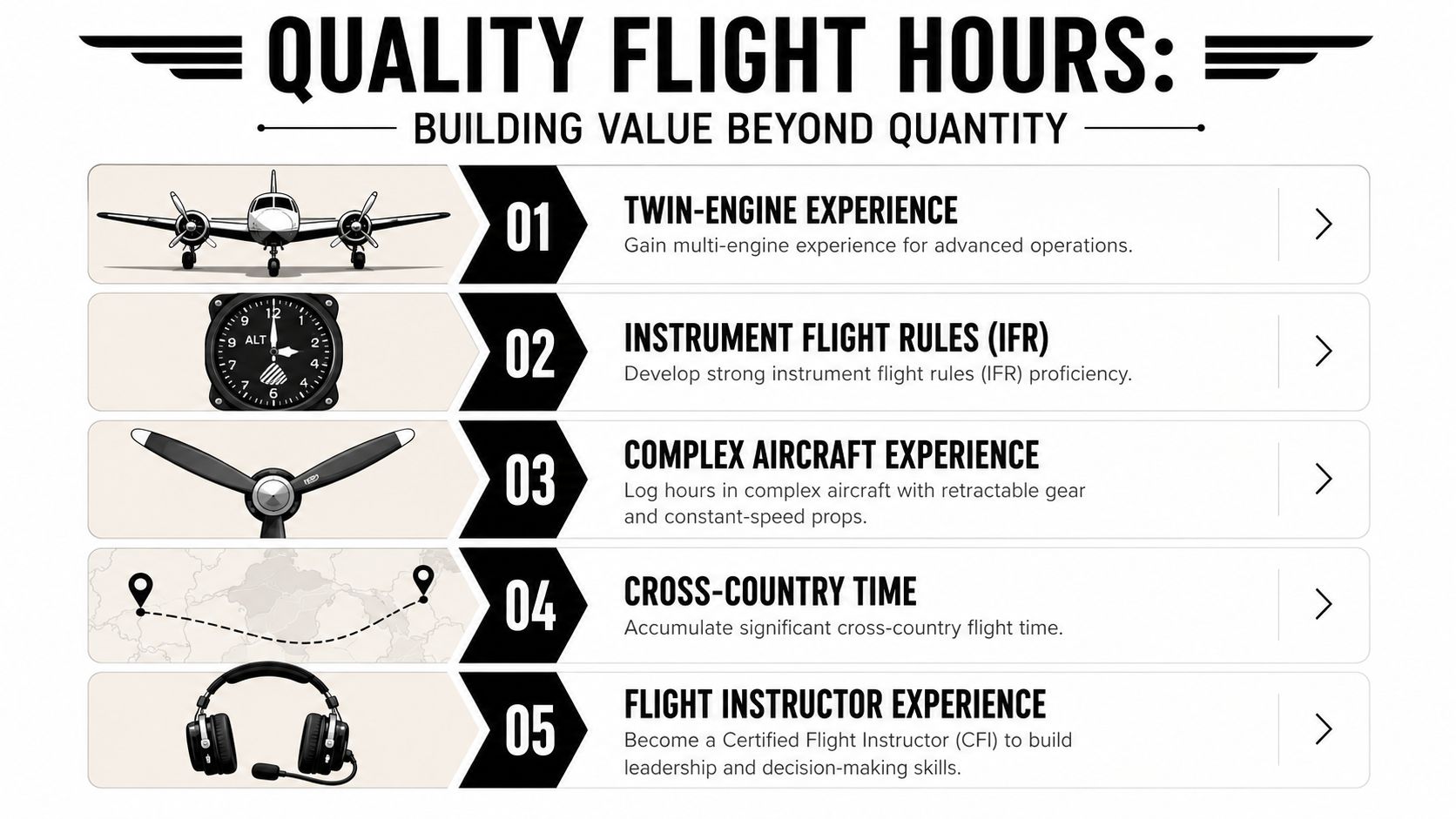
Quality time usually includes combinations of challenge, variety, and responsibility.
A pilot who regularly plans and flies meaningful cross-countries in changing weather, talks to ATC in busy airspace, and adapts to different runways and terrain is building something airlines can recognize. A pilot who repeats one easy route in good weather is mostly building familiarity.
A place like Chino gives you useful pressure if you use it right. Towered operations, traffic sequencing, changing runway flows, instrument approaches nearby, and constant radio work all build professionalism. The same is true of flying into Class B, C, and D environments rather than avoiding them.
Five categories that strengthen a logbook
- Cross-country with purpose: Plan trips that require fuel decisions, alternate thinking, airspace transitions, and real arrival management.
- IFR exposure: Actual weather and serious instrument work sharpen scan, discipline, and task management in ways VFR repetition won't.
- Night operations: Night legs reveal weaknesses in planning, visual illusions, and cockpit organization.
- Different runway and terrain environments: Short strips, mountain airports, and unfamiliar fields force better preflight thinking.
- Instructional or crew-style flying: Teaching and working with another pilot shows communication and workload management.
Airlines don't just read totals. They read patterns.
What doesn't help much
There's a kind of time building that looks productive on paper and feels hollow in practice. It usually includes very long stretches of easy VFR in the same airplane, on the same route, with minimal planning and no training objective. It's not useless. It just has weak return if that becomes your whole strategy.
If you own or rent regularly, create a rotation for your flights. One trip can emphasize IFR procedures. The next can emphasize night planning. Another can focus on unfamiliar airports, towered operations, and shorter runways. Keep every flight tied to a skill.
Build a logbook someone can talk about in an interview
When an interviewer asks what kind of flying you've done, you want more to say than “a lot of cross-country.” You want concrete answers. Busy Class D work. IFR in actual conditions. Night legs. Instruction given. Complex aircraft time. Multi-engine exposure. Diversified trips that made you make decisions.
That's the difference between having hours and having a story your logbook can support.
The Ownership Path How to Buy an Airplane Safely
For some pilots, ownership is the fastest way to turn time building from a scheduling problem into an execution problem. If the airplane is yours, or partly yours, you're not fighting the weekend rental calendar every time you want to fly a real trip.
That doesn't mean buying is automatically smart. Buying the wrong airplane can drain cash, steal months in maintenance, and leave you with less flying than you would've had as a renter. Buying carefully is the whole game.
Why ownership works for pilots time building
Ownership gives you flexibility that renters rarely get. You can launch early, stay overnight, reschedule around weather without begging for aircraft availability, and set up flights that build meaningful cross-country and instrument experience.
It also gives you responsibility. You'll deal with maintenance planning, squawks, tie-down or hangar issues, insurance, dispatch discipline, and the temptation to fly just because the airplane is sitting there. That responsibility can be a good thing if your goal is to become a more complete pilot.
For buyers sorting through training aircraft options, beginner-friendly aircraft considerations can help narrow the field before you chase a listing that looks cheaper than it really is.
How to buy an airplane the safe way
A used aircraft purchase should never start with paint, panel photos, or the seller's story. It starts with records and condition.
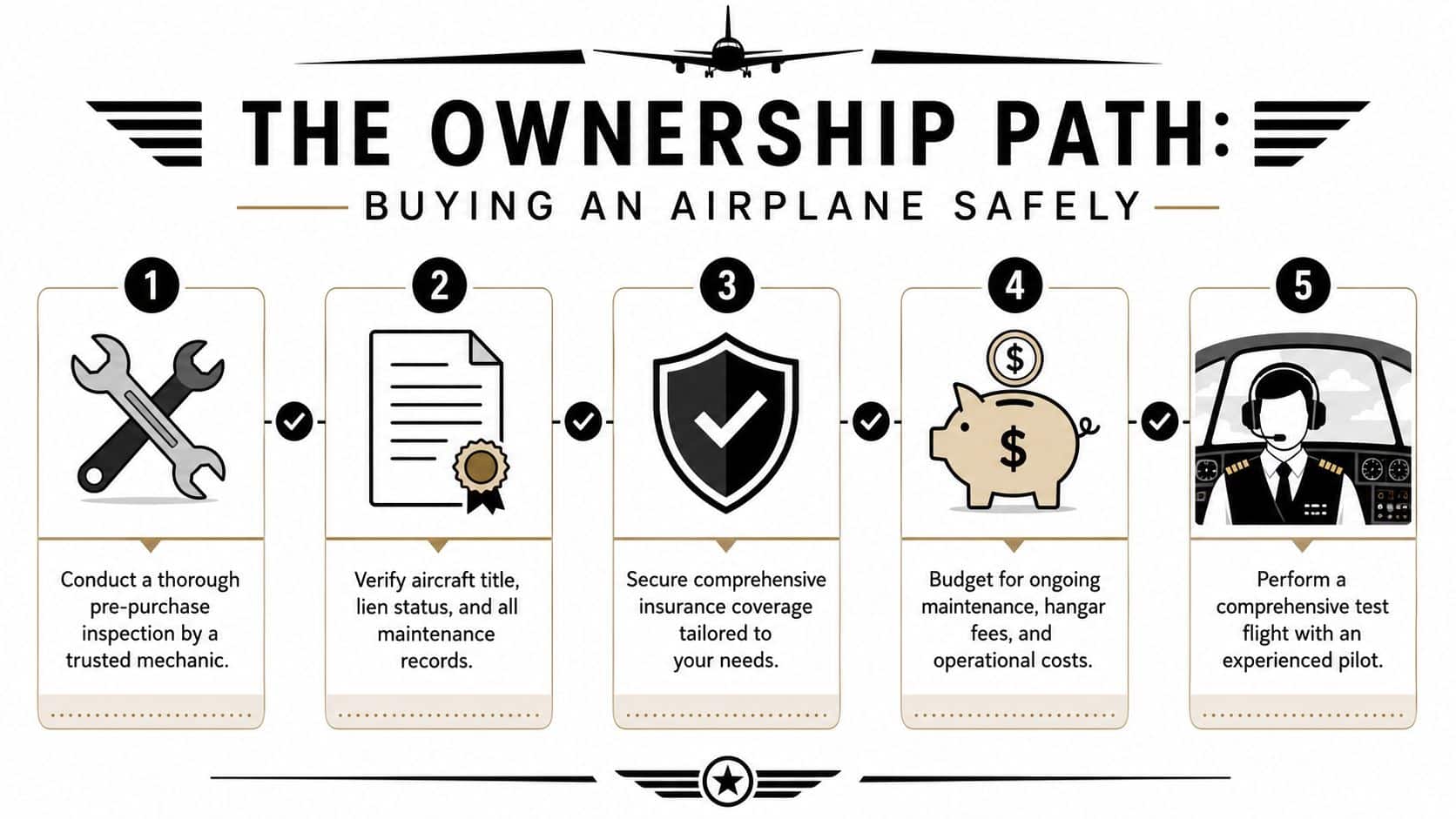
According to AOPA's guidance on buying a used aircraft, a pre-purchase inspection must include at least a differential compression check on each cylinder. You also need a thorough logbook review for FAA Form 337, which covers major repairs or alterations, and for AD compliance. The same guidance supports prioritizing aircraft that already have major expensive items like the engine or avionics completed, because those can cost $25,000 or more.
Here's the practical order I'd use:
Define the mission first
Don't buy a machine for an imaginary future. Buy for the flying you'll do in the next phase of training and time building. If you need economical cross-country and instrument work, buy for that. If you need multi-engine time, buy with that mission in mind from the start.Pull every logbook before travel
Incomplete records are a warning, not a puzzle for you to solve later. Ask for engine logs, airframe logs, prop logs if applicable, Form 337 records, and AD status.Use an independent mechanic for the pre-buy
Not the seller's mechanic. Not a friend who “knows airplanes.” An independent mechanic who will inspect it for you and who's willing to write findings clearly.Look for expensive work already done
A fresh or recently completed major item isn't just about money. It's also about downtime. If the engine or avionics are looming, your “time-building airplane” can quickly become a grounded project.Test-fly with discipline
Don't use the test flight as a joyride. Verify systems, performance indications, avionics behavior, engine indications, trim, rigging feel, and paperwork consistency with what you see in the aircraft.
A short video can help frame the ownership decision before you commit serious money.
What about helicopters
The same safety mindset applies if you're buying or selling helicopters. The records matter, component status matters, and the pre-buy inspection matters even more because helicopter operating economics can punish sloppy decisions quickly. If you're looking at a piston helicopter for training or time building, make sure the inspection is performed by someone who knows that make and model well, and don't let enthusiasm outrun maintenance reality.
Partnerships and selling strategy
A partnership can make ownership practical for pilots who don't want full carrying costs alone. The partnership only works if expectations are written down early. Scheduling, maintenance contributions, dispatch rules, and upgrade approval need to be agreed before the first flight.
If you're selling an airplane or helicopter, clean logs, current compliance, and transparent maintenance records do more for buyer confidence than cosmetic presentation ever will. Serious buyers pay attention to paperwork quality because they know hidden problems don't stay hidden for long.
Buy the airplane for dispatch reliability, records, and mission fit. Not because the ad photos look exciting.
Logging Hours Correctly and Maintaining Currency
A lot of pilots work hard for every tenth and then get casual with the recordkeeping. That's a mistake. Sloppy logging creates trouble when you apply for advanced ratings, interview for jobs, or sit down with an examiner who wants every category to reconcile cleanly.
Log with the assumption that someone will audit it
Every flight should answer a few basic questions clearly. What was the flight? What conditions were involved? What category of time was legally loggable? Who was acting as PIC, and why? If dual was given or received, was that recorded accurately? If instrument time was logged, was it actual or simulated, and is that documented properly?
Keep your entries consistent. If you use an electronic logbook, make the categories match how you'd defend them in a paper audit. If you still keep paper, write legibly and complete the entries while the details are fresh.
Separate legal logging from useful logging
Just because a flight time entry is technically legal doesn't mean it helped your career goals. Your logbook should support both compliance and storytelling. That means using remarks well.
Include useful context when it matters:
- Route details: Note meaningful cross-country routing, not just departure and arrival.
- Operational environment: Record towered operations, night work, or challenging airport environments when relevant.
- Training content: If the flight involved holds, approaches, abnormal procedures, or complex airspace work, document that.
- Crew role clarity: When sharing flights, be precise about who logged what and under what authority.
Currency isn't the same as proficiency
Legal currency is a floor. It isn't a performance standard.
A pilot can be current on paper and still be rusty in radios, instrument scan, landings, or cockpit flow. That's why the best time builders create their own recurring standards. They schedule periodic flights focused only on precision. Short-field work. instrument procedures. Night arrivals. No sightseeing. No distractions.
If flying has been irregular, review your own weak spots before the next trip. Chair-fly checklists. Brief lost comms. Review weather products. Practice radios out loud. Use a simulator when it supports your training goal and is approved for the credit you're seeking, but don't assume simulator time replaces real aircraft exposure in areas where you know you need sharper judgment.
If you want a clear refresher on the regulatory side, pilot currency requirements and practical recency rules are worth reviewing before you discover a gap on flight day.
Your logbook should do two jobs. It should satisfy the FAA, and it should prove to an employer that your hours mean something.
Find Your Path Forward at DuBois Aviation
The right time-building strategy usually isn't one method. It's a combination that fits your budget, availability, and long-term flying goals. One pilot may build the bulk of time as a CFI and use rentals for focused IFR cross-countries. Another may partner on an airplane to control scheduling and then add multi-engine time separately. Another may split time between helicopter training, airplane ratings, and commercial work opportunities as they open.
What matters is that the plan is deliberate. Build hours that teach you something. Keep the records clean. Avoid repetitive flying that only grows the total. If you're going to buy, buy safely and with a mission in mind. If you're going to rent, fly each trip like it matters.
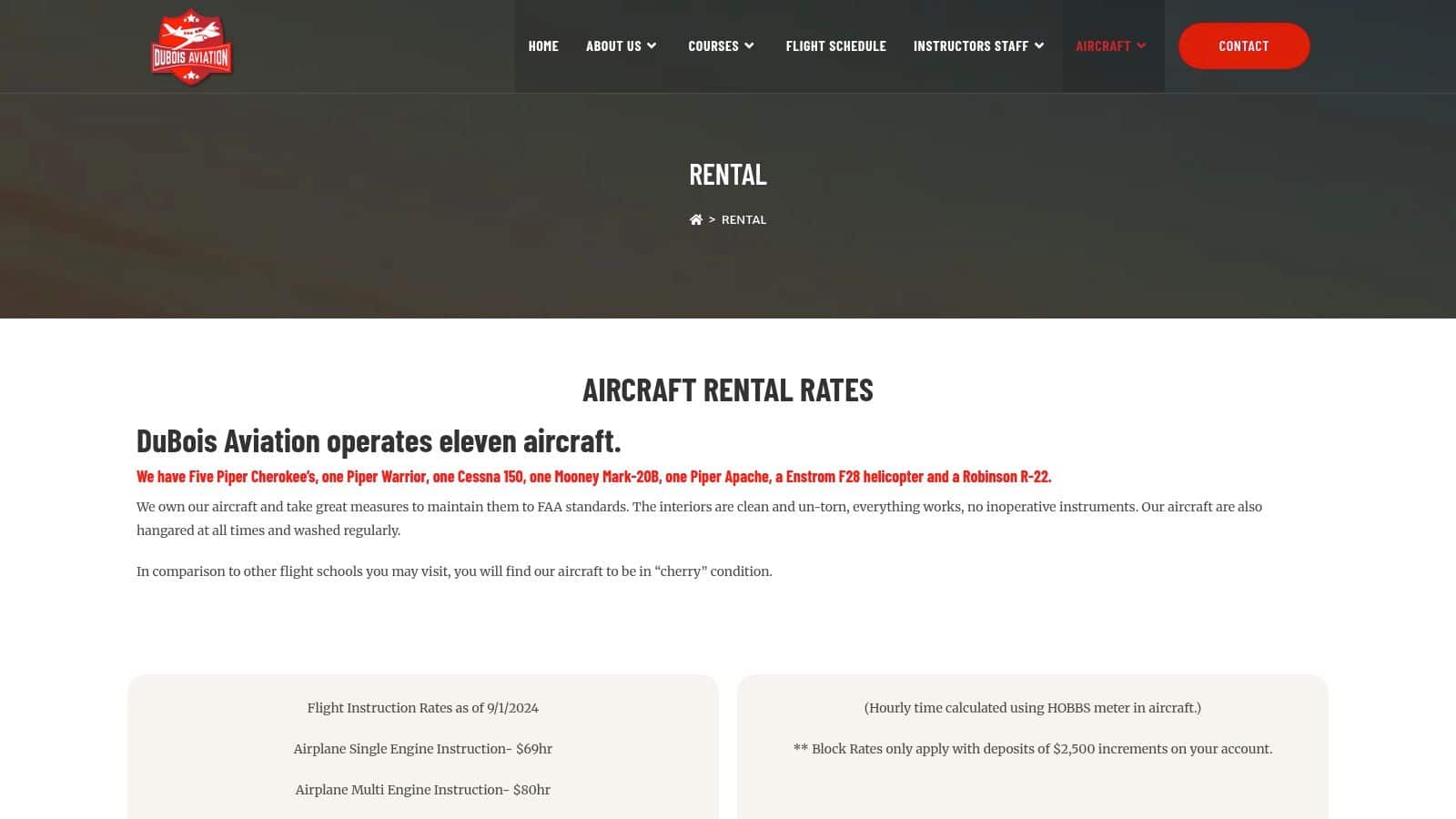
At Chino, that approach is practical because the environment itself adds training value. Busy towered operations, multiple runways, instrument exposure, and access to a varied fleet create useful opportunities for pilots who want more than a quiet local pattern. DuBois Aviation offers airplane and helicopter instruction, aircraft rental, multi-engine access through the Piper Apache, and training support at KCNO for pilots who want to build time with a clearer purpose.
If you're serious about pilots time building, don't just ask how to reach the number. Ask what kind of pilot you'll be when you get there.
If you want help mapping out a realistic time-building plan, exploring aircraft rental options, or discussing airplane and helicopter training opportunities at Chino, contact DuBois Aviation. A focused plan now can save money, reduce wasted flying, and build the kind of experience that supports the next step in your career.



Great article! Single Engine Time Building is a valuable step for aspiring pilots looking to gain practical flight experience and build their flying hours. I found the information about the training process and career opportunities very helpful. Thanks for sharing!
Really useful breakdown of the different time-building pathways, especially the point that pilots should focus on building meaningful experience rather than simply increasing total hours. The emphasis on planning, documentation, and long-term career goals is valuable for anyone trying to make better decisions about their professional path. The same principle applies when choosing business consultancy services having a clear strategy and measurable goals can make a big difference in long-term growth.