
You're probably closer to this topic than you think.
Maybe you're a student pilot getting ready for a solo cross-country and realizing that flying the airplane is only part of the job. Maybe you've already had one of those moments where ATC gives you a reroute, the weather starts changing, a light pops up on the panel, and your brain feels like it has six tabs open at once. Or maybe you're further along and looking to buy an airplane or helicopter, which brings a different kind of workload, paperwork, risk, money, maintenance history, and decisions that can follow you for years.
That's where Single Pilot Resource Management, or SRM, becomes your superpower. It gives you a way to organize your attention, use your tools wisely, and make good decisions before a small problem turns into a chain of bad ones. In plain terms, SRM is how a single pilot stays ahead of the airplane instead of chasing it.
Table of Contents
- Your Cockpit Your Command Center
- The Core Principles of SRM Explained
- Common SRM Pitfalls in the Modern Cockpit
- Applying SRM Before and During Your Flight
- A Pilot's Guide to Buying an Airplane Safely
- How DuBois Aviation Builds SRM Mastery from Day One
- Becoming a Safer More Confident Pilot
Your Cockpit Your Command Center
A single-pilot cockpit can get busy fast.
You depart on a smooth morning. Then the weather ahead starts looking less friendly. ATC calls with a new instruction. Your GPS page isn't where you thought it was. You glance down to sort one thing out, and suddenly you're behind on altitude, heading, and the next radio call. Nothing dramatic has happened yet, but the pressure is building.
That moment is where pilots often learn what SRM really means. It isn't a fancy phrase for being careful. It's the discipline of managing every resource available to you so the flight stays under control, even when the workload spikes.
The FAA's shift to mandating SRM came from a hard reality. Approximately 75% of general aviation accidents are attributed to human error, with task saturation and poor decision-making named as major contributors, according to the FAA background summarized here. That number matters because it points to something every pilot can improve. Judgment, prioritization, and workload control.
What good pilots do when things get noisy
A reactive pilot tries to solve every problem at once. A pilot using single pilot resource management starts sorting.
They ask practical questions:
- What must happen now to keep the airplane safe?
- What can wait until workload drops?
- What tool or person can help, whether that's autopilot, ATC, a checklist, or a passenger handling a simple task?
- What changed in the big picture?
Practical rule: Aviate first, navigate second, communicate third. Then manage the extras.
That's why I like to describe SRM as your cockpit command system. It helps you choose what gets your attention first. It keeps you from burning mental energy on the wrong thing at the wrong time. And it strengthens the habit of checking the whole picture, not just the one flashing item that wants to hijack your focus.
If you want a stronger foundation for this mindset, a good starting point is learning situational awareness in aviation. SRM and situational awareness work together. One helps you organize action, the other helps you see what needs action.
The Core Principles of SRM Explained
The easiest way to understand single pilot resource management is to think of it as a set of cockpit habits. Not random habits. Structured ones.
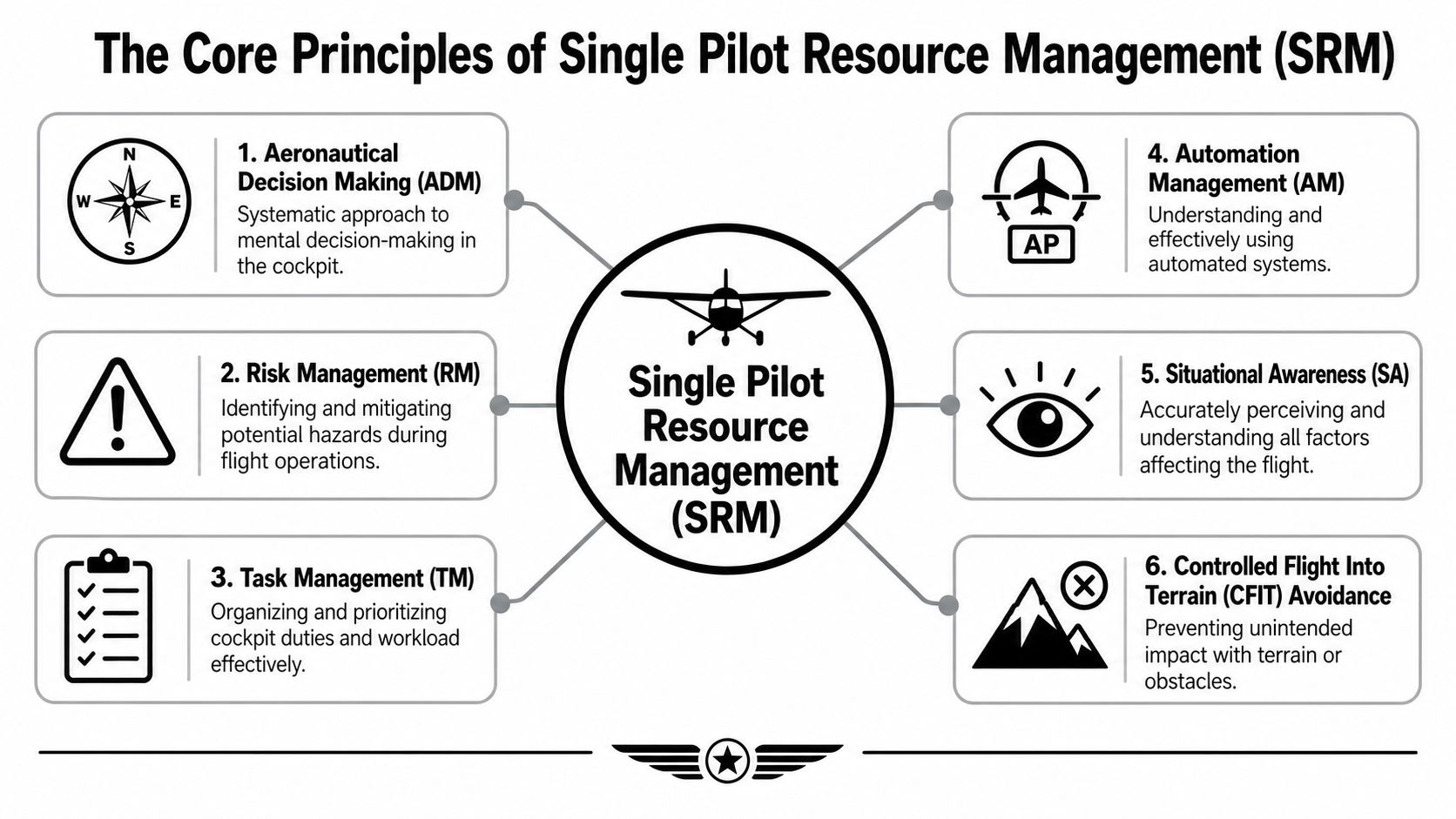
The FAA framework commonly taught through SRM centers on six areas: Aeronautical Decision Making, Risk Management, Task Management, Situational Awareness, Automation Management, and CFIT Awareness. Together, they turn a solo pilot into their own captain, first officer, and safety monitor.
Why SRM is more than good intentions
Here's a plain-English way to think about each principle.
- Aeronautical Decision Making means choosing a course of action on purpose, not just reacting. It's the difference between “I guess I'll continue” and “Conditions changed, so I'm diverting.”
- Risk Management means spotting hazards early and deciding whether you can reduce them to an acceptable level.
- Task Management is cockpit triage. Like a chef with several pans on the stove, you can't stir everything at once. You prioritize the one that's about to burn.
- Situational Awareness is knowing where you are, what the airplane is doing, what's coming next, and what matters most right now.
- Automation Management means using tools such as autopilot, moving maps, and electronic displays correctly, without becoming dependent on them.
- CFIT Awareness means staying alert to the risk of flying a working airplane into terrain or obstacles because attention, navigation, or awareness slipped.
The older idea of just teaching judgment by itself wasn't enough for single-pilot operations. SRM gives pilots a more complete structure. If you've studied multi-crew concepts, you'll notice the overlap with crew resource management, but the single-pilot version puts all of that responsibility on one person.
Good SRM doesn't mean doing more. It means doing the right thing in the right order.
The 5 Ps you can use on every flight
One of the most useful cockpit tools is the 5 Ps. According to this SRM training reference, the 5 Ps are Plan, Plane, Pilot, Passengers, and Programming, and they're meant to be checked at five critical decision gates: pre-flight, take-off, cruise, descent, and touchdown.
That matters because risk changes during the flight. A plan that looked fine before engine start may not look fine halfway through cruise.
Here's a simple version you can carry into your next lesson.
The 5 Ps SRM Checklist
| The P | What to Assess | Example Question |
|---|---|---|
| Plan | Route, weather, alternates, fuel, timing | Is the original plan still the best plan? |
| Plane | Systems, performance, fuel state, indications | Is the aircraft behaving normally? |
| Pilot | Fatigue, stress, focus, workload | Am I sharp enough for the next phase? |
| Passengers | Distractions, pressure, comfort, briefings | Are passengers helping, distracting, or creating pressure? |
| Programming | GPS, autopilot, radios, display setup | Is the avionics setup correct for what comes next? |
The power of the 5 Ps is that they're repeatable. You don't need a perfect memory. You need a reliable loop.
For a student pilot, that's huge. It turns “I hope I'm staying ahead of the airplane” into “I know exactly what I'm checking next.”
Common SRM Pitfalls in the Modern Cockpit
The modern cockpit gives you amazing tools. It also gives you new ways to get in trouble.
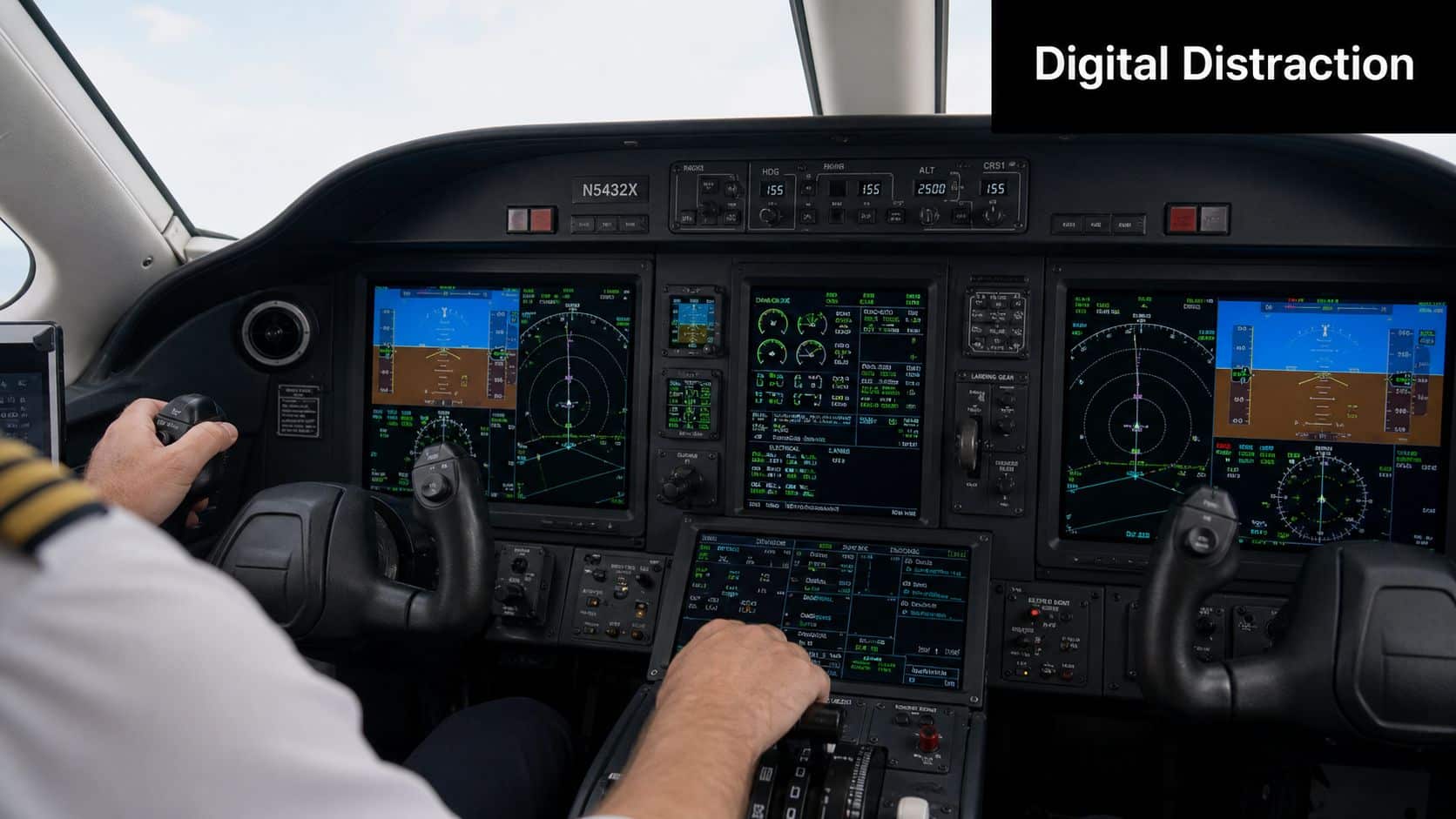
A moving map, autopilot, traffic display, engine monitor, and weather screen can reduce workload when you use them well. They can also pull your eyes inside, break your scan, and create a false sense of control. A pilot can feel busy and informed while missing the one thing that matters most.
When helpful technology becomes a distraction
One of the least understood parts of SRM is Programming. The FAA's 5P model includes it for a reason. As noted in this FAA-focused discussion of SRM and cockpit technology, existing content rarely quantifies how Programming, including electronic displays, moving maps, and autopilots, can create dangerous distraction that outweighs their workload benefits.
That rings true in training. A pilot heads down to change a waypoint, load an approach, clean up a display page, or troubleshoot an autopilot mode, and the airplane keeps flying into a different problem. Altitude drifts. Airspeed wanders. Traffic calls get missed. The pilot is “working hard,” but not on the highest-priority task.
This is one of the big traps of glass cockpits. More information doesn't automatically create better decisions.
How to keep programming from stealing your attention
The answer isn't to fear avionics. The answer is to manage them with discipline.
Try these habits:
- Set up early: Program as much as possible on the ground, before workload rises.
- Use short heads-down windows: Make one change, then look back outside and recheck attitude, altitude, and heading.
- Delay nonessential button pushing: If you're in a high-workload phase, keep the airplane stable first and tidy up the panel later.
- Treat datalink weather as strategic: It can help with route decisions, but it isn't something to use like a real-time storm scope.
- Know your autopilot modes: Don't just know how to turn it on. Know what it's doing now, and what it will do next.
If you can't explain what the autopilot is doing in one sentence, you're not really managing it yet.
A lot of pilot improvement comes from strengthening this one skill alone. If that's an area you're working on, these ideas pair well with broader habits for improving decision-making in aviation.
Applying SRM Before and During Your Flight
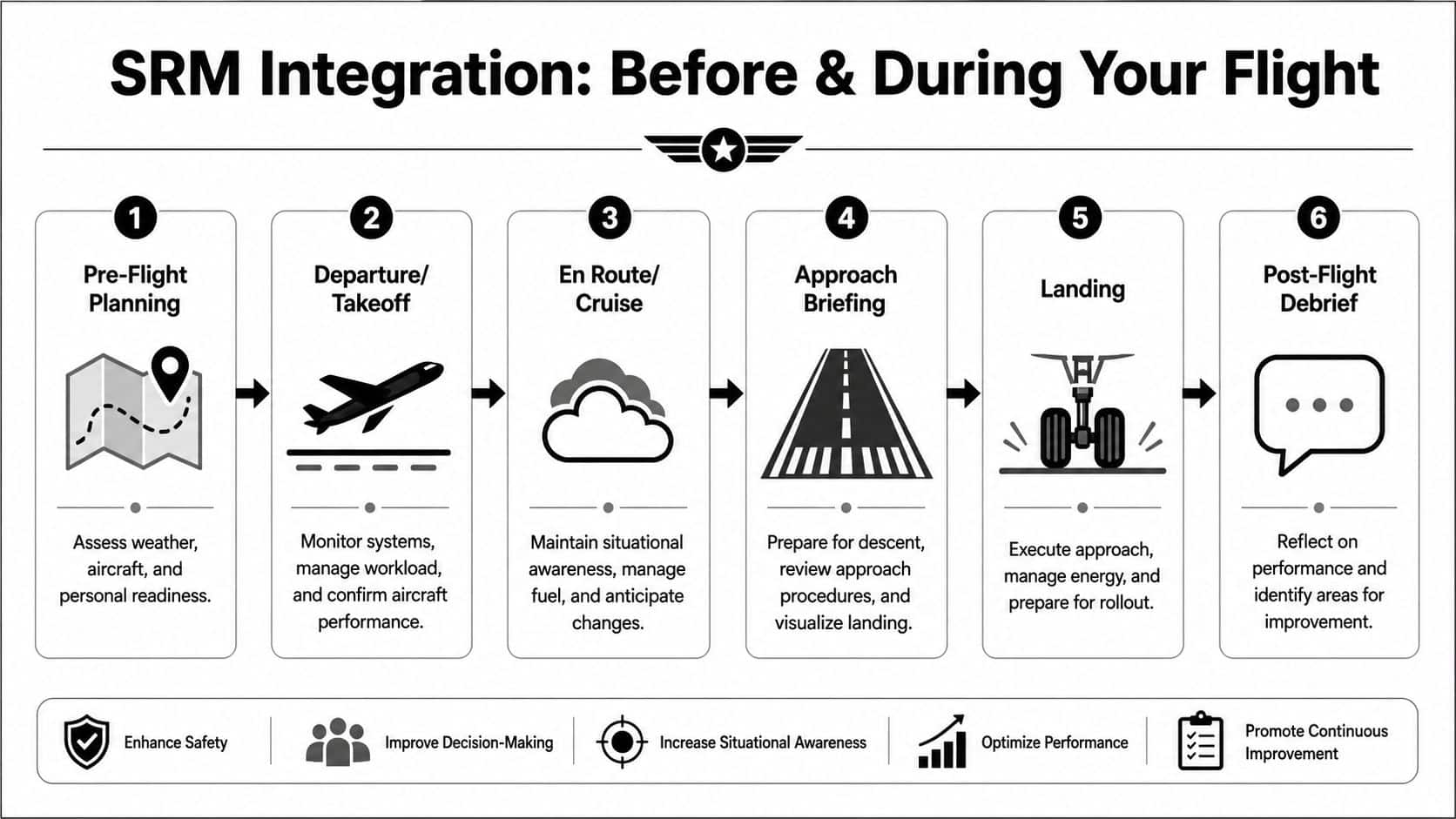
SRM works best when it becomes routine. You don't wait for the hard moment and then try to invent a system. You practice the system until it shows up automatically when pressure rises.
Preflight planning that reduces cockpit stress
A strong SRM habit starts before engine start. One practical way to do that is with PAVE:
- Pilot asks whether you're ready for the flight you're about to attempt.
- Aircraft asks whether this specific machine is ready for today's mission.
- Environment asks what weather, terrain, airspace, and runway conditions may demand from you.
- External pressures asks what might push you toward a bad decision.
Here's what that can look like in real life.
- Start with yourself. Are you current, rested, and mentally available? If you had a rough day at work and you're already rushed, that belongs in the risk picture.
- Review the aircraft objectively. Don't just ask whether it's legal. Ask whether it's suitable. A minor equipment issue might be manageable on a local flight and a poor choice for a longer one.
- Look at the environment as a chain. Weather alone may be workable. Busy airspace alone may be workable. Add crosswinds, fading daylight, and unfamiliar terrain, and the total risk may change.
- Name the pressure out loud. “I want to get there tonight” is exactly the kind of pressure that needs to be recognized before it starts steering your decisions.
Cockpit habit: If you feel rushed on the ground, that rush will usually follow you into the air.
In-flight decisions when the plan changes
Once airborne, SRM becomes a cycle of noticing, assessing, and acting. A useful model is DECIDE: Detect, Estimate, Choose, Identify, Do, Evaluate.
Suppose you're on a cross-country and the weather ahead is dropping faster than forecast.
- Detect: Visibility and ceilings ahead are getting worse.
- Estimate: Continuing may increase workload, shrink your options, and create pressure during arrival.
- Choose: Divert, turn around, or land short before the situation tightens.
- Identify: Pick the practical action. Maybe that's diverting to a nearby airport with better conditions.
- Do: Tell ATC or make the radio call, reprogram the route, brief the arrival, and fly the new plan.
- Evaluate: Did the diversion reduce risk? Do you need a further change after landing?
The calmest pilots aren't calm because they never feel stress. They're calm because they have a method.
Another useful habit is to combine DECIDE with the 5 Ps during the flight. If something changes, pause and ask:
- Plan: Is the route still appropriate?
- Plane: Any signs the airplane is adding to the problem?
- Pilot: Am I getting overloaded?
- Passengers: Are they distracting me or increasing pressure?
- Programming: Is the panel set correctly for the next decision?
That kind of structure keeps your mind from narrowing too much. It brings you back to the whole situation.
A Pilot's Guide to Buying an Airplane Safely
Single pilot resource management doesn't stop at the runway. It also applies when you're making a major ownership decision.
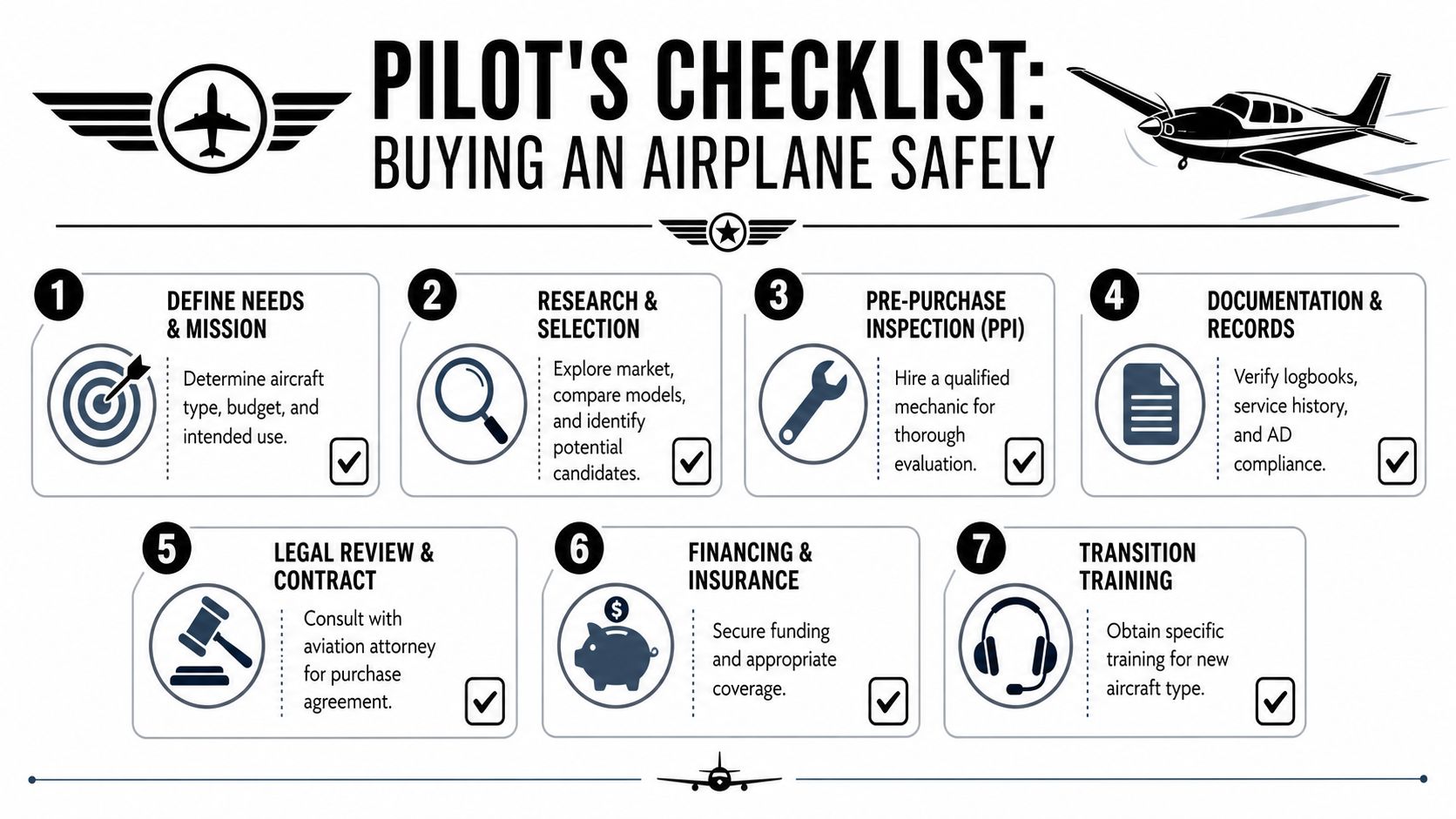
Buying an airplane or helicopter can be exciting enough to blur judgment. A clean paint job, a friendly seller, and a “great deal if you move quickly” can push a buyer into skipping the exact steps that protect them. The safe approach is slower, more deliberate, and much more professional.
People looking to buy or sell airplanes and helicopters often focus on price and appearance first. Experienced buyers focus on documentation, legal status, maintenance history, and whether the aircraft fits the mission.
What to verify before money changes hands
Start with basic verification. According to this aircraft buying protection guide, buyers should verify that the aircraft exists using the FAA registry online before paying any money, should avoid wiring funds directly to a seller, and should use escrow services even if the seller offers a discount. The same source also recommends ordering any FAA Form 337s and personally test flying the aircraft.
Those are practical protections, not technicalities.
Then confirm title status. This aviation consumer guidance on buying and selling aircraft states that a fresh FAA title search should be done to confirm no recorded liens exist, and that this search typically takes about three days before closing. That step matters because a hidden lien can follow the airplane long after the excitement of the purchase is gone.
How to buy an airplane the safe way
A safe purchase process looks something like this:
- Verify the aircraft identity: Make sure registration details line up with the aircraft being offered.
- Use escrow: Don't send money directly to the seller because it feels simpler.
- Review repair and alteration history: FAA Form 337s can reveal major repairs and modifications that affect value, maintenance, and insurability.
- Get a real pre-purchase inspection: Use a mechanic who represents your interests, not someone pressured to close the deal.
- Fly the aircraft yourself: A stationary inspection can't show you how it performs in operation.
- Check insurance early: Coverage and cost can affect whether the aircraft is practical for you to own and fly home.
- Inspect again before delivery: Make sure the aircraft's condition hasn't changed since the inspection and that agreed terms were met.
AOPA also emphasizes that buyers must ensure required documents are present and in order, including the airworthiness certificate, engine and airframe logbooks, aircraft equipment list, and FAA-approved aircraft flight manual, and notes that this step is often overlooked and can prevent a new owner from flying home, as explained in AOPA's tips on buying used aircraft.
Buying the airplane safely means managing information, pressure, and sequence the same way you would in flight.
That same thinking applies if you're shopping helicopters. Mission fit, records, legal status, maintenance reality, and transition training all matter more than a fast close.
How DuBois Aviation Builds SRM Mastery from Day One
Training quality shapes SRM more than most students realize.
A pilot can memorize acronyms in a quiet room, but single pilot resource management only becomes real when it's practiced under changing conditions, with radios, checklists, navigation, traffic, and time pressure all competing for attention. That's why the training environment matters so much.
Historical analysis has found that providing Crew Resource Management training specifically directed at single-pilots results in an “overall reduction in the rate of accidents and incidents”, as noted in this single-pilot CRM report. The takeaway is simple. Decision-making gets better when it is taught on purpose, not left to chance.
Why training environment matters
A busy, towered airport gives students frequent repetitions in workload control. They have to listen carefully, copy instructions, manage taxi tasks, stay aware of traffic, and keep the airplane under control while the environment keeps changing.
That matters because SRM is built from doing several basic things correctly, in order, over and over:
- Prioritize the airplane first
- Handle radios without fixation
- Stay oriented in complex airspace
- Use checklists and avionics without losing the outside picture
A training fleet also matters. Moving between familiar trainers, more capable aircraft, and simulator scenarios teaches pilots to adapt their workload strategy instead of relying on one comfort zone.
How repetition turns judgment into habit
Good instructors don't only teach maneuvers. They shape thought process.
They ask questions before a student gets overloaded. They pause after a mistake and ask what cue was missed. They create scenarios where the student must choose between continuing, delaying, diverting, simplifying, or asking for help. That's how confidence becomes earned instead of borrowed.
The best SRM training usually includes:
- Scenario-based flights: Not just steep turns and landings, but realistic decision points.
- Automation practice: Learning when avionics help and when they distract.
- Post-flight debriefs: Turning each flight into a lesson in pattern recognition.
- Simulator sessions: Letting students rehearse high-workload moments safely and repeatedly.
A pilot trained this way doesn't just learn to pass a checkride. They learn how to stay functional when the flight stops being tidy.
Becoming a Safer More Confident Pilot
Single pilot resource management is one of the clearest markers of a maturing pilot. It helps you stay ahead of workload, use automation wisely, make better choices sooner, and bring order to moments that could otherwise feel chaotic.
That growth doesn't stop after one rating. It keeps developing through practice, reflection, and better training. If you're thinking about how today's learning decisions affect tomorrow's capability, this piece on MEDIAL on future training benefits offers a useful perspective on why training quality pays off long after the lesson ends.
The goal isn't to become a pilot who never faces pressure. It's to become one who knows how to manage it.
If you want to build those habits with structured instruction, realistic scenarios, and access to both airplane and helicopter training, DuBois Aviation is a strong place to start. Their training environment supports the kind of judgment, workload management, and confidence that single-pilot flying demands.