
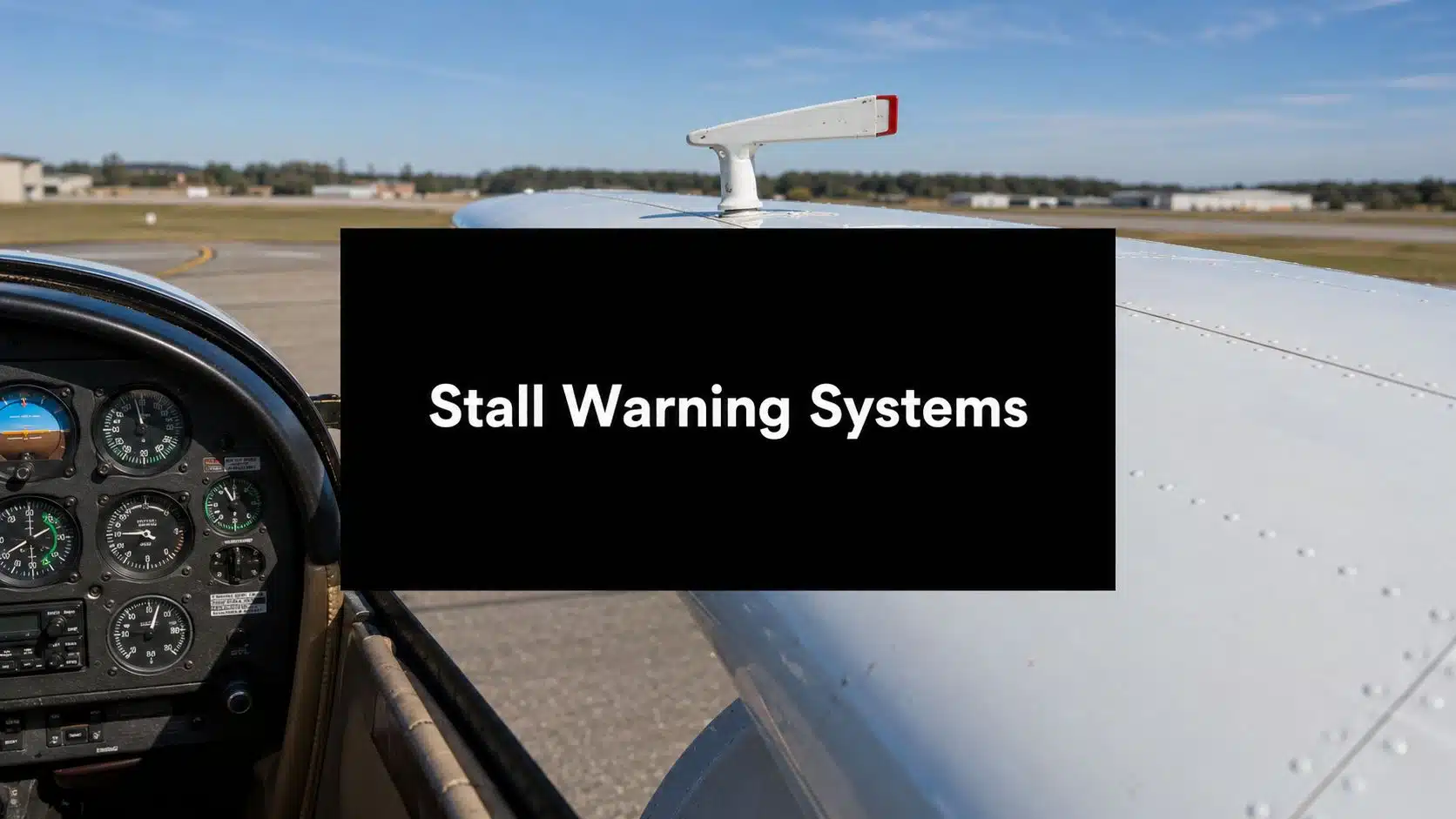
You hear it for the first time during stall practice. Power comes back, the nose rises, the controls get soft, and then that odd little horn or hum cuts through the cockpit noise. Most student pilots tense up the first time. That reaction is normal.
What matters is what you learn next. The sound isn't there to scare you. It's there to interrupt a bad chain of events before the wing quits flying efficiently.
A lot of pilots think of stall warning systems as just a buzzer mounted somewhere in the wing. That's too simple. In a Cherokee, a Cessna, or a more advanced aircraft, the stall warning is one of the clearest examples of the airplane trying to talk to you in plain language. It says, "Your angle of attack is getting too high. Fix it now."
That matters because stall accidents have never been some rare corner case. Safe Flight reports manufacturing more than 500,000 stall warning instruments since 1946, and historical data cited on that same page notes that roughly 40% of general aviation accidents historically involved aerodynamic stalls, which helps explain why stall warning systems became standard safety equipment across so many aircraft types, from light airplanes to transport aircraft (Safe Flight on AoA stall warning systems).
That Hum That Saves Lives An Introduction
In training, the first time you hear a stall horn is usually controlled and expected. You're at a safe altitude with a CFI beside you. Maybe you're in a Cessna 150 with a simple electric horn, or in a Cherokee where the warning arrives as you slow through the bottom end of the airspeed range. You know the maneuver is coming, but the sound still gets your attention.
That's good. A stall warning should get your attention immediately.
What that warning is really telling you
The horn is not saying you're already falling out of the sky. It's telling you the wing is getting close to a point where airflow may separate enough to produce a stall. In other words, the airplane is giving you advance notice while you still have room to correct.
Practical rule: Treat the warning as a command to reduce angle of attack, not as background noise.
Student pilots often get confused because they associate the warning with "slow speed." In practice, what the warning is really tied to is the wing getting close to its critical limit. That's why your instructor has you practice recognizing the sound early, before a full stall break.
Why this matters in ordinary flying
You don't need to be doing training stalls to hear it. You might hear a chirp on a short-field landing, in a steep turn if you get sloppy, or during a go-around if you pull too aggressively. The system is there because real flying gets busy. People overshoot base to final. People yank on the yoke after takeoff. People get distracted.
In those moments, the stall warning buys you time.
For anyone renting, buying, or selling a piston airplane, this isn't just a training topic. It's a practical ownership topic. If you're evaluating a used airplane, one of the systems you should care about is the one designed to warn you before an aerodynamic mistake turns into an accident. A clean panel and fresh paint don't matter much if the airplane's warning systems aren't working properly.
Why Stalls Are About Angle of Attack Not Airspeed
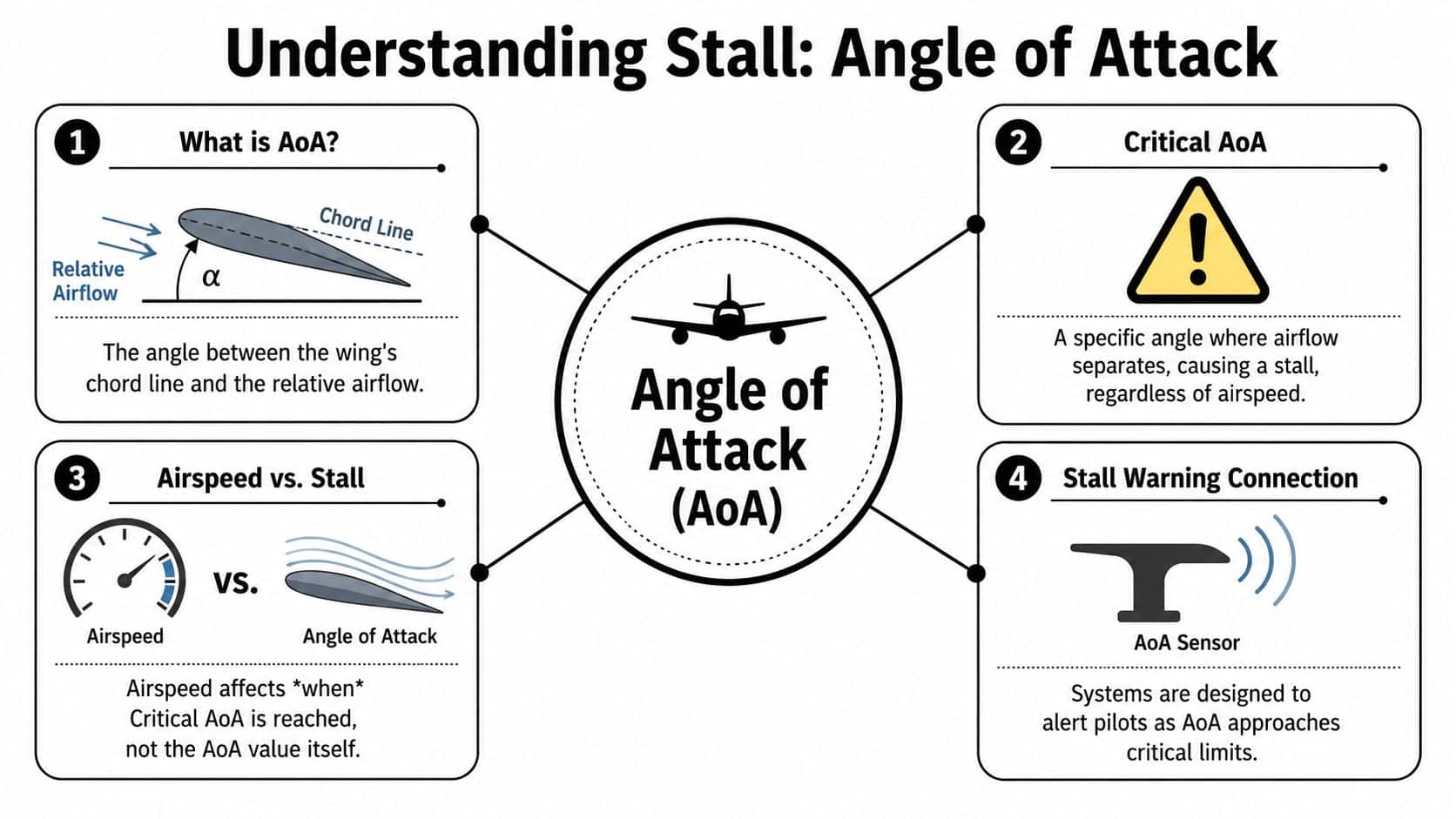
Pilots get taught stall speeds early, and that's useful. But it also creates one of the most stubborn misunderstandings in flight training. A wing does not stall because the airplane reaches one magic number on the airspeed indicator. A wing stalls because it exceeds critical angle of attack.
The hand-out-the-window way to understand it
Hold your hand out a car window, flat to the airflow. It slices through the air smoothly. Raise the front edge a little and you feel more lift. Raise it too much and the airflow breaks up. Your hand starts to wobble and lose smooth support.
That's angle of attack in simple terms. It's the angle between the wing and the relative airflow.
If you want a deeper explanation of the concept itself, DuBois Aviation's article on what angle of attack means in flight is a useful companion read.
Why the same airplane can stall at different speeds
Often, students stumble. They ask, "If my Cessna stalls at one speed in the practice area, why can it stall at a different speed in a steep turn?"
Because the stall speed changes, but the critical angle of attack does not in the same basic sense. Pull more G in a turn, carry more weight, move the CG, or change conditions, and the wing may need to fly at a higher angle of attack to make enough lift. That means the airplane can reach the critical angle at a different indicated airspeed.
AvWeb's explanation puts it plainly. A stall can occur at any airspeed when the critical Angle of Attack is exceeded, because factors like weight, bank angle, G-loading, and CG shift the stall speed, making AoA the true indicator of an impending stall (AvWeb on why AoA matters in stall warning).
A fast airplane can be stalled. A slow airplane can be flying normally. The wing only cares about angle of attack.
What this means in the cockpit
If you're turning from base to final and overshoot the runway centerline, the temptation is to tighten the turn with back pressure and rudder. Airspeed may still look acceptable. That's the trap. The wing can be much closer to a stall than the indicated speed alone suggests.
A useful way to sort it out is this short comparison:
| Situation | What the pilot sees | What matters most |
|---|---|---|
| Straight-and-level slow flight | Low airspeed | Rising AoA |
| Steep turn | Airspeed may still look safe | Increased load factor raises stall speed |
| Climb after takeoff | Nose high, power in | Excessive AoA can still stall the wing |
| Base-to-final overshoot | Runway drifting away | Pulling and skidding can exceed critical AoA |
Once you understand that, stall warning systems make more sense. The better systems don't just look for "slow." They try to warn you that the wing is approaching the condition that causes the stall.
From Vanes to Shakers A Tour of Warning Systems
Walk across a training ramp and you'll see that stall warning systems don't all look the same. The goal is the same, but the hardware can be very different.
What you might see in a Cessna or Cherokee
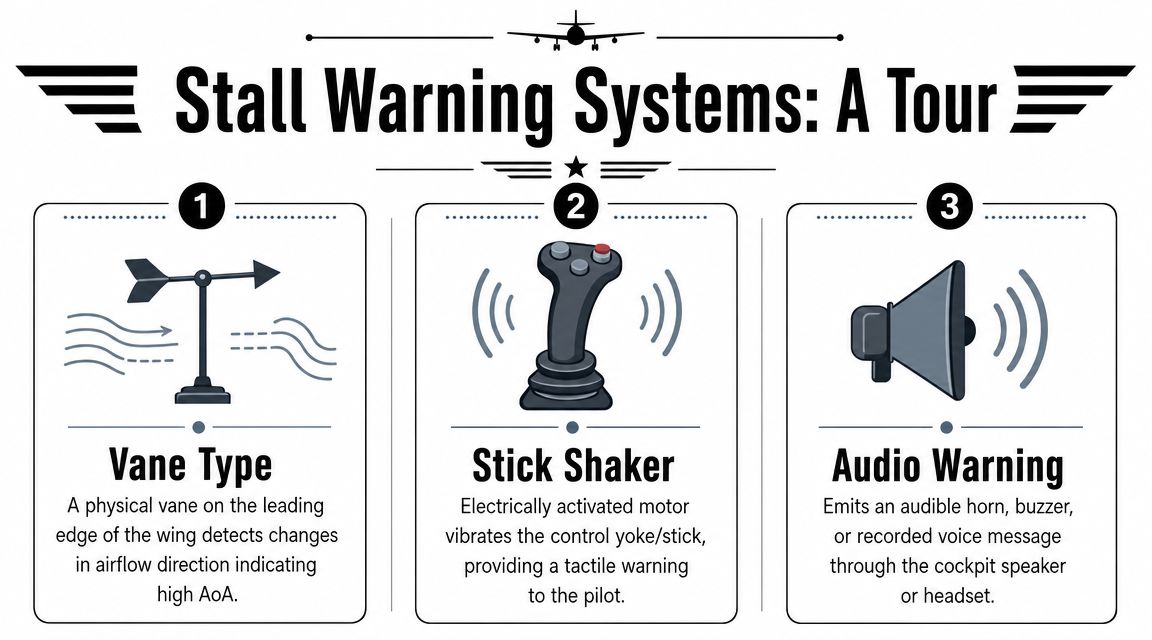
In many Cessna trainers, you'll find a small metal vane near the leading edge of the wing. As airflow changes at higher angle of attack, that vane deflects and triggers an electric warning horn. It's simple, visible, and easy for a student to understand during preflight.
In many Piper Cherokee models, the setup is often different. Instead of a moving vane, the airplane may use a leading-edge port that senses pressure changes. As the airflow shifts, air passes through a reed or horn mechanism and creates that familiar cockpit sound.
Those two examples matter because they teach a useful lesson. Different aircraft can warn you in different ways, but they're all trying to tell you the same thing. The wing is getting too close to its aerodynamic limit.
The strengths and weaknesses of common systems
Here's a practical comparison:
| System type | Common place you'll see it | What the pilot gets | Main limitation |
|---|---|---|---|
| Leading-edge vane | Many Cessna trainers | Audible warning triggered by vane movement | Can be affected by contamination, ice, or sticking |
| Pressure port or reed horn | Many Piper trainers | Audible warning from airflow and pressure change | Port blockage can affect operation |
| AoA indicator | Some upgraded GA aircraft | Continuous picture of margin above stall | Requires pilot interpretation and training |
| Stick shaker | Transport-category aircraft | Tactile warning through the controls | More complex system and not common in basic trainers |
| Stick pusher | Some advanced aircraft | Automatic nose-down protection | Surprising if a pilot hasn't been trained on it |
Why more advanced systems use AoA logic
A simple horn works well, especially in a trainer. But it only tells you that you've reached a warning point. More advanced systems can do more. They may use angle-of-attack sensing and add compensations for flap position, gear, ice, or Mach effects. That gives the pilot or the airplane's protection logic a more accurate picture of how close the wing is to a stall condition.
In transport aircraft, that can lead to stick shakers or even stick pushers. In general aviation, it often shows up as an AoA display that gives you continuous information instead of a single on-off warning.
The old-school horn is like a smoke alarm. An AoA indicator is more like a temperature gauge. One warns you at the threshold. The other helps you see the trend earlier.
Why this matters when buying an aircraft
If you're shopping for a used airplane, don't think of the stall warning as a box to check. Ask what type of system the airplane has, how it warns, whether it has any AoA upgrade, and whether the warning has been tested and maintained correctly.
For a buyer, that changes the conversation from "Does the horn make noise?" to "Does this aircraft give me reliable stall awareness in the way I typically fly?" That's a much better question.
In the Cockpit How and When a Warning Activates
A stall warning shouldn't be mysterious. Before you fly, you should know how your airplane's warning is checked, what it sounds like, and roughly when you can expect it to activate.
What to check on the ground
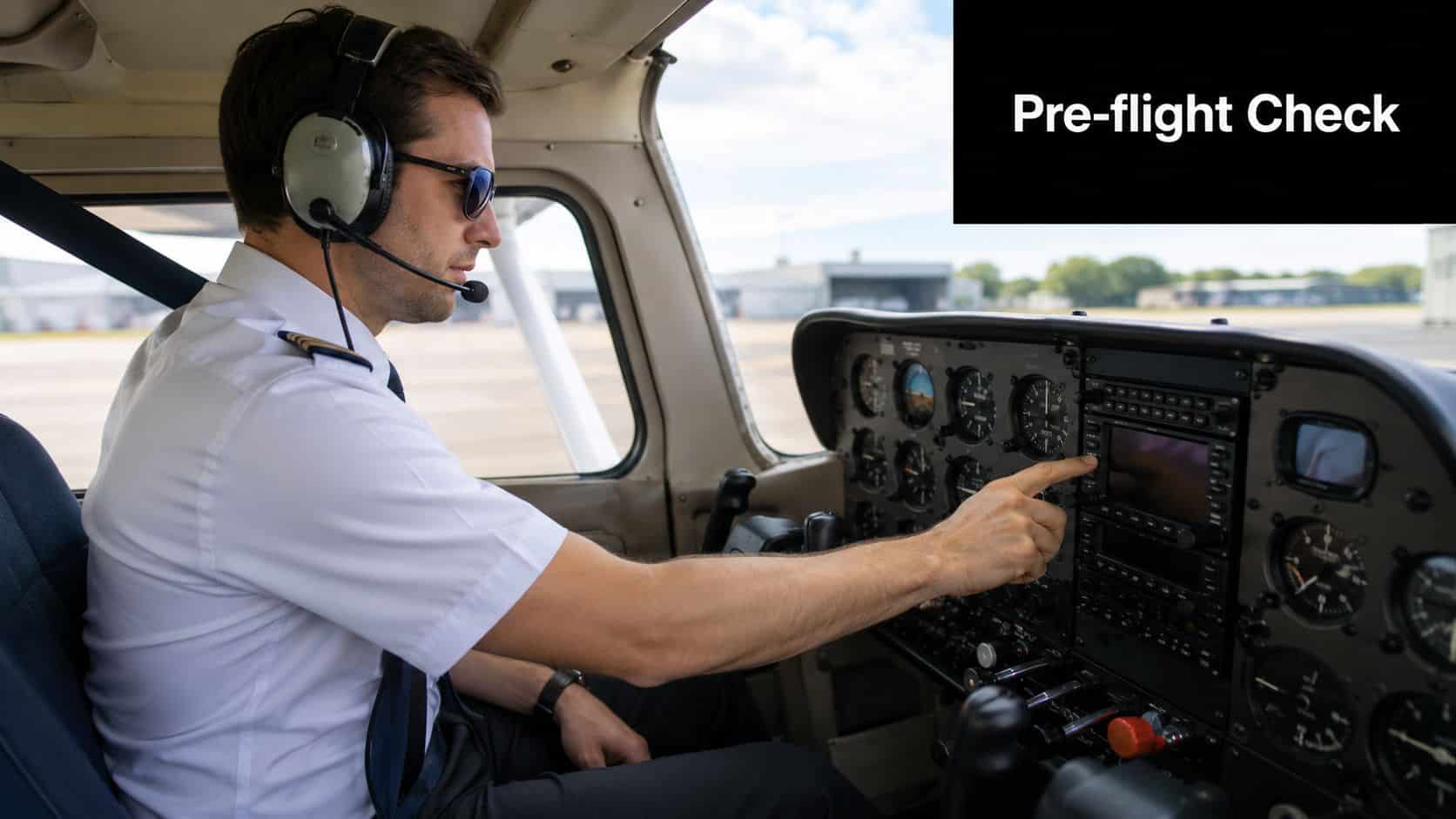
In a vane-type system, the preflight usually includes gently moving the vane to confirm the horn or warning activates. In a port-type system, the checklist may call for a test button or another approved method depending on the aircraft.
The details vary by make and model, but the habit is the same. Don't skip the check because you've "never seen one fail." You want to know on the ground, not in the flare or during departure practice.
A practical preflight sequence looks like this:
- Know the design: Identify whether your airplane uses a vane, pressure port, horn, test switch, or a combination.
- Check for contamination: Look for bugs, dirt, tape residue, ice, or damage around the sensor area.
- Confirm the indication: Make sure the horn, light, or other warning activates during the approved test.
- Compare with the checklist: Use the aircraft checklist, not memory alone.
Why it activates before the actual stall
The warning isn't supposed to begin at the exact moment the wing stalls. It has to give you margin.
A documented aircraft example in airworthiness material shows warnings activating about 10 knots before stall in several configurations, and the warning logic was calibrated to trigger at 32 AoA units, corresponding to about a 7% to 10% margin above stalling speed. Older FAA-related guidance for Cessna pneumatic systems also required the horn to sound about 5 to 10 mph above the stall-warning speed (documented warning-threshold examples and FAA-related guidance).
Cockpit mindset: The warning is not your cue to analyze. It's your cue to act.
What you'll notice in flight
In a trainer, the warning may start as a steady horn during power-off stall practice. In some landings, you may hear only a brief chirp near the flare. With flap changes, loading, or different trim conditions, the warning can arrive in a way that feels slightly different from one maneuver to another.
That's one reason students sometimes get uncertain. They expect one exact sound at one exact speed every time. Real airplanes aren't that tidy. The warning is giving you a margin before the stall, and that margin is tied to the airplane's configuration and aerodynamic state.
Stall Recovery Your Immediate Action Plan
The instant the warning activates, your job is not to admire the system. Your job is to recover.

I teach students to think in a short, memorable sequence: MAX, RELAX, ROLL. The exact wording can vary by instructor and aircraft, but the priorities don't.
MAX
Add maximum allowable power for the situation and aircraft. In a typical single-engine trainer, that usually means full power unless the procedure or aircraft limitations say otherwise.
Power helps reduce the loss of altitude and supports the recovery, but power alone doesn't fix the stall. If you keep the wing at too high an angle of attack, the airplane can still be stalled with the engine making plenty of noise.
RELAX
Relax the back pressure. Lower the angle of attack enough for the wing to start flying normally again.
This is the step many pilots resist, especially close to the ground, because lowering the nose feels wrong. But the wing doesn't care how you feel. If the warning is on and AoA is too high, you must reduce it.
If you hear the warning and keep pulling, you're arguing with aerodynamics. Aerodynamics will win.
ROLL
Return to coordinated, wings-level flight unless the procedure requires another bank attitude. A stalled wing that's also rolled or yawed is much more likely to behave badly.
This is also where understanding maneuvering limits matters. If you're reviewing how control inputs and speed relate, this guide on how to calculate maneuvering speed helps connect stall recovery judgment with normal operating technique.
After you've broken the stall and regained control, clean up the configuration as appropriate, arrest any descent, and return to the desired flight path.
Practice until it becomes automatic
You don't want your first real stall warning to be the first time you've had to think through the recovery. That's why repetitive training matters. A qualified CFI can build the sequence into your hands and feet so it happens promptly and smoothly.
The same is true in simulation. A simulator lets you rehearse recognition and recovery in scenarios you may not want to create casually in the airplane, especially high-workload situations.
A short demo is often more useful than pages of description:
When Systems Fail Limitations and Maintenance Checks
A stall warning system is important. It isn't magic, and it isn't infallible.
If you fly long enough, you'll eventually see how ordinary the failure modes can be. A bug blocks a port. Dirt or paint affects a vane. Ice keeps a component from moving freely. An electrical fault silences a horn. None of those failures are dramatic during preflight. That's exactly why the preflight matters.
What can go wrong
Most problems fall into a few practical categories:
- Blocked sensing area: Insects, dirt, wax, or debris can interfere with airflow at the sensor.
- Mechanical sticking: A vane can bind instead of moving freely.
- Electrical issues: Wiring, switches, or the horn itself can fail.
- Maintenance drift: Rigging, repairs, or surface work can affect how the system behaves.
That last point is worth respecting. Stall warning systems have a long engineering and regulatory history. The National Inventors Hall of Fame notes that Leonard Michael Greene's stall-warning device was one of his more than 100 patents, with 60 of his patents covering aviation technology, and modern U.S. certification standards require stall warning to begin before the wing reaches critical angle of attack. For light aircraft in wings-level decelerating flight, the warning must begin at least 5 knots above stall speed (Leonard Michael Greene and the regulatory warning margin).
Why you still have to fly the airplane
A nonfunctioning warning system doesn't change the laws of aerodynamics. If the system quits, the wing can still stall. That's why good pilots don't stare at the horn as though it's the only clue available.
You still look for the full picture. Control feel. Buffet if the aircraft gives it. Sight picture. Pitch attitude. Coordination. Energy state.
Respect the warning system, but never outsource your judgment to it.
What buyers and owners should verify
If you're evaluating an airplane before purchase, include the stall warning system in the same serious category as brakes, mags, and flight controls. Review the logs, ask when it was inspected, and verify proper operation during the pre-buy process.
For renters and owners, disciplined walkaround habits matter too. If you want a model-specific refresher on how that mindset applies to a common trainer, this Cessna 172 pre-flight checklist guide is a useful example of the kind of detail that prevents simple misses.
Beyond the PPL Integrating System Knowledge for Safer Flying
A deeper lesson isn't "memorize what the horn sounds like." It's bigger than that.
A pilot who understands stall warning systems knows what the airplane is measuring, what the warning means, what to do instantly when it activates, and what its limitations are. That's a different level of airmanship from just repeating a checklist item.
That knowledge becomes even more valuable when you fly an unfamiliar aircraft. It matters when you transition from a Cessna to a Cherokee. It matters when you step into a complex airplane with a different warning feel. It matters when you brief a passenger, rent a club airplane, or evaluate an aircraft before purchase.
If you're buying an airplane or helicopter, take the same safety-first approach you should take with any critical system. Ask how the stall warning works. Verify the preflight test procedure. Make sure a pre-purchase inspection includes functional evaluation, not just a glance at the wing. If the aircraft has an AoA indicator or another upgrade, learn exactly how it presents information before you rely on it.
Pilots who buy airplanes safely don't just buy performance. They buy understanding.
If you're building that kind of understanding, DuBois Aviation offers airplane and helicopter training, aircraft rental, and simulator access at Chino Airport, with instruction that gives pilots practical experience in systems, procedures, and real-world decision-making.


