

You've got the logbook in one hand and the headset in the other, and the question feels simple. Can you still fly, or has your private pilot license expiration arrived while you were busy with work, family, and a longer-than-planned break from the cockpit?
That question trips up a lot of returning pilots because the answer isn't a single date stamped on the certificate. In U.S. general aviation, the better question is whether your medical, your flight review, and your recent experience are all still valid today. If one of those three clocks has run out, you may own a perfectly good pilot certificate and still be grounded for the flight you wanted to make this morning.
Two practical options worth comparing
These are specific products pilots commonly compare for this type of flying. Confirm compatibility with your aircraft and instructor before ordering.
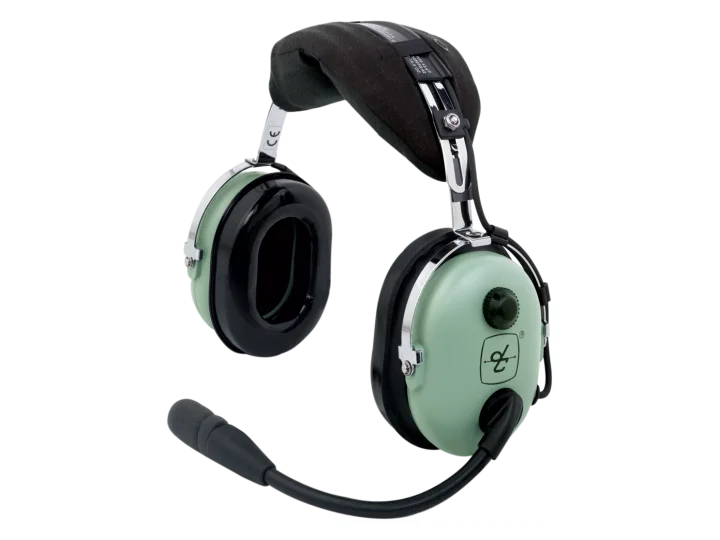 Student headsetDavid Clark H10-13.4 Aviation HeadsetCheck current availability on Amazon (paid link)
 OrganizationASA Flight BagCheck current availability on Amazon (paid link)
Table of Contents
- The Pilot in the Hangar Who Hasn't Flown in Two Years
- What FAA Really Means by an Expired Pilot Certificate
- The Three Clocks That Decide If You Can Fly Today
- Flight Review and the 90-Day Passenger Currency Rule
- How to Reactivate Your Privileges After Time Away
- Local Reactivation Options at Chino Airport
- Hidden Failure Modes Pilots Miss
The Pilot in the Hangar Who Hasn't Flown in Two Years
The Cherokee is sitting on the ramp at a towered airport, tied down, fuel caps on, wind sock moving lazily in the afternoon heat. A certificated private pilot is standing by the wing, keys in hand, doing the same mental math a lot of returning pilots do. “I still have my license, but do I get to start this engine?”
That hesitation makes sense. Aviation uses the word expiration in a way that sounds like a driver's license or a passport, but that's not really how a private pilot certificate works in the United States. The certificate and the ability to use it are related, but they aren't the same thing.
Start with the right question
The question isn't, “Does my license expire?” The better question is, “What am I allowed to do today?” That breaks the problem into pieces you can check one by one instead of guessing.
A returning pilot usually has to look at three separate items. Is the medical still valid. Is the flight review current. Are the recent takeoffs, landings, and other task-specific requirements current for the kind of flying planned today.
Practical rule: if you can't answer those three questions from your logbook and paperwork, you're not ready to assume you can fly.
That's why a pilot can feel “current” in one sense and still be blocked in another. You might be fine for a solo daytime hop to stay sharp, but not legal to take a friend to dinner after sunset. The rest of this guide keeps that distinction front and center, because that's where most confusion starts.
What FAA Really Means by an Expired Pilot Certificate
A tower controller can clear a jet to taxi, a mechanic can sign off an airplane, and a pilot can still be stuck on the ground because of paperwork that looks fine at first glance. That is the trap behind the phrase expired pilot certificate. A U.S. private pilot certificate does not expire under 14 CFR 61.19. It remains valid unless it is surrendered, suspended, or revoked, and certificates issued after June 30, 1945 were reissued without an expiration date. The old style of a printed expiration date is gone for modern Part 61 certificates, so the document in your wallet should be read differently than a driver's license or passport.
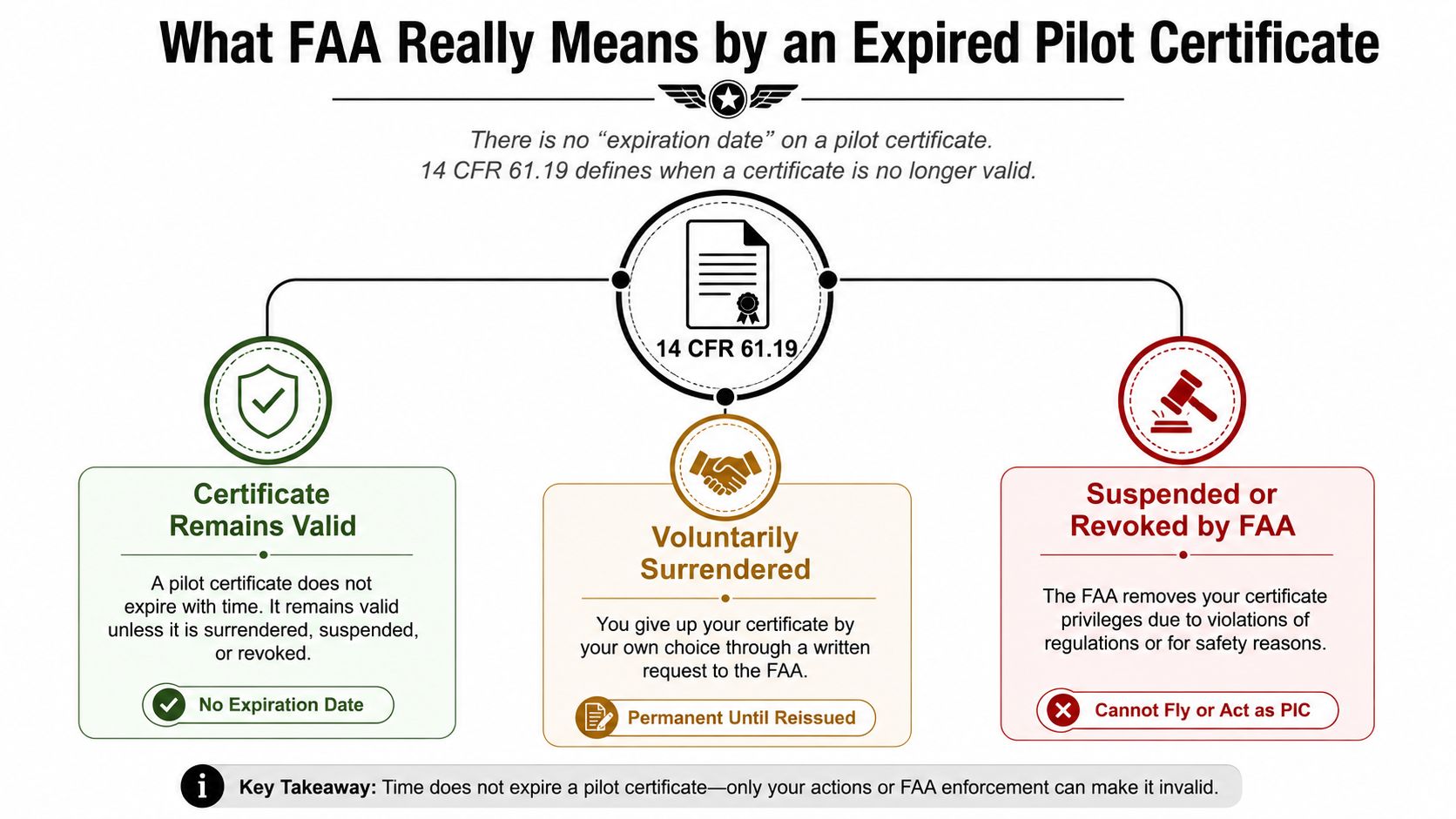
The certificate is the key, not the clock
The FAA treats the certificate itself as durable paperwork, while your right to use it depends on other current conditions. The certificate is the key that shows you earned the privilege. Separate from that is the timing attached to the privileges you want to exercise.
Pilot certificates in the United States used to carry expiration dates. The FAA moved away from that model decades ago, and modern certificates under Part 61 are issued without an expiration date. Student pilot certificates changed later too, with paper certificates issued before April 1, 2016 carrying time limits of 24 or 60 calendar months depending on age, while certificates issued after that date do not expire. That change matters because it separates the physical certificate from the rules that control whether you can use it on a given day.
The phrase expired pilot certificate still causes confusion because it suggests one single deadline. A better way to read the situation is as lapsed privileges. You may still hold the certificate, but if the conditions that let you use it have lapsed, you cannot legally act on that certificate the way you intend to.
The paper may be permanent. The privileges are not.
That is the actual meaning behind private pilot license expiration. A pilot can keep a valid certificate for years and still lose the right to fly with passengers, at night, or under IFR because those permissions run on separate rules. Once you separate the certificate from the privileges attached to it, the FAA system starts to look much more straightforward.
The Three Clocks That Decide If You Can Fly Today
A pilot who has been away for two years usually does not need a new certificate. At a busy towered airport, the key question is simpler. Can you fly today?
The answer comes from three independent clocks, and each one can land in a different place on the same day. The first clock is medical validity. The second is the flight review. The third is recent experience, especially when passengers or instrument conditions are part of the plan. FAA rules also separate passenger-carrying and IFR privileges from the basic certificate itself, so a pilot can be legal for one kind of flying and not another (14 CFR 61.19).
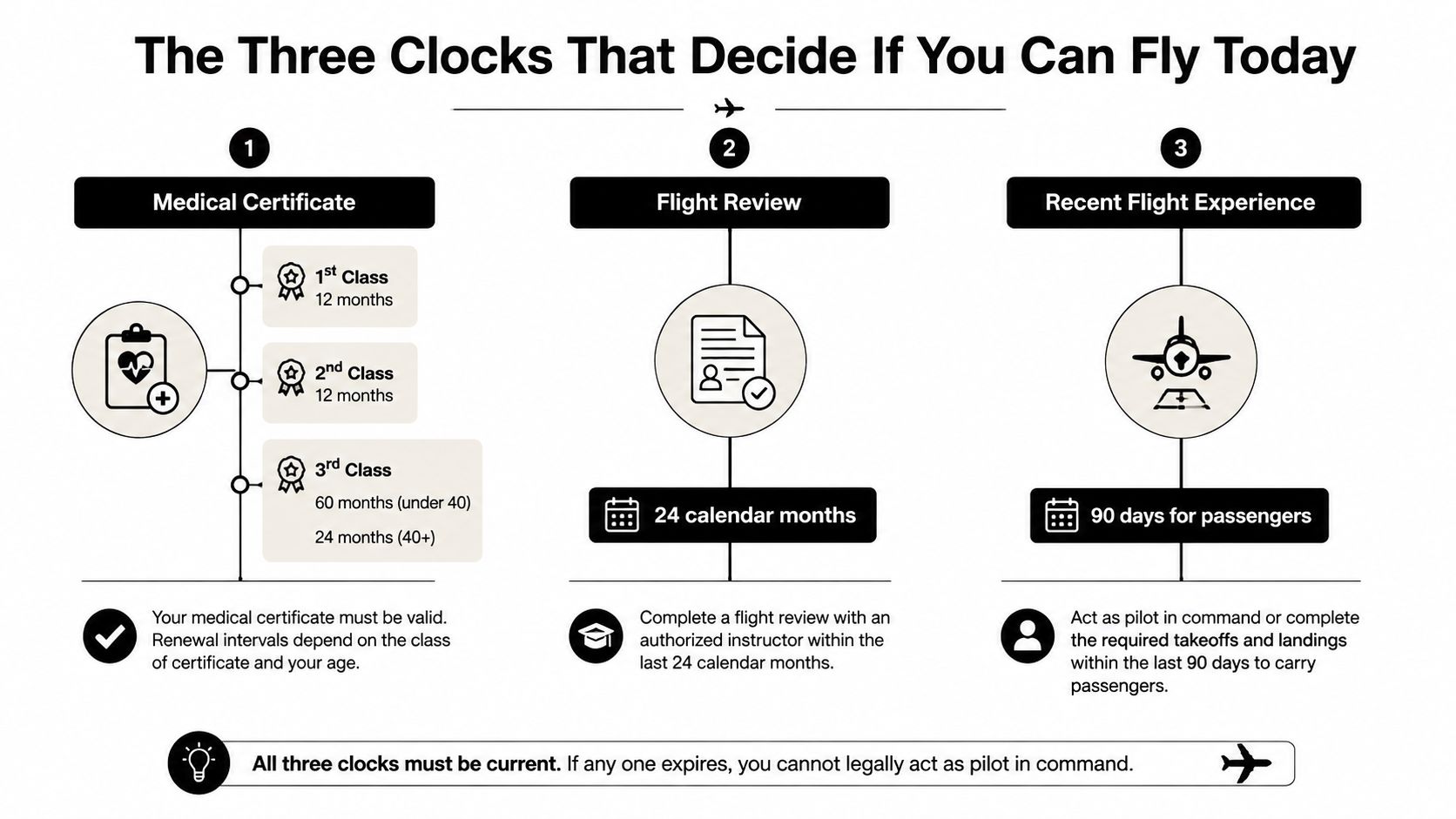
One pilot, three different answers
At a busy Class D airport, those three clocks can point in different directions quickly. A pilot may be medically current but overdue for a flight review. Another pilot may have a current flight review and still be short on the takeoffs and landings needed to carry passengers. A third may be fine for a solo daytime lap around the pattern, yet unable to take a spouse home after sunset.
Before every flight, verify these three items.
- Medical certificate: Is it valid for the kind of flying I am planning?
- Flight review: Have I completed the required review within the last 24 calendar months?
- Recent experience: Do I meet the recency rule for passengers or the specific operation I want to fly?
A returning pilot who last flew two years ago may still hold a valid certificate and still be grounded for the day. If that pilot has not flown with a CFI since then, the missing clock may be the flight review, the medical, or the recent-experience requirement, and sometimes more than one of them at once.
That is the value of this framework. It turns a vague worry into a simple decision path. If one clock is out of date, you know whether the next step is a medical appointment, instructor time, or a few proficiency flights before you put a passenger in the right seat. For a closer look at the review piece, see biennial flight review requirements.
Flight Review and the 90-Day Passenger Currency Rule
The two rules pilots miss most often are the 24-calendar-month flight review and the 90-day passenger rule. The flight review requirement includes at least 1 hour of ground instruction and 1 hour of flight instruction with a qualified instructor (flight review overview). The passenger rule is separate, and it's the one that often surprises people who are otherwise comfortable flying solo.
What a flight review looks like at a towered airport
A good review flight isn't a checkride and it isn't meant to trap you. Think of it as a proficiency reset. At a place like a busy towered airport, a CFI may start with airspace, weather, and the way you plan to manage the runway environment, then move into taxi discipline, radio work, and pattern work. The instructor wants to see whether you still fly with margins, not whether you can recite a regulation from memory.
The ground portion often covers the decisions that keep pilots safe when they return after time away. That can include weather judgment, performance planning, and reading the airport environment before you move the airplane. The flight portion lets the instructor see the actual handling side, especially the parts that get rusty first, like stabilized approaches, traffic awareness, and talking to ATC without getting behind the airplane.
The 90-day rule is about passengers, not solo flying
The passenger-carrying rule is narrower than many pilots think. To carry passengers, a pilot must have 3 takeoffs and 3 landings within the preceding 90 days in the appropriate category, class, and type of aircraft if a type rating is required. For night passenger operations, those landings must be full-stop and occur between 1 hour after sunset and 1 hour before sunrise (private pilot currency explanation).
That means a pilot can be legal to fly solo and still not legal to bring a friend along. A common example is a pilot who has been flying touch-and-goes at lunch break. That can help with stick-and-rudder skill, but it doesn't always satisfy the exact passenger-carrying requirement if the recent experience hasn't been logged the right way.
Practical rule: if you're planning to take passengers, treat the last 90 days like a hard gate. If the gate's closed, don't improvise.
For a quick refresher on the purpose of the flight review, this biennial flight review guide is a useful companion. The big takeaway is simple. A certificate can stay valid while your privilege to use it for passengers is still waiting on the clock.
How to Reactivate Your Privileges After Time Away
A pilot returning after time away usually does not need drama. They need a sequence, because three separate clocks decide whether they can fly today: the medical, the flight review, and recent experience. A CFI intake flight is the first honest check. It shows what stayed sharp, what got rusty, and whether the pilot is ready for the airplane or still needs basic rebuilding.
Rebuild skill before you chase paperwork
A pilot who has been away for a long stretch often needs to start with the basics. That can mean aircraft control, traffic patterns, and radio work before the training moves into more demanding tasks. In a busy towered airport environment, the difference shows up fast. A pilot may still remember the broad rules, but feel behind the airplane when the tower changes the runway, spacing tightens, or the pattern gets busy.
Simulator sessions can fit into that rebuild too. They make sense for instrument scan, emergency procedures, and flow training, especially when the pilot needs to regain confidence before returning to the actual airplane environment. The goal is not to rush toward a signoff. The goal is to make the next real flight calm enough that the instructor can see good habits, not just paperwork progress.
If the pilot also needs to satisfy the 24-month flight review, it can be folded into the recurrent training plan instead of handled like a separate errand. The clean order is proficiency first, then the formal signoff once the instructor is satisfied that the pilot is safe and comfortable again. For pilots who want a fuller walk-through of the reactivation process, this private pilot license renewal guide can help connect the steps.
A sensible reactivation sequence often looks like this:
- Start with a CFI evaluation. Bring the logbook, paperwork, and a clear story about how long you have been away.
- Sort the medical question early. If a condition requires FAA follow-up, a special issuance medical can be part of the path back, but it should not wait until the last minute.
- Train to the weak spots. If the pilot is rusty on approaches, steep turns, or radio flow, fix those first.
- Complete the flight review if it's due. Treat it as a real proficiency check, not a box to tick. Use it to show the basics are back and steady.
- Restore passenger currency last. If friends or family are going with you, make sure the 90-day requirement is satisfied in the right aircraft category, class, and type.
Medicals can shape the timeline
The medical piece can slow the whole process if the pilot has a condition that needs extra FAA attention. A special issuance path can keep a pilot moving, but it often adds paperwork and coordination along the way. That is why I tell returning pilots to handle the medical question at the front of the process, not the end.
The practical goal is simple. Do not plan a reactivation flight around hope. Plan it around the sequence required to get you back to a legally current, comfortable, and safe position in the cockpit.
Local Reactivation Options at Chino Airport
Reactivation goes faster when the airport environment feels real, not artificial. At a busy Class D field like KCNO, the pilot has to manage tower instructions, runway crossings, traffic spacing, and multiple runway choices while also rebuilding confidence in the airplane. That combination makes the first few flights back feel like real flying, not just a checkout lap.
Why the local training environment matters
A pilot returning after time away benefits from one-on-one instruction in an airplane they can learn to trust again. A well-maintained training fleet helps because the pilot isn't wasting mental energy figuring out hidden quirks before they've even reached the runway. An in-house simulator can also shorten the path back, especially for instrument scan, hold entries, abnormal procedures, and the kinds of cockpit habits that fade when you haven't flown for a while.
That's where a field like DuBois Aviation at Chino Airport fits naturally into a reactivation plan. The value isn't just access to an aircraft. It's the combination of instructor guidance, realistic airspace, and repeatable training sessions that let a pilot rebuild skills without feeling rushed.
The airport itself helps shape better habits. A towered pattern forces cleaner radio work. Multiple runways force better preflight planning. Instrument approaches remind a returning pilot that the margins in real aviation are built one decision at a time.
A good reactivation environment doesn't just get you current, it makes the first few flights after the break feel normal again.
For many pilots, that's the difference between avoiding the airplane for months and getting back into a sustainable rhythm. Once the basics are back, aircraft rental can keep the skills alive so the same clock doesn't start drifting again.
Hidden Failure Modes Pilots Miss
A returning pilot can be current on paper and still be unable to go today. At a busy towered airport, the problem usually shows up in the small details that sit behind the certificate, like a medical that has lapsed, a flight review that ran out, or passenger currency that no longer matches the kind of flight planned. If the plastic certificate is missing from the wallet, that is a separate paperwork issue, and it should be replaced through the FAA's airmen online services instead of pushed aside.
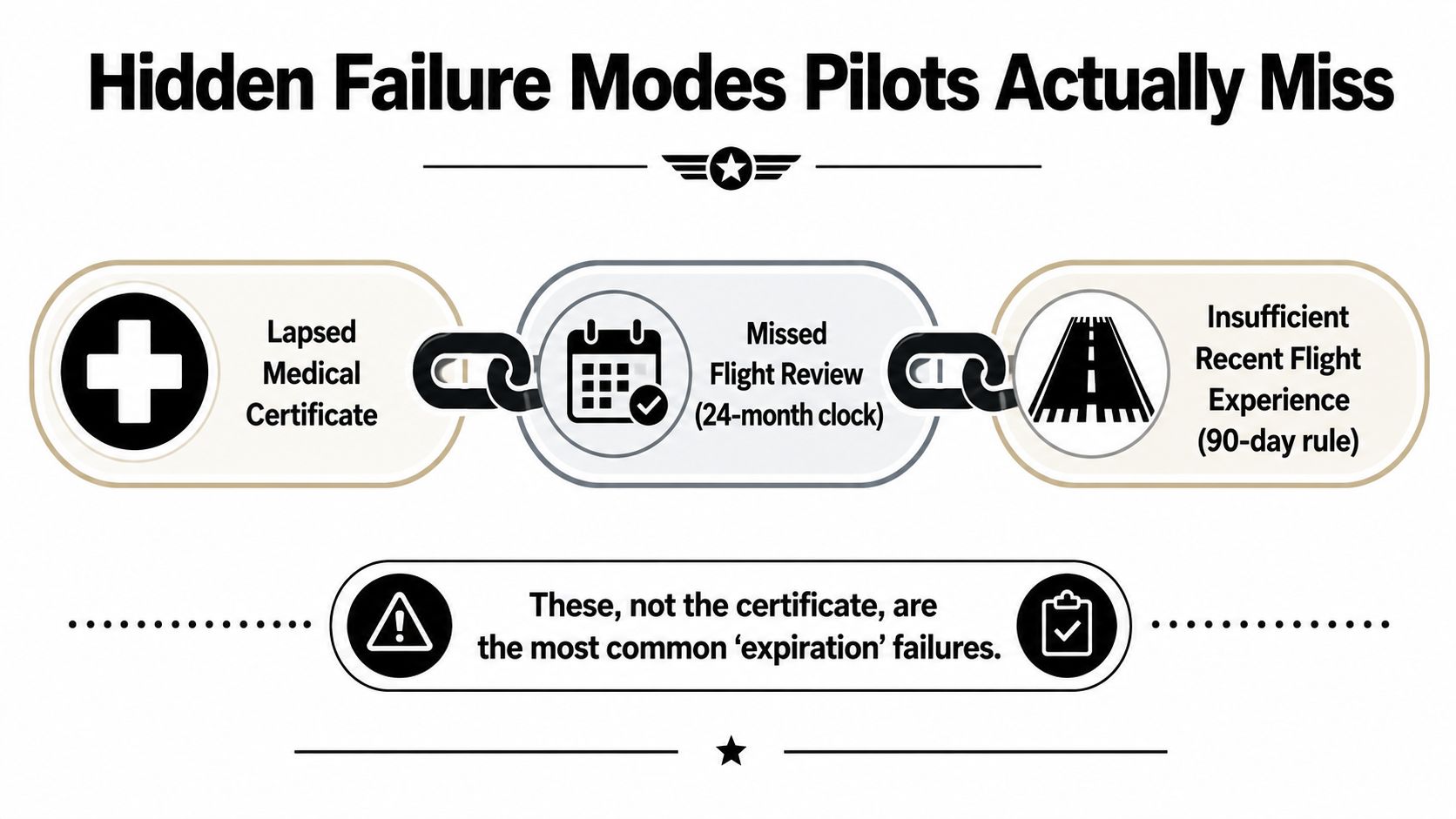
A short cockpit checklist you can use today
- Start with the logbook, not the memory. A pilot may feel current, yet the entries tell the real story of what was flown and when.
- Look for gaps in training paperwork. A missed endorsement, an unsigned flight review entry, or a missing instructor signoff can stop a flight plan before it starts.
- Check for medical changes, not just medical dates. A class upgrade, a downgrade, or a certificate that no longer matches the kind of flying planned can change what is allowed.
- Match the airplane to the rating and experience. A pilot may be legal in one aircraft and not ready, or not trained, for another type in the same hangar.
- Verify night or passenger details separately. A pilot can be fine for solo daylight flying and still be short on the recency needed for carrying passengers after dark.
- Confirm the certificate is available in usable form. If the physical certificate is lost, replace it before a ramp check or a rental checkout becomes awkward.
The part pilots miss is that these problems do not announce themselves as one big expiration date. They hide in different places, one in the medical file, one in the logbook, one in the airplane-specific training record, and one in the passenger-carrying rules. Once you start checking those pieces in the same order every time, “Can I fly today?” turns into a practical yes or no instead of a guess.


