Power on stall recovery starts with enough nose-down input to stop stall indications before the wings are leveled or power is added. Popular advice reverses that order by telling pilots to push the throttle forward and save altitude first. That habit can't fix a stalled wing, and it can keep the wing stalled longer. The recovery that works treats the problem as an angle of attack problem, restores lift first, and only then uses power and pitch to rebuild a safe flightpath.
Table of Contents
- Power on Stall Recovery in the Right Order
- Set Up and Enter the Training Maneuver
- Why the Nose Comes Down Before the Throttle
- Cues That Change by Certificate Level
- Errors That Prolong the Stall
- Limits That Change with the Airplane
- Practice the Recovery with a CFI
Power on Stall Recovery in the Right Order
The first action is reduce angle of attack. The pilot applies enough nose-down elevator, or relaxes back pressure, until the stall warning, buffet, or other impending stall indications stop. Wings are then leveled with coordinated aileron and rudder, power is applied smoothly as needed, and the airplane returns to the desired flightpath without a secondary stall.
That sequence comes from FAA guidance, not from a local throttle habit or a regulation that dictates control pressures. The FAA Airplane Flying Handbook, Chapter 5 states that power-on stall recovery begins by reducing angle of attack, not by immediately trying to level the wings or maintain altitude. The handbook is guidance for how to fly the maneuver. A separate regulation, 14 CFR 61.87, sets the pre-solo requirement for logged stall instruction, and it doesn't replace the handbook procedure or the airplane's POH.
A stall can occur at any airspeed, attitude, or power setting, including takeoff power. That's the point students often miss. The throttle doesn't set angle of attack. Elevator control does, through the load placed on the wing.
If an autopilot or flight director is engaged, the pilot disconnects it first before starting the recovery sequence. Automation that's trimmed or programmed for the wrong flightpath shouldn't fight the nose-down input.
The Briefing Table
| Order | Action | Why it is here | Do not |
|---|---|---|---|
| 1 | Reduce angle of attack until stall indications stop | Restores the wing's ability to produce lift | Add power or hold altitude first |
| 2 | Level the wings with coordinated aileron and rudder | Lateral control returns after the wing is flying | Pick up a dropped wing with aileron while still stalled |
| 3 | Apply power smoothly as needed | Increases airspeed and helps limit altitude loss | Firewall the throttle before angle of attack is reduced |
| 4 | Return to the desired flightpath | Completes recovery without a secondary stall | Pitch up to stop the descent before flying speed returns |
Two warnings belong beside that table during every brief. Adding power before reducing angle of attack can raise pitch attitude and prolong the stall. Too much forward pressure creates its own problem, because the amount needed varies by aircraft and excessive nose-down input or trim can create negative loading or high structural loads.
Briefing line: Indications stop first. Altitude comes back after the wing is flying again.
The order in the table then shapes everything that follows in training. Entry setup, checkride cue timing, and type-specific power limits all change around it, but the sequence doesn't. A pilot who can say the four steps aloud, and explain why step one can't trade places with step three, has the core of the maneuver before the engine starts.
Sources for the procedure and the pre-solo rule are the FAA Airplane Flying Handbook stall chapter in its current edition and 14 CFR 61.87. Instructors should confirm the handbook edition and its effective date at publication, because guidance can change while the regulation remains the authority for the logging requirement.
Set Up and Enter the Training Maneuver
A power-on stall is a briefed training maneuver flown with an instructor at a safe altitude. It isn't an improvised low-level exercise, and it shouldn't be practiced from a written description alone. The setup work happens before pitch changes at all.
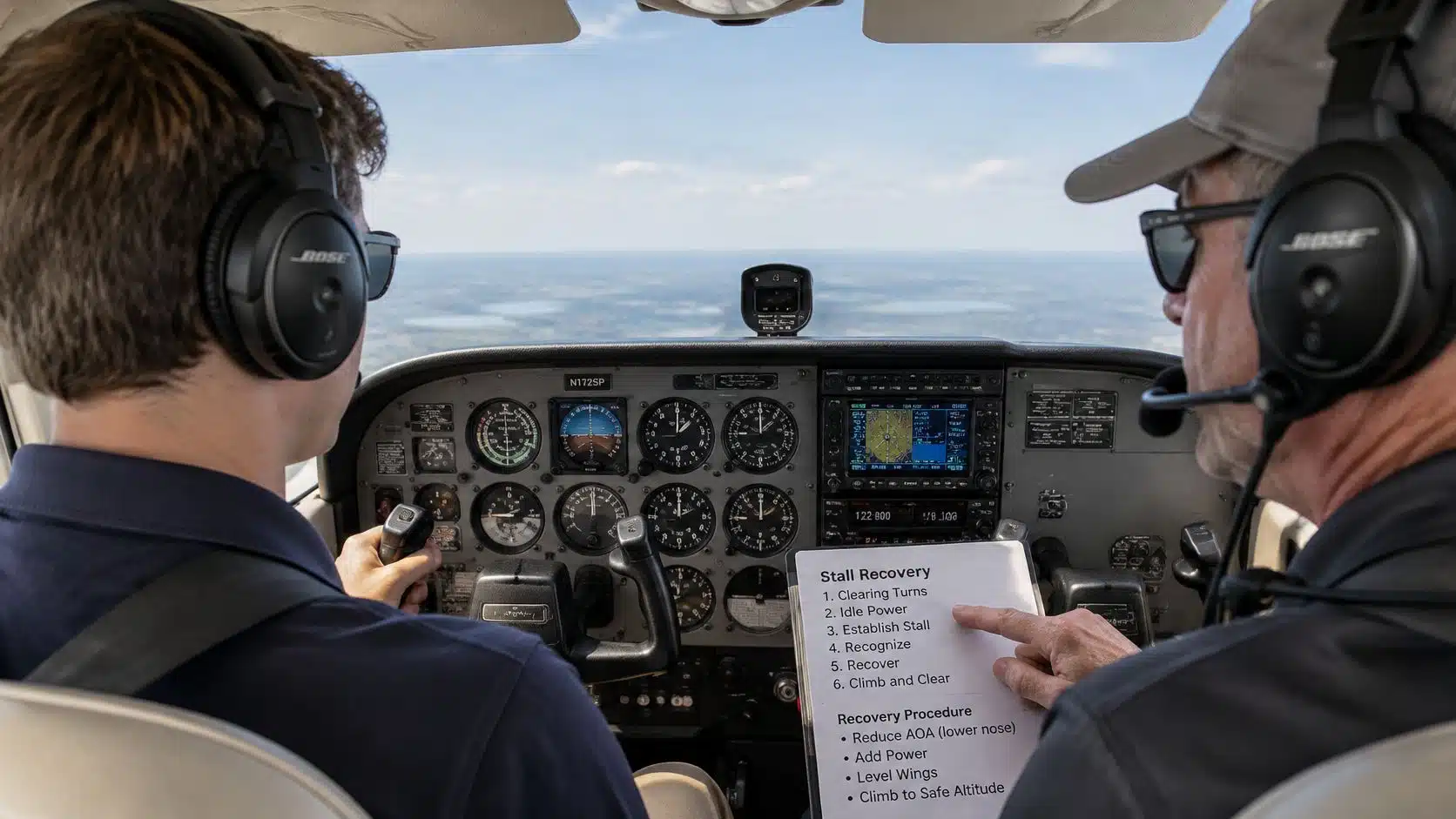
The pre-maneuver brief covers four items. The instructor and student clear the area with clearing turns, confirm the airplane and configuration from its POH, name the entry speed, and set a recovery floor under school operating procedures. That floor is a training recommendation, not an FAA rule with one altitude for every airplane and lesson. The distinction matters on a checkride and in real training planning.
Entry Flow
- Clear and confirm: Clear the area and repeat the brief aloud so both pilots expect the same cue and recovery.
- Configure from the POH: Establish the target flap and power configuration for that specific airplane.
- Slow in coordination: Slow toward lift-off speed in coordinated flight, keeping the ball centered.
- Set power smoothly: Set takeoff power, or the briefed setting the POH and instructor specified.
- Raise pitch slowly: Increase pitch gradually until the stall warning, buffet, or briefed cue appears.
- Call the cue: Call the cue aloud at once and stop the entry. Recovery follows the sequence in the opening table.
The FAA Airplane Flying Handbook chapter on stalls and upset recovery describes the representative maneuver the same way. The airplane is slowed toward lift-off speed, takeoff power is set, and pitch is increased until the stall occurs. Recovery then means reducing angle of attack, rolling wings level, adding power as necessary, stopping the descent only after flying speed returns, and re-establishing a climb at the target airspeed.
Advisory Circular AC 61-67C adds the reason power sits where it does in that flow. Reducing angle of attack is the key recovery action, and smoothly applying maximum allowable power afterward increases airspeed and minimizes altitude loss.
At high power and low speed, yaw control gets harder. Understanding left-turning tendencies during high-power, low-speed flight helps a student anticipate why rudder pressure changes during the entry instead of chasing the ball after it has already drifted.
Entry Slips Instructors Watch For
- Pitching too fast: The break arrives with little warning, so recognition practice is lost.
- Letting the ball drift: Yaw builds during entry and the stall can couple with a roll.
- Reaching for power early: The hand moves before the cue is called and angle of attack is reduced.
Training starts with a straight-ahead departure stall picture. Turning stalls and cross-controlled stalls are separate CFI-briefed tasks with different risks, and they shouldn't be blended into a first lesson. Every speed, power setting, and configuration number used in the brief is a training recommendation for that flight. Each one yields to the aircraft POH or AFM.
The milestone at the end of the maneuver isn't a race back to the starting altitude. It's positive control without a secondary stall. A recovery that loses some altitude, stops the indications promptly, stays coordinated, and settles into the target climb speed has done its job.
Why the Nose Comes Down Before the Throttle
A stall is an angle-of-attack problem, so recovery begins by reducing angle of attack. The critical angle is the point at which airflow can no longer stay attached to the wing. Weight, bank, load factor, and abrupt control inputs affect the indicated speed at which the stall occurs; the airspeed indicator alone cannot show whether the wing has exceeded that angle.
During a high-power climb, pitch may keep rising as speed decays and back pressure increases. The engine can be producing substantial power while the wing is still stalled. A hurried go-around can create a similar combination of pitch-up, trim, and configuration changes.
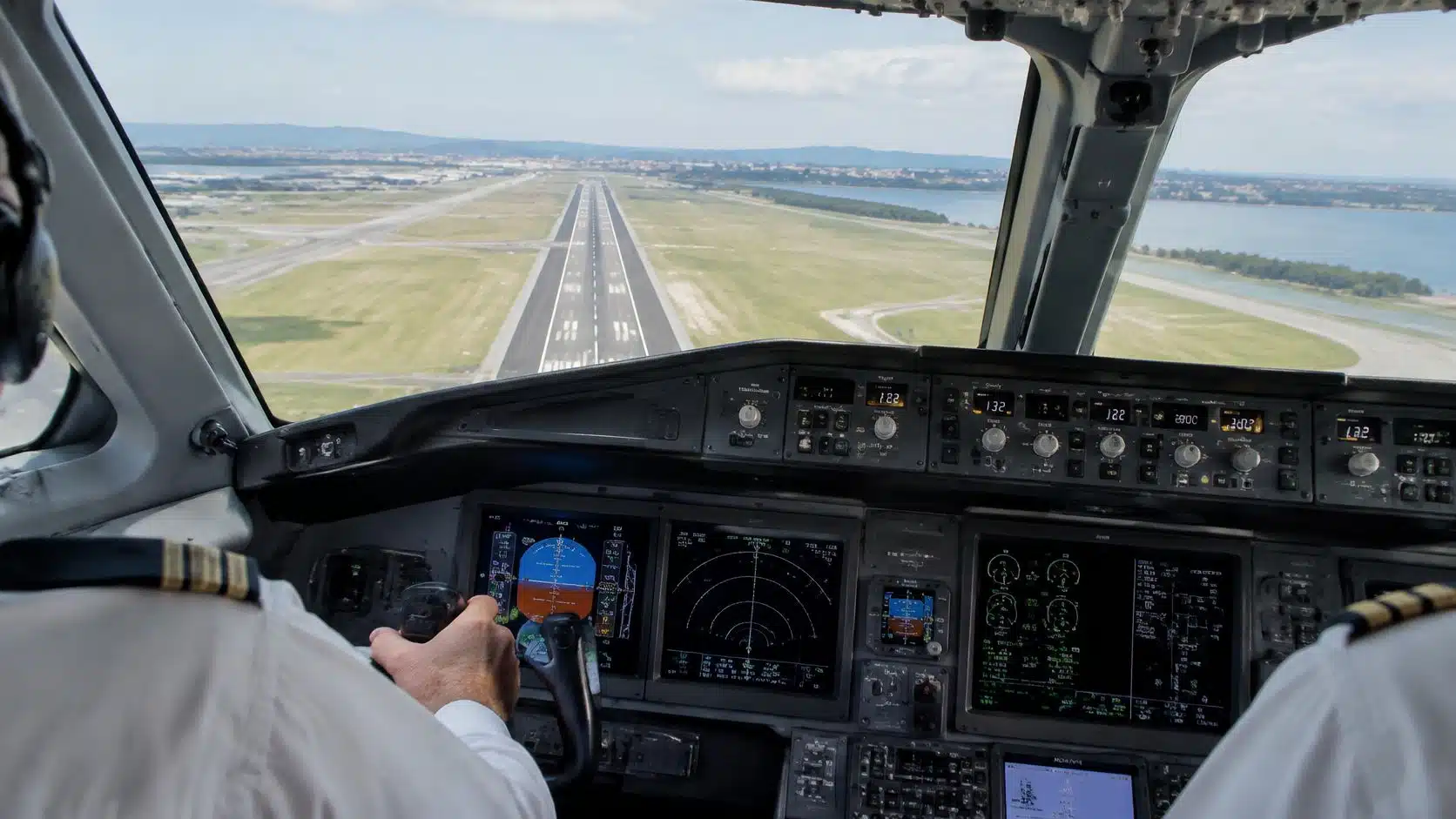
Relax back pressure or apply the forward elevator needed to unload the wing and let airflow reattach. Once the stall indications stop, use ailerons to level the wings. A stalled wing responds poorly to lateral control, and aileron input on a dropping wing can increase its local angle of attack.
The Thrust Trap
In piston trainers, added power can pitch the nose up. If the wing remains stalled, that pitch rise can prolong the stall and increase altitude loss. The throttle may feel like the obvious answer because the airplane is descending, but it does not reduce angle of attack.
Once the wing flies again, smooth power adds airspeed, limits further descent, and supports the climb. Keep rudder coordinated throughout the recovery: yaw combined with a stall can lead to a spin. Spin entries and recovery are outside this maneuver's scope.
Use enough forward pressure to stop the stall indications in that airplane. The required input varies with aircraft, loading, and trim. Abrupt elevator input or aggressive trim can create loads the maneuver does not require. Handbook and AC 61-67C guidance supports sufficient input, not maximal input.
A concise sequence is: indications stop, wings level, power as needed, then pitch for climb speed. Each step sets up the next. Raising the nose for climb speed before the stall indications stop risks increasing angle of attack again.
Cues That Change by Certificate Level
The recovery sequence stays focused on angle of attack, but the cue that starts it depends on the training task. Regulations specify required instruction; the Airman Certification Standards (ACS) describe how applicants are evaluated. Keeping those roles separate makes the expected response clearer.
Under 14 CFR 61.87, a student seeking single-engine or multiengine airplane privileges must receive and log flight instruction in stalls and stall recoveries before solo. The rule sets the pre-solo instruction requirement. The ACS provides the evaluation standards for private and commercial applicants.
The FAA's SAFO 17009 guidance on stall training distinguishes the expected response by certificate level. Private applicants acknowledge the initial impending-stall cue, such as saying “stall warning” or “buffet,” and recover when the stall warning occurs unless a full stall was thoroughly briefed. Commercial applicants acknowledge impending-stall cues and recover promptly at the first indication, including buffet or stall horn.
When to Recover by Training Stage
| Stage | What the pilot must do | Cue | Authority |
|---|---|---|---|
| Pre-solo student | Receive and log stall and stall-recovery instruction before solo | Briefed power-on and power-off stalls, including variations | 14 CFR 61.87 |
| Private pilot applicant | Acknowledge the cue and recover at the stall warning unless a full stall was briefed | Stall warning or buffet | Private Pilot ACS, stall tasks, current edition |
| Commercial applicant | Acknowledge impending cues and recover promptly at the first indication | Buffet or stall horn, not a prolonged stall | Commercial Pilot ACS, stall tasks, current edition |
The ACS documents are test standards, not regulations. Instructors should confirm the applicable edition and effective date; SAFO material should also be checked for current status on the FAA site. The pre-solo instruction requirement comes from 14 CFR 61.87.
The warning horn helps explain why recognition matters. Stall warning systems provide an angle-of-attack cue, not a fixed airspeed alarm. The horn can sound at different indicated speeds as load factor changes, so respond to the cue rather than waiting for a memorized speed.
Waiting Longer Isn't Better
In an approach-to-stall task, waiting for a full break does not demonstrate better control when the brief calls for recovery at an earlier cue. It delays recognition. The pilot's callout should identify the cue as it occurs, then the recovery should follow the order required by the task.
The comparison between certificate levels is about recognition and timing, not a universal altitude-loss figure. The applicant's response should match the applicable standard: acknowledge the cue, begin recovery at the required point, and demonstrate coordinated control.
Errors That Prolong the Stall
Some errors keep the airplane stalled; others set up a second stall during recovery. The useful debrief question is what the pilot did with coordination, timing, and control inputs as the cues changed.
Holding the nose up to save altitude keeps the wing at a high angle of attack while the airplane continues to descend. Accepting a brief, controlled loss of altitude gives the airplane room to regain flying speed.
Using aileron to raise a wing while still stalled can worsen the bank. The down-going wing may stall further as its aileron deflects. Once lateral control responds normally, level the wings with coordinated aileron and rudder.
Coordination and Timing Errors
- Uncoordinated rudder: Inside rudder in a climbing turn adds yaw at a vulnerable moment and can couple a stall to a spin.
- Silent waiting: Holding the entry for a full break delays recovery when the brief called for action at the first indication.
- Pitching up too soon: Raising the nose to stop the descent before flying speed returns can cause a secondary stall.
- Excessive trim or push: A large nose-down shove or aggressive trim may exceed what the airplane needs and create high loads.
A documented accident illustrates how quickly hesitation can matter. The NTSB report on the May 15, 2024 Cessna 150L accident states that an intentional power-on stall progressed to an inadvertent spin, with recorded data showing approximately 6 seconds of interruption before the aircraft was observed in a rapid descent. The report concerns neither a DuBois Aviation aircraft nor a DuBois Aviation flight. The relevant lesson is to identify and correct errors early, before they leave fewer options.
Debrief the sequence in concrete terms: Was the cue recognized promptly? Did coordination remain intact? Did the pilot avoid a second stall? Use any missed item as the specific target for the next repetition.
Limits That Change with the Airplane
The airplane sets the limits; the generic maneuver description does not. The POH or AFM governs permissible power, flap configuration, pitch attitude, and minimum speeds. A pitch attitude that suits one trainer may produce an excessive nose-high attitude or an out-of-limits configuration in another.
For commercial training, the FAA Commercial Pilot ACS describes a coordinated power-on stall entry commonly involving a 45-degree bank, smooth and firm elevator back pressure, and recovery at the first indication of an impending stall. The ACS also allows power reduction when needed to prevent an excessive nose-high attitude or comply with aircraft limitations. The standard defines the task; the aircraft manual defines how that task fits the airframe.
Multiengine Differences
For multiengine entries, use a smooth deceleration rather than treating a particular rate as a universal target. The recovery is judged by recognition and control order, not by a single altitude-loss figure. Lower the nose to reduce angle of attack, then manage power according to the airplane's limitations and the maneuver brief.
Multiengine airplanes add a power-sequencing concern. Applying high power before the airplane is above VMC and responding normally can create asymmetric-thrust yaw and loss of control. The FAA permits delaying high-power application until those conditions are met. In that situation, power follows directional control; it does not lead the recovery.
Reviewing aircraft performance charts for the specific airplane helps connect weight, configuration, and climb expectations to the maneuver brief. Those values belong to the airplane being flown, not a familiar model in the same category.
A Cessna 150, a Piper Cherokee, and a Mooney M20B may require different pitch and flap technique for the same training task. A Piper Apache also brings VMC and engine-out considerations that do not apply to a single-engine brief. Before flying, renters should check the current POH for that aircraft's stall speeds, flap limits, and recommended entry, then confirm which aircraft is available for training or rental.
Practice the Recovery with a CFI
A useful lesson starts with a clear brief. The CFI names the airplane and configuration, sets the recovery floor, and says whether the task ends at the first indication or continues to a briefed full stall. Before taxi, the student talks through the planned actions and identifies the cues the instructor will assess.
Three Drills That Build the Habit
These drills are instructor practice methods for sharpening recognition, control coordination, and judgment.
- Chair-flown callout: Rehearse the recognition cue and planned control actions aloud, adding hand and foot movements to make the sequence concrete.
- Straight-ahead repetition: Practice one power-on recovery with a clear call at the cue and no extra tasks competing for attention.
- Scored debrief: Review how promptly the student recognized the stall and whether the recovery avoided a secondary stall. Discuss altitude change in the context of the airplane and lesson, rather than using it as the sole measure of performance.
Turning and cross-controlled stalls are separate tasks that need their own brief. Helicopter lessons also follow different limitations and recovery logic, so airplane technique does not transfer directly to rotorcraft.
Frequently Asked Questions
Does the checkride require spin training?
The current ACS defines the stall tasks an applicant must demonstrate. Spin technique is outside the scope of this guide.
Who sets the recovery altitude?
The instructor sets the training floor for the lesson, while the POH governs aircraft limits.
Where are the speeds for a rented airplane?
Check that airplane's POH or AFM. Do not substitute speeds from another model.
Is power-on practice the same as power-off practice?
No. Power-on practice represents takeoff or climb conditions; power-off practice represents approach conditions and is covered separately.
Students can ask DuBois Aviation at Chino Airport about private, commercial, or multi-engine course availability, arrange a school tour, or request training information before booking a lesson.
DuBois Aviation offers private, instrument, commercial, and multi-engine flight training at Chino Airport, including instructor-led stall recognition and recovery practice in its training fleet. Pilots who want to brief, practice, and debrief with a CFI can visit DuBois Aviation to ask about course availability or request training information.