
What if the best flight school YouTube channel for you right now is the wrong one for your current stage of training?
That happens a lot. Student pilots watch polished instrument content before they can hold altitude, or binge accident analysis without building a solid foundation in weather, airspace, and basic aircraft control. The better question is simpler. Which channel fits the lesson you are flying this week, and how will you verify what you learned with your instructor?
Used that way, YouTube is a strong study tool. It helps you preview a maneuver before a lesson, review a weak area after debrief, and hear the same concept explained from a different angle. It also helps control training costs if you show up better prepared, especially if you are already planning around the practical economics of training and looking into options like financial aid for pilot training.
It does not teach judgment by itself.
A video can explain short-field landing technique or walk through an IFR clearance. It cannot correct your scan, catch a lazy foot on the rudder, or tell you when stress is pushing you behind the airplane. That still happens in the cockpit, in the briefing room, and in the back-and-forth with a CFI who knows your habits.
The smart way to use this list is as a framework, not a pile of recommendations. Pick one primary channel for your current rating, one secondary channel for a different teaching style, and run anything operationally important past your instructor before you adopt it. That matters even more later in this guide, where the watchlists are organized by rating and the aircraft-buying section shifts from study habits to ownership decisions. Both require judgment, not just information.
One practical habit helps across all of it. Searchable notes are a huge help. Clean transcripts make it easier to revisit a weather briefing, regulations explanation, or instrument lesson when you need accurate YouTube video transcripts.
Table of Contents
- 1. Pilot Institute
- 2. Sporty's Pilot Training
- 3. MZeroA Flight Training
- 4. FLY8MA Flight Training
- 5. Angle of Attack
- 6. Boldmethod
- 7. FlightInsight
- Top 7 Flight School YouTube Channels, Comparison
- Your watchlists for each rating
- Buying your first aircraft the safe way
- Your Flight Plan Blending Digital and In-Person Training
1. Pilot Institute
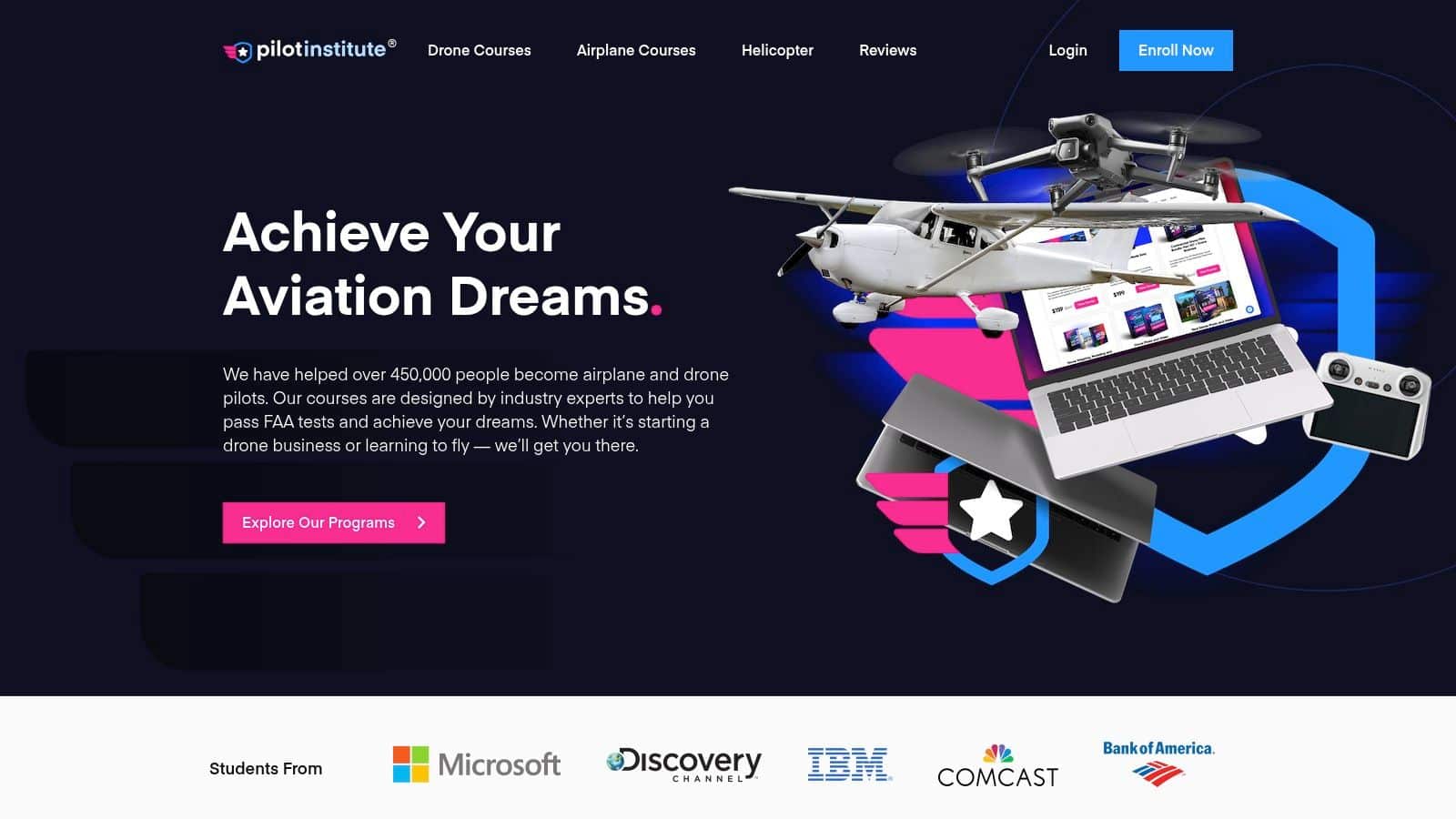
Pilot Institute is one of the easiest recommendations for students who want structure instead of browsing random flight school YouTube clips late at night. Its channel and paid courses line up well, so you don't get that common disconnect where the free videos feel polished but the paid training feels like an afterthought.
For a student working toward Private or Instrument, that matters. You need a system that carries you from first exposure, to review, to practice, to endorsement. Pilot Institute is also specifically cited by the aviation community as a strong companion for FAA knowledge test prep in the broader YouTube learning ecosystem noted earlier.
Why it works
The style is organized and test-focused. Some students thrive on that because they want short lessons, a quiz bank, practice exams, flashcards, and a clean path to the written endorsement. If you're trying to figure out the overall training path first, DuBois Aviation's guide on how to get your pilot's license pairs well with this kind of structured study.
Practical rule: Use Pilot Institute before your lesson, not after only. Watch the assigned topic the night before, write down two questions, then ask your instructor to connect the theory to the maneuver.
The trade-off is straightforward. If you learn best from raw cockpit footage, messy radio calls, and seeing how a real lesson unfolds in changing conditions, Pilot Institute can feel a little classroom-heavy.
- Best for disciplined self-study: Students who want a clear sequence and don't want to hunt through playlists.
- Less ideal for visual-only learners: Some people need more in-airplane context to make the material stick.
- Strong fit for checkride-minded planning: It keeps you moving toward the written and oral, not just passive watching.
Visit Pilot Institute.
2. Sporty's Pilot Training
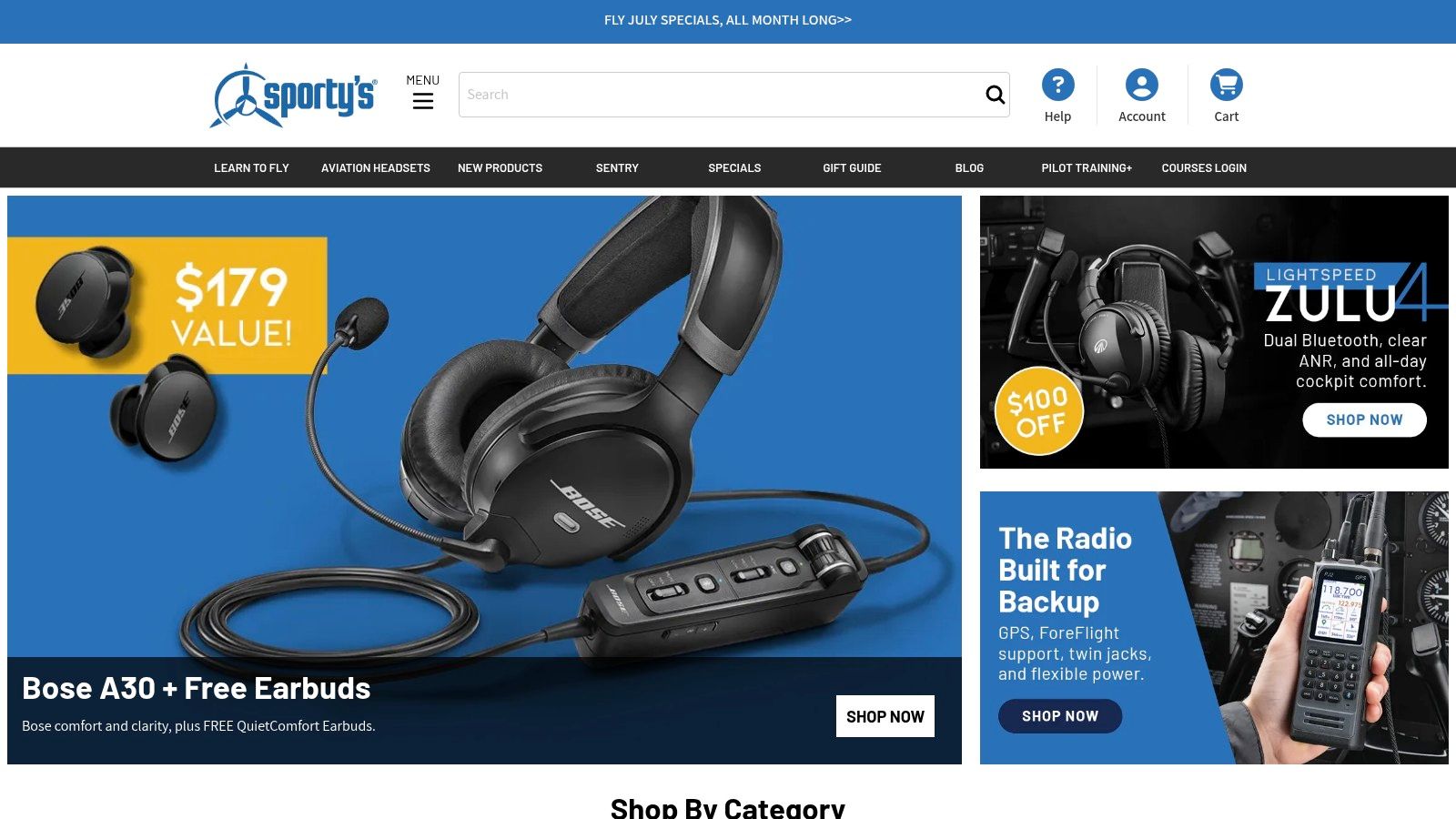
Sporty's feels like the legacy option, and that's not a criticism. Some students want a huge content library, familiar maneuver videos, and apps that follow them across devices. Sporty's has served that role for a long time.
The main strength here is breadth. If you're the kind of student who studies on an iPad at lunch, on a phone in the car, and on a TV at home, Sporty's usually fits that rhythm well. The library is broad enough that you can stay within one ecosystem for Private, Instrument, and beyond.
Best fit
Sporty's works best for students who don't mind a more traditional lesson style. The interface and pacing can feel classic rather than modern, but many learners prefer that because the content stays focused on the practical question. What do I need to understand for this stage of training?
Good training content doesn't need to feel trendy. It needs to answer the question you're stuck on before tomorrow's lesson.
There is one caution. Add-on tools and separate course choices can pile up if you buy piecemeal. If budget matters, map your whole training path first. Students comparing financing and training costs should review DuBois Aviation's page on financial aid for pilot training before stacking subscriptions and course purchases.
- Strong library depth: Good for students who want one known brand across multiple ratings.
- Cross-device convenience: Easy to keep studying without rebuilding your workflow.
- Watch the add-ons: Convenience can become expensive if you don't plan ahead.
Visit Sporty's.
3. MZeroA Flight Training
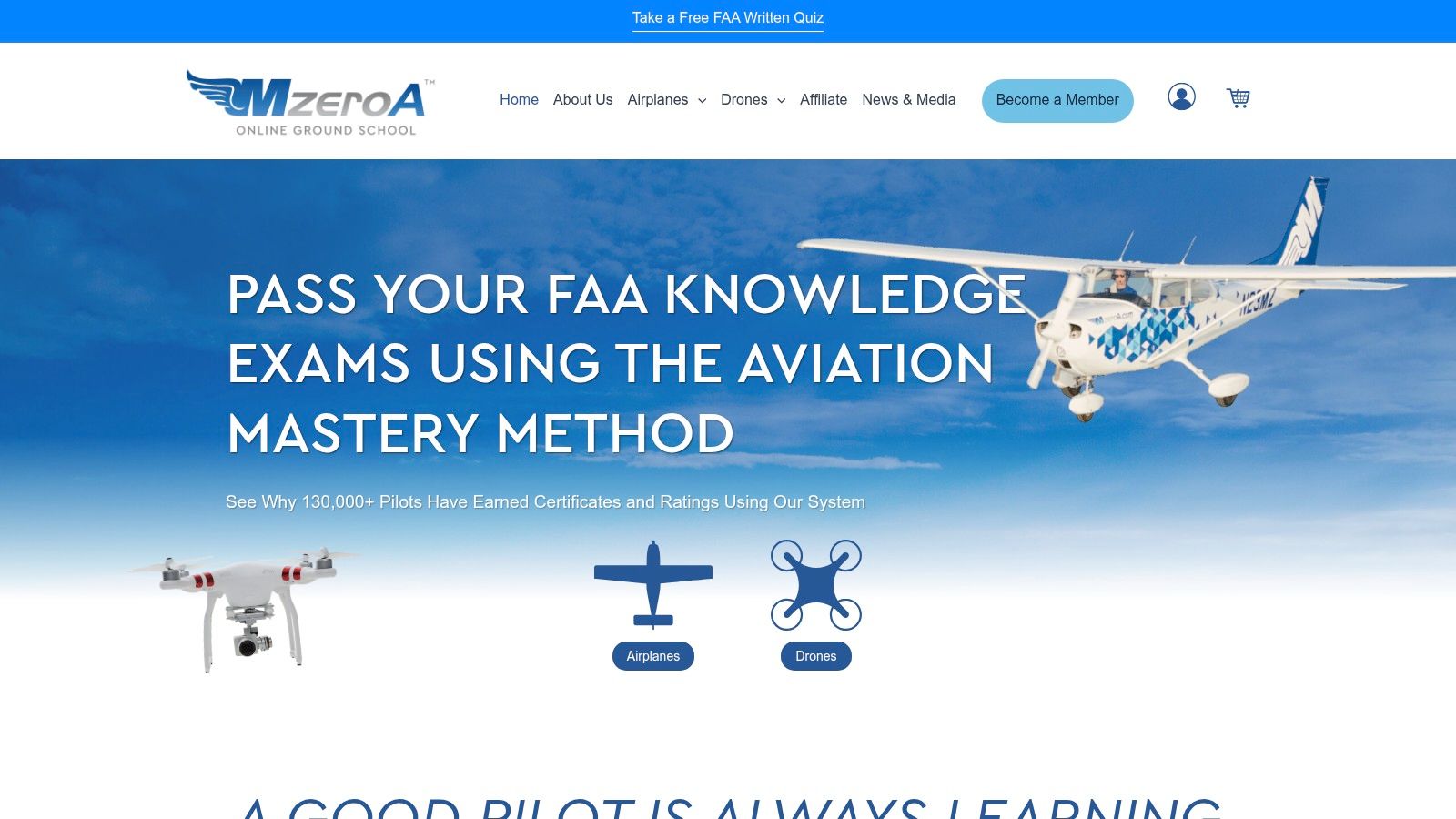
If you like frequent uploads, a recognizable teaching voice, and ongoing webinars, MZeroA is usually near the top of the list. Jason Schappert built a very visible presence in aviation training, and the channel is widely recognized for a large library of short training explanations in the aviation YouTube ecosystem described in this roundup of aviation YouTube niches and channels.
MZeroA is good at keeping students engaged over time. That's different from being good at one-off written prep. Some learners need the feeling of being part of an active training environment, especially when motivation starts dipping between lessons.
Where it shines
Membership is the key trade-off. If you move steadily and use the webinars, endorsements, and updated material, the subscription model can make sense. If you study slowly or disappear for stretches, one-time purchase platforms may fit better.
Students often underestimate how much a training format affects consistency. Before choosing any online program, it helps to know what kind of school environment you'll pair it with. DuBois Aviation's guide on how to choose a flight school is worth reading before you lock yourself into a digital system.
- Best for community-driven learners: Webinars and continuing activity help students who need accountability.
- Good continuity across ratings: The teaching style stays familiar as you progress.
- Possible downside: Navigation and membership choices can feel busy at first glance.
Visit MZeroA Flight Training.
4. FLY8MA Flight Training
FLY8MA tends to appeal to students who want practical technique, scenario-based discussion, and direct continuity between free YouTube lessons and paid ground school. That's valuable when you're trying to bridge the gap between "I watched a video on landings" and "I can brief and fly this maneuver."
This is one of the better options for students who want content that feels closer to an actual lesson debrief. The explanations often point back to what happens in the cockpit, not just what appears on a written exam.
What to watch for
FLY8MA is useful when you're preparing for a lesson on maneuvers, checkride standards, or common errors. It also fits the larger marketing reality around flight school YouTube. In aviation marketing analysis, YouTube functions as the brand-awareness step before students ever contact an instructor, and tutorial content plus facility-style videos are identified as strong assets for turning searches into leads in this Embry-Riddle aviation marketing analysis.
That insight matters for students too. If a school or platform only publishes glossy promos and vague lifestyle clips, it probably won't help you train. FLY8MA usually gives you more than marketing polish.
Instructor view: When a student walks in after watching a focused maneuver breakdown, the pre-brief gets sharper. When they walk in after watching random aviation entertainment, I have to undo confusion first.
The downside is choice overload. Course versus membership options can blur together, and older videos don't always match the production quality of newer ones.
Visit FLY8MA.
5. Angle of Attack
Angle of Attack stands out for engagement. Chris Palmer's material often feels more like a well-taught flight lesson than a dry slideshow, and that matters for IFR students who need to stay mentally connected through dense material.
If your brain switches off during regulations-heavy lectures, this platform is worth a close look. The in-cockpit storytelling and IFR emphasis help students understand not just what to do, but why pilots make specific decisions.
Strong use case
This is a strong pick for Instrument students who need context and pacing. The combination of direct instructor access, app support, and endorsement path makes it practical, while the presentation style keeps the material from going flat.
The main drawback is cost structure. Monthly access can be inefficient if life slows your progress, while lifetime access asks for a bigger commitment up front. That's not unique to Angle of Attack, but students should think realistically about study habits before choosing.
A second limitation is catalog breadth. If you want one massive legacy ecosystem that covers every niche topic in equal depth, other platforms may feel broader. If you want compelling IFR-heavy training that keeps you engaged, Angle of Attack is one of the better fits.
Visit Angle of Attack.
6. Boldmethod
Want a YouTube channel that helps with instrument flying once the basics are already in place? Boldmethod fits that job better than it fits first-week training.
I would point a newer student somewhere else first. A student still sorting out lift, drag, adverse yaw, and pattern flow can get overloaded here. Boldmethod starts making more sense once you already speak the language of flying and need to sharpen how you work through IFR procedures, weather decisions, and system-level thinking.
That matters because too many flight school YouTube lists treat all aviation content as interchangeable. It is not. For instrument students, the useful channels are the ones that explain departures, enroute structure, holds, arrivals, and approaches in a way that builds judgment in the airplane, not just recall on a quiz.
Who should choose it
Boldmethod is a good fit for the pilot who wants more than written-test prep. The channel does a good job with scenario-based IFR topics, especially when weather and procedure choices interact. Used correctly, it becomes a strong supplement between lessons with your CFII, not a replacement for those lessons.
That trade-off is important. YouTube can show a clean example with pause buttons and graphics. Your instructor sees how you brief the approach, manage workload, and respond when the plan starts slipping in actual flight.
- Best for IFR students with some foundation: Stronger in procedure flow and real-use context than early private pilot basics.
- Useful for scenario-based studying: Weather-driven examples help many instrument students connect rules to cockpit decisions.
- Less effective as a starting point: Beginners usually need simpler explanations and more direct coaching before this style pays off.
Visit Boldmethod.
7. FlightInsight
Why do some students score well on practice questions, then stumble the moment an instructor asks, "Explain why that works?" FlightInsight is one of the better YouTube channels for closing that gap.
Its strength is concept teaching. FlightInsight does a good job explaining the logic behind airspace, weather products, IFR procedures, and aircraft systems so the material sticks for more than a written test. That makes it especially useful for students who keep finding themselves able to recite a rule but not apply it cleanly in a briefing or debrief.
Best for concept builders
Dan George teaches in a way that reduces noise. Students who learn best from clear diagrams, step-by-step reasoning, and system-level explanations usually get a lot from this channel. I recommend it most often to private and instrument students who need to organize what they already heard from their instructor, not to replace that instruction.
That distinction matters. A video can slow down a hold entry or approach briefing until it finally clicks. It cannot watch your scan fall apart, catch a bad habit on the controls, or correct a weak crosswind landing. Use FlightInsight to prepare for lessons and to review after them. Use your CFI or CFII to verify that your understanding survives real cockpit workload.
There is a practical trade-off here as well. FlightInsight is stronger on explanation than on the broad, all-in-one course feel some larger training brands offer. For many students, that is a fair trade because this channel fills a different role in a safe study plan.
- Best for students who want the why: Strong at turning memorized rules into usable understanding.
- Particularly helpful for instrument study: Good support for procedure flow, systems thinking, and weather interpretation.
- Best used with live instruction: Works well before or after a flight lesson, not as a substitute for dual given.
In a smart YouTube study framework, FlightInsight belongs on the "review and clarify" list. Watch a lesson on the topic you're flying that week, write down two or three questions, then bring those to your instructor. That method gets more value from both the video and the airplane.
Visit FlightInsight.
Top 7 Flight School YouTube Channels, Comparison
| Platform | Implementation Complexity 🔄 | Resource requirements ⚡ | Expected outcomes 📊 | Ideal use cases 💡 | Key advantages ⭐ |
|---|---|---|---|---|---|
| Pilot Institute | Moderate, structured, test‑prep course flow | Lifetime access, mobile app, practice tests; mid‑range cost | ⭐⭐⭐⭐, strong exam readiness and written‑test endorsement | Test‑focused PPL/IFR learners preparing for written exams | Clear pricing & pass guarantee; frequent updates; large quiz bank |
| Sporty's Pilot Training | Low–Moderate, linear lessons with classic pacing | Multi‑platform apps (TV/mobile), large content library; add‑ons may add cost | ⭐⭐⭐⭐, broad competency across ratings; good review tools | Learners wanting established library and cross‑device study | Decades of content; 4K videos; AI study helpers; wide platform support |
| MZeroA Flight Training | Moderate–High, many options and community features | Subscription tiers, live webinars, ongoing updates; flexible cost | ⭐⭐⭐, strong ongoing support; good for continual learning | Students who prefer webinars, community and regular coaching | Active video presence; frequent webinars; endorsements and updates |
| FLY8MA Flight Training | Moderate, scenario/maneuver focused syllabi | Lifetime course options + memberships; CFI Q&A available | ⭐⭐⭐⭐, practical technique and checkride preparedness | Pilots wanting in‑cockpit technique breakdowns tied to flight training | Clear syllabi; strong link between free videos and paid courses; CFI support |
| Angle of Attack | Moderate, engaging narrative lessons, IFR emphasis | Monthly/subscription or lifetime buy; apps and endorsements | ⭐⭐⭐⭐, especially strong for IFR storytelling and test success | IFR students and those wanting in‑cockpit IFR scenarios | Engaging production; pass guarantee; direct instructor access |
| Boldmethod | Moderate, deep procedural IFR focus | Premium pricing; lifetime access for courses; rich written resources | ⭐⭐⭐⭐, high IFR mastery beyond basic test prep | Advanced IFR pilots seeking procedural and real‑weather practice | In‑depth IFR scenarios; strong written/blog/quiz ecosystem |
| FlightInsight | Low–Moderate, concept‑first, visually driven courses | One‑time pricing options; companion app and bundled savings | ⭐⭐⭐⭐, strong conceptual clarity and checkride readiness | Students who prefer theory, decision labs and competitive pricing | Concept‑first teaching; decision‑making labs; competitive bundle pricing |
Your watchlists for each rating
A channel list is useful. A watchlist is better. Most students waste time because they watch whatever the algorithm serves next instead of building a study flow around their current rating.
Private Pilot watchlist
For Private, keep your YouTube study narrow. Focus on aerodynamics, airport operations, airspace, weather basics, navigation, takeoffs and landings, stalls, ground reference maneuvers, and radio communication.
Use Pilot Institute, Sporty's, FlightInsight, and FLY8MA as the core mix. One gives you structure, one gives you a large established library, one sharpens concepts, and one brings maneuver realism. That's enough. More channels usually means duplicated explanations and conflicting habits.
- Before the lesson: Watch one concept video and one maneuver video.
- After the lesson: Rewatch only the topic that caused trouble in the airplane.
- Before the written: Shift toward structured quiz-based platforms, not random shorts.
Instrument watchlist
Instrument students need a different media diet, making Angle of Attack, Boldmethod, FlightInsight, and Pilot Institute usually more valuable than generic private-pilot content.
Prioritize scan technique, instrument interpretation, approach briefing, holds, departures, arrivals, weather products, and decision-making. The goal isn't entertainment. It's reducing task saturation before you try to fly in the system with your CFII.
A practical note on weak ground instruction: some pilots argue that schools often provide only the minimum ground needed for an endorsement, then lean too hard on memorization-based question banks, while dedicated online ground school can build deeper understanding and free instructor time for actual flight skills, as discussed in this video commentary on online ground school and CFI time use.
Commercial and CFI watchlist
At this stage, YouTube should support refinement, not replace disciplined study. MZeroA becomes more useful here because students often benefit from ongoing updates and webinar-style learning. FlightInsight also stays strong because commercial and instructor applicants need to explain concepts clearly, not just perform.
Keep watching technique and scenario videos, but don't neglect teaching-quality explanations. If you're headed toward CFI, ask yourself a harder question: can you teach this topic aloud without the video? If not, keep studying.
Buying your first aircraft the safe way
A lot of people searching flight school YouTube content are also getting pulled toward ownership videos. That's understandable. Airplane ownership and helicopter ownership look exciting online, and there are good channels covering destinations, maintenance, and travel flying. But buying your first aircraft is where YouTube enthusiasm can get expensive fast.
Videos can help you understand aircraft types, mission fit, and common ownership questions. They can't inspect corrosion, verify maintenance quality, or spot a bad purchase masked by good lighting and a smooth sales pitch.
If you're shopping for an airplane or helicopter
The safest rule is simple. If you're buying an airplane, insist that the prebuy inspection is done by a maintenance technician you choose, and that technician should never have previously worked on that specific aircraft, according to this guidance on buying and selling aircraft safely. That protects you from a biased prebuy.
That advice applies to helicopter buyers too. The machine may differ, but the principle doesn't. You need an independent set of eyes with no prior attachment to the aircraft.
People looking to buy or sell airplanes and helicopters should also slow down on two common mistakes:
- Don't let the seller pick the inspector: Convenience isn't your friend in a prebuy.
- Don't confuse cosmetics with condition: Fresh paint and nice interior photos don't tell you how the aircraft was maintained.
- Don't skip mission honesty: Buy the aircraft that matches your actual flying, not the one that looks impressive online.
If you're still in training, ownership may or may not make sense yet. Renting at a well-run school often gives you access to multiple aircraft, instructor support, and easier scheduling while you build judgment. Ownership starts paying off only when the mission, maintenance planning, and cash flow all make sense together.
Your Flight Plan Blending Digital and In-Person Training
YouTube is an excellent co-pilot for ground study. It gives you on-demand explanations, alternative teaching styles, and a practical way to review material between lessons. Used well, it can make your flight training more efficient and your questions more specific when you sit down with your instructor.
It also has clear limits. YouTube can't evaluate your crosswind correction, hear the hesitation in your radio call, or decide whether your weather judgment is mature enough for the flight you're about to make. That's why the best students treat flight school YouTube as support material, not as a substitute for a real training environment.
The strongest approach is blended training. Study concepts online, brief them with your instructor, fly them in the airplane, then debrief and revisit the weak spots. That loop works. Random viewing doesn't.
The same rule applies whether you're pursuing Private, Instrument, Commercial, Multi-Engine, or helicopter training. Watch selectively. Fly deliberately. Ask better questions every lesson. That's how online content becomes useful instead of distracting.
When you're ready to turn YouTube concepts into real-world skill, the best investment you can make is high-quality one-on-one instruction with a school that will tailor the training to your pace, goals, and judgment development.
Ready to start your journey in Southern California? Schedule a discovery flight with DuBois Aviation at Chino Airport (KCNO) and experience the difference expert, personalized instruction makes.
DuBois Aviation offers the part YouTube can't. Real airplanes and helicopters, experienced CFIs, one-on-one instruction, and training at a busy towered airport where students build practical radio and airspace skills from day one. If you're looking for personalized flight training, aircraft rental, instrument or commercial instruction, helicopter training, or a discovery flight in the Chino area, explore DuBois Aviation.