
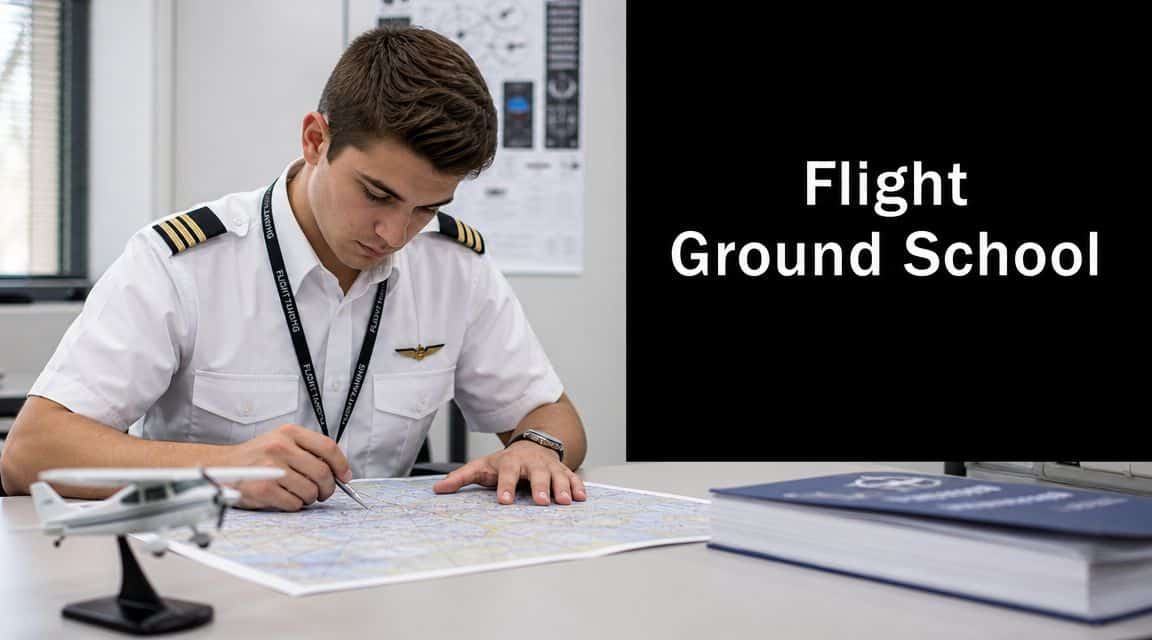
A lot of future pilots start in the same place. They're excited about flying, they've watched videos, maybe they've even looked at lesson prices, and now they're trying to answer a basic question that somehow never gets a straight answer.
What exactly is flight ground school, and how much of it do you really need before you're ready to fly well?
That confusion makes sense. Many people hear “ground school” and assume it's just the bookwork you grind through so you can pass the written test. But that's only part of the job. Good ground training shapes how you think, how you brief a flight, how you talk on the radio, and how you make decisions when things get busy.
If you're serious about becoming a pilot, you want more than test answers. You want judgment. You want context. You want to know why your instructor cares about weather trends, runway selection, taxi clearances, and local procedures before you ever push the throttle forward.
Your Aviation Journey Starts on the Ground
Before you learn to land smoothly or hold altitude, you learn how to think like a pilot. That starts on the ground.
A student usually shows up with a simple goal. Some want to fly for fun. Some want a career in aviation. Some already picture owning an airplane or helicopter one day. The common thread is that everyone wants confidence in the cockpit, and confidence doesn't come from memorizing isolated facts.
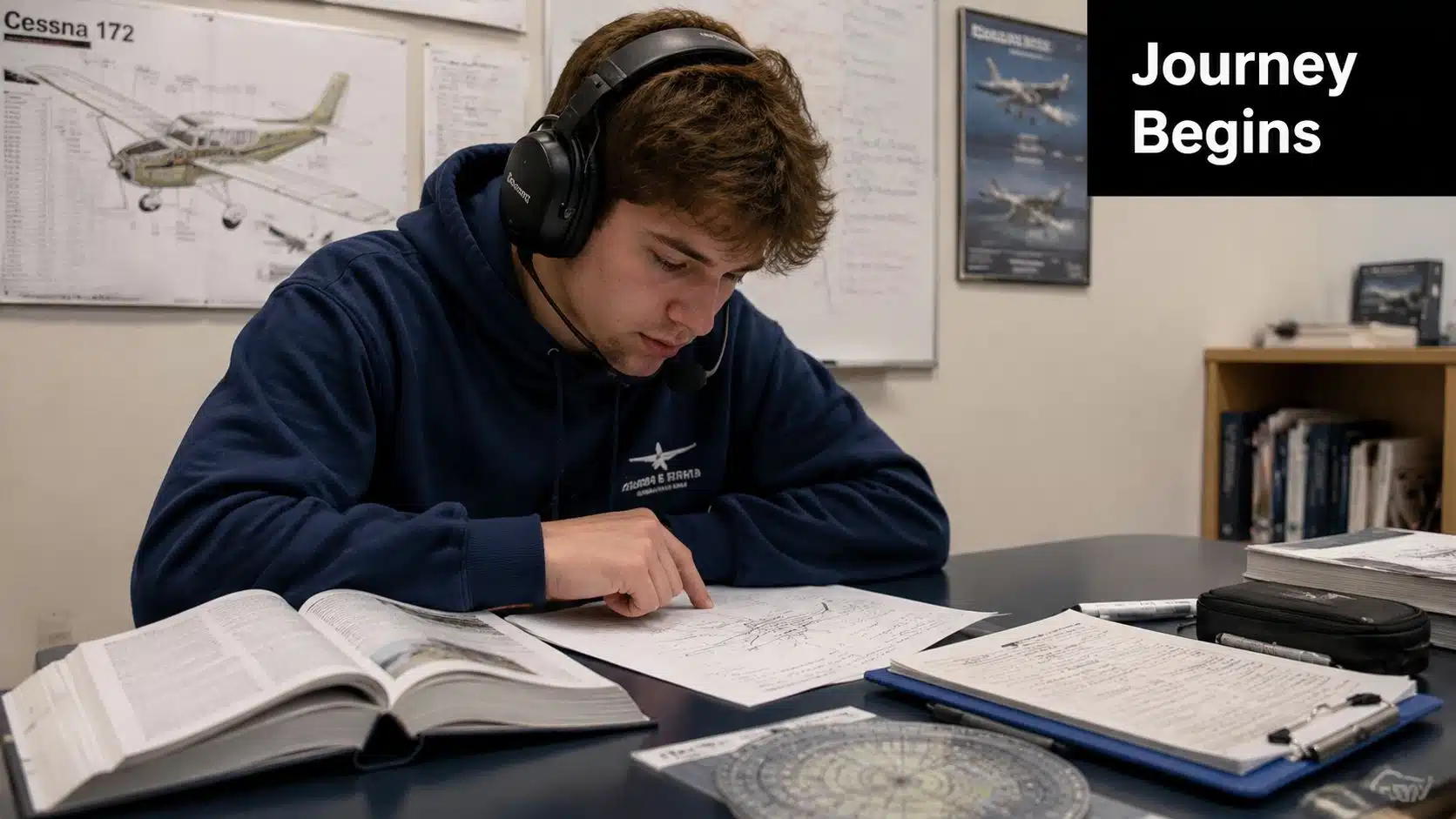
A solid flight ground school gives you the mental model behind every action you'll take later in the airplane. When you understand what the airplane is doing, what the airspace requires, and what the weather is telling you, flying stops feeling mysterious. It starts feeling manageable.
Why students get confused early
One of the biggest misunderstandings in pilot training is thinking that passing the written means you're ready for the next step. Many public-facing ground school pages frame their product around passing the FAA written exam, but they don't explain how that knowledge carries into practical decision-making or oral-exam performance, a gap noted by the Museum of Flight ground school overview.
That gap matters because the checkride isn't just a memory test. The examiner doesn't only want the right term or regulation. The examiner wants to see whether you can apply knowledge to a situation.
Good ground school turns facts into decisions.
If you're asked about weather, the actual question isn't “can you define a front?” It's “would you launch today, what are you worried about, and what would make you delay or cancel?”
What you're really building
Ground school supports more than exam prep. It builds habits that show up in every phase of training:
- Preflight judgment: You learn how to think through a flight before the engine starts.
- Radio confidence: You stop guessing what to say and when to say it.
- Safety mindset: You start recognizing small risks before they become big ones.
- Checkride readiness: You learn to explain your decisions, not just your answers.
That's why students who take ground school seriously usually feel calmer in the airplane. They're not trying to invent understanding in real time. They already have a framework.
What Is Flight Ground School Really
Think of flight ground school as the classroom side of learning to fly. It's the part where you study the rules, the aircraft, the environment, and the decision-making that keeps you safe.
Modern flight ground school became a standardized part of pilot training in the late 1920s as demand for trained pilots grew. It's now the required academic half of flight training, covering regulations, aerodynamics, aircraft systems, and more across military, commercial, and recreational pathways, as outlined in EBSCO's overview of flight schools.
That history matters because it tells you something important. Ground school wasn't added as academic busywork. It became standard because pilots need a shared foundation before they're trusted to operate in the system.
The driver's ed comparison actually works
If you learned to drive, you didn't start by jumping onto a crowded freeway with no background. You first learned signs, right-of-way, braking distance, vehicle limitations, and what other traffic might do.
Flying works the same way, except the margin for error is smaller and the environment is less forgiving.
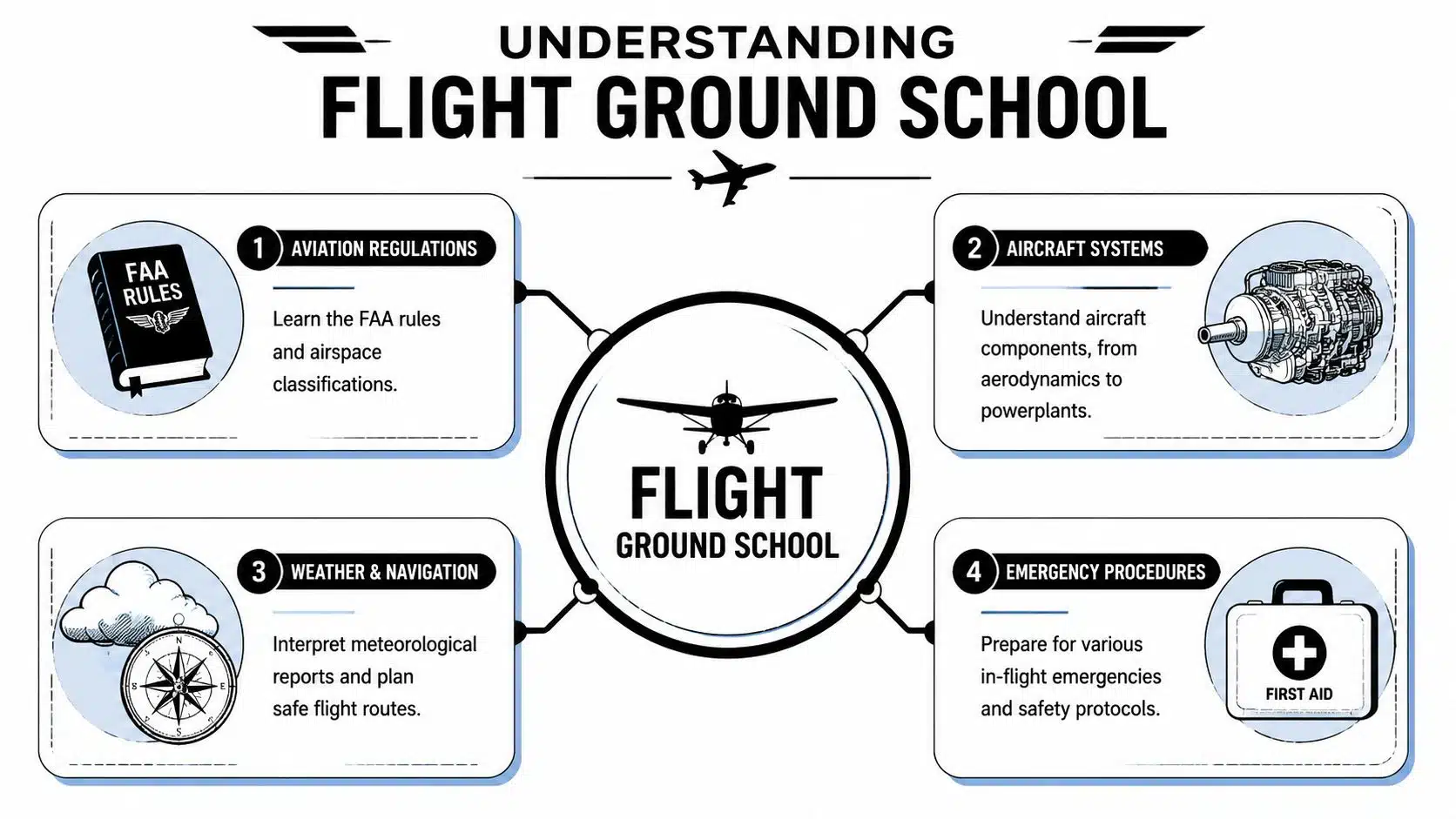
In ground school, you learn things like:
- Regulations: What you're allowed to do, and what you're required to do.
- Aerodynamics: Why the airplane climbs, stalls, turns, and reacts the way it does.
- Aircraft systems: How the engine, controls, instruments, and supporting systems work.
- Weather and navigation: How to interpret conditions and plan a route.
- Operational judgment: How to recognize risk, prioritize tasks, and avoid preventable mistakes.
A short visual overview can help if you're new to the topic.
What ground school is not
It's not just a set of slides. It's not only a test bank. And it's not separate from flight training in any meaningful way.
Practical rule: If you can recite a concept but can't use it in a scenario, you don't own it yet.
For example, it's one thing to memorize that density altitude affects performance. It's another thing to look at the day's conditions and understand why the airplane may climb differently than you expected. That second skill is what keeps you ahead of the aircraft.
A good flight ground school gives every flight lesson context. It answers the “why” behind the checklist, the briefing, and the maneuver.
The Core Curriculum You Will Master
A strong ground school turns a long list of subjects into a working mental model of a flight. Before takeoff, you check weather, performance, airspace, fuel, and aircraft status. In the air, you manage radio calls, position, traffic, and changing conditions. The curriculum teaches each piece on its own, then shows you how the pieces fit together so you can make good decisions in real time.
That is the difference between studying for a written test and preparing to fly well.
Regulations and airspace
Regulations give structure to every flight. They define what documents must be in the airplane, what currency you need, when weather minimums change, and what is required before you enter certain kinds of airspace.
Airspace often feels abstract until you connect it to actual cockpit tasks. A shaded ring on a chart is not just ink. It may mean you need two-way radio communication, a transponder, a clearance, or a different route. Once you read airspace as a set of operating rules instead of a pile of symbols, charts become much easier to use.
Students who are also comparing training options often notice that schools teach this material with very different levels of clarity. A good guide on how to choose a flight school can help you spot whether a program teaches airspace as memorization or as practical decision-making.
Aerodynamics and aircraft systems
Aerodynamics explains why the airplane does what it does, especially when it stops doing what you expected. If the nose feels mushy in slow flight, if a stall breaks unevenly, or if climb performance falls off on a hot day, the explanation starts here.
Aircraft systems add another layer. The engine, electrical system, fuel system, pitot-static system, and flight controls are not separate trivia topics. They are the machine you are trusting. When you understand how those systems work, abnormal indications become easier to interpret and checklist steps make sense for a reason.
A useful study habit is to organize procedures by normal use, abnormal use, and immediate-action items. Some students use tools inspired by AI-powered SOP documentation methods to turn scattered notes into clearer study references. Clear structure helps you remember what matters when workload rises.
Weather and navigation
Weather study changes the way you look at a flight. Instead of seeing a forecast as a collection of coded reports, you start asking better questions. Will the visibility support the route? Is the wind within your limits? Will temperature and pressure affect takeoff distance and climb? Could a harmless-looking cloud layer become a real problem by the time you return?
That same shift happens in navigation. Early on, it can feel like course lines, checkpoints, headings, and groundspeed calculations exist only because the FAA wants them on a test. Then you plan a cross-country and realize they are how you stay ahead of the airplane, especially when the wind differs from forecast or a checkpoint does not appear when expected.
Good instruction keeps connecting those topics back to real flying. You are learning weather and navigation so that later, during solo flights, cross-country planning, and checkride scenarios, you can explain your choices and adjust when conditions change.
Communication in busy airports
Radio communication gets easier once you understand the pattern behind it. At towered airports, pilots need to know who they are talking to, what the controller needs from them, and what instruction is being issued. Pilots must obtain ATC clearance for ground movement at towered airports and include the current ATIS information code on first contact, as discussed in Flying Magazine's explanation of towered versus non-towered operations.
Students sometimes assume radio skill is about sounding polished. It is usually about being prepared. If you already know the airport layout, expected runway, likely taxi route, and your next action, your call will sound calm because your thinking is organized.
That matters even more as training expands into busier airspace and more complex operations. A quality flight ground school should prepare you not only to answer knowledge-test questions, but to handle traffic flow, understand clearances, and walk into a checkride able to explain what you are doing and why.
Choosing Your Ground School Format
Not every student learns well the same way. Some need a scheduled classroom. Some want one-on-one instruction. Some prefer to move at their own pace online and use an instructor to fill in the gaps.
The options are better than they used to be. American Flyers says it became the first flight school to develop online training programs in the late 1990s, a milestone described in its aviation history summary. That shift helped make online, classroom, and hybrid flight ground school formats common.
Ground School Formats Compared
| Format | Best For | Pros | Cons |
|---|---|---|---|
| In-person classroom | Students who want structure and live discussion | Fixed schedule, direct instructor feedback, group accountability | Less flexible for work and family schedules |
| Online self-study | Independent learners with variable availability | Flexible pacing, easy review, accessible from home | Easy to procrastinate, less immediate clarification |
| One-on-one instruction | Students who want tailored pacing and targeted help | Personalized explanations, efficient remediation, direct link to flight lessons | Often depends on instructor availability and may require more planning |
| Hybrid format | Students who want flexibility plus instructor support | Combines convenience with accountability and practical application | Requires coordination between self-study and live sessions |
How to choose honestly
The best format is the one you'll complete with understanding.
If you learn well from books and recorded lessons, online ground school may work fine. If you tend to delay studying unless someone holds you accountable, a classroom or instructor-led format may save time in the long run. If you already know you struggle with test questions but do well in conversation, one-on-one coaching can help translate your understanding into checkride-ready answers.
Some schools also encourage students to repurpose their notes into shorter visual summaries or clips. That approach can help if you remember better by hearing and seeing information repeated in small pieces. If that's your style, this guide on transforming L&D content into video lessons shows the general logic behind turning dense material into shorter review content.
Questions to ask before you commit
Use practical questions, not marketing language:
- How do I learn best: Quiet self-study, live discussion, or a mix?
- How much scheduling freedom do I need: Fixed sessions or flexible access?
- Do I need accountability: Will I keep moving without external structure?
- How closely is ground tied to flight lessons: Does the school connect the academic side to what I'll fly?
If you're comparing programs, this guide on how to choose a flight school can help you evaluate fit beyond price alone.
How Ground School Fits Into Your Pilot Journey
Ground school isn't something you finish once and forget. It keeps showing up because each certificate adds new layers of responsibility.
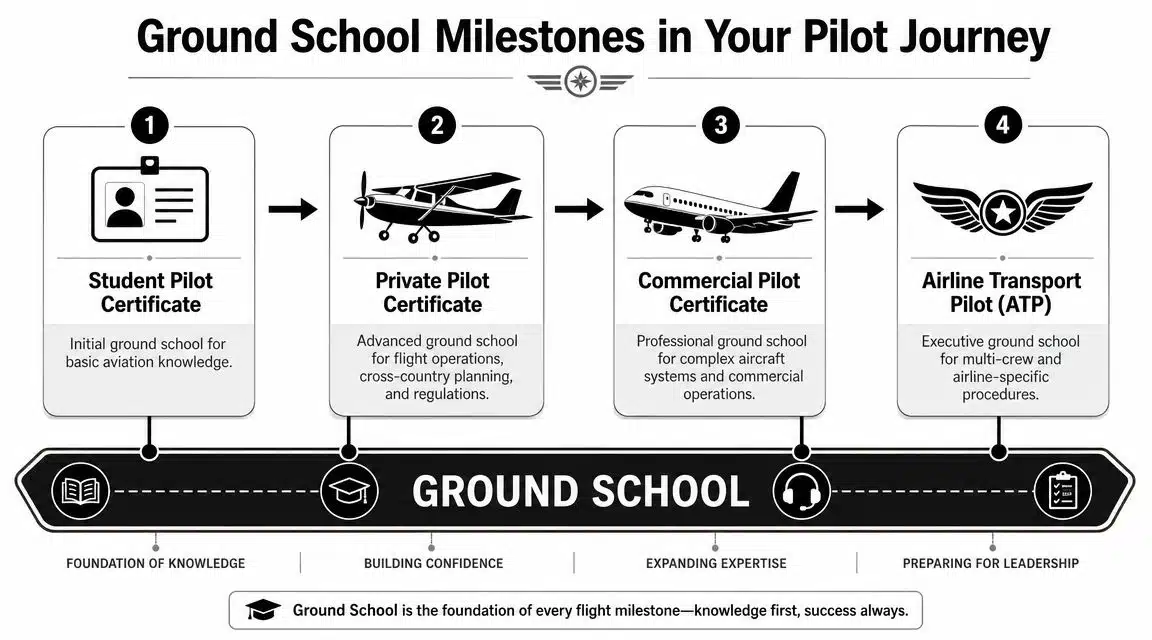
A private pilot starts with the basics. That includes aircraft control theory, regulations, weather, navigation, and the decision-making needed for day-to-day flying. This is the foundation. If it's weak, everything that follows gets harder.
Private pilot through advanced ratings
Once you move into instrument training, the academic load changes. You're no longer relying primarily on outside visual references. You're learning procedures, instrument interpretation, and a more disciplined way to manage workload. That requires a different kind of study.
Commercial training adds another layer. Precision matters more. Standards tighten. You're expected to understand not just how to operate, but how to operate professionally and consistently.
The pilot who keeps learning on the ground usually progresses more smoothly in the air.
For many students, it helps to think of each stage this way:
- Private pilot: Learn to operate safely and think ahead.
- Instrument rating: Learn to trust procedures and manage a higher workload.
- Commercial pilot: Refine knowledge and performance to a professional level.
- Advanced and recurrent training: Revisit core concepts with deeper expectations.
It comes back throughout your career
Ground school is also recurring. CAU emphasizes that experienced pilots returning for a new certificate or type rating must complete ground school again, which shows that academic training remains part of a pilot's career rather than a one-time hurdle. That's a healthy thing. Aviation keeps asking you to review, sharpen, and relearn.
If you're mapping out the broader training path, this overview of how to get my pilot's license is a useful next read.
Getting Started with Ground School at DuBois Aviation
You arrive for an early lesson at a towered airport. Ground control gives you a taxi route, another aircraft is holding short, and your instructor asks, “Which runway are we heading to, and what does that tell you about its direction?” That moment is what good ground school is for. It prepares you to recognize what is happening around you and respond with confidence, not just recall a definition from a study guide.
At DuBois Aviation, students train with one-on-one airplane and helicopter instruction, Jeppesen learning materials, an in-house simulator, and scheduling available seven days a week. That combination helps students connect study to action. You cover a topic on the ground, then see it appear in a preflight briefing, a taxi clearance, a radio exchange, or a flight lesson soon after.
Why a busy airport helps learning
A towered, multi-runway airport exposes students to real operating conditions early. You hear how controllers sequence traffic. You learn to stay ahead of the airplane during taxi. You start noticing how runway selection, traffic flow, and wind all fit together.
Runway numbering is a good example. Ground school teaches that runway numbers match the runway's magnetic direction to the nearest ten degrees. At a field with multiple runways, that stops being trivia very quickly. It becomes part of how you predict traffic flow, confirm clearances, and avoid simple mistakes during high-workload moments.
That matters for more than the written exam. It is part of learning how to operate safely in complex airspace and how to walk into a checkride already comfortable with the logic behind airport operations.
What to look for in a training environment
A strong program does more than assign reading and quiz you later. It should help you build a mental map of how flying works, the same way a good coach explains the whole play instead of only the next move.
Look for signs that ground training and flight training reinforce each other:
- One-on-one discussion: You should be able to ask follow-up questions and get answers tied to your current lesson, not generic explanations.
- Simulator practice: A simulator lets you rehearse flows, procedures, and cockpit tasks before adding the noise, motion, and time pressure of the aircraft.
- Local procedure training: Taxi routes, radio phraseology, nearby airspace, and common airport patterns should be taught with the home airport in mind.
- Scheduling consistency: Regular lessons help knowledge stick. Long gaps often force students to spend flight time reviewing material they could have retained with steadier pacing.
Students who want to see how that works in practice can review flight training at Chino Airport, where the local airport environment becomes part of the learning process.
A useful ground lesson makes your next flight lesson clearer, calmer, and more productive.
If you are just starting, begin with a conversation about your goals, schedule, and the kind of flying you want to do. A good instructor can help you choose a training pace, explain how ground lessons will support each flight stage, and set up a plan that prepares you for real flying as well as the checkride.
Beyond Certification Safely Buying Your First Airplane
For some pilots, the next big milestone after training isn't another rating. It's ownership.
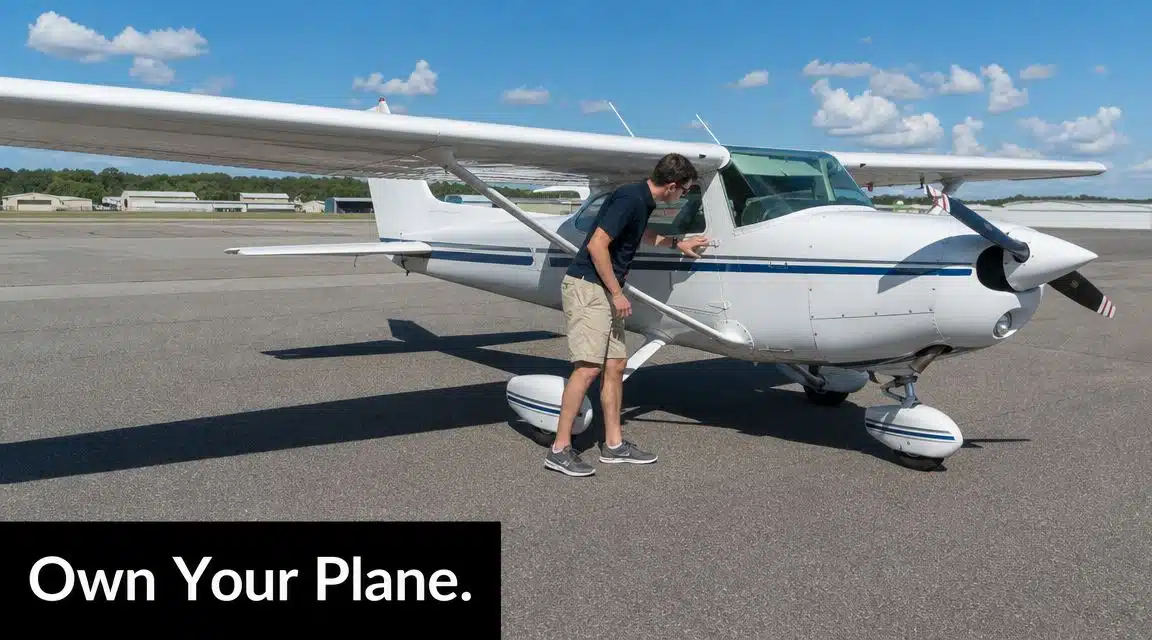
That can mean buying an airplane for family travel, personal business, time-building, or weekend flying. For others, it may mean buying a helicopter for specialized use or long-term access. Either way, the safest purchase starts with discipline, not excitement.
Start with mission, not paint color
The first question isn't “what looks good?” It's “what do I need this aircraft to do?”
A buyer who wants short local flights has a different mission than a buyer who wants cross-country capability, complex systems, or rotorcraft training utility. If you skip that step, you can end up with an aircraft that's expensive to own and poorly matched to your actual use.
The safe buying checklist
Use a disciplined process:
- Define the mission clearly: Passenger load, trip length, typical weather, and airport environment all matter.
- Review the logbooks carefully: You want a clear history of maintenance, damage, modifications, inspections, and gaps.
- Order an independent pre-purchase inspection: Use a mechanic who works for you, not the seller.
- Understand operating realities: Insurance, maintenance, storage, fuel, and training requirements all affect ownership.
- Plan transition training: Even experienced pilots need aircraft-specific instruction before regular operation.
Don't rush the emotional part
A nice panel, fresh paint, or a polished sales listing can distract buyers from the true question, which is airworthiness and suitability. The same applies to helicopters. The machine may be impressive, but the records, maintenance history, and support network matter more than first impressions.
If you're buying your first aircraft, bring the same mindset you should bring to flight training. Stay curious, ask basic questions, verify everything, and don't let urgency make decisions for you.
If you're ready to start flight ground school, explore airplane or helicopter training, or talk through the path from first lesson to aircraft ownership, DuBois Aviation offers practical training options at Chino Airport with one-on-one instruction and local operational experience.


