

The path for many begins the same way. They look up when a trainer turns base to final, feel that pull toward the cockpit, and then hit the same hard question a few days later. How am I going to pay for this?
That's where eaa flight training scholarships enter the conversation. They don't remove every financial obstacle, and they won't replace a disciplined training plan, but they can turn a vague dream into a realistic starting point. I've seen motivated students make real progress once they stop treating funding like a mystery and start treating it like part of pilot training itself.
The students who do this well usually have two traits. They're serious about flying, and they're willing to organize the boring parts early. Scholarship research, budgeting, scheduling, medical readiness, and school selection all matter. If your long-term goal is not just to earn a certificate but eventually to rent smarter, time-build efficiently, and maybe even buy your own airplane or helicopter safely, this planning mindset pays off from day one.
Two practical options worth comparing
These are specific products pilots commonly compare for this type of flying. Confirm compatibility with your aircraft and instructor before ordering.
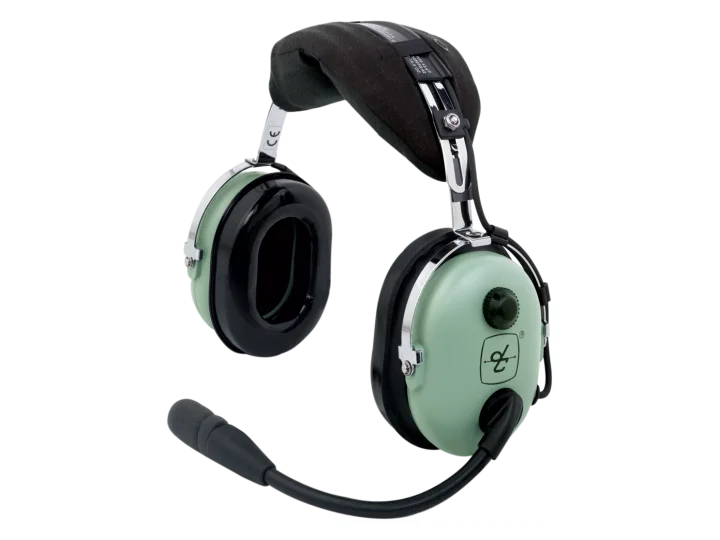 Student headsetDavid Clark H10-13.4 Aviation HeadsetCheck current availability on Amazon (paid link)
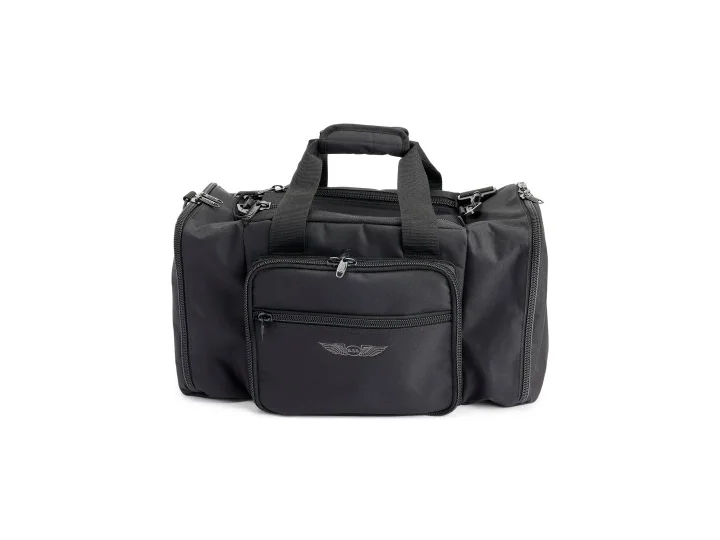 OrganizationASA Flight BagCheck current availability on Amazon (paid link)
Your Dream of Flying Starts with a Plan
A lot of aspiring pilots are closer than they think.
A teenager might be saving from a part-time job and wondering if those savings are enough to get through the first phase of training. An adult changing careers might already know aviation is the right move but still feel stuck because training costs don't fit neatly into monthly life expenses. Parents often ask the same question from a different angle. If a young person is serious about aviation, what's the smartest way to support them without guessing?

The practical answer starts with a plan, not with a purchase. Before you commit to lessons, know what certificate you're pursuing, how often you can train, and what kind of airport environment you want to learn in. If you're still sorting out the path from private through advanced training, this breakdown of pilot license levels helps frame the progression in real terms.
What serious applicants do early
Strong scholarship applicants usually begin acting like future pilots before they ever receive funding. They ask smart questions. They visit schools. They compare training environments. They learn the difference between a glossy brochure and a realistic training schedule.
That last part matters. Training at a busy towered field can sharpen your radio work and situational awareness quickly, but it can also change how your timeline feels in practice. A school operating in a dynamic environment such as Chino gives you exposure to real traffic flow, real ATC communication, and real operational pacing. That's useful because scholarship money works best when it's paired with consistent, well-structured training.
Flying starts as a dream, but scholarships go to applicants who already behave like they're preparing for a mission.
There's also value in staying inspired while you build that plan. If you want a reminder of why the cockpit still grabs your attention, take a look at an immersive Tokyo hotel room built around the flight experience. It won't replace lessons, but it captures the kind of focus and fascination that keeps many students moving through the slow parts of preparation.
Deconstructing the EAA Scholarship Program
A lot of applicants talk about “the EAA scholarship” as if it's one award. It isn't. Think of it as a scholarship ecosystem with multiple pathways under one recognizable umbrella.
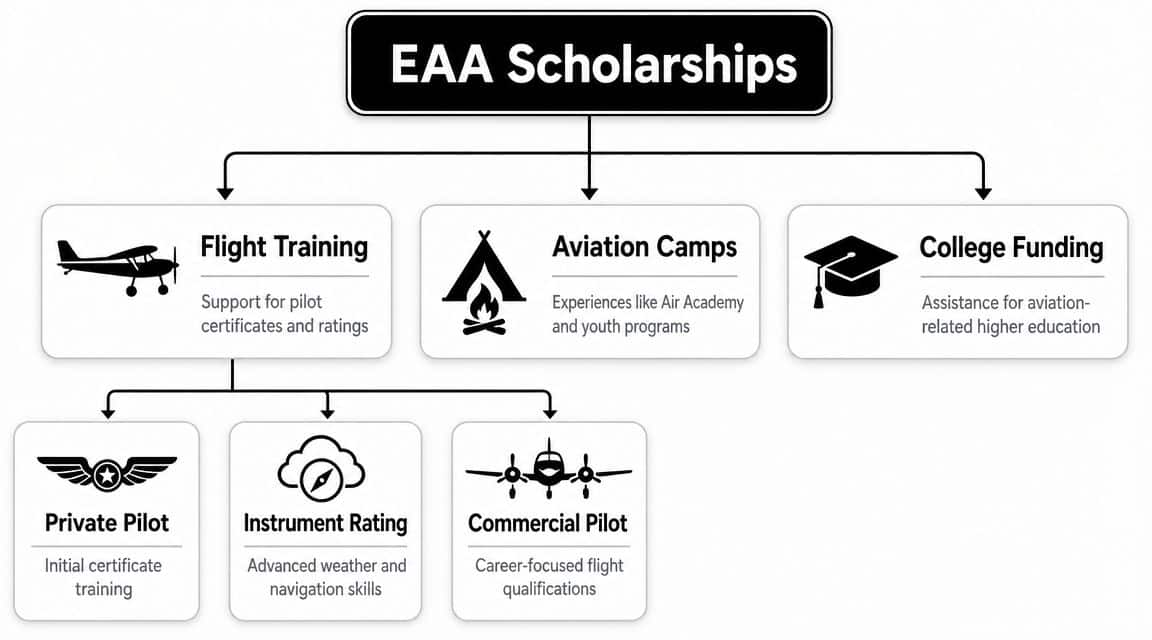
One reason that matters is scale. According to EAA scholarship listings summarized here, the Ray Aviation Scholarship can provide up to $12,000 to an individual youth for flight training, and EAA says this contributes to $2,250,000 in annual scholarship funding for young pilots. The same source notes that the broader flight training portfolio includes about 35 awards per year in that category.
Why that structure matters
This tells you something important about how EAA approaches pilot development. It's not just handing out occasional donor checks. It has a repeatable system aimed at building an aviation pipeline.
That changes how you should think as an applicant. Committees aren't only asking, “Does this person want money?” They're asking whether you fit the kind of aviator they're trying to help launch. That usually means they're looking for evidence of commitment, follow-through, aviation involvement, and a believable path from award to training outcomes.
Here's the practical breakdown:
| Program feature | What it means for you |
|---|---|
| Named scholarships under one umbrella | You may fit one award better than another |
| Flight training category includes multiple award types | Private, CFI, and other rating paths can matter |
| Large annual funding pool | This is an ongoing system, not a one-time fluke |
| Award cap on individual scholarship | You still need a training budget beyond the application |
What applicants often misunderstand
The biggest mistake is treating the scholarship as the entire plan. It's better to treat it as a launch tool.
Some awards are clearly youth-oriented. Some fit a first certificate. Others align more naturally with advanced training. That means your application has to show fit, not just enthusiasm. If you're a younger student pursuing initial training, a youth-focused EAA path may be a direct match. If you're older or targeting a different rating path, you may need to use EAA as one part of a wider funding strategy rather than the only option.
Practical rule: Apply like someone who understands the program's purpose, not like someone sending the same essay everywhere.
The strongest applications usually show three things at once. A real reason for flying. A realistic next step. A training environment that makes sense for the applicant's goals.
Are You Eligible and What Do You Need
Eligibility is where optimism has to meet paperwork.
Many people searching for eaa flight training scholarships assume they either obviously qualify or obviously don't. In reality, most applicants fall into a middle zone where the answer depends on age, stage of training, local chapter connections, application fit, and whether the specific award matches their profile.
The youth path and the adult path
A lot of EAA-related funding is youth-focused. That's clear from local chapter scholarship pages and from the way many public summaries describe the intended applicants. But that doesn't mean aviation funding stops if you're older.
The broader scholarship environment includes different tracks for private, commercial, and CFI candidates, with different expectations around age, medical status, and certificates, as described in this overview of aviation scholarship options for varied applicant profiles. For adult learners, career changers, and returning pilots, that distinction is essential. You may not be the ideal match for a youth-centered EAA award, but you may still be very fundable in the wider market.
Here's the cleanest way to assess yourself:
- Early-career youth applicant. You're often the strongest fit for chapter-supported or youth-directed opportunities tied to initial flight training.
- Adult beginner. You need to read eligibility language carefully and avoid assuming the EAA umbrella automatically includes your situation.
- Advanced-rating applicant. Your case gets stronger when you can show exactly why the next rating matters and how it connects to employment or instructing.
- Helicopter student or returning aviator. These applicants often need a broader search because not every scholarship is written with their training path in mind.
What you should gather before you apply
Don't wait for the application portal to tell you what you should have already organized.
Start building a file that includes:
- Training goal. Know whether you're applying for private pilot, an advanced rating, or a career-oriented next step.
- School information. You need a realistic training plan from a real school, not a rough guess.
- Medical and certificate readiness. If an award expects certain prerequisites, surprises here can derail your timeline.
- Aviation involvement. Clubs, volunteer work, chapter attendance, airport exposure, school activities, or community service all help establish seriousness.
- Budget notes. Know what the scholarship would cover and what it won't.
The budget gap is real
Many applicants are often caught off guard. Public summaries often highlight the award amount, but students still have to solve the rest of the training budget. EAA chapter guidance and scholarship summaries point out that awards can be capped, and many students need more than that amount to complete private pilot training, which is why planning for remaining costs and possible aid stacking matters, as discussed on this EAA chapter scholarship page.
That reality changes how you should choose a school and schedule. You want a place that can explain training in stages, help you understand where scholarship funds are applied, and show you how interruptions, aircraft availability, and airport complexity can affect progress. A vague estimate is not enough. If you're serious, ask for a stage-based outline that shows what happens if weather, work, or cash flow slows you down.
If your budget only works in a perfect training month, it isn't a real budget.
Your Application Timeline and Checklist
Most scholarship applications are not won in the final week. They're won by the person who started early enough to avoid rushed essays, weak recommendation letters, and missing documents.
Treat the application like a preflight. If you skip one item because you're in a hurry, the whole flight can stop before engine start.
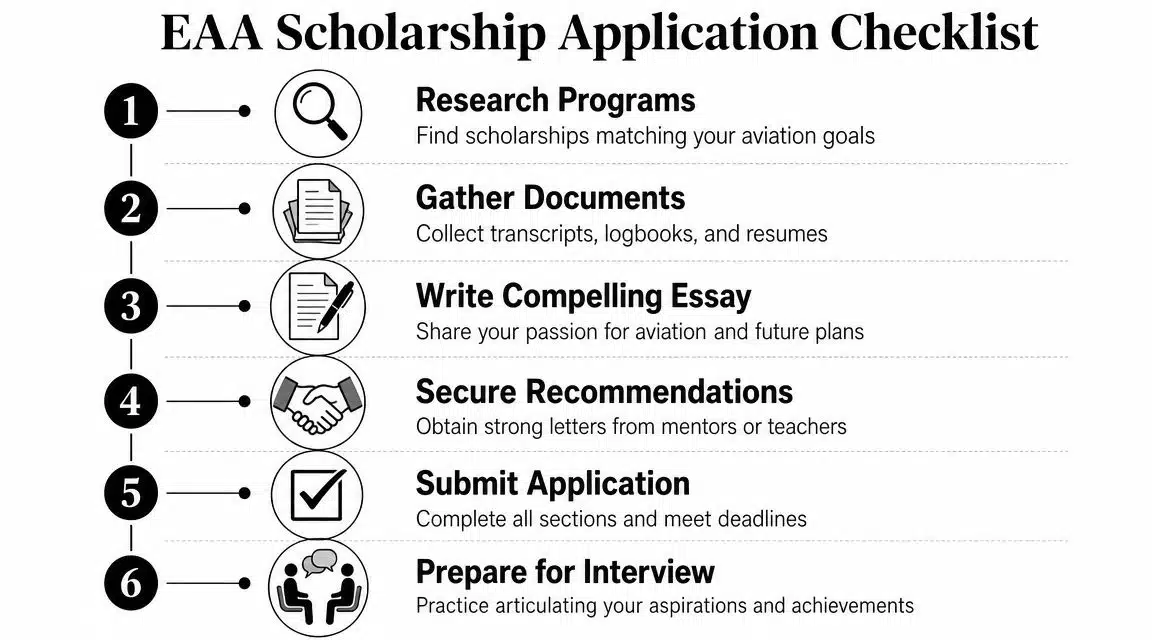
A practical build order
Don't write your essay first. Start with the parts that depend on other people.
Confirm the specific scholarship fit
Read the eligibility details with a highlighter mindset. If the award is youth-focused, chapter-based, or tied to a certain training level, you need to know that before building the rest of the package.Request recommendation letters early
Ask people who've seen you show discipline over time. A teacher, employer, coach, chapter leader, or aviation mentor usually writes a stronger letter than someone with an impressive title who barely knows you.Collect your documents
Gather transcripts, resume details, logbook entries if applicable, activity lists, and any flight school information you'll need. Keep everything in one folder.
Before you move to the next step, it helps to hear another pilot walk through the process and mindset. This overview is useful for that stage:
What your checklist should include
A good checklist is short enough to use and detailed enough to prevent mistakes.
- Personal details verified. Names, dates, contact info, and membership details should match across documents.
- Training objective stated clearly. Don't write “I want to fly someday.” Write what certificate or rating you're pursuing and why.
- School plan attached. If the application asks where and how you'll train, answer with specifics.
- Recommendation writers briefed. Give them your resume, goals, and deadline. Don't make them guess.
- Essay revised aloud. Reading it out loud catches stiffness, repetition, and empty phrases.
- Interview prep notes ready. If an interview happens, you shouldn't be inventing your story in real time.
What doesn't work
Applicants lose strength when they submit generic material. Committees can spot copy-and-paste language fast.
Avoid these common mistakes:
- Overstated passion without evidence. Loving airplanes isn't the same as showing commitment.
- Unclear career story. You don't need a lifelong master plan, but you do need a believable next step.
- Last-minute recommendations. Rushed letters read like rushed letters.
- Budget blindness. If your application suggests the scholarship alone solves everything, it can signal weak planning.
A clean, organized application feels competent. In aviation, competence is persuasive.
Telling Your Story in the Essay and Interview
The essay and interview carry more weight than many applicants expect. Grades and activity lists matter, but those items don't tell a committee how you think, how you handle setbacks, or whether you'll use the opportunity well.
That's why the story matters. Not a dramatic story. A credible one.

What a strong essay actually does
A strong essay answers three questions without sounding scripted.
First, why aviation. Not “because I've always loved planes,” unless you can tie that to real experiences. The better answer explains when aviation became personal and what you've done since that realization.
Second, why now. Timing matters. Maybe you've reached the point where training is possible if funding closes the gap. Maybe you've built the maturity, schedule, and support system to make consistent progress.
Third, what you'll do with the opportunity. This doesn't mean you need a polished airline speech. It means you should show direction, responsibility, and a plan to keep moving.
The best essays sound like a real person with a real plan, not a student trying to imitate scholarship language.
Useful interview habits
Interview performance usually improves when applicants stop trying to be impressive and start trying to be clear.
Try this approach:
- Answer directly first. If they ask why you want to fly, begin with the actual reason.
- Use examples. Mention the chapter event, airport volunteer work, job experience, or training step that shaped your decision.
- Show self-awareness. It helps to acknowledge challenges candidly, especially financial ones, scheduling constraints, or lessons learned from setbacks.
- Stay professional. Good posture, steady pace, and simple language go a long way in both virtual and in-person interviews.
What committees often remember
They remember maturity. They remember applicants who seem coachable. They remember someone who understands that aviation is a community, not just an individual ambition.
If you've helped at an event, mentored younger students, shown up consistently at a chapter, or taken initiative around the airport, say so. Scholarship committees often want to support people who will give that energy back later.
A good essay says you want to fly. A good interview convinces them you're ready to carry the responsibility that comes with it.
Beyond EAA Other Scholarships and Local Support
Even if EAA is your main target, don't build your funding plan around one application.
Aviation scholarships are competitive, and the smartest applicants widen the search early. That often means looking at organizations such as AOPA, Women in Aviation International, the Ninety-Nines, NGPA, and other aviation groups that support specific communities, ratings, or career paths. The point isn't to scatter generic applications everywhere. It's to create a funding strategy that matches your background and training goal.
How to stack your effort intelligently
One chapter-level truth matters here. Scholarship support is often capped, and many students still need additional money to complete private pilot training. That's why it's important to think about stacking aid where allowed and building a budget around the remainder, not just the award itself. Du Bois Aviation also provides a practical overview of this topic in its guide to financial aid for pilot training.
A local flight school can help more than most applicants realize. The right school or instructor can help you:
- Build a believable training plan. Scholarship committees respond better when the path from award to training is concrete.
- Estimate stage-based costs. You need to know what happens after the award is spent.
- Strengthen recommendations. A letter from someone who has observed your work ethic in aviation carries a different kind of credibility.
- Avoid poor fit. If your schedule, budget, or mission doesn't line up with a school's training model, it's better to know that before you submit applications.
A scholarship gets attention. A coherent training plan earns confidence.
Local support also helps with momentum. Students who feel connected to instructors, airport community, and fellow trainees tend to stay engaged when training gets demanding. That matters because funding helps you start, but community often helps you finish.
From Pilot to Owner A Guide to Buying an Airplane
A lot of pilots eventually aim for ownership. Not immediately, and not always full ownership, but the idea shows up sooner than many expect. Once you've trained, rented, and flown enough missions to know what kind of pilot you are, buying an aircraft starts to look less like a fantasy and more like a decision problem.
The safe way to buy an airplane starts with one question. What mission are you buying for? Weekend local flights, instrument travel, time-building, back-country utility, primary training, and helicopter access all point toward different aircraft.
Start with mission, not paint
Buyers get into trouble when they shop emotionally. A shiny panel, fresh paint, or a low advertised price can distract from the actual mission.
Write down the flying you expect to do most often:
- Local proficiency flying. A simple trainer may do the job better than a more complex airplane with higher operating costs.
- Cross-country travel. Comfort, useful load, speed, avionics, and dispatch reliability matter more.
- Training use. You want straightforward systems, predictable handling, and maintenance support you can access.
- Helicopter ownership goals. Parts support, instructor access, and insurance practicality deserve extra scrutiny.
If you're comparing common training airplanes first, this look at Piper Cherokee vs Cessna 172 is a useful starting point because it frames ownership and training trade-offs in operational terms.
The safe-buy checklist
Never buy on enthusiasm alone. Use a process.
Set a full ownership budget
Purchase price is only the opening number. You also need room for insurance, storage, inspections, maintenance, fuel, and the inevitable surprises that come with aircraft ownership.Review logs carefully
Missing, inconsistent, or confusing logbooks should slow the deal down. Paperwork issues can become expensive issues.Order a true pre-purchase inspection
This is not optional. Use a qualified mechanic who understands the aircraft type and who works for you, not for the seller.Match complexity to experience
First-time owners often do better with simpler airplanes. A familiar trainer-type airplane can be a smarter first purchase than a technically impressive aircraft that stretches your experience and budget.Think about support after purchase
Who will maintain it? Where will it live? Can you get instruction, recurrent training, and realistic insurance support for that specific model?
Buying helicopters takes extra discipline
The same basic rule applies to helicopters, but the margin for casual decision-making is even smaller. You need clear maintenance records, type-specific inspection awareness, realistic operating costs, and access to instructors who know the machine. If you can't answer those support questions confidently, pause the purchase.
Safe aircraft buying is boring in the right places. That's a good sign. The goal isn't to “win” the deal. The goal is to buy an aircraft you can operate, maintain, and enjoy without discovering hidden problems after closing.
If you're building a path from first lesson to certificate, and eventually toward renting or ownership, DuBois Aviation is one place to continue that planning with real-world training options in airplanes and helicopters at Chino Airport.


