

You're probably in one of three places right now. You want to learn to fly, you already fly and want a more affordable way to stay current, or you've started thinking about buying your own aircraft and realized that ownership is exciting right up until paperwork, maintenance history, and prebuy inspections enter the picture.
That's why flying clubs matter.
A good club gives you more than access to an airplane. It gives you people, habits, standards, and a reason to keep showing up at the airport. For many pilots, that's the bridge between dreaming about aviation and building a life in it. The Yellow Jacket Flying Club is a strong example of that model. It also points toward the next practical questions: should you join a club, train at a school, or eventually buy an airplane yourself?
As a flight instructor, I tell people to think in stages. First, find a community that keeps you engaged. Second, choose the training path that matches your schedule and goals. Third, if ownership starts calling your name, approach it like a safety decision, not a shopping trip.
What Is the Yellow Jacket Flying Club?
The Yellow Jacket Flying Club shows what a flying club can become when it lasts long enough to build real traditions. It was founded in 1945 and is described as the oldest continuously active university flying club in the United States, operating as a student-run organization at Georgia Tech with about 180 active members, according to AOPA's event spotlight on the club.
That matters because clubs come and go. A club that stays active across generations usually does a few things well. It keeps aircraft flying, keeps members involved, and keeps standards alive even as students graduate and leadership changes.
Why this club gets attention
The Yellow Jacket Flying Club isn't just old. It has a broad mission. AOPA's description notes that it exists to provide opportunities for students, alumni, faculty, and staff to develop an interest in aviation. That wider base gives it a different feel from a small student hobby group.
It also means the club sits at an interesting intersection. Part campus organization, part aviation community, part continuing network.
Practical rule: A club becomes more useful when it includes people at different stages of flying. New students need energy. Experienced pilots bring judgment.
That mix is one reason pilots find clubs easier to stick with than purely transactional rentals.
What the operating model tells you
Independent listings describe the Yellow Jacket Flying Club as a student-run, non-profit aviation organization affiliated with Georgia Tech, with a fleet of four Cessna 172 Skyhawks based at DeKalb-Peachtree Airport (PDK) and member access described as 24/7/365, as summarized in the club's independent listing.
For an aspiring pilot, those details are not trivia. They tell you what daily flying probably looks like.
- Cessna 172 fleet means training and proficiency are central. The 172 is a familiar, stable platform for private, instrument, and routine practice.
- A busy home airport means members likely get real-world exposure to radio work, taxi discipline, sequencing, and airspace awareness.
- Student-run structure means members usually learn more than stick-and-rudder skills. They also learn responsibility.
Why people get confused about clubs
A lot of readers assume a flying club is just a cheaper rental plan. Sometimes it is. But the better way to think about it is this: a club is a place where the airplane is shared, the knowledge is shared, and the culture is shared too.
That's the part many schools can't fully replicate.
A school can train you very efficiently. A club can keep you in aviation long after the checkride.
How Flying Clubs Make Aviation More Accessible
A flying club works a lot like a co-op for the skies. Instead of one pilot carrying every fixed cost alone, or one student renting from a school with no long-term connection to the operation, a group shares access to aircraft and the responsibilities that come with them.
That changes the economics, but it also changes behavior. People tend to care more about scheduling, cleanliness, squawks, and good habits when they know the next pilot is another club member, not a faceless customer.
The financial side
Aviation gets expensive fast when one person tries to shoulder everything. Clubs spread out the burden of fixed expenses like insurance, storage, and maintenance planning. Members still pay to fly, but they don't have to jump straight from renting into full ownership.
That middle ground is powerful.
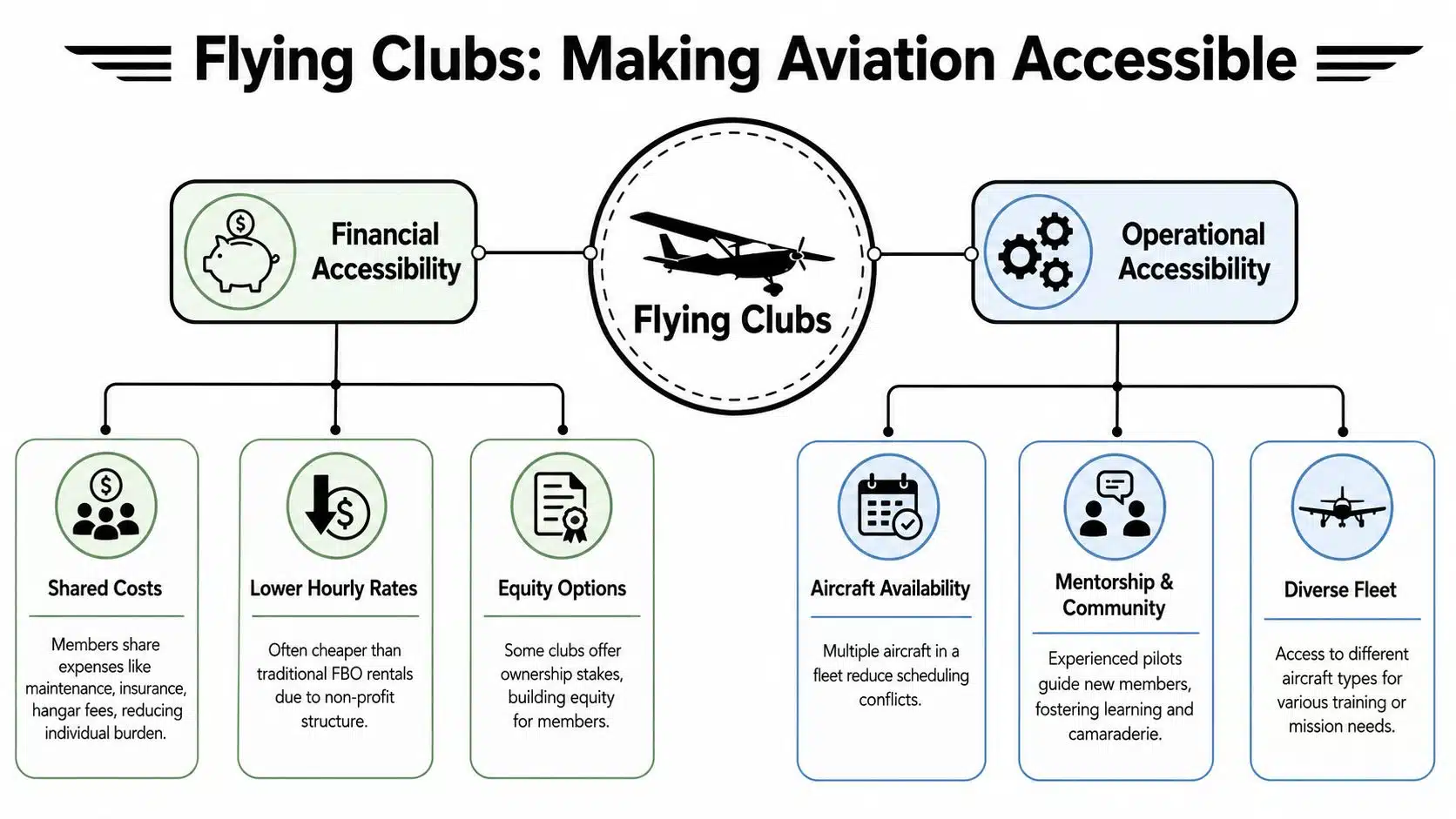
Two common club models
Some readers mix together all club structures. That leads to bad assumptions. Most clubs fall into one of two broad patterns:
Equity club
Members buy in and own a share of the organization or aircraft interest. That can create more commitment, but it also means members need to understand bylaws, reserves, and exit terms.Non-equity club
Members pay dues and usage fees without building ownership stake. This is often simpler for newer pilots who want access without the complexity of partial ownership.Hybrid arrangements
Some clubs blur the line. They may have formal membership, shared costs, and community expectations without traditional equity ownership.
The operational side
Accessibility isn't only about money. It's also about whether you can fly when you need to.
A club with a sensible fleet and clear scheduling rules often solves common problems pilots run into after training:
| Access question | Club answer |
|---|---|
| Can I get an airplane on short notice? | Sometimes yes, especially if the fleet has more than one training aircraft |
| Will someone help me get current again? | Often yes, because experienced members and instructors are part of the community |
| Can I keep learning after my certificate? | Usually yes, through trips, safety culture, and peer support |
A good flying club lowers barriers in two ways. It lowers the cost of getting in the air, and it lowers the friction of staying in the air.
That second part matters just as much. Plenty of pilots earn a certificate and then drift away because solo aviation feels expensive, intimidating, or disconnected.
Why the model lasts
The Yellow Jacket Flying Club is a useful example because it shows how durable this model can be when the club has a clear purpose and an active membership base. You don't need to be at Georgia Tech to benefit from the same idea. The core formula works almost anywhere: shared aircraft, shared standards, and a group of people who want to keep aviation part of everyday life.
Comparing Your Options Flying Club vs Flight School
When people ask me how to get started, I usually ask a different question first. What are you trying to solve right now? Training efficiently? Flying more often? Building time? Avoiding the complexity of ownership?
A flight school, a flying club, and sole ownership can all be good answers. They just solve different problems.
The quick comparison
| Factor | Flying Club | Flight School/Rental | Sole Ownership |
|---|---|---|---|
| Upfront commitment | Usually some form of membership process and club obligation | Usually minimal beyond training enrollment and checkout requirements | Highest commitment because you acquire the aircraft and all related responsibilities |
| Scheduling | Shared among members, often better than single-aircraft arrangements but dependent on club rules | Depends on school fleet size, instructor availability, and dispatch demand | You control the schedule, except when maintenance grounds the aircraft |
| Community | Often strong, especially if members fly together and help newer pilots | Varies widely. Some schools feel social, others are purely transactional | Depends on the owner. You may need to create your own network |
| Maintenance responsibility | Shared by the club leadership and membership culture | Handled by the school or rental provider | Falls on you as owner |
| Best fit | Pilots who want affordable access and community | Students who want structured instruction and a standard training pipeline | Pilots with clear mission needs and willingness to manage the whole operation |
Where schools shine
A flight school is usually the cleanest path for initial training. The syllabus is defined. Instructor availability is clearer. Checkride preparation tends to be more systematic. If your main goal is earning a private or instrument rating efficiently, that structure helps.
If you're trying to understand what the first step into training looks like, this overview of introductory flight lesson cost gives a practical example of how schools frame discovery flights and early training decisions.
Where clubs shine
A flying club often becomes more attractive after the first burst of training enthusiasm settles into real life. You're balancing work, family, weather, and budget. You want access, but you also want people around you who care whether you stay active.
That's where clubs outperform pure rental setups. They tend to support continuity.
- You keep showing up because other members are there.
- You learn informally through conversations, trips, and observed habits.
- You stay engaged because aviation feels social, not isolated.
Where ownership fits
Ownership is the most flexible option and the least forgiving one. If your flying mission is very specific, frequent, or hard to support with rentals, owning can make sense. But ownership doesn't just buy convenience. It buys responsibility.
Don't compare ownership to rental by hourly cost alone. Compare it by stress, downtime, paperwork, and the quality of decisions you'll have to make.
That's why many smart pilots move in stages. They start at a school, join a club, then buy when they know exactly what mission the aircraft needs to serve.
How to Buy Your First Airplane The Safe Way
Buying your first airplane should feel exciting. It should not feel rushed.
The biggest mistake buyers make isn't choosing the wrong paint scheme or the wrong avionics package. It's assuming the seller's description, a glossy listing, or a casual mechanic's opinion is enough. It isn't. Airplanes reward careful people and punish optimistic ones.
Start with the mission, not the listing
Before you shop, write down what the aircraft must do.
Do you want a trainer for short local flights? A cross-country machine? A time-builder? An instrument platform? If you skip this step, every airplane starts looking plausible, and that's how buyers drift into aircraft that don't fit their real use.
A short mission checklist helps:
Primary use
Training, recreation, business travel, or family trips.Runway environment
Long paved runways, shorter strips, towered airport operations, or a mix.Pilot reality
Your actual experience matters more than your aspirational future self.
The prebuy inspection is not optional
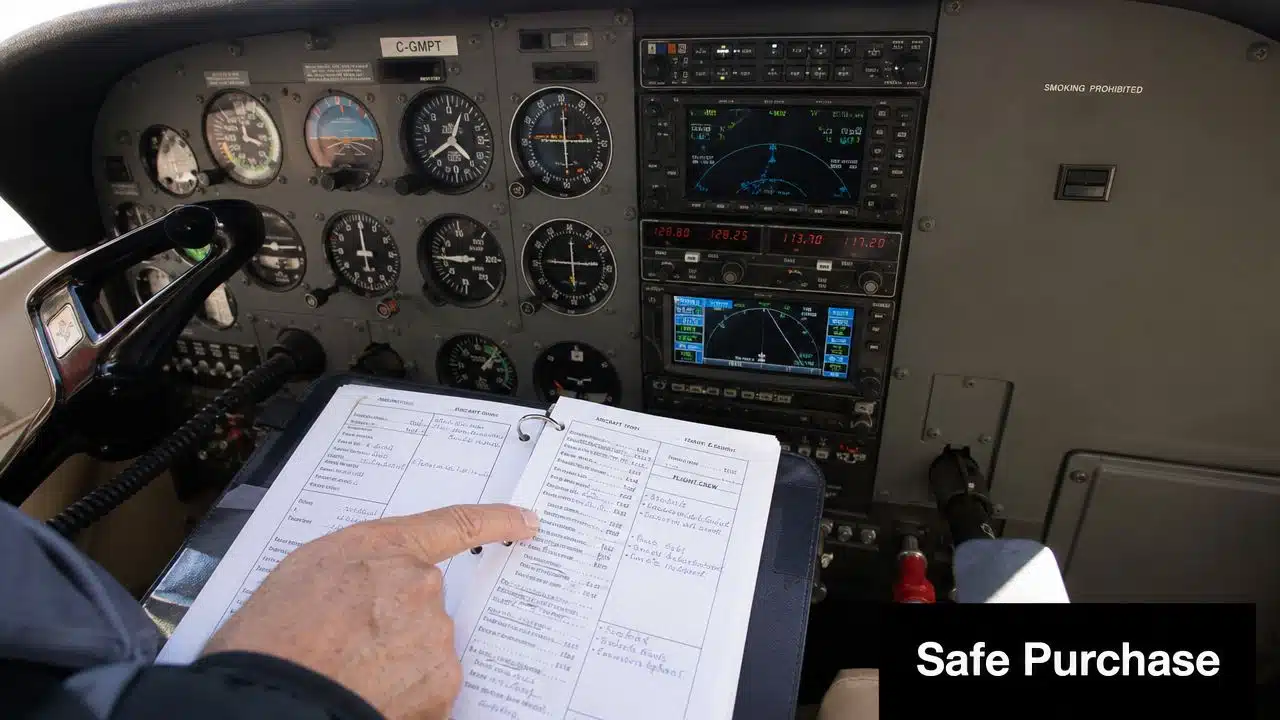
You need a neutral pre-purchase inspection by a qualified mechanic who works for you, not the seller. If the aircraft is far away, it's still worth arranging properly. The whole point is to find issues before the transaction locks you in.
This inspection should include both the physical airplane and the records. Buyers often obsess over cosmetics while underestimating logbooks, gaps in maintenance history, recurring squawks, and signs of poor care.
Bring in a mechanic who's comfortable saying no. That's more valuable than one who helps you justify the deal.
Verify records independently
A useful lesson comes from the Yellow Jacket Flying Club's public records. Third-party organizational records report ownership and operation of five aircraft used by club members, while Georgia Tech's own listing describes a fleet of four Cessna 172 aircraft, as shown in the Georgia Tech organization listing. That discrepancy is a reminder that paper records and current operational reality can diverge.
For a buyer, that principle matters a lot. If fleet size can be described differently in public records, an individual aircraft listing can certainly contain outdated, incomplete, or overly flattering information.
Ask to verify:
- Airworthiness records and continuity of logbooks.
- Maintenance status and recurring defects.
- Ownership trail and whether the records match the aircraft being offered.
- Downtime patterns that may signal hidden headaches.
This walkthrough is worth watching before you get too far into the search process:
If you're also looking at aircraft providers and training operations in Southern California, this look at Threshold Aviation in Chino is another example of the kind of local aviation ecosystem buyers often need to understand before making a decision.
Don't close while questions remain
If the logs are incomplete, if the seller resists a neutral inspection, or if the story keeps changing, walk away. There will be another airplane.
That isn't pessimism. It's discipline.
A safe purchase doesn't depend on finding a perfect airplane. It depends on refusing to buy one you haven't verified.
A Guide to Selling Your Airplane or Helicopter
Selling an airplane or helicopter safely starts long before you post an ad. Buyers don't just purchase the machine. They purchase your records, your care habits, and your credibility.
If those three things are organized, the sale tends to move more smoothly. If they're messy, the aircraft instantly becomes harder to trust, even if it's mechanically sound.
Prepare the aircraft like a professional would
Most owners think first about photos. I'd start with documents.
A buyer wants to understand the aircraft quickly. They want clean logbooks, clear maintenance status, readable equipment details, and a basic sense that the aircraft has been operated by someone who pays attention.
Use this prep list:
Organize logbooks
Put airframe, engine, propeller, and major maintenance records in order. Missing books or jumbled scans create doubt immediately.Address obvious cosmetic distractions
Small interior issues, dirty windows, worn trim, and neglected cabin presentation can make a cared-for aircraft look neglected.Create a simple aircraft summary
List equipment, recent maintenance, known squawks, and operational status in plain language.
Decide whether to use a broker
There's no single right answer here. A broker can help screen buyers, manage communication, and package the listing professionally. Selling on your own can work well if you're responsive, organized, and realistic.
A simple comparison helps:
| Selling path | Good for | Watch out for |
|---|---|---|
| Owner-direct sale | Sellers who know the aircraft well and can communicate clearly | Time-consuming inquiries, weak screening, uneven presentation |
| Broker-assisted sale | Sellers who want help with marketing and transaction handling | Less direct control over the process and messaging |
Price for trust, not fantasy
Owners often overprice because they're emotionally attached. Buyers usually notice that fast.
A better approach is to think like an instructor evaluating a student landing. Don't grade based on hope. Grade based on what's there. Fresh records, clear history, and a well-presented aircraft make your price easier to defend. Unclear logs and unresolved issues do the opposite.
A serious buyer can accept wear. They usually won't accept uncertainty.
Build a strong listing package
A useful listing package should include:
- High-quality exterior photos from multiple angles
- Cockpit and interior images that are clean and current
- Readable avionics information without jargon overload
- Honest condition notes so buyers don't feel ambushed later
That same logic applies to helicopters. Buyers want specifics about the aircraft, but they're also evaluating whether the seller understands rotorcraft maintenance culture, record discipline, and operating reality.
If you hide flaws, the prebuy will expose them anyway. If you disclose them clearly, you attract better buyers and waste less time.
Finding Local Flying Clubs and Services Near You
The Yellow Jacket Flying Club is inspiring, but most readers aren't trying to join a university club in Atlanta. They're trying to figure out what exists at their own airport, or at the nearest airport where they could realistically train and fly.
That's good news, because the basic club model shows up in many local forms. Sometimes it's a formal flying club. Sometimes it's a school with a club culture. Sometimes it's a small airport community that functionally acts like one.
What to look for close to home
Start with the airport, not the internet. Visit in person if you can. Read the bulletin boards. Ask the front desk. Talk to instructors. Ask mechanics which groups fly regularly and which ones only exist on paper.
Look for these signs:
Regular activity
Airplanes moving, instructors teaching, members talking, and pilots returning for more than one rating.A usable fleet
Aircraft that match your stage of training and likely next step.A culture of explanation
Staff and members who answer questions directly instead of acting like you should already know everything.

A local example matters more than a famous one
In Southern California, one practical example is flight training near Chino Airport, where a school-and-club environment can give newer pilots both structured instruction and a sense of belonging at the airport.
That combination matters. A pure school environment helps you progress. A community environment helps you stay.
Why busy airports can be good teachers
Some newer pilots assume they should avoid busier towered fields. I usually disagree. A well-run training environment at a busy airport forces you to get comfortable with the things that make pilots sharper:
- Radio discipline
- Taxi awareness
- Traffic sequencing
- Airspace habits
The Yellow Jacket Flying Club's setup at PDK illustrates this point well in its own context. A standard training aircraft at a busy airport gives pilots repeated exposure to real-world operations, not just calm pattern work on quiet days.
That's one reason local airport choice matters so much. The field itself teaches.
If you train where there's real traffic and real communication, you tend to carry better habits with you when the workload goes up.
How to spot a good fit
A local club or school is probably a good fit if you leave the visit with clearer answers than when you arrived. You should understand how scheduling works, what aircraft are available, how instruction is handled, and what the community feels like.
If you leave confused, rushed, or pressured, keep looking.
How to Join an Existing Club or Start Your Own
A common moment arrives for many pilots right after the early excitement wears off. You have a certificate, or you are close to one, and the question shows up. Where will you keep flying in a way that fits your budget, your schedule, and your goals?
That is where clubs earn their place.
A well-run flying club gives you a community first, then access to airplanes. That order matters. The famous Yellow Jacket model is appealing because it shows what aviation can look like when shared flying has structure, identity, and a home base. For everyday pilots, the practical version is often local. A regional group such as DuBois Flyers Club may offer the same core benefit on a smaller scale. You get people to learn from, a system for using the aircraft, and a more realistic path than jumping straight into sole ownership.
From there, you have two choices. You can join an existing club, or you can build one with a few pilots who want the same kind of flying.
Joining an existing club
Joining a club is a lot like doing a careful preflight. From the ramp, many airplanes look fine. The details tell you whether the flight will go well.
Start by asking how the club works on an ordinary Tuesday, not just on an open-house day. Who schedules the airplanes? How far in advance do weekend bookings fill up? What happens if a member returns late, reports a maintenance issue, or leaves the tanks low for the next pilot? Those answers reveal more than a polished description ever will.
Yellow Jacket is the aspirational example many pilots recognize. The lesson to borrow is not prestige. It is structure. A club becomes useful when the mission, the aircraft, and the member expectations all match. Your local option should be judged the same way.
A good joiner's checklist includes a few plain questions:
Read the bylaws and operating rules
Look for scheduling limits, currency requirements, guest policies, and how the club handles disagreements.Match the fleet to your mission
If you want regular proficiency flying, one dependable trainer may be enough. If you want family trips, instrument practice, or longer cross-countries, the fleet needs to support that.Ask how maintenance is handled
You want clear squawk procedures, grounded-aircraft policies, and evidence that members respect no-go decisions.Pay attention to the culture
Newer pilots should feel taught, not tested. A healthy club has standards, but it does not make people guess their way through them.Understand the money before you commit
Monthly dues, hourly rates, buy-in amounts, reserves, and exit rules should all be easy to explain.
If any part of the club feels vague, treat that as useful information.
Starting your own club
Starting a club makes sense for pilots who cannot find the right fit locally or who already know a few dependable partners. It can work very well, but only if you set it up with the same discipline you would use for a partnership purchase.
The biggest mistake is starting with the airplane. Start with the mission.
A club built for training behaves differently from a club built for weekend travel. A club built around low-cost time building will not run smoothly if one member wants to install upgrades, another wants hard IFR dispatch capability, and a third wants to keep costs as low as possible. That mismatch creates friction early and often.
A simple setup process usually works best:
Define the mission in one sentence
Examples include primary training, post-checkride proficiency, affordable local flying, or shared cross-country use.Choose your people carefully
Pick partners whose budgets, habits, and risk tolerance are close to your own. Skill level matters less than reliability.Write the rules before money changes hands
Cover scheduling priority, maintenance reporting, reserves, instructor use, cleaning expectations, and how a member exits.Buy the right aircraft, not the most exciting one
The best club airplane is usually the one that fits the mission, has parts support, and can stay flying without constant drama.Set up maintenance and administration early
You need an A&P or shop you trust, a clean way to track expenses, and one person responsible for making sure loose ends do not stay loose.
Flying clubs work like a shared hangar drawer. If everyone labels tools, returns them to the same place, and agrees on the system, the drawer saves time for everyone. If nobody agrees on the system, even a good tool becomes hard to use.
Which path makes more sense?
For newer pilots, joining first is usually the wiser move. You get to see how scheduling, member etiquette, and maintenance reporting work in real life before you help build those systems yourself.
For experienced pilots with a clear mission and a strong partner group, starting a club can be the practical middle step between renting and owning. It gives you more control without placing every bill, every inspection decision, and every downtime problem on one person.
That is the useful connection between the Yellow Jacket ideal and the local pilot's reality. Shared flying does not have to stay an inspiring campus story. It can become a workable path at your home airport, and for some pilots, it becomes the training ground for ownership later on.
If you want a next step that includes instruction, rentals, and a community-oriented path into aviation, DuBois Aviation is one option to explore. It offers airplane and helicopter training at Chino Airport, aircraft rental, and a Flyers Club environment that can help newer and returning pilots stay connected to the airport while building skills safely.


