How much do introductory flight lessons cost?
The price depends on the aircraft, instructor time and how much of the appointment is actual flight time. Helicopter introductory lessons normally cost more than airplane lessons because helicopter operating and maintenance costs are higher.
Before comparing offers, confirm whether the advertised duration means flight time or total appointment time, whether instructor time and fuel are included, whether taxes or booking fees apply, and whether the lesson can be logged as flight training.
For current local pricing and available airplane and helicopter experiences, view our DuBois Aviation discovery-flight options. If your goal is a pilot certificate rather than a one-time experience, ask what the next several lessons and supplies will cost so you can plan beyond day one.
So, you're considering a career as a professional pilot? That's a huge step, and one of the first questions on your mind is probably, "What's the introductory flight lesson cost?"
The short answer is that an introductory flight lesson usually runs somewhere between $150 and $400. The final price tag really depends on whether your career path leads to airplanes or helicopters. This first flight is more than just a joyride; it’s your first real taste of being in the pilot's seat with a certified instructor and the first official entry in your logbook.
Plan your first lesson with real local rates
What should an introductory flight lesson cost?
Your total depends on the aircraft, the length of the flight block, and how much instructor time is included. Airplane lessons generally cost less than helicopter lessons because the aircraft operating cost is lower. Ask whether the quote includes the preflight briefing, aircraft time, instructor time, fuel, and postflight discussion.
Planning example: The published Cessna 150 aircraft and single-engine instructor rates total $184 per Hobbs hour before any package-specific adjustments. The Robinson R22 aircraft and helicopter instructor rates total $442 per Hobbs hour. Introductory flights may use a shorter flight block, so confirm the exact package price and availability with the office before booking. Rates can change.
- Confirm the expected flight time and total appointment length.
- Ask whether your flight time will be logged with a certified instructor.
- Tell the office whether you are exploring a career, a private certificate, or a gift experience.
- Ask which airplane or helicopter best fits your size and training goal.
Your First Flight: What Does It Really Cost?
That first introductory flight is a critical moment for any aspiring professional pilot. It's not just a scenic tour; it's a genuine lesson and the best way to know for sure if a career in the sky is the right path for you. Think of it as the ultimate test drive before you commit to the full journey toward an airline or commercial helicopter career.
It's important to understand that the price covers a lot more than just the time you spend in the air. You’re paying for a complete experience designed to give you a true feel for what professional flight training is all about.
Most introductory lessons include:
- A pre-flight ground briefing: Your instructor will walk you through the basics of how the aircraft works, what the controls do, and what to expect during your first lesson.
- Hands-on flight time: This is the best part. You'll actually get to take the controls and fly the aircraft under your instructor's expert guidance.
- A post-flight debrief: After you land, you'll go over how you did, ask questions, and discuss the next steps required for your pilot training program.
Airplane vs. Helicopter: A Look at Initial Costs
The biggest factor driving the cost of your first lesson is the type of aircraft you choose. For career-focused students, this is a critical decision between a fixed-wing and a rotary-wing path.
For a quick overview, here's what you can generally expect:
Typical Introductory Flight Lesson Cost
| Aircraft Type | Average Cost Range | Typical Flight Duration | Key Inclusions |
|---|---|---|---|
| Fixed-Wing Airplane | $150 – $300 | 30-60 minutes | Pre-flight briefing, hands-on flight, post-flight debrief |
| Helicopter | $300 – $400+ | 30-60 minutes | Pre-flight briefing, hands-on flight, post-flight debrief |
As you can see, there's a clear difference. Let's break down why.
On average in the United States, a first flight lesson in an airplane typically costs between $150 and $300. This price bundles the hourly rental for the plane and the instructor's time, giving you a good benchmark for what your training will cost as you work toward the 50 to 70 hours most people need for a private pilot certificate—the first step toward an airline career.
Helicopters are a different story, especially for those aiming for specialized commercial roles. They're much more complex machines to build, maintain, and operate, which means helicopter flight training naturally has a higher price tag. This higher initial cost is the first step into a more specialized side of aviation.
If you're weighing your options, you can explore a variety of our introductory flying lessons to see which aircraft and career path feels right for you.
Deconstructing Your First Lesson's Price Tag
So, you're looking at booking your first flight lesson and wondering, "Where does all that money actually go?" It’s a great question. The final price isn't just one lump sum; it’s a mix of a few key things that get you off the ground safely and with expert guidance. Knowing the breakdown helps you see the real value you're getting.
The biggest chunk of the introductory flight lesson cost is almost always the aircraft rental. Think of it like renting a car, but way more specialized. You can fly a classic trainer like a Cessna 150, which is a fantastic, budget-friendly way to learn the ropes. If you opt for something newer or more complex, the rental rate will be higher to cover its more expensive upkeep and insurance.
As a rule of thumb, the plane itself usually makes up 60% to 70% of your total lesson cost. On a $200 lesson, that means up to $140 goes straight to the aircraft. The other 30% to 40% is for your Certified Flight Instructor's time—and for a student pilot, their expertise is worth every penny. For a deeper dive, it's worth checking out a detailed analysis of these expenses to see how flight schools structure their pricing.
Core Cost Components
Beyond just the plane and instructor, a few other necessary expenses get factored into that final price tag. These are the behind-the-scenes costs that make your training safe, effective, and fully compliant with aviation rules.
- Certified Flight Instructor (CFI) Fee: This is what you pay for the dedicated, one-on-one time with a professional pilot whose job is to teach you everything they know. Their guidance, both on the ground and in the air, is the most important part of your learning journey toward becoming a professional pilot.
- Fuel Costs: Aviation fuel isn't cheap, and its price can bounce around. Some schools will bundle this into the hourly aircraft rental rate, while others might add it as a separate fuel surcharge. It's always a good idea to ask.
- Airport and Landing Fees: If you’re flying out of a larger, controlled airport, there might be small fees for using the runways. These are often passed along to the student.
The infographic below gives you a quick visual on how these costs can differ depending on whether you're learning to fly an airplane or a helicopter.
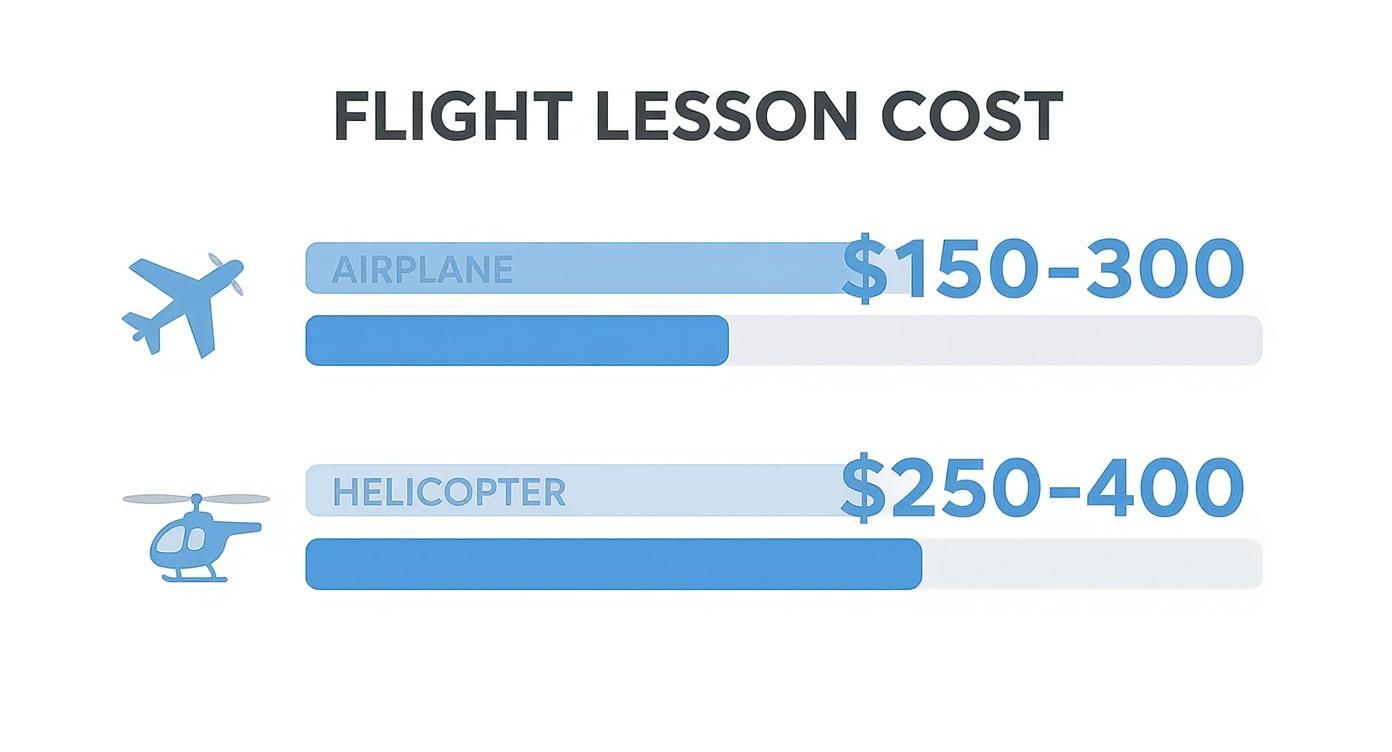
As you can see, pursuing a helicopter career requires a bigger upfront investment. That's a critical piece of information when you're mapping out your budget and your future in the sky. Now, let's get into the why behind that price difference.
Choosing Your Cockpit: Airplane vs. Helicopter
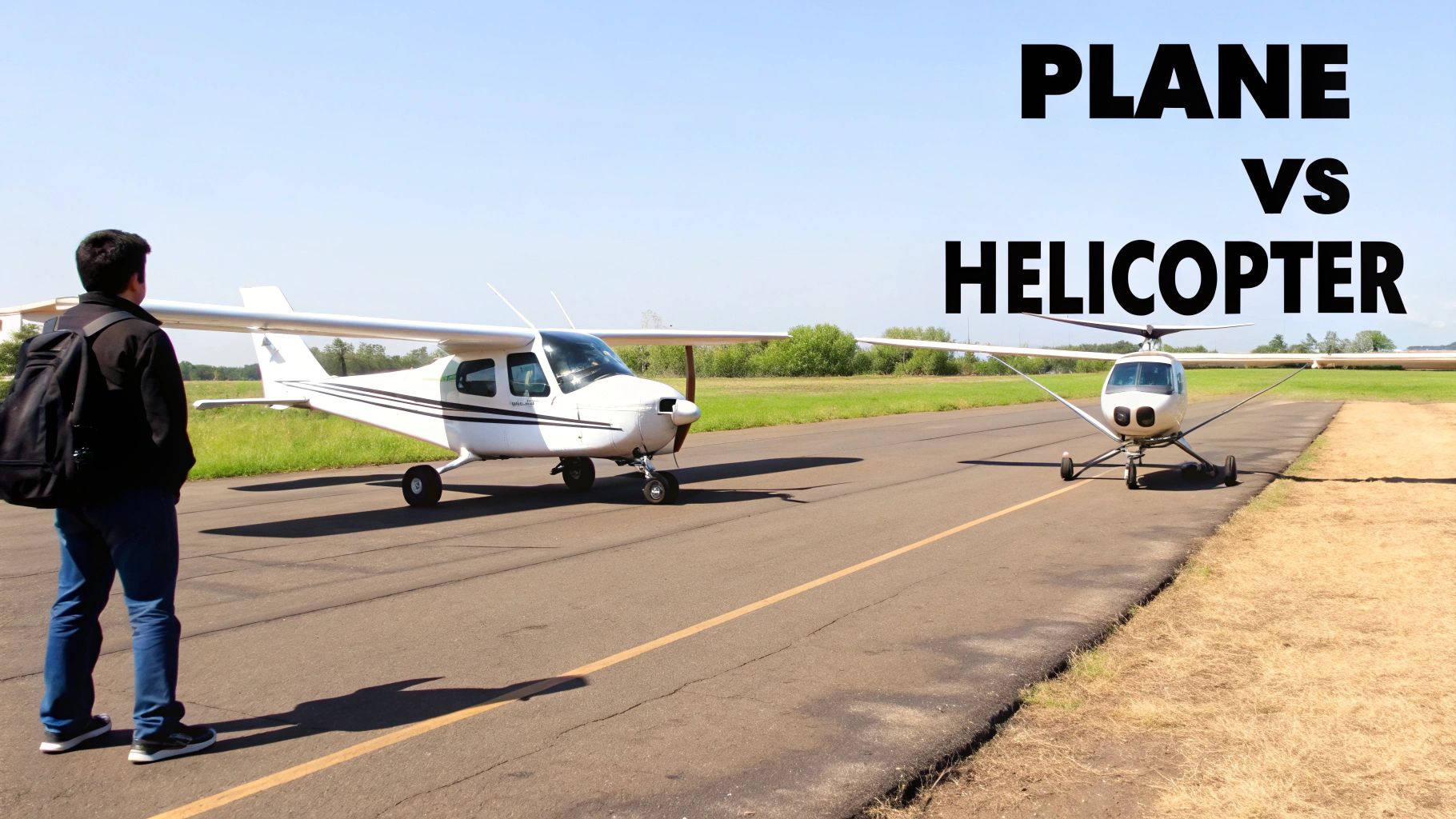
Your first time in the air is more than just a thrill; it’s a fork in the road for your entire aviation journey. The aircraft you choose for that first flight—airplane or helicopter—doesn't just influence your training; it shapes your entire career path. Unsurprisingly, this decision is the biggest driver of your introductory flight lesson cost.
If your dream is to one day sit in the captain's seat of a commercial airliner, the choice is made for you. Your journey starts in a fixed-wing airplane, no exceptions. This is the foundational skill set for the airlines, and thankfully, the operating costs are lower, making it the most common and direct path for student pilots with this goal.
But if you're drawn to a different kind of flying, the world of helicopter flight training opens up a whole different set of possibilities. These pilots often find themselves in highly specialized, dynamic roles that put them right in the middle of the action.
Why Do Helicopters Cost More?
That higher price you see for a helicopter lesson isn't just for show. It's a direct result of the machine's incredible complexity and the advanced skill needed to operate it safely.
- Mechanical Complexity: Think about it—helicopters have a dizzying number of moving parts. Intricate rotor heads, gearboxes, and control linkages all require far more intensive (and expensive) maintenance than their fixed-wing counterparts.
- Higher Insurance Rates: With all that complexity comes a higher risk profile from an insurer's perspective. Covering a fleet of helicopters simply costs a flight school more.
- Specialized Instructors: A helicopter flight instructor needs a higher level of ratings and experience. Their expertise is a specialized skill, and their instruction fees reflect that.
This higher initial investment is the gateway to a distinct set of careers. While airplane pilots head toward the airlines, helicopter pilots are essential in fields like emergency medical services, law enforcement, tourism, and aerial surveying.
Is that kind of career calling to you? Digging into what it takes to get your private pilot helicopter license will give you a much clearer picture of the road ahead.
Ultimately, the cockpit you choose should line up with where you want to go. If the airlines are your destination, the airplane is your starting line. If you’re looking for a unique adventure in the sky, the incredible capabilities of a helicopter are well worth the higher cost of entry.
How Market Trends Affect Your Training Costs
The price tag on an introductory flight lesson isn't just a number plucked out of the air. It's a direct reflection of what's happening in the wider aviation world. Think of it like the price of gas or groceries—it moves with the economy.
Things like fluctuating fuel prices, the ever-present cost of aircraft maintenance, and even the number of available flight instructors all have a hand in determining what you'll pay. Getting a feel for these forces helps you know a fair deal when you see one.
Over the past ten years or so, the cost of learning to fly has definitely been creeping up. This isn't just schools being greedy; it's a reality of rising operational costs. When parts get pricier and a tank of Avgas costs more, those expenses naturally get passed on, and schools have to adjust their rates to keep the planes safely in the air.
A Look at Recent Price Shifts
To really see how things have changed, let's look back a bit. Around 2015, you could probably find an introductory flight lesson for somewhere between $100 and $150. Fast forward to the early 2020s, and that same flight was more likely in the $150 to $250 ballpark, driven by higher demand and those operational costs we just talked about.
A 2024 survey that included over 1,400 flight schools really highlights this trend. It showed that while the total cost of a private pilot license shot up between 2020 and 2023, the intro flight price also climbed, finally settling in the $150-$200 range by 2024. You can dig deeper into the numbers and explore the full cost to become a pilot in 2025.
But it's not all bad news for your wallet. A couple of things are helping to keep these prices from soaring completely out of reach. For one, there's more competition between flight schools, which always helps the consumer. Plus, the increasing use of high-tech flight simulators offers a more affordable way to log training hours, giving aspiring pilots more options to manage their budget.
Still Have Questions About Your First Flight?
It's completely normal for a student pilot to have more questions after digging into the costs. Let's tackle some of the most common ones we hear from people just before they take the leap and book their first flight.
Does the Time from My Intro Flight Actually Count?
You bet it does. As long as you fly with a Certified Flight Instructor (CFI), every minute of your introductory flight is official flight time. It goes right into your pilot logbook and counts toward the hours you need for your private pilot license.
Just be sure to bring a logbook with you! Your instructor will be happy to make that first, official entry for you right after you land.
Are There Any Hidden Costs I Should Watch Out For?
Most good flight schools are upfront about their pricing, but it never hurts to ask the right questions. Before you book, just double-check if the introductory flight lesson cost is all-inclusive.
Specifically, ask about:
- Fuel surcharges
- Taxes
- Landing fees
Also, ask if they provide a headset. Most schools will have a loaner for your first time up, so you probably won't need to buy one just yet.
I Loved It! What’s the Next Step?
That's fantastic! If you're hooked after that first flight and want to keep going, the next move is to officially enroll in a training program. For most people dreaming of an airline career, that means starting the journey toward your Private Pilot License (PPL).
Your instructor can sit down with you, map out a full training plan, and give you a realistic breakdown of the financial commitment. They'll also help you get started on the required FAA paperwork.
Can I Bring a Friend Along?
That really depends on the school's policy and, more importantly, the aircraft. Many training aircraft, especially helicopters, only have two seats—one for you and one for the instructor.
However, if the school uses a larger, four-seat plane, they might allow a passenger to ride in the back. Sometimes this comes with a small extra fee, so it's always best to ask when you call to book.
Your introductory flight isn't just a one-off adventure; it's the first official entry in your pilot logbook and a crucial first step for anyone who wants a career as a professional pilot, whether in airplanes or helicopters.
Thinking way ahead about buying an aircraft after your training? It’s a big step. Learning how to buy an airplane the safe way involves a lot more than just a handshake—you'll need thorough pre-purchase inspections and deep dives into logbooks. Many new pilots find it's much easier to navigate the market for airplanes and helicopters with some expert guidance.
At DuBois Aviation, we specialize in clear, no-nonsense flight training for students who are serious about a career in the cockpit. Whether you're drawn to airplanes or helicopters, our experienced team is here to guide you from that very first flight all the way to your professional pilot career. Learn more and book your introductory lesson at https://duboisaviation.com.


