
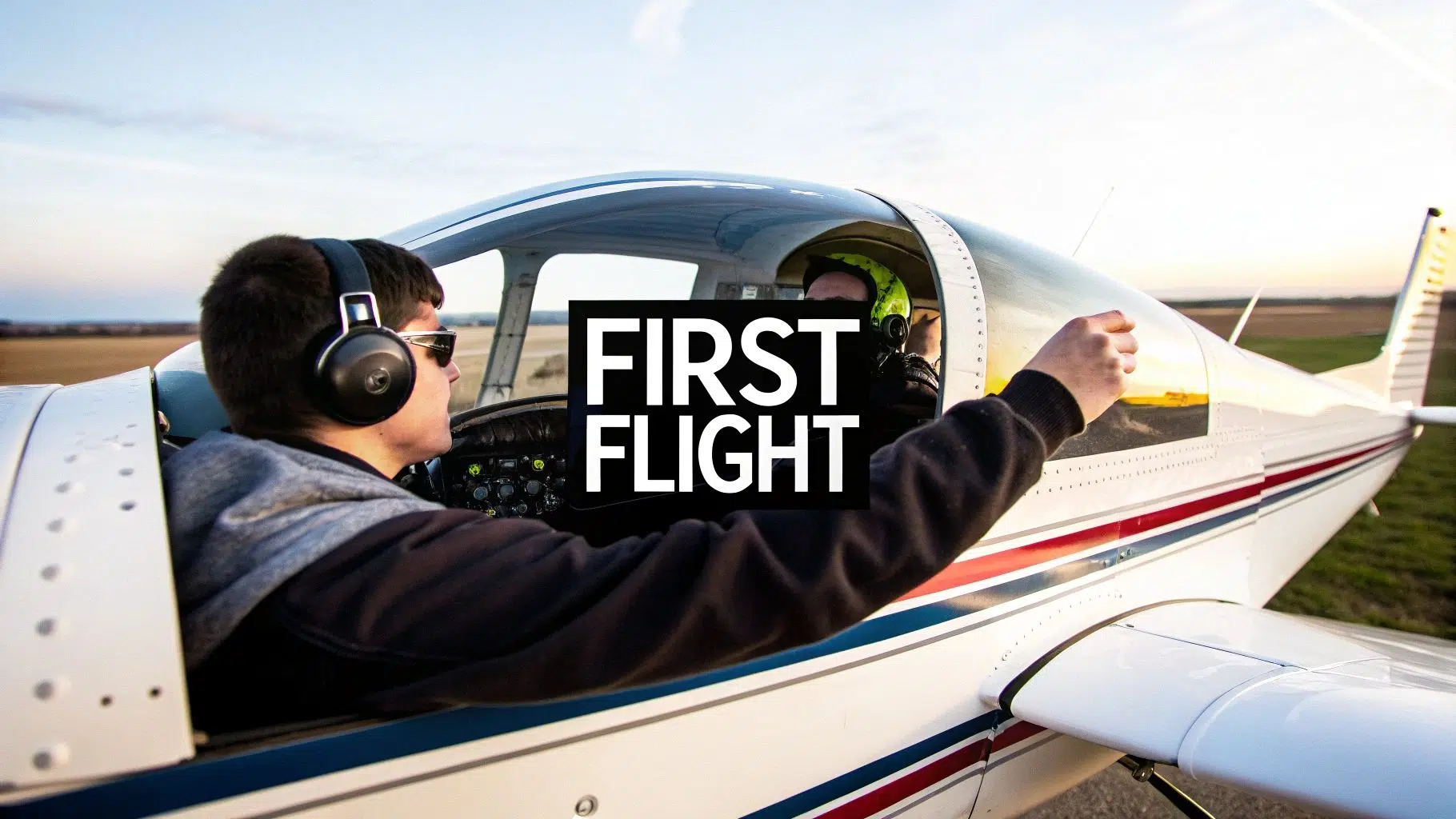
Think of an introductory flying lesson as the ultimate test drive, but instead of navigating city streets, you’re taking command of the open sky. Most people in the aviation world call it a discovery flight, and that’s exactly what it is—a hands-on experience designed to give you a genuine feel for piloting an aircraft, all under the watchful eye of a certified instructor.
Your First Taste of Flight
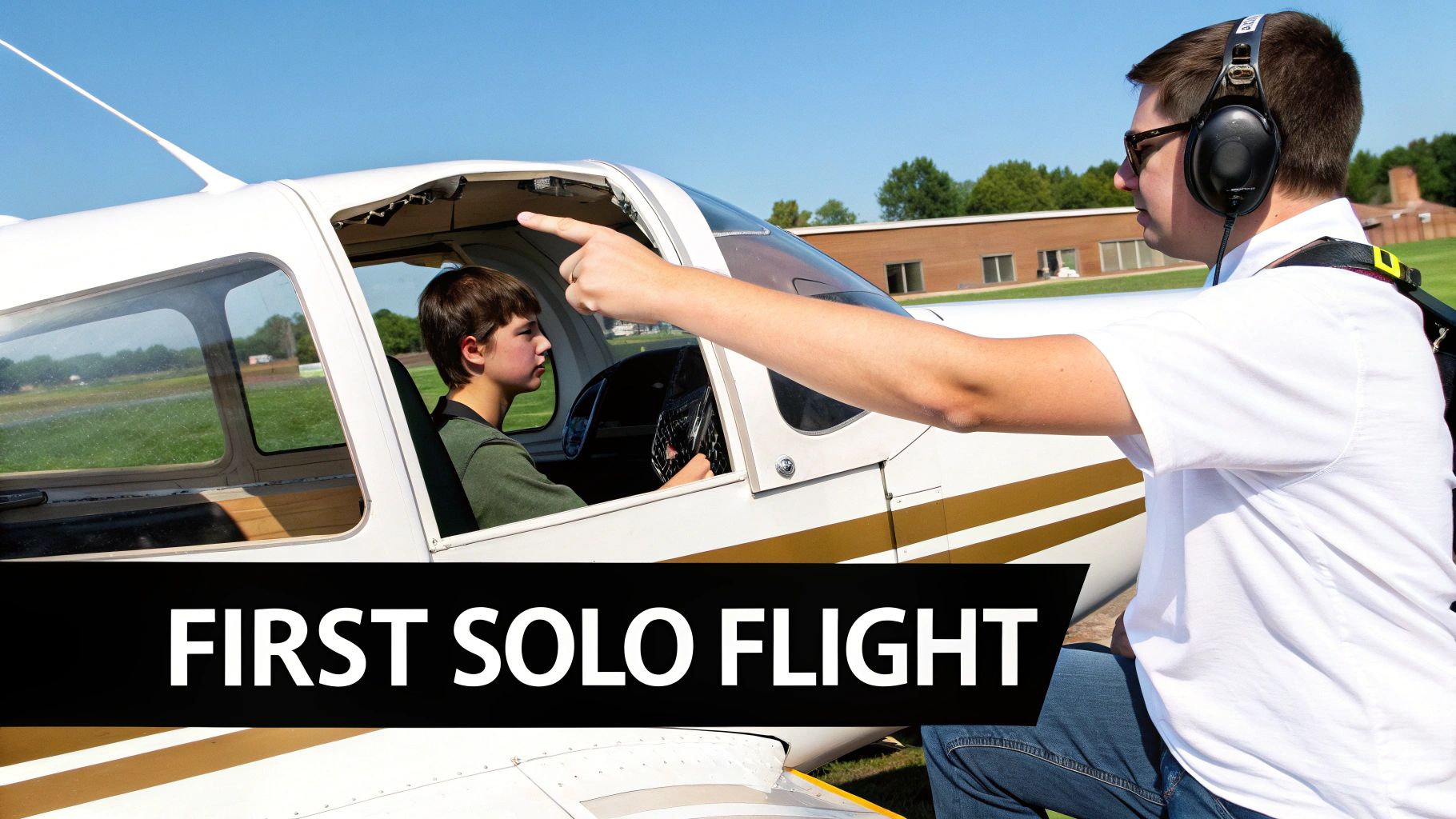
An introductory flight is so much more than a scenic tour. It’s your first real step into the cockpit, your first taste of what it’s really like to be a pilot. The whole experience is structured to pull back the curtain on aviation and show you that learning to fly is an achievable dream. It’s a low-commitment, high-excitement way to answer that one big question: “Is flying right for me?”
You’re not alone in asking that question. The global market for pilot training was recently valued at a staggering $9.37 billion, and that number is only expected to grow. It’s a clear sign that the passion for aviation is stronger than ever. If you’re curious about the industry’s health, you can explore more pilot training market statistics at AMRA & ELMA to see the trends for yourself.
The Core Phases of Your Flight
Your first lesson isn’t a random joyride; it’s a carefully planned experience broken down into three distinct phases. This structure is designed to build your knowledge and confidence step-by-step, so you never feel overwhelmed.
- Pre-Flight Briefing: This is ground school, compressed. You and your instructor will go over the plan for the day, covering the basic aircraft controls, critical safety procedures, and the flight path you’ll be taking. It’s your chance to get oriented before the engine even starts.
- The Flight: This is what you came for. You’ll be in the pilot’s seat, with your hands on the controls, performing basic maneuvers like turns, climbs, and descents. Your instructor will be right there, guiding you through every step.
- Post-Flight Debrief: Once you’re back on solid ground, you’ll sit down with your instructor to review how things went. This is the perfect time to ask all your lingering questions and talk about what it would take to pursue a pilot’s license.
To give you a clearer picture, here’s a quick breakdown of how the experience typically unfolds.
Key Components of Your First Flying Lesson
This table summarizes the main parts of your discovery flight, so you know exactly what to anticipate.
| Phase | What Happens | Your Role |
|---|---|---|
| Pre-Flight Briefing | Your instructor explains basic aerodynamics, flight controls, and safety protocols. You’ll also do a pre-flight inspection of the aircraft. | Listen, ask questions, and get familiar with the cockpit layout and the plane itself. |
| The Flight | You’ll take off (with instructor help), handle the controls in the air, practice turns, climbs, and straight-and-level flight. | You’ll be flying the plane! Your instructor will handle the complex parts, but you’ll do most of the hands-on maneuvering. |
| Post-Flight Debrief | A sit-down discussion about the flight. The instructor provides feedback, answers your questions, and outlines the next steps for training. | Reflect on the experience, clarify any doubts, and decide if you’re ready for more. |
This process ensures you get a realistic, engaging, and safe introduction to the world of flying.
This structured approach is what makes introductory flying lessons so effective. It’s not about throwing you in the deep end; it’s about giving you a clear, hands-on understanding of what it truly means to fly an airplane.
By the time you step out of the cockpit, you’ll have a real, tangible answer to whether the pilot’s seat is where you belong.
A Step-By-Step Walkthrough of Your First Flight
So, what actually happens during an introductory flight? It’s easy to imagine the exciting parts, but knowing what to expect from the moment you arrive at the airport can calm any nerves and get you truly hyped for the experience.
Let’s walk through it together, from your first handshake with the instructor to the final touchdown.
The Pre-Flight Briefing and Inspection
Your day starts on the ground, where all good flights begin. First, you’ll meet your Certified Flight Instructor (CFI). This isn’t just a quick meet-and-greet; it’s your first taste of “ground school.” Your instructor will probably grab a model airplane or sketch on a whiteboard to show you the fundamental principles of flight—how the wings create lift and how the controls move the airplane through the air. You’ll get a simple, clear explanation of pitch, roll, and yaw.
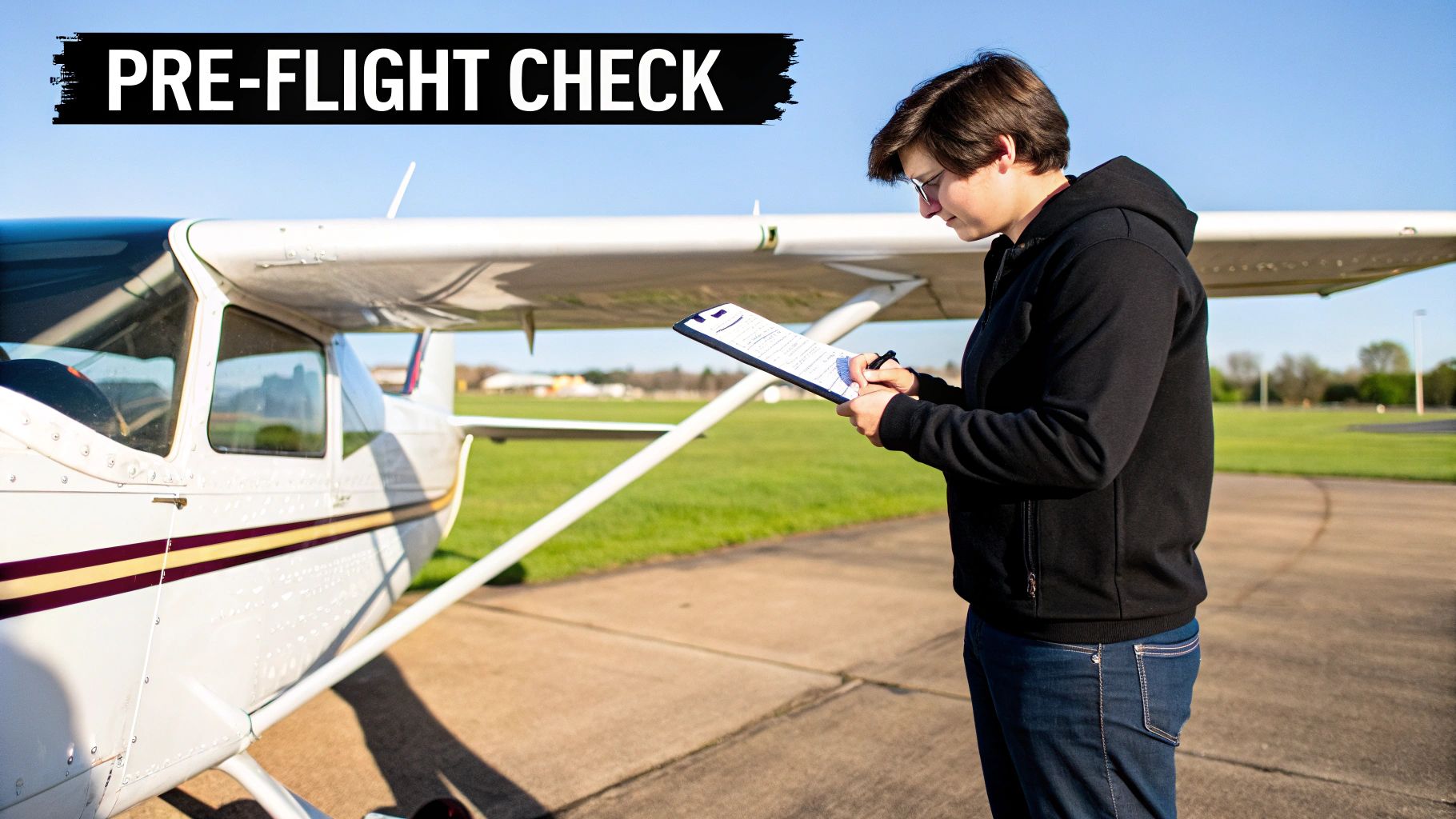
Next, you’re heading out to the airplane for the pre-flight inspection. This is a non-negotiable safety ritual for every pilot before every flight. Your instructor will walk you through the entire process, letting you get hands-on as you check the fuel, inspect the control surfaces, and make sure the aircraft is ready to go. This is the moment the plane stops being a machine and starts feeling like a partner.
Think of the pre-flight briefing as learning the rules of the game and the inspection as checking your gear. Both are essential for a safe flight and help build the meticulous habits of a pilot right from day one.
With the ground checks complete, it’s time to hop in the cockpit.
Cockpit Familiarization and Takeoff
Once you’re buckled into the pilot’s seat (yes, you get the real deal with your own set of controls), your instructor will give you a tour of your new “office.” They’ll point out the essential gauges—the “six-pack”—like the altimeter and airspeed indicator, and explain what they all mean in plain English.
The instructor will handle the engine start, taxiing, and radio calls to air traffic control, but they’ll be talking you through every single step. It’s a fantastic chance to see how a professional pilot operates. When you’re cleared for takeoff, your instructor will handle the controls, but they’ll have you place your hands and feet on your set to feel the inputs as you lift off the ground.
This infographic breaks down how your time is typically split during the lesson.
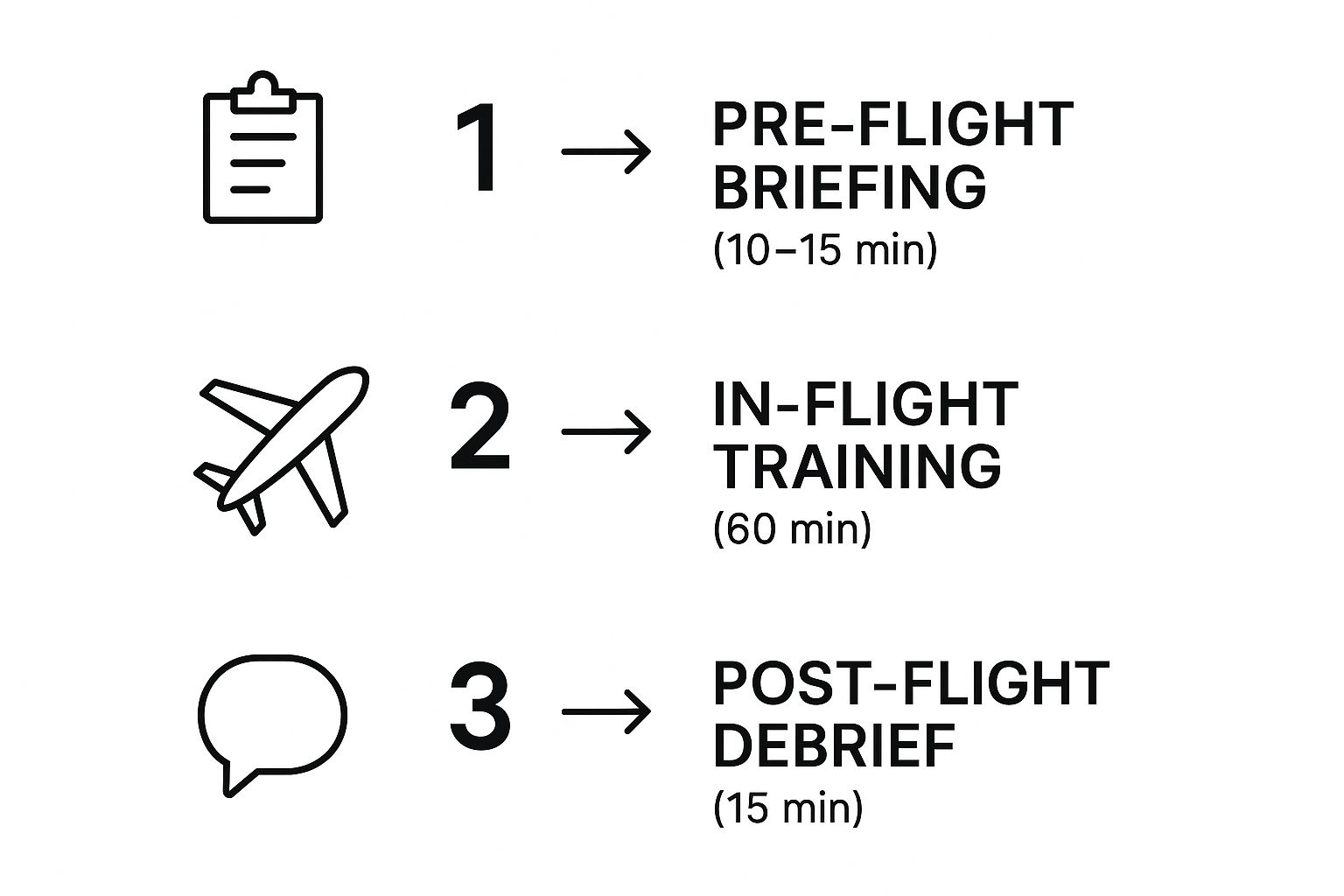
As you can see, the real magic happens up in the air, giving you plenty of time to actually fly.
You Have the Controls
After climbing to a safe altitude, you’ll hear the five words you’ve been waiting for: “You have the flight controls.”
This is it. Your instructor will guide you, but it’s your hands on the yoke. You’ll start with some gentle turns, getting a feel for how the plane banks left and right. Then you’ll practice climbs and descents, discovering how a tiny push or pull on the controls changes your flight path. It’s an incredible feeling of connection and command.
As you head back to the airport, your instructor will take back the controls for the landing, talking you through the procedure all the way down. After you’ve taxied back and shut down the engine, you’ll do a quick post-flight debrief. This is your chance to ask every question you can think of and talk about what comes next.
Choosing The Right Aircraft For Your Flight
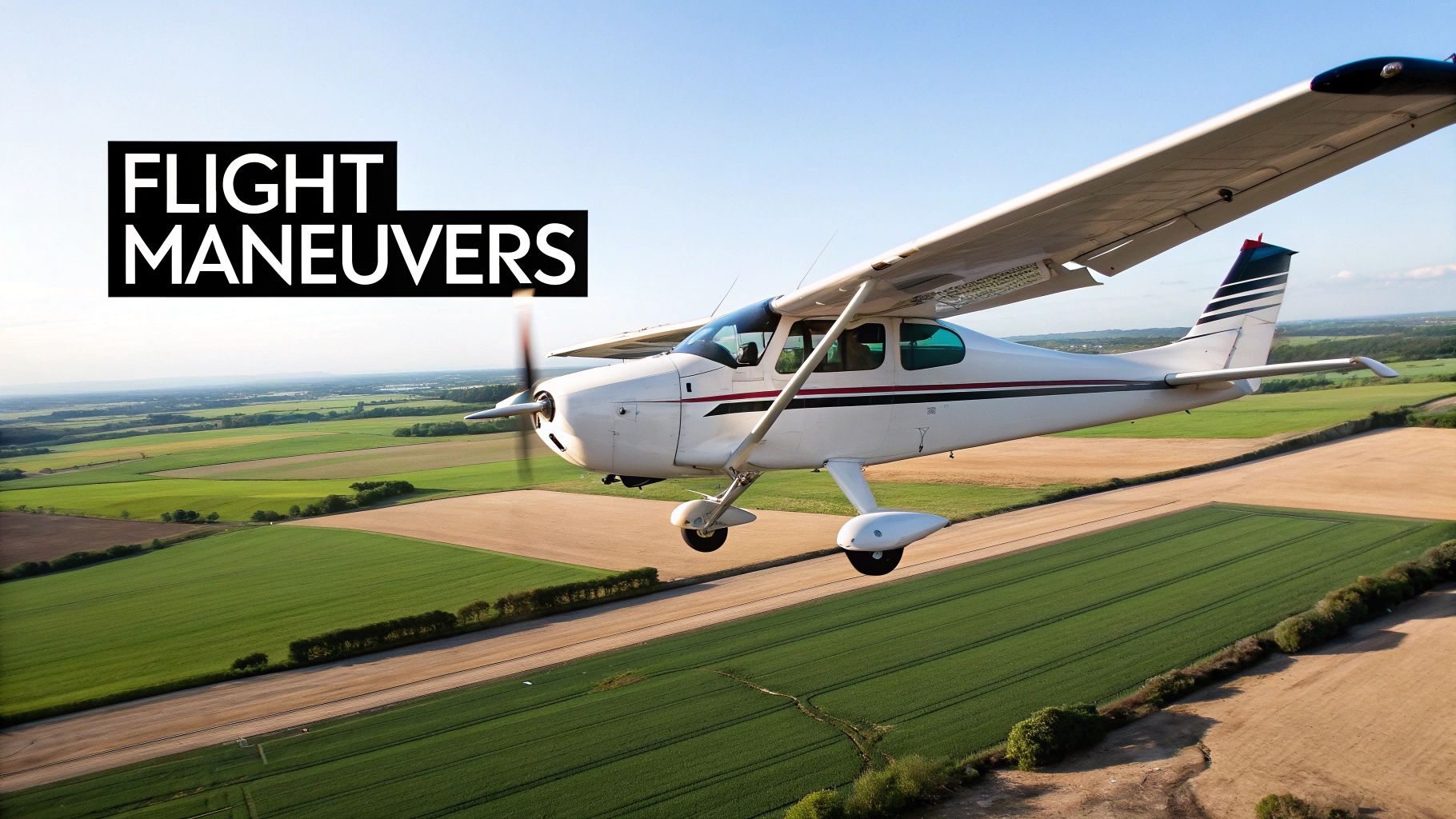
The airplane you’ll fly on your first lesson is more than just a machine—it’s your classroom in the sky. Flight schools are incredibly deliberate about the planes they use for training. They don’t pick the flashiest or fastest models; they choose aircraft known for being safe, reliable, and especially forgiving for someone who’s never touched the controls before.
More often than not, you’ll find yourself stepping into one of two industry workhorses: the Cessna 172 or the Piper Archer. Think of these planes as the trusty sedans of the aviation world. They’re predictable, stable, and built with dual controls, which means your instructor has a yoke and rudder pedals on their side, ready to guide you or take over in an instant.
High-Wing vs. Low-Wing Trainers
The first thing you’ll probably notice is the most obvious difference between a Cessna and a Piper: where the wings are. A Cessna 172 is a high-wing aircraft, with the wings mounted above the cabin. On the other hand, a Piper Archer is a low-wing aircraft, with the wings attached to the bottom of the fuselage.
This isn’t just a style choice; it actually changes the experience of flying.
- Views: In a high-wing plane, you get an amazing, unobstructed view of the ground stretching out below you. It’s perfect for sightseeing. A low-wing plane gives you a clearer view upward and into your turns.
- Feel: High-wing designs tend to be naturally stable; the plane almost wants to level itself out. Low-wing aircraft can feel a bit sportier and more responsive to your inputs.
There’s no “better” design here—just different flavors of flying. Most schools have a preference, and you can usually see what they fly by checking out their fleet page, like our detailed aircraft list at DuBois Aviation.
No matter which one you end up in, the goal is the same: to make your first flight feel as intuitive and safe as possible. The forgiving nature of these planes lets you focus on learning the basics without feeling like you’re trying to tame a wild beast.
This careful selection of trainers is the first step in a massive, industry-wide effort to create the next generation of aviators. With a wave of retirements on the horizon, the aviation industry needs an estimated 674,000 new pilots over the next two decades just to keep up with demand. Your introductory flight is the very first step on a path that many are taking to fill that critical need.
Common Training Aircraft Comparison
So, what are the key differences between the two planes you’re most likely to meet on the ramp? This quick comparison breaks it down.
| Feature | Cessna 172 (High-Wing) | Piper Archer (Low-Wing) |
|---|---|---|
| Primary Advantage | Excellent ground visibility and inherent stability. | Clearer views in turns and a more sporty feel. |
| Cockpit Access | Two doors, making it easy to enter and exit. | Typically one door over the wing. |
| Feel in Flight | Very stable and “self-correcting” in the air. | Feels responsive and connected to the controls. |
Ultimately, both the Cessna 172 and the Piper Archer are fantastic platforms for learning to fly. They have trained generations of pilots for a reason, and either one will give you a perfect introduction to the world of aviation.
How to Prepare for Your First Flying Lesson
A little prep work goes a long way in making your first flight an incredible experience instead of just a good one. When you show up to the airport with a few basics covered, you’ll feel more confident, soak up more knowledge, and really make the most of your time in the sky.
The simple stuff is often the most important. Try to get a full night’s sleep before your lesson. Being well-rested isn’t just a suggestion; it’s a core part of being a safe pilot, and it keeps your mind sharp and ready to learn.
What you wear also makes a surprising difference. Go for comfortable clothes that you can move around in easily. The most critical part? Closed-toe shoes, like a pair of sneakers. You’ll be using your feet to work the rudder pedals, and the right shoes are key for both comfort and control.
Your Pre-Flight Checklist
Besides getting some rest and dressing the part, there are a few things you’ll want to bring with you. Think of it as your mini flight bag for the day.
- Sunglasses: It gets bright up there! A good pair of non-polarized sunglasses will cut the glare, making it easier to enjoy the view and spot other aircraft.
- Camera or Smartphone: Trust me, you’re going to want pictures of this. The views from the cockpit are spectacular, and you’ll want to remember your first time at the controls.
- An Open Mind: Show up ready to ask a ton of questions. Your flight instructor is your best resource, and being curious is the fastest way to really start understanding what flying is all about.
Preparing for your introductory flying lessons is really about setting yourself up for success. Simple steps like watching a video on the basics of flight—pitch, roll, and yaw—can give you a mental head start, making the instructor’s in-person explanation click much faster.
Doing this little bit of homework beforehand keeps you from feeling overwhelmed once you’re in the plane. It frees you up to truly enjoy the hands-on thrill of actually flying the aircraft.
If you want to share this amazing adventure with someone else, our discovery flight gift certificates make an unforgettable present.
Understanding the Costs and What’s Included
Alright, let’s talk about the price tag. It’s easy to see the cost of a discovery flight as just another expense, but it’s much more than that. Think of it as an investment in finding out if flying is your thing—a potential passion or maybe even a whole new career. So, what are you actually paying for?
Usually, the price you see is an all-inclusive package that covers all the essentials for your first time in the cockpit. This isn’t just about the time you spend wheels-up. It includes the instructor’s time for the ground briefing before you even see the plane and the debrief afterward, making sure you get a complete, well-rounded lesson.
The total cost of an introductory flight is a package deal. It combines aircraft rental, fuel, and the expertise of a Certified Flight Instructor for the entire duration of your lesson—both on the ground and in the air.
This bundled approach is great because it means no surprise fees. It’s a straightforward way to get you behind the controls without having to worry about hidden costs popping up later.
Breaking Down the Price Tag
While prices definitely vary from one flight school to another, most introductory flights fall into a predictable range. The final cost really just comes down to the resources required to get you in the air safely and effectively.
Here’s a look at what’s almost always rolled into that single price:
- Aircraft Rental: This is for the use of a safe, well-maintained training aircraft.
- Fuel: Aviation fuel is a major operational expense, so it’s a big part of the cost.
- Instructor’s Time: You’re paying for the dedicated, one-on-one time with a professional pilot whose job is to teach you and keep you safe.
- Airport Fees: In some cases, things like landing fees or facility use charges at the airport are also included.
It’s worth noting that the demand for pilots is booming globally, which makes these first steps more valuable than ever. The Asia Pacific pilot training market, for instance, holds about 40% of the global market share, largely driven by the explosion in air travel. If you’re curious about these trends, you can explore detailed insights on the pilot training market to see the bigger picture.
When you book, it’s always a good idea to ask about any optional extras. Some schools offer a pilot logbook (so you can officially count the flight time!) or a video of your flight. Knowing about these ahead of time helps you budget perfectly for an unforgettable day.
So, What’s Next? From First Flight to Pilot’s License
You’ve just landed, the propeller has spun to a stop, but your head is still in the clouds. That exhilarating feeling from your first time at the controls isn’t just a fleeting moment for many people—it’s the beginning of a genuine passion for aviation. If you’re already wondering when you can go up again, let’s talk about what the path forward looks like.
The best part? Your introductory flight wasn’t just for fun. It was a real, official flight lesson. Your instructor logged that time, which means you’ve already taken the very first step toward earning your Private Pilot License (PPL).
The Path to Earning Your Wings
Getting your Private Pilot License is a lot like learning any new, complex skill. Think of it as a journey with a clear destination and well-marked signposts along the way. Your intro flight was the first leg of that journey; now it’s about building on that experience.
Here’s a quick look at the major milestones you’ll hit:
- Flight Time: The FAA sets the bar at a minimum of 40 hours of flight time. In reality, most pilots-in-training need around 60-70 hours to feel truly confident and ready for their final test.
- The Written Exam: This is a multiple-choice test that covers the book-smarts of flying—things like aerodynamics, weather, and FAA regulations.
- The Checkride: This is the big one—your final exam. It includes an oral quiz on the ground and a practical flight test with an FAA examiner to demonstrate your skills.
That intro flight you just took? It’s the very first entry in your pilot logbook, the official record of your entire flying career. Every lesson from here on out builds directly on that foundation, getting you one step closer to earning your license.
This isn’t a random process. It’s a structured, time-tested path designed to make sure every new pilot is safe, knowledgeable, and competent.
Choosing the Right Hangar to Call Home
Now that you’ve been bitten by the flying bug, one of the most important decisions you’ll make is where to continue your training. The connection you have with your flight school and your instructor will shape your entire experience. You’re not just looking for someone to teach you maneuvers; you’re looking for a mentor who gets your learning style.
As you look at different schools, keep these three things front and center:
- Safety First: Does the school have a top-notch safety record? Are their planes well-maintained and cared for?
- Instructor Consistency: Will you be flying with the same instructor most of the time? Does their schedule work with yours?
- Aircraft Access: Do they have enough planes available so you aren’t constantly fighting to get on the schedule?
Finding the right school turns your training from a simple checklist of lessons into a true mentorship. A great program provides a clear roadmap from that first flight all the way to your final checkride. You can see how a complete curriculum works by exploring professional flight training programs, which lay out every step of the process. It’s how a single flight turns into a skill you can enjoy for a lifetime.
Answering Your Top Questions About Discovery Flights
Even with all the excitement, it’s natural to have a few lingering questions before you hop in the cockpit. Let’s tackle some of the most common ones we hear from first-time flyers.
How Old Do You Have to Be to Take a Lesson?
While you need to be 16 years old to get a student pilot certificate and fly solo in the United States, there’s actually no minimum age to take a flying lesson with an instructor. We’ve had plenty of younger aspiring pilots take a discovery flight to see if aviation is really for them—it’s a fantastic way to get a head start!
Just How Safe Is an Introductory Flight?
Extremely safe. In aviation, safety isn’t just a priority; it’s the foundation of everything we do. The training aircraft you’ll fly in are meticulously maintained to meet stringent FAA standards.
More importantly, you’ll be sitting next to a Certified Flight Instructor (CFI), a professional who has been trained to handle virtually any scenario. The aircraft is equipped with dual controls, meaning your instructor has their own set of controls and can instantly take over if needed.
Think of it this way: your introductory flight is part of the same safety-obsessed culture that governs commercial airlines. It’s a carefully managed environment designed to make your first time in the air as secure as it is memorable.
Do I Need to See a Doctor for a Medical Certificate First?
Nope! For an introductory flight, a special FAA medical certificate isn’t required. You only need to worry about that later on, once you decide to pursue your student pilot certificate and start flying solo. For your first lesson, as long as you feel you’re in good general health, you’re good to go.
What If I Feel Nervous or Get Motion Sickness?
Feeling a little bit of everything—excitement, nerves, you name it—is completely normal. If at any point you start to feel queasy or overwhelmed, the most important thing to do is speak up and tell your instructor right away.
They can immediately take the controls, smooth out the flight, or simply head back to the airport if that’s what you want. Your comfort is just as important as the experience itself.
Ready to feel the thrill of flight for yourself? At DuBois Aviation, we specialize in creating unforgettable first flight experiences that are safe, educational, and a whole lot of fun. Book your introductory flight with our expert instructors today and take the first step on your aviation journey. Learn more and schedule your flight at DuBois Aviation.
Article created using Outrank


