
Those who look up experience flying a plane often share a common starting point. They’ve looked up every time a small aircraft passed overhead, wondered what the cockpit feels like, and asked themselves whether flying is something other people do or something they could learn.
That question usually gets answered on a discovery flight.
A first lesson at a busy airport like Chino isn’t a theme-park ride. You’ll hear radios, watch airplanes move in every direction, sit through a real preflight briefing, and put your hands on the controls with an instructor beside you. That’s what makes it useful. You don’t just see aviation from the outside. You start learning how it works.
From Dream to Discovery Flight
The turning point comes when aviation stops being abstract.
One day it’s a passing thought. The next, you’re standing on the ramp at Chino Airport, smelling avgas, watching a trainer taxi by, and realizing that a first flight lesson is an ordinary thing people book every week. That shift matters because it turns “maybe someday” into a scheduled lesson on a calendar.
A discovery flight is the right entry point because it provides an authentic environment without asking you to commit to the full training path up front. You meet an instructor, see the aircraft, and get a feel for whether you enjoy the pace, the procedures, and the responsibility. If you’ve been thinking about trying it, an introductory flight lesson is the practical first step.
What first-timers usually notice
The surprise isn’t how complicated flying is. It’s how structured it is.
You’ll notice that everything has a sequence. The instructor doesn’t rush you to the airplane. You talk first. You walk around the aircraft. You discuss what you’ll do if something doesn’t look right. Good flight training starts with that mindset on day one.
A good first lesson should feel welcoming, but it should also feel disciplined.
That’s especially helpful at a Southern California field where you’re not isolated from real-world operations. Chino gives you movement, radio traffic, and runway activity right away. For a first-timer, that’s valuable because it shows what flying looks like when people use airplanes for training, travel, and recurrent proficiency.
What a discovery flight is really for
A first lesson answers a few practical questions fast:
- Do you like the cockpit environment
- Can you handle instructions while the airplane is moving
- Do you enjoy the learning process, not just the view
- Do you want to keep going after landing
Those answers matter more than trying to “perform well” on the first flight. Nobody expects that. The right goal is simpler. Show up curious, pay attention, and let the lesson tell you whether aviation feels like a fit.
Booking Your First Flight Lesson
Booking the flight is straightforward. Choosing the right school takes more judgment.
A first-timer often compares by convenience or price alone, but that misses the main issue. You’re trusting a school with your introduction to aviation, so you want to see signs of an operation that treats training as a system, not as a casual sightseeing add-on.
What to look for before you schedule
Start with the school’s training environment. A serious operation will make the process clear. You should be able to understand what the lesson includes, what kind of aircraft is used, who flies with you, and how scheduling works.
Then look for signs of a safety culture. One useful benchmark is whether a school’s training approach reflects data-driven risk management. In aviation operations, statistical analysis is used to identify inefficiencies and safety gaps, centralize operational data, and monitor outcomes over time through continuous review, as described in this aviation safety analysis overview. For a training organization, that translates into paying attention to incident trends, focusing instruction on higher-risk procedures, and adjusting training based on results instead of guesswork.
Practical rule: If a school can explain how it trains, schedules, briefs, and maintains standards, that’s a better sign than polished marketing alone.
Questions worth asking
Before you book, ask a few direct questions. You don’t need to sound like an aviation insider.
What’s included in the lesson
Ask whether the session includes a ground briefing, aircraft walk-around, and actual hands-on flight time.Who flies with me
You want a certificated instructor, not a generic “pilot experience” host.How does weather rescheduling work
A school that cancels for weather without pressure is showing good judgment.Is the lesson loggable if I continue training
If you decide to pursue a certificate, that first flight may become part of your training record.
Booking with confidence
If you’re comparing options around Chino, check how transparent the school is about pricing and scheduling. A clear introductory flight lesson cost page helps because it removes the awkward mystery that keeps many first-timers from booking at all.
Here’s the short version of what works and what doesn’t.
| Choice | What works | What doesn't |
|---|---|---|
| School selection | Clear training process, real instructors, straightforward scheduling | Vague promises, unclear lesson structure |
| Safety signals | Emphasis on procedures, briefings, and operational discipline | Pressure to “just hop in” |
| Booking | Transparent pricing and responsive communication | Surprise add-ons and fuzzy policies |
A good booking experience should feel organized before you ever touch the airplane. If the ground process is sloppy, don’t expect the flight process to be better.
How to Prepare for Your Day at the Airport
Students usually overthink the wrong things.
They worry about whether they’ll understand the radios, whether they’ll get airsick, or whether they need to study aerodynamics the night before. What matters more is showing up physically comfortable, mentally open, and ready to communicate openly with the instructor.
What to wear and bring
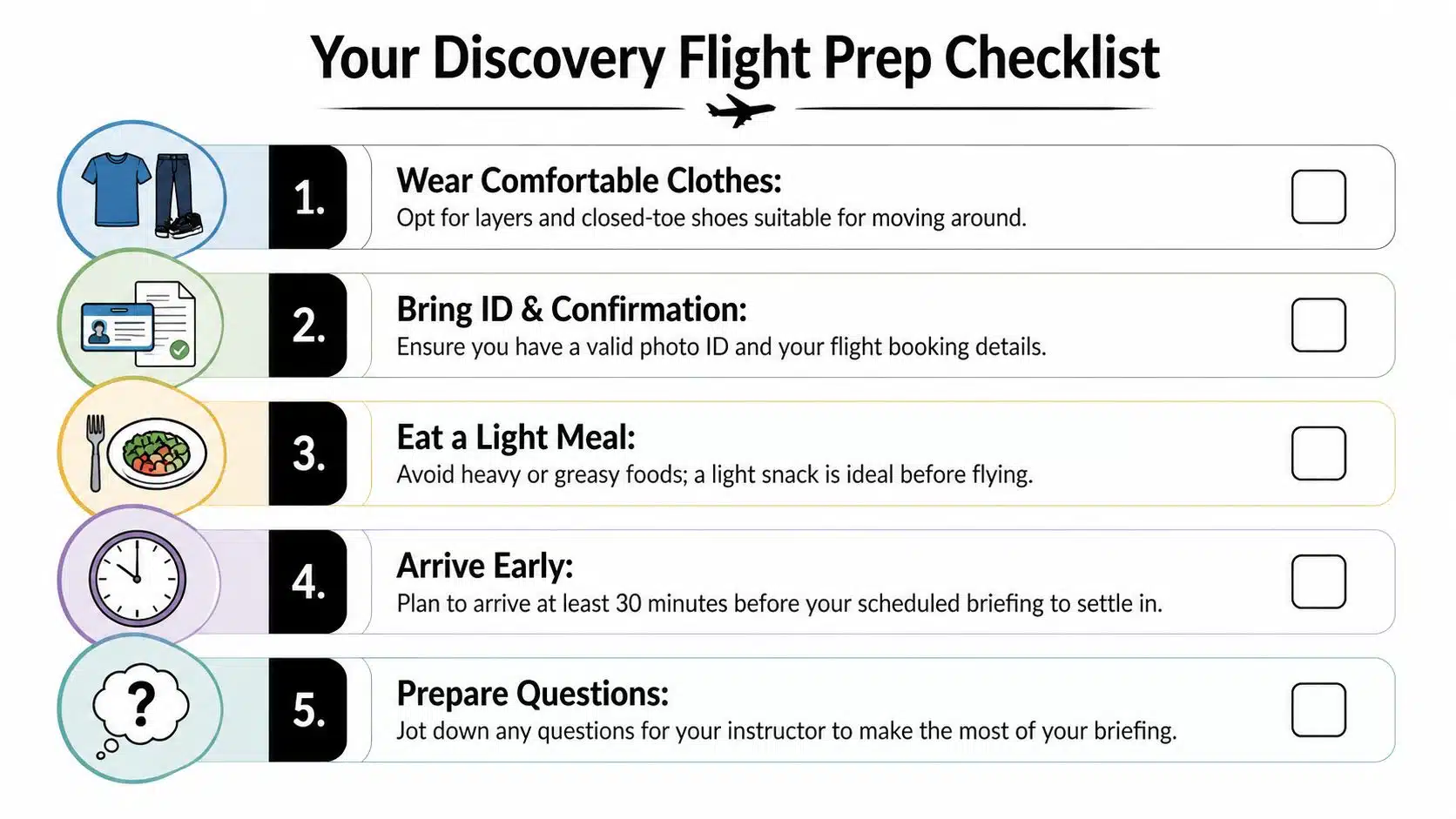
Dress for a working cockpit, not for a photo shoot. Small trainers can get warm on the ground and cooler in the air, so layers help. Closed-toe shoes matter because you’ll be stepping around the airplane and working rudder pedals.
Bring the basics:
- Photo ID so the front desk process stays simple
- Sunglasses because glare in a high-wing or low-wing trainer can be tiring
- Water for before and after the flight
- Your booking confirmation on your phone
- Questions you want answered so you don’t forget once the engines start
Eat lightly. Don’t show up hungry, but don’t arrive after a heavy meal either. Most first flights are smooth, but your body handles motion better when you keep it simple.
Set your comfort limits early
The best thing a first-time student can say is, “I’m excited, but I’m also a little nervous.”
That helps the instructor calibrate the lesson. It also starts a habit that matters throughout your flying life. Experienced instructors often point out that there’s a real gap between what an aircraft is approved to do and what a pilot should personally attempt. One instructor puts it plainly in this discussion of personal minimums and aircraft capability: “although the handbook says you can do it, and everything checks out, know what you are and are not comfortable with” and “know what your aircraft really CAN and CANNOT do”.
That lesson belongs on the first day, not years later.
If you feel warm, tense, overloaded, or uncomfortable, say it early. Quiet passengers are harder to help than honest ones.
Why a busy airport helps
A towered field changes the quality of the lesson. You hear sequencing, runway instructions, and radio discipline from the start. That gives your first experience flying a plane more realism than a quiet airport where little is happening.
At Chino, you’re not shielded from normal operations. You’ll watch the instructor manage checklists, timing, taxi awareness, and communication in a live environment. That can feel like a lot at first, but it’s productive exposure. Students who begin around real traffic often build better habits because they see right away that safe flying depends on attention, not bravado.
A simple day-of routine
Use this sequence and the day usually goes well:
Sleep normally the night before
Don’t treat the lesson like a test. Treat it like a skill session.Arrive early enough to slow down
Rushing into aviation is a bad habit from the start.Tell the instructor your experience level
“Zero” is a perfectly normal answer.Speak up in flight
If you need a smoother turn, a break from talking, or a quick explanation, ask.
Preparation for a discovery flight is less about impressing anyone and more about making yourself teachable.
Your Hands-On Experience Flying the Plane
The first few minutes usually reset a student’s expectations.
They expect the exciting part to start at takeoff. In reality, the lesson begins when you walk to the airplane and your instructor starts pointing out what’s normal, what isn’t, and what you always check before a flight. That’s where aviation starts becoming real.
The briefing and walk-around
Before the engine starts, the instructor will explain the plan in plain language. You’ll hear what route you’ll likely fly, what parts you may handle, and how the instructor will step in when needed. That conversation lowers stress because it removes the mystery.
Then comes the walk-around. You’ll inspect the airplane from nose to tail. The instructor may show you fuel quantity, control surfaces, tires, general condition, and areas pilots check before every departure. The point isn’t to make you memorize a checklist in one lesson. The point is to show that pilots don’t assume the airplane is fine. They verify.
Getting settled in the cockpit
Once strapped in, the cockpit looks busy for about two minutes. Then it starts making sense.
You’ll get introduced to the yoke, rudder pedals, and throttle. The explanation is usually simple:
- Yoke changes pitch and bank
- Rudder pedals help control the airplane on the ground and coordinate in flight
- Throttle manages engine power
Your instructor remains the pilot in command. That’s important. It means you can focus on learning without carrying the full workload alone.
Most first-timers don’t need more theory. They need one clear instruction at a time and time to feel what the airplane does in response.
The takeoff and climb
Taxiing is often the first surprise. You feel how alive the airplane is even before leaving the ground. Every control input matters. At a busy airport, you also start hearing why cockpit discipline matters. The radios aren’t background noise. They’re part of how everybody shares the same space safely.
On takeoff, the acceleration feels different from a car because there’s less friction and more intention. Once airborne, most students relax. The airplane settles into the climb, the horizon drops, and Chino starts looking organized from above. Roads, hangars, fields, and traffic patterns all make more sense from the air than from the fence line.
When you take the controls
This is the part people remember.
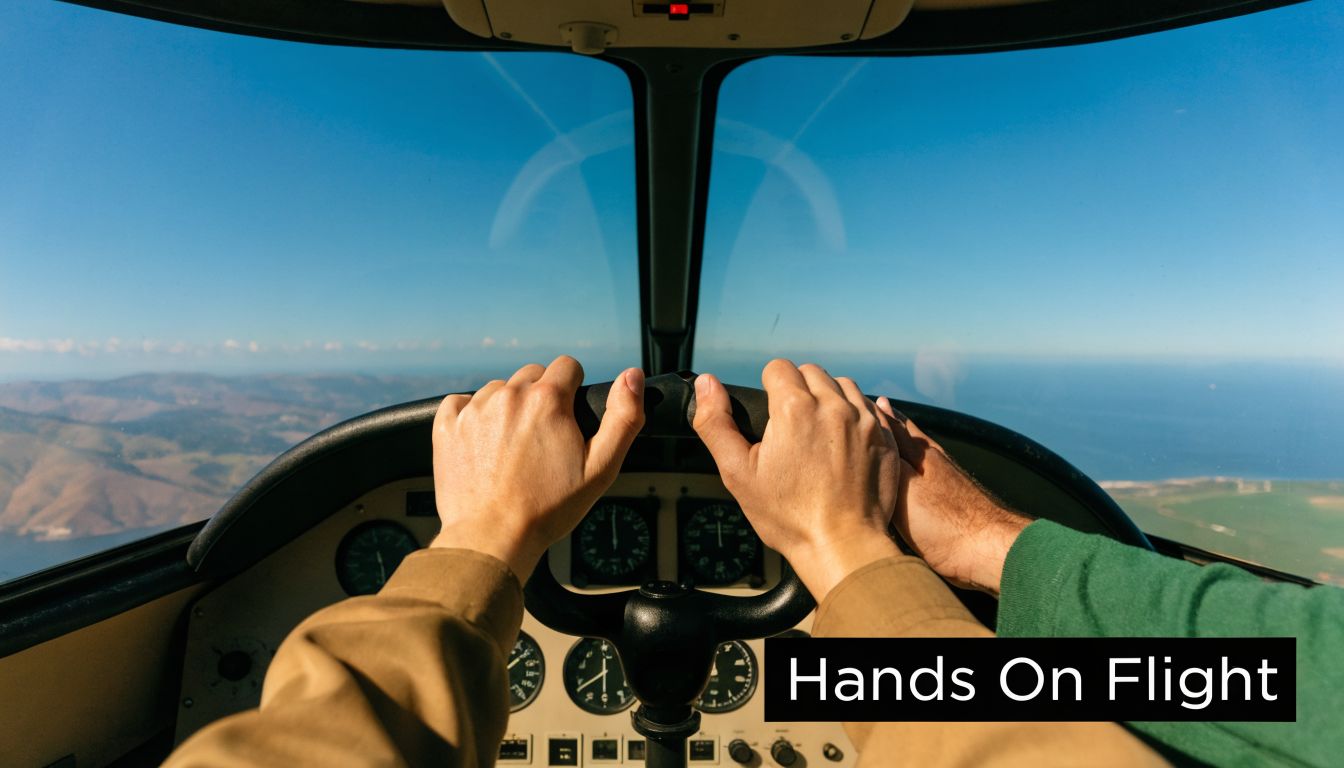
The instructor will usually transfer control clearly and have you make small, manageable inputs. The first lesson is not about sharp maneuvers. It’s about learning that tiny corrections work better than big ones.
Beginners tend to stare at the instrument panel because they think that’s what pilots do. In practice, good aircraft control starts outside. Experienced instructors teach students to use the visual picture through the windshield, especially the relationship between the horizon and the airplane’s structure. In steep turns and other maneuvers, instructors note that many people “go for the flight instruments first,” but that’s the wrong priority. Skilled control relies heavily on visual cues, with instruments used to verify, as explained in this discussion of visual reference and flight control.
That idea clicks fast in the air. When you look outside, your turns smooth out. Your altitude control improves. The airplane stops feeling like a machine you’re wrestling and starts feeling like something you’re guiding.
The return and landing
The trip back to the airport usually feels shorter because your brain is busy organizing what just happened.
During the arrival, your instructor will take on more of the workload. That’s normal. Approaching a towered airport requires spacing, planning, radio work, and steady energy management. Watch closely. The landing phase teaches first-timers an important lesson. Flying isn’t one dramatic action. It’s a chain of small, timely decisions.
After shutdown, most students step out smiling and a little overloaded. That’s exactly where they should be.
From First Flight to Formal Pilot Training
A good first lesson doesn’t end when the propeller stops. The debrief is where scattered impressions turn into useful understanding.
This is when students often say some version of, “That was more manageable than I expected.” That matters because pilot training is built on repetition, structure, and gradual increase in workload. The first flight gives you a preview. Formal training turns that preview into a process.
What the first lesson tells you
The debrief should cover more than whether you had fun. It should answer practical questions.
How did you handle instructions
Some students pick up control feel quickly. Others process better after a short review on the ground. Both are normal.Did the cockpit environment suit you
Small aircraft training is hands-on and physically engaged. You should know whether that feels energizing or draining.Do you want to continue soon
Momentum matters in flight training. Waiting too long between early lessons makes everything harder.
If the lesson was conducted as training with an instructor, that time may count toward your progress if you continue. That’s one reason a real discovery lesson is more useful than a sightseeing flight.
Why structured hours matter
Experience is not a vague concept in aviation. It shows up in safety outcomes.
A general aviation safety study found strong differences between accident and non-accident pilots based on experience. Non-accident pilots had higher mean total flight time, higher recent flight time, and higher time in make and model. The same study found that pilots with over 1500 total hours had 21% accidents and 79% incidents, while pilots with under 250 hours had 83% accidents and 17% incidents, as reported in this general aviation experience and safety study.
That doesn’t mean low-time pilots are doomed. It means structured experience matters. The hours themselves help, but the bigger point is how those hours are built. Training that reinforces procedures, judgment, and aircraft familiarity produces a different pilot than occasional, unfocused flying.
Repetition without standards builds habits. Repetition with instruction builds skill.
Turning one lesson into a plan
Formal training works best when the next steps are concrete. A student usually needs three things:
| Training need | Why it matters | What to ask |
|---|---|---|
| Consistent curriculum | Prevents random lesson drift | What ground and flight sequence do you follow |
| Access to aircraft | Keeps gaps between lessons manageable | How does scheduling work week to week |
| Proficiency support | Helps when weather or timing interrupts progress | Is there simulator access or extra ground review |
A school such as DuBois Aviation offers one-on-one airplane and helicopter instruction at Chino, uses Jeppesen learning materials, operates a fleet that includes Piper Cherokees and a Cessna 150, and supports training with an in-house simulator. For a student deciding whether to move beyond the first lesson, those details matter because they affect training continuity, aircraft familiarity, and how efficiently you can progress.
How goals change after the first flight
Some people leave wanting a Private Pilot Certificate for personal travel. Others start thinking about instrument training, commercial flying, or an airline pathway. A few discover they prefer helicopters. The first lesson doesn’t need to settle all of that.
What it should do is confirm whether you want to keep learning. If the answer is yes, act on it while the experience is fresh. Schedule the next lesson, review what you learned, and start building the kind of experience that makes pilots safer and more capable over time.
A Safety-First Guide to Buying an Airplane or Helicopter
Owning an aircraft changes the conversation.
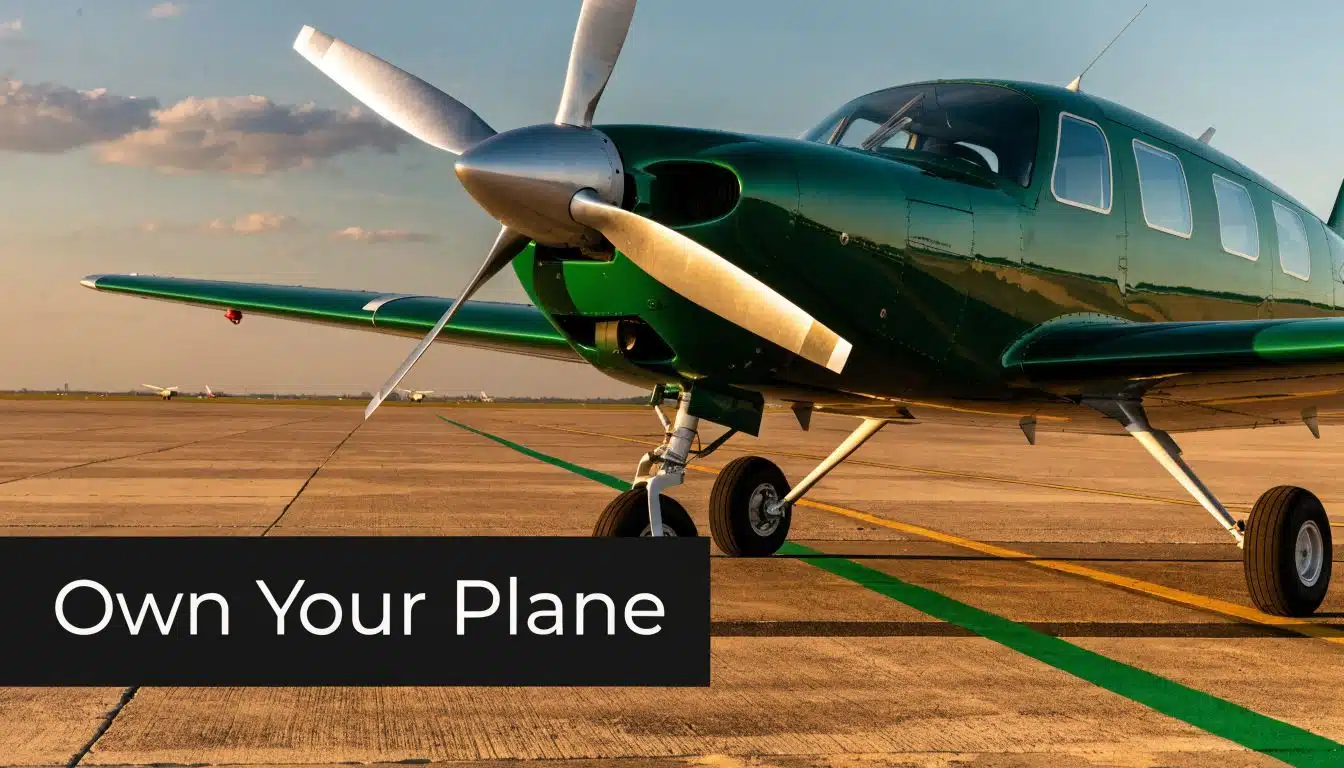
Up to this point, the focus has been on learning to fly. Ownership adds another layer. You’re no longer only choosing how to train. You’re choosing a machine, a maintenance history, an operating mission, and a long-term responsibility. That’s why buying an airplane or helicopter the safe way means slowing down.
Buy for the mission, not the fantasy
Most bad aircraft purchases start with ego. A buyer shops for speed, image, or a dream mission that rarely happens.
Start with what you will do. Local proficiency flights require something different than family cross-countries. Basic time-building is different from instrument travel. Helicopter ownership brings its own maintenance, insurance, and mission questions. If you don’t define the mission first, you can’t judge whether the aircraft is a fit.
A practical comparison between common trainers helps many first-time buyers think clearly. Reviewing an aircraft matchup like Piper Cherokee vs Cessna 172 can sharpen your sense of cabin layout, handling style, and mission suitability before you start shopping seriously.
The non-negotiable steps
There are a few parts of the purchase process you should never skip:
Independent pre-purchase inspection
Use a mechanic who works for you, not the seller. This is not optional.Logbook and records review
Missing records are not a small paperwork problem. They affect airworthiness confidence, maintenance planning, and resale value.Title and lien search
Clear ownership needs to be confirmed formally, not assumed from a conversation.Real operating budget
Purchase price is only the entry cost. You still need to think through fuel, insurance, storage, scheduled maintenance, and the unscheduled items that always arrive.
Ownership also requires recurrent training
The safest owners aren’t always the most experienced on paper. They’re the ones who stay current and honest.
Longitudinal research on pilot performance shows that flight summary scores declined at an average rate of 0.025 standard units per year, with age-related effects most pronounced in traffic avoidance (ES = −0.60) and approach procedures (ES = −0.47), according to this pilot expertise and aging performance study. The takeaway for owners is simple. If you fly less often than professional crews, you need recurrent training on purpose, especially around traffic management and approaches.
Aircraft ownership does not make proficiency automatic. Infrequent flying erodes precision quietly.
The safe buyer thinks past the purchase. The safe owner budgets for training, seeks recurrent instruction, and chooses an aircraft that matches both skill and mission.
If you want your first real cockpit experience or you’re trying to build a safer path into training and aircraft ownership, DuBois Aviation offers introductory lessons, structured flight training, and access to a real operating environment at Chino Airport. A discovery flight is still the cleanest way to find out whether flying should stay a dream or become a plan.