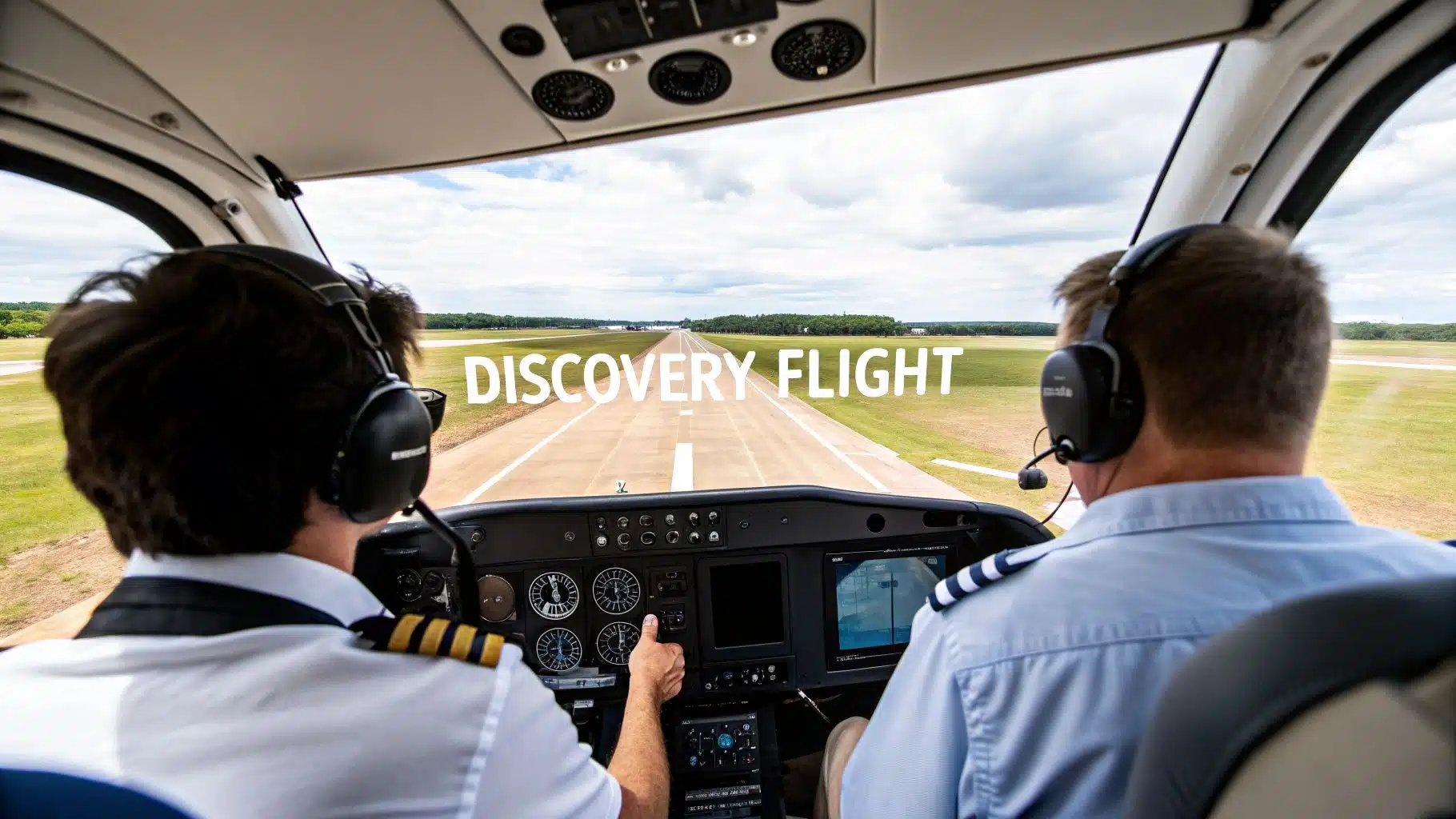
An introductory flying lesson, often called a discovery flight, is your first real taste of what it feels like to be a pilot. This isn't just a scenic tour; it's a one-on-one session with a Certified Flight Instructor where you get to take the controls and actually fly the plane. Think of it as the ultimate test drive to decide if earning a pilot’s license is the right path for you.
Your Launchpad Into the World of Aviation
A discovery flight is designed to pull back the curtain on aviation and turn the abstract dream of flying into a concrete, hands-on reality. From the moment you step onto the tarmac, you're not a passenger—you're a student pilot. You’ll sit in the left seat (the pilot’s seat!), get familiar with the controls and instruments, and with your instructor's guidance, you'll be the one making the plane turn, climb, and descend.
The whole experience is structured to mirror a real training lesson, which usually breaks down into three parts:
- Pre-Flight Briefing: Your instructor will walk you through what you'll be doing in the air, explain some basic principles of flight, and show you how to perform the pre-flight safety inspection.
- Hands-On Flying: Once airborne, it's your turn! You’ll handle the controls to practice basic maneuvers like straight-and-level flight, climbs, and turns.
- Post-Flight Debrief: Back on the ground, you’ll review the flight with your instructor, ask any questions you have, and see how this very first hour is officially logged toward your pilot's license.
For many, this single flight is the spark that ignites a lifelong passion. It's not uncommon for that initial excitement to grow into bigger goals, eventually leading people to ask questions like how to buy an airplane the safe way.
From First Flight to Aircraft Ownership
It might sound like a huge leap, but the path from a discovery flight to owning your own aircraft is one many pilots follow. This first lesson often sparks interest in the broader world of aviation, including the market for buying and selling airplanes and helicopters. While that goal is further down the road, it's helpful to know what it involves. Safely buying an airplane or helicopter requires a detailed pre-purchase inspection from a qualified mechanic and a careful review of the aircraft’s maintenance logbooks, which document its entire service history.
Your journey starts with that first lesson, which follows a simple, structured process.
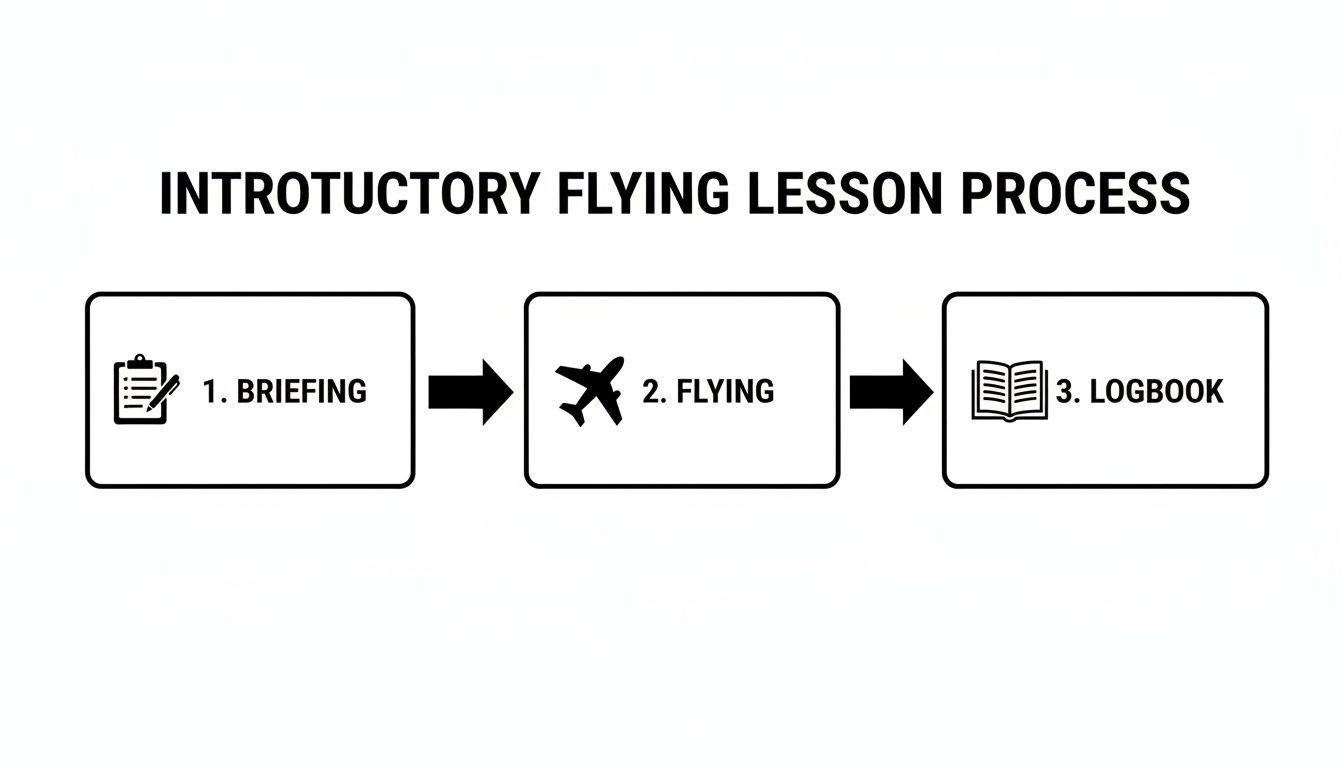
To give you a clearer idea of what to expect, here’s a quick breakdown of your first flight lesson.
Your Introductory Flying Lesson At a Glance
| Phase | What You Will Do | Key Learning Outcome |
|---|---|---|
| Pre-Flight | Meet your instructor, discuss the flight plan, learn about basic aircraft controls, and perform an exterior walk-around inspection of the plane. | Understand the importance of safety checks and get familiar with the aircraft's key components before you even start the engine. |
| During Flight | Taxi the aircraft to the runway, handle the takeoff (with assistance), and perform basic maneuvers like turns, climbs, and descents in the air. | Get a real, hands-on feel for how the aircraft responds to your control inputs and build foundational flying skills. |
| Post-Flight | Assist with landing, taxi back to the hangar, and debrief with your instructor. You'll discuss what went well, ask questions, and log your flight time. | Solidify what you learned, get professional feedback, and officially document your first hour of flight training in a pilot's logbook. |
This clear progression from ground briefing to logged flight time shows that a discovery flight is more than just fun—it's a complete, official training experience.
And you're not alone in this interest. The global flight training market was valued at USD 10.61 billion in 2025 and is projected to reach USD 24.86 billion by 2032. Fixed-wing training in aircraft like Cessnas and Pipers—the kind you’ll fly in your lesson—accounts for a massive 70% of that market. You can explore more insights about the flight training market and see just how fast it's growing.
The Pre-Flight Briefing and Aircraft Walk-Around
Every single flight, whether it's your first or your five-thousandth, starts on the ground. Your introductory lesson is no different. It kicks off with what we call a pre-flight briefing, where you and your Certified Flight Instructor (CFI) sit down to map out your time in the sky. This isn't just a casual chat—it's the bedrock of a safe and productive flight.
During the briefing, we'll talk through the plan. What are we going to do up there? What can you expect to see and learn? Your instructor will also break down the day’s weather in plain English, explaining how things like wind and clouds will play a role. We'll also give you a primer on the aircraft's controls and instruments, so you know what you’re looking at before you even climb in.
The Importance of the Aircraft Walk-Around
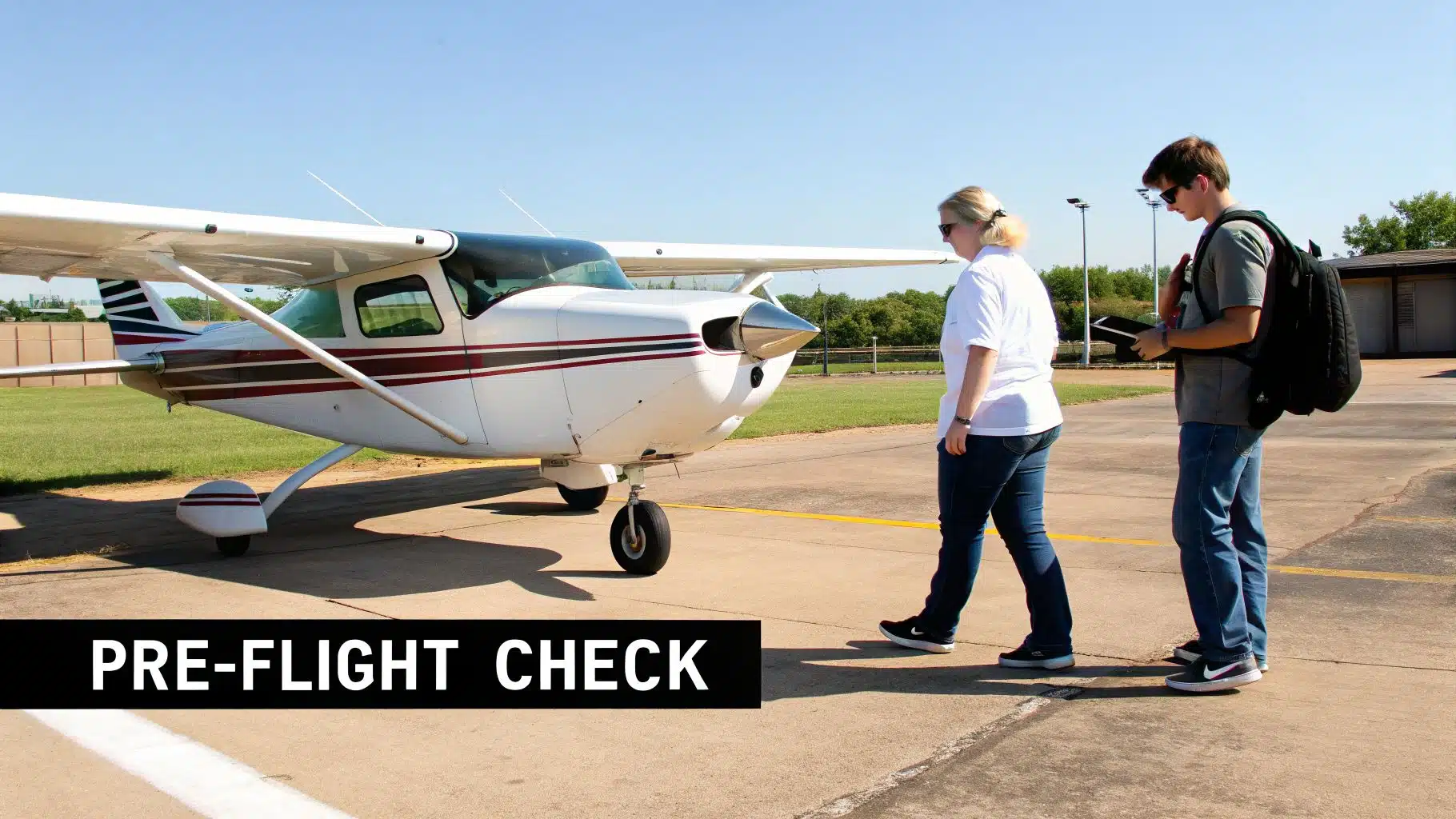
Once the briefing is done, we head out to the plane for the walk-around. This is one of the most fundamental rituals in aviation, and it’s all about safety. It’s a hands-on inspection to make sure the aircraft is in perfect shape to fly, and you won’t just be watching—you’ll be doing it with us.
Think of the walk-around as a pilot's conversation with their aircraft. It's a methodical check-in to ensure every part is ready for the flight ahead, turning abstract safety concepts into tangible actions.
This isn’t just a quick glance. It’s a systematic, physical inspection of the entire airplane. You'll be right there with your instructor, learning to:
- Check the Control Surfaces: You'll actually get to move the ailerons on the wings and the elevator on the tail, feeling how they respond and confirming they move freely.
- Inspect the Fuel: We'll show you how to look inside the fuel tanks and even take a small sample to check its color and make sure it’s free of water or other contaminants.
- Examine the Propeller and Engine: You’ll learn how to spot nicks on the propeller and check that the engine cowling is secure.
This process does more than just ensure the plane is airworthy; it demystifies the machine. It builds your confidence because you're seeing for yourself the professional care that goes into every single flight. Getting your hands on the plane solidifies a core pilot principle: you are ultimately responsible for the aircraft.
What to Look For During the Inspection
The entire walk-around is guided by a checklist, a pilot’s best friend. It ensures absolutely nothing gets overlooked. Your instructor will point out exactly what to look for, training your eyes to spot anything out of the ordinary—a loose panel, a low tire, or the tiniest sign of a fuel or oil leak.
This hands-on experience is incredibly powerful. It takes the concepts you just discussed in the briefing and makes them real. For anyone curious about the nitty-gritty details, our guide on pre-flight checks for a Cessna 172 breaks it down even further. This initial involvement is a huge step in shifting your mindset from passenger to pilot, building the habits of diligence that every great aviator possesses.
Taking the Controls During Your First Flight
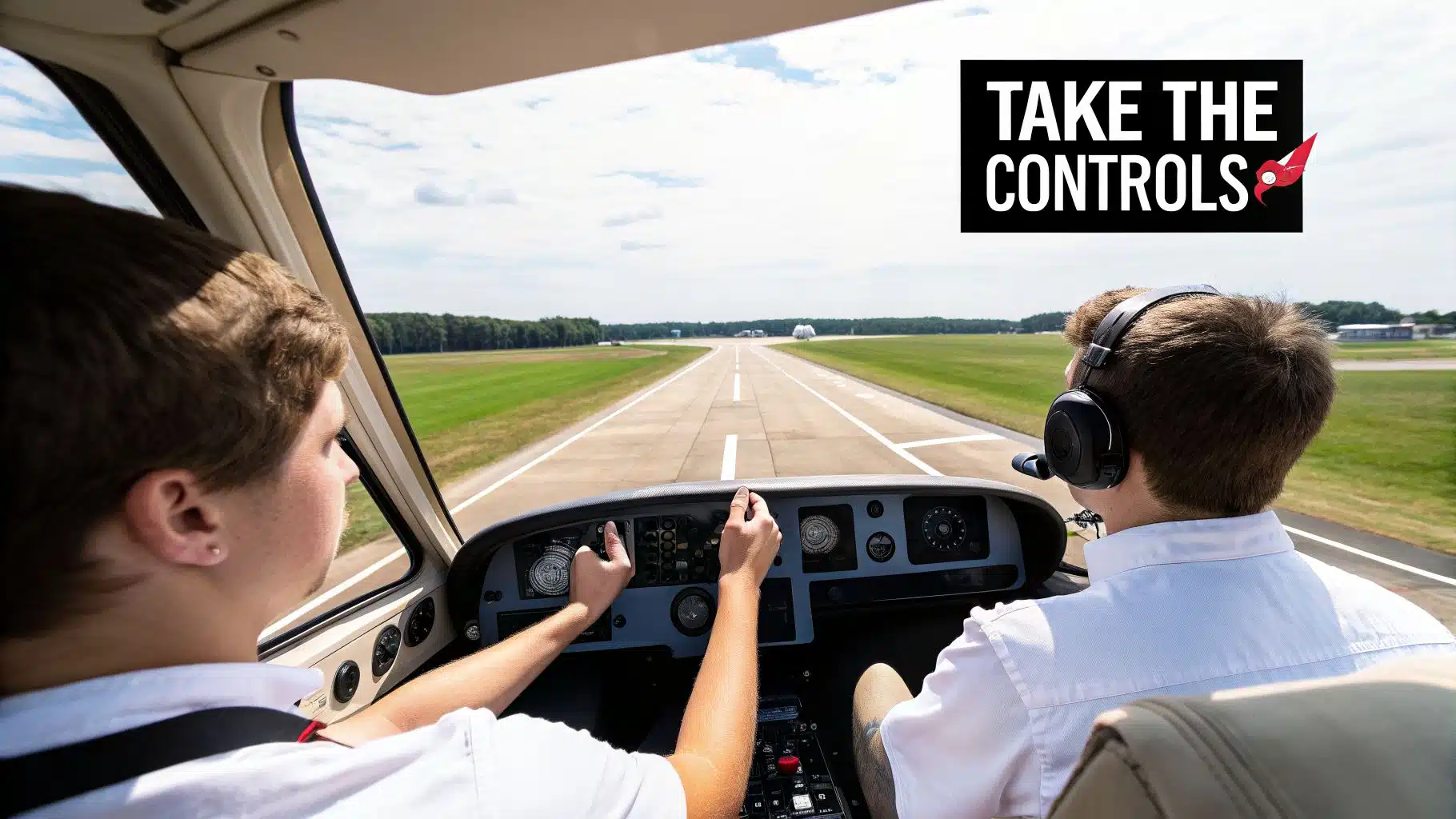
Alright, the ground checks are done. Now for the fun part. You’ll climb into the pilot’s seat, and your instructor will talk you through the engine start-up sequence. That first time you hear the engine catch and roar to life is something you won't forget—it’s the sound of theory turning into reality.
Next up is taxiing, which is just a fancy word for steering the airplane on the ground. It feels a little weird at first. You won't use a steering wheel; instead, you'll use your feet on the rudder pedals to follow the yellow lines out to the runway. Your instructor will be right there to guide you, and it quickly starts to feel natural.
The takeoff is where the real thrill kicks in. Once you get clearance from the tower, your instructor will have you push the throttle all the way in. The plane picks up speed surprisingly fast, and with a gentle pull back on the yoke, you’ll feel the wheels leave the pavement. That moment you lift off the ground is pure magic.
Your First Maneuvers in the Sky
Once you’re at a safe altitude, your instructor will turn to you and say the words you've been waiting for: “You have the controls.” It’s an incredible feeling. But don't worry—they have a complete set of dual controls right in front of them, acting as a safety net so you can fly with total confidence.
Your first job is usually straight-and-level flight. This is the foundation for everything else. The idea is to keep the wings level with the horizon while holding a steady altitude. It sounds easy, but it’s a great way to get a feel for the airplane and learn how subtle your control inputs need to be.
After that, you’ll likely move on to basic turns. With a little bank and a bit of rudder, you’ll guide the aircraft through smooth, graceful arcs across the sky. Watching the world pivot below you because of your own commands is incredibly empowering. From there, you'll practice climbs and descents, learning to manage the engine's power and the plane's pitch to go up or down deliberately.
From First Lesson to Future Ownership
That initial feeling of being in command often plants a seed. It’s not uncommon for pilots who start with an introductory flying lesson to start dreaming about one day owning their own aircraft. While that’s definitely a long-term goal, it doesn't hurt to understand what’s involved if flying really captures your imagination.
For anyone looking that far ahead, it pays to learn about the process early. People looking to buy or sell airplanes and helicopters have to navigate a complex path. Learning how to buy an airplane the safe way means understanding the critical steps that will protect your investment and ensure the aircraft is safe to fly.
A safe purchase always hinges on two non-negotiable elements: a thorough pre-purchase inspection by a trusted, independent mechanic and a meticulous review of the aircraft’s maintenance logbooks. This diligence is what separates a dream machine from a potential nightmare.
Whether it’s your first time touching the controls or you’re seriously considering a purchase, the core principles of safety and thoroughness are the same. The skills you start building in your very first lesson—attention to detail, understanding the machine, and making careful decisions—are the exact same skills that will serve you well if you ever decide to buy an airplane or helicopter of your own.
How to Prepare for Your Discovery Flight
So, you've booked your discovery flight. Awesome! A little bit of prep goes a long way toward making sure you squeeze every drop of fun and learning out of the experience. Think of it like this: you wouldn't show up for your first day on a new job without a little homework, right? Same idea here. Getting a few things sorted beforehand means less stress and more focus on what matters—flying.
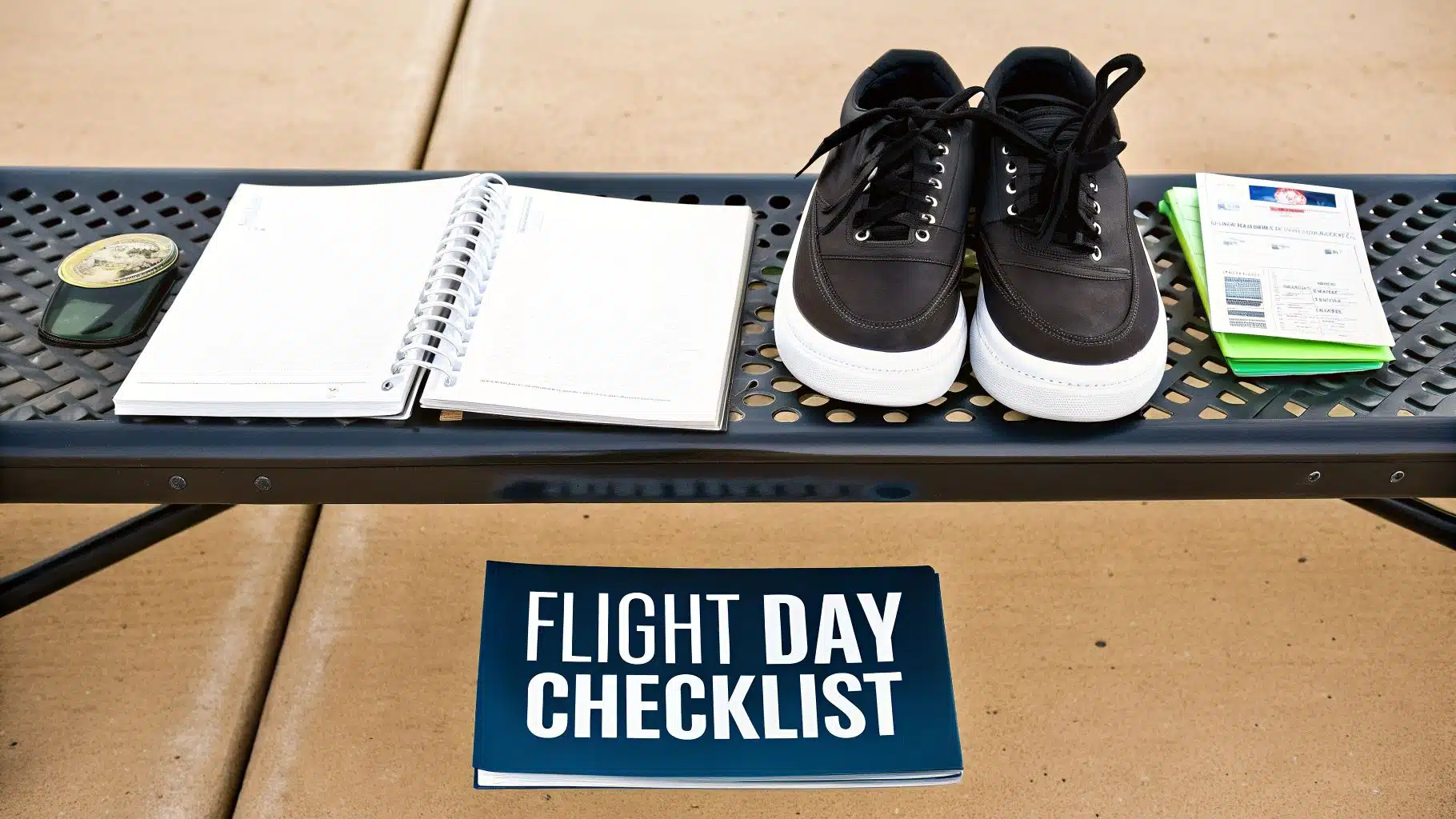
Let’s run through a quick pre-flight checklist so you can walk in feeling confident and ready to go.
What to Bring to Your First Flying Lesson
You don't need to show up with a pilot's flight bag, but a few small items are essential. Here’s a quick rundown of what to have on hand:
- Government-Issued Photo ID: This is non-negotiable for security and logging your flight. A driver's license or passport works perfectly.
- A Notebook and Pen: Your instructor is going to be dropping some serious knowledge. You'll thank yourself later for jotting down key concepts or answers to your questions.
- A Camera or Smartphone: Trust me, you’re going to want pictures. The views from a few thousand feet are absolutely unforgettable.
- Sunglasses: It gets bright up there! A good pair of non-polarized sunglasses will cut the glare and make it much easier to spot other aircraft and take in the scenery.
Once you’ve got those few things packed, let's talk about what to wear.
Dressing for Comfort and Safety
The cockpit of a small airplane is a functional space, so practical clothing is the name of the game. Comfort is everything.
The best approach is to dress in layers. It might be warm on the ground, but temperatures can change once you're in the air. A t-shirt with a light jacket or sweatshirt you can easily take off is a perfect combo.
Most importantly, you absolutely must wear closed-toe shoes. Sneakers or other comfortable, flat-soled shoes are ideal. You’ll be using your feet to control the rudder pedals, so sandals, flip-flops, and heels are a definite no-go.
Finally, feeling your best is key to enjoying the flight. Make sure to eat a light meal an hour or two before you head to the airport and drink some water to stay hydrated. This helps keep your energy steady and is one of the best ways to ward off any potential motion sickness. You'll be able to focus on the pure joy of flying.
And if you're curious about everything this experience covers, you can get a full breakdown of the introductory flight lesson cost.
Choosing the Right Flight School for You
Your introductory flying lesson is a huge deal. It’s more than just a quick trip around the patch; it’s your first real taste of the aviation world. The flight school you pick and the instructor sitting next to you will completely shape this experience, setting the stage for everything that might come next. Getting this choice right is the key to a first flight that’s not just safe and fun, but genuinely inspiring.
Think of a flight school as your partner in this new adventure. You're looking for a place with a solid reputation and a safety record that speaks for itself. The best schools have instructors who are fired up about teaching, not just building their own flight hours. They're transparent, proud of their aircraft, and happy to show you how they keep them in top shape.
Key Factors in Your Decision
When you start looking around, you'll want to zero in on a few crucial details. These aren't just checkboxes; they're the true indicators of a school's quality and how much they care about their students. A great school doesn’t just teach you the mechanics of flying—it starts you on the path to becoming a true pilot.
Here’s what to look for:
- Instructor Credentials: Ask about the instructors. Are they experienced Certified Flight Instructors (CFIs)? Do they hold more advanced ratings, like a CFII for instrument training or an MEI for multi-engine aircraft? An instructor's depth of experience has a direct impact on the quality of your training.
- Aircraft Fleet and Maintenance: Take a good look at the planes you'll be flying. Do they look well-cared-for? A clean, organized hangar and a willingness to discuss maintenance logs are signs of true professionalism.
- Safety Record and Culture: Safety is everything in aviation. Don't be shy about asking about a school's safety procedures and its track record. You should feel a strong sense of a "safety-first" culture from the moment you walk in the door.
The Long-Term View From Lesson One
While you're probably just focused on having an awesome first flight, don't be surprised if this one experience sparks a much bigger dream. It happens all the time. That one flight can easily turn into a passion, leading people to think about earning a license or even owning their own aircraft someday.
The cool thing is, the skills you use to pick a great flight school are the same ones you'd need if you ever decide to buy a plane. Learning how to choose a flight school teaches you the importance of due diligence, of checking maintenance histories, and getting expert inspections. That critical mindset starts right here, with lesson one.
Choosing a flight school is like hiring a guide for a grand expedition. The right guide not only shows you the path but also instills the skills and confidence you need to navigate the journey yourself, whether that journey ends with a pilot license or the keys to your own aircraft.
This first decision really matters. A top-notch school will give you an unforgettable discovery flight and also stand ready as a trusted resource if you decide to go for your pilot's license or explore the exciting world of aircraft ownership.
Turning Your First Flight into a Pilot License
That feeling you get when the wheels touch down after your introductory flying lesson? It’s unforgettable. If you walked away from the airport thinking, "Okay, what's next?" you'll be happy to know the journey has already started. That first hour in the air isn't just a fun experience; it’s a real, loggable flight that counts directly toward your Private Pilot License (PPL).
Think of your discovery flight as laying the first brick. The next step is to formalize the process by enrolling in a PPL program. From here, you'll be working on two tracks at once: ground school to master the theory and more flight lessons to put that theory into practice.
From First Flight to Aircraft Ownership
As you build your skills and flight hours, an idea that once seemed like a distant dream might start to feel surprisingly practical: owning your own plane. It’s a common path; many pilots get the bug after that first lesson and eventually decide to buy their own aircraft. For anyone looking to buy or sell airplanes and helicopters, knowing the ropes is everything.
Learning how to buy an airplane the safe way is all about doing your homework. It’s a process that absolutely cannot be rushed and involves a couple of critical steps:
- A Thorough Pre-Purchase Inspection: You need an independent, certified mechanic to go over the aircraft with a fine-toothed comb. They're looking for any hidden issues that could turn your dream into a money pit.
- Meticulous Logbook Review: An aircraft's logbooks tell its life story. You have to scrutinize every entry for maintenance history, repairs, and any past damage. This part is non-negotiable.
The Path to Certification
Your flight training is a series of milestones, each one more rewarding than the last. After you get a handle on the fundamentals of flying the plane, you'll reach a huge moment: your first solo flight. It's a rite of passage every pilot remembers forever.
The journey from that first introductory flight to earning a pilot license is a structured process of building skill upon skill. Each lesson adds a new layer of competence, transforming a curious passenger into a confident pilot in command.
From that first solo, you'll continue to build more solo time, learn how to navigate on cross-country flights, and work toward the final exam, the checkride. Once you earn that PPL, a whole world of new opportunities opens up. You can pursue an Instrument Rating, a Commercial License, or even a Multi-Engine certificate—each one a new chapter in your aviation adventure.
Frequently Asked Questions About Introductory Flights
Taking that first step into the cockpit is a huge thrill, but it’s completely normal to have a few questions swirling around. Let's tackle some of the most common ones we hear from new flyers to help you feel confident and ready for takeoff.
How to Buy an Airplane the Safe Way
It might seem like a giant leap, but many students get bitten by the flying bug so hard they start dreaming about ownership right away. Thinking about how to buy an airplane the safe way isn't just a daydream; it's a vital skill for anyone serious about aviation.
The whole process comes down to due diligence. You absolutely must get a thorough pre-purchase inspection done by a mechanic you trust. Just as important is combing through the aircraft’s maintenance logbooks, which tell the complete story of its life. A clean history is non-negotiable.
For anyone looking to buy or sell an aircraft, this careful approach prevents nasty surprises and guarantees you're getting a safe, airworthy machine. It's a detailed process, but it’s the only way to ensure a secure and honest transaction for everyone involved.
Common Questions Before You Fly
An introductory flight is more than just an amazing experience—it's the first official entry in your pilot logbook. Every minute you're at the controls with a Certified Flight Instructor counts toward your pilot license.
Here are a few more quick-fire questions we often get:
Is it safe?
Absolutely. You'll be flying with a Certified Flight Instructor in an aircraft equipped with dual controls. Every plane is maintained to rigorous FAA standards, and safety is, without exception, the number one priority.Can I bring a friend?
That depends entirely on the airplane. Many training aircraft, like the Cessna 152, are two-seaters (just you and the instructor). If the school uses a four-seater like a Cessna 172 for discovery flights, you might be able to bring someone along. It's always best to ask when you book.What if the weather is bad?
If the weather isn't safe for flying, we don't fly. Simple as that. Your flight school will call you to reschedule for another day. Pilots never gamble with the weather.
Your journey into aviation begins with a single flight. Ready to see the world from a new perspective? Book your introductory flight lesson with DuBois Aviation and get your hands on the controls for the very first time.