
You just passed your checkride. The temporary certificate is in your wallet, your logbook finally has that signature, and now the question changes from “Can I become a pilot?” to “How do I keep flying?”
That's where Piper rental becomes real. Not as an abstract idea, but as the first Saturday morning when you want to launch from Chino, take a friend for breakfast, stay current, or start building time for instrument training. Most new pilots don't need more motivation. They need a clear process. What paperwork to bring. What the checkout is really like. What the airplane costs. How to handle a busy Class D airport without feeling behind the airplane.
At KCNO, details matter. Chino moves quickly on the radio, taxi instructions can stack up, and a rental flight only stays enjoyable if your planning is tight before the engine starts. A good renter learns to think like a pilot in command from the first phone call to the final shutdown.
Table of Contents
- So You Have Your Pilot License Now What
- Your Pre-Rental Checklist Eligibility and Documents
- Booking Your Aircraft and The Checkout Flight
- A Pilot's Guide to Rental Costs and Insurance
- Flying the Piper Cherokee and Chino Airspace
- From Time Building to Buying Your Own Airplane
So You Have Your Pilot License Now What
The first thing most new private pilots discover is that the certificate doesn't create a flying routine by itself. You're legal to fly, but legality and readiness aren't the same thing. You still need access to an airplane, a place to fly from, and a repeatable system that keeps you comfortable in the cockpit.
That's why Piper rental fits so well after the checkride. The PA-28 family is familiar, forgiving, and common enough that you're not learning an entirely new style of airplane while also learning how to rent, schedule, and operate independently. The Piper Cherokee PA-28 family dominates the single-engine rental market, with five commonly available models that include the PA-28-140, PA-28-151, PA-28-160, PA-28-180, and PA-28-235, according to DuBois Aviation's aircraft rental overview.
The first rental is usually more emotional than technical
A newly certificated pilot often sounds confident on paper and slightly cautious in person. That's normal. You've spent months with an instructor nearby, and then one day you're expected to decide if the weather works, whether the airplane is equipped the way you need, and whether the mission makes sense.
The right mindset is simple:
- Start local: Keep the first flight short. A local flight from KCNO removes the pressure of destination planning.
- Use familiar profiles: Do a normal departure, basic maneuvers area work, then come back for a few landings.
- Treat the flight like command practice: You're not trying to impress anyone. You're proving that your planning and judgment travel with you after training.
New renters do best when they stop thinking about “getting an airplane” and start thinking about “running a safe flight from beginning to end.”
Why Chino is a good place to grow
KCNO gives you useful workload without throwing you into chaos. You'll deal with tower communications, multiple runways, and traffic that rewards concise radio work. That's exactly the kind of environment that helps a new pilot mature.
A Piper rented from a busy Class D field also teaches good habits early. You learn to show up prepared, have frequencies ready, know your taxi plan, and stay ahead of the airplane. Those habits transfer everywhere.
Here's the practical progression most renters follow:
| Stage | What you're focused on |
|---|---|
| First flights | Comfort in the rental process and local procedures |
| Next few bookings | Consistency, smoother radio work, better planning |
| Ongoing use | Time building, proficiency, instrument prep, or weekend trips |
Some pilots stay renters for years because it keeps aviation simple. Others use Piper rental as the bridge to more ratings, more cross-country experience, or ownership later on. Both are valid paths. The important step is the first one. Get organized, get checked out properly, and make the process routine instead of mysterious.
Your Pre-Rental Checklist Eligibility and Documents
Before you reserve anything, get your documents in order. That's how experienced renters save time. They don't wait until the day of the flight to discover an expired medical, a missing photo ID, or an insurance question nobody answered.
For a typical Piper rental setup, you should expect to present your pilot certificate, current medical certificate, and government-issued photo ID. If you're rusty, you should also expect questions about your recent experience and whether you meet local currency expectations.
What to bring before anyone hands you keys
A clean handoff usually starts with four items:
Pilot certificate
Private pilot or higher is the baseline for standard rental. Bring the actual certificate, not a phone photo.Medical certificate
Make sure it's current for the privileges you're exercising.Photo identification
A government-issued ID should match your certificate details.Logbook access
Paper or digital is fine if it clearly shows your time, endorsements, and recency.
If you want to confirm local recency expectations before showing up, review the pilot currency requirements at DuBois Aviation.
The renter agreement matters more than most people think
New pilots sometimes skim the rental agreement because they assume it's standard office paperwork. Don't. That document tells you how scheduling works, how late returns are handled, what to do if weather changes, and how squawks should be reported.
Look for the practical items that affect your day:
- Dispatch expectations: Who releases the airplane, and when?
- Fuel and return policy: What do they want the airplane to come back with?
- Cancellation terms: Especially important on weekends.
- Damage and insurance language: Understand your responsibility before there's stress involved.
Practical rule: If you wouldn't be comfortable explaining the agreement back to another pilot, you haven't read it carefully enough.
The 100-hour inspection myth confuses a lot of renters
One of the most common misunderstandings around Piper rental is the belief that every rented Cherokee automatically triggers a 100-hour inspection issue for the pilot. That isn't how the rule works.
A widespread misconception is that renting a Piper Cherokee automatically requires a 100-hour inspection for all pilots. Data clarifies that private pilots sharing costs pro-rata are not “for hire” and thus rarely need this inspection, which only triggers if carrying passengers for compensation or receiving instruction in an instructor-owned aircraft, as explained in Boldmethod's discussion of 100-hour inspections.
That distinction matters because it reduces a lot of unnecessary cost anxiety. Maintenance compliance is still critical, but the legal trigger for a 100-hour inspection is narrower than many renters assume.
What works and what doesn't
What works is showing up organized, current, and honest about your recent flying. If it's been a while since you've flown, say so. A short tune-up is cheaper than a bad first day back.
What doesn't work is acting like paperwork is separate from flying. It isn't. The pilot who manages documents well usually manages weather, fuel, time, and risk well too.
Booking Your Aircraft and The Checkout Flight
Once your documents are squared away, the process becomes operational. Many new renters relax at this stage, because booking an airplane is usually easier than they expected. The part that deserves respect isn't the scheduler. It's the checkout.
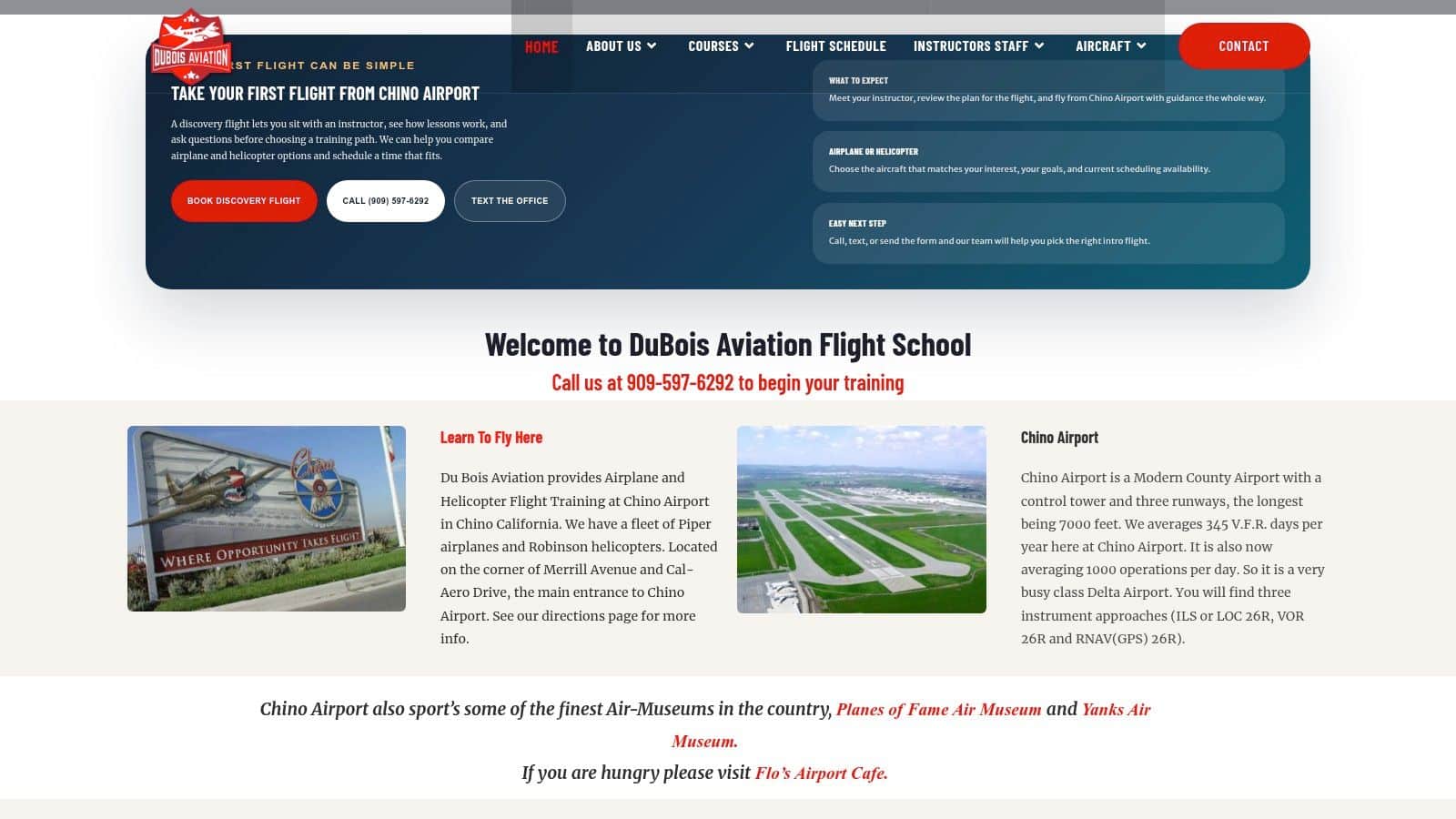
Here's what the home base looks like before you ever click reserve:
How to book without creating your own problems
A smart booking starts with the mission, not the airplane. Decide whether you need a local trainer, a cross-country platform, or an IFR-capable Cherokee. Then pick a time block that gives you margin for preflight, taxi, and post-flight wrap-up.
A simple booking flow looks like this:
- Create your scheduler account: Use your full legal name and current contact details.
- Check aircraft notes: Avionics differences matter. A familiar airframe with an unfamiliar panel still requires preparation.
- Choose realistic block time: Don't book so tightly that a normal delay creates stress.
- Confirm instructor availability if needed: Especially for checkout, recurrent work, or a flight review.
If you're comparing local training and rental operators around the field, Threshold Aviation at Chino is part of the broader local context many pilots review while choosing where to fly.
Why the checkout flight isn't bureaucracy
Some renters worry about the idea of a formal checkout flight. They take it personally, as if their certificate should speak for itself. In practice, the checkout protects the pilot, the aircraft, and everyone else in the pattern.
While some renters worry about needing a formal checkout flight, most FBOs require one for insurance and safety. Industry discussion shows this isn't just red tape. It's a practical way for renters to demonstrate proficiency in a specific make and model and learn local airport procedures, especially at busy Class D airports, as discussed by Ask A CFI on renting an aircraft type you've never flown before.
What the checkout usually includes
The best checkout flights feel like orientation, not interrogation. A CFI wants to see that you can operate the airplane safely and that you understand how this field works.
Expect attention on:
| Area | What the instructor is checking |
|---|---|
| Aircraft knowledge | Systems familiarity, limitations, checklist flow |
| Ground handling | Taxi discipline, brake use, awareness in busy movement areas |
| Takeoff and landing | Centerline control, airspeed discipline, stabilized approach habits |
| Airwork | Basic maneuvers, coordination, judgment, trim use |
| Local procedures | Tower work, traffic pattern expectations, situational awareness at KCNO |
What helps you pass the checkout cleanly
Show up having studied the exact model you booked. If the panel includes equipment you haven't used recently, review it before the flight. Don't assume “I flew a Cherokee before” means every Cherokee is operationally identical.
A renter who knows the avionics, has current radio habits, and flies smooth checklists usually makes the checkout routine.
What hurts people is preventable. Rushing taxi. Digging for checklist items. Overcontrolling on landing because they're trying too hard. Talking on the radio before they know what they want to say.
If you need recurrent training later, treat it the same way. Proficiency is not a one-time event. The pilots who stay easy to insure and easy to dispatch are the ones who refresh before they have to.
A Pilot's Guide to Rental Costs and Insurance
You finish a short local flight at Chino, taxi in, and start doing the math. Hobbs time, fuel, block discounts, renter's insurance, maybe a better-equipped airplane next time. That is the point where many new renters realize the hourly rate is only the starting point. The process is still simple once you know which costs are fixed, which are optional, and which are worth paying for.
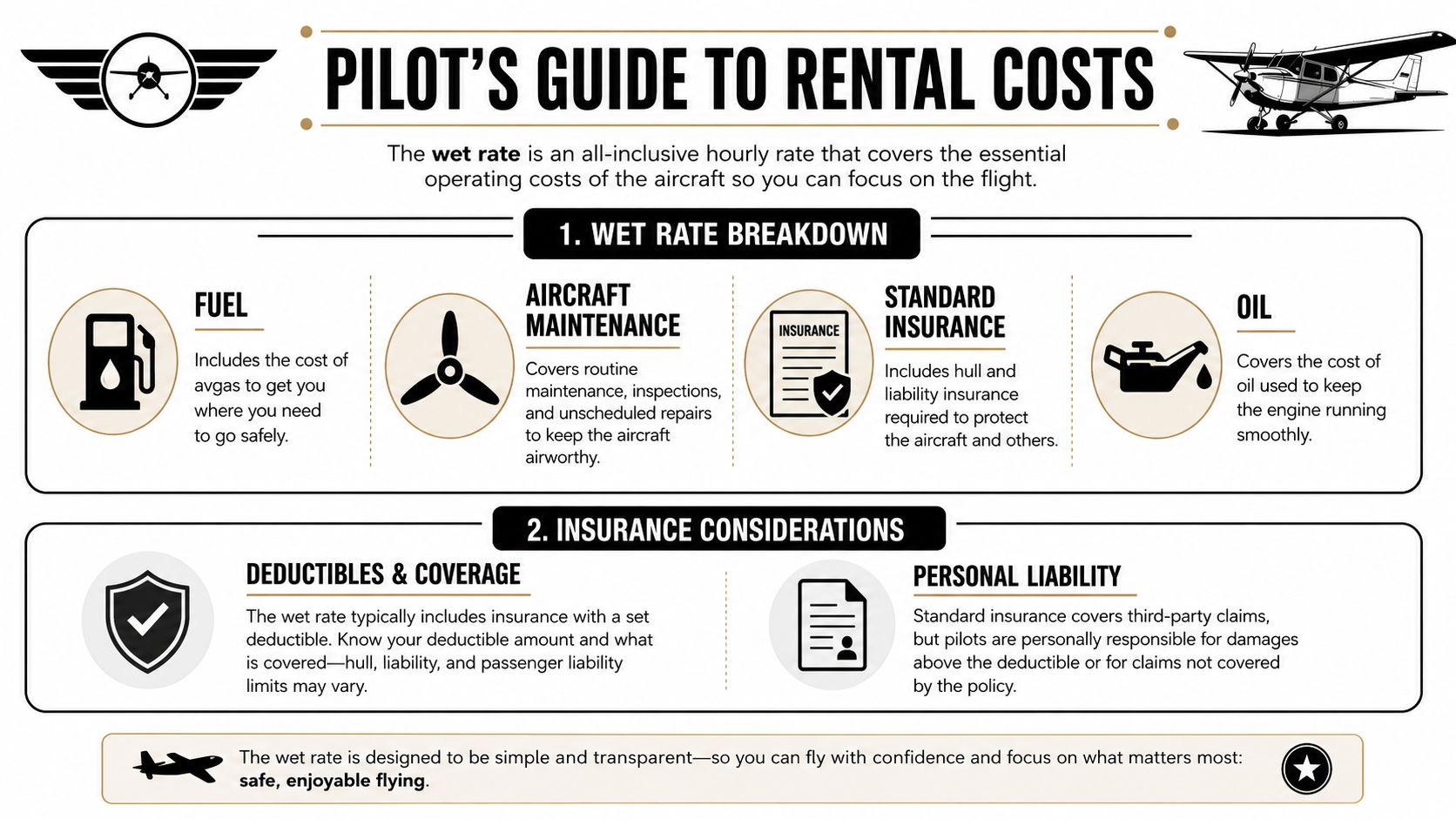
The first item to understand is the wet rate. For Piper rental, a wet rate generally means the hourly price already includes fuel, oil, and the operator's base insurance coverage. That matters because it keeps the bill predictable, especially for local flights out of KCNO where you want to focus on dispatch, weather, and airspace instead of estimating a separate fuel adjustment.
What the fleet pricing tells you
At DuBois Aviation, the Cherokee lineup spans basic VFR trainers and better-equipped models that cost more per hour. That spread is useful because it forces a practical question. What mission are you flying?
For pattern work, local proficiency, or a quick flight to stay current, the lower-cost Cherokee usually gives you the best value. If you are filing, training in the system, or you want avionics that reduce cockpit workload, the more expensive airplane can save money in a different way. You spend less time working around equipment limits and more time accomplishing the lesson.
I tell renters to match the airplane to the day, not to their ego. A simple Cherokee flown often is usually more useful than a nicer panel flown rarely.
Block rates can improve the numbers if you already know you will fly consistently. If you are comparing options, it also helps to understand the mission fit between a Cherokee and a Skyhawk. DuBois breaks that down well in its guide to the Piper Cherokee vs Cessna 172 for training and rental flying.
Price matters, but dispatch value matters too
The cheapest airplane on the board is not always the cheapest flight. A lower hourly rate loses its appeal if the airplane lacks the equipment you need for that lesson or trip.
Use a simple filter:
- Local VFR practice: A basic Cherokee is usually the right call.
- Instrument training or IPC work: Pay for the panel and capability you need.
- Frequent renters: Block time can reduce your hourly cost if your schedule is realistic.
At a busy airport like KCNO, there is another trade-off. A renter who books the right airplane for the assignment usually wastes less time on the ground reworking the plan.
Insurance you should carry yourself
The rental rate may include the operator's insurance, but that does not mean your personal exposure disappears. The school or FBO policy is written first to protect the aircraft owner's interest. You can still be responsible for deductibles, liability, or loss-of-use, depending on the policy and the event.
That is why experienced renters carry non-owned aircraft insurance, also called renter's insurance. It is one of the least expensive ways to protect yourself from a very expensive mistake.
If you can afford to rent, you can afford to clarify your insurance position before the first flight.
Before you buy a policy, read the details that affect real claims. Look at liability limits, deductible coverage, whether the insurer accepts your certificate level and recent experience, and whether your intended use includes instruction, solo rental, or instrument flying. Keep a copy of the policy where you can get to it quickly.
The right insurance decision is usually boring. That is good. In aviation, boring paperwork prevents dramatic phone calls after shutdown.
Flying the Piper Cherokee and Chino Airspace
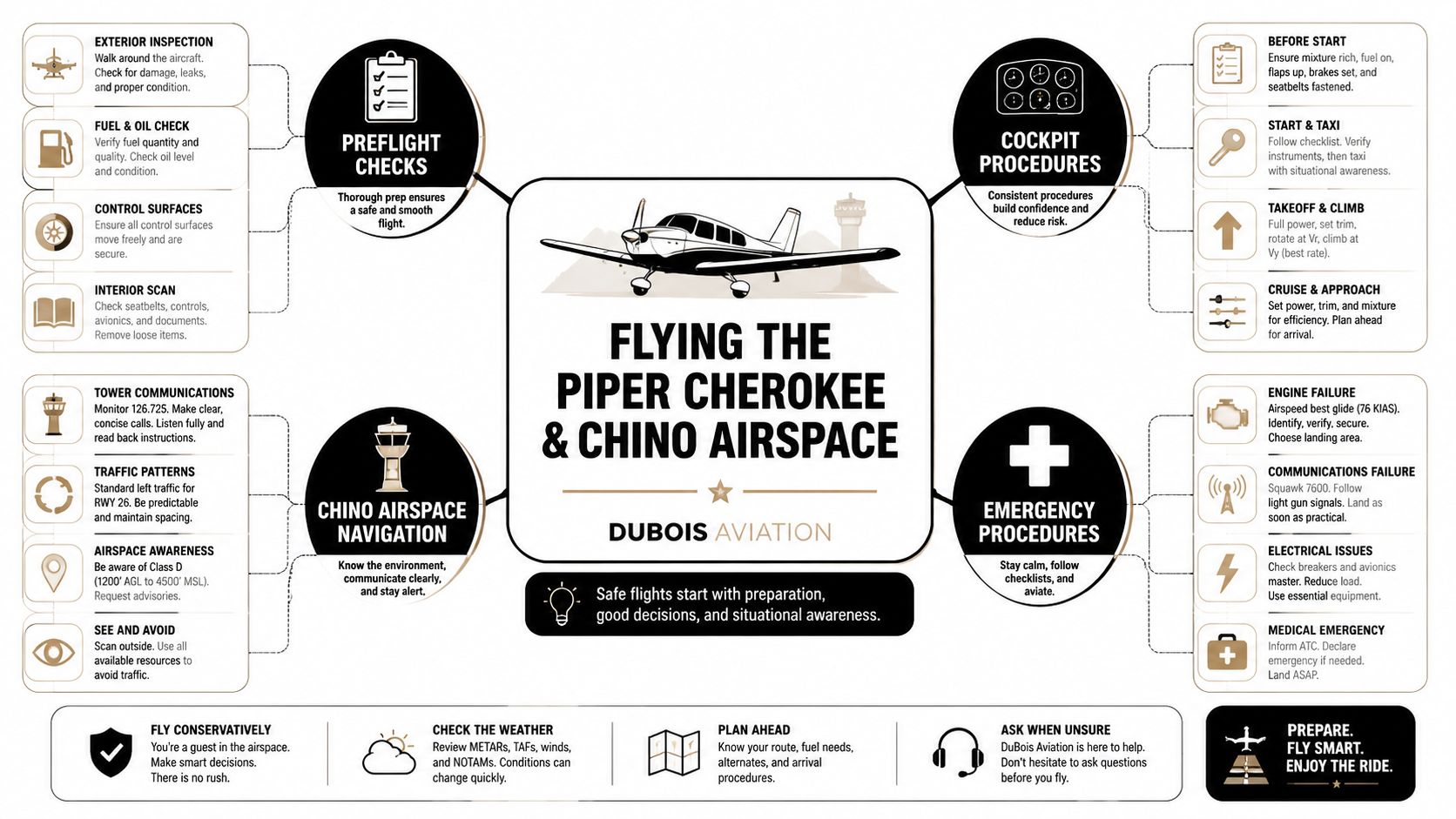
This is the part renters look forward to, and it's also where small lapses turn into big workload. The Piper Cherokee is straightforward, but straightforward airplanes still punish casual planning. At KCNO, the airplane and the airport both demand that you stay ahead.
Preflight habits that matter in a Cherokee
A good Cherokee preflight isn't rushed and isn't theatrical. You're checking the aircraft in a way that would catch a real problem before taxi, not just touching every surface because a checklist told you to.
Focus on the basics that renters sometimes miss:
- Fuel sampling: Make sure you know sump locations on that specific airframe.
- Oleo struts and tires: A Cherokee that sits a little differently than usual deserves attention.
- Control freedom: Verify full, correct movement without forcing anything.
- Cabin organization: Put checklists, headset cords, and personal items where they won't become distractions after engine start.
Performance planning at Chino isn't optional
For the PA-28-140, takeoff distance is 1,609 ft, and that figure increases by about 15% at 5,000 ft density altitude. Rental operators also mandate a 10% runway buffer beyond POH calculations, and maintaining 85 mph best rate-of-climb speed matters for obstacle clearance, according to the Piper Cherokee 140 operating data cited here.
That's the kind of number renters should use, not just admire. Chino can be hot. Density altitude changes what an ordinary takeoff feels like. If you're launching heavy, with warm temperatures, and you haven't run the numbers carefully, you're already behind.
If you're still deciding whether the Cherokee is your best fit versus another trainer, this Piper Cherokee vs Cessna 172 comparison is useful background before you commit to one rental path.
Field habit: Compute runway requirement, add the margin, and then ask whether you'd still feel good about the departure if the engine weren't making perfect power.
Working KCNO without getting saturated
Chino rewards clean cockpit management. Have the ATIS copied before you call. Know your first taxi route before you release brakes. Listen to the rhythm of the tower frequency before stepping on another transmission.
A few habits help immediately:
Brief the departure while parked
Not after start. Not while rolling. While parked.Set frequencies in order
Tower, ground, departure needs, and any backup frequencies should already be where you want them.Use plain, concise readbacks
Correct, calm radio work matters more than sounding polished.Stay flexible on runway assignment
At a busy Class D, your preferred plan may not be the one you fly.
From landing to shutdown
The rental doesn't end at touchdown. Clear the runway completely, finish after-landing items without blocking movement, and taxi back with the same attention you had on departure. Many pilots mentally relax too early.
On shutdown, leave the airplane in a condition that helps the next pilot and protects the fleet. That means a clean cabin, accurate squawk reporting, and no vague “it was acting weird” comments. If something was off, write it clearly.
That professionalism is part of safe Piper rental. It's not extra. It's command responsibility.
From Time Building to Buying Your Own Airplane
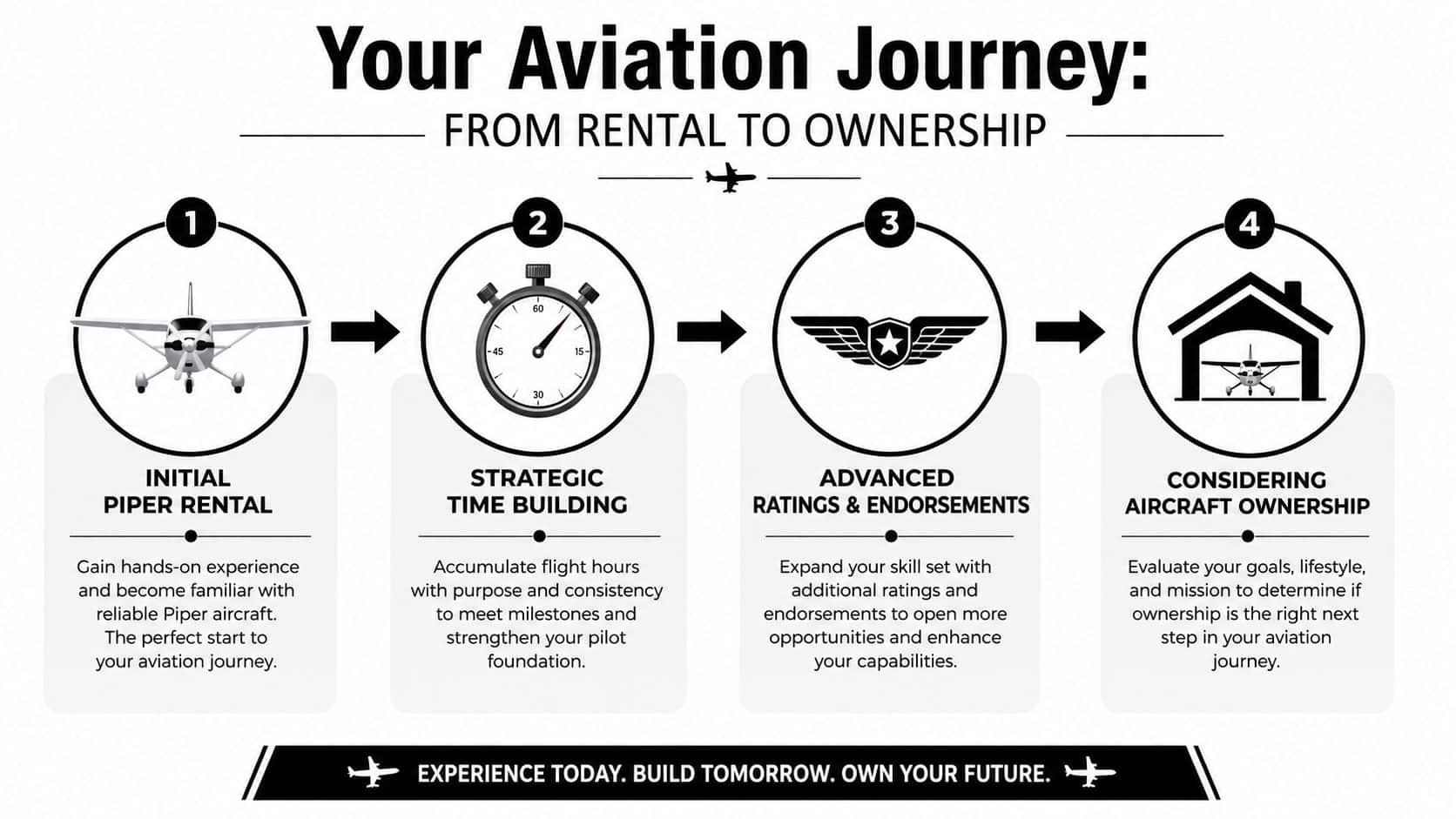
A lot of renters think ownership is a separate world. It isn't. Renting teaches you what kind of pilot you really are. It shows how often you fly, what missions you take, how much avionics you use, and whether your habits support the responsibilities that come with owning.
That's why time building in a rented Piper is so valuable. You get real operating experience without immediately taking on maintenance management, hangar decisions, or acquisition risk. You learn what matters by flying, not by daydreaming over listings.
Use rental time strategically
If you're building toward an instrument rating, commercial training, or just broader confidence, don't fly random hours. Build flights around skills.
Examples of smart time-building missions include:
- Short cross-country loops: Great for navigation rhythm, fuel planning discipline, and controlled-airspace work.
- Dual refresh sessions: Useful when landings, radio work, or instrument scan feel rusty.
- Purpose-driven local flights: Practice with a goal, such as steep turns, pattern consistency, or avionics repetition.
The mistake is renting only when the mood strikes. That produces scattered experience. A plan produces useful experience.
How to buy an airplane the safe way
People looking to buy or sell airplanes and helicopters usually focus on the visible item first. The ad, the paint, the panel, the total time. Safe buyers focus on the hidden risk first.
A practical ownership path looks like this:
| Step | Safe buyer focus |
|---|---|
| Define the mission | Seats, range, runway needs, weather mission, training goals |
| Review the budget honestly | Purchase price plus maintenance, insurance, storage, and downtime |
| Narrow the aircraft | Match the airplane to the mission, not the fantasy |
| Order a pre-purchase inspection | Use a trusted A&P who is independent from the seller |
| Check records carefully | Logs, damage history, recurring discrepancies, missing documentation |
| Close properly | Title, registration, and funds handled in a clean process |
What buyers and sellers often get wrong
Buyers often fall in love with panel upgrades and stop asking hard questions about maintenance history. Sellers often assume a cosmetically clean aircraft will survive serious logbook scrutiny. It won't.
For airplanes and helicopters, the safe move is always the same. Slow down enough to verify what you're buying or selling. A rushed deal creates expensive surprises.
Ownership works best for pilots who already know their mission, their flying frequency, and their tolerance for maintenance decisions.
When ownership starts making sense
Ownership may fit if you fly often enough to value constant availability, want control over equipment choices, or are tired of scheduling around a rental fleet. It may not fit if your flying is occasional, your mission varies widely, or you don't want the administrative side of aviation.
That's why renting first is so useful. Piper rental gives you the cleanest way to test your real habits before you sign up for the full obligations of owning. By the time you start looking seriously at purchase listings, you'll have sharper judgment about useful load, avionics, dispatch reliability, and what your missions require.
If you're still in that in-between stage, keep renting with intention. The pilots who buy well are usually the ones who spent enough time renting to know exactly why they're buying.
If you're ready to turn your certificate into a real flying routine, DuBois Aviation offers Piper rental, flight instruction, and local KCNO experience that can help you move from paperwork to confident dispatch. Bring your documents, be honest about your recency, and start with a checkout that builds habits you'll keep using long after the first flight.


