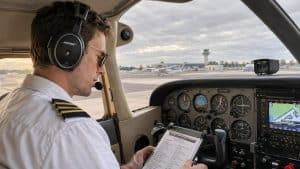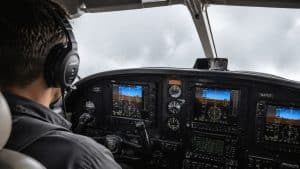
You've probably hit this point in your flying already. You're comfortable in a Cherokee or Cessna, your checklists are solid, your radio work is clean, and landings are mostly predictable. But something still feels unfinished.
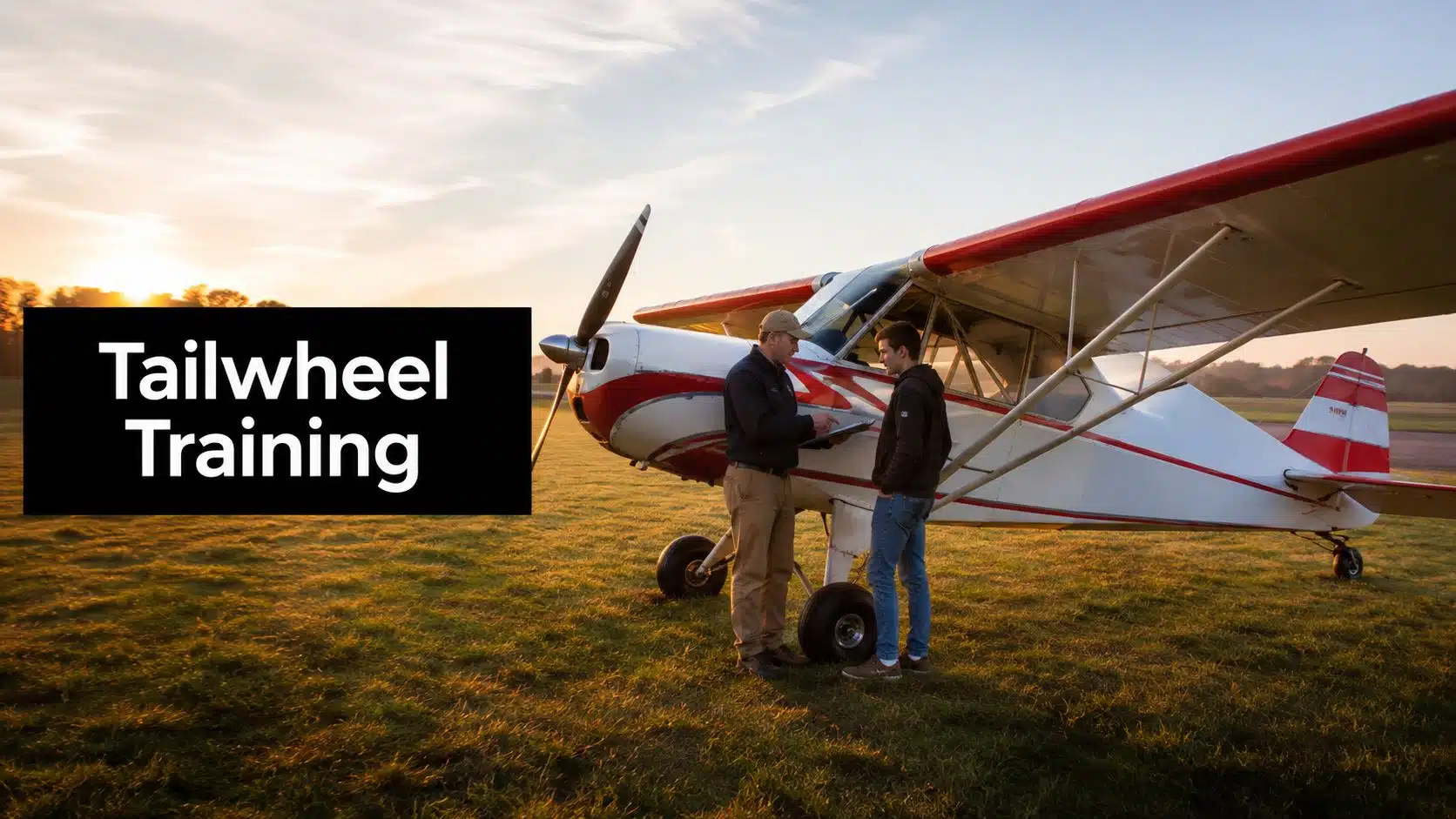
That missing piece is usually stick-and-rudder precision. Tailwheel flying exposes every lazy foot, every sloppy flare, and every habit a nosewheel airplane has been forgiving. It also sharpens pilots fast when the training is done correctly.
At a busy airport like Chino, that matters. You're not learning in isolation. You're learning while managing traffic flow, tower instructions, runway alignment, wind, and workload. That environment tends to build better habits because the airplane demands your attention and the airport doesn't let you drift mentally.
The Call of the Taildragger Why Earn Your Endorsement
A lot of pilots come to tailwheel endorsement training for the wrong reason at first. They think they want an old-school airplane, a better-looking ramp presence, or access to a backcountry machine later on. Those are fine reasons, but they're secondary.
Control is the value. A tailwheel airplane won't let you fake directional discipline. You have to stay ahead of it on takeoff, on rollout, and especially when the wind isn't cooperating. That pressure exposes weak technique quickly, which is exactly why the training works.
Under 14 CFR § 61.31(i), the endorsement is a one-time, proficiency-based logbook endorsement that allows you to act as PIC in a tailwheel airplane. It isn't a rating with a checkride. It's an instructor saying you can safely handle a conventional-gear airplane to the required standard.
Why good tricycle-gear pilots seek it out
Many competent private pilots reach a plateau. They can fly trips, hold altitude, talk to ATC, and shoot decent landings. Then they realize they've been flying systems well, but not always flying the airplane with full precision.
Tailwheel flying changes that. You stop waiting to see what the airplane will do and start controlling what it does next.
A lot of the same pilots who first chased a private certificate for freedom later come back looking for challenge and refinement. That's part of why a pilot who understands the broader benefits of a private pilot license often ends up wanting tailwheel time too.
Tailwheel airplanes are honest. They don't create bad habits, but they expose the ones you already have.
What the endorsement gives you beyond legality
The legal privilege matters. The skill transfer matters more.
You'll usually come out of solid tailwheel endorsement training with better rudder use, better crosswind awareness, and much better visual discipline in the flare. You also gain respect for energy management, which helps in every airplane you fly afterward.
That's why many pilots describe tailwheel training as the first time they felt they were really flying the airplane all the way until it stopped.
Preparing for Your Training Budgeting and Vetting Your CFI
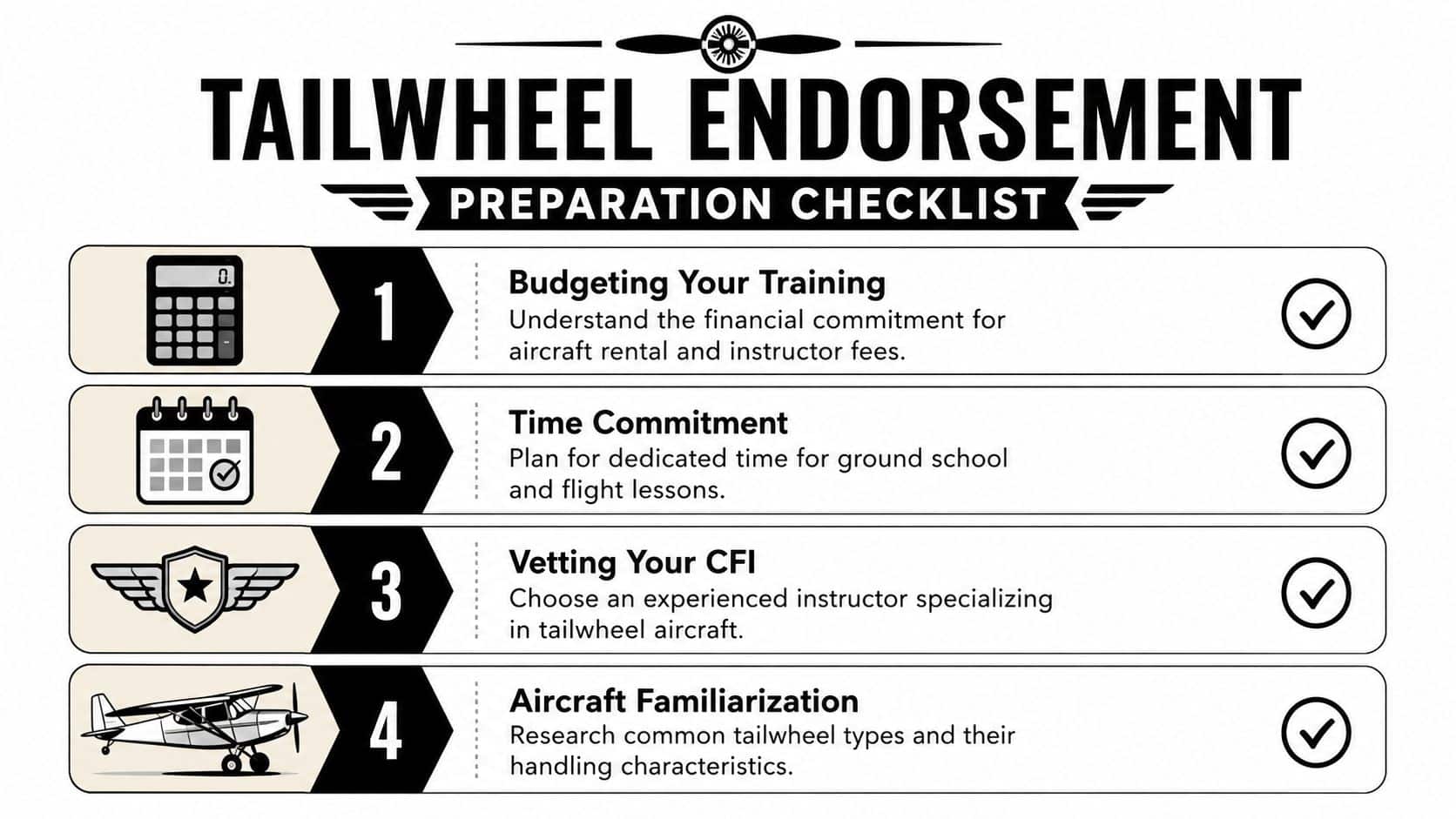
The biggest mistake pilots make before tailwheel training isn't in the airplane. It happens before the first lesson, when they assume the endorsement will be cheap, quick, and available from any instructor who has flown a taildragger a few times.
That assumption causes frustration. It also creates safety problems.
Budget for the real training, not the regulation
The FAA doesn't set a minimum hour requirement for the endorsement. Real-world training does not follow the minimum fantasy. 2024 to 2025 market data shows training now averages 10+ hours because insurance companies often require that much for coverage, and a typical 3-day course can cost around $2,750 according to this tailwheel training market snapshot.
If you want a planning tool before you start calling schools, a simple training program cost estimator can help you map out aircraft and instructor costs in a structured way. It won't replace a quote from a flight school, but it does force you to think realistically about hours, rates, and the total commitment.
Ground instruction often gets minimized by students who only care about flight time. That's backwards. Tailwheel training works better when you arrive already ready to discuss wind correction, sight picture, and rollout discipline instead of trying to discover all of it by trial and error.
How long it usually takes
There's no single number that fits every pilot, but there is a pattern. Stronger pilots with recent time, good feet, and decent crosswind habits move faster. Pilots with rusty landings or weak rudder coordination usually need more repetition.
Use this as a practical planning range:
| Training factor | What it usually means |
|---|---|
| Recent flight experience | Current pilots adapt faster because they aren't rebuilding basic landing rhythm first |
| Crosswind judgment | Weak crosswind habits slow everything down |
| Aircraft type | Some tailwheel airplanes are more forgiving than others |
| Instructor quality | A sharp CFI shortens confusion, not necessarily total hours |
Practical rule: If a program promises a fast endorsement with almost no evaluation of your recent flying, be skeptical.
How to vet a tailwheel CFI
Many pilots encounter a significant challenge. Regulations require the endorsement, yet they don't guarantee the person teaching it has deep tailwheel judgment. Industry discussions in 2023 and 2024 highlighted significant knowledge gaps in tailwheel pilot training, especially around center of gravity and the way instructors explain ground handling and control feel.
Ask direct questions. Don't apologize for it.
- Ask what aircraft they teach in most often. You want repetition, not novelty.
- Ask how they teach wheel landings versus three-point landings. If the answer is vague, keep looking.
- Ask how they handle crosswind progression. A good instructor has a sequence, not just “we'll see what the wind does.”
- Ask what common student errors they see on rollout. Experienced tailwheel instructors answer this immediately.
- Ask how much of the briefing is spent on center of gravity, taxi control, and visual references. Those topics matter.
A good tailwheel CFI doesn't just know the maneuvers. They know where students break down, what phrase fixes a bad habit, and when to stop forcing a landing and call for a go-around.
What a qualified instructor sounds like
Listen for specificity. The right instructor talks about control position in the wind, where your eyes should go in the flare, and what rudder timing feels like as the airplane decelerates.
The wrong instructor talks in broad motivational slogans. Tailwheel students don't need slogans. They need clear standards and corrections they can apply on the next pass.
The Core Syllabus From Ground Handling to Three-Point Landings
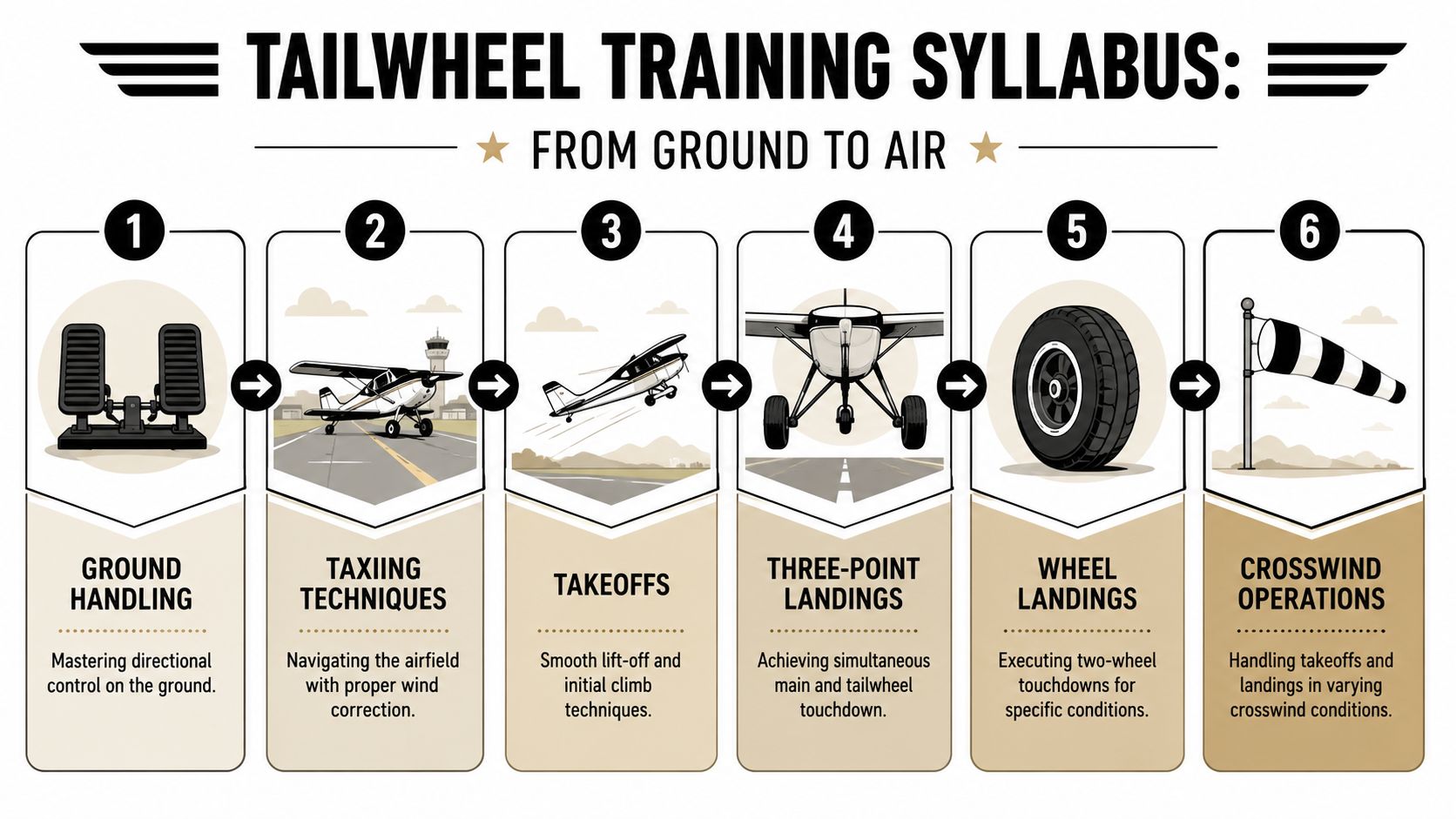
At Chino, a tailwheel lesson can start with a simple taxi clearance and turn into a real workload check before you ever reach the runway. You are scanning for traffic, working around faster aircraft, managing prop blast, and keeping the airplane straight with limited forward visibility. That is why good tailwheel training starts on the ground. The landing gets the attention. Ground handling builds the pilot.
The endorsement is a one-time, proficiency-based logbook entry under 14 CFR § 61.31(i). There is no FAA minimum hour requirement, and many pilots take several lessons before they are ready for consistent wheel landings, three-point landings, and crosswind work, as explained in the AOPA tailwheel endorsement guide.
Ground handling comes first
A student who is lazy with the rudders at taxi speed will usually be late with the rudders on rollout too. I would rather see sharp feet and good control positioning on the ramp than a pretty landing that happened by luck.
Early flights should build a few habits right away:
- Taxi with purpose, using S-turns as needed to clear the path ahead
- Keep the controls positioned for the wind, every time, without waiting for a reminder
- Use brakes carefully and evenly, because poor brake technique can start the swerve you were trying to stop
- Line up on centerline with discipline, before power comes in and the airplane starts asking for more of you
That work matters even more at a busy Class D field like KCNO. Students are not training in a quiet bubble. They are learning while fitting into real traffic flow, staying ahead of instructions, and keeping the airplane under control in a place where sloppiness shows up fast.
Takeoffs are really rudder lessons
The tailwheel takeoff teaches timing. Add power and the airplane starts talking immediately. Torque, P-factor, changing tail attitude, and shifting sight picture all show up in the first few seconds. Students who wait to see a big swing are already behind.
The fix is simple, but it takes repetition. Small rudder inputs, early. Eyes far enough down the runway to catch deviation before it grows. Hands quiet. Feet active.
Keep flying with your feet after the tail comes up and after the mains come back down. Tailwheel pilots who relax in either phase usually create the problem they have to fix.
For pilots working on crosswind alignment and touchdown control, our guide to the side slip landing shows the same visual references and control coordination that carry directly into tailwheel operations.
A useful visual reference helps when you're first seeing these techniques in motion:
Three-point versus wheel landings
Both belong in the syllabus. A good endorsement does not produce a pilot with one favorite landing and one weak one.
A three-point landing aims for touchdown at or near the stall, with the main wheels and tailwheel arriving together. Done well, it gives a slow touchdown and a short rollout. Done poorly, it turns into a float, drift, or a crooked arrival because the pilot kept trying to salvage the picture.
A wheel landing puts the mains on first with the right attitude, then uses forward elevator pressure to keep the airplane planted while it decelerates. In gusts, stronger crosswinds, or a slick runway, that is often the cleaner choice because the airplane reaches the ground with better control authority and less guesswork.
The trade-off is straightforward:
| Landing type | Primary advantage | Common student error |
|---|---|---|
| Three-point landing | Slow touchdown with stable deceleration when done well | Holding it off too long and letting drift build |
| Wheel landing | Better control authority in many crosswind situations | Releasing forward pressure too early after mains touch |
Students usually need to learn when each landing fits the conditions, not just how each one looks from the cockpit. That judgment matters at airports like Chino, where runway conditions, traffic pace, and crosswinds can make one technique clearly smarter than the other on a given day.
The supporting skills that make landings repeatable
The syllabus should also include forward slips, go-arounds, crosswind takeoffs, and rollout discipline after touchdown. Those are not side topics. They are the parts that keep a landing from unraveling.
A forward slip teaches descent control without excess airspeed. A go-around teaches judgment before pride takes over. Crosswind takeoffs teach a student to manage drift and directional control from the first inch of movement, not just on final.
By the end of good training, the standard is clear. The pilot should be able to taxi with control, hold centerline on takeoff, choose the right landing type for the conditions, touch down aligned, and keep flying the airplane until it is parked. That is the practical syllabus.
Common Pitfalls and How to Recover
The ugliest tailwheel mistakes usually start small. A little drift. A bounce the pilot thinks can still be saved. A moment of relaxation after touchdown. Then the airplane starts moving sideways, the pilot gets behind it, and the correction becomes the next problem.
That's why recovery thinking matters as much as technique.
The landing mistake that shows up most
One mistake appears over and over in tailwheel endorsement training. Data shows 45% of endorsement failures come from students stalling at touchdown instead of using forward elevator pressure on wheel landings, which leads to bounces and loss of control, according to this tailwheel landing error breakdown.
The pattern is familiar. The student learned to admire the three-point landing, tries to force that style in conditions that favor a wheel landing, and arrives with the wrong control picture. The mains touch, the airplane rebounds, and the pilot either freezes or starts chasing pitch.
How to fix the bounce before it grows
A small bounce isn't automatically a disaster. The wrong response makes it one.
Use a simple decision process:
- If the bounce is minor and alignment is still good, stabilize the attitude immediately.
- If the airplane starts oscillating, stop trying to salvage pride and go around.
- If directional control is deteriorating, prioritize keeping it straight over everything else.
Students who recover well are usually the ones who don't argue with the airplane. They recognize the bad setup early and make a clean decision.
A go-around is not a failed landing. It's a successful rejection of a bad one.
For pilots who still struggle to feel the edge of the wing and energy decay, reviewing the basics of power-off stalls helps because the flare and touchdown picture depend on the same aerodynamic awareness.
Ground loop prevention is mostly early correction
The classic ground loop doesn't arrive out of nowhere. It builds from a swerve that wasn't corrected early enough, or from overcorrection after the first deviation.
The recovery mindset is straightforward:
- Catch yaw early. Small, quick rudder is far better than late, aggressive rudder.
- Don't fix everything with brakes. Uneven braking often worsens the swing.
- Keep the controls alive after touchdown. Students often mentally end the landing too soon.
- Respect crosswind drift on rollout. The airplane is still flying enough to demand active control.
The student habit that delays progress
Many pilots look too close over the nose and lose the wider visual picture. Tailwheel flying improves when your eyes work farther down the runway and your peripheral vision helps with height and alignment.
That's one reason experienced instructors emphasize sight picture so heavily. Better feet matter, but feet improve faster when the eyes are in the right place first.
Your Training at Du Bois Aviation KCNO Operations
Where you train changes how well the endorsement sticks. A quiet strip can be useful for repetition, but a busy Class D airport teaches you to stay precise while doing real pilot work. KCNO gives you that every day.
At Chino, you're dealing with tower sequencing, multiple runways, changing traffic mixes, and the need to stay mentally ahead of the airplane. That's a healthy environment for tailwheel training because conventional-gear flying rewards pilots who stay organized under workload.
Why KCNO sharpens the training
Three habits get better at a place like Chino. First, radio discipline improves because sloppy communication creates friction immediately. Second, runway awareness improves because you must think about geometry, winds, and taxi planning from the start. Third, your scan gets wider because there's more going on around you.
That combination helps students build habits that transfer beyond the endorsement. You're not just learning to land a taildragger. You're learning to manage a taildragger while functioning in a realistic airport environment.
Practical operating habits for Chino
At KCNO, a tailwheel pilot needs to think clearly before movement starts. Taxi planning matters because visibility and ramp activity can raise workload fast. Runway assignment matters because a manageable wind on one runway can become an awkward picture on another.
A few habits pay off:
- Brief the taxi route before brake release. Don't sort it out while rolling.
- Listen to the whole frequency, not just your call sign. Pattern flow tells you what's coming.
- Expect crosswind work. Use every departure and arrival as a directional-control exercise.
- Stay ahead of the rollout. Busy airports punish slow reactions.
Students who train in active towered airspace tend to develop cleaner cockpit discipline because the environment demands it from day one.
What to expect from the operation
Du Bois Aviation runs in the kind of setting that builds useful skill. The airport is active, the scheduling is practical, and the operation supports both airplane and helicopter training in a real training environment rather than a stripped-down one. That matters if you want proficiency that carries into everyday flying instead of an endorsement that only made sense on one calm runway.
Beyond the Endorsement How to Buy an Airplane Safely
A lot of pilots start shopping for a tailwheel airplane right after the endorsement. Others branch into airplanes or helicopters for business, training, or personal travel. The excitement is understandable. The risk is moving too fast and buying based on paint, panel, or a seller's confidence.
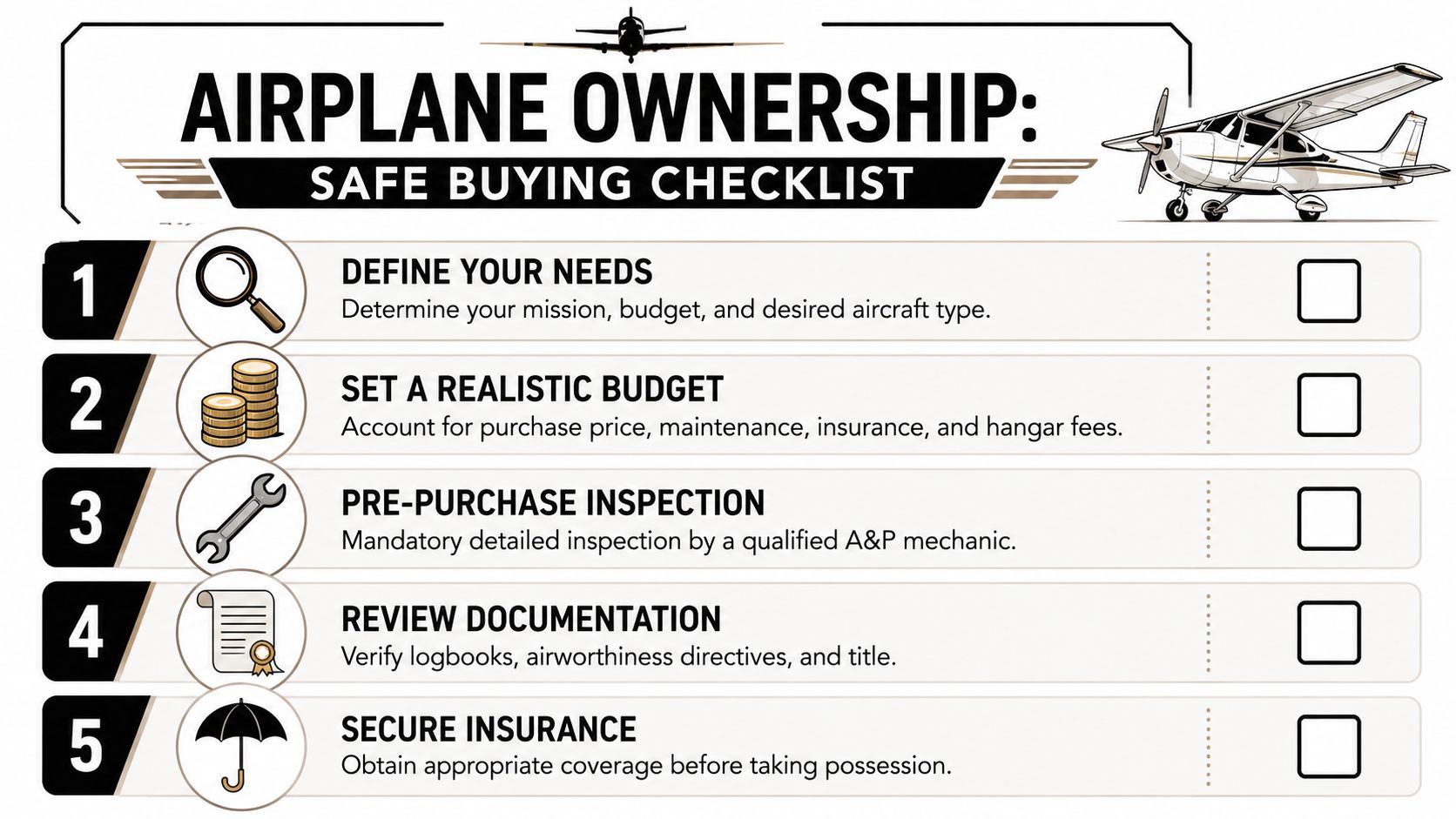
The safe purchase starts before you call the seller. Get your funding lined up, decide what mission the aircraft must serve, and use a written purchase agreement instead of handshake optimism. One practical pilot discussion on the process recommends securing funds first, preparing a written Purchase Agreement, and paying for an annual inspection plus a borescope inspection, with airworthiness items found becoming the seller's responsibility in that agreement structure, as outlined in this used aircraft buying discussion.
The inspection items you don't skip
At this stage, buyers either protect themselves or donate money to future maintenance.
A pre-purchase inspection must include a differential compression check on each engine cylinder and a review of FAA Form 337 reports for major alterations or repairs, along with checking AD compliance, service bulletin status, and component serial numbers, according to AOPA's guidance on buying a used aircraft safely.
That's the baseline. Not the deluxe option. The baseline.
A safe buying sequence
Use a clean order of operations:
- Define the mission first. Trainer, cross-country machine, tailwheel fun airplane, working helicopter. Mission drives the right airframe.
- Secure funds before shopping seriously. Sellers take prepared buyers more seriously, and you'll move faster when the right aircraft appears.
- Put the agreement in writing. Verbal promises disappear when inspection findings show up.
- Hire the right mechanic for the pre-buy. Preferably one who knows the make and model.
- Review the paperwork as hard as the airplane. Missing logs and unclear repairs can be worse than cosmetic flaws.
Buying airplanes and helicopters the safe way
The same due diligence applies whether you're buying a used airplane or helicopter. The details differ by type, but the discipline doesn't. You need records, a qualified inspection, and a purchase agreement that protects you when the inspection uncovers airworthiness issues.
Here's the practical rule I give pilots. Never let excitement outrun verification.
A polished spinner, fresh paint, or a clean interior can distract buyers from the expensive truth sitting in the engine, logs, or repair history. That's why the safest buyers act more like investigators than shoppers.
If you're moving from renting into ownership, or you want guidance on training, rentals, or next steps after your tailwheel endorsement training, DuBois Aviation is a solid place to start. Their team at Chino can help you build skill in a real-world airport environment and make smarter decisions about the aircraft you fly next.