The journey to becoming an airline pilot is a well-defined and incredibly rewarding path for any aspiring student. While it demands dedication, you can typically go from zero experience to the first officer's seat in about two years. The process starts with foundational flight training, progresses through advanced ratings, and requires you to build up 1,500 flight hours before an airline will hire you. It’s a direct roadmap to one of the most respected and exciting careers out there.
Charting Your Course In The Sky
Deciding to become an airline pilot is a major investment, but it's an investment in a future with incredible growth and responsibility. Unlike a traditional four-year degree, pilot training is a focused, hands-on progression of skills. And frankly, there has never been a better time for students to start. The aviation industry is facing a massive, well-documented pilot shortage.
Two practical options worth comparing
These are specific products pilots commonly compare for this type of flying. Confirm compatibility with your aircraft and instructor before ordering.
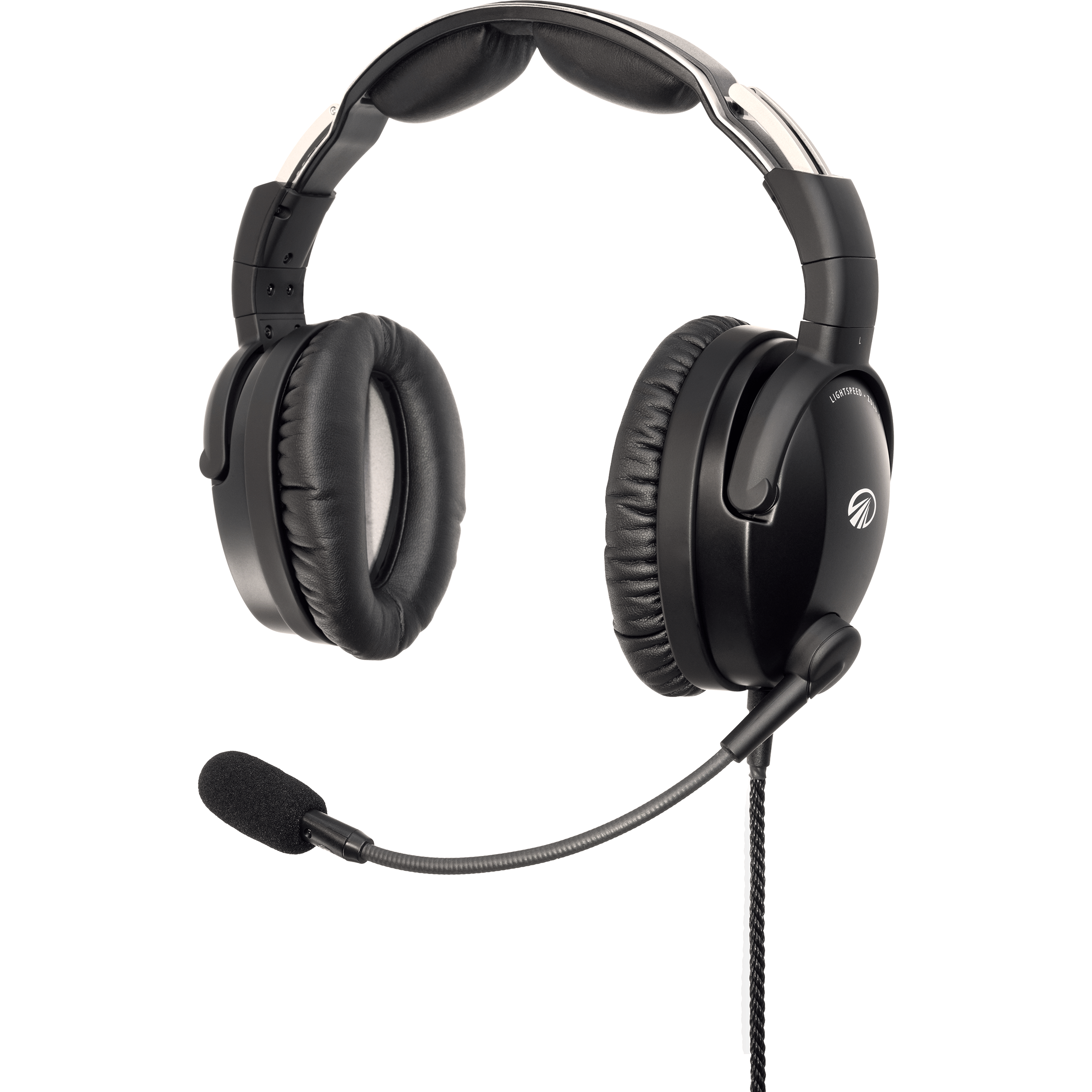 Premium ANR headsetLightspeed Zulu 4 ANR Aviation Headset - Dual GA PlugCheck current availability on Amazon (paid link)
 Premium headsetBose A30 Bluetooth Aviation Headset - Dual PlugCheck current availability on Amazon (paid link)
This isn't just a short-term blip. Projections show the global airline industry needs around 674,000 new pilots by 2045 just to keep up with new aircraft deliveries and cover mandatory retirements. In North America alone, that number is 123,000. Why the huge demand? Think about it—post-pandemic travel is booming with over 4.5 billion passengers flying each year, and the air cargo market continues to expand. For a new pilot, this means fantastic job security and the chance to advance quickly.
This infographic breaks down the typical journey from student to professional pilot in a clear, visual way.
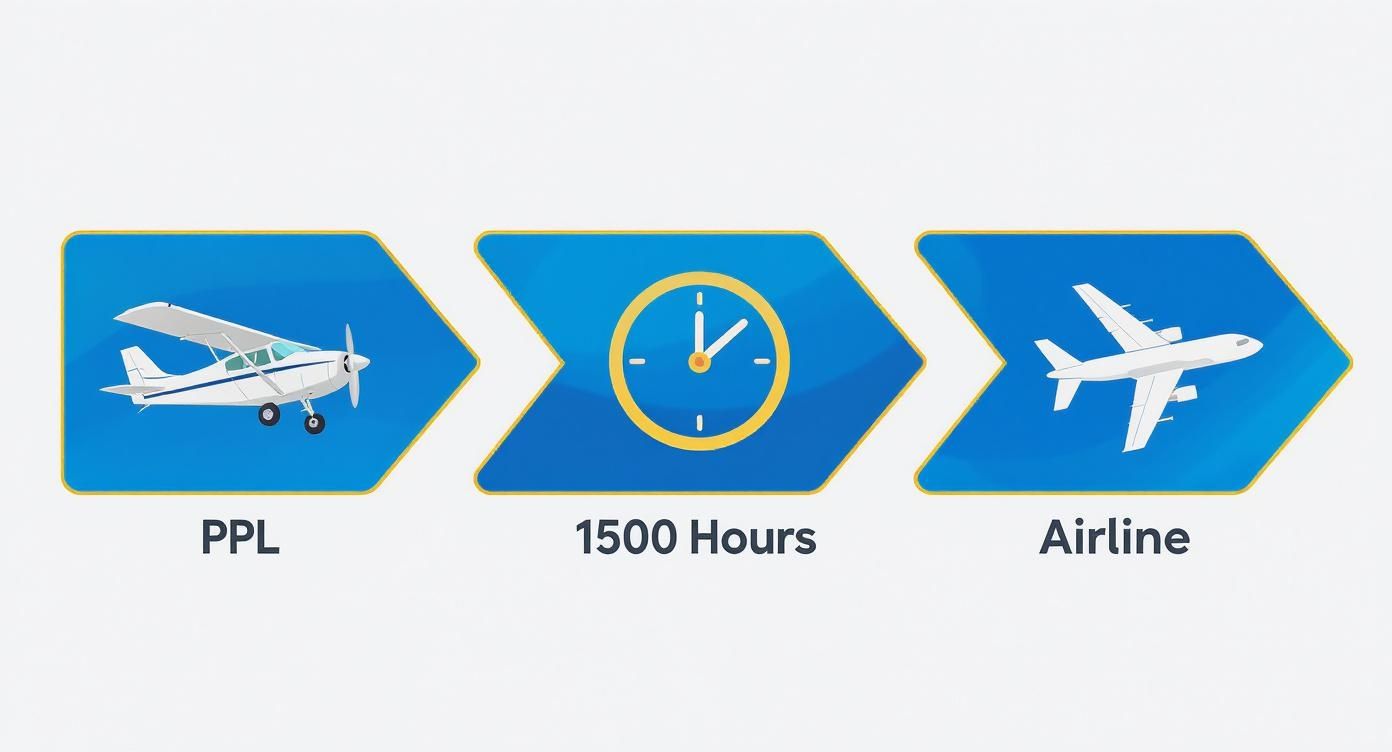
As you can see, it all starts with foundational training, moves into a phase of intensive experience building, and culminates in landing that first airline job.
Airline Pilot Career Path At a Glance
To give you a clearer picture, here's a table summarizing the entire journey from start to finish. It breaks down each phase, what you'll be aiming to achieve, and the typical time and financial investment involved.
| Career Stage | Objective | Estimated Timeline | Estimated Cost |
|---|---|---|---|
| Student Pilot | Earn a Private Pilot License (PPL) | 4–6 months | $15,000–$20,000 |
| Advanced Training | Earn Instrument Rating & Commercial Pilot License (CPL) | 6–8 months | $35,000–$45,000 |
| Flight Instructor | Build 1,500 flight hours to meet airline minimums | 12–18 months | (Income-Earning) |
| First Officer | Get hired by a regional or cargo airline | Ongoing | (Income-Earning) |
Keep in mind these are estimates. Your own pace and how frequently you fly can change the timeline and costs, but this gives you a solid framework for what to expect on your path to the flight deck.
Fixed-Wing And Helicopter Training Paths
While the airline dream is a popular one, aviation is a massive field with tons of different opportunities. Your initial flight training will set you on a path for either fixed-wing aircraft (airplanes) or rotary-wing aircraft (helicopters), and each opens up a completely different world.
- Fixed-Wing Training: This is the classic route for students whose goal is to fly for the airlines. You'll start with a Private Pilot License (PPL), add on your Instrument Rating and Commercial certificates, and build the specific skills needed to fly for regional and major carriers.
- Helicopter Flight Training: This path leads to some of the most dynamic flying jobs you can imagine—think emergency medical services (EMS), law enforcement, tourism, and offshore oil rig support. The skills are unique and always in high demand.
Choosing where to begin is one of the most important decisions you'll make. A great flight school provides the mentorship and structured environment you need to succeed. If you're weighing your options, our guide on how to choose a flight school is a must-read.
Opportunities In Aircraft Sales
Flying isn't the only way to build a career in this industry. For those looking to buy or sell airplanes and helicopters, a deep knowledge of aviation can lead to a lucrative role in aircraft brokerage. This niche requires a sharp mix of technical understanding, market savvy, and negotiation skills. It’s another rewarding way to stay deeply involved in the world of aviation.
Mastering the Core Flight Training Phases
Your journey from the ground up to the flight deck is really a series of building blocks. Each license and rating you earn layers on new skills and greater responsibility, shaping you into the kind of professional aviator the airlines are looking for. This is where student pilots merge book knowledge with hands-on skill, forging the foundation for every flight they'll command down the road.
This is the part of your training where you prove you have the right stuff—the discipline, the skill, and the judgment that a life in aviation demands. It’s tough, but for every student who makes it through, it's incredibly rewarding.
Your First Milestone: The Private Pilot License
The Private Pilot License (PPL) is your official ticket into the world of aviation. It’s the license that finally gives you the freedom to act as pilot-in-command and even carry passengers, as long as it's not for hire. I like to tell students it’s like getting your driver's license for the sky. You can take friends and family up for a weekend flight, but you can't get paid for it… yet.
Getting your PPL is a blend of ground school—where you’ll dive into aerodynamics, weather, and regulations—and a minimum of 40 flight hours. Honestly, though, most student pilots take closer to 60-70 hours to feel truly comfortable and proficient. It all wraps up with a written test, an oral exam, and the big one: the practical flight test, or "checkride," with an FAA examiner.
This first certificate is so important because it's where you build the fundamental stick-and-rudder skills and decision-making habits that will stay with you for your entire career.
Mastering the Clouds: The Instrument Rating
Once that PPL is in your wallet, the very next step is the Instrument Rating (IR). This one is non-negotiable for an airline career. It’s what teaches you to fly the plane solely by referencing your instruments, which is how you’ll operate safely in clouds, fog, and on hazy days when you can't see the horizon.
Without it, you’re stuck flying in clear weather under "Visual Flight Rules" (VFR). But airlines fly day and night, in all kinds of weather. The IR teaches you precision, discipline, and a deep trust in your instruments—the absolute bedrock of professional flying.
Pilots often say the Instrument Rating is the toughest certificate to earn, but also the most satisfying. It’s what really turns you from someone who can fly a plane into a true aviator who can navigate the complex air traffic control system in almost any condition.
Earning this rating takes a lot of dedicated study and practice in both simulators and the actual aircraft. It's a huge step up in complexity and an even bigger boost to your confidence.
Going Pro: The Commercial Pilot License
With your PPL and IR under your belt, the Commercial Pilot License (CPL) is what officially allows you to get paid for flying. Before you can start, you need to be at least 18 years old and have logged a minimum of 250 flight hours.
The CPL training sharpens your flying to a much higher standard. You'll work on mastering advanced maneuvers designed to show you have absolute, precise control of the aircraft. The commercial checkride has a reputation for being tough because the examiner needs to be 100% certain you can operate smoothly and safely with passengers or cargo on board.
This license opens the door to your first flying jobs, which are crucial for building hours. The most common paths are:
- Flight Instructor: This is the go-to route for most pilots to build the time needed for the airlines.
- Banner Towing: A unique gig that requires fantastic low-and-slow aircraft handling skills.
- Aerial Survey and Photography: Flying specific, precise patterns for mapping or imaging work.
The Helicopter Alternative: A Different Path to the Skies
While most people think of airplanes, helicopter flight training opens up a completely different world of career opportunities for aspiring pilots. The training path looks similar on paper—Private, Instrument, and Commercial Rotorcraft certificates—but the skills you learn and the jobs you get are totally distinct. Helicopter pilots are the backbone of fields like emergency medical services (EMS), law enforcement, tourism, and offshore oil and gas transport.
It's a specialized path that leads to an incredibly dynamic, hands-on flying career. If the world of vertical flight sounds exciting, Du Bois Aviation has comprehensive training programs for both Robinson and Enstrom helicopters.
Aircraft Ownership: A Deeper Dive Into Aviation
For some pilots, the journey doesn't stop at just flying. Owning your own aircraft is the ultimate way to immerse yourself in aviation. Understanding the ins and outs of buying or selling an airplane or helicopter is a skill in itself. It's about more than just the price tag; you have to factor in maintenance, insurance, hangar space, and inspections. This knowledge transforms you from just a pilot into a true aviation stakeholder.
The Grind to 1,500 Hours: Building Your Flight Time
https://www.youtube.com/embed/OhlGhbJCSsE
Getting your Commercial Pilot License is a huge milestone, but the journey to the airline-required 1,500 flight hours is where the real work begins. This is the part of your career where you need a solid plan to build time efficiently without breaking the bank.
Here at Du Bois Aviation, we see our pilots get creative, often mixing flight instruction with other specialty flying jobs to keep the hours ticking up and their skills sharp. One of our recent CFIs is a perfect example—he logged an impressive 250 hours in just four months by teaching ground school on the weekends and flying dual lessons every day.
It's all about strategy. Paid instruction is fantastic because it not only helps pay the bills but also makes you a fundamentally better pilot. Other gigs, like short-haul survey flights, are great for honing your cross-country planning and precision. We also encourage pilots to stay night current, as it builds immense confidence for flying in low-visibility conditions.
Pro Tip: Keep an eye on the schedule for off-peak days. You can often snag more affordable rental rates. Flying at sunrise or twilight is another great trick—you'll deal with less traffic and often pay less.
Always keep your logbook meticulous. Using an app like ForeFlight or LogTen Pro is a game-changer. It ensures every tenth of an hour is accounted for and helps you see exactly where you need more experience, making your time-building far more effective.
The Classic Route: Certified Flight Instructor (CFI)
For good reason, becoming a CFI is the most well-trodden path to the airlines. There is simply no better way to master a subject than to teach it. You're not just building hours; you're building a rock-solid foundation of knowledge that will serve you for your entire career.
At our Chino flight school, CFI positions start at $30 per instructional hour, which makes a real difference in offsetting your own training costs. We also run peer review sessions and instructor workshops to make sure our team is always improving and learning from each other. Most CFIs in the area earn between $25–$35 per hour, all while getting paid to fly.
The key is balancing your students' needs with your own progression.
- Adding a CFII (Certified Flight Instructor – Instrument) lets you build valuable IFR time in both simulated and actual instrument conditions.
- Getting your MEI (Multi-Engine Instructor) is a huge resume booster, opening the door to multi-engine aircraft.
- Always document your lesson plans and debriefs. It reinforces best practices for you and your students.
"I thought I knew instrument flying, but teaching back-to-back instrument approaches completely transformed my own confidence and scan under the hood." – Alex M., Du Bois CFI
Beyond Instructing: Alternative Ways to Build Hours
Not everyone wants to be an instructor, and that's perfectly fine. There are plenty of other flying jobs out there that can get you to 1,500 hours, sometimes even faster.
Banner towing, for example, is a classic time-builder that demands excellent low-and-slow aircraft control and pays around $40–$60 per hour. Aerial survey work is another great option, often involving multi-week contracts that provide steady flying and pay, typically in the $50–$70 per hour range.
You could also look into pipeline patrols, on-demand charter, or even scenic tours. If you have a rotorcraft rating, helicopter EMS is a demanding but rewarding field where pilots can earn $60–$80 per hour.
| Role | Typical Hourly Rate | What You'll Master |
|---|---|---|
| Banner Towing | $40–$60 | Precision low-altitude control |
| Aerial Survey | $50–$70 | Grid navigation and long-duration flights |
| Helicopter EMS | $60–$80 | Critical decision-making and vertical ops |
Each of these roles adds a unique skill set to your pilot toolkit, making you a more well-rounded and appealing candidate for the airlines when the time comes.
Networking and the Business of Aviation
Building hours is as much about who you know as what you know. You need to immerse yourself in the local aviation community.
Show up to local fly-ins, join the Flyers Club, and be active in online pilot forums. That's where you'll hear about the unlisted jobs and niche opportunities. Attending major events like the AOPA National Aviation Community Events puts you face-to-face with recruiters, brokers, and potential mentors.
You can also get involved in aircraft sales. For anyone looking to buy or sell airplanes or helicopters, understanding the market can lead to roles as a broker or advisor. For instance, knowing the intricacies of a multi-engine aircraft adds significant value. You can learn more in our detailed Multi-Engine Rating Requirements Guide.
| Activity | Primary Benefit | Time Commitment |
|---|---|---|
| Flyers Club Events | Networking, mentorship, and job referrals | Ongoing |
| Aircraft Brokerage | Earn commission on sales | Variable |
| Pre-Buy Inspections | Gain deep technical knowledge | Per-aircraft basis |
Getting involved in pre-buy inspections is an incredible learning experience. You'll sit with A&P mechanics, pour over maintenance logs, and evaluate an aircraft's real-world performance. You’ll learn what to look for in everything from a Cessna 172 to a Robinson R22.
Local brokers at Chino (KCNO) will tell you that a well-documented aircraft with a polished listing can sell up to 15% faster. That's knowledge you can use.
- Always verify the logbooks are complete, especially for aircraft like the Robinson R22 or a Piper Apache.
- Join online pilot groups on social media—you'd be surprised how many charter or survey gigs get posted there first.
- Offer to help a broker prepare an aircraft for sale; the hands-on experience is invaluable.
Thinking About a Helicopter Pilot Career? Here’s a Look at the Path
While many aspiring student pilots have their sights set on the airline cockpit, there’s an entirely different and equally rewarding world in rotary-wing aviation. A career as a helicopter pilot offers a hands-on, dynamic flying experience that’s fundamentally different from the fixed-wing world, opening up opportunities in vital, adventurous roles that airplanes simply can't touch.
If you’re drawn to the unique challenge of vertical flight, helicopter flight training offers a familiar structure—progressing through private, instrument, and commercial certificates—but the actual skills are a world apart. You'll be mastering the intricate dance of helicopter aerodynamics, focusing on hovering, autorotations, and landing in tight, confined spaces.
The Specialized Helicopter Training Pipeline
Your first real step is earning a Private Pilot Certificate with a Rotorcraft-Helicopter rating. This isn’t just about learning to fly; it’s about understanding the complex systems and emergency procedures unique to helicopters. The flight training is intense, demanding a high level of hand-eye coordination to manage the cyclic, collective, and anti-torque pedals all at once. It’s a true test of skill for any student pilot.
Next up is the Instrument Rating (IR). While it's true that not every helicopter job involves flying in the clouds, this rating is a major career booster. It proves you have the precision and discipline for advanced roles, making you a much stronger candidate for competitive jobs like Emergency Medical Services (EMS).
Finally, the Commercial Pilot-Rotorcraft certificate is your ticket to getting paid for what you love. This is where you polish your skills to a professional level, preparing you for the high-stakes, real-world scenarios you’ll encounter on day one of your first job. If this sounds like the path for you, checking out a dedicated helicopter training program is the perfect way to get a feel for the curriculum and its demands.
Where Can a Helicopter License Take You?
Unlike the more linear path to the airlines, the helicopter industry presents a wide array of specialized career options right from the start. These roles are often mission-critical, putting you right in the middle of the action.
- Emergency Medical Services (EMS): As an "air ambulance" pilot, you'll be transporting critically ill patients. This job demands cool-headed decision-making under immense pressure.
- Law Enforcement: From the sky, you’ll provide crucial support for police operations, including surveillance, search and rescue, and pursuit management.
- Offshore Energy Support: This is precision flying at its best, ferrying crews and equipment to oil and gas rigs in challenging maritime weather.
- Tourism and Charters: You can share the magic of flight every day, giving scenic tours over cities, famous landmarks, and breathtaking natural wonders.
The skills you develop as a helicopter pilot—like meticulous planning for off-airport landings and sharp situational awareness in low-altitude environments—are incredibly transferable. This kind of versatility makes you a more compelling candidate across the entire aviation industry.
For those curious about how the two paths stack up, it's helpful to see a side-by-side comparison. Each has its own unique demands, costs, and career trajectories.
Fixed-Wing vs Helicopter Pilot Careers
| Aspect | Airplane Pilot Path | Helicopter Pilot Path |
|---|---|---|
| Primary Training Focus | Straight-and-level flight, takeoffs, landings on runways, navigation, instrument procedures. | Hovering, autorotations, confined area operations, sling loads, advanced aerodynamic principles. |
| Typical Initial Cost | Generally lower initial training costs to reach commercial pilot status. | Often higher due to the mechanical complexity and operational costs of helicopters. |
| Hour Building | Often done as a Certified Flight Instructor (CFI) to reach 1,500 hours for airline transport. | Diverse options like tours, agricultural flying, or instructing; fewer hours often required for entry-level jobs. |
| Entry-Level Jobs | Flight instructing, regional airlines, cargo feeder operations, banner towing. | Flight instruction, aerial tours, electronic news gathering, agricultural spraying. |
| Mid-Career Path | Progression through regional to major or national airlines; corporate aviation. | EMS, law enforcement, offshore oil/gas support, utility work (power line inspection), firefighting. |
| Work Environment | Structured, flying between established airports at high altitudes on set schedules. | Dynamic, often low-altitude, flying in varied environments from urban centers to remote wilderness. |
While the numbers and job titles give a good overview, the core difference lies in the type of flying you want to do every day.
The Helicopter Advantage
Choosing helicopter flight training is about embracing a different kind of aviation. The job satisfaction doesn't come from crossing continents in a jet; it comes from the immediate, tangible impact of your work. The specialized skills you acquire are always in demand. More importantly, the experience you gain in dynamic, uncontrolled environments forges a pilot with razor-sharp instincts and a deep understanding of risk management—qualities that are respected in any cockpit, whether it has wings or rotors. This path isn't just an alternative; for the right person, it's the ultimate flying adventure.
The Practicalities of Aircraft Ownership
For a lot of pilots, the dream doesn't stop with a job at the airlines. Many find themselves drawn deeper into the world of general aviation, and that often leads to thinking about owning an aircraft. Getting a handle on the business side of things—how to actually buy or sell airplanes and helicopters—is what turns you from just a pilot into a true aviation stakeholder.
This kind of knowledge doesn't just open up more career doors; it gives you a much richer understanding of the financial and operational gears that make the whole industry turn. Moving into aircraft sales or acquisition is a whole different ballgame than flying. It's about market analysis, obsessive record-keeping, and sharp negotiation skills, adding a powerful new layer to your professional life.
Navigating the Purchase of an Aircraft
Buying your first airplane or helicopter is a huge milestone, but it's one you need to approach with a solid plan to avoid some seriously expensive pitfalls.
First things first: be brutally honest about your mission. What do you really need the aircraft for? Are you just looking for a simple, cheap way to build hours, like a trusty Cessna 150? Or do you need something with longer legs for cross-country trips with the family?
Once you've defined your mission, you need to build a budget that's just as realistic. And I don't just mean the sticker price. The real costs of ownership are ongoing, and they add up fast.
- Insurance: This can be all over the map, depending on your flight hours and the type of aircraft.
- Hangar or Tie-Down Fees: This is a fixed monthly cost that you can't ignore.
- Annual Inspections: A mandatory, and often eye-wateringly expensive, part of ownership.
- Fuel and Oil: Your most obvious operating cost, directly tied to how much you fly.
- Unscheduled Maintenance: Things break. You absolutely must have a rainy-day fund for those unexpected repairs.
If there's one piece of advice to take away, it's this: never, ever skip the pre-buy inspection. This isn't just a quick look-over. It's a deep-dive examination by an A&P mechanic that you hire and who works for you—not the seller. Skipping this step is probably the single biggest financial gamble you can take in aviation.
Preparing to Sell Your Airplane or Helicopter
When the time comes to sell, preparation is everything. An aircraft that’s well-presented with complete, organized logbooks will always fetch a better price and sell much faster.
Your first move should be to get the aircraft professionally detailed. A sparkling airframe and a clean interior make a massive first impression and show you've cared for the machine.
Next, pull together every single maintenance record, logbook, and piece of FAA paperwork into one organized, easy-to-review package. Any potential buyer is going to pour over these documents. Being transparent builds immediate trust, whereas a messy or incomplete set of logs is a huge red flag that can kill a deal on the spot.
Pricing it right is also key. Do your homework. See what comparable models are selling for, factoring in total time on the airframe and engine, the avionics suite, and the overall condition. Nailing the price from the get-go brings in serious buyers and saves you from a long, drawn-out negotiation process. From there, marketing it effectively through online listings and broker networks will give your aircraft the exposure it needs to find its next home, whether it’s a fixed-wing plane or part of a helicopter flight training fleet.
Landing Your Dream Job in the Airlines
You've got the ATP certificate—the pinnacle of pilot certification. Now, the real work begins: aiming for the flight deck of a major airline.
The path from a newly minted First Officer at a regional to a Captain's seat at a legacy carrier is well-defined, but it's not just about logging hours. Recruiters are looking for something more. They want to see exceptional crew resource management (CRM) and sharp, real-world decision-making skills.
To truly stand out, you need to prove you're more than just a pilot; you're a potential leader. This means mastering the behavioral side of flying just as much as the technical.
- Simulator Sessions: Think of these as your audition. You'll face everything from engine failures to sudden, severe weather. Recruiters want to see how you react under immense pressure.
- Interview Rehearsals: Don't walk in cold. Practice with peers or mentors, running through tough scenario-based questions that test your judgment and communication in the cockpit.
- CRM Drills: These aren't just exercises; they're your chance to show you can manage crew dynamics, delegate effectively, and maintain total situational awareness when things get complicated.
When building your resume, go beyond just listing your total flight time. Highlight specific accomplishments, like successfully completing challenging multi-leg cross-country flights or any experience in complex airspace.
Acing the Airline Interview
Get ready for a two-pronged attack in the interview. First, they'll hit you with technical questions—expect to be grilled on aircraft systems, performance calculations, and emergency procedures. Know your stuff, inside and out.
Then comes the behavioral part. They’ll ask you to describe a time you had to resolve a disagreement in the cockpit or how you’ve managed fatigue among your crew. They want to see your thought process.
The ability to remain calm, think clearly, and articulate your solution under stress is often the single biggest factor that separates you from other qualified candidates.
To get ready, I always tell pilots to:
- Make reviewing aircraft performance charts a daily habit. Keep those calculation skills sharp.
- Verbally walk through emergency scenarios with an instructor. Get your protocols down cold.
- Use the STAR method (Situation, Task, Action, Result) to frame your answers for those tricky HR questions. It gives your stories structure and impact.
Leveraging the Pilot Shortage
There's never been a better time to be entering this field. We're in the middle of a structural pilot shortage that is completely reshaping the aviation industry.
The FAA projects high demand for pilots all the way through 2045. Boeing’s forecast is even more eye-opening, predicting a need for 119,000 new pilots in North America and a staggering 649,000 globally over the next two decades. You can dig into the pilot hiring outlook findings to see the numbers for yourself.
What does this mean for you? It means faster upgrades and much stronger bargaining power. Airlines know they need to compete for top talent. If you can prove you have the skills and leadership potential, you're in a fantastic position.
But don't just rely on the market. Add layers to your expertise. For example, pilots who understand the business side of aviation—like the nuances of buying or selling airplanes and helicopters—often catch an interviewer's eye. It shows you're a well-rounded professional who thinks about safety and cost management.
Ever thought about writing an article on market trends for the Cessna 172 or Robinson R22? It’s a great way to showcase a deeper level of technical knowledge. And if you have any helicopter flight training, make sure it’s front and center. Showing you're adaptable across both fixed-wing and rotary-wing aircraft is a huge plus.
Your portfolio should be polished and tell a compelling story. Include:
- Copies of all your certificates: PPL, IR, CPL, and multi-engine for both airplanes and helicopters.
- Logbook excerpts that showcase diverse experience, like mountain flying or extensive night ops.
- A brief case study from a time you assisted on a pre-buy inspection—this is a fantastic way to prove your technical savvy.
Finally, when that job offer comes, don't just sign on the dotted line. Understanding the contract is crucial. Zero in on the pay scales, per diem rates, and scheduling rules.
Taking the time to really understand the pay tables and rostering policies before you sign can make a massive difference in both your long-term income and your quality of life.
Follow this advice, and you won’t just be another applicant in the pile. You’ll be a candidate who not only meets all the criteria but also brings a unique blend of helicopter skills and aviation business sense to the table.
Your Pilot Career Path Questions Answered
When you start looking into a career as an airline pilot, a lot of questions pop up, especially around the money. It's no secret that the journey requires a serious commitment of both time and cash, but for those who stick with it, the rewards are absolutely worth it.
The pilot industry is definitely hot right now, but we have to be real about the upfront hurdles. You're looking at training costs that can easily top $100,000 and a few years of dedicated flying to build the necessary experience.
On the other side of that investment, though, the potential is huge. As of May 2024, the median annual salary for airline pilots hit $226,600. It's a lucrative field once you’re established. For a deeper dive into the numbers, the U.S. Bureau of Labor Statistics is a fantastic resource.
What About Helicopter Training And Aircraft Sales?
We often get asked if helicopter flight training can be a stepping stone to an airline career. While it’s not the typical route, the skills you learn flying a helicopter—precision control, quick decision-making under pressure—are incredibly valuable and definitely make your resume stand out.
Another topic that comes up is the business of aviation itself: buying and selling aircraft. It might seem unrelated at first, but for people looking to buy or sell airplanes and helicopters, understanding the market gives you a massive advantage. It shows you have a much deeper grasp of the industry's financial and operational moving parts.
Whether you're a student pilot focused on fixed-wing training or an enthusiast exploring helicopter options, having a broad understanding of the entire aviation ecosystem, including aircraft sales, makes you a more informed and versatile aviator.
That kind of knowledge is priceless, whether you're negotiating your first plane purchase to build flight hours or just talking shop about industry trends during an airline interview. It proves your commitment goes beyond just being in the cockpit.
Ready to start your journey on the airline pilot career path or explore helicopter flight training? At DuBois Aviation, our experienced instructors and diverse fleet are here to guide you every step of the way. Visit us at https://duboisaviation.com to book a discovery flight and take control of your future in the sky.