
Getting the weight and balance right on a Cessna 172N isn't just a paperwork exercise—it's one of the most fundamental skills for keeping the airplane stable, predictable, and safe. A properly filled-out sheet is your proof that both the aircraft's total weight and its center of gravity (CG) fall squarely within the manufacturer's approved limits.
Why Weight and Balance is So Critical for Flight Safety
Before every single flight, the pilot in command is responsible for confirming the aircraft is loaded correctly. It's not just a good idea; it's a regulatory requirement and the bedrock of predictable aircraft performance.
Two practical options worth comparing
These are specific products pilots commonly compare for this type of flying. Confirm compatibility with your aircraft and instructor before ordering.
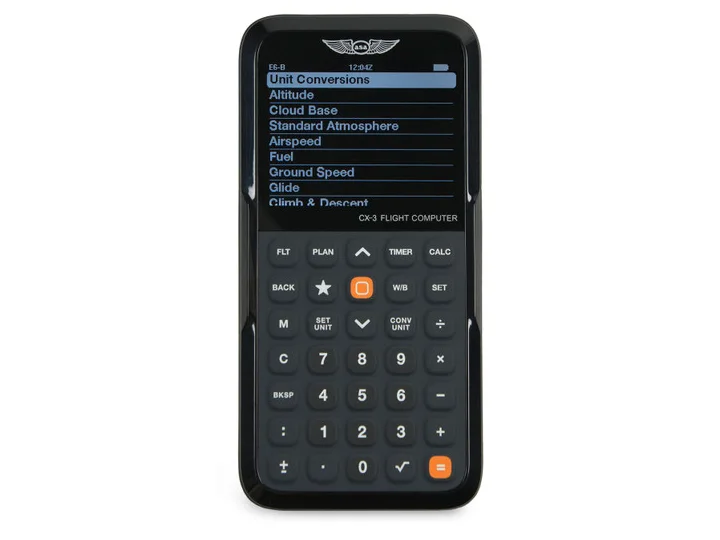 Flight planningASA CX-3 Flight ComputerCheck current availability on Amazon (paid link)
 Electronic flight bagApple iPad mini A17 Pro, Wi-Fi and Cellular, 128GBCheck current availability on Amazon (paid link)
Fly an overloaded or out-of-balance airplane, and you're asking for trouble. You could face anything from sluggish climb performance and unexpected stall characteristics to a complete loss of control. Knowing your way around the Cessna 172N weight and balance sheet is what keeps these dangerous situations from ever happening.
This guide is designed to walk you through the entire process. We'll start with the basics, like understanding the aircraft's specific Basic Empty Weight (BEW), and move all the way through detailed calculations for different real-world loading scenarios. For anyone thinking about buying an aircraft, this knowledge is just as crucial during the evaluation process.
Key Aspects We Will Cover
- Core Terminology: We’ll demystify essential terms like arm, moment, station, and Center of Gravity (CG). Think of this as learning the language of aircraft loading.
- Step-by-Step Examples: You'll see practical, worked-out calculations for typical flights—from a quick solo trip to a cross-country with full passengers and baggage.
- Safety and Regulations: We'll dig into the real-world consequences of getting it wrong and review a pilot's legal responsibilities for ensuring the aircraft is airworthy before takeoff.
- Buying an Aircraft Safely: If you're in the market for a Cessna, we'll touch on how weight and balance plays a role in a pre-buy inspection. This includes checking logbooks for modifications that alter the CG and performing a title search to ensure there are no hidden issues. A good pre-buy is non-negotiable.
Consider this your go-to reference for mastering one of the most important pre-flight tasks you'll ever perform. Let's get started.
Getting the Core Numbers for Your Cessna 172N
Before you can even think about doing a weight and balance calculation, you have to start with the right data for the specific aircraft you're flying. Every single plane is different. Its maximum gross weight, empty weight, and useful load aren't just numbers in a book; they are unique to that tail number.
The most important figures you need—the Basic Empty Weight (BEW) and its CG arm—are located in Section 6 of your aircraft's Pilot’s Operating Handbook (POH). This is the only legally binding source for this information. Don't ever get tempted to use numbers from a different plane or a generic online template. It's not just unsafe; it's a direct violation of regulations.
Why Aircraft-Specific Data Is a Must
Think of an aircraft's weight and balance as a living document. It changes throughout its service life. Things like equipment upgrades, new avionics, a fresh paint job, or even minor repairs can tweak the BEW and shift the center of gravity. That's why the POH maintains a current, historical record of these changes, making it the definitive source for your preflight planning.
The classic Cessna 172N, a true workhorse of flight training, has a maximum takeoff weight of 2300 pounds. While some later models got a bump, sticking to this 2300-pound limit is crucial for doing your calculations correctly. This precision is what keeps you safe.
For anyone moving from renting to owning, this becomes even more critical. During a pre-buy inspection, you absolutely must comb through the aircraft's logbooks and current weight and balance sheet. This step is your chance to verify the plane's actual numbers and uncover any undocumented modifications that could compromise its safety and legality. You can dig deeper into the specifics and documented weight variations for the Cessna 172N on this comprehensive resource site.
An aircraft's BEW is like a fingerprint—no two are identical. One 172N might have a BEW of 1450 lbs, while another with a different avionics package could be 1475 lbs. That seemingly small difference can have a huge impact on your useful load and how you can load the plane.
Key Performance Numbers
When you crack open the POH, you're looking for a few foundational numbers that will form the basis of your cessna 172n weight and balance sheet.
- Maximum Gross Weight: For the 172N operating in the Normal Category, this is 2300 lbs. Going over this limit jeopardizes the plane's structural integrity and performance.
- Basic Empty Weight (BEW): This is the weight of the airframe itself, plus unusable fuel, full oil, and all standard equipment. You'll find this exact value, along with its specific arm and moment, in the current POH for your aircraft.
- Useful Load: This is simple math: Maximum Gross Weight minus the BEW. It tells you exactly how much weight you can carry in pilots, passengers, usable fuel, and baggage.
Typical Cessna 172N Weight and Arm Specifications
To make the math a little easier, here's a table with the standard arm locations for the items you'll be loading. Remember, while the weights will change with every flight, these arm locations are fixed.
| Item | Weight (lbs) | Arm (inches Aft of Datum) |
|---|---|---|
| Front Seats (Pilot & Passenger) | Variable | 37 |
| Rear Seats (Passengers) | Variable | 73 |
| Baggage Area 1 | Variable (Max 120 lbs) | 95 |
| Baggage Area 2 | Variable (Max 50 lbs) | 123 |
| Fuel (Usable, 40 gal) | Variable (6 lbs/gal) | 48 |
Always double-check these arms against your specific POH, but these figures are standard for most 172N models and are essential for accurately plotting your CG.
How to Calculate Weight and Balance Step by Step
Running the numbers for weight and balance isn't just a pre-flight ritual; it's a fundamental part of flying safely. The whole process is really just some straightforward multiplication and addition. Once you have a repeatable system down, you'll be able to do it accurately and confidently every single time.
Everything starts with the official numbers for your specific airplane. You'll pull data straight from the Pilot's Operating Handbook (POH) to find the empty weight, which becomes the foundation for figuring out how much fuel, baggage, and how many people you can actually carry.
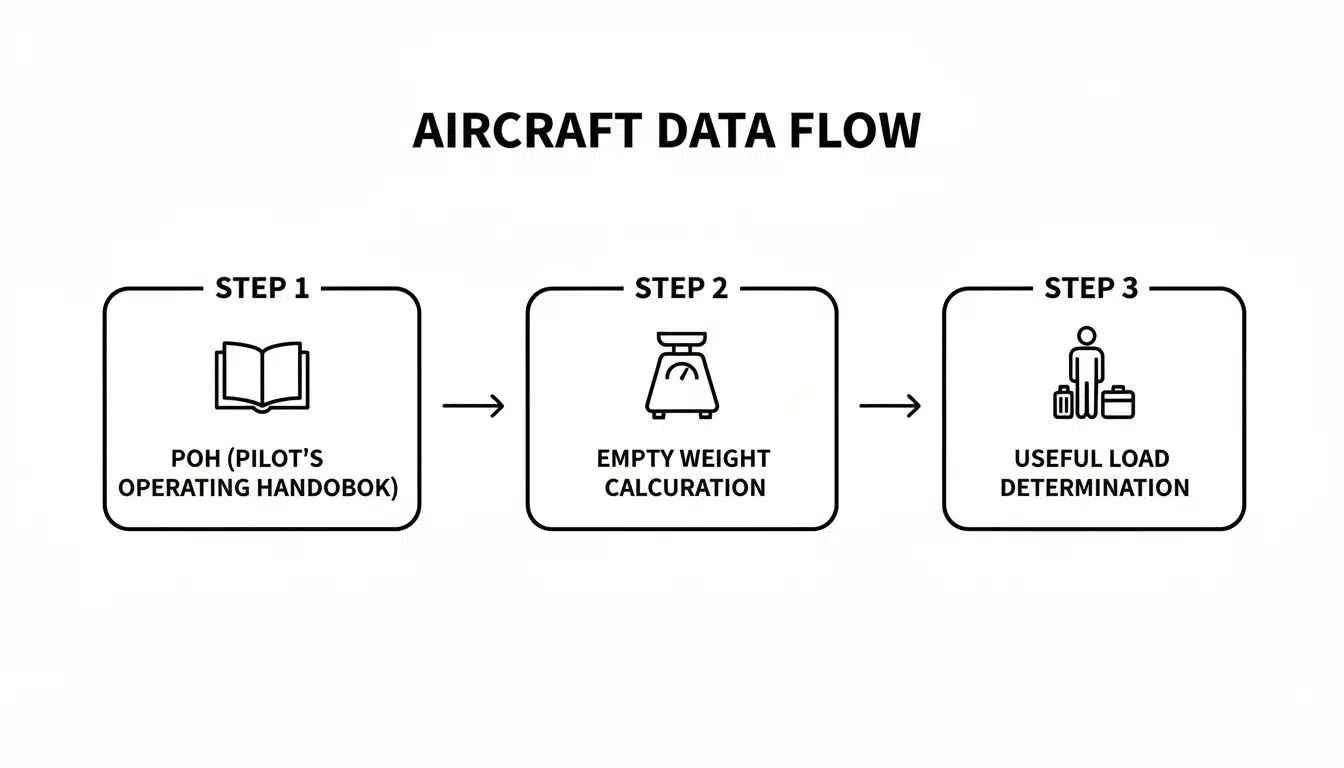
This flow shows how it all connects: the POH gives you the aircraft's empty weight, and from there, you can determine your useful load for that particular flight.
Step 1: Start With the Aircraft's Basic Empty Weight
The very first thing you need to do is grab the Basic Empty Weight (BEW) and its corresponding moment from the POH. Go find the most current weight and balance record for your specific tail number and copy those figures onto your cessna 172n weight and balance sheet. This isn't a generic number—it's unique to that plane and includes the airframe, all the installed equipment, unusable fuel, and a full sump of oil.
Step 2: Add Your Pilot and Passengers
Next up are the people. Get the actual weights for yourself and your passengers—this is no time for guessing! Jot down each person's weight on the correct line of your worksheet.
Once you have the weights, you'll multiply each one by its arm (the distance from the datum) to get the moment for that seat. In a 172N, the front seats typically have an arm of 37 inches, while the rear seats sit at 73 inches.
Step 3: Calculate Your Fuel Load
Now for the fuel. Figure out how many gallons of usable fuel you have on board and multiply that number by 6 pounds per gallon (the standard weight for avgas). For example, if you top off a 172N with standard 40-gallon usable tanks, your fuel weight is 240 pounds.
The arm for the fuel tanks in the 172N is right around 48 inches. Multiply your fuel weight by this arm to find the fuel moment, and add that to your calculations.
Step 4: Account for All Baggage
Don't forget what's in the back! Weigh all your bags and record them. The Cessna 172N actually has two separate baggage areas, each with its own strict limit.
- Baggage Area 1: has a 120-pound limit (arm at 95 inches).
- Baggage Area 2: has a 50-pound limit (arm at 123 inches).
It's critical that you never exceed these individual limits, even if your total aircraft weight is well below the maximum gross.
Step 5: Sum the Totals and Find the Center of Gravity
With every line item filled in, it's time to find your totals. Add up the entire weight column to get your ramp or takeoff weight. Do the same for the moment column to get your total moment.
The final, critical calculation is finding the Center of Gravity (CG). Simply divide the total moment by the total weight. The result is your CG location in inches aft of the datum. You'll then take this number and plot it on the CG envelope chart to make absolutely sure you're within safe operating limits.
When you're dealing with digital manuals or PDF-based performance charts, pulling the right numbers efficiently is key. Sometimes, using a tool for document extraction with a PDF parser can help grab the figures you need without endless scrolling. Mastering these calculations is a core part of pilot training, a topic explored in depth in our https://duboisaviation.com/ground-school/ program.
Putting It All Together: Practical Loading Scenarios
This is where the rubber meets the runway. Moving from textbook examples to actual pre-flight planning is what being a pilot is all about. Running through a few different loading situations on your Cessna 172N weight and balance sheet is the best way to build the real-world judgment you need before every flight.
Let's walk through a few common scenarios. You'll see how the mission dictates the loading—a long-haul trip looks very different from a quick hop around the pattern.
Scenario 1: The Solo Cross-Country
Picture this: you’re a 180-pound pilot getting ready for a long cross-country flight. Your goal is maximum range, so you've topped off the tanks with 40 gallons of usable fuel (240 pounds). You’ve also tossed a 30-pound flight bag into Baggage Area 1.
Let's run the numbers:
- Pilot: 180 lbs @ arm 37 = 6,660 lb-in
- Fuel: 240 lbs @ arm 48 = 11,520 lb-in
- Baggage: 30 lbs @ arm 95 = 2,850 lb-in
After adding these to your plane's basic empty weight and moment, you'll get your takeoff CG. But don't stop there. A big part of this flight's planning is thinking ahead to landing. As you burn off that 240 pounds of fuel, your CG is going to shift forward. You need to double-check that your landing CG will still be safely within the envelope.
Scenario 2: The Local Training Flight
Now for a different mission. We have a student pilot (170 pounds) and their instructor (200 pounds) heading out for an hour of training. They want the plane to feel responsive for maneuvers like stalls and steep turns, so they decide to fly light, taking off with just 20 gallons of fuel (120 pounds) and no baggage.
This kind of light loading usually puts the CG in a more forward position, which is actually great for stall recovery. But just because it's a routine flight doesn't mean you can skip the paperwork. The weight and balance is just as critical here as it is on any other flight.
It's easy to get complacent on familiar, local flights—and that's a trap. A quick calculation confirms that even with two pilots and partial fuel, the aircraft remains well within both weight and CG limits. It's about building the habit of diligence, every single time you fly.
Scenario 3: The Weekend Getaway (Pushing the Limits)
Here’s a trickier one. A 190-pound pilot is taking two friends (170 pounds each, one in the front, one in the back) on a weekend trip. They've also packed 80 pounds of gear into Baggage Area 1.
To keep the aircraft under its 2,300-pound max gross weight, fuel becomes the only variable they can play with. This is a classic trade-off: more people and bags means less fuel, which directly cuts into your range. The final calculation will likely be right up against the gross weight limit, demanding total accuracy. It's also crucial to verify that the rear passenger and baggage don't push the CG too far aft, which can be a serious safety issue.
How to Use the Center of Gravity Envelope Chart
After you've run the numbers on your Cessna 172N weight and balance sheet, you're left with two critical figures: the total weight and the Center of Gravity (CG). But on their own, these numbers don't mean much. The final, non-negotiable step is to see if they fall within the aircraft's approved limits by plotting them on the Center of Gravity Envelope Chart from the POH.
This chart is your visual proof that the aircraft is actually safe to fly. It gives you a clear, definitive go/no-go decision. Think of the envelope as a safety box—as long as your calculated loading point falls inside the lines for your flight category, you're airworthy.

Plotting Your Takeoff Point
Using the chart is pretty straightforward. You just need to find where your total weight and calculated CG intersect.
- Find Your Weight: On the chart's vertical (Y) axis, locate your total takeoff weight.
- Find Your CG: On the horizontal (X) axis, find your calculated Center of Gravity (in inches aft of datum).
- Plot the Point: Trace straight lines from these two points. The spot where they cross is your aircraft's loading point.
If this point lands inside the boundaries of the Normal Category envelope, you're good to go for standard flight operations. If it falls outside that boundary, the aircraft is unsafe and you absolutely must reload it before flying.
An out-of-balance aircraft can create some truly dangerous situations. A forward CG can make it a real struggle to raise the nose for takeoff or landing. An aft CG is even worse, often leading to instability and making stall recovery nearly impossible. This chart is your last line of defense against those exact risks.
Normal vs. Utility Category Envelopes
You'll notice the Cessna 172N chart has two distinct envelopes drawn on it.
- Normal Category: This is the larger box, allowing for a maximum gross weight of 2,300 pounds. It covers all your standard day-to-day flying.
- Utility Category: This is a much more restrictive envelope with a lower maximum weight and a tighter CG range. You must be loaded within these limits to perform certain maneuvers, like intentional spins.
Here's a tip for prospective buyers: always review the specific POH and weight and balance history for any aircraft you're considering. Modifications over the years can change the basic empty weight, which might shrink your useful load and impact how you operate within these envelopes. A thorough pre-buy inspection is crucial to make sure the plane's paperwork matches its real-world condition.
How to Buy an Airplane the Safe Way
For a lot of pilots, the dream of moving from renting to owning your own plane—like a classic Cessna 172—is a huge milestone. It’s an exciting thought, but the process of buying an aircraft demands a serious, methodical approach to make sure you're making a smart investment, not buying someone else's problems. Getting it right from the start saves a world of headache and money down the road.
The Critical Pre-Buy Inspection
Let me be blunt: the single most important thing you will do is get a pre-buy inspection. This isn't just another annual. A proper pre-buy is a deep, invasive look into the aircraft's true condition, performed by an A&P mechanic you trust—ideally one who specializes in the specific model you're eyeing. The entire point is to hunt down the things you can't see, like hidden corrosion, undocumented damage, and looming mechanical failures.
Digging Into the Paperwork
While the mechanic is getting their hands dirty, you need to be buried in the logbooks. The logs are the aircraft's biography. They tell you everything from its maintenance history and major repairs to whether it's compliant with every mandatory Airworthiness Directive (AD).
Clean, organized, and complete logbooks are usually a sign of a meticulous owner. On the other hand, if you see missing entries, gaps, or just sloppy record-keeping, that’s a massive red flag. This is also where you'll find the aircraft's current, official weight and balance data.
A word of warning: never trust the original weight and balance sheet from the factory. Every single piece of equipment added or removed—from avionics upgrades to a new paint job—changes the plane's empty weight and center of gravity. You must verify that the cessna 172n weight and balance sheet in the logs matches the plane's current equipment list. This isn't just paperwork; it's a fundamental safety check.
Closing the Deal Securely
Before a single dollar is exchanged, you absolutely must conduct a professional title search. This confirms the seller legally owns the aircraft and, more importantly, tells you if there are any liens on it. Finding out there's a lien after you've paid is a financial and legal nightmare you don't want any part of.
To protect everyone involved, I always recommend using an aviation escrow service. The escrow agent acts as a neutral third party, holding your money and the aircraft's title documents. They only release everything once all the conditions of the sale—like a clean pre-buy and a clear title—have been met. It’s the safest way to finalize the transaction.
By following these steps, you turn a potentially stressful process into a confident purchase. If you're starting to explore ownership, it's worth checking out expert guides on aircraft sales and acquisitions to get a better feel for the market. A safe buy always starts with due diligence and ends with you holding the keys to a solid, airworthy airplane.
Common Errors and Safety Best Practices
Getting the weight and balance right isn't just paperwork; it's a critical safety task that can turn a routine flight into an emergency if done wrong. Even a small miscalculation on the Cessna 172N weight and balance sheet can seriously compromise the plane's stability and performance. Knowing where pilots commonly trip up is the first step to making sure you don't.
One of the most frequent—and frankly, most dangerous—mistakes is guessing passenger weights. Under Part 91, you have to use actual weights. Don't just accept a "standard" number or make an assumption. A seemingly minor 10-pound difference per person adds up fast and can easily push you over the limits without you ever realizing it.
Miscalculating the fuel load is another classic error. It’s easy to assume the tanks are full or just eyeball the gauges, but both can lead to a significant discrepancy. You should always visually confirm how much fuel you have on board and then calculate its weight accurately at 6 pounds per gallon.
Avoiding Critical Calculation Mistakes
You’d be surprised how often simple math errors creep in, usually when a pilot is rushing through their pre-flight. One misplaced decimal point or a simple addition mistake can render the entire calculation useless, giving you a completely false sense of security. The solution is simple: slow down and be methodical.
To keep these preventable errors out of your cockpit, make this your standard practice:
- Always Use Actual Weights: It might feel a little awkward, but you must ask your passengers for their weight and weigh every piece of baggage. As Pilot in Command, it's a non-negotiable part of your job.
- Verify Your Fuel: Dip the tanks or use a trusted gauge to confirm your fuel level, then do the math. Never rely on what you think was left from the last flight.
- Double-Check Your Math: Once you've filled out the sheet, run through all your addition and multiplication again. Even better, have another pilot or a flight instructor give it a quick once-over.
Upholding a Safety-First Mindset
Beyond just crunching the numbers correctly, developing a proactive safety culture is key. That means always using the current Pilot's Operating Handbook (POH) for the specific tail number you’re about to fly. Every single aircraft is different, and its empty weight and CG can shift over time due to new equipment or repairs.
Remember, flying at or near maximum gross weight dramatically hurts performance, especially in high-density altitude conditions. Your takeoff roll will be longer, your climb rate will suffer, and your stall speed will be higher. A calculation that looks "barely legal" on paper can be a huge risk in the real world.
Finally, always be ready to re-do your calculations if something changes. If a passenger shows up with an extra heavy bag or you decide to top off the tanks, you have to run the numbers again. Diligence isn't just about the initial checks; it’s about adapting to changes. For a comprehensive look at everything this entails, our guide on essential pre-flight checks for the Cessna 172 is a great resource. This commitment is what separates a good pilot from a truly professional one.
Common Questions Answered
When it comes to the Cessna 172N weight and balance sheet, pilots always have questions. Getting the details right isn't just about passing a checkride; it's about safety. Here are some straightforward answers to the questions we hear most often.
Where Do I Find the Official Empty Weight and Arm?
The only place you'll find the correct Basic Empty Weight (BEW), arm, and moment for a specific airplane is in its current, FAA-approved Pilot's Operating Handbook (POH). Remember, these numbers are unique to each individual tail number.
That data is updated by a certified mechanic anytime equipment is added, removed, or a major repair is done. Never, ever use generic numbers or data from a different airplane. Always pull the figures directly from the POH of the aircraft you're about to fly. It's the only way to be sure.
What's the Difference Between Normal and Utility Categories?
You'll notice the Cessna 172N has two different operating envelopes on its CG chart. They're there for a reason.
- Normal Category: This is for your everyday flying. It allows for a maximum gross weight of 2,300 pounds.
- Utility Category: This category has a lower max weight and a much tighter CG range. It's required for certain maneuvers like intentional spins (if the aircraft is approved for them), because the stricter limits guarantee better control and stall recovery.
Before you fly, you absolutely have to confirm your loading keeps you within the right envelope for the kind of flying you plan to do.
How Does Fuel Burn Affect the Center of Gravity?
As you burn off fuel, two things happen: your total weight decreases, and your total moment decreases. In the 172N, the fuel tanks are in the wings, and their center of gravity is slightly forward of the typical CG range.
This means that as you burn fuel, your CG will slowly creep forward. This is a critical factor on long flights. You must calculate your weight and balance for both takeoff and landing to ensure the CG stays within the approved envelope for the entire trip.
An aircraft that's perfectly balanced at takeoff could easily be out of balance by the time you're ready to land if you don't account for the CG shift from fuel burn. Always plan for the full flight profile.
Can I Use Standard Passenger Weights?
The short answer is no. For any flight under FAR Part 91, the pilot is legally required to use the actual weights of all passengers, crew, and baggage. Using "standard" weights or guessing is not compliant and adds a dangerous amount of risk.
This is a big one, especially for new pilots. It might feel a bit awkward, but asking your passengers for their weight is a non-negotiable part of your responsibility as Pilot in Command. Doing so ensures your cessna 172n weight and balance sheet is accurate and the flight is safe.
At DuBois Aviation, we believe professional pilots are built from the ground up, starting with a deep understanding of core safety principles like weight and balance. Our one-on-one instruction at Chino Airport (KCNO) ensures you master these essential skills with real-world confidence. Learn more about our comprehensive flight training programs at https://duboisaviation.com.
A practical Cessna 172N weight-and-balance workflow
- Start with the current empty weight, moment and equipment list for the specific tail number—not a generic example airplane.
- Add occupants, baggage and usable fuel using the approved stations and arms.
- Total the weight and moment, then calculate center of gravity when required by the worksheet.
- Plot takeoff weight and CG inside the approved envelope in the POH or aircraft flight manual.
- Recalculate for the expected landing fuel when that condition could become limiting.
A sample worksheet is useful for learning the process, but it cannot replace the current records for the airplane being flown. The FAA’s Weight and Balance chapter explains how loading affects stability and performance.