
Piper Cherokee vs. Cessna 172: the short answer
Both are proven trainers. The Cessna 172’s high wing, two-door layout and downward visibility appeal to many new students. The Piper Cherokee’s low wing, different sight picture and fuel-tank management give students useful experience with another common aircraft design.
| Consideration | Piper Cherokee | Cessna 172 |
|---|---|---|
| Wing | Low wing | High wing |
| Cabin access | One main door on many models | Two doors on many models |
| Ground visibility | Open view above the wing | Strong downward view |
| Best choice | The well-maintained aircraft you can schedule consistently with a good instructor | |
See the aircraft currently available in our airplane and helicopter training fleet.
Walk onto the flight line at just about any airport, and you'll immediately spot the two workhorses of pilot training: the high-wing Cessna 172 and the low-wing Piper Cherokee. The debate over which is "better" is as old as the planes themselves, but the real question isn't about which one wins. It’s about which one is right for you.
At its core, the choice boils down to a fundamental design difference. The Cessna 172’s high-wing design makes it incredibly stable and gives you a fantastic view of the ground, which is a huge confidence booster when you're learning to navigate. On the other hand, the Piper Cherokee's low-wing configuration gives it a more responsive, "sporty" feel in the air and often comes with a lower rental cost, making it a very practical choice.
Choosing Your Ideal Flight Training Aircraft
Picking your primary trainer is one of the first big decisions you'll make as a student pilot. This isn't just about a piece of equipment; it's the aircraft where you'll build your foundational skills, spend your money, and make your first memories as a pilot. The conversation almost always narrows down to the Cherokee and the 172, but the goal is to find the right tool for the job you have in mind.
Whether you’re aiming for a weekend hobby license or charting a course for an airline career, your goals will shape this choice. Of course, the plane is only one part of the equation. It's just as important to find the right training environment, so be sure you know how to choose a flight school that fits your specific needs.
Key Initial Considerations
Let's be clear: there’s no wrong answer here. Both the Cherokee and the 172 are incredibly safe airplanes that have successfully launched the careers of countless pilots. Before we get into the nitty-gritty performance numbers, let's look at the big picture.
| Feature | Piper Cherokee | Cessna 172 |
|---|---|---|
| Wing Position | Low-Wing | High-Wing |
| Primary Advantage | Responsive handling, better upward visibility | Inherent stability, superior downward view |
| Landing Feel | Feels more "planted" due to ground effect | Can "float" more, very forgiving gear |
| Typical Cost | Often lower rental and acquisition costs | Often higher rental and acquisition costs |
Ultimately, the right choice for you will come down to what your flight school offers, your budget, and what kind of pilot you want to become. Think of this as the first of many decisions you'll make on your journey to becoming a safe, proficient aviator.
Getting a handle on these key differences is the first step. It helps you frame the rest of the comparison and decide how each aircraft’s unique personality aligns with your own learning style and long-term goals.
Design Philosophy: How The Wings Shape The Pilot
When you get down to it, the Piper Cherokee and Cessna 172 debate isn't just about specs. It’s about two completely different ideas on how to build a good pilot, and you can see it all in where they put the wings. These aren't just planes; they're teaching tools, and their design philosophies have a huge impact on your training.
The Cessna 172 is famous for its high-wing design, and for good reason. It creates an incredible amount of inherent stability. Think of the fuselage hanging underneath the wings like a pendulum—the plane naturally wants to return to straight-and-level flight. For a brand new student, this self-correcting tendency is a huge confidence boost. It makes the plane feel solid, predictable, and incredibly forgiving.
That high wing also gives you fantastic visibility straight down. You can easily spot landmarks for navigation and keep the runway in sight all the way through your landing approach. It’s a design built from the ground up to make the first few hours in the cockpit as smooth as possible.
The Low-Wing Approach
Piper took a different route with the Cherokee's low-wing design. The result is a plane that feels more responsive and connected, what many pilots would call "sportier." It reacts right away to your control inputs without that same urge to self-stabilize. This means you, the pilot, have to be more precise and stay ahead of the airplane.
The trade-off for that downward visibility is excellent upward and side visibility in the Cherokee, which is great for spotting traffic, especially when turning in the pattern. On the ground, it also has a completely different feel. Sitting lower, it handles a bit more like a car when you're taxiing, which many people find intuitive.
The key takeaway is this: the Cessna 172 is built to forgive, fostering confidence through stability. The Piper Cherokee is built to respond, cultivating precision through direct feedback. Both approaches create skilled pilots, just via different paths.
This fundamental difference has had a massive real-world impact on which plane you’re more likely to find at the local airport. The Cessna 172 Skyhawk is the most-produced aircraft in history, with over 44,000 built. The Piper Cherokee family is no slouch—it’s the fourth most produced with over 32,750 models—but that production gap is significant.
For students, this often means flight schools simply have more 172s on the line, leading to better parts availability and a deeper pool of experienced mechanics. While you'll find both everywhere, the 172's sheer numbers can sometimes mean more scheduling flexibility. You can discover more insights about these iconic aircraft on YouTube, but the bottom line is that the 172's market dominance reflects decades of trust from flight schools that value its reliability and gentle learning curve.
Specs on a page are one thing. How a plane actually feels in your hands—that’s what really matters. The classic Piper Cherokee vs. Cessna 172 debate truly comes to life in the cockpit, where their different design philosophies create two very distinct flying experiences, from takeoff to touchdown.
These aren't just minor quirks; they shape how you learn to fly and the kind of pilot you become.
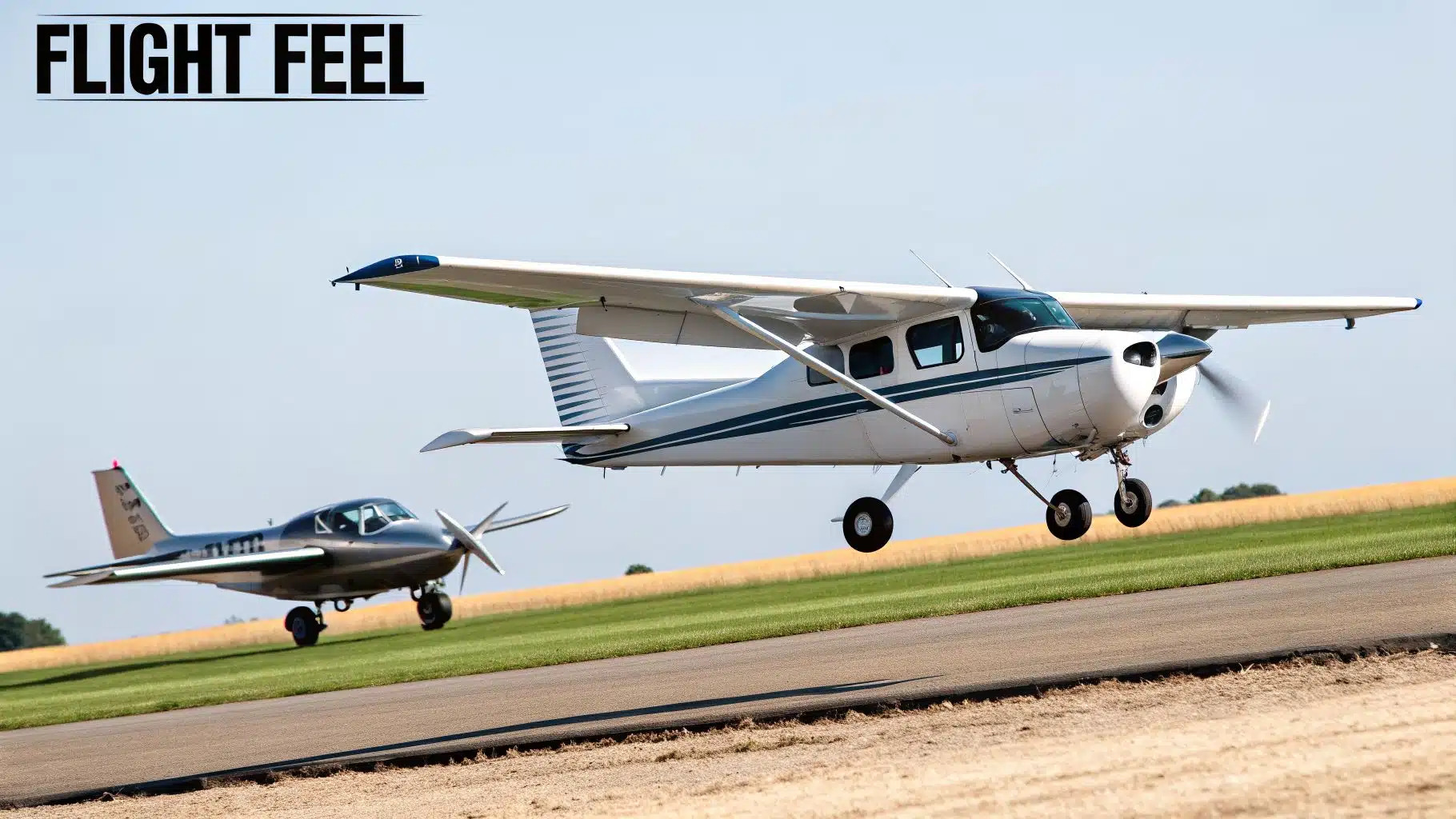
The differences are obvious from the moment you line up on the runway. In the Cessna 172, the high-wing design gives you a phenomenal, wide-open view of the world below. For ground reference maneuvers and sightseeing, it's hard to beat. The low-wing Cherokee, on the other hand, provides a different sight picture, but its squat stance and shorter gear often give pilots a more connected feel for speed and movement during the ground roll.
Stability and Control Feel
Once you’re in the air, the Cessna 172’s famous stability is immediately apparent. The fuselage essentially hangs from the wings like a pendulum, giving the plane a natural tendency to return to straight-and-level flight. For a brand-new student, this is a huge confidence builder. The plane feels solid, predictable, and incredibly forgiving.
The Piper Cherokee is a different story. It offers a more direct and crisp control feel. It doesn't have the same self-correcting nature as the 172, meaning it stays exactly where you put it. This requires the pilot to be more engaged and precise, forcing you to develop a keen sense for "flying the wing" right from your first lesson.
This difference gets to the heart of the training debate:
- The Cessna 172’s stability lets students focus on checklists, procedures, and navigation without feeling overwhelmed by the constant need for minor control inputs.
- The Piper Cherokee’s responsiveness rewards smooth, precise flying and builds a kind of stick-and-rudder skill that many pilots feel translates well to more complex aircraft later on.
Landing Characteristics: The Float vs. The Settle
Nowhere are these two aircraft more different than in the flare. Ask any pilot, and they’ll have a story about one of these.
The high-wing Cessna 172 is legendary for its tendency to "float" in ground effect, especially if you carry a little extra speed over the numbers. That big wing just wants to keep flying. On the plus side, its beefy landing gear is incredibly forgiving, soaking up firm arrivals that might have you bouncing in another aircraft.
The Piper Cherokee behaves completely differently on final. Its low wings generate a very noticeable ground effect cushion that, when used properly, can help you grease the smoothest of landings. However, it’s far less tolerant of excess speed and will settle firmly onto the runway once that energy bleeds off. This demands disciplined energy management all the way down.
The notorious 'Cessna float' teaches patience and energy management, while the Cherokee's tendency to settle firmly onto the runway demands disciplined airspeed control. Each aircraft molds a different, but equally valuable, landing skillset.
This is a critical distinction every student needs to grasp. While both are perfectly safe and predictable trainers, mastering the landing in each requires a completely different touch. No matter which you fly, it all starts with a thorough pre-flight, and you can review the process in our guide covering pre-flight checks for the Cessna 172.
To put it all together, here’s a quick look at how the specifications translate to the handling characteristics we've been discussing.
Performance Snapshot: Piper Cherokee vs Cessna 172
| Specification | Piper Cherokee (PA-28-140/161) | Cessna 172 (Skyhawk N/P) |
|---|---|---|
| Cruise Speed | ~105-120 kts | ~110-122 kts |
| Takeoff Roll | ~1,000 ft | ~960 ft |
| Landing Roll | ~600 ft | ~575 ft |
| In-Flight Stability | Neutral Stability (Stays where you put it) | Positive Stability (Wants to self-correct) |
| Landing Feel | Firm settling, pronounced ground effect | Prone to floating, very absorbent gear |
As you can see, while the numbers on paper look quite similar, the small differences in design create two very unique personalities in the air.
Analyzing The True Cost Of Flying And Training
Let's talk about the bottom line. For most of us, money is the biggest factor in flight training. It dictates which plane you fly, how often you fly, and ultimately, whether you make it to your checkride. When you put the Piper Cherokee and Cessna 172 head-to-head on cost, the differences can be stark, and choosing wisely from the start can be the difference between getting your license and running out of funds.
The hourly rate you see on a flight school's website isn't an arbitrary number. It’s driven heavily by what the school paid for the airplane in the first place. This is where the Cherokee often gets a head start on affordability.
How Purchase Price Shapes Your Rental Rate
The initial investment for a flight school or an individual buyer has a direct trickle-down effect on the cost per hour. This is where the economics start to favor the Cherokee.
On the used market, a well-maintained Piper Cherokee 140 can often be had for around $60,000. A comparable Cessna 172 Skyhawk, on the other hand, frequently fetches closer to $90,000—that’s a 50% premium. While the 172 might have a slight performance edge on paper, many pilots and schools question if it justifies such a steep price jump for training flights. This price difference is why you'll often see Cherokees renting for less. You can see a detailed breakdown of these costs and how they play out in the real world.
Breaking Down The Hourly Operating Costs
Beyond the purchase price, the real cost of flying comes down to what you spend every hour the engine is running. These are the key variables that every owner and renter needs to keep an eye on.
- Fuel Burn: Both planes are fairly economical, sipping between 7-9 gallons per hour depending on the engine and how you fly. While the difference is minor, those gallons add up over the 40+ hours needed for a license.
- Insurance: An aircraft's value is a major factor in insurance premiums. Because a Cherokee typically has a lower hull value, it often costs less to insure. This is a win for both owners trying to control fixed costs and renters who benefit from the lower overhead.
- Maintenance and Parts: Here, simplicity is king. The Cherokee is famous for its simple, rugged design. With its fixed-pitch prop and sturdy fixed landing gear (on most trainers), there are simply fewer complex parts to break, which can lead to lower maintenance bills over time.
Choosing a more affordable trainer like the Piper Cherokee doesn't mean you're getting a lower-quality experience. It's about being smart with your money. The savings on your rental rate can be put toward more flight hours, an instrument rating, or just finishing your license with less debt.
Both the Cherokee and the 172 are excellent, safe airplanes that will get you your certificate. But by taking a hard look at both the upfront and hourly costs, you can make a choice that fits your budget and keeps your dream of flying financially on track.
Safety & Maintenance: What the Numbers Really Tell Us
When you’re comparing two titans like the Cherokee and the 172, it’s easy to get tangled in the safety statistics. Let’s be clear from the start: both of these aircraft have earned incredible safety records over millions of flight hours. They are, without a doubt, exceptionally safe airplanes.
But simply looking at raw accident rates doesn't give you the full picture. The real value comes from understanding the types of incidents each airframe sees more often. This insight turns dry statistics into practical lessons you can apply in the cockpit.
Interpreting the Accident Data
Here’s where things get interesting. A detailed analysis reveals something that seems contradictory at first. While the Cessna 172's overall accident rate is about 50% higher than the Piper Cherokee’s, its fatal accident rate is actually 40% lower. What does this tell us? It suggests that while 172 pilots might find themselves in more minor scrapes, the incidents are far less likely to be catastrophic.
One statistic, in particular, stands out and offers a crucial training takeaway. Studies show that pilots of the PA-28 family (the Cherokee) are significantly more prone to accidents from fuel mismanagement and exhaustion. If you're interested, you can explore the full analysis of these safety statistics, but for a Cherokee pilot, the message is clear. Diligent fuel planning, understanding the tank switching procedure, and never taking your fuel state for granted are non-negotiable skills to master.
Airworthiness and Common Maintenance Quirks
Beyond the pilot's actions, the aircraft's design and maintenance profile play a huge role in its overall safety. Both the Cherokee and the 172 are built like tanks and have proven their durability in demanding flight school environments for decades.
Still, they each have their own quirks that mechanics know well and pilots should be aware of:
- Piper Cherokee: Its simple, stout landing gear is almost legendary for its durability and low maintenance needs. On the flip side, the low-wing design can make pre-flight inspections underneath a bit more of a crouch-and-crawl affair. The stabilator—that single, moving horizontal tail surface—is a unique Piper design feature that always deserves a careful look during your walk-around.
- Cessna 172: The high-wing design is a gift for pre-flighting. You can easily check the tops of the wings and visually inspect your fuel levels without a ladder. The oleo strut landing gear is fantastic for smoothing out less-than-perfect landings, but those struts require regular service to keep them properly inflated and free of leaks.
As a pilot, the biggest lesson here is that you are the final line of defense. Meticulous pre-flight inspections and a proactive attitude toward maintenance are what truly keep you safe, no matter which plane you're flying. Knowing an aircraft’s specific weak spots makes you a smarter, safer pilot.
Don't let any of this data scare you away from either choice. With a fatal accident rate of just 0.56 per 100,000 flight hours, the Cessna 172 is statistically one of the safest aircraft you can fly. Both the Cherokee and the 172 are fantastic, reliable machines. Their safety records simply highlight different—but equally important—areas for you to focus on and master on your journey to becoming a better aviator.
Making Your Final Decision
So, after comparing all the specs and performance figures, you’re probably asking: which one is actually better? The honest answer from any experienced pilot will be the same—it depends entirely on you. The Cherokee vs. 172 debate doesn’t have a single winner because your personal flying goals define which aircraft is the right tool for the job.
If you're moving beyond renting and looking to purchase, the decision-making process gets even more personal. It's a structured path that starts with your mission and budget and always ends with a thorough pre-buy inspection.
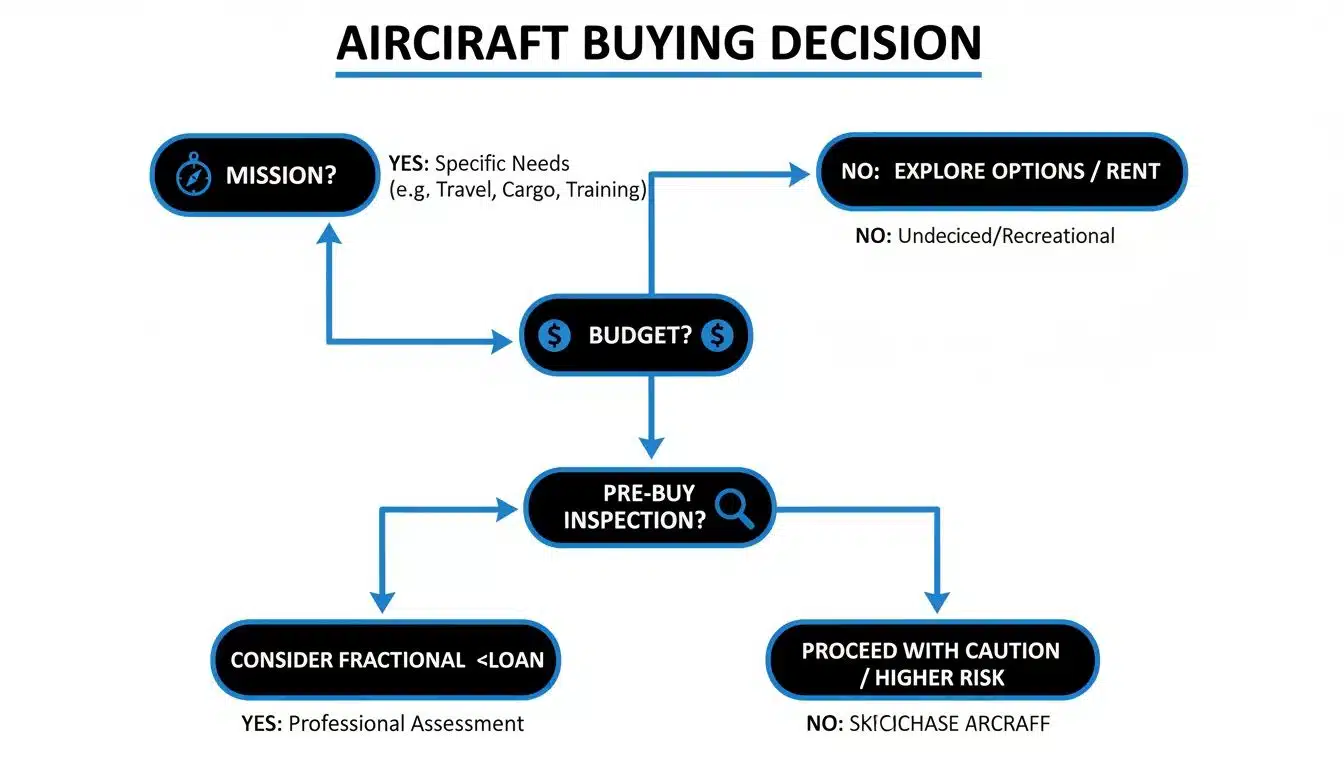
This process isn't just a suggestion; it’s the safest way to transition from renting to ownership. Following these steps helps ensure you end up with a plane that fits your needs without any costly or dangerous surprises down the road.
Recommendations For Different Pilot Profiles
Let's look at a couple of common scenarios. If you're a student pilot focused on earning your Private Pilot License as affordably as possible, the Piper Cherokee often has a clear edge. Its lower purchase price generally means a lower hourly rental rate, stretching your training budget further.
For the aspiring career pilot, however, the goal isn't just to get one rating—it's to build a diverse and valuable logbook. Future employers love to see pilots who are comfortable in different types of aircraft. The ideal path here involves getting experience in both high-wing and low-wing planes, demonstrating your adaptability and a deeper grasp of aerodynamics.
Ultimately, no amount of reading can replace putting your hands on the yoke. The only way to truly know which aircraft is right for you is to get in the cockpit and fly both.
The Ultimate Tie-Breaker: A Discovery Flight
Reading articles and watching videos is a great start, but the real test is how an airplane feels in the air. We can't stress this enough: book a discovery flight in both a Cherokee and a 172 before you commit.
This is your chance to go beyond the numbers and see for yourself. A hands-on flight will let you:
- Feel the quicker control response of the low-wing Cherokee.
- Experience the inherent stability and landing forgiveness of the high-wing Cessna.
- See firsthand what the visibility is like from the pilot's seat during critical phases of flight like turns and final approach.
More importantly, it’s a golden opportunity to talk with an experienced Certified Flight Instructor (CFI). They can discuss your specific goals—whether you plan to fly for fun on weekends or for a major airline—and help you choose the aircraft that makes the most sense for your journey. This real-world experience is the final piece of the puzzle.
Frequently Asked Questions
Pilots wrestling with the Cherokee vs. 172 decision tend to ask the same questions. Here are some straight answers based on real-world experience.
Is A Cherokee Harder To Land Than A 172?
Not harder, just different. The low-wing Cherokee floats quite a bit in ground effect, which cushions the landing beautifully but demands you nail your energy management on final. Come in with a little extra speed, and it will want to fly forever.
The high-wing 172 is more forgiving of a slightly fast approach and less prone to floating. However, that forgiving gear can lead to some embarrassing bounces if you come in too fast or land flat. Each plane has its own feel, and mastering both is a key part of becoming a well-rounded pilot.
Which Aircraft Has Better Visibility?
This really depends on what you’re trying to see. The high-wing 172 gives you an incredible, unobstructed view of the ground. It's fantastic for sightseeing and spotting landmarks during cross-country navigation.
On the other hand, the Cherokee’s low-wing design gives you a much better view of the sky, especially in turns. This is a huge advantage for spotting other aircraft in a busy traffic pattern.
Ultimately, it's a personal trade-off. Do you want a clear picture of the ground for reference, or a wide-open view of the sky for traffic awareness? The only way to know for sure is to fly them both.
If I Train In A Cherokee Can I Easily Fly A 172 Later?
Yes, absolutely. Hopping between these two aircraft is a common rite of passage for pilots. The transition is very straightforward.
Once you have your license, you'll just need a few hours with a CFI to get the feel for the different sight picture, handling, and landing characteristics. After that, you'll get a simple sign-off and be ready to go.
Which Plane Is Better For Instrument (IFR) Training?
Both are workhorse IFR trainers, and you can’t go wrong with either. Many pilots will tell you the Cherokee feels a bit more stable and planted on an instrument approach, a nice benefit of its low-wing design.
That said, the Cessna 172 is an incredibly reliable instrument platform in its own right and has probably trained more IFR pilots than any other aircraft in history. The best choice often comes down to what the flight school has available and which one your instructor prefers.
Your aviation journey starts with the right instruction and the right aircraft. At DuBois Aviation, we offer a diverse fleet and expert guidance to help you make the best choice for your goals. Explore our flight training programs today.
Choose by mission, not brand loyalty
How to make the Cherokee-versus-172 decision useful
Both designs can teach strong fundamentals. Compare cockpit comfort, sight picture, entry and exit, useful load, avionics, aircraft availability, rental terms, and how often each airplane is available when you plan to fly.
If your goal is a certificate or rating, consistent scheduling and a stable instructor-aircraft combination usually matter more than winning a high-wing-versus-low-wing debate.
Source: Compare the DuBois training fleet. Reviewed August 17, 2026.