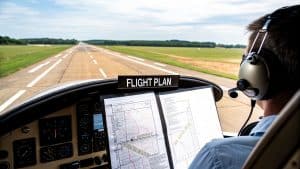
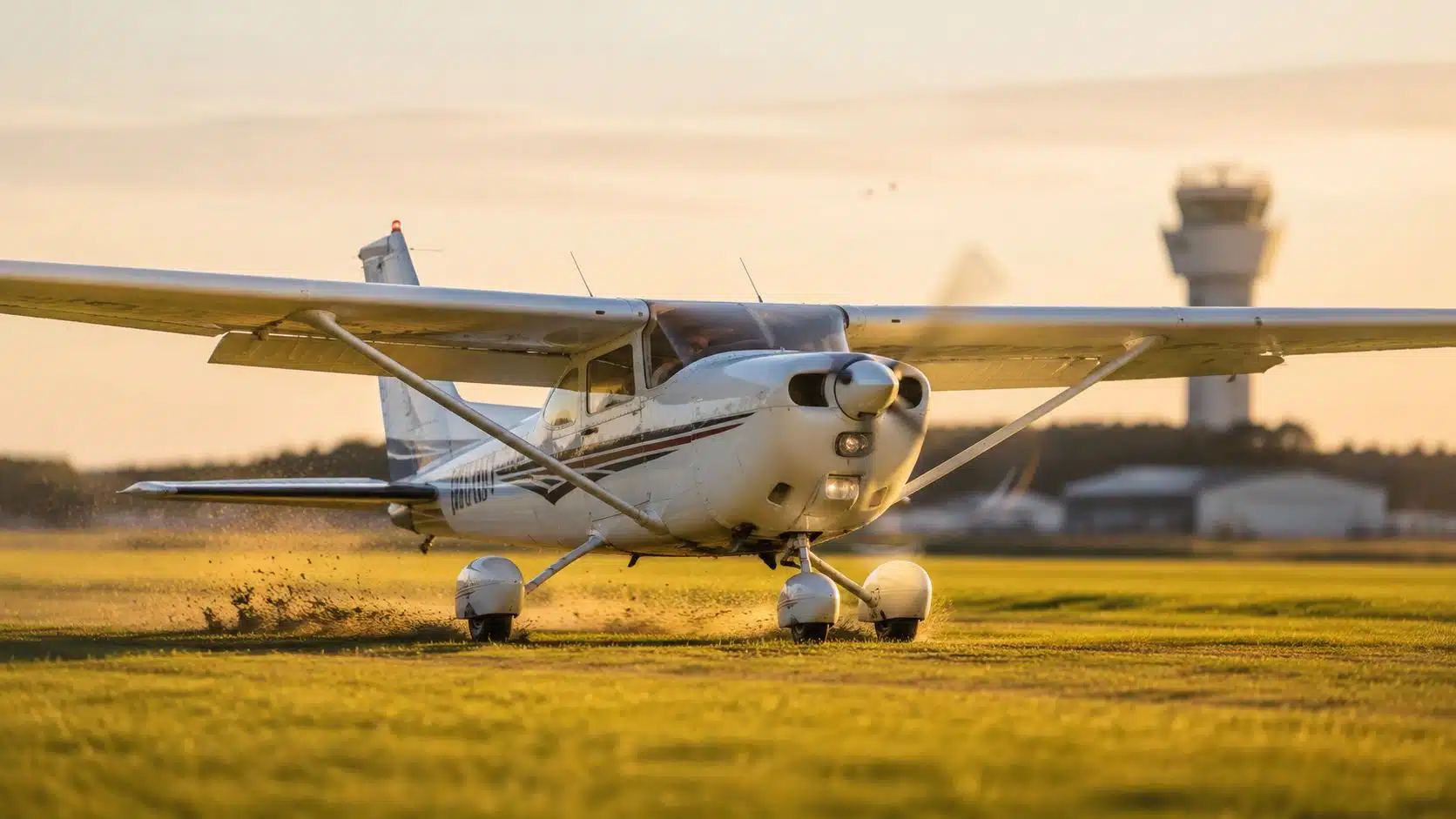
You're on short final at a busy towered airport, the surface ahead isn't perfect, and the airplane doesn't care that the tower cleared you to land. If the runway looks a little soft, a little rough, or just not ideal, the soft field landing technique is what keeps the airplane flying until it's ready to settle, then keeps the nosewheel light while you taxi clear. Done correctly, it feels deliberate, calm, and almost boring. Done poorly, it turns into a bounce, a dig-in, or a rushed rollout.
Table of Contents
- What a Soft Field Landing Does for the Airplane
- Briefing, Runway Choice, and the Setup Before You Turn Final
- Approach Profile, Flap Schedule, and Speed Management
- How Cherokee, Cessna, Mooney, and Helicopters Behave in Ground Effect
- Touchdown, Rollout, and Getting Off the Soft Surface
- Common Mistakes and the Crosswind Trap Most Guides Skip
- Go-Around Triggers, KCNO Realities, and Practice Drills
What a Soft Field Landing Does for the Airplane
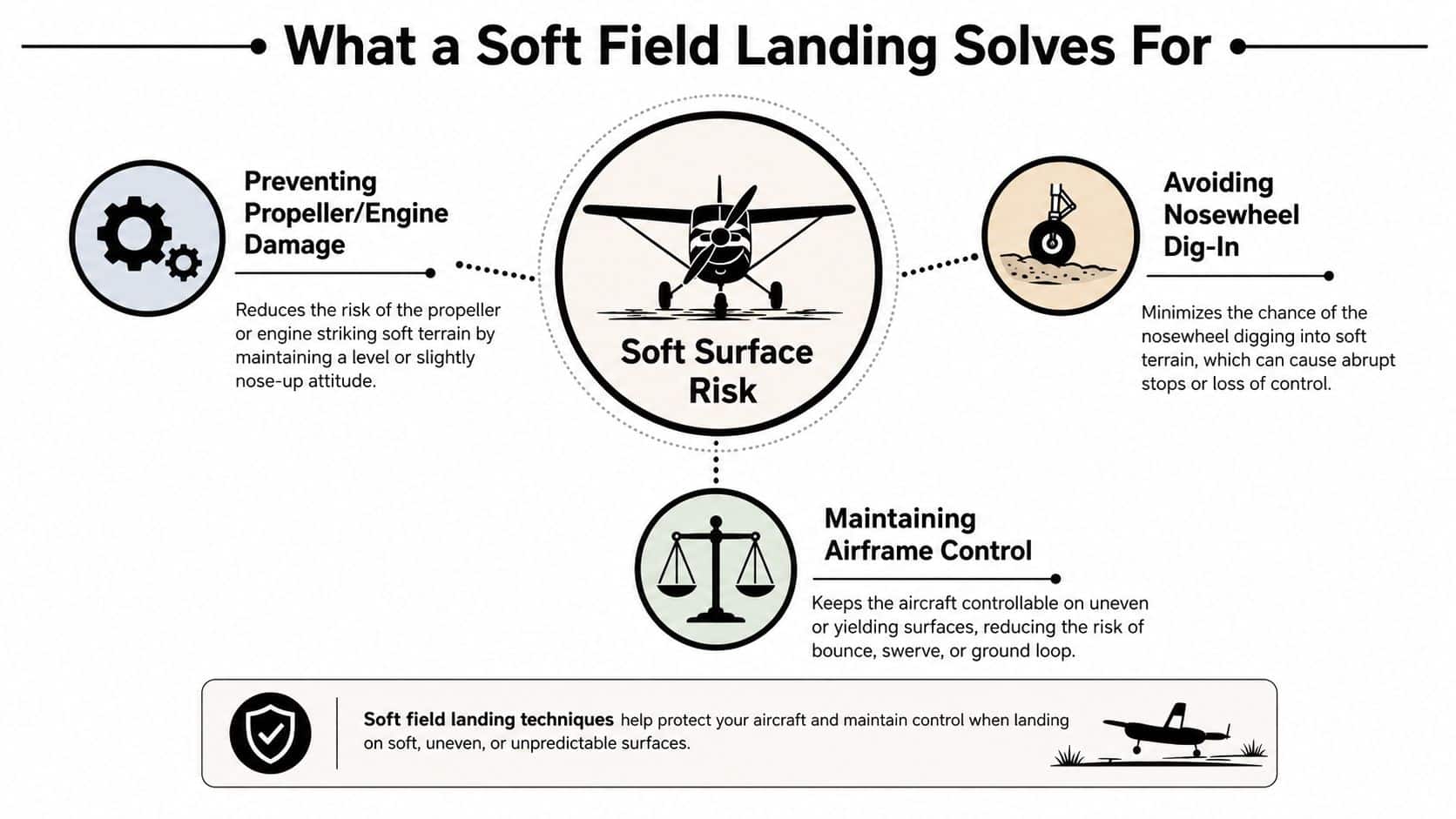
A soft field landing is a load-management maneuver. The pilot is trying to arrive with minimum sink, then keep the airplane from loading the landing gear more than necessary once the mains are on the surface. That matters on grass, dirt, snow, or any runway that cannot tolerate a normal, firm rollout, because soft terrain punishes excess weight and abrupt deceleration. The technique also fits the way many training syllabi talk about landing accuracy, with practical tolerances often referenced around 200 feet for PPL and 100 feet for CPL touchdown targeting, while the airplane itself is stabilized earlier, usually by 200 feet AGL or the go-around call should already be in motion. Pilot Institute
Why the technique exists
Soft-field work started as a practical answer to a very basic problem. If the airplane lands on a surface that gives way, the wheels can sink, the nose can dig, and the airframe can get pinned before the pilot wants it to stop. Historical training material from AOPA and EAA describes the same core idea, keep some power in during the flare, touch down softly, and hold aft elevator so the airplane stays light on the nosewheel during rollout. EAA's soft-field explanation makes the logic plain, the airplane is being supported by aerodynamic lift for as long as possible instead of relying on the wheels.
That is why this maneuver is different from a short-field landing. Short-field work is about getting stopped in the shortest usable distance. Soft-field work is about keeping the airplane from sinking, bogging, or loading the nosewheel too soon. Those goals can overlap, but they are not identical, and treating them like one generic “soft landing” recipe usually causes confusion in the flare.
Practical rule: If the surface can punish the nosewheel, your priority is not a perfect-looking touchdown. Your priority is keeping the airplane flying just long enough to unload the gear, then rolling without asking the surface to do more than it can.
The mental picture helps. You are not trying to plant the airplane. You are trying to let it settle while it is still supported by airflow, then keep it light and controlled all the way through rollout. That is the whole job.
What changes at a busy towered field like KCNO is the margin for hesitation. A soft-field landing has to fit the traffic flow, the runway choice, and the surface condition without turning the last part of the approach into a rushed salvage. In a Cherokee, that matters even more because the stabilator gives you a different feel near touchdown than a Cessna elevator does. The Cherokee's tailplane can make small pitch inputs feel more immediate in ground effect, so the airplane may seem eager to stay light if you are patient with pitch and power. That is helpful on a soft surface, but only if you stay ahead of sink and do not let the airplane settle onto the nosewheel early.
The trade-off is simple. More lift in the flare reduces surface loading, but it also demands cleaner energy control and a more disciplined rollout. Less energy makes the touchdown easier to predict, but it can put the gear into the surface sooner than you want. The pilot's job is to keep the airplane flying just long enough to protect the gear, then let it roll with as little disturbance as the runway allows. If you want a practical distance check before the approach, use a landing distance calculation guide and compare that number against the runway and surface you have.
Briefing, Runway Choice, and the Setup Before You Turn Final
The landing is decided before you turn base. Read the surface, note the wind, and choose the runway that gives you the simplest directional picture, not just the shortest taxi afterward. At a towered field, that usually means preferring the runway that lines up closest with the wind, because stable directional control matters more on a soft or uneven surface than squeezing every foot out of the available runway. If there's a longer parallel runway available, that can be the smarter choice when it gives you a cleaner wind relationship and more room to protect the rollout, especially if the surface condition is the primary concern. The planning question is not “Can I land there?” It's “Which runway lets me keep the airplane easiest to control?”
Before you ever call final, brief the decision points out loud. If the airplane isn't stabilized by the time you're approaching 200 feet AGL, go around. If the surface looks worse than expected, go around. If the wind has shifted enough that your correction starts to feel like work instead of normal control, go around. That kind of upfront call matters more at a place like KCNO, where busy Class D traffic and multiple runway options can tempt a pilot to salvage an approach that should've been discarded.
The runway-length question should always be honest. A longer runway that gives you a simpler, more stable setup is usually better than a shorter one that forces extra maneuvering. Landing-distance planning belongs in the briefing, not as a last-second guess, and a practical runway analysis tool like the one at DuBois Aviation's landing distance calculation page is a good reminder that the choice starts with numbers, surface, and wind, not optimism.
Brief it this way: “Runway, wind, soft-surface condition, go-around gate, and the touchdown plan.” If any part of that changes in the pattern, the plan changes too.
That briefing keeps everyone honest. It also keeps the cockpit from turning the landing into a rescue mission after the airplane is already unstable.
Approach Profile, Flap Schedule, and Speed Management
A soft-field approach works best when the setup stays calm and predictable. Carry a stabilized descent, hold an approach speed near 1.3 VSO if the POH does not publish a specific soft-field number, and leave enough gust correction in the picture that the airplane does not get pushed below the glide path in the flare. Training guidance commonly uses 200 feet AGL as the point where the approach should already be settled, because the flare is too late to start fixing a fast, slow, or wandering airplane. That matters at a busy towered airport like KCNO, where you do not have much room to improvise while trying to fit into the pattern and stay ahead of the airplane.
What the setup should look like
Early configuration does most of the work. Partial flaps are usually the right choice because they help manage sink without turning the approach into a float that eats up runway and attention. If the airplane is already in the right attitude and on speed, small power changes can trim the descent. If you are still making big corrections close to the runway, the setup started too late.
Power needs the same discipline. Carry enough to soften the descent, but do not drag excess power all the way to touchdown, or the airplane will keep flying when you need it to settle. The target is not a hover. The target is a shallow sink rate, gentle main gear contact, and a nose that stays light so the surface does not force a sudden pitch change.
In a Cherokee, that judgment feels different than it does in a Cessna. The Cherokee's stabilator gives more usable pitch authority in the flare, so the airplane often lets you hold it off longer without feeling as though pitch control is disappearing. If you want a model-specific comparison that shows why Cherokee and Cessna pilots brief different landing pictures, this Cherokee vs. Cessna 172 comparison is a useful reference. A Cessna 150 usually feels more willing to settle, so the pilot has to be a little cleaner with pitch and power to avoid an early sink. Neither airplane is difficult. They just reward different timing.
| Aircraft | Reference Speed | Typical Flap Setting |
|---|---|---|
| Cherokee | 1.3 VSO if no specific approach speed is published | Partial flaps, as appropriate to the model |
| Cessna 150 | 1.3 VSO if no specific approach speed is published | Partial flaps, as appropriate to the model |
| Mooney M20B | 1.3 VSO if no specific approach speed is published | Partial flaps, as appropriate to the model |
The table is only a guide. The POH still controls the numbers, and the flap setting still has to match what the airplane can support cleanly on final. The point is consistent across types, arrive stabilized, keep the sink under control, and keep the nose light enough that the airplane can keep flying as the runway surface starts to matter.
Practical rule: If you are still making large pitch and power changes inside the final segment, you are not refining the landing anymore. You are chasing it.
A good soft-field approach feels calm in the controls, but it is not vague. The airplane should be set up early enough that the flare finishes the landing, not redesigns it.
How Cherokee, Cessna, Mooney, and Helicopters Behave in Ground Effect
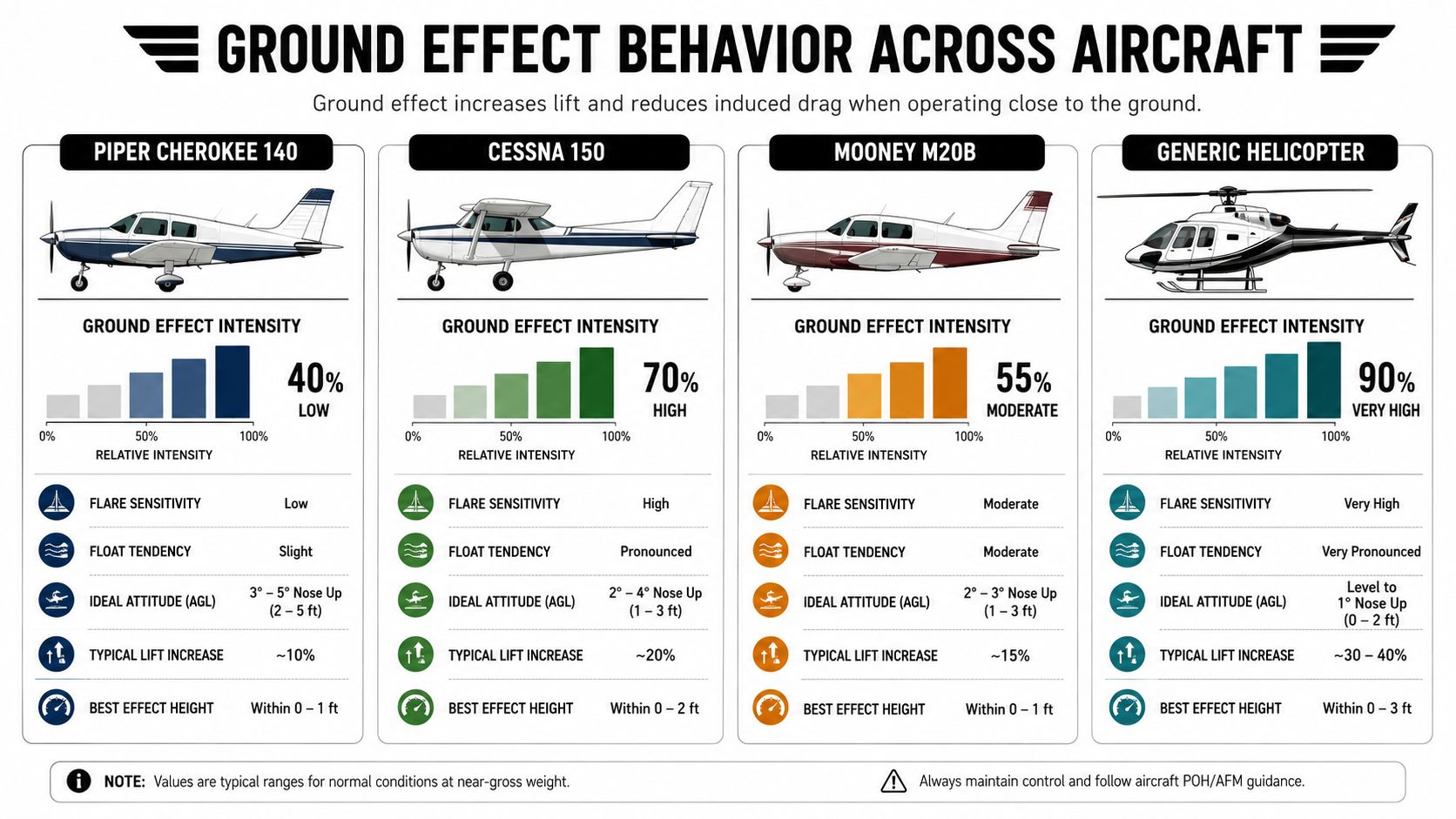
The same soft-field input doesn't feel the same in every cockpit. A Piper Cherokee gives the pilot a different flare picture than a Cessna 150, and that difference matters because the airplane's control feel changes right when ground effect starts helping. On Cherokee models, the stabilator tends to give more authority in the flare, so the pilot can keep the nose light and hold the airplane off without running out of pitch feel as quickly. That makes the Cherokee forgiving in soft-field work, especially when you're trying to keep the mains from settling too abruptly. The student still has to fly it, but the airplane gives back a little more room.
A Cessna 150 usually feels more eager to settle. Its elevator doesn't provide the same stabilator-style authority close to the ground, so the pilot often has to be more precise with pitch and power to avoid an early sink. That doesn't make it a bad trainer. It just means the airplane is less willing to mask an imprecise flare.
Mooney pilots already know their airplane brings a different set of habits to the landing picture. The model-specific landing behavior and gear considerations change how the rollout is managed, so the pilot's priority stays on control and surface protection rather than assuming one generic technique works everywhere. Rotary-wing aircraft are the cleanest comparison of all, because they don't land on a nosewheel at all. The lesson there is simple, the soft-field mindset is about load management and control, even when the gear itself is completely different.
The practical training point is this. A Cherokee often makes soft-field teaching easier because the stabilator lets a student feel the pitch changes more clearly in the flare. That's one reason a Cherokee 140 can be a strong platform for learning this maneuver, while the Cessna tends to punish a rushed or lazy pitch picture more quickly. The airplane doesn't change the rule, it changes how loudly the rule speaks.
See the broader training-airframe comparison in DuBois Aviation's Cherokee versus Cessna 172 discussion.
Touchdown, Rollout, and Getting Off the Soft Surface
The airplane should touch down with the mains first, softly, and with the nose still held high. The second the wheels meet the surface, reduce power smoothly to idle, but keep the elevator aft enough that the nosewheel stays light. That's the whole trick during rollout, let the airplane keep flying as much as the surface allows, and refuse the urge to pin the nosewheel down early.
What your hands and feet should do
The hands should stay active but not busy. Keep back pressure in until you're on harder pavement or a taxiway, because soft surfaces can trap the airplane if you relax too soon. The feet need to keep the airplane tracking straight without resorting to hard braking. Heavy braking on soft terrain can stop the airplane abruptly or make the wheels dig in, which is exactly what the technique is trying to avoid. Boldmethod's soft-field landing guidance is consistent with what good instructors teach, keep weight off the nosewheel and don't ask the surface to absorb more than it can.
The last few seconds before touchdown also deserve attention. If the airplane is slightly yawed or cross-controlled, that problem may stay hidden in the flare and then show up during rollout when the surface grabs one wheel more than the other. A smooth correction keeps the airplane aligned without making the landing look dramatic. If the airplane starts drifting, fix the drift immediately with coordinated rudder and aileron, not with brake pressure.
Hold the nose up, keep the pressure gentle, and let the airplane roll free until it reaches firm pavement.
That's the part many pilots forget. The rollout doesn't end just because the mains are down. On a soft surface, the airplane should keep that nose-light attitude until the surface itself no longer threatens to trap the gear. The better the discipline on rollout, the less likely the airplane is to bog, dig, or nose over when the airplane finally transitions to firmer ground.
Common Mistakes and the Crosswind Trap Most Guides Skip
A soft-field landing goes wrong fast when the pilot starts protecting the airplane instead of managing it. Float too much and you give up runway while the airplane settles later, usually after you have already used up some of your control margin. Push the nosewheel down too soon and you load the front gear at the exact moment the surface is least able to help you. Both mistakes come from the same habit, treating the landing like a smoothness contest instead of a load-management problem.
Crosswinds change the picture
Crosswinds make soft-field work less forgiving, especially at a busy towered airport like KCNO, where you may be correcting for wind while still thinking about spacing, wake turbulence, and who is behind you in the pattern. Keep the runway aligned all the way through rollout, with the crosswind correction still active after touchdown, because the surface can grab one wheel before the airplane has fully settled. Flight training guidance also notes that some instructors add half the gust factor to approach speed in gusty conditions, which helps preserve control margin when the air is unsettled. Use a crosswind component calculator before the lesson if you want a clear picture of what the runway is asking of you. Flight Training Central's crosswind soft-field discussion makes the same practical point, the landing is not just about holding the airplane off, it is about keeping directional control without asking for heavy braking on a low-friction surface.
Cherokee pilots need to pay extra attention here. A Cherokee's stabilator responds differently from a Cessna elevator in ground effect, and that changes how much pitch input feels available as the airplane settles and the tail gets closer to the runway. The control feel can stay light longer, then change quickly once the mains are down and the surface starts to matter. That is why a soft-field landing in a Cherokee often rewards a steadier hand than a Cessna, especially when the wind keeps changing during the flare.
A long hold-off is still the wrong answer. Soft-field technique keeps the airplane in ground effect only as long as needed to stay light and under control, then lets it settle at an appropriate attitude. Holding it off forever just burns runway, adds uncertainty, and gives the wind more time to move the airplane around. On a runway that is soft rather than rough, extra float does not buy much.
What to watch during the rollout
- Floating too long: A flare that turns into a hover means the airplane is no longer being managed, it is just drifting toward a later touchdown.
- Premature nosewheel contact: If the nose starts dropping before the airplane is ready, the rollout becomes heavier and less stable.
- Crosswind correction relaxation: If the wing-low or rudder input fades too early, the airplane can start weathervaning as the surface grabs.
- Brake habit: If the feet go to the brakes too quickly, the airplane loses the gentle deceleration the soft surface needs.
The hardest part for many pilots is accepting that a smooth-looking landing is not always a good soft-field landing. The better landing is the one that keeps the airplane straight, light on the gear, and under control from touchdown to taxi.
Go-Around Triggers, KCNO Realities, and Practice Drills
The go-around call should be simple and unapologetic. If the airplane isn't stabilized by 200 feet AGL, if sink rate isn't under control, if the surface is worse than briefed, or if the wind shift takes away the runway advantage, the landing ends right there. That's not hesitation. That's discipline. At a busy place like KCNO, where Class D traffic, three runways, and instrument arrivals all share the same piece of air, it's easy to feel pressure to accept a marginal setup just because you're already in the pattern. Don't.
What to practice before the lesson feels automatic
Simulator repetitions help, but they need to be specific. Practice setting the approach early, holding the target speed, and making the go-around decision out loud before the flare. Then move to grass-strip work when available, because real soft surfaces teach you how quickly the airplane reacts when the wheel load changes. That combination builds the kind of muscle memory that a busy towered pattern can't provide on its own.
At KCNO, the student also has to think about spacing, radio discipline, and runway selection all at once. A soft-field landing there is never just an airplane exercise, it's a timing problem inside a controlled environment. The pilot who plans early, communicates clearly, and rejects a bad setup without drama usually learns faster than the pilot who keeps trying to save every approach.
A good soft-field pilot knows the runway is optional until the approach is stable. After that, the only acceptable choices are a controlled landing or a clean go-around.
If you want the maneuver to hold up under real-world pressure, rehearse it until the decision points feel normal. Then fly it the same way every time, with the surface, the wind, and the tower traffic all folded into the same calm plan.
If you want structured, one-on-one instruction that ties landing technique to real KCNO conditions, DuBois Aviation offers training in a busy Class D environment with experienced CFIs, a varied fleet, and the kind of pattern work that makes soft-field judgment stick. Book a lesson, bring your questions, and turn this maneuver into something you can repeat cleanly when the runway isn't perfect.