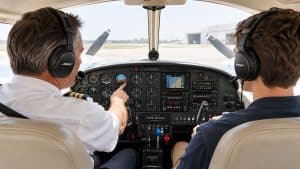
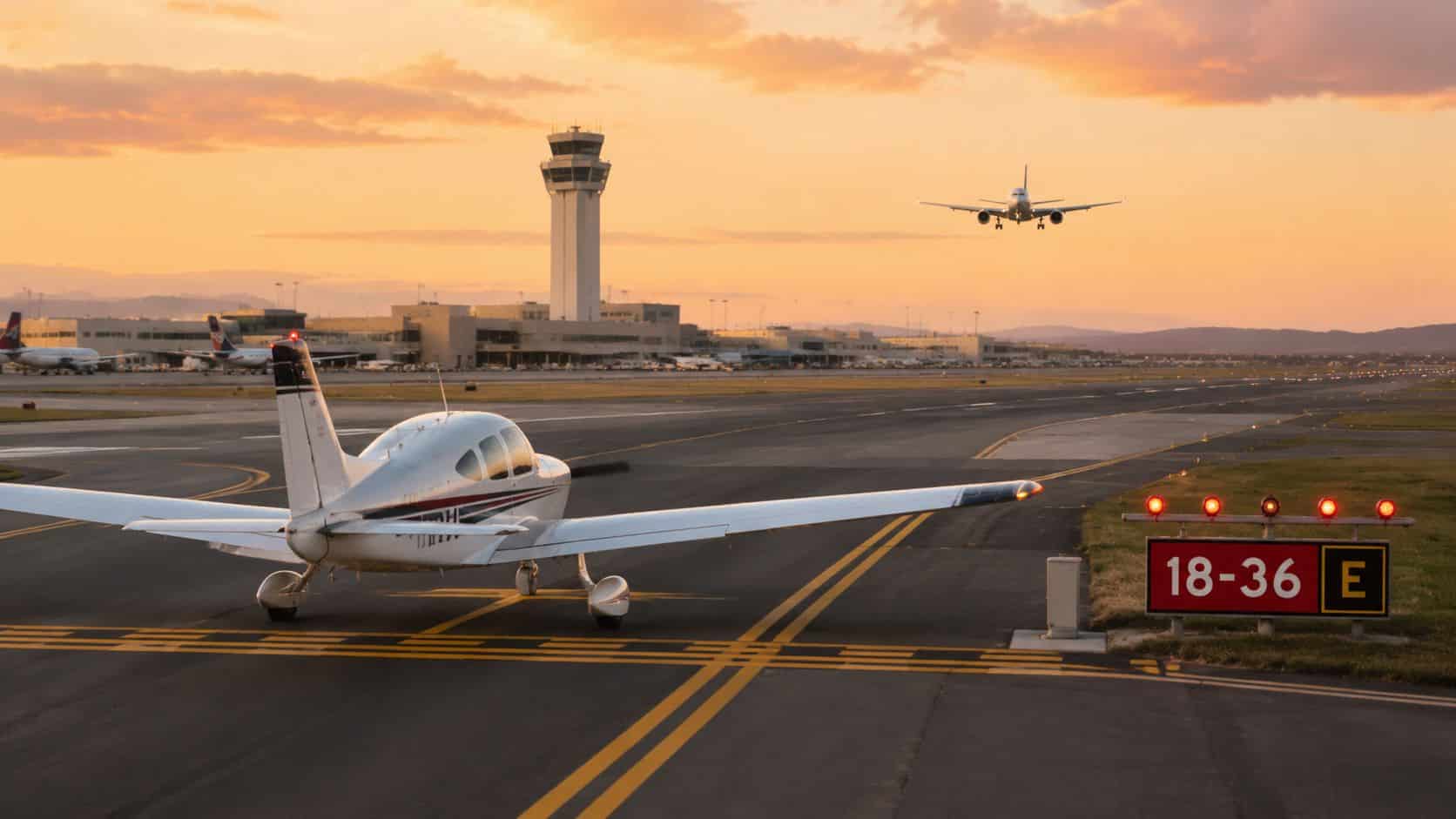
You're approaching an unfamiliar towered airport, listening to a busy frequency, and trying to match a clearance to taxiways that seem to converge in every direction. Runway incursion avoidance starts with one simple rule: never place an aircraft, vehicle, or person on a runway's protected area without the clearance and visual confirmation that make the movement clear. At Chino Airport, students commonly face the risk of crossing a runway without permission, especially when grass or weeds obscure signs and the airport geometry becomes difficult to read. The cure isn't nervousness. It's a disciplined sequence of briefing, reading back, stopping, looking, and asking.
Table of Contents
- What Runway Incursion Avoidance Really Means
- A Familiar Near Miss on the Taxiway
- Radio Phraseology and Hold Short Discipline
- Mapping KCNO Hot Spots Before You Taxi
- Why Pilot Deviations Still Lead the Numbers
- The One Habit That Has Prevented the Most Close Calls
- Your Pre-Taxi Routine and Common Questions
What Runway Incursion Avoidance Really Means
The FAA defines a runway incursion as “any occurrence at an aerodrome involving the incorrect presence of an aircraft, vehicle or person on the protected area of a surface designated for the landing and takeoff of aircraft”. In practical terms, an aircraft doesn't need to collide with anything for an incursion to occur. Crossing a hold-short line without authorization, entering a runway while another aircraft is using it, or allowing a vehicle or person onto the protected area can all fit the definition. The FAA's runway incursion resources distinguish contributing categories that help explain how the event developed.
A pilot deviation involves the pilot's action or inaction. An operational error involves air traffic controller action or inaction. A vehicle or pedestrian deviation involves a person or vehicle entering the protected area incorrectly. Broader system conditions, such as confusing geometry, obscured markings, lighting problems, or a frequency transition that leaves an aircraft uncertain, can also create the conditions for an incursion even when the immediate mistake appears simple.
Where the chain usually starts
At a towered airport, the trigger might look like one of these:
- Controller conflict: A controller issues clearances that place two aircraft in conflict or creates an unexpected runway situation.
- Pilot assumption: A student rolls beyond a hold-short line because the runway looks empty or because a clearance for another aircraft sounded applicable.
- Ground movement error: A lineman crosses a movement area while retrieving equipment or moving an aircraft.
- Communication breakdown: A frequency change, incomplete readback, or blocked transmission leaves the pilot unsure what happens next.
The FAA's fiscal year 2023 data recorded 1,756 runway incursions across about 54.4 million takeoffs and landings, or roughly 32 incursions per one million operations. The same FAA data recorded 23 Category A and B incursions, the most serious categories, which represented about 0.00004% of all National Airspace System operations (FAA runway safety statistics).
Working rule: If the aircraft's position, clearance, or relationship to an active runway is unclear, stop before the protected area and query ATC.
That rule connects directly to situational awareness in aviation. Avoidance isn't one checklist item. It's a stack of recognition, airport knowledge, radio discipline, visual scanning, and the willingness to pause before uncertainty becomes motion.
A Familiar Near Miss on the Taxiway
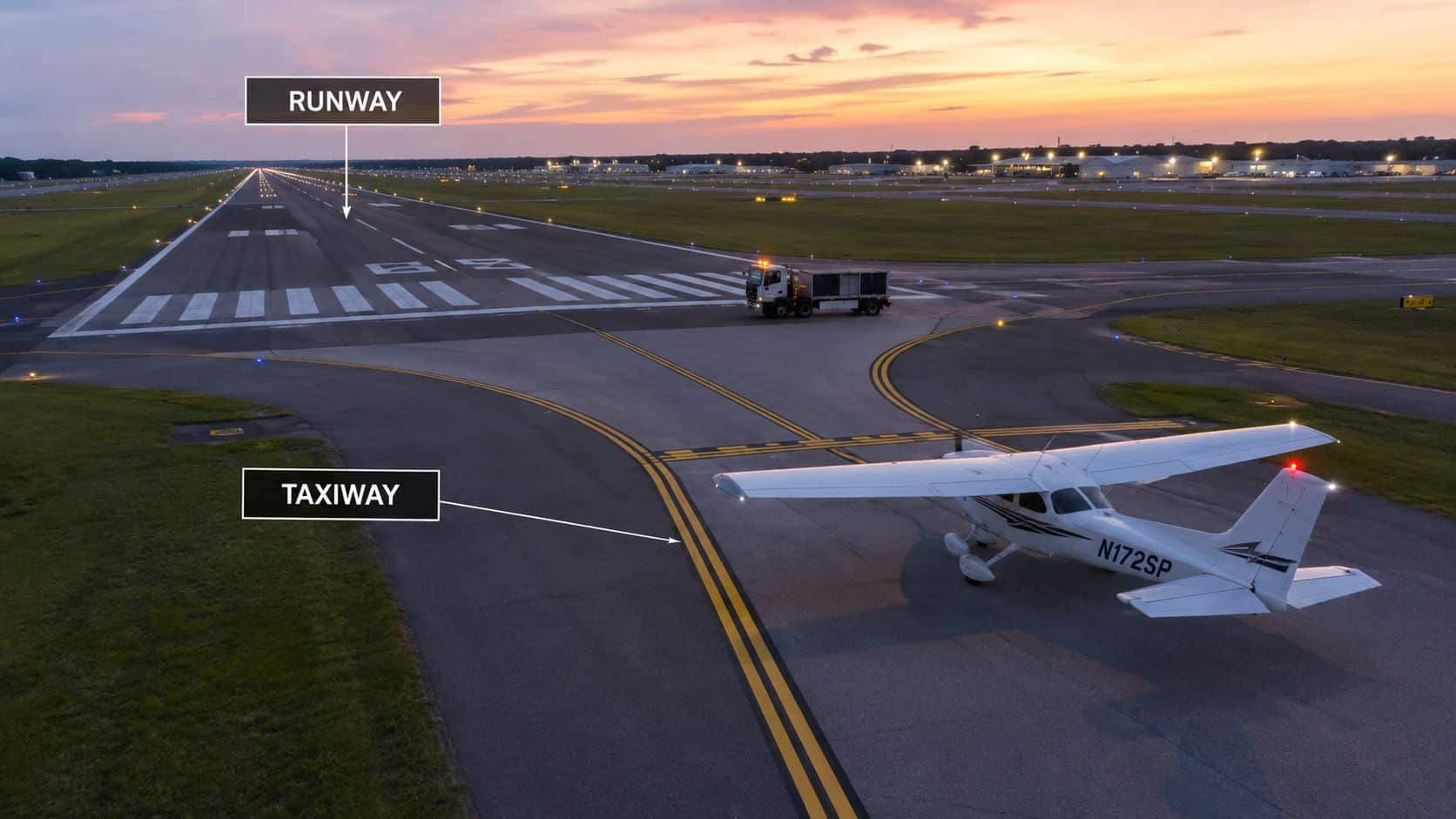
A student in a Cessna 172 calls Ground with the intention of departing Runway 26R. The clearance sounds manageable, but the airport diagram contains several turns and runway relationships that demand more than a quick glance. The student starts along Taxiway B, follows the pavement toward the active area, and begins to focus on the expected departure runway instead of the hold point ahead.
The aircraft is still moving slowly when the radio crackles with an inbound Skyhawk on a four-mile final. Tower's voice rises over the frequency because another aircraft has transmitted. The student hears familiar words, sees an apparently empty pavement area, and briefly trusts the aircraft already on the runway environment rather than the restriction implied by the hold-short position.
That's how a runway crossing can develop. No reckless decision is required. The student may overlook the moment when a taxi route ends and a runway-protection rule begins.
Visual cues that should stop the rollout
Several cues deserve an immediate reduction in speed and a clearance check:
- The yellow ladder bars: The runway holding-position marking warns that the aircraft is approaching the point where it must stop unless cleared.
- The runway holding-position sign: Red and white mandatory signs identify the runway and reinforce that the location isn't an ordinary taxiway intersection.
- Wigwag lights: Alternating flashing lights can reinforce the runway boundary, but they don't replace the need to understand the clearance.
- Lighting differences: Taxiway lighting and runway lighting serve different functions. A pilot should confirm the pavement identity rather than rely on a single visual clue.
- Changing pavement geometry: A broad intersection or a taxiway that appears to continue straight can conceal the fact that the aircraft is nearing a runway.
At Chino, grass or weeds can make signs harder to see. That makes the airport diagram and the painted hold-short line even more important, not less. If the sign is hidden, the pilot can't treat the absence of a visible sign as permission to continue.
The corrective sequence is short enough to memorize: stop, ask, verify, then move. A CFI should be able to use that phrase during training without shaming the student, because the objective is to interrupt the chain before the aircraft crosses the line.
Radio Phraseology and Hold Short Discipline
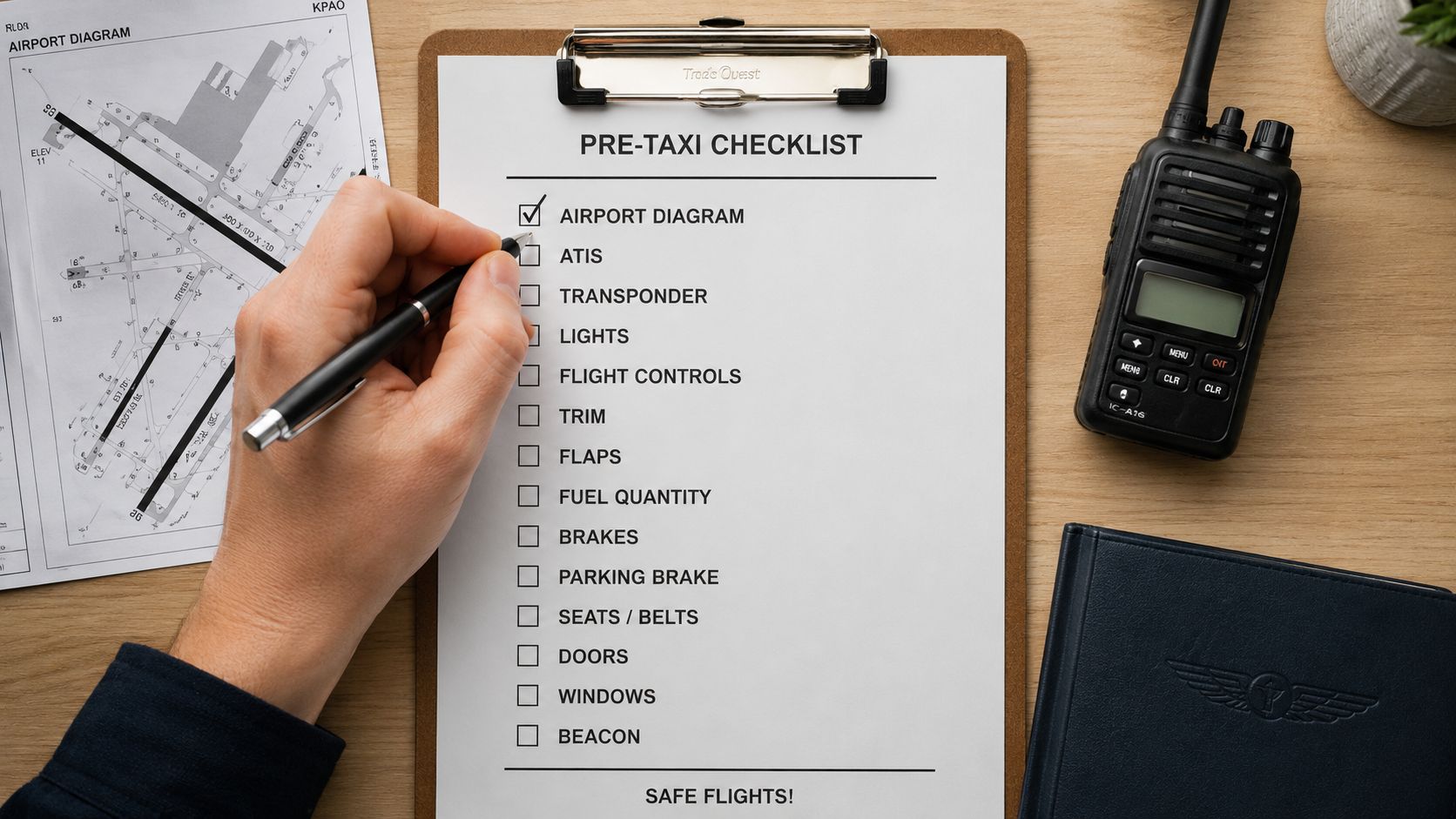
Radio work begins before the first taxi call. The pilot should have the airport diagram open, listen to the current ATIS, identify the expected runway, trace the likely taxi route, and mark any hot spots or runway crossings. If another pilot or instructor is in the right seat, both people should verbalize the route and identify every location where the aircraft must hold.
A taxi clearance needs to be processed, not merely heard. The pilot should write it down when workload permits, identify the destination, note every runway to cross or hold short of, and read back the full instruction. The FAA surface-operations guidance specifically says pilots shouldn't acknowledge a hold-short instruction with only “Roger” or “Wilco”. Controllers are required to receive a readback of hold-short instructions, and the pilot's readback should include the runway and the aircraft call sign (FAA surface operations guidance).
A practical radio sequence
Suppose Ground says:
“Cessna 12345, taxi to Runway 26R, hold short of Runway 26L at Taxiway A.”
A complete response would be:
“Taxi to Runway 26R, hold short of Runway 26L at Taxiway A, Cessna 12345.”
The call sign belongs at the end, where it helps the controller associate the readback with the correct aircraft. “Wilco” means the pilot understands and will comply, but it doesn't let the controller confirm which runway or hold-short point the pilot understood.
As the aircraft approaches the expected hold point, the pilot should say the assignment aloud again. That can be as simple as, “Holding short of Runway 26L.” The purpose isn't to create unnecessary radio chatter. It's to force the cockpit to compare the painted line, the diagram, and the clearance at the moment the comparison matters.
What to do when the airport doesn't match the clearance
If the hold bar is faded, the sign is sun-bleached, or vegetation blocks the runway designation, the aircraft should stop before the suspected boundary. A gate agent, lineman, or another pilot can provide useful context, but ground control owns movement-area clearances. If an informal direction conflicts with the ATC clearance, the pilot should query Ground rather than choose the instruction that seems more convenient.
The pilot can also request progressive taxi when the route is unfamiliar or the geometry is difficult. During taxi, the cockpit should stay focused on surface movement. Checklist work, instruction, and route discussion should happen before moving or at a safe stopped position. Frequency information and airport communication references can be reviewed through flight service frequencies, but an unexpected handoff still requires a positive frequency check before the aircraft continues.
Mapping KCNO Hot Spots Before You Taxi
Chino Airport's three-runway layout gives students a useful training environment, but it also requires a mental map before engine start. Taxiway A functions as a major spine through the airport, while the relationships around Runway 8R/26L and the other runway surfaces can create converging paths. A pilot who studies only the departure runway can miss the runway that appears earlier in the route.
The pre-engine-start briefing should identify the expected taxi route, every runway crossing, every hold-short location, and the spots where a turn can appear to lead directly onto a runway. The student should then describe the route aloud without looking down continuously. That rehearsal exposes confusion while the aircraft is still parked, where correction is easy.
Why intersection departures demand extra attention
Tower may use an intersection takeoff from Runway 26L. That changes the pilot's sightline and reduces the amount of runway visible from the departure point. It also means the pilot's attention can become fixed on the intersection, the lineup instruction, or the takeoff roll while overlooking approaching traffic and the runway's far end.
A taxi clearance toward an intersection isn't a takeoff clearance. A lineup-and-wait instruction isn't a takeoff clearance either. The pilot needs to identify the exact runway, the exact position, and the exact authorization before entering or departing.
The following reference is a briefing aid, not a replacement for the current airport diagram or ATC instructions:
| KCNO area | Typical risk pattern | Verbal cue before moving |
|---|---|---|
| Taxiway A spine | Traffic routes converge while the pilot focuses on the destination runway | “Which runway do we hold short of next?” |
| Runway 8R/26L geometry | Intersections and hold-short lines can blend into a busy taxi route | “Stop at the marked hold point, not at the turn.” |
| Runway 26L intersection departure area | The departure sightline changes and less runway may be visible | “Confirm runway, position, and takeoff clearance.” |
| Obscured signage near grass or weeds | A sign or runway designation can be difficult to identify | “If the sign is unclear, stop and ask.” |
Build the map around decisions
A useful briefing doesn't memorize pavement names in isolation. It attaches an action to each location:
- Approach: Slow before the intersection or enhanced centerline marking.
- Identify: Match the pavement, sign, and diagram.
- Confirm: State the hold-short assignment or crossing clearance.
- Scan: Look for traffic even after receiving a clearance.
- Proceed: Move only when the position and authorization agree.
Students training at KCNO can also use DuBois Aviation's Chino Airport information as part of their local-area preparation. The essential habit is to brief the actual airport layout before taxiing, because generic runway advice can't account for every local sightline or intersection.
Why Pilot Deviations Still Lead the Numbers
FAA fiscal year 2023 data attribute about 60% of runway incursions to pilot deviations, about 20% to air traffic controller action or inaction, and about 20% to vehicle or pedestrian deviations (FAA runway incursion data). The categories don't mean pilots are the only part of the safety system. They show where the immediate contributing action was recorded.
Pilot deviations remain the largest share because pilots control the aircraft's movement after receiving, misunderstanding, or failing to verify a clearance. A controller can issue a clear instruction, but the pilot still has to identify the correct pavement, stop at the correct line, and confirm that the visual environment matches the radio picture.
Three familiar breakdowns
A common error begins when a pilot hears “cleared to” and unconsciously attaches the words to the wrong aircraft. Another occurs when a taxi clearance is mentally promoted to a takeoff clearance because the aircraft has reached the expected runway. A third happens when the runway looks empty, so the pilot continues beyond the expected hold point without confirming authorization.
At a busy field such as KCNO, geometry can magnify each error. A runway may sit beyond a turn, a sign may be difficult to see, or an intersection departure may change the pilot's view. The radio call and the pavement must be treated as two separate sources of information that should agree before movement continues.
Practical rule: An empty runway is only a visual observation. It isn't a clearance.
The historical record also shows why focused mitigation matters. FAA data covering towered-airport operations during fiscal years 2004 through 2007 recorded about 250 million operations and 1,353 runway incursions, an average of 5.5 incursions per million operations. The most serious Category A and B rate reached 0.39 per million operations in FY 2007, which was 26% below the FAA's FY 2007 target of 0.53 per million (FAA Runway Safety Report). The FAA later reported a 69% reduction in the incursion rate at mitigated locations through calendar year 2022, reinforcing that airport-specific interventions can reduce risk (FAA runway incursion mitigation program).
The One Habit That Has Prevented the Most Close Calls
A takeoff clearance doesn't end the runway scan. The pilot who reads back “cleared for takeoff,” fixes the eyes on the centerline, and stops looking for landing traffic has removed a critical layer of protection at exactly the wrong moment.
A recurring near-miss pattern is simple. A student lines up, receives a takeoff clearance, and concentrates on power, instruments, and centerline control. A landing aircraft appears on short final, sometimes from the side of the pilot's forward field of view, while the departing aircraft is already committed to the runway.
A scan that continues through departure
Before entering the runway, the pilot should look along the runway in both directions and check the approach ends. Once lined up, the scan should continue before advancing power. During the initial roll, the pilot can keep the visual scan broad enough to detect traffic while maintaining directional control. After liftoff, the pilot should continue monitoring the runway environment and approach path during the early climb, when a clearance or traffic picture may not match the expectation.
The exact scan pattern depends on the aircraft, runway, sun angle, and traffic, but the principle doesn't change:
- Before entry: Confirm the runway and inspect both directions.
- At lineup: Recheck the approach end before applying power.
- During the roll: Maintain directional control while looking for conflicting traffic.
- After liftoff: Continue awareness of the runway and approach corridor during the initial climb.
If a clearance feels wrong, the pilot should stop before entering the runway or stop the takeoff roll when stopping remains safe. The correct radio call is a query, not a guess. “Tower, Cessna 12345, confirm clearance” is more useful than trying to reconcile an unexpected aircraft with an expected departure.
The training version is easy to repeat: look for landing traffic even after takeoff clearance. The runway can be visually clear in one direction and occupied in the other. The pilot's eyes remain the final check when the radio picture and the traffic picture don't align.
Your Pre-Taxi Routine and Common Questions
A six-item routine keeps runway awareness from depending on memory under pressure. The sequence should be brief enough for a student to use on every flight and specific enough to catch the errors that occur during a busy taxi.
- Review the airport diagram. Trace the expected route from the ramp to the departure runway and identify every runway, hold-short point, and hot spot.
- Listen to ATIS. Record the active runway, relevant notices, and any information that changes the expected taxi plan.
- Set the aircraft for movement. Configure the transponder and required lights according to the aircraft's procedures and the airport environment before calling Ground.
- Read back the taxi clearance. Include every hold-short and runway-crossing instruction, then end with the aircraft call sign.
- Brief the hot spots. Say what the aircraft will see, where it must stop, and what clearance is required before proceeding.
- Scan the cockpit and pavement. Before the first turn, confirm the diagram is available, the route is understood, and the aircraft hasn't already approached a hold-short line.
ICAO guidance supports this layered approach by emphasizing local runway safety teams, hot-spot identification, standardized communications, complete callsigns and readbacks, and explicit clearance before runway crossings. It also advises pilots not to cross illuminated red stop bars and to query ATC when holding on a runway for more than 90 seconds (ICAO-linked runway safety guidance).
What if ATC says to cross but the red lights stay on?
Stop before the marked boundary and query ATC. An apparent conflict between the clearance and the lighting is exactly the kind of uncertainty that requires clarification, not interpretation. Don't cross an illuminated stop bar while waiting for the situation to resolve.
What if a runway sign is obscured?
Stop where the pilot can remain clear of the protected area and tell Ground the sign or marking isn't visible. Ask for progressive taxi or confirmation of the exact hold-short location. Grass, weeds, glare, and faded paint are reasons to slow down, not reasons to rely on memory.
Can a pilot decline a clearance that feels wrong?
Yes, a pilot can state that the clearance can't be accepted or ask ATC to confirm the instruction. The pilot remains responsible for preventing the aircraft from entering an unsafe position, even when a clearance seems unexpected. A short, clear query is preferable to moving while uncertain.
How should an unexpected frequency handoff be handled?
Read back or acknowledge the frequency, tune it carefully, verify the airport or controller being contacted, and stop if the handoff leaves the aircraft unsure of the next instruction. If no transmission is understood, return to the previous frequency when appropriate or use the published airport communication information, then request clarification before crossing a runway.
Runway incursion avoidance becomes reliable when the pilot treats every runway boundary as a decision point. Stop, ask, verify, then move, especially when the signs, lights, diagram, and clearance don't agree.
DuBois Aviation provides airplane and helicopter training, aircraft rental, simulator-supported instruction, and progression through private, instrument, commercial, multi-engine, and instructor ratings at Chino Airport. Pilots and students can visit DuBois Aviation to ask about course availability, schedule a school tour, or request training information focused on safer taxi habits and confident towered-airport operations.