

Fatigue has shown up in 21% to 23% of major aviation accidents in the safety literature, which is a hard reminder that this is not a comfort issue, it's a flight safety problem (Flight Safety Foundation review cited in PMC). For a student pilot or CFI starting a dawn lesson at a busy towered airport like Chino, that matters just as much as it does in airline flying. A pilot can be legally scheduled and still be mentally behind the airplane.
Table of Contents
- Why Fatigue Is a Critical Aviation Safety Issue
- Understanding the Physiology of Aviation Fatigue
- How Short Training Days Create Unexpected Fatigue Risk
- Measurable Performance Impacts of Sleep Loss
- Individual Fatigue Mitigation Strategies for Pilots
- Organizational and Scheduling Approaches to Fatigue Management
- Practical Fatigue Assessment and Decision Frameworks
Why Fatigue Is a Critical Aviation Safety Issue
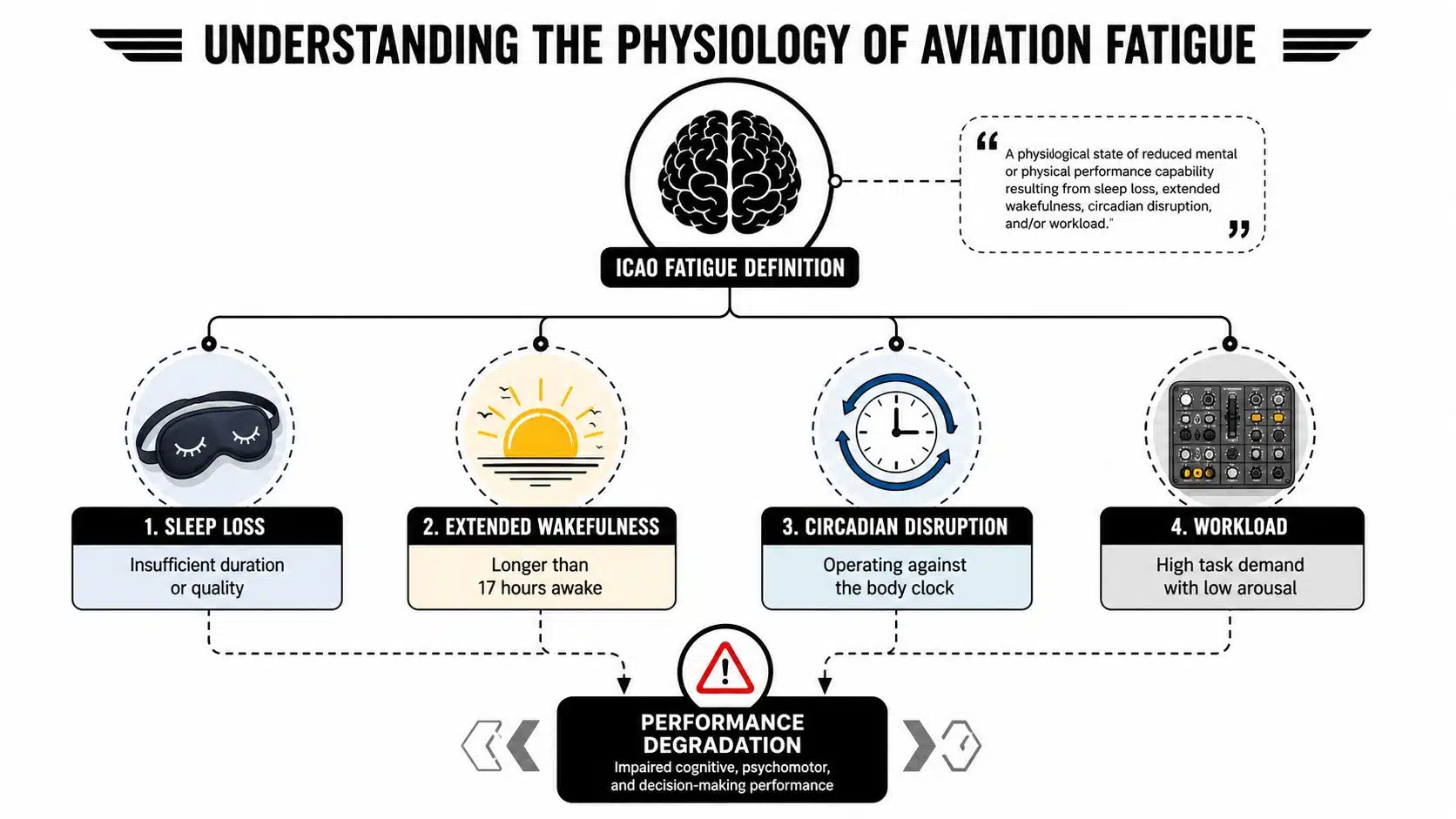
Fatigue has been treated as a major aviation hazard for decades because it changes how pilots think, scan, and react. The International Civil Aviation Organization defines it as a physiological state that reduces mental or physical performance because of sleep loss, extended wakefulness, circadian disruption, and workload (ICAO definition via FAA report). That definition matters because it moves fatigue out of the “I'm just a little tired” category and into the safety category where it belongs.
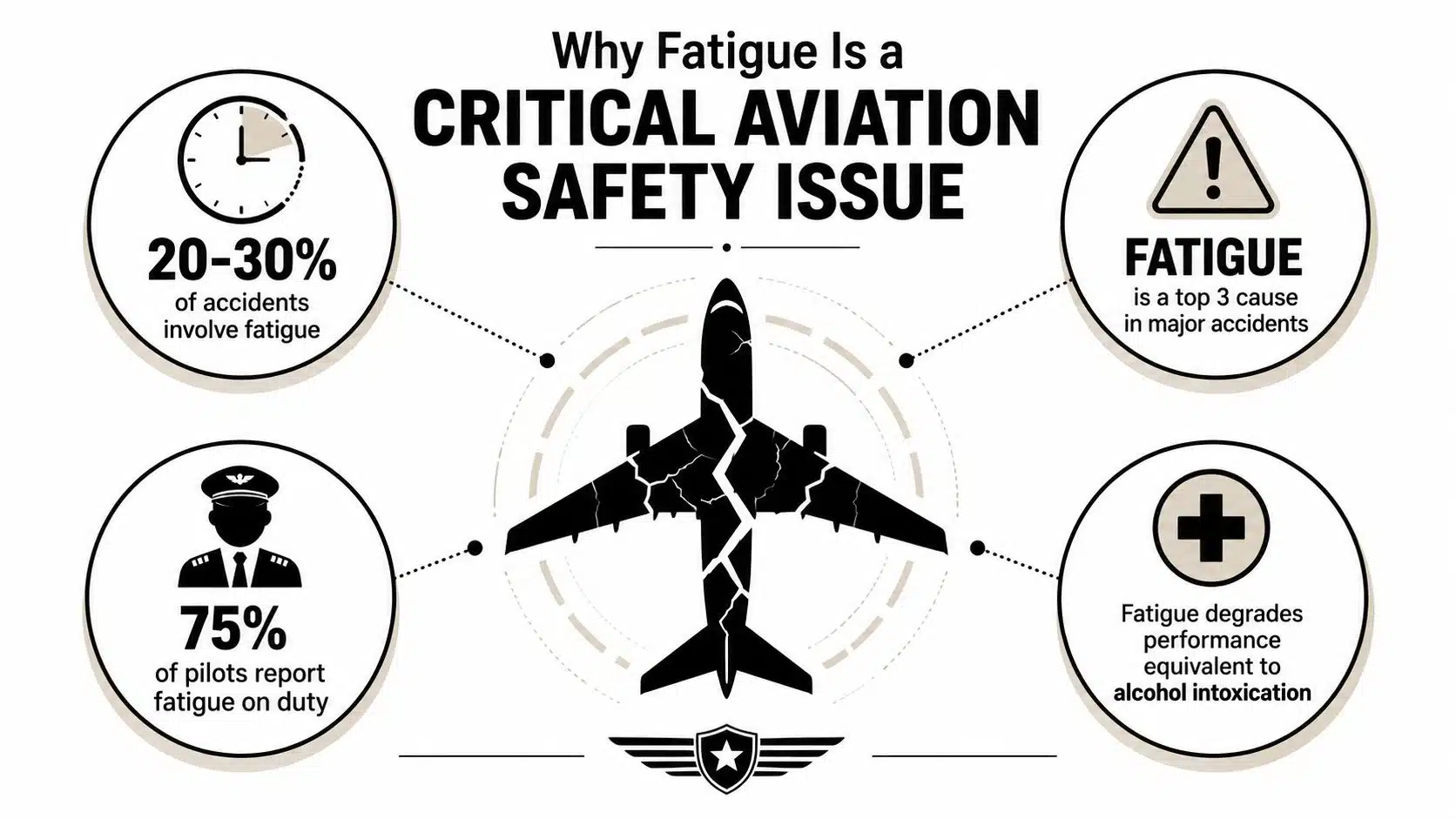
Aviation reporting backs that up. A 2021 review cited by Flight Safety Foundation found fatigue in 21% to 23% of major aviation accidents (PMC review). Earlier NASA reporting also linked fatigue to 77 of 2,006 incidents, or 3.8%, and broader analysis tied it to 426 incidents, or 21.2% in the Aviation Safety Reporting System (PMC review). Those numbers don't say fatigue is the only cause, they show it keeps appearing as a real contributor when investigators dig into what went wrong.
Why this still matters in general aviation
Student pilots sometimes think fatigue only belongs in long-haul airline operations. That's the wrong mental model. Repeated takeoffs and landings, early call times, dispatch pressure, and busy pattern work can stack cognitive load fast, especially when you're flying multiple short legs or doing training at a towered airport.
Practical rule: if a pilot is trying to “push through” fatigue with motivation alone, the airplane is already carrying a risk the pilot hasn't managed yet.
The safest habit is to treat fatigue like fuel. You check it before the flight, you watch it during the flight, and you don't pretend a legal schedule always means a safe one.
Understanding the Physiology of Aviation Fatigue
Fatigue in aviation has a specific meaning, and the mechanism matters. ICAO's definition points to sleep loss, extended wakefulness, circadian phase disruption, and workload as the main drivers (FAA ICAO summary). That's useful in training because it tells you fatigue isn't just about how “slept in” you feel. It's about how long you've been awake, what time of day you're operating, and how hard your brain is working.
Four mechanisms that show up in the cockpit
Sleep loss is the easiest to recognize. If you slept poorly before a lesson, your attention drifts sooner, your scan gets shallower, and your memory for checklist items gets less reliable. Extended wakefulness is different, because you can get by early in the day and still fall apart later because the clock keeps moving.
Circadian disruption is the body clock problem. Flying or training against your normal sleep window can leave you awake when your body wants rest, which is why early report times and night work are so punishing. Workload matters too, especially in training, where you're doing radio work, aircraft control, traffic scanning, and instructor corrections all at once.
Acute fatigue and chronic fatigue
A single bad night can create acute fatigue, but training schedules often create chronic fatigue through accumulated sleep debt. That's why a pilot may feel “okay” on day one and still become sloppy by day three. The body doesn't reset just because the calendar says it should.
If you want a simple way to keep tabs on recovery, tools that track resting heart rate variability can be a useful personal reference point. A readable overview from Cartwright Fitness on resting heart rate variability helps make that idea more concrete, even though cockpit decisions still need to be based on how you feel and perform.
Fatigue isn't beaten by caffeine alone. Caffeine can help you feel more alert, but it doesn't replace sleep, and it doesn't erase workload or circadian misalignment.
For student pilots, the key takeaway is simple. Fatigue is a physiological state, not a character flaw, and the right response is to manage it like any other safety risk.
How Short Training Days Create Unexpected Fatigue Risk
The common mistake is assuming fatigue only shows up on long trips or red-eye airline duty. In training and general aviation, the opposite can happen. A short day can still be fatiguing if it starts early, includes multiple legs, and repeats across several days without enough recovery.
Why the pattern matters more than the block time
A dawn departure to beat winds or airport congestion can put a pilot into the cockpit before the body is ready to be sharp. Add touch-and-go practice, ground ops, taxi delays, and repeated radio calls at a busy towered field, and the workload stacks up quickly. The FAA warns that performance and alertness can deteriorate after sleep is restricted to 6 hours per night, and that uncontrolled sleep attacks can occur with only 4 hours of sleep per night (FAA fatigue guidance).
The trouble is that training days often look “reasonable” on paper. The duty time may not feel extreme, but the body doesn't care whether the hour count seems modest. What matters is how much sleep opportunity you had, how early you woke up, and whether the day included repeated high-attention phases.
Busy towered airports raise the workload
At a field like Chino, the environment itself can amplify fatigue. You're listening, reading back, sequencing, and responding while also managing the airplane. Multiple legs mean more takeoffs, more landings, more decision points, and more chances for a tired brain to miss something small.
The Skybrary fatigue overview notes that in short-range flying, early wake-ups, multiple legs, and consecutive work days are major fatigue drivers, and that time pressure and high leg counts increase reduced-alertness episodes (Skybrary). That's the pattern many student pilots and CFIs live with. It's not glamorous, but it's real.
A pilot can finish a two-hour training session more tired than a pilot who flew a longer, easier cruise segment, because repeated high-workload transitions drain attention faster than steady-state flying.
For CFIs, that means you can't judge fatigue by aircraft Hobbs alone. A student who has been up since before sunrise and has already flown one lesson may be a worse risk than the student who just showed up for a single afternoon sortie.
Measurable Performance Impacts of Sleep Loss
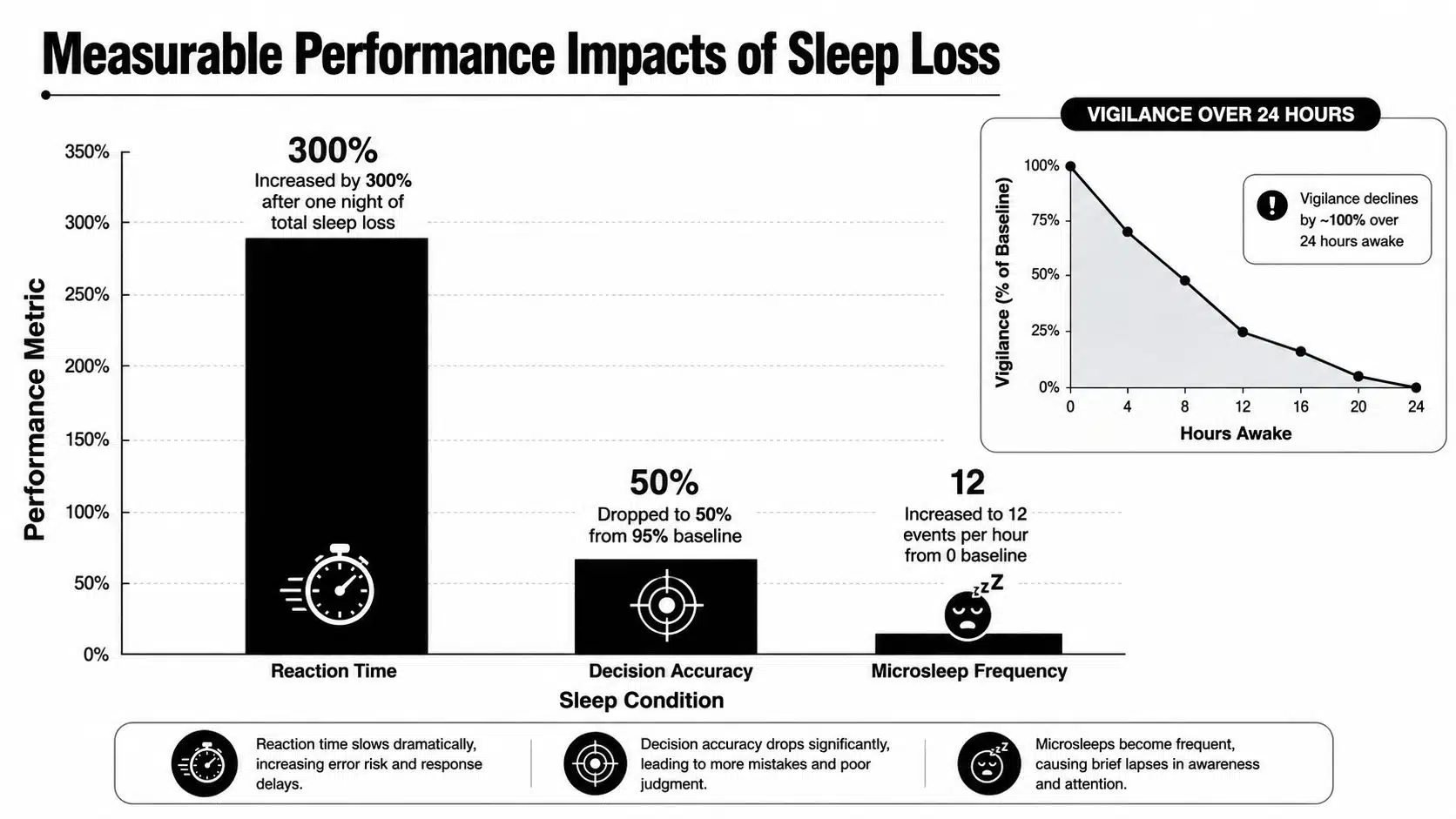
Sleep loss shows up in ways pilots can measure. FAA guidance says a night of acute sleep loss can cause 4 to 10 times more lapses, while chronic sleep restriction of 2 to 3 hours less sleep per night for 1 week may increase lapses by 3 to 5 times normal (FAA fatigue guidance). In practical terms, that means the tired pilot is not just feeling slower, the brain is missing more steps, more often, during tasks that already demand precision.
The thresholds that should get your attention
FAA material also warns that alertness can deteriorate after sleep is restricted to 6 hours per night and that uncontrolled sleep attacks can happen with only 4 hours of sleep per night (FAA fatigue guidance). Those numbers help a student pilot or CFI recognize when a long day is no longer just a long day. If you woke up before dawn for a flight lesson, spent time commuting, and are still trying to finish ground study later, the margin can shrink faster than it feels.
At a towered airport, that shrinkage matters because the workload comes in bursts. Taxi instructions, readbacks, traffic sequencing, and runway changes all ask the mind to switch quickly. A tired pilot can still function, but the extra delay shows up as slower call sign recognition, a late checklist response, or a pause before confirming a hold short instruction.
What pilots often notice first
The first signs are usually small. You reread the same checklist item, stare at the altimeter longer than you should, or need a second try to capture a clearance correctly. Those are the kinds of mistakes that blend into a busy training day unless you are watching for them on purpose.
Short-leg general aviation flying makes the pattern easier to miss because each individual event feels manageable. One departure, one pattern, one landing, then another short leg. That rhythm can hide fatigue better than a long cruise, because the brain keeps getting reset into another high-attention phase before it can settle.
Pilots also need to watch for the quiet performance drop that shows up before any obvious error. Reaction time slows. Decision quality drops. Microsleeps become more likely during low-workload moments like waiting at the hold short line or listening to a long taxi clearance. For a student pilot, a practical way to think about this is to compare your scan, your callouts, and your response speed to your own normal standard, not to what you hope the day should feel like.
A useful training habit is to make fatigue part of the go or no-go check, the same way you would check weather or fuel. If you want a decision-making checklist you can use before stepping to the airplane, see this guide on improving pilot decision-making. When your scan is slower, your checklist flow is less crisp, or you keep correcting simple tasks, fatigue is already affecting the flight.
Individual Fatigue Mitigation Strategies for Pilots
The pilot's first tool is sleep, but sleep strategy has to fit aviation life. Irregular call times, early departures, and repeated lessons make ordinary “get eight hours” advice too vague to use. You need habits that work on a training schedule, not just in a perfect world.
Build your pre-duty routine around the report time
If you have an early lesson, protect the night before like it matters, because it does. That means less late scrolling, fewer “just one more thing” chores, and a real bedtime that gives you actual sleep opportunity. A short sleep window before a dawn lesson often matters more than trying to make up for it with coffee after you arrive.
For students flying multiple days in a row, the better move is to preserve the whole week's sleep pattern, not just one night. If you're stacking lessons, aim for a stable routine with a quiet room, low light, and no extra stimulation right before bed.
Use naps and caffeine with discipline
A short nap can help before duty if it doesn't push you into grogginess, and caffeine can be useful when timed carefully. The trick is not to use either one as a substitute for sleep. Think of them as tools for margin, not rescue devices.
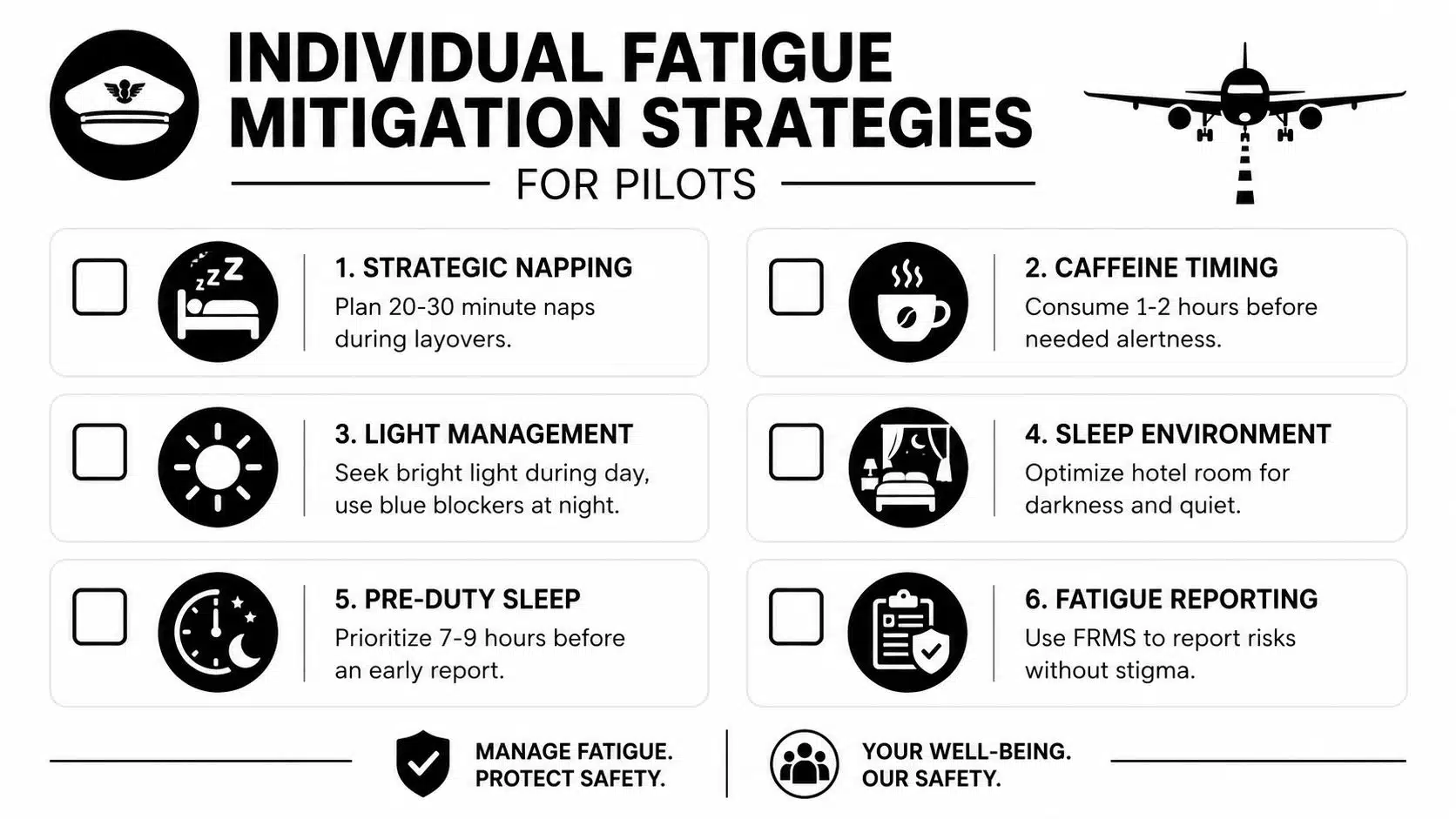
For practical planning, a few habits are worth keeping on one card in your flight bag:
- Strategic napping: Use brief naps during layovers or long breaks, but keep them short enough that you can wake up and function.
- Caffeine timing: Take it before you need alertness, not after you're already struggling.
- Light management: Get bright light during the day, then reduce it at night so your body can wind down.
- Sleep environment: Make the room dark and quiet, especially if you're sleeping between early duty periods.
- Fatigue reporting: Tell the instructor or dispatch side when you're not sharp enough to fly safely.
For pilots who want to sharpen judgment under pressure, a separate resource on decision-making for pilots can complement fatigue planning, because fatigue and bad decisions tend to travel together.
Practical rule: if a nap leaves you foggier than before, it wasn't restorative enough for the job you were about to do.
The point for students and CFIs is straightforward. Plan sleep first, then use caffeine and rest tactics to support the plan, not replace it.
Organizational and Scheduling Approaches to Fatigue Management
Fatigue control cannot sit on the pilot alone. Flight schools, instructors, and students all shape the schedule, so they also shape the risk. A good fatigue plan starts with how lessons are arranged, not with how much coffee a pilot brings to the airport.
The IATA fatigue management guide uses the window of circadian low from 0200 to 0600 and notes that if a crew member has been awake for more than 16 hours, sleepiness may be a factor. It also flags disrupted circadian rhythm if the person has worked nights or crossed time zones in the prior 72 hours (IATA fatigue guide). Those thresholds come from airline operations, but the logic still helps flight schools think more clearly about early reports, late-day recency, and the kind of short-leg training day that can feel easy on paper and heavy in the cockpit.
A student who arrives for a dawn departure after a poor night's sleep may still look ready on the ramp. The bigger question is whether the mind is ready for taxi calls, pattern spacing, radio work, and airspace awareness all at once. That is where schedule design matters.
What flight schools can control
Schools can reduce fatigue by designing training blocks that leave room for recovery. That means not stacking a hard morning lesson, a rushed afternoon ground session, and another dawn report the next day if the student is already worn down. It also means watching for cumulative strain in multi-day programs, especially when the same student is learning new procedures while also learning to manage a busy towered airport.
A smart instructor treats fatigue like any other training hazard, something to brief, monitor, and reschedule around when needed. One practical test is simple, does the lesson still have enough margin to absorb mistakes? If the answer is no, the safer choice is to move the flight.
Short legs can hide fatigue until the second or third takeoff. The first sortie may feel fine, then the student starts missing callouts, rushing checklist discipline, or trailing the aircraft during taxi. That is a scheduling problem as much as a human factors problem.
Why crew concepts still matter in training
Good fatigue management borrows from crew resource management, even in a two-seat trainer. A clear explanation of crew resource management helps students see why the instructor is not only teaching stick-and-rudder skills, but also managing the whole operation, including alertness, communication, and decision quality. In a training airplane, that shared responsibility matters because fatigue can make small errors harder to catch.
For schools that want structured scheduling and training support, DuBois Aviation is at Chino Airport, where it provides one-on-one airplane and helicopter instruction along with aircraft rental. The point is not that one operator solves fatigue by itself. The point is that a busy training environment makes scheduling discipline visible, because the aircraft, the instructor, and the student all have to fit the same day without creating unnecessary strain.
For pilots who want to sharpen judgment under pressure, a separate resource on fatigue tips for remote workers can still be useful, because the underlying problem is the same, sustained attention under a drained brain. In flight training, the margin is tighter. If a roster keeps producing early-morning strain, back-to-back lessons, or rushed turnarounds, the schedule needs to change before the quality of the training drops.
Practical Fatigue Assessment and Decision Frameworks
Use a quick go/no-go check before every flight. Start with sleep quantity, sleep quality, time awake, and whether the day's workload is heavier than normal. If any of those boxes are weak, the pilot should slow down and reassess before engine start.
For a simple in-cockpit decision rule, ask three questions. Did I sleep enough to be sharp? Have I been awake so long that my attention is fading? Does this flight add enough workload that a mistake would be hard to catch?
The same mindset shows up in useful fatigue resources outside aviation too, including fatigue tips for remote workers, because the underlying problem is the same, sustained attention under a drained brain. For flight training, the point is even stricter. If the student or CFI is already degraded, the flight doesn't need to happen.
Use go/no-go criteria as a habit, not a last-minute debate. If fatigue is strong enough to change your scan, your communication, or your willingness to speak up, the safest call is to reschedule.
DuBois Aviation supports pilots who want structured training, aircraft rental, and realistic experience in a busy towered environment at Chino Airport. If you're training for private, instrument, commercial, or helicopter flying, visit DuBois Aviation to see how its instruction and scheduling options can fit a fatigue-aware training plan.