
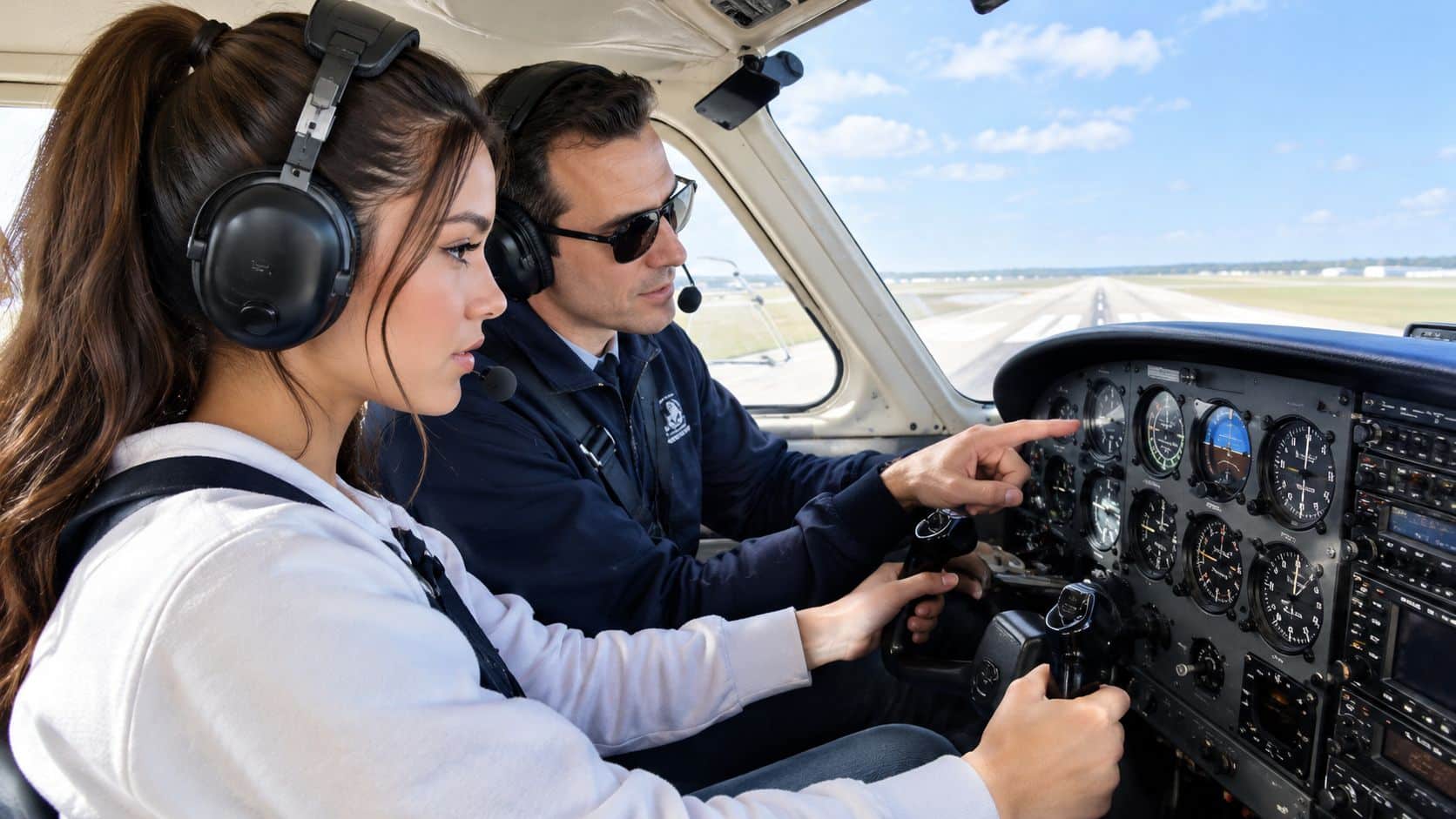
Can a student fly an accurate turn and still be unprepared for a safe flight? Yes. The skills needed for a pilot include aircraft control, systems knowledge, situational awareness, sound decisions, clear communication, and medical and documentary readiness. A capable pilot must combine them when weather changes, equipment behaves unexpectedly, or cockpit tasks compete for attention.
The useful question isn't whether a student has a particular personality trait. It's whether that student can demonstrate the right behavior, explain the decision behind it, and repeat it without constant instructor prompting.
Table of Contents
- Core Skills Needed for a Pilot
- Aircraft Control and Systems Knowledge
- Situational Awareness and Instrument Scanning
- Decision-Making and Risk Management
- Communication, Teamwork and Crew Resource Management
- Medical Fitness and Certification Readiness
- Common Questions About Pilot Skills
- Choose a Training Path That Builds These Skills
Core Skills Needed for a Pilot
How can you tell whether a student is building the skills needed for safe flight? Look for behaviors an instructor can observe, assess, and ask the student to explain. Pilot competence brings together six connected skill groups. A student may handle an aircraft smoothly, yet still miss a traffic conflict or overlook a risk before departure.
The FAA Airplane Flying Handbook describes safe flying as a combination of aircraft control, systems operation, and aeronautical decision-making. In training, each skill should show up in specific actions, from checking an instrument to speaking up when a plan no longer fits conditions.
Core pilot skill groups, how they are checked and where they are built
| Skill group | What it covers | How it is checked | Where students build it |
|---|---|---|---|
| Aircraft control, or stick-and-rudder | Pitch, bank, power, coordinated yaw, maneuvers and landings | Applicable practical-test maneuvers | Dual lessons and appropriate solo practice |
| Systems and automation | Fuel, electrical systems, engine indications, automation modes and manual reversion | Systems questions and applicable practical-test tasks | Ground instruction, aircraft handbook study and simulator exercises |
| Situational awareness and instrument scanning | Position, traffic, weather and instrument cross-checking | Instrument tasks and flight scenarios | Instrument lessons, traffic-pattern practice and degraded-instrument exercises |
| Aeronautical decision-making and risk management | Hazards, personal limits, departure decisions and diversions | Risk-management questions and scenario evaluation | Flight planning, briefings and debriefs |
| Communication and crew resource management | Radio calls, readbacks, task sharing and speaking up | Communication during lessons and practical-test scenarios | Radio practice, cockpit briefings and instructor feedback |
| Medical and readiness | Medical eligibility, identification, English proficiency, endorsements and records | Eligibility and document review, plus medical examination when applicable | Medical planning and a pre-checkride document audit |
Communication, for example, is more than making a radio call. In a lesson, an instructor can listen for a clear request, an accurate readback, and a timely report when the student is uncertain. On a practical test, the applicant must communicate appropriately while completing the task, not wait for the examiner to identify a problem. Students often fall short by staying silent when workload rises. Practice by briefing who will handle each task, then saying aloud when a clearance, instruction, or changing condition needs clarification.
Use the table as a self-check, not a scorecard. For each row, name one behavior you can demonstrate without prompting and one you still need to practice. If you cannot explain what you would do when conditions change, mark that skill for more work and discuss a practice scenario with your instructor.
Aircraft Control and Systems Knowledge
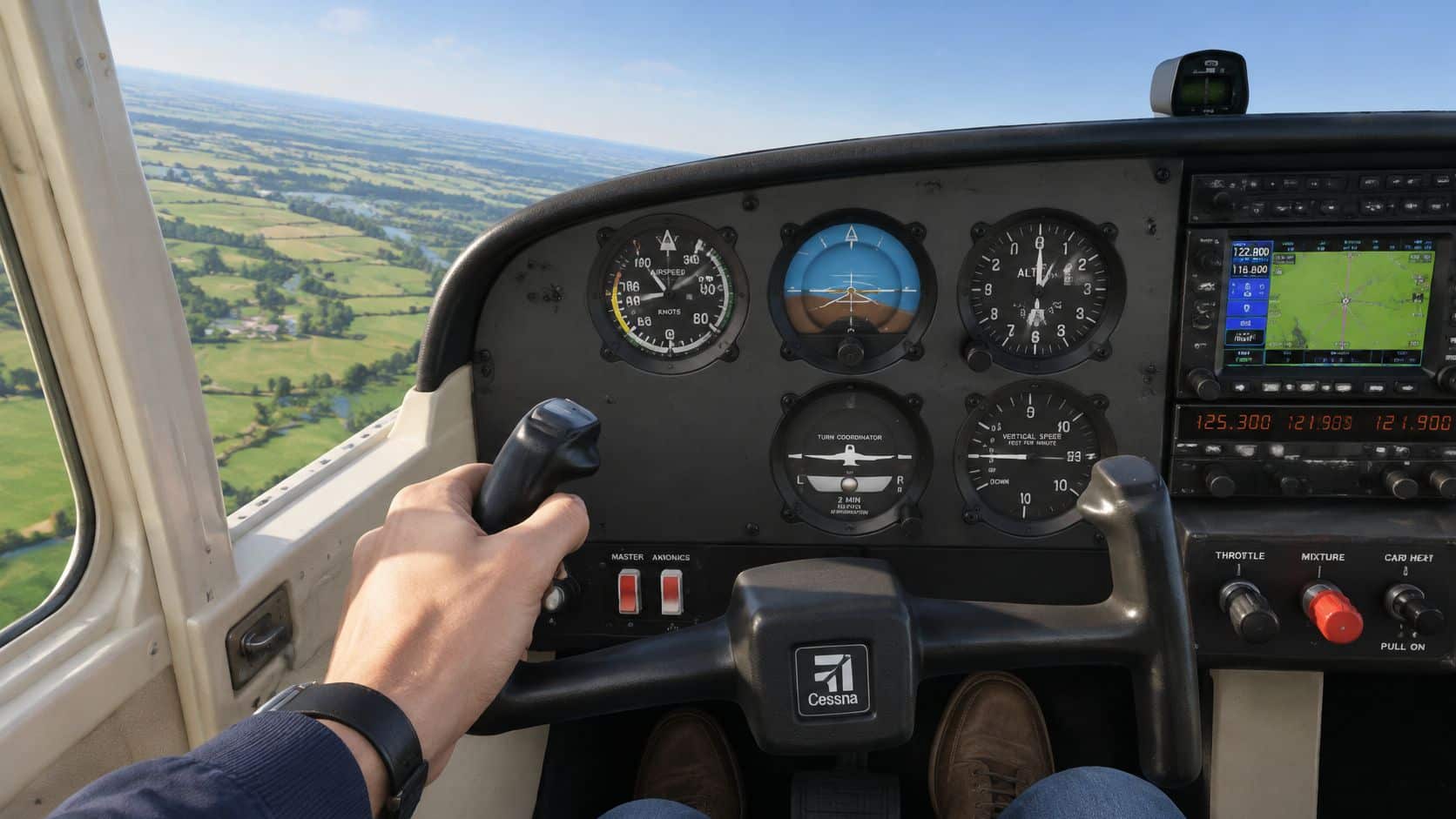
What should your hands, feet, and eyes do when the airplane begins to drift? Stick-and-rudder skill means coordinating pitch, bank, power, and yaw. Pitch moves the nose up or down, bank tilts the wings, and yaw moves the nose left or right. Instructors can observe this coordination in each maneuver, and students commonly fall short by making a second correction before seeing how the first one affected the aircraft.
What consistent handling looks like
Students practice straight-and-level flight, climbs, descents, turns, slow flight, stall recognition and recovery, and takeoffs and landings, including crosswind technique. The Airman Certification Standards, or ACS, connect each applicable task to knowledge, risk management, and flight-performance expectations.
The FAA's private-airplane, instrument-airplane, and commercial-airplane ACS editions listed here became effective May 31, 2024. Check the FAA's current ACS listings for the standards that apply, rather than relying on remembered tolerances or an old study sheet.
In a level turn, establish the intended bank, coordinate the controls, and monitor altitude and airspeed. Then roll out smoothly on the intended heading. A common error is fixating on the altimeter, noticing a loss of altitude late, and making a sharp correction without identifying its cause.
Practice standard: Hold a 30-degree bank for a brief, instructor-set interval while keeping altitude within the tolerance specified for the exercise. Watch how small control inputs affect the flight path, then correct smoothly. Finishing at the right heading matters, but so does understanding how the airplane stayed stable.
Systems understanding and automation judgment
Systems knowledge helps a pilot turn an indication into a suitable action. In a single-engine training airplane, an instructor might ask the student to explain the fuel arrangement, interpret an electrical indication, and find the relevant procedure in the aircraft's operating handbook.
A checklist works best when the student understands what each step protects or verifies. For example, explain which system an action concerns, complete it, and check that the expected indication follows. Reciting the words alone can leave a student unsure how to respond when a reading is unexpected.
FAA automation safety guidance warns that overreliance can weaken manual proficiency, while automation failures can raise workload. Mode awareness means knowing what the system is doing now, what it will do next, and whether that matches the intended flight path.
A student who automates every suitable segment may learn to select modes without becoming confident at holding attitude by hand. An instructor can expose that gap during a planned exercise, with workload and conditions in mind, rather than during an unexpected failure.
A supervised practice routine can include:
- Hand-flying practice: Fly a suitable segment manually when conditions and workload permit.
- Mode explanation: Name the active mode and describe the expected aircraft response.
- Disconnect rehearsal: Practice an instructor-briefed transition to manual control.
- Outcome review: Assess flight-path control and systems understanding, not button-pressing speed.
Situational Awareness and Instrument Scanning
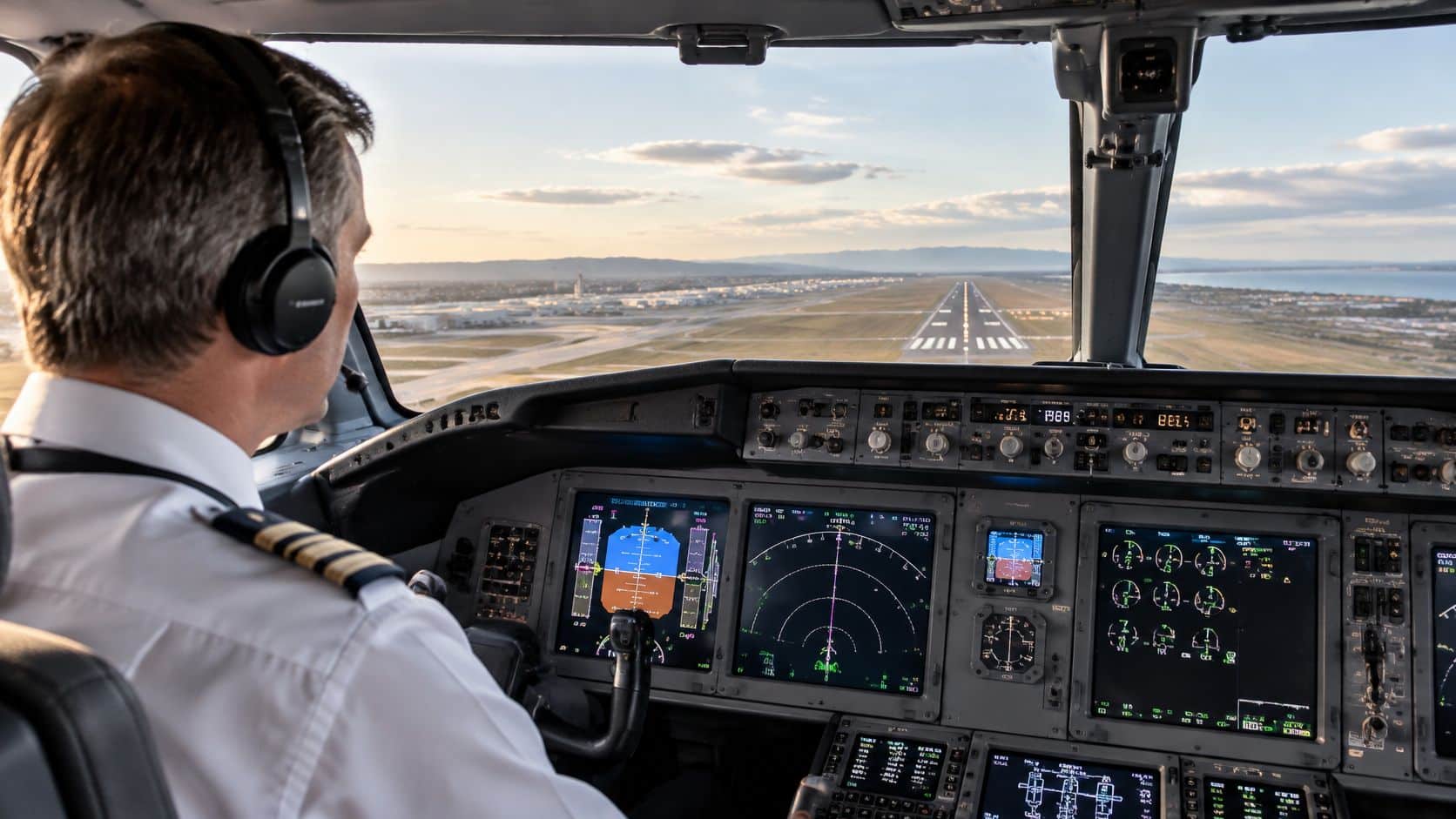
On downwind at a busy towered airport, you hear a traffic call while holding altitude and preparing for the next turn. You estimate where the traffic will be, check whether your spacing remains safe, and predict the next step: continue downwind, adjust spacing, or prepare to turn base. Situational awareness is the ability to connect those details and keep updating what is happening and what is likely to happen next.
Build a picture rather than collect isolated readings
A student might report the correct altitude yet lose track of traffic. Another might follow a navigation display while missing that the aircraft's heading or performance has drifted from the plan. On a checkride, the observable skill is keeping the aircraft's path, instruments, and surroundings in agreement.
The FAA Instrument Flying Handbook describes cross-checking as continuous observation of control and performance instruments. Without a visible horizon, comparing those indications helps the pilot interpret attitude and control the aircraft.
A 10-knot airspeed drift noticed early calls for one small correction; noticed late, it can require a larger one. A useful scan includes airspeed, altitude and vertical speed, coordination, and heading. The scan should reveal changes that matter, not become a memorized eye movement. Fixation on a navigation display can hide a developing bank or speed change until the flight path has strayed.
Practice attention allocation
Partial-panel training means practicing with selected instrument information unavailable or unreliable. In an instructor-led rehearsal, cover an agreed instrument, then state which remaining indications support your assessment of attitude and performance. Use a specific checkpoint, such as confirming heading and altitude before making a correction.
Practice navigation in the same way. After setting a route, compare the intended path with displayed guidance, then check whether the aircraft's heading and performance match it. This makes the scan a checkride behavior: observe, interpret, and confirm the result.
The concept of situational awareness in aviation links instrument readings with traffic, weather, position, and what comes next. At a towered training environment such as Chino Airport, an instructor can combine a traffic call with a navigation task and ask you to state your altitude, expected turn, and next action.
Use named exercises to make scan habits observable:
- Trend checkpoint: During straight-and-level flight, call out an airspeed change and correct it before it grows.
- Correction check: After a heading adjustment, verify the aircraft is tracking the intended heading.
- Partial-panel rehearsal: With an instrument covered, identify which available indications support your assessment.
- Downwind forecast: After a traffic call, state your altitude, where the traffic is, and the next likely step before acting.
Decision-Making and Risk Management
A pilot 40 minutes from a 2 p.m. appointment sees the cloud ceiling dropping toward the destination. The decision is not just whether the aircraft can continue. It is whether the conditions still fit the pilot's limits and whether there is time to use an alternative.
An FAA human-factors analysis of 14,436 general-aviation accidents associated skill-based errors with 79.2%, decision errors with 29.7%, violations with 13.7%, and perceptual errors with 5.7% (FAA threat-and-error-management material). The categories overlap, so the percentages should not be added. They show why a pilot must both fly accurately and recognize when a plan has become unsafe.
Turn risk assessment into a repeatable process
Aeronautical decision-making, or ADM, is a structured way to choose a response. The FAA handbook framework calls for identifying hazards, assessing their likelihood and severity, choosing controls, making a decision, and monitoring the result.
Set personal minimums before departure with an instructor. For example, a student might choose not to depart if the forecast ceiling is below 3,000 feet, visibility below 5 miles, or crosswind above 10 knots. These are example limits, not universal recommendations or substitutes for legal requirements. The useful habit is deciding in advance what conditions prompt a delay, cancellation, or change of destination.
Planning should connect weather limits with fuel, diversion options, and personal readiness. A checkride-ready student can explain the trigger for changing plans before schedule pressure makes that harder.
Five hazardous attitudes and their antidotes
The FAA ADM framework identifies attitudes that can distort decisions, even when a pilot knows the rules. The antidotes are actions to practice, not just more reassuring thoughts.
| Hazardous attitude | Typical thought | Antidote |
|---|---|---|
| Anti-authority | Rules are an unnecessary restriction | Check the applicable rule and follow it |
| Impulsivity | Action must happen immediately | Pause, identify the options, then choose |
| Invulnerability | The adverse outcome happens to other pilots | Name the specific hazard and how it could affect this flight |
| Macho | Skill can overcome the risk | Set a limit before the maneuver or flight, and stop when it is reached |
| Resignation | The outcome can't be influenced | State one available action and carry it out |
On the flight toward worsening weather, a predetermined ceiling or visibility limit prevents the appointment from becoming the deciding factor. If conditions reach the limit, the pilot follows the planned alternative rather than repeatedly finding reasons to continue. Scenario-based flight training gives an instructor a way to observe how a student weighs conditions and acts under realistic pressure.
A decision should include a condition that would change it. Without a change trigger, a pilot may keep defending an old plan as conditions worsen.
During the debrief, ask the student to state the decision, cite the evidence, and name the trigger for reassessment. Those observable steps reveal whether sound judgment is becoming a repeatable cockpit habit.
Communication, Teamwork and Crew Resource Management
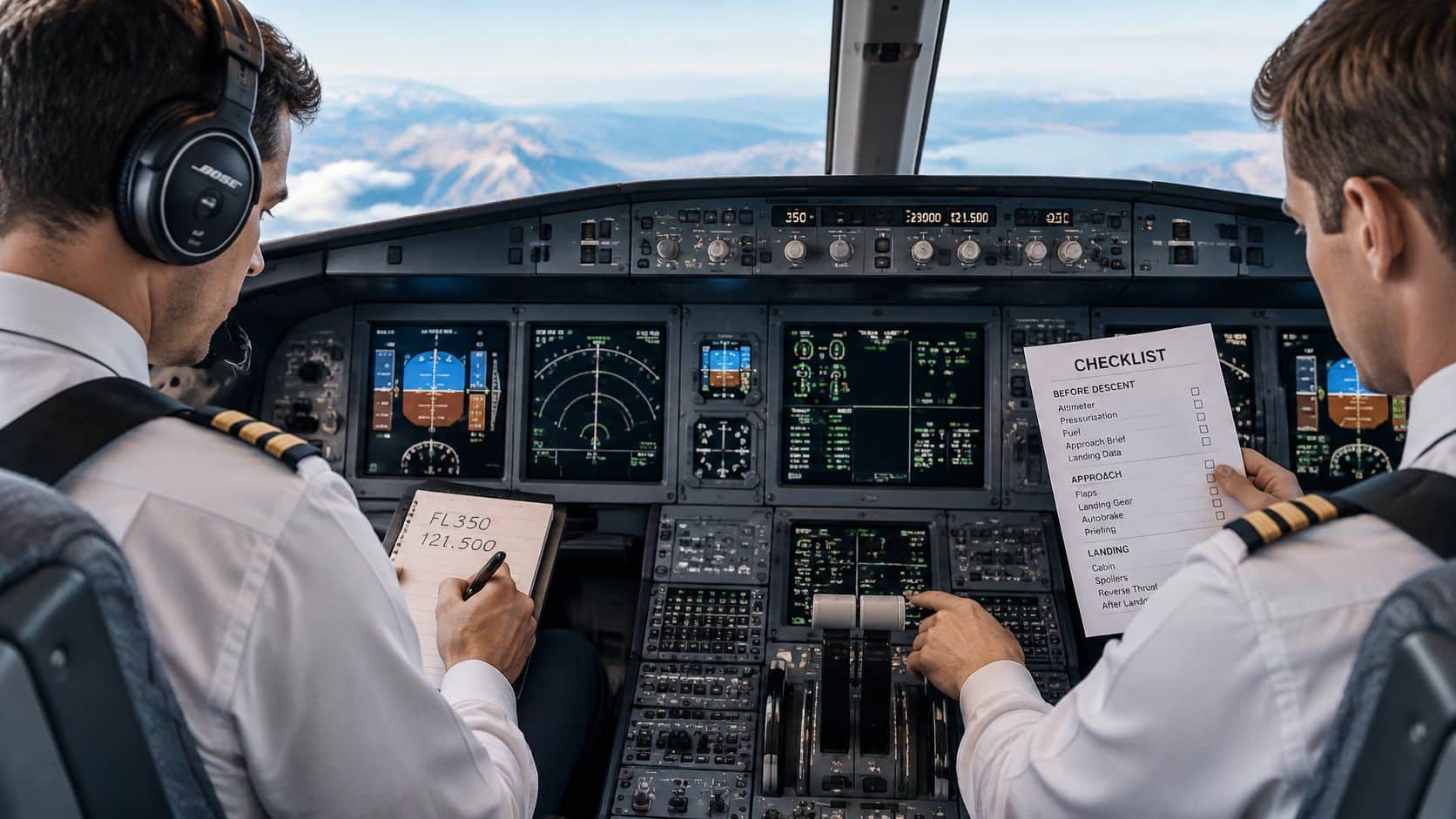
“Climb and maintain five thousand feet.” A student reads back, “Climb and maintain six thousand feet.” The controller corrects the altitude, and the student reads back the corrected clearance. This exchange shows the work in a small sequence: listen for the instruction, repeat the key detail, compare the readback with what was heard, and correct any mismatch before acting. Clear communication means making both the intended action and any uncertainty understandable.
Radio work includes identifying the correct call sign, using appropriate phraseology, keeping transmissions concise, and recording important instructions. If a clearance is unclear, ask for repetition rather than guess. During a checkride, an instructor can observe whether the student catches a mismatch and resolves it before following the instruction.
Radio technique and teamwork solve the same problem
A request such as “We need to go down” leaves the listener to infer the intended action. State the aircraft's call sign, the requested altitude, and any relevant limitation using appropriate phraseology.
The aircraft is descending when the instructor announces a route change. The student should acknowledge the change, ask about anything unclear, and assess whether there is enough attention available to make the change while maintaining control. A common error is to begin adjusting the route before confirming the instruction or checking the aircraft's flight path.
Crew resource management, or CRM, means using people, procedures, and equipment effectively. In a training aircraft, the student can coordinate with the instructor and air traffic control, follow a checklist, and use suitable automation. Each resource has a role; none replaces monitoring what the aircraft is doing.
A solo pilot applies the same habits without another pilot aboard. For example, the pilot can brief the planned route aloud, organize tasks before a busy phase of flight, and use callouts to catch a missed checklist item.
Observable behavior matters more than confidence
The EASA 2025 research agenda identifies workload and fatigue as areas needing stronger scientific evidence for future training and rulemaking. Students should take both seriously: success on routine maneuvers does not show how well they will communicate when several tasks compete for attention.
Instructors can assess actions rather than broad claims about teamwork:
- Recognize overload: Say when tasks are accumulating, before aircraft control suffers.
- Report relevant status: Clearly state a fuel concern or uncertainty about equipment.
- Request assistance: Ask for clarification or help instead of guessing.
- Respond to concerns: Check an instructor's or passenger's observation rather than dismissing it.
- Protect readiness: Acknowledge fatigue and speak up when schedule pressure affects readiness.
Rambling transmissions, incomplete readbacks, and silence after noticing a possible error are common problems. Students may also hesitate to ask for help, as if doing so shows weakness. On the radio, for example, saying “Confirm heading two-seven-zero?” gives the controller a chance to resolve uncertainty before the aircraft turns.
Debrief question: Did the pilot make the next action and any uncertainty clear enough for another person to respond usefully?
Before each flight, the student can describe the intended departure, likely workload peaks, available assistance, and reasons to change the plan. The instructor can compare that briefing with the student's actions during flight.
Medical Fitness and Certification Readiness
An expired ID or misunderstood medical option can interrupt a checkride, even when a student is ready to fly. Check documents and eligibility before arranging the test, then confirm which rules apply to the privileges you intend to exercise.
Medical certificate class and the privileges it supports
The current electronic text of Part 61 outlines the general framework below. Check the regulation's currency and amendment information before relying on it, since rules can change.
| Medical option | Privileges it supports | Regulation |
|---|---|---|
| Third-class medical | Generally, private-pilot privileges | 14 CFR 61.23 |
| Second-class medical | Generally, commercial-pilot privileges in an aircraft | 14 CFR 61.23 |
| First-class medical | Generally, airline transport pilot privileges | 14 CFR 61.23 |
| Driver's license alternative | Limited private-pilot operations only when every applicable condition is met | 14 CFR 61.113(i) |
The driver's license alternative has specific limits. Under 14 CFR 61.113(i), the aircraft must be authorized for no more than seven occupants and have a maximum takeoff weight of 12,500 pounds or less. The operation may carry no more than six passengers and must not be above 18,000 feet MSL or faster than 250 knots. Other conditions also apply.
Pilots must stop acting as required flight crewmembers when they know a condition or treatment makes them unable to meet the applicable standard. For a new diagnosis or medication, discuss the situation with an aviation medical examiner or treating clinician. That is a prudent step, not individualized medical advice.
Audit documents before arranging the test
The FAA applicant and endorsement guidance addresses identity, address, age, English-language ability, training records, and endorsements. Guidance editions can be superseded, so ask your instructor to confirm the current requirements.
Use a pre-checkride audit to catch paperwork errors:
- Identification: Check that your government-issued photo ID is unexpired and has the required signature and supporting identity information.
- Medical eligibility: Confirm that your documentation supports the privileges and operation you plan to exercise.
- Endorsements: Ask your instructor to check required entries and applicable timing.
- Logbook records: Compare experience entries with the certificate or rating you seek.
- Language readiness: Confirm that you meet the applicable Aviation English Language Standard.
A student may be ready to perform the flying tasks and still be unable to begin testing because a record is missing or a medical pathway was misunderstood. Use the Southern California FAA medical certification guide to organize questions, then rely on the regulation to determine eligibility.
Common Questions About Pilot Skills
Which skill should a new student train first?
Aircraft control and systems knowledge provide the foundation. Decision-making and communication should begin with the first lesson, however, because they influence how the student uses those handling skills.
How can a pilot recognize weak automation skills?
Difficulty holding attitude and airspeed after disconnecting automation indicates a manual-proficiency gap. Inability to identify the active mode indicates an automation-understanding gap. Instructor-supervised practice should address both.
Do skills transfer between airplanes and helicopters?
Decision-making, communication and resource management transfer well as training habits. Aircraft control inputs and responses differ, so helicopter add-on training requires new handling skills rather than assumed equivalence.
What should a student verify before a checkride?
Identification, endorsements, medical eligibility and logbook records need an instructor-led review. The student should also review the applicable ACS and explain how weather, fuel, performance, airspace and personal readiness affect the tasks. Returning to the weakest skill group provides a more useful study plan than repeating familiar material.
Choose a Training Path That Builds These Skills
A useful training path connects lessons to observable progress. Instead of recording only that a maneuver was practiced, the instructor and student should identify what improved, what still needed prompting, and what the next lesson will test.
One-on-one instruction gives an instructor opportunities to observe recurring errors. Ground preparation supports that work when the student studies the actual aircraft's systems and procedures before applying them in flight.
Match training resources to the learning need
Prospective students comparing flight schools should ask how each resource supports a specific weakness:
- Aircraft lessons: Build coordinated handling, checklist use and consistent procedures.
- Ground instruction: Connect regulations, weather, aircraft performance and systems to flight decisions.
- Simulator exercises: Rehearse suitable instrument, workload and abnormal-situation scenarios when the equipment and lesson permit.
- Scenario debriefs: Examine why a decision was made, not merely whether the maneuver passed.
- Rental transition training: Review the particular aircraft and identify proficiency gaps before independent use.
A career-oriented sequence may include private, instrument, commercial and multi-engine training, followed by flight instructor, instrument instructor and multi-engine instructor qualifications, commonly called CFI, CFII and MEI. Helicopter add-on training should be discussed as a separate handling and qualification goal, not merely another airplane stage.
The FAA notes that an approved pilot-school course may reduce the private-pilot minimum from 40 to 35 flight hours, although most applicants need 60–75 hours (FAA pilot-school guidance). That provision doesn't establish any particular school's approval status or predict an individual completion time.
Take a specific next step
- Arrange an introductory visit. Request a discovery flight or school tour to discuss aircraft, instructors and training goals.
- Ask how progress is tracked. Discuss course availability, scheduling, ground preparation and the behaviors required before advancing.
- Confirm the pathway. Review enrollment information and applicable certificate or rating options; instructor candidates should also ask about teaching preparation.
The right discussion starts with the student's weakest skills, intended flying and realistic study availability. A training plan should make those priorities visible before it promises a timeline.
DuBois Aviation offers one-on-one airplane and helicopter flight training and aircraft rental, providing a setting for developing these connected cockpit skills. Visit DuBois Aviation to request training information, ask about course availability, or arrange a school tour focused on the next certificate, rating or proficiency goal.