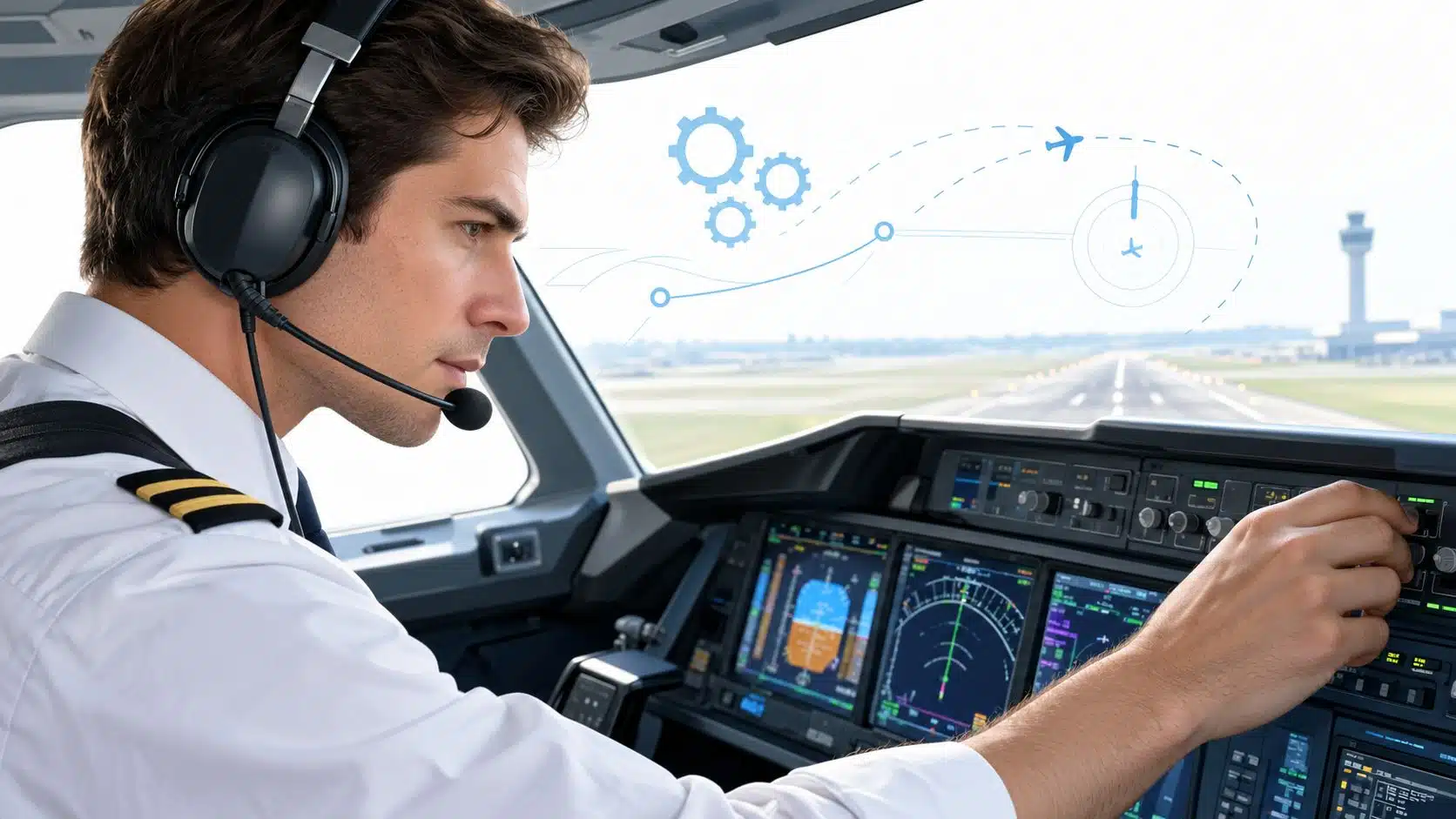
Human factors training for aviators is the study and practice of how pilots interact with aircraft systems, procedures, displays, and other people so errors are less likely to start, spread, or go unnoticed. It matters because a clean crosswind landing means little if a rushed radio call, a missed checklist item, or a bad handoff creates the risk.
You're taxiing at a busy towered airport, the frequency is busy, the airplane ahead slows, and the instructor asks for a quick change in the plan. That kind of moment is where human factors training earns its keep, because aviation rarely fails from one big mistake, it usually fails from a chain of small ones. FAA research frames the discipline as the study of how pilots interact with aircraft systems, displays, controls, procedures, and training, which is why good training has to fit both the cockpit and the person flying it. FAA research on pilot interaction with aircraft systems and procedures
Table of Contents
- What Human Factors Training Means for Aviators
- Why Human Factors Training Matters in Flight Safety
- Core Components Every Pilot Should Master
- Practical Aviation Examples and Hands On Exercises
- Sample Human Factors Syllabus and Integration Into Flight Lessons
- How to Choose the Right Human Factors Course
- Frequently Asked Questions About Human Factors Training
What Human Factors Training Means for Aviators
At a busy towered airport, a routine taxi can change quickly. The frequency fills, traffic slows ahead, and an instructor changes the plan. Human factors training prepares the pilot to recognize rising workload, protect attention, and recover before a small slip becomes a larger cockpit problem. It treats performance as part of the aircraft's error-prevention and error-recovery system.
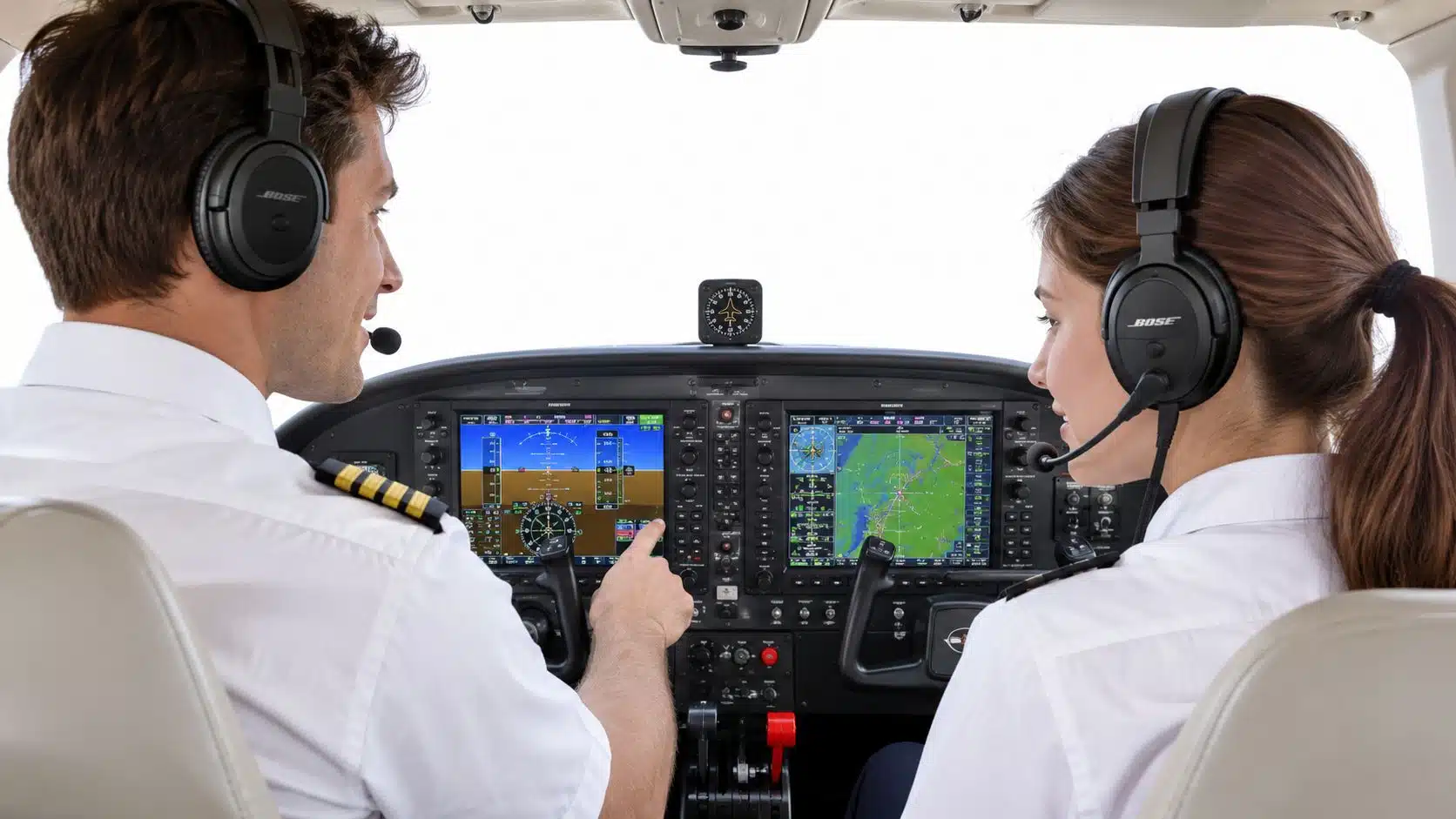
Human factors training teaches pilots to notice where judgment can slip and how cockpit design can support or burden them. FAA research connects the subject with cognition, interface design, and procedural workload alignment, helping pilots match procedures and equipment to human limits. FAA research on how pilots interact with aircraft systems and training
Where the confusion usually starts
Students sometimes hear “human factors” and expect a lesson about manners or teamwork alone. The practical subject is broader. It covers how a pilot reads the whole situation, including the other person in the right seat, the controller's instructions, the checklist, and the time available to respond. Like a circuit breaker, each habit adds a way to catch or contain an error.
Practical rule: if a task gets harder when the radio gets busy, training should address workload, not just stick-and-rudder technique.
A useful lesson turns that principle into an exercise. During a busy-airport scenario, the instructor can introduce a reroute, a delayed departure, or competing radio calls, then review what drew attention away and which cross-check restored control. The same pattern belongs in the syllabus: brief workload-specific drills followed by a calm debrief. Students learn when to pause, clarify, reprioritize, and communicate.
A pilot may know the airplane well and still lose track of an approach after fatigue, distraction, or an assumption starts an error chain. Human factors training makes that chain visible, then gives the pilot ways to slow it, trap it, or stop it.
Why Human Factors Training Matters in Flight Safety
A student is turning base at a busy towered airport when the controller changes the runway, another aircraft reports traffic, and the instructor asks for a revised plan. The student may know the airplane well, yet attention can narrow, a readback can be missed, or the descent can continue from an outdated assumption. Human factors training prepares pilots to catch that drift before it becomes an unsafe outcome.
Human performance became a formal safety concern because aviation showed that technical skill alone could not prevent every error. Crew Resource Management emerged from a NASA-sponsored meeting in June 1979 and became a regulatory requirement for all U.S. airlines in 1990. CRM timeline and U.S. airline requirement
The same pattern appears in smaller aircraft. A missed callout, unclear expectation, or rushed descent can begin a chain that seems minor until several tasks compete for attention. Human factors therefore belongs inside flight training, not in a separate classroom reserved for airline crews.
Safety is a system, not a slogan
ICAO connects human-factors training with safety culture, human-performance basics, stress, fatigue, and workload management. It also relates those subjects to hazard identification, risk assessment, mitigation, and incident investigation. ICAO guidance on human factors and safety processes
Technical skill keeps the aircraft under control. Human factors training helps the pilot recognize traps, manage changing priorities, and recover when an error has already started. In a busy-airport lesson, an instructor can add a reroute, delayed departure, or competing radio calls, then ask which cue restored the correct plan.
The goal is practical: pause, clarify, reprioritize, communicate, and continue safely. DuBois Aviation's guide to threat and error management explains the same error-prevention and recovery mindset in a form that supports real-time cockpit decisions.
Core Components Every Pilot Should Master
A busy towered airport can turn a routine lesson into a human-factors test. The airplane remains controllable, yet a new clearance, traffic call, or runway change can crowd the pilot's attention. Crew resource management gives the pilot a repeatable way to use people, equipment, and information before small errors become larger problems. FAA AC 120-51E on CRM
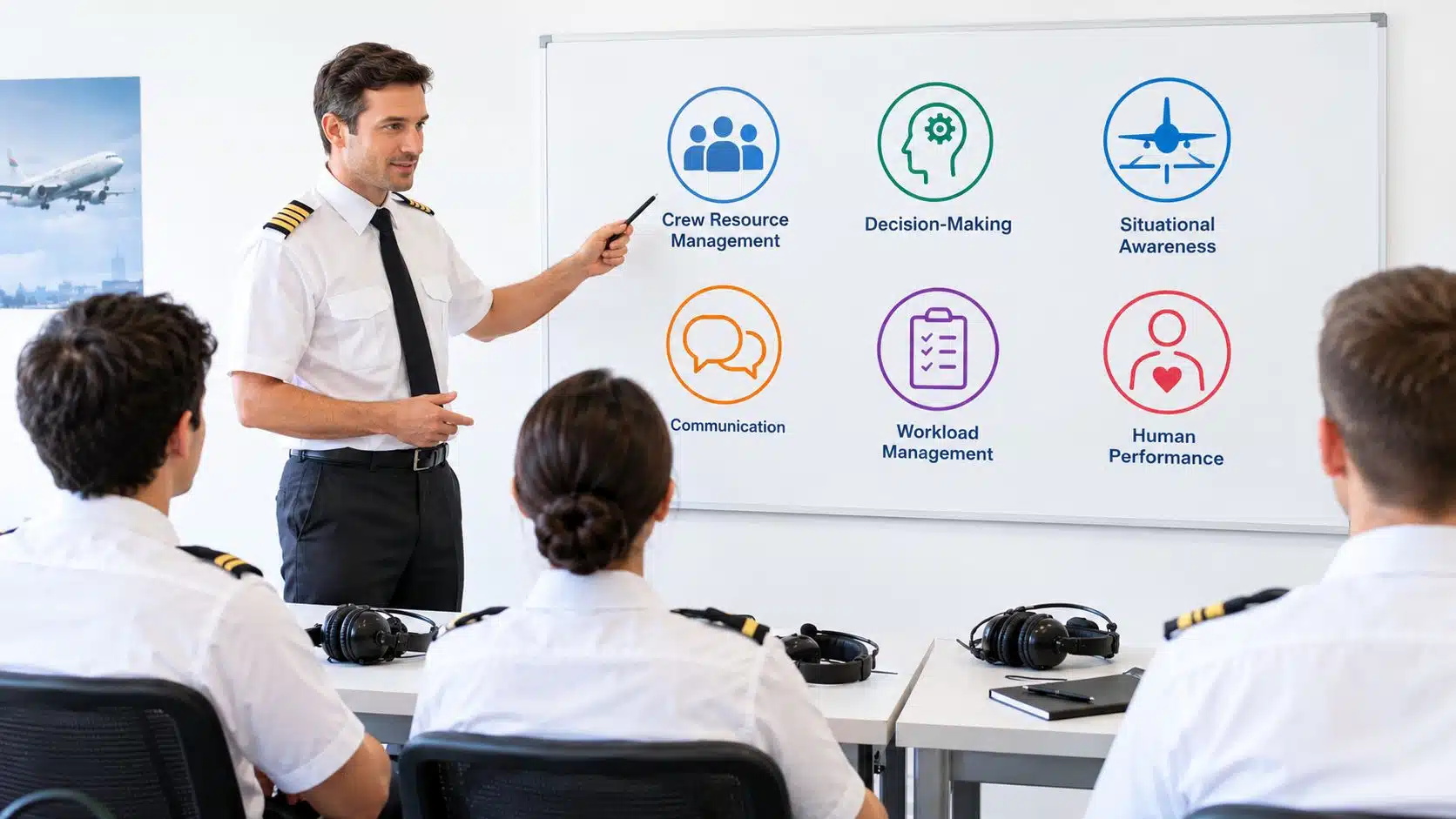
The six pillars that keep showing up
- Crew resource management: Use every useful resource in reach, not only the flight controls. A pilot communicates early, listens carefully, checks the instructor or another crewmember, follows the checklist, and uses aircraft systems in a sensible order. For a broader explanation, see this guide to crew resource management in aviation.
- Decision-making and error-chain recognition: One missed step can pull the next task off course. Training helps pilots spot that chain early, identify a recovery point, and choose a safer action before the problem becomes urgent.
- Situational awareness: Maintain a current mental picture of altitude, airspace, traffic, runway alignment, fuel, and the active plan. A stale picture leaves the aircraft moving ahead of the pilot's understanding.
- Fatigue and stress management: Fatigue and stress narrow attention. A pilot may still perform the controls while missing information at the edge of the scan. Training builds recognition of that shrinking margin and prompts an adjustment in pace or workload.
- Communication and workload management: Clear radio calls, cockpit briefings, and task sharing reduce confusion. During a busy sequence, the goal is understandable information and deliberate prioritization, not perfect wording.
- Safety culture: Reporting, debriefing, and feedback should be ordinary parts of training. An instructor who makes it safe to discuss a missed item helps the pilot correct a pattern while it is still manageable.
Cognitive load is the hidden pressure behind these skills. As tasks compete for attention, working memory has less room for instructions and decisions. LearnStream's guide to cognitive load explains why training organized into small, usable pieces is easier to apply under pressure. A syllabus can therefore pair one concept with one cockpit behavior, then revisit it during taxi, departure, approach, and debriefing.
Practical insight: If a pilot can explain a rule but cannot apply it during a taxi clearance, the skill has not reached operational level.
Human factors training must be practiced, observed, and discussed. Instructors can assign workload-specific scenarios, watch how the pilot prioritizes tasks, and ask which cue restored the correct plan. Recurrent practice and feedback keep the behavior available when radio traffic rises and several decisions arrive together. The FAA CRM framework supports this repeated-use approach rather than treating CRM as a single classroom lecture.
Practical Aviation Examples and Hands On Exercises
At a busy towered airport, a routine lesson can change in seconds. The aircraft is stable, the student is prepared, and then the controller issues several instructions while traffic builds in the pattern. The instructor can use that moment to show how human factors prevent errors, detect confusion, and restore a workable plan.
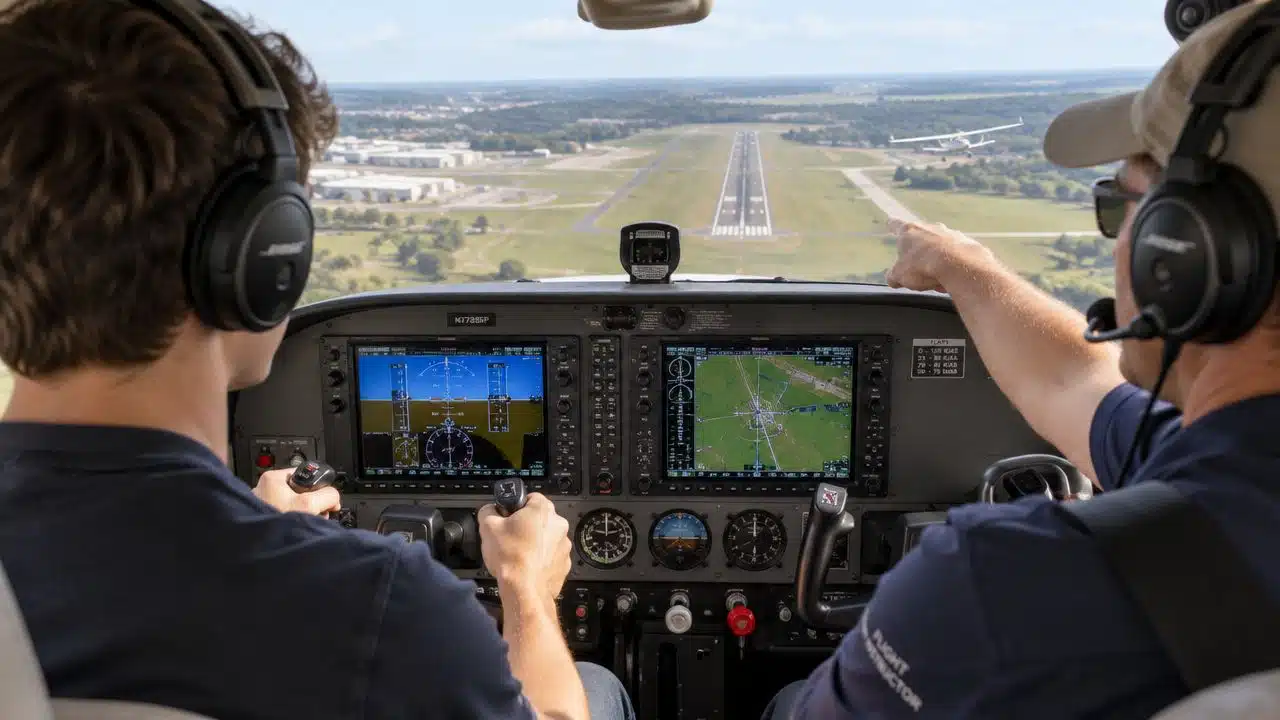
Exercises that actually change behavior
Human-factors practice works best when it connects a realistic situation with an observable cockpit behavior. Maintenance training commonly combines error-chain analysis, reporting, communication, situational awareness, fatigue awareness, hands-on work, group discussion, and case studies. Flight instructors can apply the same structure during normal lessons.
- Pattern entry under pressure: The student joins a busy pattern, then receives a late runway change. The exercise is to keep flying the airplane, confirm the revised plan, and delay secondary tasks until the setup is stable.
- Instrument approach with automation surprise: The selected mode produces an unexpected result. The student identifies the aircraft's actual mode, states the intended mode, and changes one control at a time. That sequence prevents a small misunderstanding from becoming several simultaneous errors.
- Instructor handoff briefing: One pilot completes a leg and transfers responsibility to another. The receiving pilot should hear the fuel state, clearance, aircraft status, and unresolved concerns without having to reconstruct the situation.
- Fatigue-impaired go or no-go judgment: A student may feel capable of continuing while workload, weather, or schedule make the flight a poor choice. The exercise requires the student to identify the risk, set a clear limit, and explain the decision.
A pilot who responds to rising workload by moving faster often removes the time needed to check the plan. Slowing one task can protect the whole sequence.
Before takeoff, identify one likely distraction, one task bottleneck, and one backup plan. In flight, use short callouts and pause the flow when an instruction or clearance is unclear. After landing, review the exact moment attention narrowed or the plan became uncertain. That review turns a vague “busy” feeling into a specific behavior for the next lesson.
For lesson planning and workload-specific practice, DuBois Aviation's workload management strategies provide a useful reference for keeping high-pressure tasks manageable in real time. The instructor can then repeat the exercise at a busier stage of flight, so error recovery becomes a practiced response rather than an improvised one.
Sample Human Factors Syllabus and Integration Into Flight Lessons
At a busy towered airport, a student may be flying a normal pattern when the radio becomes crowded, traffic appears on final, and the controller changes the sequence. The lesson is no longer only about aircraft control. It becomes practice in preventing errors, detecting confusion, and recovering before a small mistake affects the next task.
Human factors training fits best inside normal flight instruction. Students already manage radios, checklists, weather, traffic, and aircraft handling, so instructors can teach performance skills in the setting where they must be used. ICAO guidance connects this work with safety culture, human performance, stress, fatigue, and workload management. ICAO human-factors training guidance
At an airport such as Chino, three runways, towered operations, and instrument procedures provide regular practice opportunities. The instructor can adjust the exercise to match the workload, rather than relying on artificial scenarios.
A simple integration flow
| Training Phase | Human Factors Focus | Lesson Integration Example |
|---|---|---|
| Early private training | Attention, checklist discipline, and callouts | Use preflight and taxi to build deliberate task sequencing |
| Pattern work | Communication and traffic scanning | Add spacing changes and short decisions during towered pattern entries |
| Instrument training | Workload control and automation awareness | Confirm modes and approach setup before the workload rises |
| Commercial training | Error-chain recognition and judgment | Review rushed decisions, unstable setups, and go-around choices |
| CFI or recurrent training | Safety culture and teaching judgment | Ask the pilot to explain why a choice was safe, not only legal |
How the lessons fit together
Each lesson should record a behavior to repeat or change, not only mark the task complete. Before engine start, the student briefs the plan and identifies likely pressure points. In flight, the instructor observes how the student prioritizes tasks, verifies instructions, and responds when the plan changes. After landing, the debrief identifies the first missed cue and the recovery action that worked.
The exercise should match the lesson's workload. A private pilot may practice checklist flow during taxi. An instrument student may verbalize mode awareness before an approach. A commercial student may identify when a rushed setup required a go-around. Repeating these exercises in progressively busier conditions creates measurable improvement in behavior.
DuBois Aviation uses one-on-one instruction and Jeppesen-based materials. That structure can support human factors practice across each training phase instead of placing it in a separate lecture. The instructor can then assess whether the student notices rising workload, chooses a safer sequence, and communicates clearly under pressure.
How to Choose the Right Human Factors Course
A good course should change how a pilot flies next week, not just how the pilot feels after class. The test is simple. Does it use scenarios, feedback, and recurrent practice, or does it only define terms and move on?
That matters because training often trails the cockpit. Analysts at CompTIA workforce and learning trends report that the biggest technical skill gaps are tied to the pace of technical and AI change and to a shortage of skilled workers, which points to a need for training that helps people adapt during real work, not only memorize material.
What to ask before enrolling
- Scenario depth: Does the course use real cockpit situations, or does it stop at definitions?
- Recurrent options: Is there follow-up practice and feedback, or is it a one-and-done class?
- Automation and intervention training: Does it teach what to do when the airplane, avionics, or procedure surprises the pilot?
- Instructor credibility: Has the instructor taught flying or safety in a way that reflects actual operational pressure?
- Fit with current training: Does the course support instrument, commercial, multi-engine, or CFI goals instead of treating all pilots the same?
A strong course also fits the phase of training. A private pilot needs help spotting workload spikes during taxi and takeoff. An instrument student needs practice with mode awareness and clear callouts before the approach gets busy. A commercial or CFI candidate should be asked to explain why a choice was safer, not just legal, because that is how judgment gets built.
For students who want human factors tied to actual flying, ask about course availability, request training information, and schedule a school tour. A discovery flight can also show how communication, workload, and situational awareness appear from the first lesson.
Frequently Asked Questions About Human Factors Training
Is human factors training the same as CRM?
CRM is one part of human factors training. Human factors also covers fatigue, workload, attention, error prevention, and how the pilot and the cockpit system affect each other. As noted earlier, CRM focuses on using the resources available in a flight environment.
How often should recurrent training happen?
It should happen often enough to keep the habits fresh. A good program does not treat human factors as a one-time class, because pilots need repeated practice and feedback to make better decisions under pressure.
Is human factors training required for Part 61 students?
Part 61 training does not carry the same CRM structure as airline operations. Even so, the same human limits show up in a smaller cockpit. A student taxiing at a busy towered airport can face the same workload, distraction, and communication pressure that matter later in larger aircraft.
Does human factors training help with checkrides?
Yes. Checkrides reward steady judgment, clear communication, and sound task management. A pilot who briefs well, catches errors early, and stays organized during a busy sequence gives the examiner a clearer picture of safe habits.
Why does automation matter so much now?
Modern cockpits can hide workload problems behind screens and modes. If a pilot does not understand what the system is doing, the automation can add confusion instead of reducing it. That is why human factors training should include real flight lessons, not just theory, so students learn how to spot confusion early and recover from it.