You're probably in one of two spots right now. You've either taken a discovery flight and can't stop thinking about the view over the nose, or you've wanted to fly for years and finally looked up the price of training. That second moment stops a lot of good future pilots cold.
It shouldn't.
A private pilot license scholarship isn't just a bonus if you happen to win one. For many students, it's the piece that turns aviation from “someday” into a real training plan. The key is to stop treating scholarships like lottery tickets and start treating them like part of a funding strategy. That strategy can include national programs, museum and chapter scholarships, local aviation contacts, pay-as-you-go training, and for a small subset of serious long-term planners, even aircraft ownership.
Two practical options worth comparing
These are specific products pilots commonly compare for this type of flying. Confirm compatibility with your aircraft and instructor before ordering.
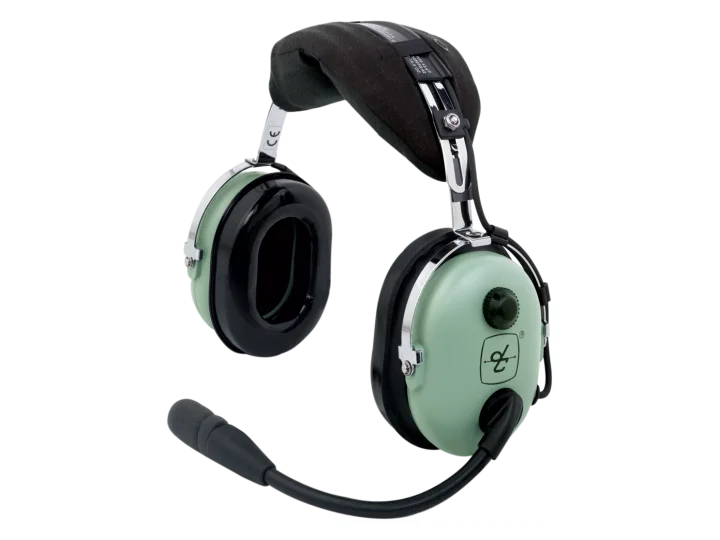 Student headsetDavid Clark H10-13.4 Aviation HeadsetCheck current availability on Amazon (paid link)
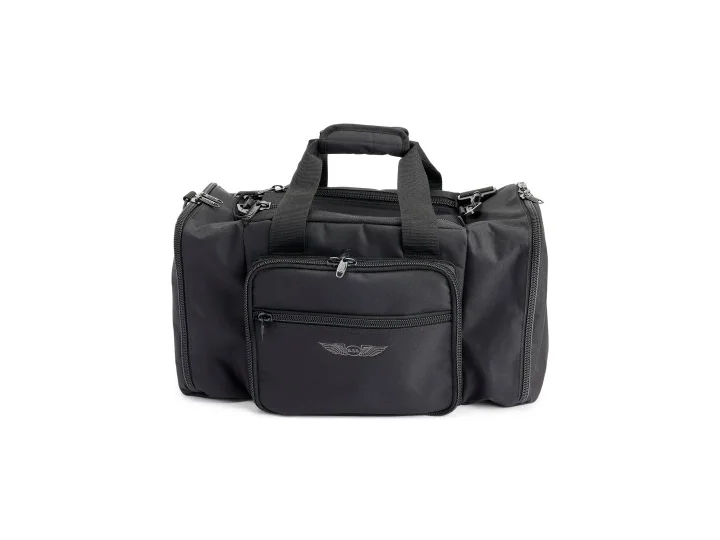 OrganizationASA Flight BagCheck current availability on Amazon (paid link)
Near Chino, that matters more than people think. Training at a busy towered airport forces you to grow up quickly on the radio, in the pattern, and in your planning. If you can line up the money intelligently, you're not just buying hours. You're buying momentum.
From Dream to Cockpit Your Flight Training Funding Roadmap
A student usually starts with the same question: “Can I afford to become a pilot?” The better question is, “How will I fund this without stalling halfway through?”
That shift matters because the cost is real. Scholarships.com estimates a private pilot license at about $15,000, while AOPA says it offers at least 90 scholarships of $12,000 each for high school students ages 16 to 18, and its broader scholarship portfolio ranges from $250 to $14,000 depending on donor funding, according to AOPA flight training scholarships. That means some awards can cover a substantial share of entry-level training.
What a real funding plan looks like
A workable roadmap usually starts with three tracks running at the same time:
- Scholarship track: You apply broadly, but only to programs that are a good fit.
- Training readiness track: You get your documents, medical, and study habits in order.
- Backup funding track: You decide now how you'll cover gaps if an award is partial or delayed.
Students who make progress don't wait for a perfect answer. They build options. That's also why it helps to study what other students say about training experiences and support systems before committing to a path. If you want a feel for how aviation students describe preparation and course support, browse all Aerostudies reviews.
Why location and school environment matter
Funding is only useful if it converts into consistent flying. A scholarship can disappear into delays if the student doesn't have a school, schedule, and instructor plan lined up.
At a place like Chino, the training environment is active enough that your habits get tested early. You're managing radios, traffic, planning, and consistency. That's good for long-term skill, but it also means your funding plan needs to be realistic. A student who understands the training path before applying comes across much stronger, which is why it helps to review a clear overview of how to become a private pilot.
Practical rule: Don't wait to “win money” before acting like a serious applicant. Start building the file that a scholarship committee wants to see.
Aviation funding works best when you treat it like flight planning. You pick a route, build alternates, and leave room for weather.
Where to Find Private Pilot License Scholarships
A student near Chino usually asks the scholarship question the same way: where should I apply first so I am not wasting weekends on forms that go nowhere?
Start by sorting opportunities by how training gets completed. From an instructor's side, I care less about the headline dollar amount than whether the award fits your age, schedule, location, and the pace you can realistically maintain at the airport. A smaller award tied to a strong local chapter or a structured program often produces better results than a larger award with weak follow-through.
Start with the national programs that can carry a real portion of training
AOPA stays near the top of the list for high school applicants because, as noted earlier, it offers large flight training scholarships for students in the 16 to 18 range through its student scholarship program. If you fit that window, apply early and treat it like a primary target, not a backup.
The EAA Ray Aviation Scholarship belongs in the same first pass. It can cover a meaningful share of private pilot training and runs through participating EAA chapters. That chapter piece matters. Students with chapter support usually get more accountability, more local guidance, and a clearer path from award notice to actual flight lessons.
The Hiller Aviation Museum scholarship is another one worth tracking closely. It is a serious award for teens working toward the FAA Private Pilot Certificate, and the timeline is specific. Application deadlines, interviews, award notices, and completion requirements are spelled out clearly on the program page. That kind of structure is useful because you can build your training calendar around it instead of guessing.
Structured pathway programs can be stronger than a simple cash award
Some of the best opportunities are really training systems with funding attached.
The AFJROTC Flight Academy is the clearest example. It is competitive, but it also gives cadets a defined program instead of just a check and good luck. For the right student, that support system matters as much as the money. Committees and program directors know flight training stalls when students lose momentum, so pathway programs are built to keep that from happening.
That is why I tell students to judge scholarships on two questions. How much of training will this cover? What will help me finish once I start?
Group-specific and local scholarships are where careful applicants separate themselves
This is the bucket many applicants handle poorly. They chase the broad national names and ignore narrower awards where they would be a much stronger match.
Some scholarships limit eligibility by age, state, gender, school affiliation, or career goal. That is not a drawback if you fit the criteria. It is an advantage. A women-focused scholarship, a regional museum fund, or a community aviation award may draw a smaller pool and reward applicants who can show a direct connection to that mission, as discussed in this aviation scholarships for females roundup.
For students near KCNO, local searching still matters. Check museums, EAA chapters, 99s chapters, airport associations, flying clubs, and youth aviation groups within driving distance of Chino, Pomona, Ontario, and the Inland Empire. Some of these opportunities are not marketed well. You find them by calling, asking, and showing up.
That old-fashioned work still pays.
2026 Major Private Pilot Scholarship Comparison
| Scholarship | Typical Award Amount | Key Eligibility | Application Window |
|---|---|---|---|
| AOPA High School Flight Training Scholarship | Large flight training award | High school students ages 16 to 18 | Check current AOPA cycle details |
| EAA Ray Aviation Scholarship | Meaningful chapter-based training support | Apply through a local EAA chapter program | Varies by chapter program |
| Hiller Aviation Museum PPL Scholarship | $15,000 | Ages 16 to 18, milestone-based readiness required | Due April 10, 2026 |
| AFJROTC Flight Academy | Scholarship-backed training pathway | AFJROTC cadets | Check current academy cycle details |
A practical search order that works
Use this order if you want the best return on your time:
- National awards with enough money to matter: AOPA, EAA chapter programs, major museum scholarships.
- Programs with built-in structure: AFJROTC and similar pathways that help students keep progressing.
- Narrow-fit opportunities: awards tied to age, region, identity, school program, or career track.
- Local aviation groups around your home airport: museums, clubs, associations, and chapter contacts near where you plan to train.
For a Chino-area student, the local piece is more important than it looks on paper. If a scholarship sends you toward a school, chapter, or mentor network that can keep you flying consistently, the award has more practical value. That same local search also helps answer a longer-term funding question students rarely ask early enough. Whether it makes more sense to keep chasing outside funding, join a club, or eventually put the money toward partial aircraft ownership.
Crafting an Application That Stands Out
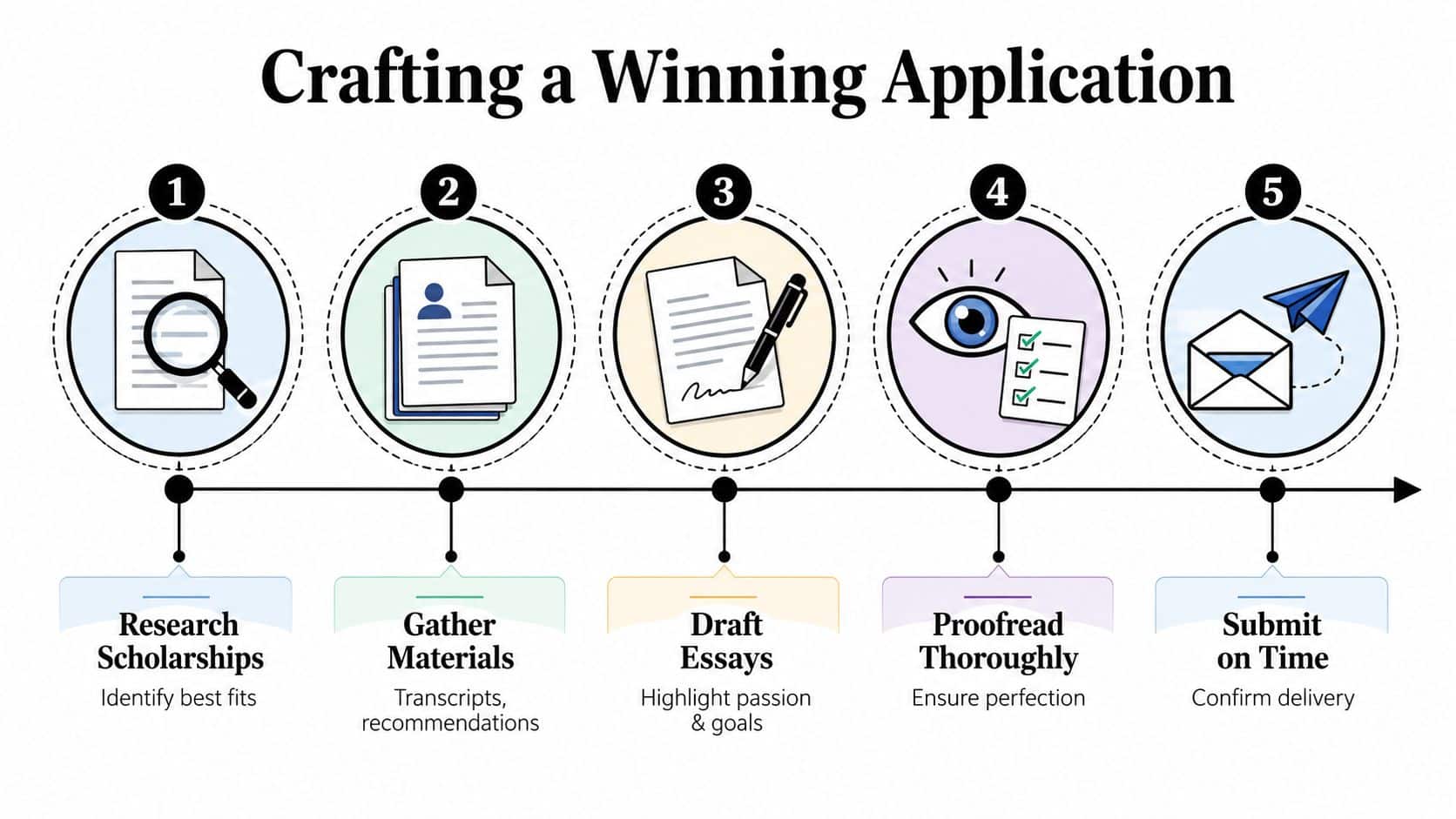
A scholarship committee often decides the shape of your application before it finishes your essay. If the package looks generic, rushed, or detached from the realities of training, it goes into the same mental category as dozens of others. The applications that rise are the ones that show preparation, judgment, and a realistic plan to keep flying after the first check is written.
That matters even more for a budget-conscious student around Chino. I see applicants spend weeks polishing a personal story, then fail to show the committee where they plan to train, how often they can fly, or what they will do if the award only covers part of the certificate. From an instructor's side of the desk, those details are what make a student look finishable.
Write an essay that proves you will use the money well
Strong essays are specific. They show motion.
A committee already knows you love aviation. The useful question is whether you have started building the habits that get a student to solo, through the written, and on to the checkride. Good essays mention concrete steps such as a discovery flight, independent ground study, time spent around the airport, savings from a part-time job, or a training calendar built around school or work.
The best essays also show that you understand pace. If you explain how often you plan to fly and why that schedule is realistic, your application gets stronger. Students who have reviewed the typical private pilot license timeline and training pace usually write more believable plans because they understand that long gaps between lessons cost money and momentum.
One more point separates a solid essay from a forgettable one. Address the funding gap directly. If the scholarship covers only part of training, say how you will cover the rest through savings, family support, local work, a flying club, or a reduced lesson schedule. Committees know very few students have unlimited funds. They do want to see judgment.
What committees are really buying: a student who can turn limited money into steady progress.
Recommendations should describe behavior, not personality
The phrase “hard worker” carries almost no weight by itself. A useful recommendation explains what that looks like in practice.
Ask for letters from people who have seen you handle responsibility over time. A teacher can speak to consistency and preparation. An employer can describe reliability, attention to procedure, and how you respond to correction. A coach can speak to discipline under pressure. A CFI, mentor, or airport volunteer coordinator can be especially persuasive because they can comment on how you approach aviation tasks, safety, and instruction.
Make it easy for recommenders to write a strong letter. Give them the scholarship name, the deadline, your resume, and a short note on what you want them to address. If the award is aimed at career-minded students, tell them. If the program values community involvement or training readiness, tell them that too. Specific input produces specific letters.
Build a resume that looks like a pilot in progress
Your resume does not need corporate polish. It needs evidence.
The strongest aviation resumes show that you have already started reducing risk for the committee. That can include early ground school work, FAA knowledge test prep, a short list of flight schools you have researched, transportation plans to the airport, and a schedule that proves you can train consistently. Around KCNO, local access is part of the story. If you live close enough to train regularly, or you have already identified a practical route to the airport, include that. Reliability on the ground supports reliability in the cockpit.
Useful categories to include:
- Flight exposure: discovery flight, simulator time, aviation camp, airport volunteering
- Academic preparation: technical classes, strong writing, math or science coursework
- Responsibility: paid work, family duties, long-term commitments, caregiving
- Leadership and service: CAP, JROTC, school clubs, church work, community volunteering
- Training readiness: medical planning, written exam prep, school research, realistic lesson availability
As noted earlier, some scholarships place a high value on readiness milestones before funding starts. That should shape how you present yourself. If you have already chosen a school, started test prep, or met with an instructor to map out training, put it in the application package.
Here's a useful walkthrough if you want to see a training conversation in plain language:
Show judgment, not just ambition
A polished application also answers a question applicants often miss. What happens if the scholarship does not fully solve the problem?
Students who stand out usually present a layered plan. They may apply for national scholarships, keep searching locally, save cash from work, and stay open to lower-cost paths such as club flying or shared ownership later on. That last point matters more than many applicants realize. If your long-term goal is to keep flying after the certificate, the committee may view you as a better risk when you show you are thinking beyond the first award.
Mistakes that weaken good candidates
A few patterns come up every year:
- Generic essays: broad inspiration, no real plan, no evidence of action
- Weak letters: recommenders like you, but cannot describe responsibility or follow-through
- Thin resumes: interest in aviation with no sign of preparation
- All-or-nothing funding logic: the application assumes training stops without this single award
- Readiness gaps: no school research, no schedule, no test prep, no practical next step
The strongest applicants make the committee comfortable. They look organized, coachable, and realistic about the money. That combination beats dramatic writing almost every time.
Your Application Checklist and Timeline
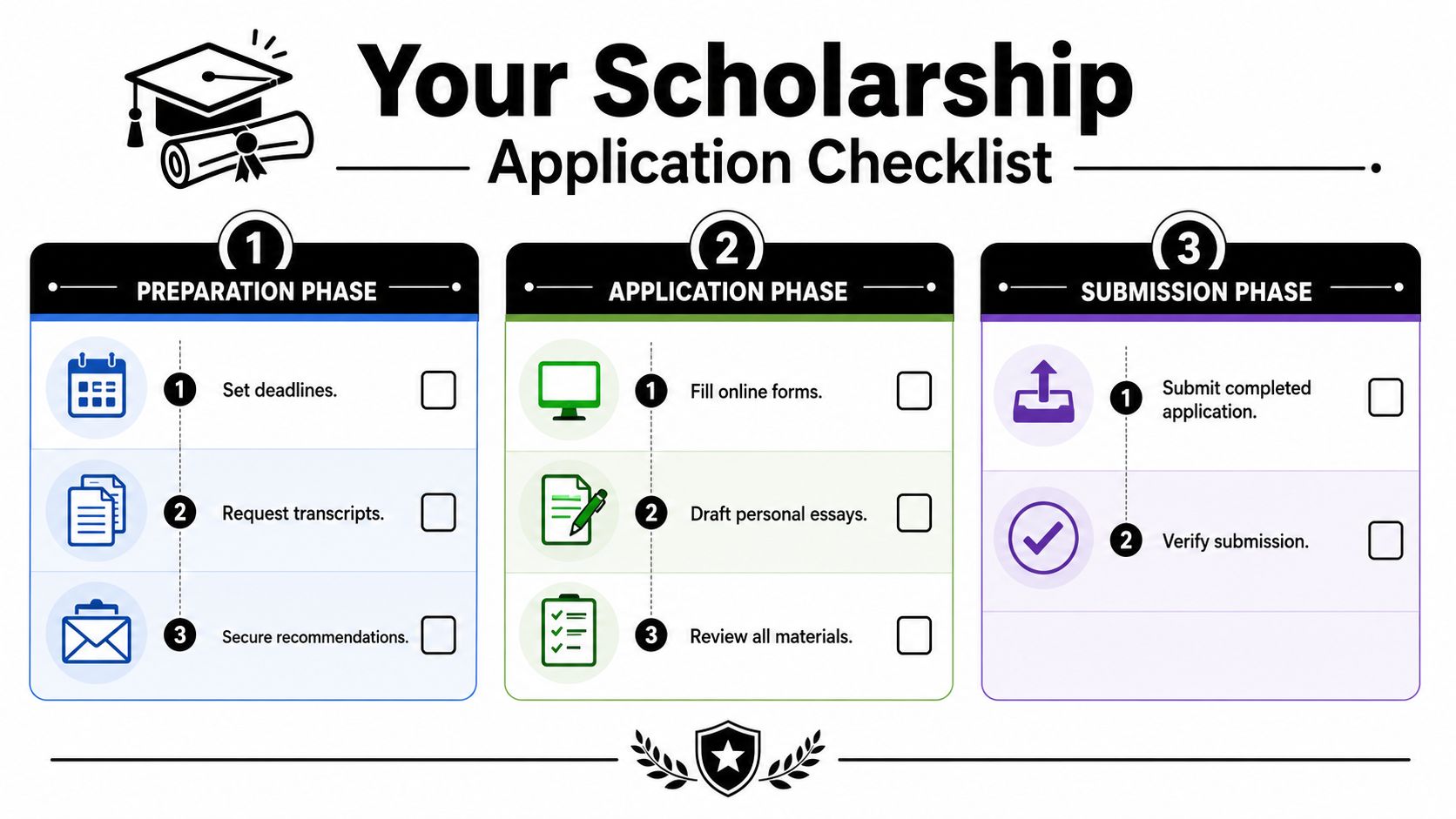
A strong scholarship plan usually breaks down before the essay does. I see that with flight students all the time. They wait too long on transcripts, assume the medical will be simple, or treat deadlines like rough estimates. By the time they are ready to submit, the application is already weaker than it should be.
Good applicants run this like preflight. Nothing fancy. Just orderly, early, and complete.
Preparation phase
Start with the items that can stall for reasons outside your control.
- Build one master calendar: Put every scholarship deadline, transcript request date, recommendation deadline, essay draft date, and follow-up reminder in one place.
- Request documents early: Schools, counselors, and volunteer organizations all work on their own schedule.
- Schedule your FAA medical sooner than feels necessary: If there is any question about medications, history, or paperwork, extra time matters.
- Choose a training plan you can explain clearly: Committees want to see where you plan to train, how often you expect to fly, and how you will stay consistent.
Students near Chino often underestimate the scheduling side of training. Weather is usually workable, but aircraft availability, instructor calendars, school commitments, and drive time still affect progress. A realistic training calendar matters as much as a strong application. If you need a baseline, review how long it can take to earn a private pilot license and then adjust for your actual week, not your ideal one.
Application phase
Organization is evident.
Keep a working folder with your resume, activity list, transcript copies, essay drafts, recommendation contacts, and every scholarship prompt. Then build one clean master document with your flight goals, financial plan, volunteer work, leadership examples, and aviation experience. Use that file to tailor each application instead of rewriting your story from scratch every time.
The trade-off is simple. Reusing material saves time. Over-reusing it makes you sound generic.
I tell students to check three things before they submit any draft. Does this sound specific to me? Does it answer the prompt directly? Does it show I can finish training, not just start it? That third question matters more than many applicants realize, especially if you are applying for local opportunities around Chino while also chasing national awards.
Submission phase
The final review should be slow and boring.
Read the application once for content, once for compliance, and once for errors. Confirm names, dates, attachments, file formats, signatures, and word counts. Make sure each required document opens. Then submit early enough that a portal problem or missing upload does not turn into a deadline miss.
Use a short sequence:
- Finish every written response
- Match each requirement to an attached document
- Submit before the final day
- Confirm receipt if the system allows it
- Save a full copy of what you sent
One more practical point. Keep tracking applications after submission. Note award dates, interview windows, thank-you emails, and backup funding steps. Scholarship students who manage the process well usually handle training well too, and that matters if your long-term plan includes not just earning the certificate, but staying active through renting, club access, or eventually buying an aircraft.
Funding Your Training Beyond Scholarships
A student around Chino wins a scholarship, books the first block of lessons, and feels set. Two months later, the award money is gone, rental rates are still running, and progress slows right when consistency starts to matter.
That pattern is common because a private pilot license scholarship usually covers part of training, not the whole path. The smart move is to build the rest of the plan before the first lesson, not after the scholarship funds hit your account.

Build a funding stack, not a wish
Students who finish efficiently usually combine several sources of money instead of waiting for one perfect award. In practice, that often means:
- Scholarships with a realistic fit for your profile
- Cash savings set aside only for training
- Family help, if that is available
- A training frequency you can afford to maintain
- A backup plan for weather delays, checkride prep, and extra flight time
That last point matters more than many applicants expect. Training rarely follows the original estimate exactly. A few extra lessons for landings, cross-country work, or checkride polish can change the budget fast.
The trade-off students need to understand early
Pay-as-you-go training gives you control. Debt or rushed financing can get you in the airplane faster, but it also adds pressure to keep spending when your schedule, weather, or progress says you should slow down and regroup.
As an instructor, I would rather see a student fly steadily on a realistic budget than sprint through the first phase and disappear for six weeks because the money ran out. Long gaps are expensive. You lose rhythm, you repeat lessons, and the total cost often goes up.
For students comparing lesson pacing, financing options, and local training costs, this guide to financial aid for pilot training helps you build a full budget instead of treating a scholarship as the whole answer.
Use training milestones to control the risk
Break the budget into stages.
Fund enough to start strong, then protect enough cash to keep flying through early solo. After that, reassess before cross-country phase, again before checkride prep, and again if your timeline changes. Students near KCNO who handle funding this way usually make better decisions about lesson frequency, written test timing, and whether to rent, join a club, or save for a different long-term path.
A partial award works well when it fits into a larger plan. On its own, it can create false confidence.
Local and unconventional options count too
National scholarships get the attention, but local aviation communities often matter just as much. Ask nearby airports, EAA chapters, flying clubs, Civil Air Patrol contacts, and community organizations whether they offer small awards, mentorship, split-cost access, or introductions to aircraft partners. Around Chino, those conversations can lead to opportunities that never show up in a national scholarship database.
And there is a bigger question behind all of this. If your goal is not just the private certificate but staying active after it, the funding decision should consider what comes next. For some students, the better long-term answer is not chasing one more scholarship. It is comparing rental costs, club access, and eventual ownership much earlier than they expected.
An Alternative Path Buying Your First Aircraft
For a small number of students, the more strategic answer isn't another scholarship search. It's ownership.
That sounds extreme until you look at the trade-off. Scholarship routes are competitive. The AFJROTC Flight Academy, for example, had more than 1,200 applicants for 194 scholarships in 2025, an award rate of about 16%, according to the AFJROTC Flight Academy release. If you're a serious long-term planner and you expect to continue beyond the private certificate, ownership can become a legitimate alternative to waiting on limited awards.
Scholarship and rental versus ownership
The scholarship-and-rental path has clear advantages. Lower upfront commitment. Less maintenance responsibility. More flexibility if your life changes. It's the right answer for most students.
Ownership changes the math in a different direction. You gain control over scheduling, familiarity with one aircraft, and a platform for continued hour building after the private. But you also take on every responsibility that comes with the machine.
Here's the honest comparison:
| Path | Main Advantage | Main Risk |
|---|---|---|
| Scholarship plus rental | Lower entry barrier and fewer ownership headaches | Funding gaps can interrupt training |
| Buying an aircraft | Control, availability, and long-term utility | Purchase mistakes, maintenance surprises, and ongoing fixed costs |
How to buy an airplane the safe way
If you're even considering this route, don't shop like a first-time car buyer. Aircraft deals punish impatience.
Use a disciplined process:
Define the mission first
Buy for the training mission you will fly. A simple trainer makes more sense for many private pilot candidates than a faster, more complex airplane.Get a real pre-buy inspection
This is not optional. Use a mechanic who knows the aircraft type and does not work for the seller. A pre-buy should uncover airworthiness issues, deferred maintenance, logbook gaps, and expensive surprises.Review complete logs and records
Missing records create risk. You want to know how the aircraft has been maintained, not guess.Confirm title and ownership status
Clear paperwork matters. Liens, registration problems, or fuzzy ownership history can turn a “deal” into a mess.Budget for the first problem, not just the purchase
New owners often focus on acquisition and forget what happens right after delivery. Something always needs attention.Use trustworthy professionals
That can include a mechanic, escrow service, title support, and an instructor familiar with the type.
What about helicopters
The same caution applies, but more strongly. Helicopter ownership can make sense for a narrow group of motivated pilots with a long-range plan and the budget discipline to support it. It isn't a shortcut for someone who's already financially stretched.
A better way to think about ownership is this: not as a cheap path, but as a control path. If you want access, flexibility, and a machine that can support years of flying, it may be worth serious evaluation. If you're only trying to solve the first funding hurdle, scholarships and a steady training budget are usually the safer route.
If you're sorting through scholarships, trying to map out a realistic training budget, or weighing whether renting or ownership makes more sense for your goals, DuBois Aviation is one place to start your research. The school operates at Chino Airport with airplane and helicopter training, aircraft rental, and a range of certificate paths, which makes it a useful option for students who want to compare funding strategy against a real training environment.