

Earning your wings as a private pilot is a journey with four distinct phases: you'll need to pass a medical exam, get through ground school, log enough flight hours with an instructor, and finally, pass your written and practical exams. This structured path is designed to make sure you have the medical green light, the book smarts, and the hands-on skill to be a safe, competent pilot.
Your Realistic Flight Plan to a Pilot License
Before you even think about climbing into a cockpit, it helps to look at the whole journey from 30,000 feet. Understanding the real-world roadmap to earning your Private Pilot License (PPL) is the first and most important step toward making it happen. This isn’t just about daydreaming of the sky; it’s about putting a practical, achievable plan in place.
Two practical options worth comparing
These are specific products pilots commonly compare for this type of flying. Confirm compatibility with your aircraft and instructor before ordering.
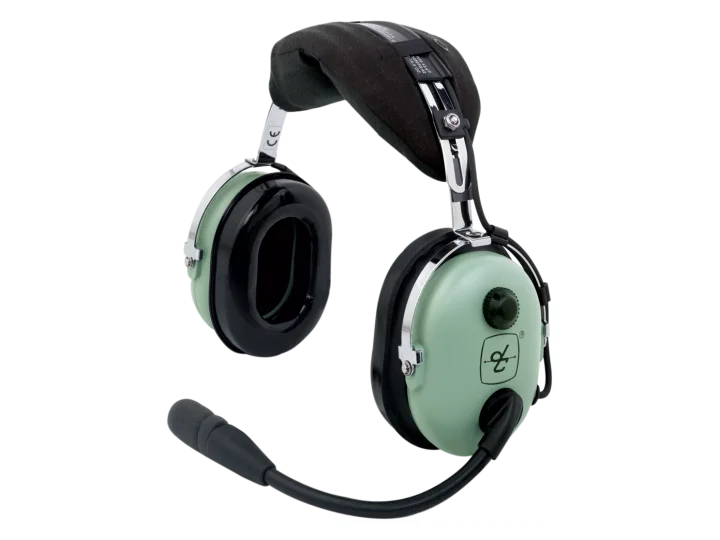 Student headsetDavid Clark H10-13.4 Aviation HeadsetCheck current availability on Amazon (paid link)
 OrganizationASA Flight BagCheck current availability on Amazon (paid link)
The path is marked by several major milestones, and each one comes with its own set of requirements and challenges. You'll actually start on the ground, first by securing a medical certificate and then by mastering aviation theory long before you take the controls. Think of this as your mission briefing—it’s here to get you prepared, both mentally and financially, for what is truly one of the most rewarding things you’ll ever do.
The Core Milestones on Your Journey
Your training follows a logical sequence, moving from one checkpoint to the next. This ensures you build a rock-solid foundation of knowledge before you start tackling the more complex skills in the air. Every step is a building block for the one that follows, all leading up to your final checkride.
This infographic breaks down the standard four-step roadmap that every aspiring pilot takes to earn their wings.
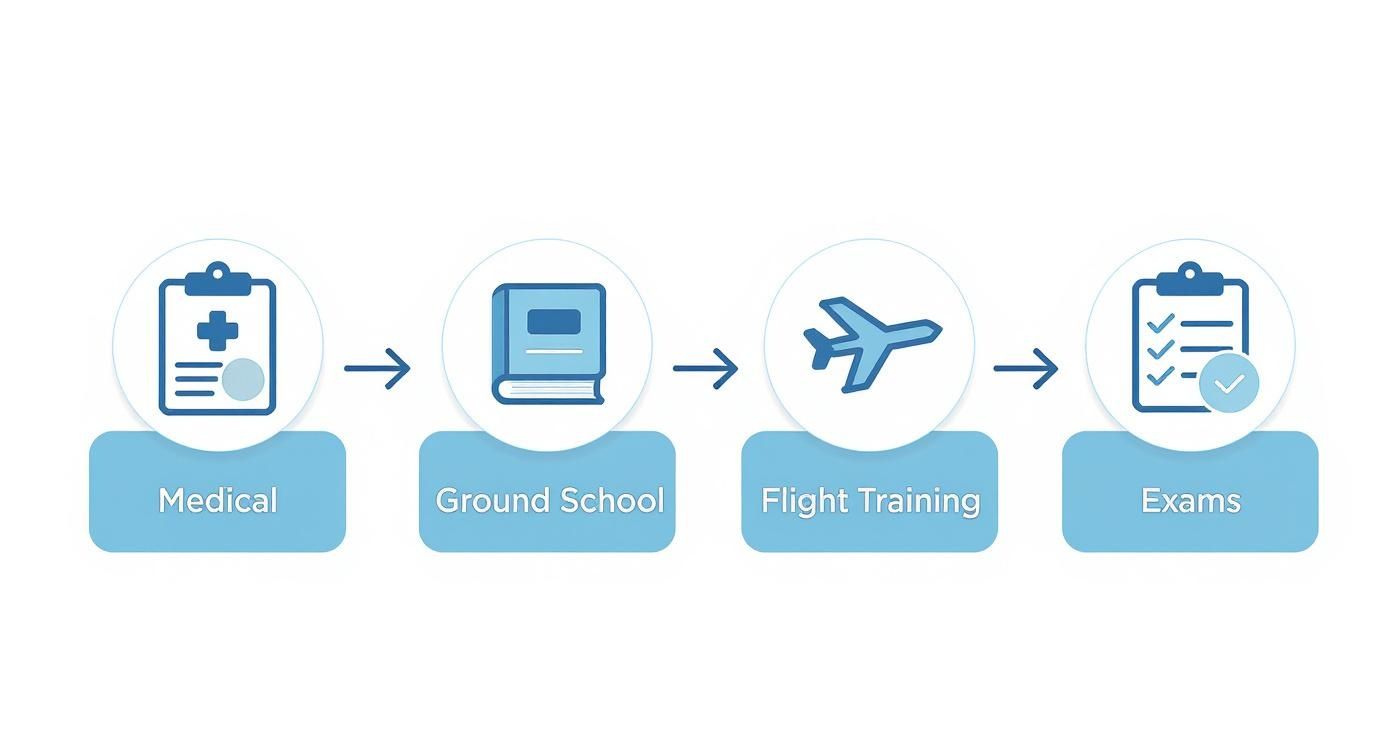
As you can see, it all kicks off with making sure you're medically fit to fly and culminates in a series of exams that prove you’ve got what it takes.
To give you a clearer picture, let's summarize the key components of your flight training journey. This table breaks down what to expect at each stage.
Private Pilot License At a Glance
| Milestone | Requirement | Average Timeframe |
|---|---|---|
| FAA Medical Certificate | Pass an examination with an Aviation Medical Examiner (AME). | 1 Day |
| Ground School | Learn aerodynamics, regulations, weather, navigation, etc. | 4-8 Weeks |
| Flight Training | Minimum 40 hours of flight time, including solo and dual instruction. | 3-9 Months |
| FAA Written Exam | Pass a multiple-choice knowledge test. | 2-3 Hours (single event) |
| Practical Exam (Checkride) | Pass an oral exam and a flight test with a Designated Pilot Examiner (DPE). | 4-6 Hours (single event) |
Each of these milestones represents a significant step forward in your training, bringing you closer to that ultimate goal of becoming a licensed pilot.
Commitment in Time and Money
Let’s be real: getting your license is a significant investment, both in time and money. While FAA regulations state a minimum of 40 flight hours is required, the national average to become truly proficient is closer to 60-70 hours. This time is a mix of flying solo, getting instruction from a Certified Flight Instructor (CFI), navigating cross-country, and flying at night. You can get a much deeper dive into the factors that affect this timeline in our guide on how long it takes to get a private pilot license.
A successful training experience is about more than just logging hours. It's about achieving true proficiency—the ability to make safe, confident decisions as pilot-in-command in any situation.
Thinking about the financial side is just as crucial. Your costs will include aircraft rental, instructor fees, ground school materials, exam fees, and your medical certificate. By creating a realistic budget from day one, you can avoid the kind of financial stress that can derail your training momentum. Many students save up before they start or fly at a pace that works for their budget, which keeps the learning process smooth and continuous. A clear plan helps you start with confidence, knowing exactly what to expect.
FAA Medical and Eligibility: Your First Checkpoint
Before you ever climb into the cockpit, your journey to becoming a pilot starts on the ground. Think of it as your official green light from the Federal Aviation Administration (FAA). These initial steps ensure you meet the basic criteria and are medically fit to fly, setting a solid foundation for your training.
First, let's look at the basic requirements. You need to be at least 17 years old to get your private pilot license, but the fun starts even earlier—you can begin training and even fly solo at 16. You’ll also need to be fluent in English (reading, writing, and speaking), as it's the universal language of aviation.
Getting Your FAA Medical Certificate
One of the very first things on your to-do list is securing an FAA Medical Certificate. This isn't your typical check-up. It's a specific exam performed by an Aviation Medical Examiner (AME) to make sure there are no health issues that could create a problem in the air.
There are a few different types of medical certificates, and the one you need depends entirely on your flying ambitions.
- First-Class Medical: This is the big one, required for Airline Transport Pilots flying for major carriers. It has the strictest standards.
- Second-Class Medical: If you plan to fly for hire—think charter pilots, crop dusters, or banner towers—you'll need a Second-Class.
- Third-Class Medical: For student, recreational, and private pilots who won't be flying for compensation, this is the certificate you'll need.
For anyone aiming for a private pilot license, the Third-Class Medical is your ticket. It's good for 60 calendar months (five years) if you're under 40, and for 24 calendar months (two years) if you're 40 or older. You can see how these certificates map to different flying careers by checking out the various pilot certification levels.
How to Find an AME and What to Expect
Finding an AME is easy. The FAA has an online database you can use to search for an examiner near you. My advice? Schedule this appointment as soon as you decide to start training. It's best to clear any potential medical hurdles right away instead of getting a surprise down the road.
Before your appointment, you’ll fill out the FAA MedXPress application online. This form goes deep into your medical history, and it's critical to be completely honest.
The AME isn’t trying to fail you. Their job is to ensure the safety of our skies. Being upfront about your medical history helps them make an accurate assessment and can even help them work with you to find a solution if a potential issue arises.
For most people, the exam itself is straightforward. The AME will check your vision, hearing, blood pressure, and do a general physical. Just remember to bring your glasses or contacts if you need them, along with any documents related to previous medical conditions.
What If You Have a Medical Concern?
Worried that a past or current health issue might stop you? Conditions like color blindness, well-managed diabetes, or even certain heart conditions aren't necessarily disqualifying. The FAA has a process for this called a Special Issuance.
This pathway allows you to show the FAA that your condition is under control and won't compromise safety. It usually involves a bit more paperwork, like getting reports from your specialist or completing specific tests, but it's a viable option for many. Once you have that medical certificate in hand, you’re cleared for takeoff and ready for the really exciting stuff—ground school and your first flight.
Mastering the Knowledge in Ground School

While everyone gets excited about actually flying the plane, the truth is that every safe flight begins with a solid foundation built on the ground. Ground school is where you stop being just an aviation enthusiast and start thinking like a pilot. It's where you learn the "why" behind every single maneuver and decision you'll make in the cockpit.
This isn't just about passing a test. It's about building the kind of deep-seated knowledge and sound judgment that keeps you, and your passengers, safe up there. Think of it as learning the language of aviation—before you can command an aircraft, you have to be fluent.
What You Will Actually Learn
Ground school dives deep into the core subjects every pilot-in-command needs to know inside and out. This isn't high-level theory; it's practical, essential information that you will use on every single flight.
Here’s a look at what you’ll be mastering:
- Aerodynamics: You'll get into the physics of how a wing generates lift, what drag does to performance, and why the airplane responds the way it does.
- Aircraft Systems: It's time to get intimately familiar with your aircraft. You’ll learn about the engine, the electrical system, the flight instruments—everything that makes it go.
- Federal Aviation Regulations (FARs): These are the rules of the sky. We'll cover everything from airspace and right-of-way rules to the proper way to talk on the radio.
- Weather and Meteorology: This goes way beyond checking the local forecast. You'll learn to read complex aviation weather reports, understand how weather systems develop, and make smart go/no-go decisions.
- Navigation and Flight Planning: Here, you’ll master the art of planning a cross-country flight, from reading aeronautical charts to calculating fuel burn and navigating with both modern GPS and old-school pilotage.
Truly understanding these topics is what separates a great pilot from someone who can just operate the controls. It’s the difference between reacting to a situation and being five steps ahead of it.
Choosing Your Ground School Format
Thankfully, ground school isn't a one-size-fits-all deal. Everyone learns differently, so you can pick the path that works best for your schedule, budget, and personal learning style.
| Training Format | Best For | Key Considerations |
|---|---|---|
| Structured Classroom | Learners who thrive on routine, peer interaction, and direct instructor access. | Fixed schedule can be restrictive; moves at the pace of the group. |
| One-on-One Instruction | Students who want a personalized pace and direct mentorship from their CFI. | Most effective for targeted learning but can be the most expensive option. |
| Online Courses | Self-motivated individuals needing maximum flexibility to study anytime. | Requires discipline; lacks immediate instructor feedback for questions. |
Here at DuBois Aviation, we find a blended approach works best for most people. We often combine dedicated one-on-one ground instruction with great self-study materials. This hybrid model gives you the flexibility you need with the expert, personalized guidance you deserve.
Acing the FAA Written Exam
All of your book-work culminates in the FAA Aeronautical Knowledge Test, which most pilots just call the "written exam." It’s a multiple-choice test designed to prove you’ve really absorbed the core concepts of flying.
The goal isn’t just to memorize answers for the test. The real objective is to internalize the knowledge so you can apply it instantly and accurately in a real cockpit, where it truly matters.
To really nail the exam, you have to go beyond just memorizing facts. Use practice tests to find your weak spots and then go back to the books on those topics. Make flashcards for things like regulations, airspace dimensions, and weather minimums. Most importantly, always ask your instructor "why?" When you understand the logic behind a rule, it sticks with you, especially under pressure.
With the demand for pilots skyrocketing, training methods are getting better and more sophisticated. The global pilot training market, which was valued at around USD 9.37 billion in 2024, is projected to surge to nearly USD 25 billion by 2032. This boom is driving innovation, and flight schools are adopting amazing tools like virtual reality simulators to make complex topics easier to understand. You can see more on how technology is changing flight education in the latest market analysis on pilot training.
Passing your written exam is a huge milestone. It’s a massive confidence booster and a clear sign that you’re well on your way.
Taking Command in the Cockpit
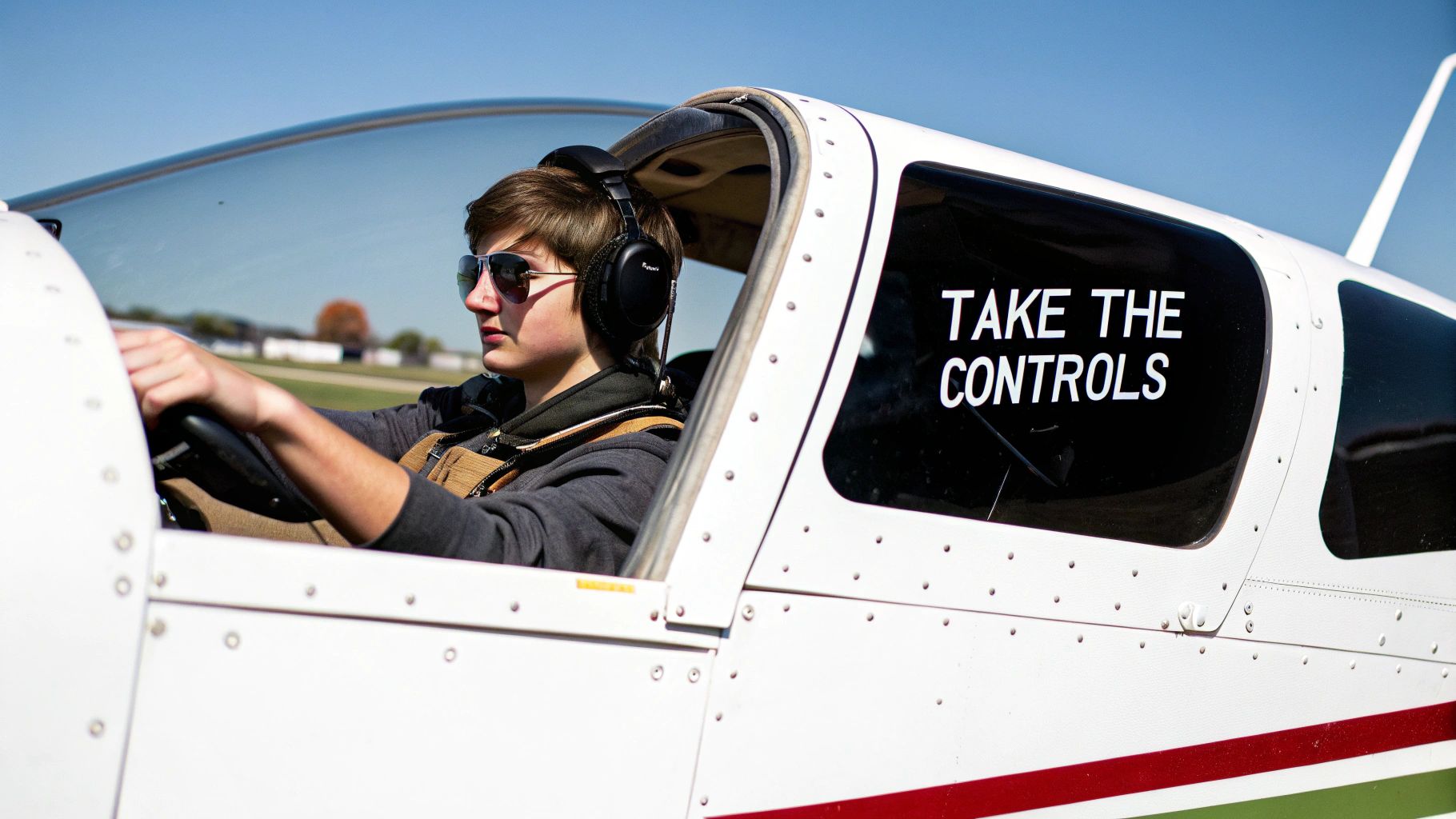
After all the books and studying, this is where the real adventure starts. Flight training is where the rubber meets the runway—or, more accurately, where your wheels leave it for the first time. All those abstract concepts from ground school suddenly click into place as you learn to feel the aircraft, make split-second decisions, and build the quiet confidence of a pilot-in-command.
Your first few hours are all about getting a feel for the airplane. You’ll learn how to keep it flying straight and level, how to make gentle turns, and how every little input you make affects the aircraft. It’s all about building that crucial muscle memory and an instinct for how the plane will respond. This foundation is everything.
From First Flight to First Solo
The journey from your first time at the controls to your first solo flight is a carefully structured process. Your Certified Flight Instructor (CFI) won't just throw you in the deep end; they'll guide you through a proven syllabus designed to build your skills progressively and safely. There’s a lot to master before they'll send you up alone.
You’ll start by drilling the fundamental maneuvers over and over again. These are the building blocks of good flying:
- Takeoffs and Landings: Get ready to do a lot of these. The goal is consistency, stability, and learning to handle tricky crosswinds.
- Stalls and Recovery: This one sounds scary, but it's a critical safety skill. You'll learn how to recognize the signs of an aerodynamic stall and recover smoothly and safely.
- Emergency Procedures: You'll practice simulated engine failures and other problems until your response becomes second nature.
- Ground Reference Maneuvers: Flying S-turns over a road or rectangular patterns over a field isn't just for fun—it teaches you how to precisely control the aircraft's path over the ground by managing the wind.
There's no feeling quite like your first solo. It's that moment when your instructor hops out, gives you a nod, and says, "She's all yours." It's a mix of sheer terror and pure exhilaration that marks a huge leap in your journey as a pilot.
Of course, before that day comes, you have to prove you're ready. You’ll need to show your CFI that you can consistently perform all the pre-solo maneuvers and pass a short written exam they administer.
Getting the Most Out of Every Flight Hour
Let's be honest: flight training is a big investment. Making every hour in the air count is the best way to keep your budget on track. The single most effective thing you can do is show up prepared for every single lesson.
Don't just walk into the airplane cold. Before you even get to the airport, review the maneuvers for the day, read the relevant chapter in your textbook, and come with a few questions for your instructor. A prepared student learns faster, which means they finish sooner and spend less money. It’s that simple.
Part of that preparation is the pre-flight inspection. This isn’t just a checklist item; it’s a non-negotiable safety habit. A thorough walk-around doesn't just confirm the plane is airworthy—it reinforces your knowledge of the aircraft's systems. You can see what a meticulous inspection looks like with our guide to Cessna 172 pre-flight checks.
Pushing Past Plateaus
Every single student pilot hits a learning plateau at some point. It’s inevitable. One week you’ll feel like you’ve finally mastered landings, and the next, you can’t seem to put the plane on the runway without bouncing. It’s frustrating, but it’s completely normal.
The key is to talk to your CFI. They’ve seen it a thousand times and can help you figure out what’s going on, whether it's a tiny flaw in your technique or just a mental block. Sometimes the best fix is to switch gears. If you’re getting stuck on one maneuver, your instructor might decide to work on something totally different for a lesson or two. This breaks the cycle of frustration and lets you come back to the challenge with a fresh mindset.
Passing Your Checkride to Earn Your Wings
After all the ground school, book work, and hours spent in the cockpit, it all comes down to this: the practical exam. In the aviation world, we call it the checkride. This is the final gatekeeper standing between you and your private pilot license.
Think of it as the ultimate final exam, designed to confirm you have the knowledge, skill, and—most importantly—the good judgment to act as a pilot-in-command. It's a comprehensive test, but it’s one you’ll be more than ready for.
Your checkride is administered by a Designated Pilot Examiner (DPE), a highly experienced pilot who has been certified by the FAA to conduct these tests. It’s a two-part affair: first, a detailed oral exam on the ground, followed by the practical flight test in the air. Their job isn’t to stump you, but to verify you’re a safe and competent aviator.
What the DPE Is Really Looking For
Here’s a piece of wisdom from countless checkrides: the DPE is evaluating more than just your ability to fly a perfect maneuver. They're assessing your airmanship and your thought process. They want to see that you understand the "why" behind your actions, not just the "how."
They’re constantly gauging a few core principles throughout the entire day:
- Aeronautical Decision-Making (ADM): When faced with an unexpected situation—like a pop-up weather shower—can you identify the risks, weigh your options, and make a safe call?
- Risk Management: How do you handle potential hazards before they become a real problem? This could be anything from noticing a slightly low tire during pre-flight to planning a route around challenging terrain.
- Situational Awareness: Are you always building a mental picture of what’s going on? Where you are, what the plane is doing, where other traffic is, and what the weather is up to.
Showing the DPE that you think like a pilot is just as critical as nailing your steep turns. It proves you have the right mindset to earn your wings.
The Oral Exam
Your day begins on the ground with the oral exam. Plan for a thorough conversation, typically lasting 1 to 3 hours, where the DPE probes your understanding of everything you learned in ground school. A common starting point is for the DPE to have you plan a cross-country flight, and then they'll use that scenario to ask all sorts of related questions.
You should be ready to talk about aircraft systems, aerodynamics, weather reports, airspace, and FAA regulations. The DPE loves to throw in "what-if" scenarios to see how you think on your feet. For example, "What would you do if you noticed the oil pressure was slowly dropping an hour into this flight?"
The oral exam is an open-book test, but with a catch—you are the book. The DPE wants to see you apply your knowledge, not just recite memorized answers. Confidently explaining your reasoning is key.
The Flight Test
Once the DPE is satisfied with your ground knowledge, it's time to head out to the airplane. This is where you put theory into practice. The flight test isn't a random series of maneuvers; it follows the specific tasks laid out in the FAA's Airman Certification Standards (ACS).
You'll be asked to demonstrate everything you’ve learned, from the moment you start your pre-flight inspection to your final landing. Expect to perform takeoffs and landings (short-field, soft-field), stalls, slow flight, emergency procedures, and navigation.
Remember, the goal isn't absolute perfection. The DPE is looking for your ability to fly the plane safely and within the standards. If you make a small error, don't panic. The best thing you can do is acknowledge it, correct it, and continue flying the airplane. That shows the examiner you have command of the situation, which is exactly what they want to see.
Buying Your First Aircraft the Smart Way
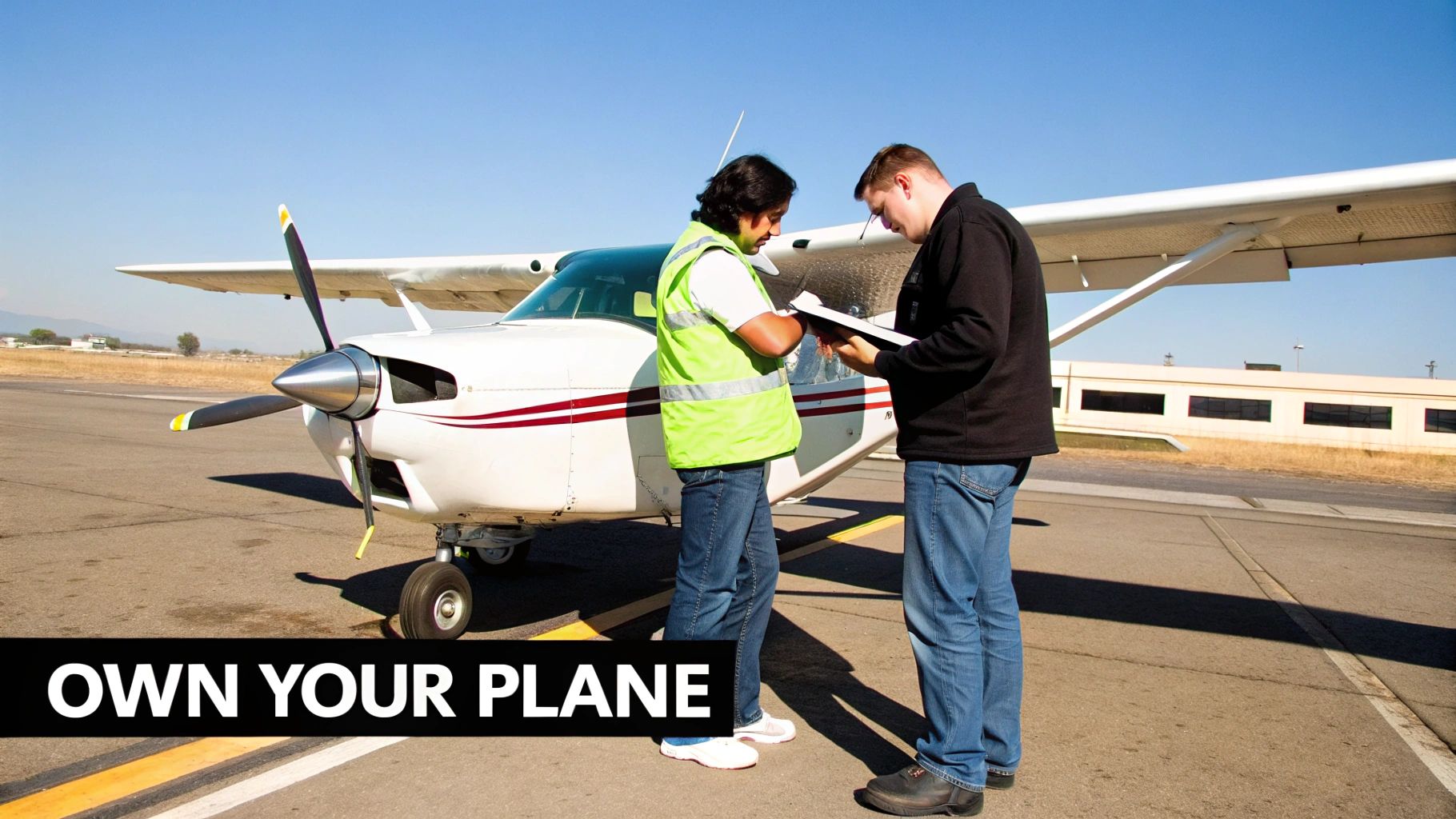
Getting your private pilot license is a feeling like no other, but for many of us, it’s just the first step. The real dream? Owning your own plane. It’s the ultimate freedom—the ability to fly wherever you want, whenever you want.
But let's be realistic. Making that dream a reality without it turning into a financial nightmare takes a smart, disciplined approach.
The journey to ownership doesn't start on aircraft marketplace websites. It starts with an honest conversation with yourself about your mission. What kind of flying are you actually going to do? Are we talking short hops for a weekend breakfast, or do you need a serious cross-country machine for family vacations? Nailing this down first will take you from a sea of overwhelming options to just a handful of planes that genuinely fit your life.
Due Diligence Before You Buy
Once you have a few models in mind, the real work begins. Finding a specific plane for sale is the easy part; making sure it’s a sound investment is the hard part. This is where you absolutely cannot cut corners on research and expert help.
The single most crucial step is the pre-purchase inspection. You need to hire a trusted, independent mechanic—ideally, a specialist in that exact make and model—to give it a top-to-bottom look. They’ll be your eyes, digging into the airframe, engine, and all the systems to find any hidden wear, corrosion, or past damage.
Just as critical is a thorough review of the maintenance logbooks. These books are the aircraft's biography. A clean, meticulously organized set of logs is a fantastic sign. On the other hand, missing entries or a pattern of recurring problems should be a major red flag. This detailed inspection is your best line of defense against discovering expensive surprises after you've already bought the plane.
The goal of a pre-purchase inspection isn't to find a perfect aircraft—because they don't exist. It's to uncover the aircraft's true condition so you can make an informed decision and negotiate a fair price.
Understanding the True Cost of Ownership
The purchase price is just the tip of the iceberg. The total cost of ownership is a much bigger number, and every potential buyer needs to wrap their head around it completely. Owning an aircraft brings a mix of recurring costs, both fixed and variable.
- Fixed Costs: These are the bills you'll pay every month, whether you fly 100 hours or zero. Think hangar or tie-down fees, annual inspections, and insurance premiums.
- Variable Costs: These expenses go up the more you fly. This bucket includes fuel, oil, and, importantly, setting aside money for engine overhauls and other time-sensitive maintenance items.
Underestimating these ongoing expenses is a classic rookie mistake that can quickly turn the joy of ownership into a source of stress.
The path from student pilot to aircraft owner is an exciting one, often seen as a stepping stone in a long-term aviation career. With forecasts showing a need for around 119,000 new pilots in North America alone through 2044, the future looks bright.
This demand has pushed salaries to new highs, with the median annual wage for airline pilots reaching $226,600 in 2024. You can dig into more of the numbers on the strong pilot hiring outlook. For many pilots, this career stability is what makes the long-term goal of aircraft ownership a real possibility.
Still Have Questions About Becoming a Pilot?
It's completely normal to have a few more questions buzzing around even after mapping out the entire process. Let's tackle some of the most common ones I hear from aspiring pilots, so you can feel confident taking that first step.
A big one is always, "What can I actually do with my license?" Once you have your PPL, you can fly any single-engine airplane (as long as you have the right endorsements), bring friends and family along, and fly for your own personal reasons, whether it's day or night. Think of it as your key to incredible weekend trips, breathtaking scenic flights, or simply experiencing the pure joy of being in the sky.
So, Can I Just Go Out and Buy My Own Plane?
Yes, you absolutely can. A lot of new pilots dream of owning their own aircraft, and many do—either on their own or by splitting the cost with a partner. It’s the ultimate freedom, but you need to be smart about it to avoid some serious financial headaches.
If you're looking to buy an airplane the safe way, it all comes down to doing your homework. Seriously, don't skip these steps:
- Know Your Mission: First, get honest about what kind of flying you'll really be doing. Are you planning short hops for breakfast or long cross-country trips? Your answer will help you zero in on the right type of aircraft.
- Get a Pre-Purchase Inspection: This is non-negotiable. Hire a mechanic you trust—one who isn't affiliated with the seller—to go over the aircraft with a fine-tooth comb.
- Dig Into the Logbooks: You need to become a bit of a detective here. Scrutinize every entry in the maintenance logs. You're looking for a complete history and any red flags, like undocumented damage or nagging, recurrent mechanical issues.
The same principles apply if you're thinking about buying a helicopter, which comes with its own set of complex systems and maintenance needs.
I can't stress this enough: The single most important part of buying an aircraft is verifying its true condition before any money changes hands. That pre-purchase inspection is your best and only defense against a "great deal" that turns into a money pit.
Don't forget to factor in the true cost of ownership. It's not just the purchase price; you've got insurance, hangar or tie-down fees, fuel, and all the scheduled maintenance. Budgeting for these from the start is what makes owning an airplane a joy instead of a constant financial strain. A smart, informed strategy is crucial, whether you're interested in buying or selling airplanes.
Ready to trade that dream for a pilot's seat? The journey starts with a single step, and at DuBois Aviation, our team is here to guide you through every single milestone, from that unforgettable first flight to the day you pass your checkride.