

An instrument rating course is a specialized training program that teaches you how to fly an aircraft entirely by referencing your cockpit instruments, without needing to look outside. Think of it as the critical next step after earning your Private Pilot License. This rating empowers you to fly safely through clouds, fog, and other low-visibility conditions under what are known as Instrument Flight Rules (IFR). For almost any professional pilot career, this certification isn't just an option—it's a must-have.
Why the Instrument Rating Is Your Most Important Upgrade
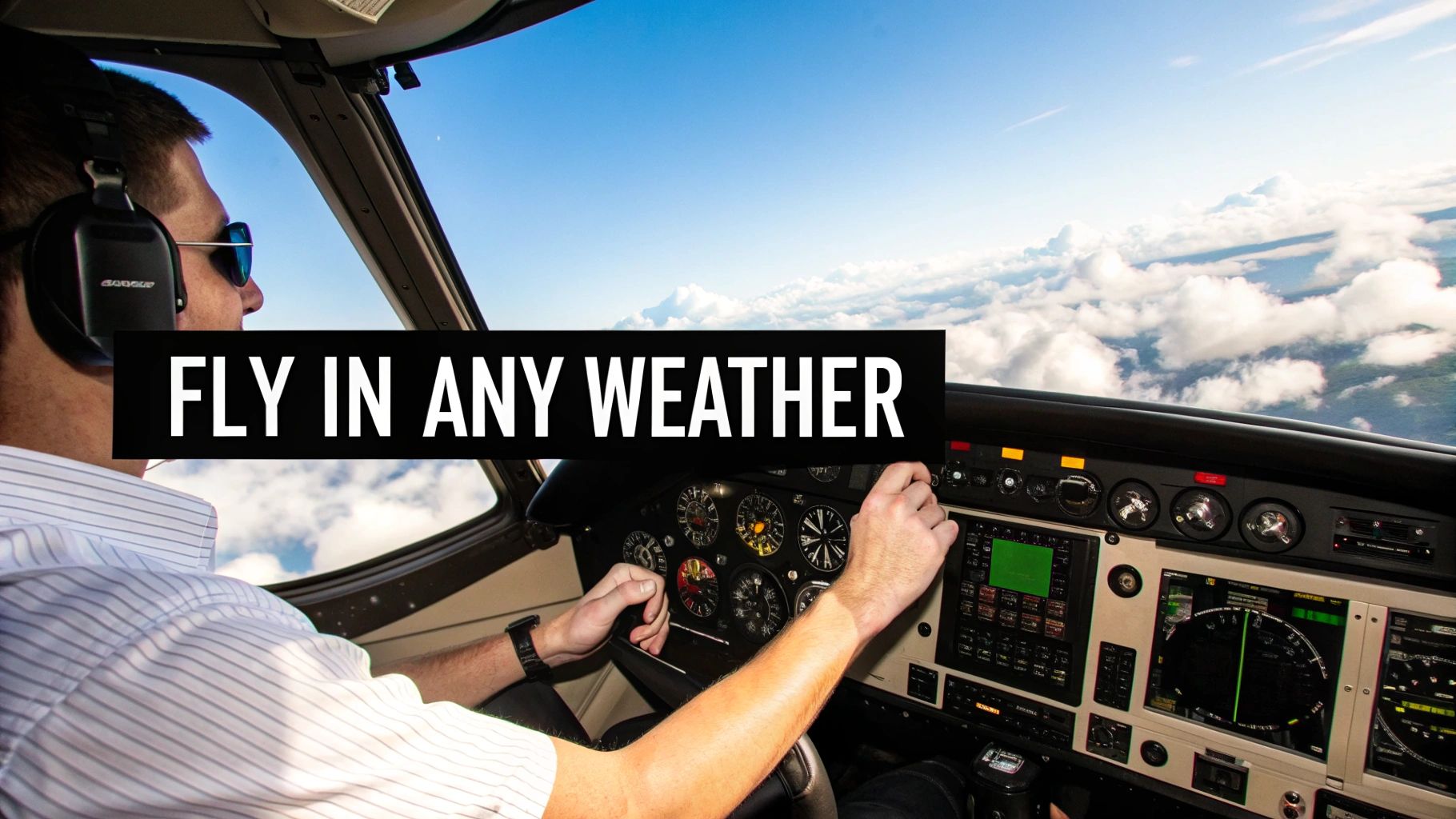
Getting your private pilot license is a massive accomplishment, but it has one major catch: you're limited to flying under Visual Flight Rules (VFR). In simple terms, if you can't see the ground or the horizon, you can't legally—or safely—fly. A surprise cloud layer or a patch of morning fog can ground you completely, forcing a last-minute cancellation or, far worse, leading to a dangerous situation if you're already airborne.
Two practical options worth comparing
These are specific products pilots commonly compare for this type of flying. Confirm compatibility with your aircraft and instructor before ordering.
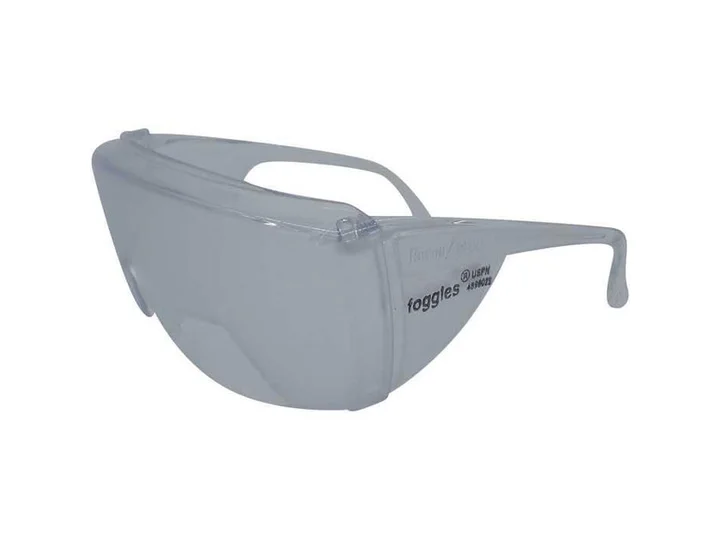 Instrument trainingFoggles Aviation IFR Training GlassesCheck current availability on Amazon (paid link)
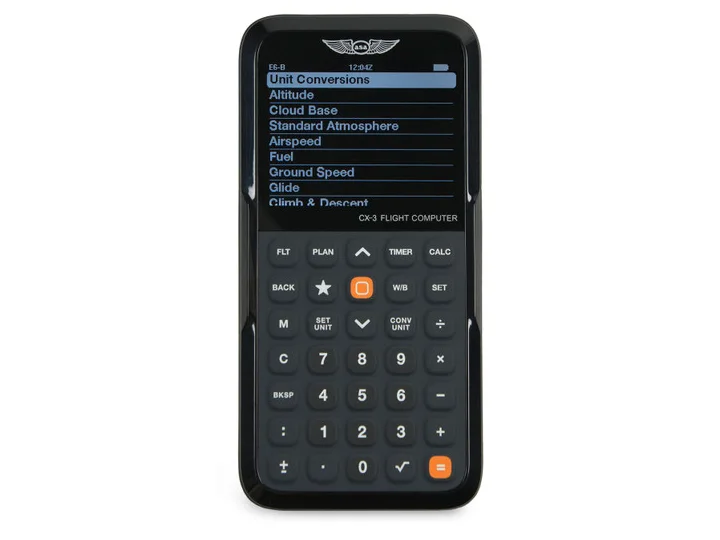 Flight planningASA CX-3 Flight ComputerCheck current availability on Amazon (paid link)
The instrument rating course is the answer to that problem. It’s like upgrading your skillset from a fair-weather driver to an all-weather professional navigator. This training fundamentally transforms you from someone who just flies for fun into a proficient aviator who can handle complex atmospheric conditions with precision and confidence.
From Visual Pilot to All-Weather Aviator
The training completely shifts your focus from looking out the window to interpreting the data on your instrument panel. You learn to put your absolute trust in your gauges, mastering the skill of flying the plane without a single outside visual reference.
But the skills you build aren't just for flying in the clouds. They make you a more disciplined, organized, and precise pilot in every phase of flight. An instrument rating course sharpens your abilities in several key areas:
- Precision Aircraft Control: You’ll learn to hold your heading, altitude, and airspeed with incredible accuracy, relying only on your instruments.
- Systematic Instrument Scanning: Your training instills a methodical "scan" so you're constantly monitoring every critical flight instrument to build a clear mental picture of what the aircraft is doing.
- Complex Navigation: You will master the intricate system of airways using VORs, GPS, and other navigational tools, almost like a ship's captain navigating the high seas.
- Executing Instrument Approaches: You’ll learn to fly highly structured procedures that safely guide your aircraft from cruising altitude all the way down to the runway, even when you can't see it until the last few hundred feet.
An instrument rating is often called the most valuable rating a pilot can earn. It doesn't just teach you to fly in clouds; it teaches you to be a safer, more methodical pilot in all conditions, dramatically reducing the risk of spatial disorientation.
Beyond the Clouds: A Foundation for Your Career
While the immediate payoff is flying more often and more reliably, the long-term value of this rating is even bigger. It's a non-negotiable stepping stone for any pilot with dreams of an airline or corporate aviation career.
It’s more than just a box to check. It builds the foundational skills—procedural flying, clear communication with air traffic control, and systematic decision-making—that are absolutely essential at the professional level. Ultimately, completing an instrument rating course is the single most important investment you can make in your safety and your future in the sky.
Meeting the Prerequisites for Your Instrument Rating
Before you can dive into the demanding world of flying by instruments, you need to have the right foundation. The FAA has set some clear benchmarks to make sure every aspiring IFR pilot has the core skills and experience needed to handle the course.
Think of it this way: you wouldn't start building the second floor of a house before the foundation is poured and cured. These prerequisites are that foundation. They’re not just boxes to check; they prove you've got the airmanship, navigation know-how, and medical fitness to take on the unique challenges of instrument flying.
Let's break down exactly what you'll need to have in your logbook and wallet before you get started.
To make it simple, here's a quick checklist of what the FAA requires before you can earn your instrument rating.
Instrument Rating Eligibility Checklist
| Requirement | Description | Key Details |
|---|---|---|
| Pilot Certificate | You must hold at least a current Private Pilot Certificate. | This is the starting point. It confirms you've mastered VFR flight. |
| Language Proficiency | You need to be able to read, speak, write, and understand English. | Essential for clear communication with Air Traffic Control (ATC). |
| Medical Certificate | You must hold at least a valid third-class medical certificate. | Ensures you meet the health standards for safely operating an aircraft. |
| PIC Cross-Country | 50 hours of cross-country flight time as pilot-in-command (PIC). | Each flight must land at an airport at least 50 nautical miles away. |
| Instrument Time | 40 hours of actual or simulated instrument time. | This includes time with a CFII and specific instrument approach training. |
Meeting these requirements shows you're not just eligible on paper but truly ready for the next level of your aviation journey.
Your Pilot Certificate and Medical Standards
The absolute first step is holding a current Private Pilot Certificate. This is your non-negotiable ticket to entry. It shows you’ve already mastered the fundamentals of flying an aircraft in visual conditions. If you're starting from scratch, learning how to become a private pilot license holder is where your journey begins.
Along with your pilot certificate, you must be proficient in English. It's the universal language of aviation, and crystal-clear communication with Air Traffic Control is absolutely critical when you're flying in the clouds.
Finally, a current FAA medical certificate is a must. For an instrument rating, you’ll need at least a third-class medical. This confirms you’re healthy enough to handle the mental and physical workload that comes with IFR flight.
Logging the Required Flight Hours
Beyond the paperwork, the FAA wants to see that you have real-world experience in the cockpit. The required flight hours are designed to build your judgment and navigation skills before you shift your focus inside to the instrument panel.
Here's the breakdown of the flight time you'll need before you can take your checkride:
- 50 hours of cross-country flight time as pilot in command (PIC). Remember, a qualifying flight involves landing at an airport more than 50 nautical miles from where you started.
- 40 hours of actual or simulated instrument time. This is the heart of your training and will include dual instruction with a Certified Flight Instructor-Instrument (CFII) and flying a variety of instrument approaches.
The 50 hours of PIC cross-country time is often the biggest hurdle for pilots. It’s easy to fall into the trap of just flying back and forth to meet the requirement. Don't do that.
Be strategic. Use those hours to explore new airports, navigate different types of airspace, and maybe even fly an approach with a safety pilot. This approach turns a requirement into a powerful learning experience, making you a much stronger candidate when you officially start your instrument rating course.
What You'll Actually Learn in an Instrument Rating Course
Earning your instrument rating is less about learning to fly all over again and more about learning to think differently. You're shifting your entire mindset from looking out the window to interpreting the data on your panel. The training is built to rewire your instincts, teaching you to trust your instruments when your inner ear is telling you something else entirely.
The whole syllabus is split into two logical parts: ground school and flight training. You'll build the theoretical framework first, then head to the cockpit to put it all into practice. This approach is deliberate—it makes sure you know the "why" behind every procedure before you have to execute the "how" in a high-workload environment.
Ground School: Building Your IFR Brain
Think of ground school as the foundation for everything that comes next. This is where you'll get into the nitty-gritty of the rules, procedures, and systems that govern flight in the clouds. It's like learning the grammar and vocabulary of a new language before trying to hold a conversation with Air Traffic Control.
Your ground instruction will hammer home a few key areas:
- IFR Rules and the Airspace System: You'll discover that the rules for flying IFR are a world apart from VFR. This means getting comfortable with IFR clearances, understanding preferred routes, and seeing how the national airspace system is designed to keep everyone safely separated when nobody can see each other.
- Deep-Dive Weather Theory: This isn't your private pilot weather briefing. We're talking about mastering complex weather charts, truly understanding icing, and learning how to read between the lines of a forecast to make a smart go/no-go call.
- Instrument Procedures: Soon enough, you'll be an expert at reading IFR en-route charts, departure procedures (DPs), and standard terminal arrival routes (STARs). These are the official "highways in the sky" that will guide you safely across the country.
The real goal of ground school is to build a solid mental picture of the IFR system. When you’re bouncing around in the soup, you won't have time to look up a regulation. That knowledge needs to be second nature.
Flight Training: Putting Theory into Practice
Once you've got the theory down, it's time to translate that head knowledge into stick-and-rudder skills. The flight portion of your instrument rating course is all about progressive learning. You’ll start with the absolute basics and slowly layer on more complex tasks.
It all begins with learning to control the airplane without looking outside. Your instructor will have you put on a "view-limiting device" (a fancy term for foggles (paid link) or a hood) that simulates being in a cloud. Your first big win? Just holding the airplane straight and level. From there, you'll move on to basic turns, climbs, and descents, all done purely by reference to your instruments.
This initial phase is critical. It trains your brain to ignore the confusing signals your body sends during flight—a crucial defense against spatial disorientation—and to place your full trust in the gauges.
From Basic Flying to Complex Approaches
After you’ve nailed basic aircraft control on instruments, the syllabus gets into the real meat of IFR flying. This is where you learn to navigate the system with confidence.
You'll master skills like:
- Instrument Navigation: This means learning to navigate using everything from old-school VORs to modern, super-accurate WAAS GPS units. You’ll get good at intercepting and tracking specific courses with razor-sharp precision.
- Holding Patterns: You'll learn to fly perfect holding patterns—the standardized racetrack in the sky that ATC uses to "pause" traffic or manage flow.
- Instrument Approaches: This is the pinnacle of your training. You'll become proficient at flying various instrument approaches, including precision types like the ILS and LPV, and non-precision approaches like VOR and RNAV, guiding the plane safely down to the runway when you can't see a thing.
The industry has taken notice of how detailed this training needs to be. Some aircraft manufacturers even have their own dedicated programs. For example, the Cirrus Instrument Rating Program blends online ground school with hands-on flight training. With over 25,000 users having completed more than 33,000 courses, it shows a growing trend toward highly structured training paths. You can read more about this approach in Flying Magazine.
Each lesson intentionally builds on the one before it. A typical flight might involve taking off on a published departure, navigating a few waypoints, entering a hold, and then shooting two or three different types of approaches at a couple of airports before heading home. This method ensures that by the time you finish your instrument rating course, you’re not just competent—you’re genuinely confident.
Calculating the Cost and Time Commitment
Let's get right to it. The two biggest questions on every aspiring IFR pilot's mind are always "How much will this cost?" and "How long will this take?" Planning your budget and calendar is the absolute first step toward earning your instrument rating, so let's break it down honestly.
There’s no single price tag for an instrument rating course. The final number is a mix of several moving parts, from the hourly rate for the plane to your instructor's time and the final exam fees. Getting a handle on these variables is the key to building a realistic budget and avoiding any nasty surprises along the way.
This infographic gives you a great visual of the core skills you'll be paying to master.
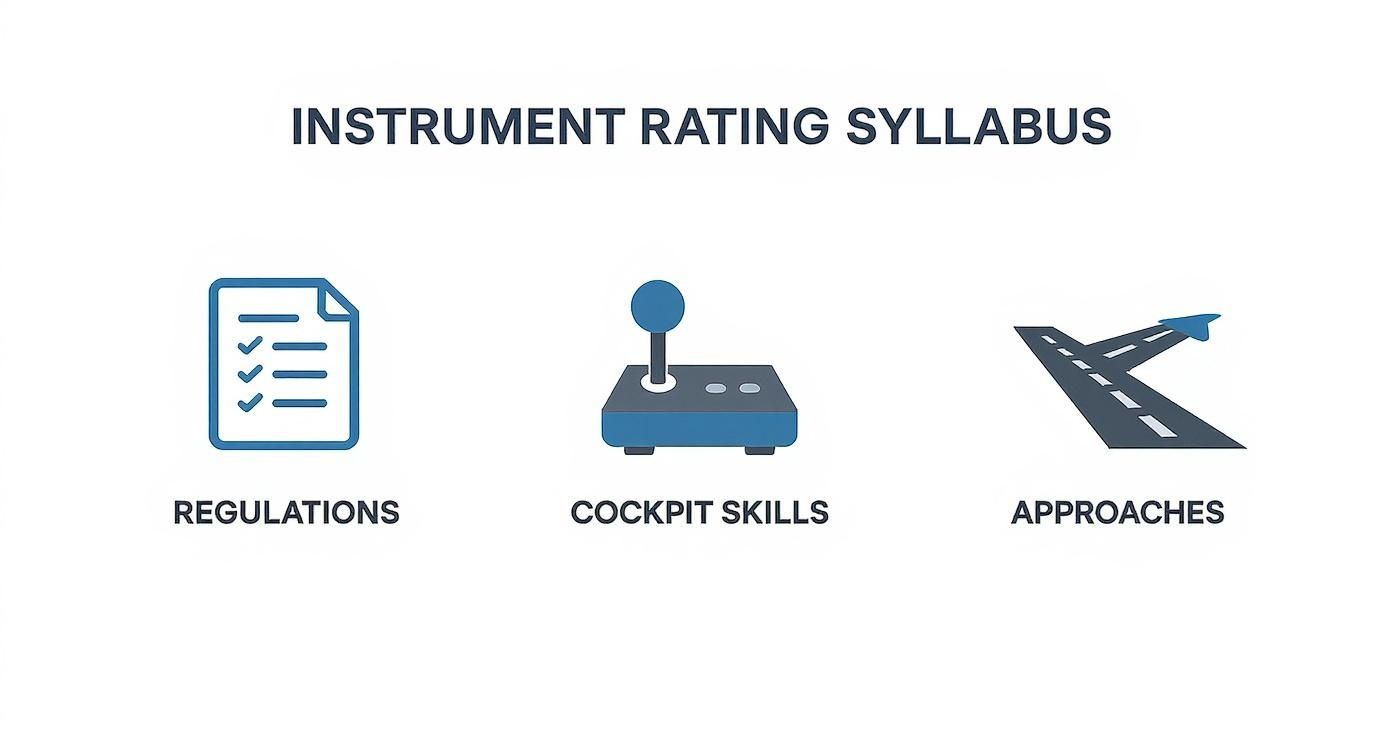
As you can see, your training is a careful balance of learning the rules, developing real hands-on cockpit skills, and perfecting the art of flying precise instrument approaches.
A Transparent Breakdown of Course Costs
To put together a solid budget, you need to know exactly what you’re paying for. While every flight school sets its own rates, the cost categories are pretty much universal.
Here are the main expenses you'll need to plan for during your training:
- Flight Instructor Fees: You're paying for a professional's one-on-one time and expertise. A Certified Flight Instructor-Instrument (CFII) will have a specific hourly rate based on their experience and your location.
- Aircraft Rental: This is almost always the biggest chunk of the budget. The cost per hour depends heavily on the type of aircraft, its age, and the avionics it has on board.
- Simulator Time: This is your secret weapon for saving money. Using an approved flight simulator for a portion of your training is a fantastic way to practice procedures at a much lower hourly rate than the actual airplane.
- Ground School Materials: Think textbooks, online courses, and the chart subscriptions you'll need to pass the written and oral exams.
- Exam Fees: These are separate costs. You'll pay a fee for the FAA written knowledge test and another for the Designated Pilot Examiner (DPE) who conducts your final practical test, also known as the checkride.
Brace yourself for a significant investment. Based on data from various flight training providers, the average instrument rating course takes about two months and costs around $17,000. This estimate typically covers your ground school, all the required flight training, and the final tests needed to earn the rating.
Choosing Your Training Timeline
Just like the cost, the time it takes to finish your instrument rating course isn't set in stone. The right path for you really depends on your schedule, how you learn best, and your budget.
You'll generally find two main approaches to scheduling your training, and each has its own pros and cons.
1. The Accelerated, Full-Time Program
Think of this as an immersive boot camp. You’ll be dedicating yourself to flying and studying almost every single day.
- Pros: You can knock out the rating in just a few weeks or months. The constant practice helps you build momentum fast and retain information much more effectively.
- Cons: This requires a big financial commitment upfront and the ability to completely step away from work or other life responsibilities for a while.
2. The Flexible, Part-Time Approach
This path lets you fit lessons in around your job and family commitments, usually flying once or twice a week.
- Pros: It’s much easier to manage financially because you pay as you go. It’s designed to fit into a busy lifestyle without putting everything else on hold.
- Cons: The training will take a lot longer—often six months to a year. You also run a higher risk of getting a little rusty between lessons, which can sometimes mean you need more total hours to get sharp again.
Ultimately, your timeline is a personal choice that ties into your bigger aviation goals. If you're wondering how many years to become a pilot with an airline career in mind, an accelerated program is probably the smarter move. But if flying is a passion you're pursuing alongside another career, the part-time route offers a much more sustainable pace. By thinking through these financial and scheduling factors now, you can build a clear roadmap for success.
Thinking About Buying an IFR-Equipped Aircraft?
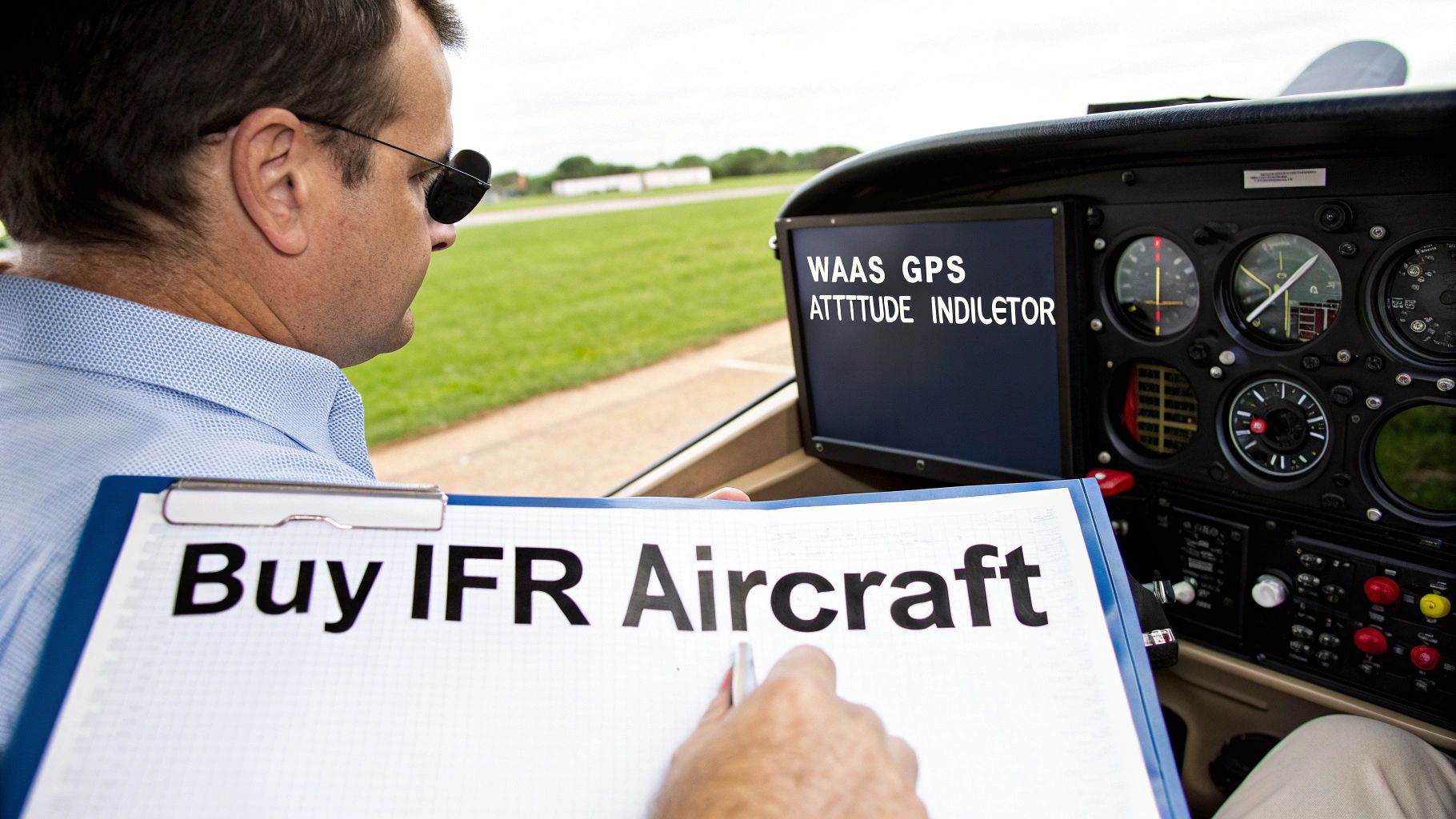
Earning your instrument rating is a huge milestone. For many pilots, it immediately sparks the dream of owning their own plane or helicopter. The thought of moving from renting to owning is exciting, but it’s a big leap, especially when your goal is flying in the soup. You aren't just buying an aircraft; you're investing in a complex machine that has to be legally and practically ready for flight in the clouds.
The single biggest mistake I see new instrument-rated pilots make is thinking any plane with a few extra gauges is good to go for IFR. That’s just not the case. A true IFR platform is defined by its avionics—that’s what separates a fair-weather VFR machine from an aircraft that can safely take you through a weather system.
How to Buy an Airplane or Helicopter the Safe Way
So, you’ve found an aircraft with the right gear. Now what? The purchase process itself is where your diligence really pays off. Taking your time and getting professional guidance here will protect your investment and save you from major headaches. Rushing it is a recipe for financial and legal trouble.
A safe aircraft purchase isn't complicated, but it does follow a clear, methodical path. Here are the steps you should never, ever skip:
- Conduct a Title Search: Before a single dollar changes hands, verify the seller has a clean title. A professional title search uncovers any hidden liens or claims against the aircraft, ensuring you don’t accidentally inherit someone else’s problems.
- Use an Escrow Service: An aviation escrow service is your best friend in this transaction. They act as a neutral third party, holding your funds securely until every single condition of the sale is met. This protects both you and the seller, guaranteeing the title is transferred correctly only after your money is confirmed.
- Get a Thorough Pre-Purchase Inspection: This is non-negotiable. For an IFR aircraft, it has to go deeper than a standard annual. You need to find a mechanic who truly specializes in avionics to confirm every instrument, antenna, and wire is working perfectly and meets all legal IFR certification standards.
- Work with an Aircraft Broker: While you don't have to use a broker, an experienced one can be worth their weight in gold. They know the market inside and out, can help you negotiate a fair price, and will guide you through the mountain of paperwork. Their expertise can easily save you from a costly mistake.
Buying your own IFR-equipped aircraft is the ultimate payoff for all the hard work you put into your instrument rating course. By focusing on the right avionics and following a safe buying process, you can confidently make that transition from student pilot to aircraft owner, ready to explore the skies on your own terms.
Why Instrument Proficiency Is a Lifelong Commitment
Passing your instrument rating checkride is a massive accomplishment. It’s a moment that truly transforms what you’re capable of as a pilot. But a common trap is thinking of that certificate as a finish line. In reality, it’s the starting block for a lifelong journey of maintaining a skill that can fade surprisingly fast.
Earning the rating proves you have the knowledge and ability to fly safely in the clouds. But like any advanced craft, whether it's performing surgery or playing a musical instrument, your skills will atrophy without consistent practice. The stakes in aviation are just too high to let that happen.
Current Versus Proficient: A Critical Distinction
The FAA has specific rules to keep your instrument rating legally current. This means logging a certain number of instrument approaches, holds, and course intercepts within a specific timeframe. Ticking these boxes keeps you legal, but it doesn't automatically make you safe or sharp.
True proficiency, on the other hand, is something you feel in your gut. It's the quiet confidence to handle a complex approach in bumpy, low-visibility weather with a calm, methodical flow. It's muscle memory.
A pilot who is merely current might find themselves scrambling to keep up with an unexpected hold or a system malfunction in IMC. A proficient pilot has practiced these scenarios so often their response is nearly automatic, keeping them well ahead of the airplane.
This isn't just an academic argument—it has life-or-death consequences. When a pilot who hasn't flown in actual instrument conditions for months suddenly finds themselves in the soup, the risk of a critical error skyrockets.
The Dangers of VFR into IMC
One of the most lethal scenarios in aviation is when a VFR pilot accidentally flies into Instrument Meteorological Conditions (IMC)—in plain English, they fly into a cloud. The data is sobering: in recent years, all documented accidents where VFR pilots flew into IMC were fatal. What's even more troubling is that one-third of these accidents involved pilots who already held an instrument rating but lacked recent, real-world practice. You can learn more about this on AOPA's safety tips article.
This points to a dangerous gap in how we train. Many pilots complete their entire instrument rating course using a view-limiting device ("under the hood") in perfectly clear weather, getting very little time in actual clouds. Without regular practice, those hard-won skills erode, leaving them unprepared when they need them the most.
Actionable Strategies for Staying Sharp
Maintaining your instrument proficiency doesn’t have to feel like a chore. By weaving regular practice into your flying routine, you can keep your skills razor-sharp and your confidence high. True competency is an ongoing process, not a one-time achievement.
Here are a few practical ways to maintain your edge:
- Embrace Flight Simulators: Modern sims are incredibly realistic and easy on the wallet. You can practice engine failures on takeoff in IMC, fly complex approaches to minimums, and tackle dicey scenarios that would be far too risky in a real aircraft.
- Fly with a Safety Pilot: Grab a fellow pilot and go practice under the hood. It’s a fantastic way to log simulated instrument time, polish your scan, and shoot approaches, all while splitting the cost. Plus, it builds community.
- Schedule Periodic CFII Check-ins: Make a plan to fly with a Certified Flight Instructor-Instrument (CFII) every few months. This isn't a checkride; it's a tune-up. It's a chance to get professional feedback, catch any bad habits, and polish your procedures. Think of it as being just as important as your biennial flight review requirements for your overall safety.
- Seek Out Actual IMC: Once you're comfortable, and with the right conditions and guidance, don't shy away from flying in real instrument weather. There is simply no substitute for the experience of managing the aircraft, the radios, and the navigation while you’re actually in the clouds.
Adopting this mindset of continuous improvement is what separates a truly safe, competent IFR pilot from someone who just happens to hold the rating. Your instrument ticket is a license to learn, and that learning never really stops.
Ready to build and maintain the skills that will make you a truly proficient pilot? At DuBois Aviation, we offer everything from initial instrument training to proficiency flights to keep you sharp. Start your journey with us by exploring our programs at https://duboisaviation.com.


