
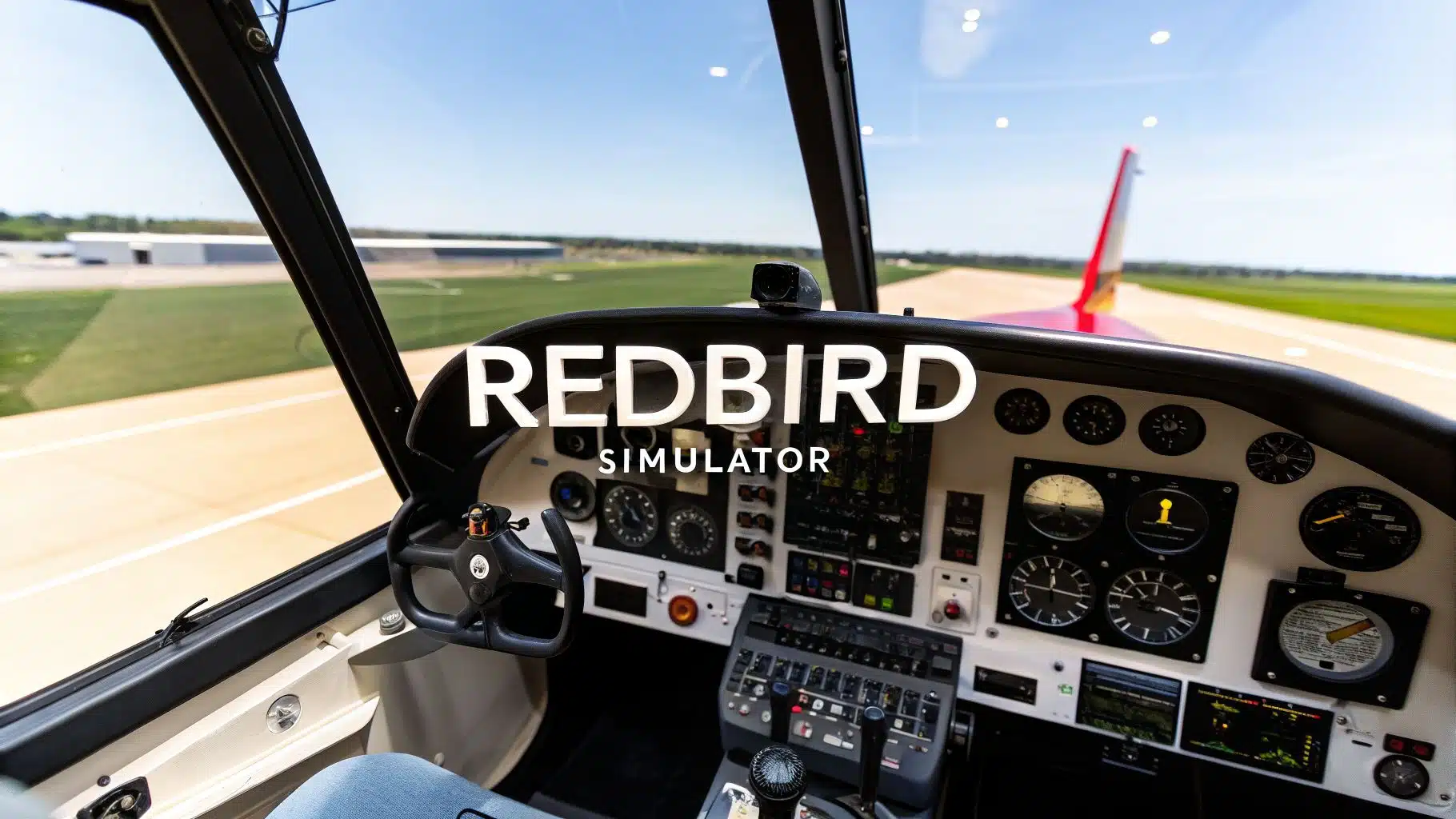
Imagine being able to master complex emergency procedures before your plane’s wheels ever leave the runway. That’s the power of a Redbird flight simulator. This isn't a video game; it's a highly realistic, FAA-approved training device that acts as a personal 'flight gym' for pilots. Top-tier flight schools use these tools to build pilot proficiency faster and more affordably, making them a cornerstone of modern flight training.
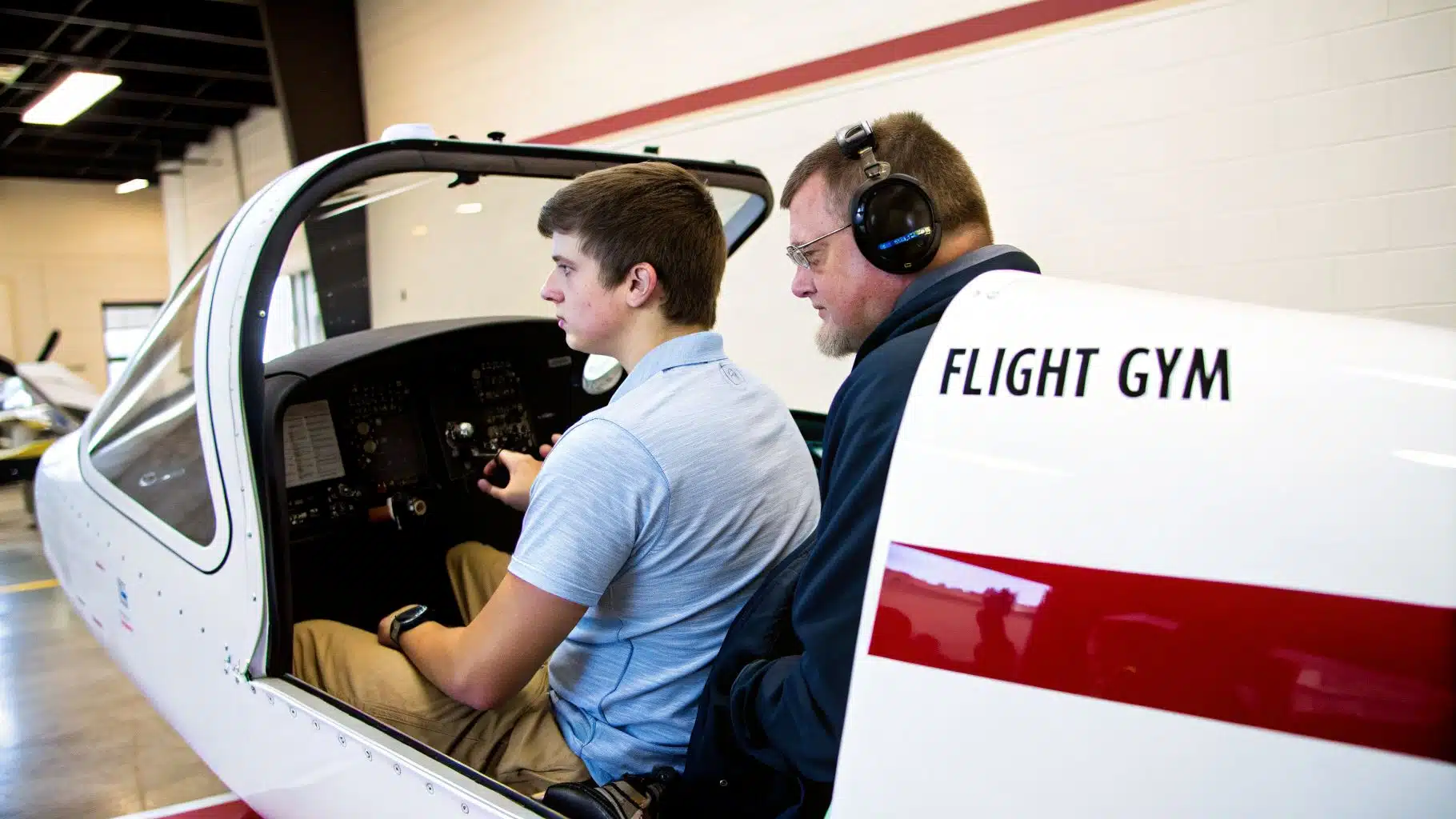
Why Modern Pilots Train with a Redbird Flight Simulator
Not too long ago, every single bit of flight training happened in an actual aircraft. Every lesson—from basic maneuvers to instrument approaches—meant burning expensive fuel, navigating unpredictable weather, and managing real-world risks. Today, pilot education looks fundamentally different, thanks in large part to advanced simulators.
A Redbird provides a safe, repeatable, and completely controlled environment where pilots can build foundational skills and critical muscle memory. Think of it as the ultimate practice field. Before ever taking to the skies, a student can get truly comfortable with an aircraft’s controls, instruments, and checklists. This makes those first few real flights far more productive and way less overwhelming.
The Power of Practice Without Pressure
One of the biggest wins for simulator training is the ability to practice without the high-stakes pressure of being airborne. An instructor can literally hit "pause" in the middle of a maneuver to explain a concept or correct a mistake. You just can't do that at 3,000 feet. This "pause and discuss" capability speeds up the learning curve dramatically.
On top of that, simulators allow for endless repetition of tasks that are crucial for safety and proficiency. For instance, a student pilot can run through scenarios again and again, including:
- Emergency Procedures: Safely experience and manage engine failures, instrument malfunctions, and other critical situations that would be far too dangerous to replicate in a real airplane.
- Instrument Approaches: Fly complex IFR (Instrument Flight Rules) approaches into any airport in the world, in any weather, as many times as it takes to get it right.
- Radio Communications: Practice talking to Air Traffic Control (ATC) in a simulated environment, building confidence before keying the mic on a live frequency.
Simulator Training vs Traditional Aircraft Training
Integrating a simulator creates a more dynamic and efficient training program. Here’s a quick look at how the two approaches compare.
| Aspect | Simulator Training (e.g., Redbird) | Aircraft-Only Training |
|---|---|---|
| Cost | Significantly lower hourly rate, saving on fuel and maintenance. | High hourly cost due to fuel, insurance, and wear and tear. |
| Safety | Zero-risk environment for practicing dangerous emergencies. | Inherent risks, even with a qualified instructor. |
| Efficiency | Pause, repeat, and focus on specific skills without wasted time. | Time spent on taxiing, transit, and avoiding other traffic. |
| Weather | Unaffected by real-world weather; training is never cancelled. | Lessons are often postponed due to poor weather conditions. |
| Scenario Control | Instructors can create any situation on demand, from failures to weather. | Limited to real-time conditions and ATC availability. |
While nothing can fully replace time in a real aircraft, a simulator makes that time infinitely more valuable.
A Global Standard in Flight Training
This blended approach is no longer a fringe idea; it's a global standard. Redbird has become a major force in flight schools worldwide, with their 2021 report noting over 2,000 devices in service across the globe. You can dive into the details in their 2021 State of Flight Training Report. This growth highlights a massive shift in how aspiring pilots—like those right here at DuBois Aviation—are earning their Private, Instrument, and Commercial certificates.
Ultimately, weaving a Redbird simulator into a training plan saves students a significant amount of time and money. By mastering procedures on the ground first, pilots simply need fewer expensive hours in the aircraft, creating a more direct and affordable path to certification.
How a Redbird Simulator Mirrors the Real Cockpit
One of the first questions student pilots ask is, "Is this just a fancy video game?" It's a fair question, but the answer is a firm no. While they both have screens, the similarity ends right there. A Redbird flight simulator isn't designed for entertainment; it's engineered to be a true extension of the aircraft, building real skills and muscle memory that translate directly to the cockpit.
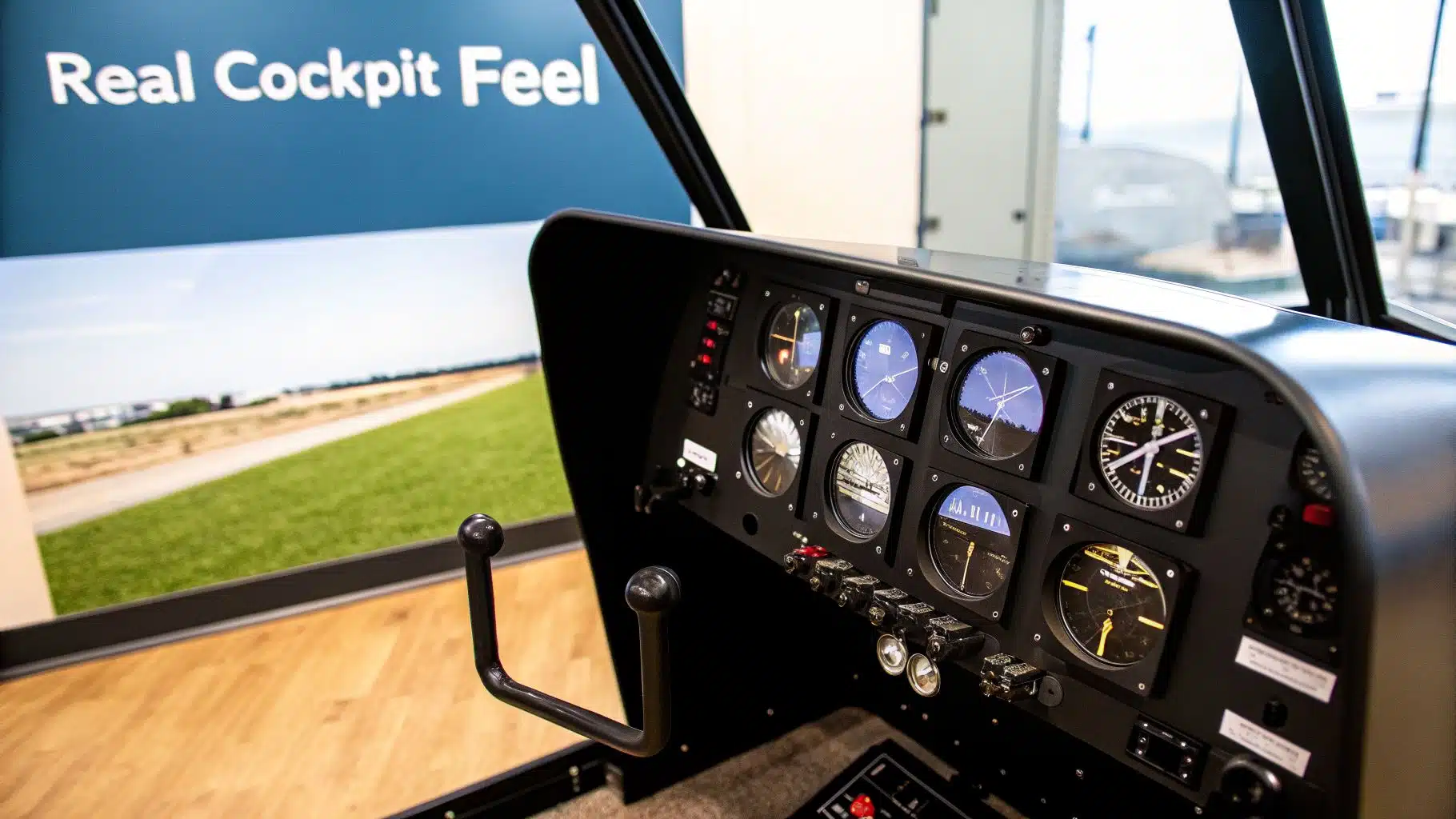
Think of it as a professional "flight gym." It’s a dedicated space where you can safely build the foundational strength and reflexes needed for real-world flying, all in a controlled, repeatable environment. This isn’t an accident; it's the result of painstaking attention to detail in the simulator's design and technology.
The heart of this realism comes down to the physical controls and authentic flight models. When you climb into a Redbird, you aren't grabbing a flimsy plastic joystick. You’re putting your hands on a high-fidelity yoke and your feet on robust rudder pedals that provide force feedback, mimicking the actual aerodynamic pressures you'd feel in flight.
Versatility for Modern Training
What really sets the Redbird ecosystem apart is its incredible versatility. These simulators are built with interchangeable instrument panels, which means a flight school like ours can switch from a classic "steam gauge" six-pack to a modern G1000 glass cockpit in just a few minutes. This is absolutely crucial for preparing pilots for the mix of aircraft they'll find on the ramp.
This adaptability also applies to the aircraft themselves. A single simulator can accurately model the flight characteristics of different planes, from a workhorse Cessna 172 to the Piper Cherokee models in the DuBois Aviation fleet. A student can run checklists, practice procedures, and handle emergencies for their specific training aircraft long before the engine ever starts.
The Redbird Flight Simulations ecosystem makes this possible with impressive precision. Their lineup includes the TD2, a Basic Aviation Training Device (BATD) that was the first table-mounted device with ergonomic rudder pedals. It simulates both G1000 and 6-pack gauge setups for single-engine pistons and is available at some U.S. programs for as low as $35 per hour. With over 2,000 units in use worldwide by 2021, these simulators provide training on aircraft like the Cessna 172 Skyhawk, Bonanza G36, and Baron, which closely mirrors the experience in our own Piper Cherokees and Cessna 150 at Chino Airport. You can read more about these programs and their impact on training.
Building Critical Muscle Memory
Every single action you take in the simulator, from flipping a switch to trimming the aircraft, is designed to build correct habits. The physical layout of the cockpit is an exact replica of the real thing. This ensures that when you need to reach for the flaps or the fuel selector, your hand goes to the right spot without a second thought.
This process of building muscle memory is fundamental to becoming a proficient pilot. When a real emergency strikes, there's often no time to think—you have to react based on ingrained training. The simulator is where you forge those instincts safely.
From the entry-level Redbird TD2 to the full-motion MCX, every model has a clear purpose. The goal isn’t just to see what flying is like but to feel it. It's about deeply understanding the cause-and-effect relationship between your control inputs and the aircraft's response. This hands-on experience makes every hour in the real airplane more productive, more focused, and ultimately, much safer.
Speeding Up Your Pilot Certifications with a Simulator
A Redbird flight simulator is far more than just a realistic set of controls; it’s one of the most effective tools we have for getting you through your pilot training faster and more efficiently. For every single rating—from your Private Pilot License all the way to advanced commercial certificates—simulator time translates directly into proficiency, saving you a surprising amount of time and money.
So how does it work? For a new Private Pilot, the simulator is the perfect place to get the fundamentals down cold. You can practice climbs, descents, and turns without the mental workload of being thousands of feet in the air. Getting comfortable with the instruments and procedures on the ground means your time in the actual airplane is spent on more advanced skills, not just getting a feel for the controls.
Honing Your Skills for Advanced Ratings
As you progress, the simulator's role only gets bigger. When you're working on your Instrument Rating, a Redbird is absolutely essential. It’s the perfect environment to fly holds, track courses, and shoot complex instrument approaches again and again, until the procedures become muscle memory. Our instructors use the sim to walk you through the very concepts we cover in our guide on how to succeed in your instrument flight training, letting you practice in a controlled setting.
And we're not the only ones who see the value. A recent landmark report on flight training trends showed that an incredible 87% of active students plan to use flight simulators. That’s a figure that has outpaced instructor and examiner enthusiasm for five years straight. This student-led demand is changing how schools like DuBois Aviation operate, because pilots are actively looking for smarter, faster ways to earn their certificates. You can read the full 2026 State of Flight Training report for more on this trend.
The "Pause and Discuss" Advantage You Can't Get in a Real Plane
One of the simulator's most powerful features is something completely impossible in a real airplane: the ability to just hit pause. Imagine you’re in the middle of a tricky instrument approach or handling a simulated emergency and you get stuck or make a mistake.
In a real aircraft, you have to keep flying the plane. Period. But in the simulator, your instructor can freeze the entire scenario at that exact moment.
This "pause and discuss" capability is a game-changer. It creates a space for immediate, detailed feedback right when it's most relevant. We can break down what happened, why it happened, and how to fix it—then instantly un-pause or reset the scenario to try again.
This ability to stop, analyze, and repeat is priceless. For pilots going for a Commercial or Multi-Engine rating, it offers a zero-risk way to master engine-out emergencies. An instructor can fail an engine right after takeoff, and you can work through the entire flow—identifying the dead engine, securing it, and flying the plane to a safe landing—with the freedom to pause, ask questions, and repeat until it's second nature.
This kind of focused practice builds true confidence and mastery. By nailing these critical skills on the ground, you spend far fewer expensive hours in the aircraft just trying to get it right. That efficiency doesn't just make you a better, safer pilot; it directly saves you thousands of dollars over the course of your training.
Logging Simulator Time: How To Make It Count With The FAA
One of the best things about training in a Redbird flight simulator is that the time you spend in it can legally count toward your pilot certificates. But as you'd expect, the FAA has some very specific rules about how this works. Getting a handle on these regulations is the key to making your training budget stretch further and ensuring every minute on the ground pays off in the air.
The FAA doesn't just call everything a "simulator." For general aviation, they're typically classified as either a Basic Aviation Training Device (BATD) or an Advanced Aviation Training Device (AATD). These aren't just fancy names; the classification directly impacts how many hours you can credit toward a rating. For a flight school like DuBois Aviation to offer loggable time, both the simulator and its training curriculum must get the green light from the FAA.
BATD vs. AATD: What’s The Difference For Logging?
Think of a BATD as the workhorse for fundamental skills—it’s perfect for nailing down procedures and instrument basics. An AATD provides a much higher degree of realism, which is why the FAA lets you log more hours in one for certain ratings. Knowing which type of device your school uses is essential for mapping out your training path.
This distinction becomes crystal clear when you're working on an Instrument Rating. The regulations under FAR Part 61 are generous, allowing a big chunk of your training to happen in the sim. That’s where you’ll see massive cost savings, since simulator time is far more affordable than renting an airplane. It's a major reason why a recent industry report found that 87% of students plan on using simulators in their training.
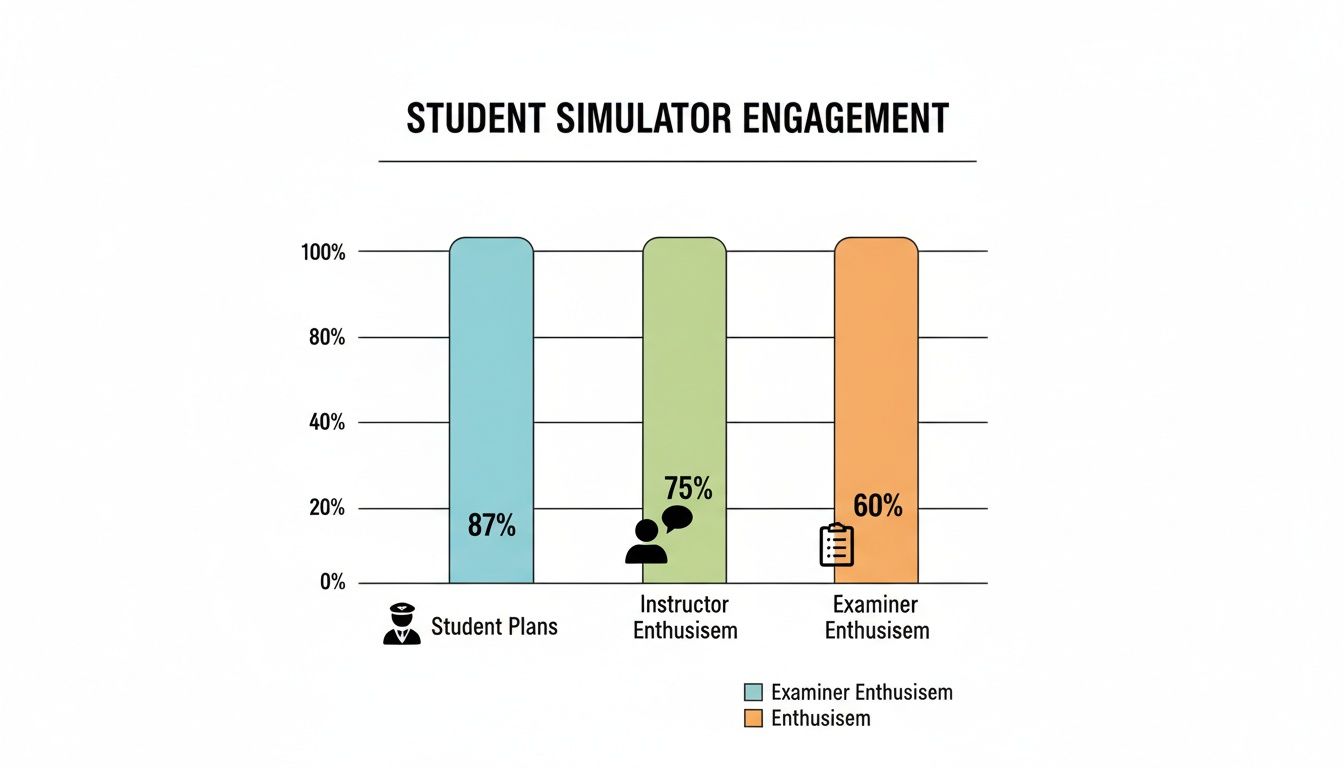
The numbers don't lie. Students are actively seeking out this kind of efficient training, and it shows why top-flight schools have made advanced simulators a core part of their programs.
FAA Simulator Hour Allowances (FAR Part 61)
So, how many hours can you actually log? It depends entirely on the certificate or rating you're pursuing. The most important rule to remember is that you can't just hop in and log time by yourself. An authorized flight instructor (CFI or CFII) must be with you, providing the training and signing your logbook for it to be legal.
To make it simple, here’s a quick overview of the maximum hours you can credit toward your goals under FAR Part 61.
| Certificate / Rating | Maximum BATD Hours | Maximum AATD Hours |
|---|---|---|
| Private Pilot Certificate | 2.5 hours | 2.5 hours |
| Instrument Rating | 10 hours | 20 hours |
| Commercial Pilot Certificate | N/A | 50 hours |
| Airline Transport Pilot (ATP) | N/A | 100 hours |
As you can see, the allowances vary quite a bit. The Instrument Rating is where sims provide the most bang for your buck, but even the hours for a Commercial certificate can significantly reduce your total costs.
By working with your instructor, you can build a training plan that uses the simulator strategically. For instrument students, this often means knocking out nearly half of the required experience on the ground. You’ll save thousands of dollars while mastering complex procedures in a low-stress environment before you ever have to do it in a real cockpit.
This approach lets you master the procedures first, making your time in the actual aircraft far more productive. You can learn more about how simulators help you stay proficient by checking out our guide on IFR currency requirements. By using these rules to your advantage, you can build a smarter and more affordable path to your pilot certificate.
How to Buy an Airplane the Safe and Smart Way
Getting your pilot certificate is a huge accomplishment, but for a lot of us, it’s really just the starting line. Once you have that license, the idea of owning your own airplane starts to feel less like a dream and more like the next logical step. It's an exciting thought, but buying an aircraft is a serious transaction with major financial and safety implications.
This isn't remotely like buying a car. It's a massive investment that demands a smart, methodical approach long before you ever start scrolling through trade-a-plane listings.
Defining Your Mission and Budget
First things first: what's the plane for? Are you looking for a weekend flyer to grab a $100 hamburger, or are you planning serious cross-country trips with the family? Will you be flying mostly in fair weather, or do you need something that can handle instrument conditions?
The answer to that question drives every other decision, from the type of aircraft you should consider to your total budget. A simple two-seat Cessna 152 has entirely different costs and capabilities than a six-seat, turbocharged Cirrus ready to fly in the clouds. Be honest and realistic about how you'll actually fly.
With a mission in mind, you can start building a real-world budget. This is where so many new buyers get into trouble—they focus on the purchase price and forget about everything else.
Your budget has to cover the total cost of ownership, not just the initial check you write. This includes insurance, annual inspections, regular maintenance, pop-up repairs, fuel, and hangar or tie-down fees. These costs can easily run into thousands, or even tens of thousands, of dollars every year.
The Non-Negotiable Pre-Purchase Inspection
Once you’ve found a plane that seems to fit your mission and budget, you’ve arrived at the most critical step in the entire process: the pre-purchase inspection, or "pre-buy." If you only take one piece of advice, let it be this: do not cut corners here.
You need to hire your own trusted, independent A&P (Airframe & Powerplant) mechanic—ideally one who specializes in the exact make and model you're considering. Never, ever use the seller’s mechanic. The goal is to get an unbiased, expert opinion on the true condition of the aircraft.
A proper pre-buy is a deep dive into the plane’s health. Your mechanic will meticulously go through:
- The airframe: Looking for any hint of corrosion, hidden damage, or shoddy repair work.
- The engine: This involves a borescope inspection of the cylinders, a compression check, and an analysis of the engine oil.
- The logbooks: These are the aircraft’s complete life story. Your mechanic will verify the maintenance history, check for compliance with all Airworthiness Directives (ADs), and confirm the total time on the airframe and engine.
A thorough pre-buy inspection can uncover problems that might cost you a fortune down the line or, worse, put you in danger. The final report gives you the power to negotiate the price, require the seller to fix certain items, or—most importantly—give you the confidence to walk away from a potential money pit.
Protecting Your Investment Legally
With the mechanical side cleared, the final steps are all about protecting yourself on the legal and financial front. Before a single dollar is exchanged, you have to perform a title search with the FAA. This confirms that the person selling the plane actually owns it and that there are no outstanding liens against it. The last thing you want is to buy a plane only to find out a bank has a claim on it.
Finally, always close the deal using a reputable aviation escrow service. The escrow company is a neutral third party that holds your payment securely until every condition of the sale has been met. They verify the title is clean and handle the proper filing of the bill of sale and registration with the FAA. This small step protects both you and the seller and ensures a clean, legal transfer of ownership.
Following these steps diligently is what turns a high-stakes purchase into a smart, confident investment, freeing you up to enjoy what it's all about: the freedom of flight.
Gaining Your Edge at DuBois Aviation
After all the ground school study sessions and dreaming about your first solo, there’s truly nothing like the feeling of strapping into a real airplane. But as any seasoned pilot will tell you, becoming a genuinely proficient aviator—the kind who is safe, confident, and ready for the unexpected—starts long before the engine ever roars to life. And that's where the simulator training at DuBois Aviation gives you a real-world edge, perfectly blending ground and flight training right here at Chino Airport (KCNO).
We don't see our Redbird flight simulator as just another piece of equipment. It’s the flight gym where you build critical muscle memory, the lab where you can safely push the limits on emergency procedures, and the ultimate classroom where complex instrument approaches finally click and become second nature.
A Straightforward Path to Proficiency
At DuBois Aviation, we’ve woven simulator training directly into our curriculum to make it a seamless part of your learning. Booking time in our Redbird is just as easy as scheduling an aircraft. You and your instructor can reserve a slot through our online portal, which means your training never loses momentum, even when the weather doesn't cooperate.
A low-IFR day doesn't have to mean a canceled lesson. Instead, you can jump into the sim and get some incredibly valuable work done.
- Master Local Approaches: You can fly the ILS, RNAV, and VOR approaches into Chino (KCNO) and nearby airports over and over until the procedures feel completely automatic.
- Tackle Emergencies: This is your chance to realistically practice scenarios like engine failures on takeoff, electrical fires, or instrument malfunctions—things that are simply too dangerous to fully replicate in the air.
- Build Radio Confidence: Rehearse your comms for navigating KCNO's busy Class D airspace without the pressure of a real-time transmission, so you sound like a pro when you key the mic for real.
From Your First Flight to Aircraft Ownership
Our mission goes far beyond just helping you pass a checkride. We're here to help build lifelong aviators who make smart, safe decisions for their entire flying career. That same mindset becomes absolutely essential when you reach the exciting milestone of looking into aircraft ownership.
Just as a simulator helps you master the skills of flying, getting good guidance is key to navigating the complex world of buying an airplane. A smart purchase is never an impulse decision; it requires a disciplined approach.
You need to clearly define your mission, create a realistic ownership budget—factoring in everything from insurance and hangar fees to maintenance—and, most importantly, get a thorough pre-purchase inspection from a trusted, independent A&P mechanic. This step is non-negotiable; it’s what keeps your dream from turning into a financial or safety nightmare.
This commitment to developing the whole pilot is what defines our training philosophy. We don't just teach you how to fly an airplane; we teach you how to think and act like a pilot.
Your Invitation to Fly
Whether you're an aspiring student with airline ambitions, a private pilot looking to sharpen your skills, or a parent checking out our youth aviation camps, we invite you to see the DuBois Aviation difference for yourself. You can learn more about how to book a simulator session on our website and see how it can accelerate your own training.
Come by our facility at Chino Airport for a discovery flight and see firsthand how our investment in modern tools like the Redbird simulator helps create safer, more capable pilots. Let's get your journey started.
Frequently Asked Questions About Flight Simulators
When pilots first hear about training in a simulator, a lot of the same questions tend to pop up. It's a shift from the traditional way of doing things, so a little curiosity is natural. Let's clear the air and tackle some of the most common ones.
Is a Redbird Flight Simulator Just a Fancy Video Game?
Not even close. While you might see a screen, think of it less like a game and more like a high-fidelity cockpit firmly planted on the ground. A Redbird is an FAA-approved training device built with realistic flight controls, certified instrumentation, and accurate flight modeling.
It's designed from the ground up for serious training. The yoke, rudder pedals, and throttle feel just like the real thing, which means the muscle memory you build transfers directly to the aircraft. You can log official hours in a simulator—something you could never do with a game you bought off the shelf.
How Much Money Can I Really Save by Using a Simulator?
The cost savings are one of the biggest draws, and they're significant. An hour in the simulator can easily cost 50% to 70% less than an hour in an actual airplane. You’re not paying for fuel, oil, or the wear and tear on the engine, which adds up fast.
For an Instrument Rating, FAA rules allow you to log up to 20 hours in an AATD like our Redbird. This alone can translate into thousands of dollars saved, all while letting you practice complex procedures over and over without the financial pressure of a ticking Hobbs meter.
Can I Use the Simulator to Practice for My Checkride?
Absolutely. In fact, it’s one of the most powerful ways to prepare. Your instructor can program the exact flight profile for your checkride, from the specific VFR maneuvers you’ll be tested on to the instrument approaches at your local airport.
Imagine flying your entire checkride multiple times before the big day. In the simulator, you can pause, ask questions, and repeat any task until it feels second nature. Walking into your checkride already having "flown" the test gives you an incredible mental edge and a huge boost in confidence.
Do I Need an Instructor to Use the Simulator?
If you want to log the time toward a certificate or rating, then yes. An authorized instructor (CFI/CFII) needs to be there to guide the session, provide instruction, and sign your logbook. This ensures the training is effective and meets all FAA requirements.
However, once you're a licensed pilot, the simulator becomes a fantastic tool for staying sharp on your own. Many pilots book solo time to maintain instrument currency, practice emergency procedures, or even "pre-fly" a trip to an unfamiliar airport. It's a cost-effective way to keep your skills honed, especially when bad weather has the real planes stuck in the hangar.
At DuBois Aviation, we build our Redbird simulator directly into your training to make you a safer, more proficient pilot from day one. Learn more about booking simulator time at KCNO and see how it can give you an advantage.


