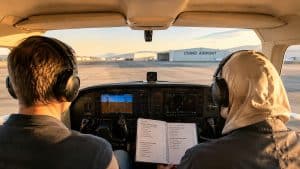
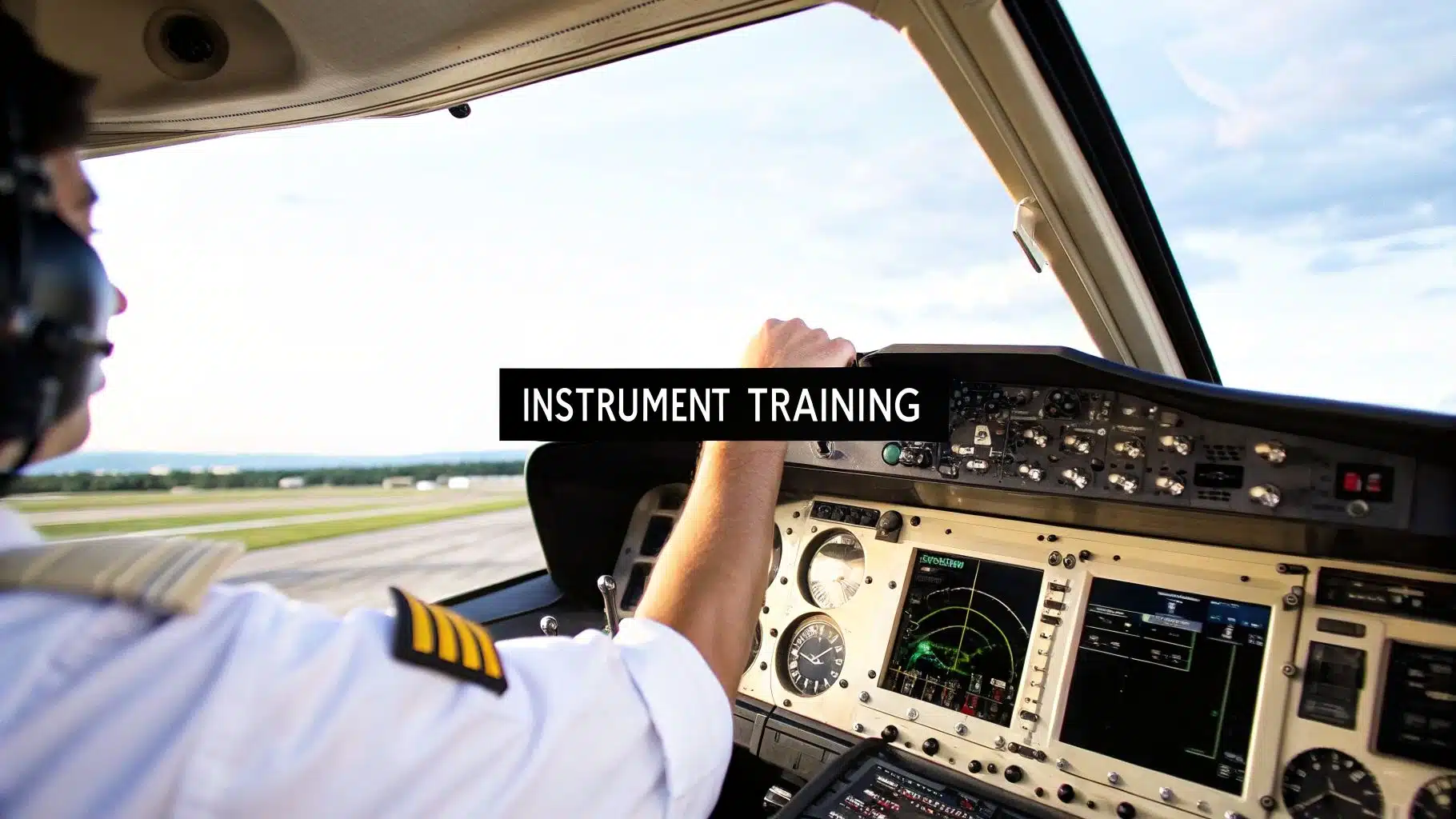
Staring into the milky white abyss of a cloud is enough to make any VFR pilot’s palms sweat. But for an instrument-rated pilot? It’s just another day at the office. This guide is all about getting you that level of confidence. Earning your instrument rating isn’t just about adding another line to your pilot certificate; it’s about completely changing the way you approach flying.
Why Your Instrument Rating Is the Most Important Upgrade You'll Make
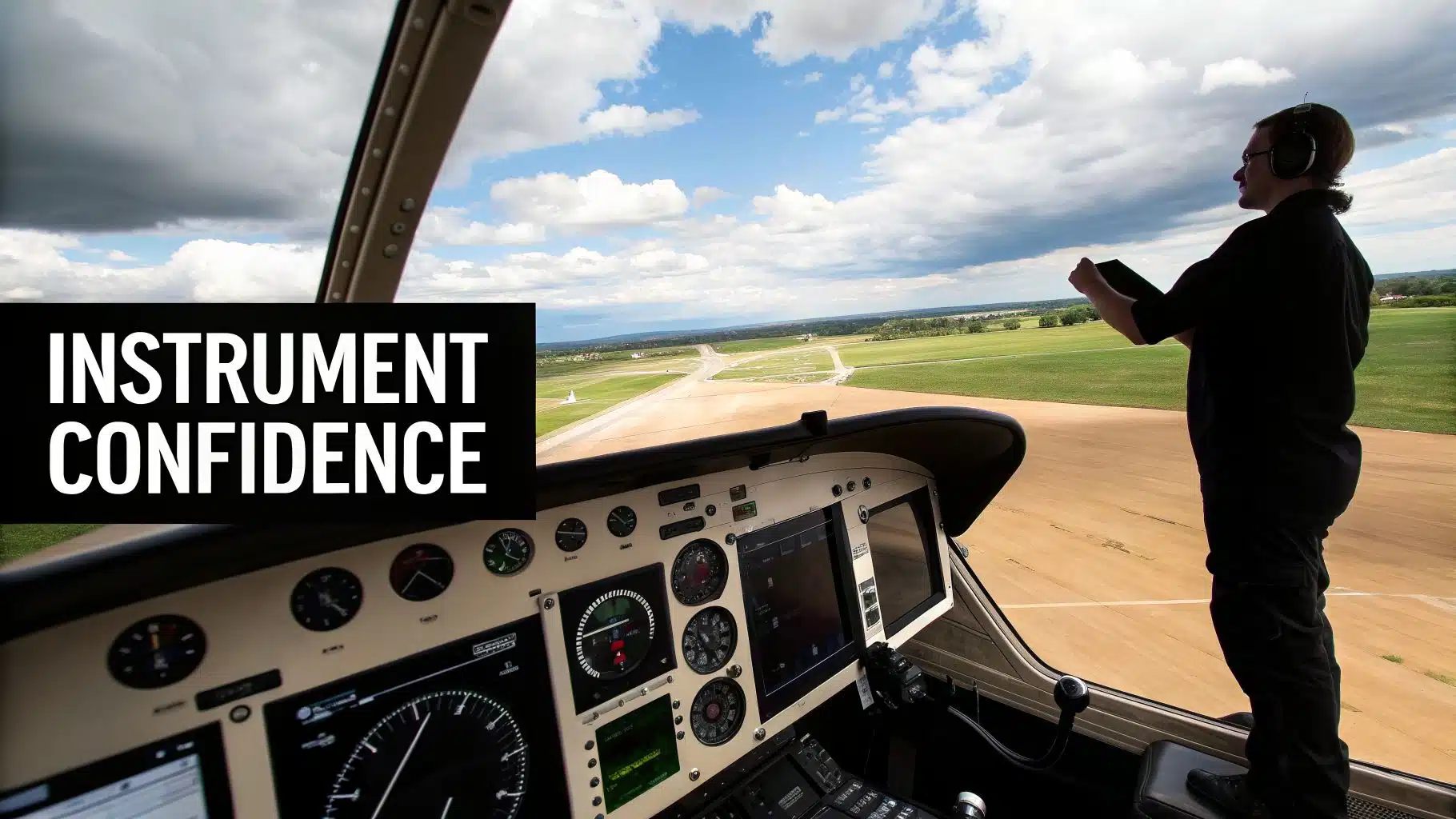
Think of it like learning a new language—one where you’re communicating directly with your aircraft's instruments and Air Traffic Control. This training gives you the skill to fly precisely and safely without ever seeing the ground, turning you from a fair-weather pilot into a genuinely capable, all-weather aviator. It’s a profound shift that unlocks a whole new level of safety and utility in your flying.
Two practical options worth comparing
These are specific products pilots commonly compare for this type of flying. Confirm compatibility with your aircraft and instructor before ordering.
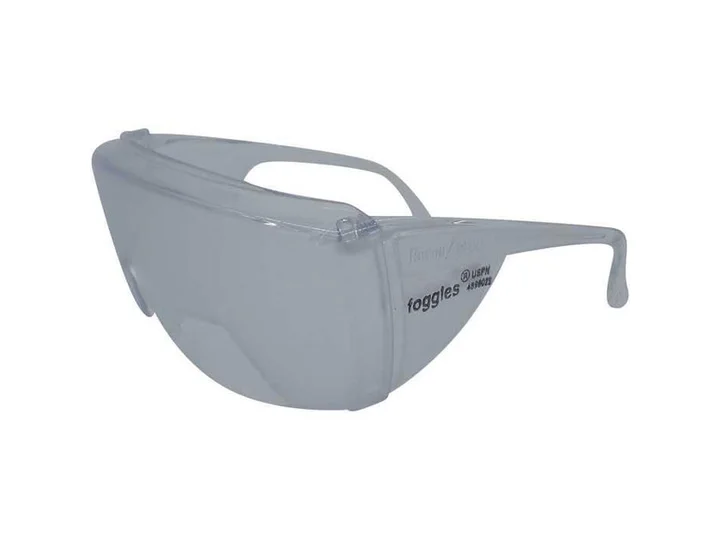 Instrument trainingFoggles Aviation IFR Training GlassesCheck current availability on Amazon (paid link)
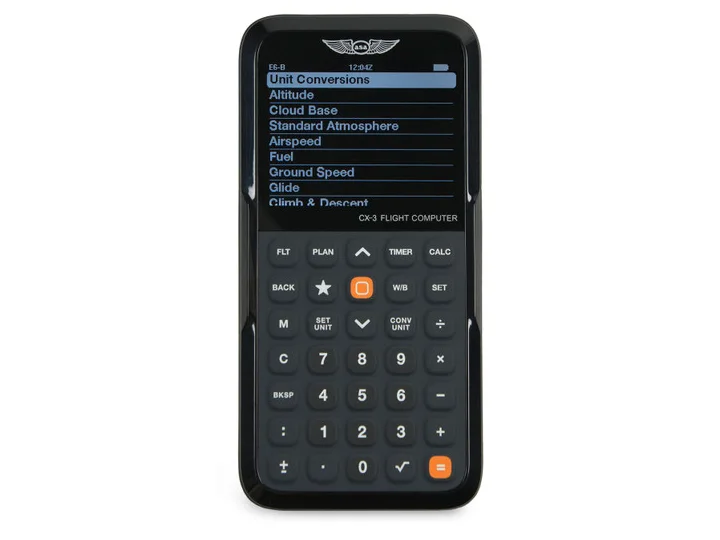 Flight planningASA CX-3 Flight ComputerCheck current availability on Amazon (paid link)
This isn't just a "nice-to-have" skill anymore; it's the modern standard for any serious pilot. The numbers don't lie. According to the FAA's latest 2026 airman statistics, of the 495,907 certificated pilots in the U.S., an incredible 342,400—or 69%—hold an instrument rating. That's a huge jump, climbing 10 full percentage points from just 59% back in 2004, as noted in a recent AOPA safety report. It’s clear that proficiency in instrument flying is becoming essential.
Go Beyond the Horizon
Once you have your instrument rating, you’re no longer a prisoner of a low cloud layer or a hazy morning. This opens up a world of possibilities. It’s a game-changer whether you’re a private pilot tired of scrubbing trips or a career-minded aviator building time for the airlines.
But the confidence you gain extends far beyond just flying in the clouds. It makes you a more precise, disciplined, and knowledgeable pilot in every situation, even on a perfectly clear day.
The skills you master—from precise aircraft control to understanding complex avionics—directly translate to other areas of aviation, including the process of buying an aircraft. An instrument-rated pilot is far better equipped to evaluate the advanced systems in modern airplanes and helicopters.
Become a Smarter Aircraft Owner
The journey to buying or selling an aircraft is full of expensive pitfalls. Your instrument proficiency gives you a massive advantage here. When you go to evaluate an airplane for purchase, your IFR training helps you:
- Assess Avionics with Confidence: You can actually test and understand the GPS, autopilot, and other complex IFR systems that represent a huge part of an aircraft's value.
- Spot Costly Red Flags: Your deep knowledge of IFR equipment and inspection requirements helps you identify potential maintenance bombs or outdated tech hiding in the logbooks.
- Define Your Real Mission: As an instrument pilot, your mission profile is much more versatile. This lets you choose an aircraft that truly meets your new, expanded travel needs.
Ultimately, mastering instrument flying doesn't just make you a better pilot—it makes you a sharper, more capable aircraft owner. It’s a foundational step toward achieving true freedom in the skies.
The Life-Saving Skill of Flying by Instruments
Let's be blunt: learning to fly by instruments isn't just about adding a new capability or avoiding weather cancellations. It's one of the most important survival skills a pilot can ever master. For a pilot without this training, accidentally flying into a cloud can become a life-or-death situation in minutes. The change from seeing a clear horizon to being engulfed in a disorienting soup of white is one of the most dangerous things that can happen in an airplane.
The real danger? Your own body becomes your worst enemy. Without a horizon to look at, the fluid in your inner ear—the very system that gives you your sense of balance—starts sending dangerously false signals to your brain. This terrifying phenomenon is called spatial disorientation, and it's a documented killer in aviation.
When Your Senses Lie
Here’s how it happens. You might enter a slight, imperceptible bank. But because your body can’t feel it, you think you’re still flying straight and level. When you try to "correct" this imaginary attitude, you might actually push the aircraft into an even steeper bank, tightening it into what pilots call a "graveyard spiral."
Your body is screaming that you're wings-level, but the airplane is spiraling towards the ground.
In these moments, your instruments are the only source of truth. Learning to trust your attitude indicator over your own gut feelings is a non-negotiable skill, one that we drill relentlessly during instrument training. It’s a constant battle between your ingrained physical sensations and the cold, hard data on your panel.
This is where the training pays off. You’ll master how to recover from these "unusual attitudes," smoothly bringing the plane back to stable flight from extreme nose-high or nose-low positions using nothing but your instruments. This skill is the very core of what makes an instrument-rated pilot so much safer.
A Foundation for Safety
Even the Private Pilot curriculum touches on this danger. That’s why it requires three hours of basic instrument training. This isn't just about checking a box on a form; it's a crucial safety net designed to give a new pilot the bare-minimum skills to control the plane, hold a heading, and execute a 180-degree turn to escape clouds they've entered by mistake.
But those three hours are just basic first aid. The full instrument rating is the cure.
To understand the difference this training makes, consider the operational mindset between flying visually (VFR) and flying by instruments (IFR). One relies on seeing, the other on a disciplined, structured system.
VFR vs. IFR Flight: A Safety Comparison
| Aspect | VFR (Visual Flight Rules) | IFR (Instrument Flight Rules) |
|---|---|---|
| Navigation | Primarily by looking outside; pilot is responsible for seeing and avoiding obstacles and other aircraft. | Primarily by reference to instruments and navigation aids; Air Traffic Control provides separation. |
| Weather | Requires specific minimum visibility and distance from clouds. Flying into a cloud is prohibited and dangerous. | Can be conducted in clouds and low visibility, down to published minimums for the approach. |
| Mindset | Reactive and flexible. "See and avoid." | Proactive and procedural. "Plan the flight, fly the plan." |
| Risk Factor | The risk of accidentally entering instrument conditions (IMC) without the skills to handle it is significant. | The primary risk shifts to procedural errors or equipment failure, managed through redundancy and training. |
The statistics paint a stark picture of why this matters. A 2021 analysis showed that while very few general aviation flights happen in instrument conditions, they are responsible for a staggering 17% of all fatal accidents. Even more telling, 81% of accidents that occurred in clouds proved fatal, a rate far higher than any other kind of mishap. You can read more about these critical findings in Air Facts Journal's analysis of IFR proficiency data.
This data proves a vital point: you don't have to plan on flying in bad weather to become a victim of it. An unexpected cloud layer or rapidly dropping visibility can trap any VFR pilot. The instrument rating is your ticket out of that trap. It's the single most effective investment you can make in your long-term safety as a pilot.
Your Instrument Rating Training Syllabus Explained
So, what does earning your instrument rating actually involve? It’s not just one big hurdle; think of it as a logical, step-by-step journey that builds your skills layer by layer. The entire process is built on two parallel tracks that constantly reinforce one another: ground school and flight training.
You can think of ground school as learning the language of the Instrument Flight Rules (IFR) system. Flight training is where you become fluent, putting that language to use in the cockpit. Both are absolutely critical to becoming a safe, competent, and confident instrument pilot.
Laying the Groundwork for Success
Before you even touch the controls on your first instrument flight, your training starts on the ground. This knowledge-based portion is designed to give you the solid theoretical foundation you need to make smart decisions when you can't see a thing outside.
This is a life-or-death skill. For a pilot without an instrument rating, flying into a cloud can become a fatal trap in minutes. This is why the training is so rigorous.
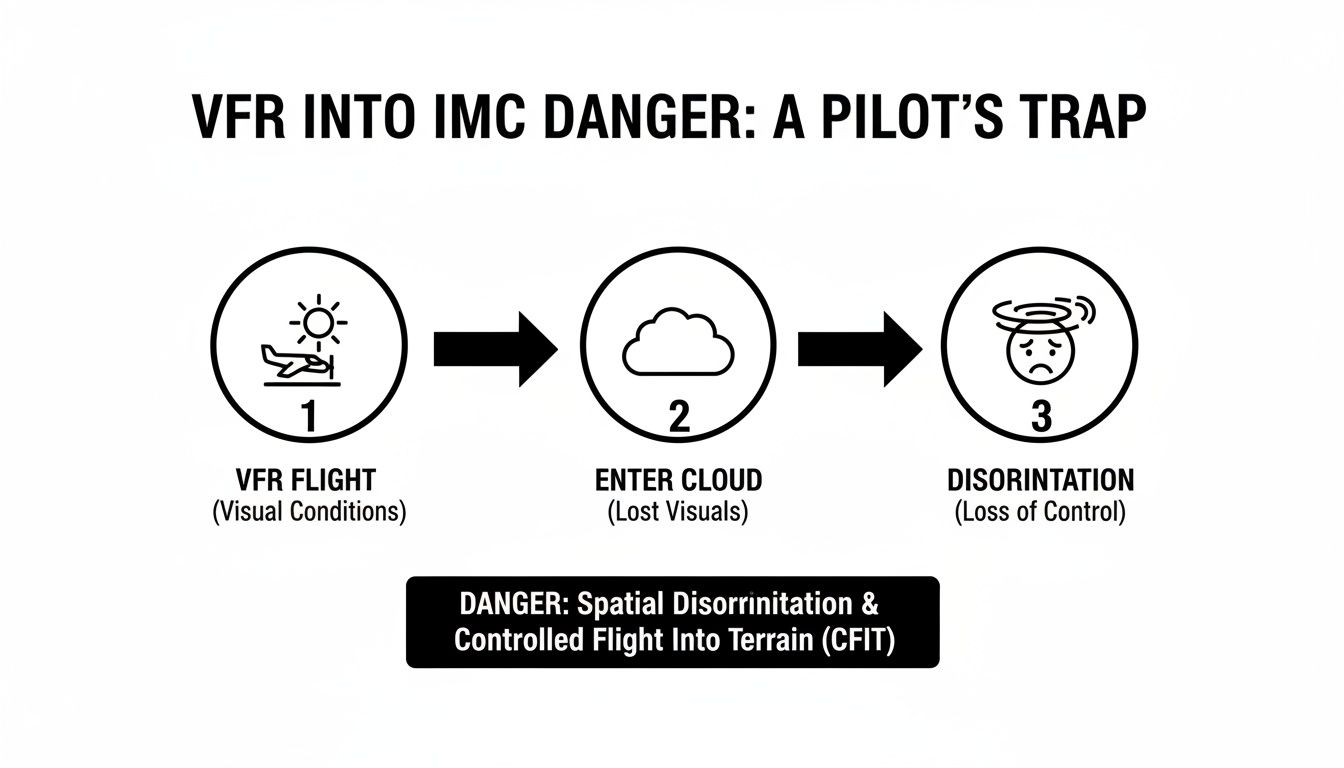
The image above starkly illustrates the danger of spatial disorientation. Your ground school provides the knowledge to rely on the IFR system, your only true defense when your inner ear is lying to you.
Your ground school curriculum is focused on three main areas:
- IFR Regulations and Procedures: This is where you’ll go way beyond the VFR rules you already know. You'll get into the nitty-gritty of IFR flight planning, requirements for filing an alternate airport, and exactly what to do if you lose communications with ATC.
- Advanced Weather Theory: Forget just looking out the window. You’ll learn how to interpret complex weather charts, understand the serious threat of icing, and make sound go/no-go decisions based on detailed aviation forecasts.
- The National Airspace System: You’re about to master the "highways in the sky." This means learning to read IFR enroute charts and, most importantly, deciphering the incredibly dense but vital information packed onto instrument approach plates.
Think of an approach plate as a detailed recipe for landing safely in the clouds. It tells you exactly where to go, what altitudes to fly, and how to communicate with ATC, ensuring a precise and repeatable outcome every single time.
From Theory to Practice: In the Cockpit
With a solid grasp of the theory, you’ll start applying it where it counts—in the airplane and simulator. The flight portion of your instrument flying training follows a clear progression, starting with the absolute fundamentals and building toward complex, real-world scenarios. Each lesson builds directly on the one before it.
You won't be flying a full approach on day one. Instead, you'll start with the most basic building blocks of instrument flight.
The Building Blocks of Instrument Flight
Your first few flight lessons are all about learning to trust your instruments over your own senses. Your entire world shrinks from the expansive view outside to the six primary flight instruments right in front of you.
- Basic Attitude Instrument Flying: This is the bedrock of everything that follows. You’ll develop a disciplined "scan"—a continuous, methodical cross-check of your instruments. This is how you maintain precise control over the aircraft’s pitch, bank, and power without a single outside reference.
- Navigation and Tracking: Once you can hold the airplane straight and level on instruments, you’ll learn to navigate. You’ll practice tracking courses using VOR (Very High-Frequency Omnidirectional Range) and GPS, the two pillars of IFR navigation, intercepting and flying these invisible highways in the sky.
- Holds and Procedures: You will master holding patterns, which are essentially parking lots in the sky that ATC uses to manage traffic. This requires real precision, a deep understanding of wind correction, and situational awareness.
From there, you’ll start combining these skills to tackle the most critical phase of any instrument flight: the approach. This is how you get from your cruising altitude all the way down to the runway, often breaking out of the clouds just a few hundred feet from the ground. You'll practice both precision approaches like the ILS (Instrument Landing System) and non-precision approaches like RNAV (GPS) and VOR approaches, making sure you’re ready for anything.
How to Buy an Aircraft the Safe Way
For any pilot, owning your own airplane is the ultimate dream. It’s the freedom to fly whenever and wherever you want. But that dream can quickly turn into a financial nightmare if you’re not careful. Buying an aircraft isn’t like buying a car; it’s a serious investment filled with unique challenges.The key to a successful purchase is a smart, disciplined approach. It all starts long before you ever browse the classifieds or walk a flight line. The first, and most important, step is to get brutally honest with yourself.
Define Your Mission and Budget
Before you fall in love with a sleek paint job, you have to define your mission. What will you actually do with this plane?
Are you looking for a fun weekend flyer for local trips? Or do you need a true cross-country machine to haul your family and luggage through the clouds? Answering this question honestly will narrow your search significantly and keep you focused on what truly matters.
Once the mission is clear, it's time to build a realistic ownership budget. The sticker price is just the beginning. You need to account for all the ongoing costs:
- Insurance: Your rates will depend heavily on your experience (especially your instrument flying training) and the aircraft's type and value.
- Maintenance: This is a big one. You'll need to budget for the annual inspection, routine oil changes, and have a healthy cash reserve for those unexpected repairs that always seem to pop up.
- Hangar or Tie-Down Fees: Your plane has to live somewhere, and that space comes with a monthly cost.
- Fuel and Oil: This is your main variable cost. Calculate your expected flight hours and the plane's fuel burn to get a good estimate.
A clear mission and a solid budget are your guardrails. They stop you from buying a plane that’s too much for your wallet or not enough for your needs. With those in place, you can start digging into specific models. For a look at how different aircraft stack up, check out our comparison of the Piper Cherokee vs. the Cessna 172.
The Non-Negotiable Pre-Purchase Inspection
So, you've found a plane that looks perfect. Now comes the single most critical step in the entire process: the pre-purchase inspection. This is not the time to cut corners. You must hire your own trusted and independent Airframe & Powerplant (A&P) mechanic to give it a top-to-bottom review.
Ideally, you'll find a mechanic who specializes in that specific make and model. They're not just kicking the tires; they are meticulously examining the engine, airframe, avionics, and flight controls for any signs of corrosion, wear, damage, or improper repairs. Their job is to find the skeletons in the closet before they become your problem.
A proper pre-purchase inspection is your single best defense against buying someone else's problems. The cost of a thorough inspection is a tiny fraction of what a major "surprise" repair, like an unscheduled engine overhaul, could cost you down the line.
Scrutinize the Logbooks
While your mechanic is getting their hands dirty, you need to be buried in paperwork. The aircraft's logbooks are its official biography, chronicling every flight, repair, and inspection it has ever had.
You're looking for the full story. Are there gaps in the maintenance history? Signs of major damage that wasn't properly repaired? A pattern of ignoring small issues? Compliance with all mandatory Airworthiness Directives (ADs) is also a must-check. This is another spot where having your instrument rating helps, as you'll better understand the service history of the complex IFR avionics you're about to own.
Finally, get the legal side buttoned up. A title search is essential to make sure there are no hidden liens on the aircraft. Always use a formal purchase agreement that spells out the price, terms, and conditions—especially making the final sale contingent on a satisfactory pre-buy inspection. By following these steps, you can ensure your new investment is safe, sound, and ready to fly.
Strategies for Acing Your Instrument Training
Passing your checkride is the finish line, but true mastery is the real prize. Just showing up and logging hours won't cut it. To become a genuinely proficient instrument pilot, you need to be deliberate about how you train. It’s the quality of your practice and the habits you build along the way that will set you apart.
The single biggest factor for success? Consistency. Flying every few weeks is a recipe for rust and frustration. You’ll spend half of each lesson just shaking off the cobwebs, which is a slow and expensive way to learn. Committing to a regular schedule, even if it's just once a week, keeps your skills sharp and the momentum going. This steady rhythm is the fastest path to building the deep confidence you need to fly IFR.
Perfect Practice On the Ground
Beyond just flying regularly, you can seriously accelerate your learning by using a few powerful—and often free—training techniques. These are the methods that build the muscle memory and mental clarity required to manage a high workload when you're all alone in the clouds.
The most effective tool by far is chair flying. This isn't just daydreaming; it’s a focused, structured rehearsal. Find a quiet room, put up a poster of your cockpit panel, and grab your stack of approach plates. Now, talk your way through an entire flight out loud. Touch the imaginary knobs, make the radio calls, and visualize the needles on the instruments.
"Chair flying is the ultimate force multiplier in flight training. It costs nothing but time and discipline, yet it pays huge dividends in the cockpit. By rehearsing procedures on the ground until they are automatic, you free up critical mental bandwidth to manage the flight and handle unexpected events."
This simple practice cements procedures in your mind, making your actions in the aircraft feel smooth and second-nature. It’s the secret weapon of high-performing pilots at every level.
Becoming a Self-Reliant Pilot
Your training isn't just about learning procedures; it's about learning to be self-sufficient. In the real world, you won't have a CFI in the right seat to bail you out. That’s where single-pilot resource management (SRM) comes in. It’s the art of managing everything at your disposal—inside and outside the cockpit—to ensure a safe flight.
A huge part of modern SRM is skillfully using your Electronic Flight Bag (EFB). Knowing your iPad inside and out is crucial for maintaining situational awareness. To get the most out of this powerful tool, check out our guide on how to choose and use an iPad for pilots.
Think of our flight simulator as your personal laboratory. Use it to practice the complex emergencies that are too risky to attempt in the real airplane. Fail an engine in the clouds. Deal with a total electrical failure on final approach. Navigate with a dead GPS. The sim lets you push the limits and build rock-solid confidence in your ability to handle adversity, all without any real-world risk.
Finally, get into the habit of a disciplined pre-flight self-brief. Before every single flight, sit down and walk yourself through the route, the weather, and the instrument procedures you plan to fly. This habit ensures you launch with a clear plan and a full picture of the flight ahead. These strategies—consistency, chair flying, and deliberate self-reliance—are the pillars of true instrument mastery.
Choosing The Right School For Your IFR Journey

Deciding to get your instrument rating is a huge step. But where you choose to train is a decision that will shape the entire experience—and the kind of pilot you become. It's the difference between just learning the rules and truly living inside the IFR system.
At DuBois Aviation, we've built our instrument flying training program from the ground up to immerse you in that system. A huge part of that is our home base at Chino Airport (KCNO). This isn't some sleepy, uncontrolled field. KCNO is a towered Class D airport, buzzing with activity. From your very first lesson, you’re talking to air traffic control, getting clearances, and sequencing with other aircraft. You won't just learn radio work; you’ll master it by doing it, over and over, until it’s second nature.
The Perfect Training Environment
The real magic of training at Chino is the sheer variety of instrument procedures available right outside our hangar. You aren't burning precious flight time just to get to a practice area. Here, you get to fly a broad mix of real-world IFR scenarios from day one.
This isn't just about convenience; it's about building a deeper skill set. At KCNO, you'll benefit from:
- Multiple Runways: With three runways, you’ll constantly adapt to different traffic patterns, wind corrections, and ATC instructions—just like in the real world.
- On-Site Instrument Approaches: KCNO has a fantastic selection of instrument approaches right on the field. This lets you practice different types of procedures repeatedly, building the muscle memory that's critical for IFR flight.
- A Busy Airspace: Learning to manage your workload while being number three in line for the approach is an invaluable skill. The constant flow of traffic teaches you to think ahead and stay aware.
While massive Flight Training Organizations now make up about 18.61% of the national training landscape, there’s a reason independent schools like ours thrive. We focus on a personal, effective approach that gets results. The environment at KCNO allows us to run tightly focused CFI, CFII, and MEI programs that career-minded pilots, in particular, find invaluable. You can see more on these industry trends and pilot statistics.
The Right Tools and Mentorship
Of course, a great airport is only half the story. You also need excellent equipment. Our fleet of IFR-certified aircraft is meticulously maintained, providing a reliable and modern platform for your training. We pair this with our advanced in-house simulator, which is far more than just a video game.
The simulator is your personal IFR laboratory. It's where you can tackle complex procedures and emergency scenarios repeatedly without the pressure of being in the air. This blend of sim and aircraft time is, without a doubt, the most efficient and cost-effective way to build true proficiency.
Ultimately, though, your success comes down to your instructor. At DuBois Aviation, this isn't a factory-line operation. You'll work one-on-one with a dedicated and experienced Certified Flight Instructor – Instrument (CFII) who is personally invested in your progress.
We use the world-class Jeppesen curriculum as our guide, but we tailor the pace to fit you. You’ll never feel rushed, and you’ll never be held back. With flexible scheduling seven days a week and a supportive community of fellow pilots, we give you everything you need to not just pass your checkride, but to become a confident and truly capable instrument pilot.
Common Questions About Instrument Flying Training
Thinking about earning your instrument rating always brings up a lot of questions. That’s a good thing. Getting clear, honest answers is the first step to making a smart decision about your flying career. Let's walk through some of the most common things pilots ask us about instrument flying training.
How Long Does It Take and What Does It Cost?
The FAA minimums are a starting point, not the whole story. While the regulations require 40 hours of instrument flight time, we’ve found the national average for becoming a truly competent IFR pilot is closer to 50-60 hours.
The biggest factor in your timeline is consistency. At DuBois Aviation, students who fly regularly can often earn their instrument rating in just 2 to 4 months.
As for cost, it really depends on your pace and which aircraft you fly. We believe in total transparency and will always give you a detailed cost estimate upfront. One of the best ways to manage your budget is by making smart use of our advanced simulator—it dramatically lowers your total cost compared to doing every single hour in the plane.
What Is the Difference Between Part 61 and Part 141?
You'll hear these terms thrown around a lot, so let's break them down. Both are FAA-approved training structures, but they serve different needs.
- Part 141 is like a university program—highly structured, rigid, and designed for full-time students who need to follow a strict, FAA-audited syllabus.
- Part 61 offers a ton of flexibility. It’s the perfect fit for pilots who need to juggle training with a job, family, or other commitments.
We operate under Part 61 rules at DuBois Aviation. This lets us give you the best of both worlds: a proven, organized curriculum that we can tailor to your personal schedule and learning style. It ensures every lesson is built around you.
How Do I Stay Current After My Checkride?
Passing your checkride is a huge accomplishment, but the learning doesn't stop there. To legally fly under Instrument Flight Rules (IFR), you have to maintain your currency.
Within the last six calendar months, the FAA requires you to have logged:
- Six instrument approaches
- Holding procedures and tasks
- Intercepting and tracking courses using navigation systems
The great news is you can meet these requirements in either an aircraft or an approved simulator like ours. For a full rundown, check out our guide on maintaining IFR currency. We make it easy to stay sharp with our rental fleet, simulator access, and Instrument Proficiency Checks (IPCs) with our CFIIs.
At DuBois Aviation, we're here to help you reach your goals with personalized, one-on-one instruction. Book a discovery flight or get started today.