
Earning your instrument rating is a huge accomplishment, but it's really just a license to learn. The real work begins now, keeping those hard-won skills sharp enough to safely navigate the clouds when the time comes. This is where IFR currency comes in.
To legally act as pilot in command under IFR, the FAA has a set of minimums you have to meet. You’ve probably heard it called the “6-6-6 Rule.” Within the preceding six calendar months, you must have flown and logged six instrument approaches, practiced holding procedures, and performed intercepting and tracking courses using your navigation systems.
More Than Just Checking a Box
Think of your instrument skills like a muscle. If you don't use them, they atrophy, and they do so surprisingly fast. An instrument scan that was once effortless becomes clumsy. Procedures that were second nature suddenly require you to look them up. This is why IFR currency is so much more than a legal requirement—it’s the absolute bedrock of your safety when you can't see the ground.
Two practical options worth comparing
These are specific products pilots commonly compare for this type of flying. Confirm compatibility with your aircraft and instructor before ordering.
See the complete pilot gear guide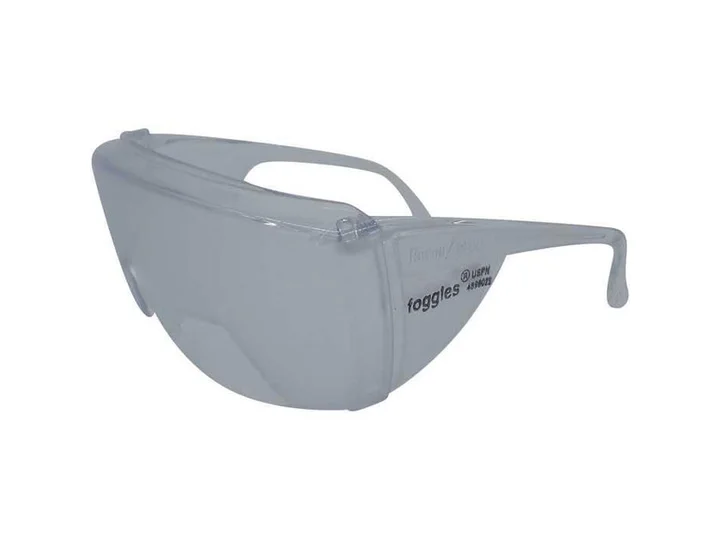
These minimums are the FAA's way of ensuring you maintain at least a basic level of proficiency. Flying in actual Instrument Meteorological Conditions (IMC) is demanding. Without that regular practice, your workload can skyrocket, and your margin for error shrinks dramatically.
The Real Goal: Confidence and Proficiency
Frankly, just meeting the bare minimum isn't the point. The real goal is to maintain the confidence and command you need to handle whatever a real-world IFR flight throws at you. The regulations tell you what you need to do, but a true commitment to your craft is about how well you can do it, especially under pressure.
We'll break down exactly what you need to know to stay both legal and, more importantly, safe. We’ll cover:
- How to properly interpret the details of the “6-6-6 Rule.”
- The right way to log your flights to keep your logbook clean and audit-proof.
- What happens if you fall out of currency and the steps to get back in the game.
- The crucial difference between being "current" and being truly "proficient."
Remember, these rules aren't just hoops to jump through. They're a framework for building the readiness and precision you need to be a competent, confident pilot in the IFR system.
Decoding the FAA's 6-6-6 Rule
Every instrument pilot knows the term "IFR currency," but what does it actually take to stay legal? It all comes down to what most of us call the "6-6-6 Rule." This is the FAA's minimum standard for acting as Pilot in Command (PIC) on an IFR flight plan. While it sounds straightforward, the details are what trip up many pilots.
The rule itself lives in 14 CFR 61.57(c). It's dense, but let's pull out the important part:
“(c) Instrument experience. Except as provided in paragraph (e) of this section, a person may act as pilot in command under IFR or in weather conditions less than the minimums prescribed for VFR only if . . . Within the 6 calendar months preceding the month of the flight, that person performed and logged at least the following tasks and iterations in an aircraft, full flight simulator, flight training device, or aviation training device . . .
(1) Six instrument approaches.
(2) Holding procedures and tasks.
(3) Intercepting and tracking courses through the use of navigational electronic systems.”
This is the bedrock of IFR currency. Think of it as the legal floor—the absolute minimum you must do to fly in the system.
Understanding "Preceding Six Calendar Months"
This is where the confusion often starts. The "preceding six calendar months" is a rolling window, and it doesn't care about the specific day you fly.
Let’s say you want to fly IFR on July 15th. To check your currency, you look back at the six full calendar months before July. Your lookback period is from January 1st through June 30th. Anything you logged in that window counts. It doesn’t matter if you did your approaches on January 2nd or your holds on June 28th. As long as all the required tasks were completed within those six months, you're good to go.
Here's the breakdown for that July 15th flight:
- Your Flight Date: July 15th
- The Currency Window: January 1, February, March, April, May, June 30.
- What Doesn't Count: Any flights from July 1st onward or anything logged before January 1st.
This timeline illustrates how the tasks fit into that six-month window. You have to get everything done before the clock runs out.
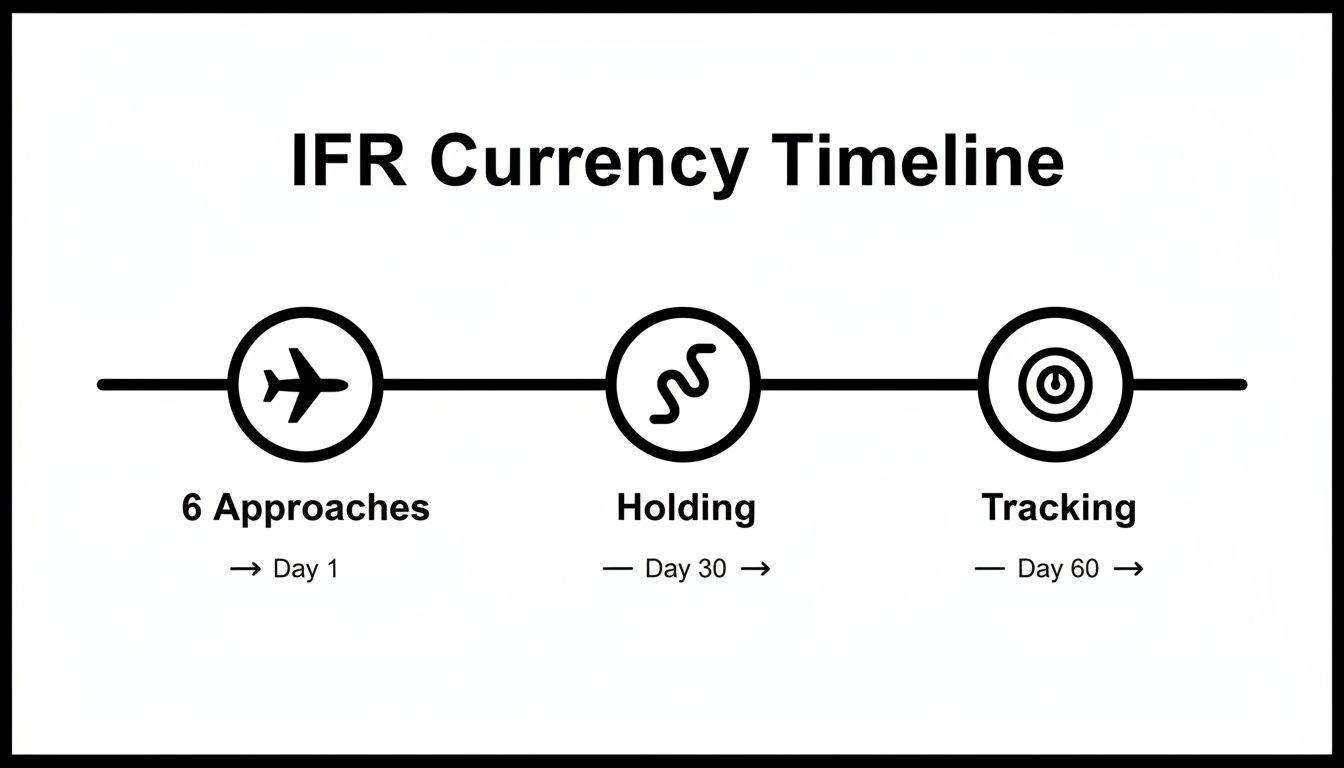
The key is simply completing all three required elements—the six approaches, holding procedures, and course tracking—somewhere within that six-month block of time.
Aircraft vs. Simulators: A Tale of Two Training Tools
Fortunately, the FAA gives us options. You can maintain your currency in an aircraft, a full flight simulator, or an Aviation Training Device (ATD). This flexibility is a huge advantage, letting you practice maneuvers that would be impractical or even dangerous in the real world.
To log time in an airplane on a VFR day, you’ll need a view-limiting device (paid link) (foggles or a hood) and a qualified safety pilot. In a simulator or ATD, however, you can do it all solo. This is perfect for running emergency procedure checklists or shooting complex approaches to minimums without burning a single drop of avgas.
But why is this six-month window so important? It turns out that instrument skills are incredibly perishable. A 2020 FAA Wings Program analysis of 50,000 pilots found that 28% of them lost IFR currency within just 90 days of stopping regular training. Other studies have shown a 35% drop in approach accuracy during simulator evaluations after a period of inactivity. This data makes it clear: consistent practice isn’t just about staying legal—it’s about staying proficient and safe.
How to Log Your Flights for IFR Currency
Think of your logbook as more than just a personal record—it's a legal document. When it comes to instrument flying, it’s the only proof you have that you're current in the eyes of the FAA. Getting the logging details wrong can turn a friendly ramp check into a major headache, so it’s just as important to master your logbook as it is to master the approaches themselves.
The FAA is very clear about what you need to write down. For every instrument approach, you must note the location and type of that approach. For holding, a simple note of "holding" is technically sufficient, but smart pilots will also jot down the fix where they held. This habit creates a clear, audit-proof record of your proficiency.
What to Record for Each Flight or Session
To make sure every entry counts toward currency, you need to include a few key details. If you miss one, the whole entry could be disqualified for currency purposes.
- Date: The calendar date of the flight or simulator session.
- Aircraft or Simulator Type: The specific aircraft (e.g., Cessna 172S) or the ID of the FAA-approved simulator you used.
- Total Flight Time: The total duration of your flight or sim session.
- Instrument Time: The time spent in actual IMC or under a view-limiting device ("simulated instrument").
- Specific Tasks Performed: This is where the detail matters most. List the location and type of each approach (e.g., "KDUJ ILS RWY 25," "KFIG RNAV (GPS) RWY 29") and note any holding procedures you practiced.
Your logbook tells a story. A sloppy, vague entry suggests a certain kind of pilot. A detailed, precise entry shows an aviator who understands the rules and takes their craft seriously.
Example Logbook Entries
Let's see what this looks like in practice. Here are two solid examples—one for a flight in an actual airplane and one for a session in an Aviation Training Device (ATD).
Airplane Flight Example:
- Date: 10/26/2026
- Aircraft: Piper Apache PA-23 (N12345)
- Route: KCNO-KFUL-KCNO
- Total Time: 1.5
- Simulated Instrument: 1.2
- Remarks: Safety Pilot: J. Smith, PPL. Practiced holds over Prado (PDR). Approaches: KFUL RNAV (GPS) 24, KCNO ILS 26L.
Simulator Session Example:
- Date: 11/05/2026
- Aircraft/Simulator: Redbird FMX ATD
- Total Time: 1.0
- Simulated Instrument: 1.0
- Remarks: Holds over SLI VOR. Approaches: KBUR VOR-A, KLGB ILS 30, KSNA RNAV (GPS) 20R, KONT ILS 26R.
See how both entries are specific about the location and type of each approach? That's the level of detail the FAA is looking for. It leaves nothing to interpretation. Building these good habits from day one is key, and it's a huge focus for anyone working through an instrument rating course.
Common Logging Mistakes to Avoid
I’ve seen plenty of pilots make small, honest mistakes in their logbooks that unfortunately invalidated their currency. Watch out for these common traps:
- Vague Approach Details: Just writing "2 instrument approaches" won't cut it. You have to specify the airport and the exact approach, like "KABC ILS 19R."
- Forgetting the Safety Pilot: If you’re flying under the hood, your logbook must list the name and certificate level of your safety pilot. It's a required crewmember for that flight.
- Confusing "Actual" vs. "Simulated": "Actual" instrument time is logged only when you are in the clouds with no forward visibility. Any time spent with a hood or foggles is "simulated" instrument time.
- Improper Simulator Entries: When you use a simulator, log it as such. Don't try to make it look like time in an actual aircraft. It’s perfectly legal and valuable time, so log it correctly.
By avoiding these slip-ups and keeping a clean, detailed logbook, you’re doing more than just staying legal. You’re building the professional habits that define a safe, precise instrument pilot.
Your IFR Currency Lapsed. Here’s What to Do Next
Let's face it, life happens. Between bad weather, a busy schedule, or just not having a need to fly in the soup, it’s surprisingly easy to let your instrument currency slip. If you’ve just realized your six months are up, don’t panic. It's not a black mark on your record, and the FAA has a clear, step-by-step process to get you back in the system.
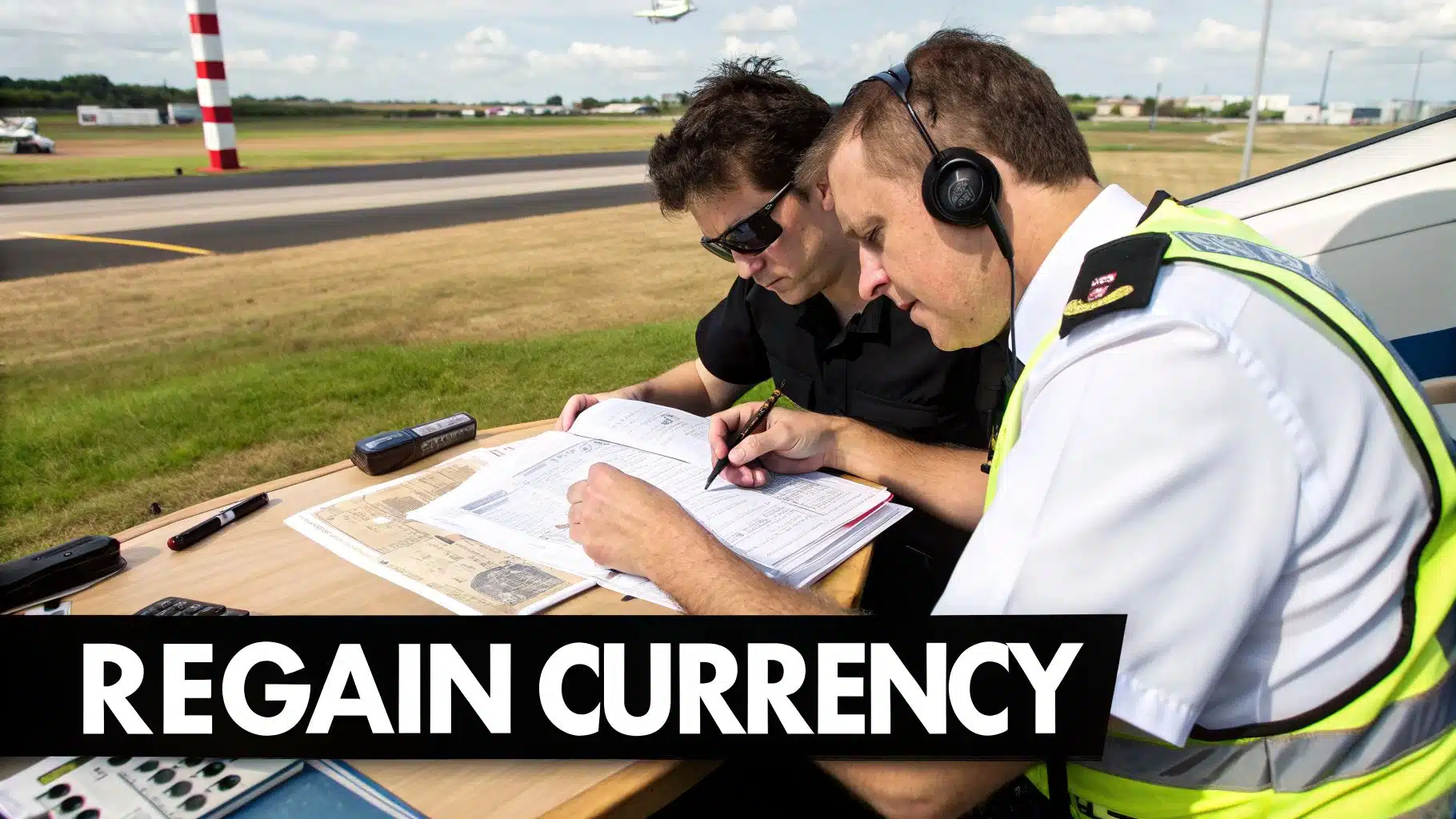
You’re not alone in this. Industry estimates suggest that 20-30% of general aviation pilots find themselves non-current for IFR each year. But it’s a situation to take seriously. 2021 NTSB data showed that 15% of accidents in IFR conditions involved pilots who weren't current, contributing to 42 incidents and 12 fatalities. This is exactly why the FAA’s currency rules exist—to keep us all safe.
The 6-Month "Grace Period"
Once your initial 6-month window closes, you can no longer legally act as pilot in command under IFR. But you haven't lost your rating. The FAA gives you another 6 months—a grace period—to get your skills back up to speed without needing a formal check.
To get current during this time, you just need to go up with a qualified safety pilot and log the required tasks: six instrument approaches, holding procedures, and intercepting/tracking courses.
Think of this as your "get well" window. It’s a chance to self-correct and get comfortable again with a qualified observer, before needing to involve an instructor for a formal review.
Remember, a safety pilot isn't just a passenger. They are a required crewmember for that flight, responsible for seeing and avoiding traffic while you’re under the hood. They must hold at least a private pilot certificate and be properly rated for the aircraft you're flying.
After 12 Months: The Instrument Proficiency Check (IPC)
If a full year has gone by since you were last IFR current, the path back is a bit more formal. You can no longer use a safety pilot to get current. Instead, you'll need to complete an Instrument Proficiency Check (IPC).
Don't let the word "check" intimidate you. An IPC isn't a pass/fail test like your initial checkride. It's a structured review of your knowledge and skills conducted by a CFII, designed to ensure you're still safe and proficient in the IFR system. It’s a fantastic opportunity to shake off the rust with an expert.
An IPC is a comprehensive review tailored to you, but it will generally cover the tasks outlined in the Airman Certification Standards (ACS).
Here’s what to expect:
- Preflight Discussion: A solid ground review covering IFR regulations, flight planning, chart interpretation, and weather.
- Flight Maneuvers: You'll fly a variety of maneuvers, including holds, unusual attitude recoveries, and multiple instrument approaches (precision, non-precision, and perhaps a circle-to-land).
- Systems Knowledge: You'll need to demonstrate proficiency with your aircraft's avionics and navigation systems.
Once you’ve successfully completed the IPC, your instructor will give you a logbook endorsement, and you’re officially IFR current and legal again. To get a deeper look at what a well-structured review involves, you can check out our guide on the Instrument Proficiency Check.
Whether you're in the grace period or need an IPC, the process is designed to reinforce safe habits. It turns a currency lapse into a great opportunity for a productive tune-up.
Moving Beyond Currency to True Proficiency
Getting your six approaches in every six months makes you legal to fly in the clouds. But does it make you safe? There’s a world of difference between being legally current and being truly proficient, and that gap is where safety breaks down.
Think about it this way: would you feel ready for a chaotic highway commute in a downpour if your only driving practice was parking in an empty lot once in a while? Of course not. The same is true for instrument flying. Just logging the bare minimum might keep your ticket valid, but it does little to prepare you for the workload of a real IFR flight when things get busy or go wrong.
The Reality of Skill Decay
Instrument flying skills are incredibly perishable. They fade much faster than pilots like to admit. Without consistent, meaningful practice, your instrument scan gets rusty, your ability to recall procedures slows, and your capacity to manage the flight deck shrinks.
This isn't just about forgetting the steps to fly an ILS. It’s about losing the crisp muscle memory and mental sharpness needed to juggle multiple tasks under pressure. When ATC throws an unexpected reroute at you or a small issue pops up on the panel, a merely "current" pilot can quickly get overwhelmed. A truly proficient pilot, on the other hand, takes it in stride.
Recent data paints a stark picture of this reality. A 2023 MITRE Corp study of over 10 million flight hours found that out-of-currency pilots were 3.2 times more likely to have an altitude deviation. But there's good news, too: simulator use jumped by 40% after 2020. This lines up with a 2022 FAA rule change allowing pilots to log half of their required approaches in a simulator—a tool we use heavily at DuBois, logging over 5,000 simulator sessions a year. The numbers don't lie: consistent, high-quality training works.
Cultivating a Proficiency Mindset
Shifting your focus from just "staying current" to "staying proficient" means making continuous learning a core part of your flying. The goal isn't just to check a box, but to build the deep confidence that comes from knowing you can handle whatever the IFR system throws at you.
Here are a few ways to build and maintain genuine proficiency:
- Go Beyond the Minimums: Don’t just do one hold—practice different entries. Fly a mix of approaches, including precision, non-precision, and circling, into airports you've never visited before.
- Embrace Recurrent Training: Book a session with a CFII, even when you don't "need" to. Use that time to hammer on emergency procedures and complex scenarios you wouldn’t (and shouldn't) try on your own.
- Participate in the FAA WINGS Program: This is a fantastic, structured way to stay sharp. The program rewards you for completing specific training tasks with an instructor, keeping your skills polished.
When you adopt this mindset, the IFR currency requirements stop being a chore and become the foundation for real mastery. You’ll build the kind of confidence that makes you a safer, more capable pilot, ready for any challenge in the IFR environment.
Using Your IFR Skills to Buy an Airplane Safely
Think your instrument rating is just about flying in the soup? Think again. It's one of the most powerful assets you have when it comes time to buy an airplane. Staying proficient on the gauges sharpens your eye for detail and gives you an almost unfair advantage when evaluating a potential purchase.
When you’re IFR current, you don’t just fly an airplane; you manage a system. You instinctively know what a truly capable IFR platform feels like, and you can spot red flags that a VFR-only pilot might not even recognize as a problem. That perspective is priceless when you're about to write a very large check.
Your IFR Rating as an Evaluation Tool
As an instrument-rated pilot, you're looking at a prospective airplane through a different lens. You understand the deep integration of avionics, the non-negotiable need for redundancy, and the specific logbook entries that separate a solid IFR machine from an expensive liability. You’re not just kicking the tires—you’re conducting an expert-level audit.
Here’s how you can put those hard-earned skills to work:
- Avionics Assessment: Is that GPS actually IFR certified, or is it just a fancy VFR map? Does the autopilot actually track a glideslope, or does it wander off into the weeds? You can immediately tell if the panel is a clean, logical workspace or a chaotic mess of mismatched gear.
- System Redundancy: You’ve been trained to ask, "What's my backup?" You’ll be the one checking for a second nav/com, a standby attitude indicator, and other redundant systems that are absolutely critical when you’re alone in the clouds.
- Logbook Scrutiny: Your IFR training makes you acutely aware of the clock. You’ll know to flip right to the pages that show the 24-month pitot-static and transponder certifications, and you’ll check if the GPS database subscription is even current.
A Step-by-Step Guide for the IFR Buyer
The key to a successful purchase is to approach it with the same discipline you use to fly an instrument approach. You wouldn't rush a procedure turn, so don't rush your due diligence. A methodical process is your best defense against discovering costly problems after the sale.
A great airframe with a flaky IFR system isn't just a bad deal—it's a trap. Your proficiency lets you judge the aircraft as a complete flying system, not just a collection of parts.
Use this checklist to stay on the right track:
- Conduct a Title Search: First things first. Before you get emotionally invested, make sure the plane has a clean title. A professional search will uncover any hidden liens or legal claims that could become massive headaches later on.
- Perform an IFR-Focused Pre-Buy Inspection: This is non-negotiable. Find a trusted A&P mechanic—ideally one who specializes in the make and model you’re buying—and tell them to put the IFR systems under a microscope. This means a deep dive into the avionics, autopilot, and related electrical systems.
- Execute a Thorough Test Flight: This is your time to shine. Don’t just do a lap in the pattern. Go fly a real mission. Hand-fly an ILS down to minimums, let the autopilot handle an RNAV approach, and enter a hold. Does the plane fly straight and true? Are the instruments stable and reliable?
Making a smart purchase is a huge milestone. For pilots wanting to see a wide range of aircraft or get professional guidance on the ownership process, a large, full-service FBO can be an invaluable resource. To get a sense of what a comprehensive aviation center offers, you can see examples of services like those at Threshold Aviation Group at Chino Airport. This final, in-the-air test is your ultimate proof, ensuring the plane you buy is truly ready for the demands of the IFR environment.
Your IFR Currency Questions Answered
Let's be honest—the FAA's rules for IFR currency can feel a bit tangled. Even seasoned instrument pilots sometimes scratch their heads over the specifics. So, let's clear up some of the most common gray areas.
We'll walk through a few real-world scenarios that frequently cause confusion, giving you direct, practical answers so you can log your time and plan your flights with total confidence.
Can I Log Approaches in VMC for Currency?
Yes, you absolutely can, and it's one of the most common ways pilots stay current. You don’t have to be in the soup to log an approach.
As long as you’re flying solely by reference to instruments with a view-limiting device (like foggles or a hood) and have a qualified safety pilot on board, you can perform and log approaches in beautiful VMC weather. The key is that you are simulating instrument conditions.
Does a Simulator Approach Count the Same as One in an Airplane?
It sure does. For currency, an approach is an approach, whether you're in the air or in a high-quality sim. The FAA fully recognizes how valuable simulators are for maintaining proficiency.
Any approach you fly in an approved Aviation Training Device (ATD), Flight Training Device (FTD), or Full Flight Simulator (FFS) counts toward your six required approaches.
This is a huge win for pilots. Simulators let you tackle challenging approaches, practice holding patterns, and run emergency procedures in a safe, controlled setting without spending a dime on avgas.
What Is the Difference Between an IPC and a Flight Review?
This is a critical distinction that trips up a lot of pilots. While both are check-ins on your skills, they serve completely different purposes.
- Flight Review: This is required every 24 calendar months for all pilots to act as Pilot in Command (PIC). It’s a general review of flight rules and maneuvers, involving at least one hour of ground and one hour of flight instruction.
- Instrument Proficiency Check (IPC): This is only required if you’ve let your IFR currency lapse for more than 12 months. It focuses entirely on the instrument flying tasks laid out in the Airman Certification Standards (ACS).
Here's an easy way to think about it: A Flight Review keeps your pilot certificate active, while an IPC restores your IFR privileges after a long break from instrument flying.
Does My Safety Pilot Need to Be Instrument Rated?
This is probably the most common misconception out there. The answer is no, your safety pilot is not required to be instrument rated.
According to 14 CFR 91.109(c), a safety pilot simply needs to:
- Hold at least a Private Pilot Certificate.
- Be rated for the category and class of aircraft you're flying (e.g., Airplane Single-Engine Land).
- Have a current medical certificate.
The safety pilot’s job is to be your eyes, scanning for traffic while your vision is limited. They aren't there to provide instrument instruction, so an instrument rating isn't legally required for them to do their job safely.
At DuBois Aviation, we believe knowing the rules is the foundation for true proficiency. Whether you need to schedule an IPC, want to practice in our advanced simulator, or just fly some approaches with an experienced CFII, we have the tools and expertise to keep you sharp. Schedule your next flight or simulator session with us today by visiting https://duboisaviation.com.