
Your flight hours are logged, your ratings are secured, and your sights are set on the right seat of a commercial airliner. The final hurdle? The airline pilot interview. This isn't just a formality; it's a comprehensive evaluation of your technical knowledge, decision-making skills, and professional demeanor. Airlines are looking for more than just a skilled aviator; they're investing in a future captain who embodies their culture of safety and excellence. This guide breaks down the most frequent airline pilot interview questions you'll face, providing expert strategies and sample answers rooted in real-world training.
From behavioral assessments using the STAR method to technical deep-dives on weather and systems, we'll equip you with the tools to navigate your interview with the same confidence you command in the cockpit. Beyond technical skills, airlines assess your judgment and leadership qualities, making preparation for common behavioral interview questions vital to showcasing your professional maturity. Mastering these is just as critical as knowing your aircraft's limitations.
Two practical options worth comparing
These are specific products pilots commonly compare for this type of flying. Confirm compatibility with your aircraft and instructor before ordering.
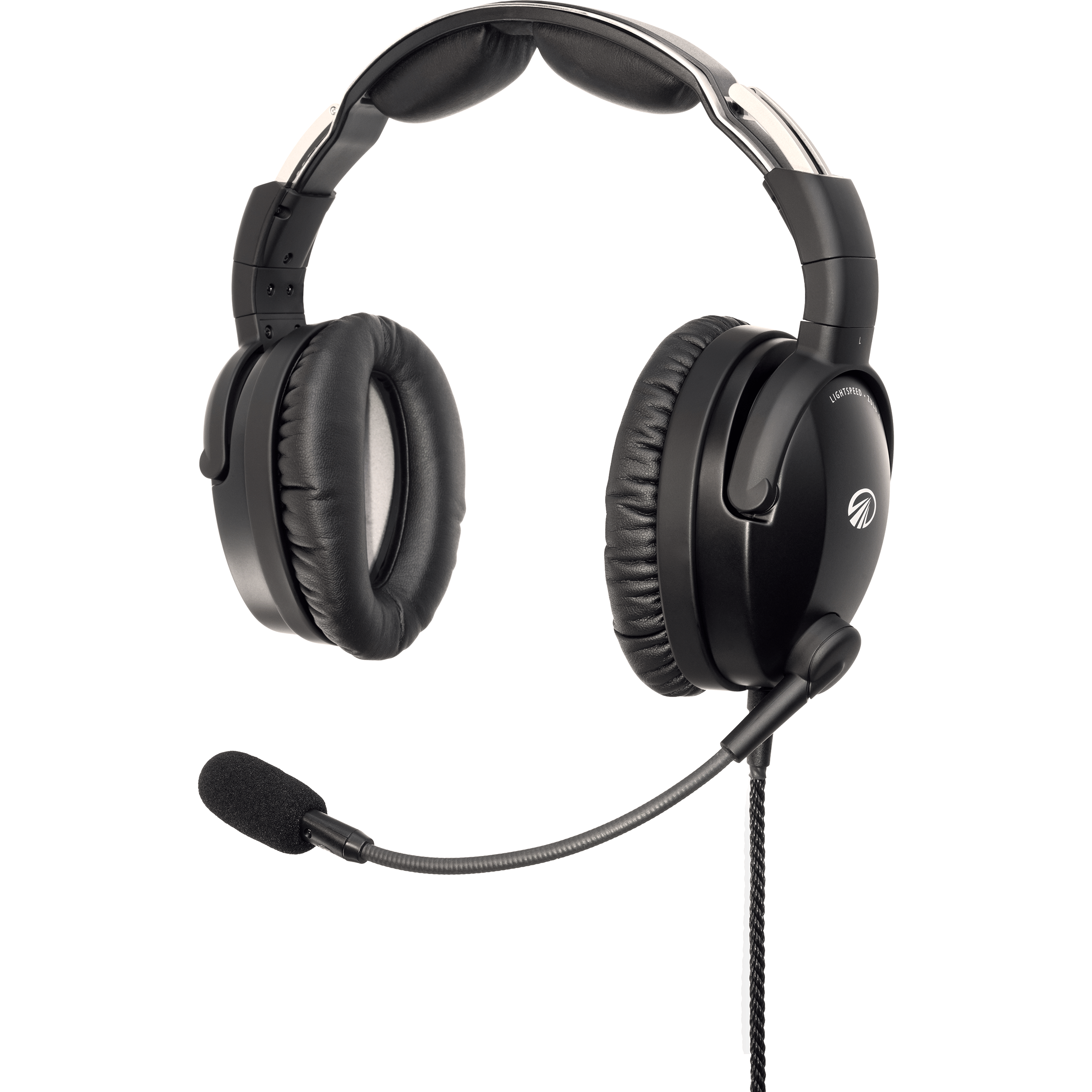 Premium ANR headsetLightspeed Zulu 4 ANR Aviation Headset - Dual GA PlugCheck current availability on Amazon (paid link)
 Premium headsetBose A30 Bluetooth Aviation Headset - Dual PlugCheck current availability on Amazon (paid link)
This article provides actionable tips to help you stand out. We will also touch upon the practicalities of aircraft ownership for those considering buying or selling airplanes, a common long-term goal for career aviators. Throughout, we'll connect these interview concepts back to how a structured training background, like the Airline Career Program at DuBois Aviation, builds the foundational skills that interviewers actively seek. This isn't about memorizing answers; it's about learning to articulate the value of your experience and proving you have the right stuff for the flight deck.
1. Tell me about your flight training experience and why you chose aviation
This is often one of the first airline pilot interview questions you will face, and it sets the tone for the entire conversation. Interviewers use this prompt to gauge your genuine passion for flying, understand the structure and quality of your training, and see how your early decisions connect to your long-term career goals. A well-crafted answer demonstrates commitment, professionalism, and self-awareness.
Your response should be a concise, chronological story of your aviation journey. Start with the initial spark that made you want to fly, then progress through your training milestones. Mention specific certificates, the approximate dates you earned them, and the flight schools or instructors who were instrumental in your development. Highlighting training at a reputable institution known for its structured programs, like DuBois Aviation, shows that you prioritized a professional and safety-oriented environment from the beginning.
How to Structure Your Answer
A strong response will blend personal motivation with professional progression. Avoid simply listing ratings. Instead, create a narrative that connects your choices to your ultimate goal of becoming an airline pilot.
- The "Why": Begin with a brief, authentic story about what drew you to aviation. Was it a discovery flight, an airshow, a family member who was a pilot, or a deep-seated interest in technology and travel?
- The "How": Detail your training path. Mention key milestones like your first solo, earning your Private Pilot License (PPL), Instrument Rating (IR), and Commercial Pilot License (CPL). For example, "I started my training in 2021, earning my PPL after 65 hours. I then immediately began my instrument training, as I knew proficiency in IFR was critical for an airline career."
- The Connection: Explicitly link your training to your professional aspirations. Discuss how each step was a deliberate move toward your goal. This shows foresight and planning, key traits for any pilot. Detailing this journey is a core part of understanding the complete airline pilot career path.
Pro Tip: Mentioning specific aircraft you trained in (e.g., Cessna 172 for primary, Piper Seminole for multi-engine) adds valuable detail and demonstrates a concrete understanding of your own logbook and experience. This also provides a natural opening to discuss more technical aspects of your training if the interviewer chooses to follow up.
2. Describe a challenging flight situation and how you handled it
This is one of the most common behavioral airline pilot interview questions, designed to test your decision-making under pressure, adherence to procedure, and overall airmanship. Recruiters aren't looking for a story of heroic, seat-of-your-pants flying; they want to see a methodical, calm, and safety-oriented approach to problem-solving. Your answer reveals your judgment, risk management skills, and how you apply your training in a real-world scenario.
Your response should detail a genuine event that challenged you but remained within your control. It could be an unexpected weather diversion, a minor systems anomaly, or dealing with a difficult air traffic control instruction. The key is to demonstrate a procedure-first mentality. Show that you used all available resources, whether it was checklists, ATC, or another crew member or instructor, to manage the situation safely and effectively.
How to Structure Your Answer
A compelling answer uses a narrative framework like the STAR method (Situation, Task, Action, Result) to clearly explain your thought process and actions. This structure helps you stay on point and ensures you cover all the critical aspects the interviewer is listening for.
- The Situation: Briefly set the scene. What phase of flight were you in? What were the conditions? What was the challenge you encountered? Example: "During a solo cross-country flight, I encountered unforecast instrument meteorological conditions (IMC) developing over a mountain pass that was critical to my route."
- The Action: Detail the specific steps you took. This is where you emphasize procedure. "My first action was to fly the airplane. I then immediately performed a 180-degree turn toward VFR conditions, referenced my charts for a suitable diversion airport, and communicated my intentions to ATC, declaring my position and new heading."
- The Result & Lesson: Conclude with the outcome and what you learned. The outcome should always be a safe resolution. "I successfully diverted to a nearby airport, landed safely, and waited for the weather to clear. The experience reinforced the importance of always having multiple diversion options and making a conservative decision early, rather than pressing on into deteriorating conditions."
Pro Tip: Choose a scenario that is appropriate for your flight experience. A low-time private pilot discussing a complex multi-engine failure would lack credibility. Instead, pick a real event that demonstrates your core competencies: aviating, navigating, and communicating. This shows honesty and self-awareness, which are highly valued by airlines.
3. Why do you want to work for this airline?
This is one of the most critical airline pilot interview questions, as it directly measures your commitment and specific interest in the company. Airlines are not just hiring a pilot; they are investing in a future captain who will represent their brand for decades. Your answer reveals whether you have done your homework or are just looking for any job with a major carrier. A thoughtful, well-researched response demonstrates that you see a long-term future with them specifically.
Your response must go beyond generic praise. The goal is to connect your personal values, professional goals, and understanding of the aviation industry directly to the airline’s unique identity. This means researching their fleet, route structure, company culture, recent news, and financial health. Showing that you understand where the airline is headed and how you fit into that vision is a powerful way to stand out.
How to Structure Your Answer
A convincing answer is specific, authentic, and forward-looking. It should be a blend of admiration for the company and a clear explanation of how your career goals align with their operational model.
- Show You've Done Your Research: Start by mentioning specific, positive attributes of the airline. This could be their modern fleet composition, specific international routes you find exciting, their stellar safety record, or their commitment to advanced training programs. For example, "I've been impressed with your recent order for the A321XLR, as it shows a clear strategy for expanding transatlantic routes from the East Coast, which is an exciting area of growth I want to be part of."
- Connect to Your Personal Goals: Explain why those attributes matter to you. Do their base locations work well for your family life? Does their rapid growth offer a clear and quick path to captaincy? Does their company culture, known for strong pilot-management relations, appeal to you? This shows you have thought about your long-term fit.
- Align with Their Values: Reference the airline’s mission statement, core values, or recent community initiatives. For instance, if the airline prides itself on customer service, share a brief example from your own experience that demonstrates your commitment to the same principle.
Pro Tip: Avoid talking about pay and benefits unless asked directly. Instead, focus on culture, career progression, fleet, and operational excellence. Mentioning something unique, like their participation in a specific sustainability initiative or their reputation for having a strong pilot union, shows you've dug deeper than the average applicant.
4. Tell me about your most significant aviation achievement or accomplishment
This question allows you to showcase excellence, persistence, and professional pride. Interviewers use it to understand what you consider significant and how you measure success, revealing your personal values and professional standards. A strong answer moves beyond simple flight milestones and frames an experience in a way that highlights airline-relevant competencies like problem-solving, dedication, and high-level performance.
Your response should detail a specific event or project that required genuine effort and skill. This is your chance to stand out by sharing a story that demonstrates your character. Whether it was a flawless checkride under difficult conditions, managing a complex cross-country flight, or even a non-flying project like navigating the complex process of buying an airplane, the key is to articulate why it was a significant accomplishment for you.
How to Structure Your Answer
A compelling response will provide context, detail the challenge, and connect the outcome to the qualities of a professional airline pilot. Your story should be concise yet impactful.
- Set the Scene: Briefly explain the context. What was the goal? What were the circumstances? For example, "My most significant achievement was earning my multi-engine rating in an accelerated two-week timeline while also working part-time."
- Explain the Challenge: Describe what made the achievement difficult. This could be a tight deadline, challenging weather, a complex aircraft system, or a personal hurdle you had to overcome. This is where you build the substance of your story.
- Detail Your Actions and Results: Explain the specific steps you took to succeed. Use quantifiable results where possible, such as a high checkride score or completing the training within a specific number of flight hours. For instance, "I created a rigorous study schedule, dedicating four hours each evening to ground school and systems knowledge, which enabled me to pass the oral exam with a score of 98%."
- Connect to the Airline Career: Conclude by explaining how this experience prepared you for the demands of an airline career. Show humility but also express appropriate pride in your hard work and its successful outcome.
Pro Tip: Your achievement doesn't have to be a dramatic in-flight event. Successfully managing the purchase or sale of an aircraft is a great example. Explaining how you navigated inspections, paperwork, and financing demonstrates meticulous planning, risk management, and project-management skills-all highly valued by airlines. It shows a deep, practical engagement with the aviation world.
5. How do you approach continuous learning and staying current with aviation regulations and procedures?
This is one of the more insightful airline pilot interview questions, as it probes beyond your logbook to reveal your professional character. Airlines want to hire captains-in-the-making, not just pilots who meet minimums. Your answer shows your dedication to safety, your proactive nature, and whether you view learning as a career-long commitment or a chore to be completed.
How you stay current demonstrates your personal safety culture. An airline needs to know you will embrace recurrent training, stay on top of regulatory changes, and actively seek out knowledge to become a better, safer pilot. A thoughtful answer here confirms that you are a true professional who takes ownership of their knowledge and skill.
How to Structure Your Answer
Your response should highlight your intrinsic motivation for staying sharp. Frame learning not just as a regulatory requirement, but as a core part of your professional identity. Show that you go beyond the bare minimum to ensure you are always at the top of your game.
- Proactive Learning Mindset: Start by stating your philosophy. For example, "I believe continuous learning is the foundation of aviation safety. For me, it's not just about meeting regulatory minimums; it's about being the most competent and prepared pilot I can be on every single flight."
- Specific Resources: Mention the actual sources you use. This could include subscriptions to FAA Safety Briefings, AOPA or EAA publications, or even participating in online forums where professional pilots discuss procedural changes and safety incidents.
- Beyond the Minimums: Give an example of learning you've done that wasn't required. Did you take an advanced course, read a book on aircraft systems, or study a particular accident report to understand its human factors? This shows initiative. For instance, you could mention how you actively monitor changes to things like IFR currency requirements to stay ahead of the curve, rather than just waiting for a flight review.
Pro Tip: Connect your learning habits to safety. Explain that by staying current on regulations, procedures, and even topics like how to buy an airplane safely, you contribute to a stronger safety culture. Mentioning that you review NTSB reports or FAA Safety Alerts shows a deep commitment to learning from the experiences of others.
6. Describe your experience with crew resource management and working as part of a larger flight operations team
This question is a cornerstone of modern airline pilot interview questions because it directly assesses your fitness for a multi-crew environment. Airlines are complex systems where pilots, flight attendants, dispatchers, and maintenance crews must work in sync. Your answer must show you understand that flying for an airline is fundamentally a team sport, not a solo endeavor. Interviewers are looking for evidence of your collaborative skills, communication discipline, and respect for established procedures.
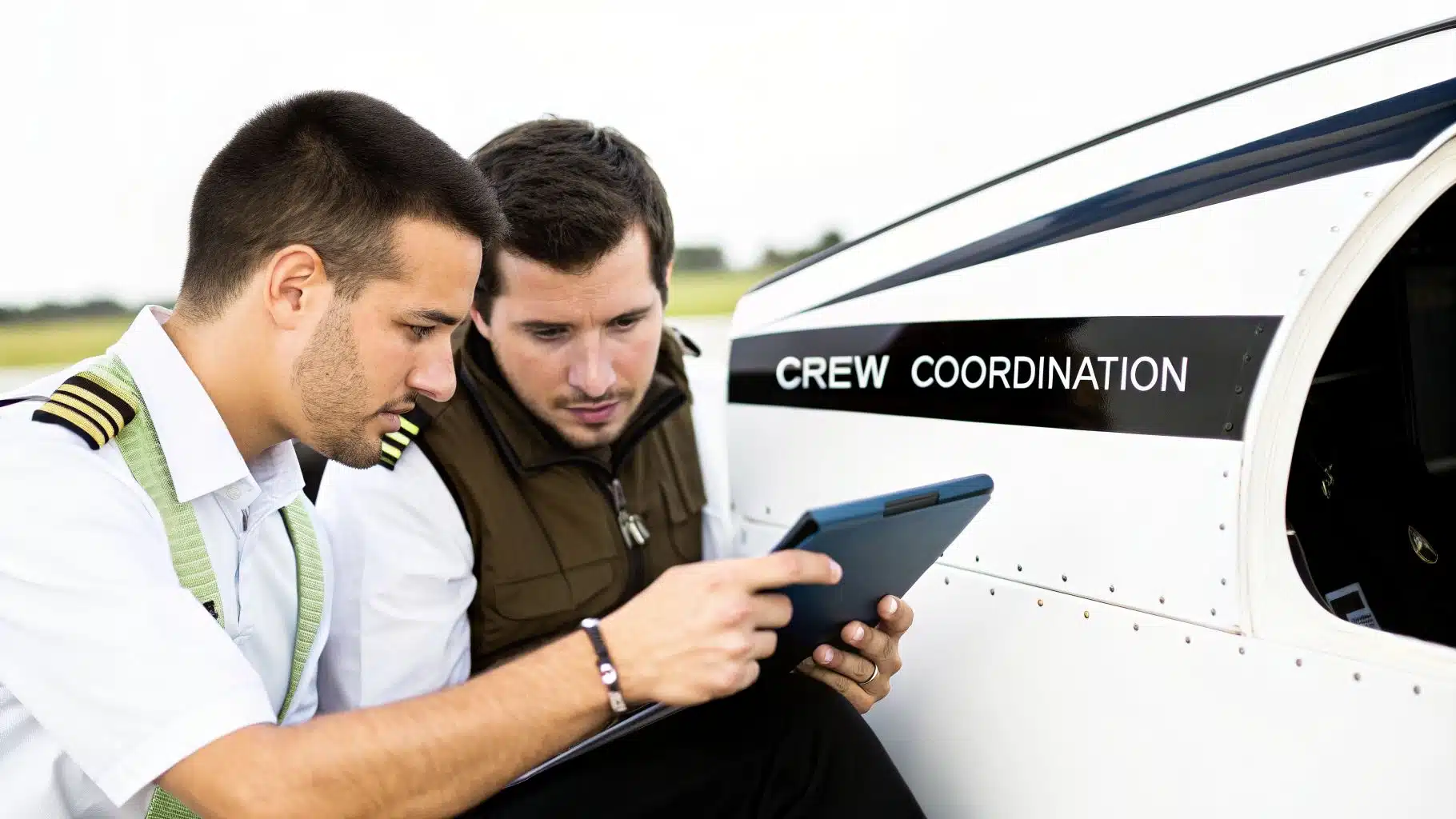
Your response should highlight any experience you have in a multi-crew or team-based setting, even if it wasn't in an aircraft. Frame your answer around the core principles of Crew Resource Management (CRM). Show that you value clear communication, shared situational awareness, and collaborative decision-making. Acknowledging your instructor's feedback during multi-engine training or discussing team projects from a previous career demonstrates a foundational understanding of these critical skills.
How to Structure Your Answer
A convincing answer will connect theoretical knowledge of CRM with practical examples, showing you are ready to integrate into a professional flight deck.
- Define Your Understanding: Start by explaining what CRM means to you in your own words. For example, "To me, CRM is about using all available resources-people, equipment, and information-to ensure a safe and efficient flight. It's about creating an environment where everyone feels empowered to speak up."
- Provide Specific Examples: Share a concrete story. This could be from your multi-engine training, a simulator session, or even a non-aviation job. "During my multi-engine training, my instructor and I practiced a V1 cut. I verbalized my actions clearly, he confirmed the checklists, and together we managed the simulated emergency by following our established procedures. This taught me the value of standardized callouts and cross-checking under pressure." A deeper exploration of what Crew Resource Management is can provide more context for your answer.
- Connect to Airline Operations: Conclude by expressing your eagerness to apply these skills in an airline environment. Emphasize your respect for the roles of all team members, from the captain to the ground crew, and your commitment to being a supportive and communicative First Officer.
Pro Tip: Even if your flight training has been entirely single-pilot, you can draw parallels from other life experiences. Discussing teamwork in sports, group projects in school, or collaborative roles in a previous job can effectively demonstrate your ability to work well with others. The key is to link that experience back to the principles of aviation safety and CRM.
7. What would you do if you made a mistake during flight operations or discovered a procedural error?
This is one of the most critical airline pilot interview questions because it directly probes your character and commitment to safety. Airlines operate within a robust Safety Management System (SMS), and your response must show that you understand and embrace a non-punitive reporting culture. Interviewers are looking for honesty, accountability, and a mature understanding that transparency is the bedrock of aviation safety, not a sign of weakness.
Your answer should demonstrate that you see mistakes not as personal failures but as learning opportunities for the entire organization. Hiding an error, no matter how small, compromises the safety of everyone. A strong response shows you are a pilot who can be trusted to report issues, take responsibility, and contribute to a continually improving operational environment.
How to Structure Your Answer
Frame your response around the principles of immediate safety, transparent reporting, and personal accountability. Show that your first priority is always the safe outcome of the flight, followed by a commitment to improving the system.
- Acknowledge and Mitigate: First, state that your immediate action would be to fly the airplane and mitigate any immediate threat. If you misread a clearance, your priority is to correct the aircraft's state and communicate with ATC.
- Report Transparently: Clearly state your commitment to reporting the error through the proper channels, such as an Aviation Safety Action Program (ASAP) report. This shows you understand airline procedures and are not afraid to be accountable. Mentioning that you see this as a way to help prevent future occurrences is key.
- Take Ownership: Use a real, minor example from your training. For instance, "During a cross-country flight in training, I incorrectly calculated my top of descent and came in slightly high on the approach. I acknowledged the error to my instructor, went around, and flew the approach again correctly. Afterward, we debriefed the miscalculation, and I now use a more conservative method." This shows you learn from mistakes.
Pro Tip: Conclude by reinforcing your belief that a strong safety culture relies on every pilot's willingness to report their own errors without defensiveness. This demonstrates that your professional values align with those of a major airline, making you a desirable candidate for the flight deck.
8. Tell me about a time you had to make a quick decision with incomplete information
This is a classic behavioral question designed to probe your Aeronautical Decision Making (ADM) skills under pressure. Airlines ask this to see how you react when you don't have the full picture, a common scenario in the dynamic environment of a flight deck. Your answer reveals your judgment, reliance on procedures, and ability to manage risk effectively.
How you respond to these airline pilot interview questions demonstrates your capacity to remain calm and systematic when faced with uncertainty. Interviewers are looking for a pilot who can make a safe, logical choice based on the limited data available, rather than freezing or making a rash move. It’s a direct test of your command potential and situational awareness.
How to Structure Your Answer
The best way to tackle this question is with a clear, concise story using the STAR method (Situation, Task, Action, Result). Focus on a real-world flight scenario where you had to act decisively without all the facts you would have preferred.
- Situation: Briefly set the scene. For example, "During a cross-country flight, I noticed an intermittent flicker in the oil pressure gauge, but the engine instruments and aircraft performance otherwise appeared normal."
- Task: Explain what you needed to do. "My task was to determine the severity of the potential issue and decide whether to continue to my destination, return to my departure airport, or divert to a closer, suitable airport, all with uncertain information about the gauge's reliability."
- Action: Detail the steps you took. Describe your thought process. "I immediately ran the appropriate checklist for low oil pressure. I cross-referenced other engine instruments, which were stable. I reduced power slightly as a precaution, informed ATC of my situation, and began identifying the nearest suitable airports along my route, weighing the risks of continuing versus diverting based on an unconfirmed problem."
- Result: Conclude with the outcome and what you learned. "I elected to make a precautionary diversion to the nearest airport with maintenance services. Upon landing, mechanics found a faulty wire connection to the gauge. The decision validated my training to err on the side of caution. It taught me the importance of trusting my judgment to make a conservative decision even when the data is ambiguous."
Pro Tip: Your story doesn't have to be a major emergency. A scenario involving weather, a minor system abnormality, or an unexpected ATC instruction can work perfectly. The key is to demonstrate a structured thought process that prioritizes safety and uses all available resources, even when they are limited.
9. How have you handled stress and fatigue during your flight training, and how would you manage it as a professional pilot?
This is one of the most critical airline pilot interview questions because it directly addresses safety culture and personal accountability. Interviewers want to see that you recognize fatigue and stress as significant operational threats, not as signs of weakness. Your answer should demonstrate maturity, self-awareness, and a concrete plan for managing these inevitable challenges throughout your career.
Your response needs to show that you take a proactive, multi-faceted approach to well-being. A pilot who prioritizes fitness, nutrition, and rest is a pilot who is preparing to perform at their best. This question is a chance to prove you understand that peak performance in the cockpit begins with disciplined self-management on the ground.
How to Structure Your Answer
A strong answer acknowledges the reality of fatigue, provides specific examples from your training, and connects your personal strategies to professional standards and FAA regulations. Show that you view fatigue management as a core responsibility, not an afterthought.
- Acknowledge and Validate: Start by confirming that you understand the seriousness of stress and fatigue in aviation. For instance, "I recognize that fatigue is a major safety risk, and managing it was a key lesson during my training, especially during intensive periods like building instrument cross-country time."
- Provide Specific Strategies: Detail the methods you use. Discuss the importance of quality sleep, proper nutrition, and physical exercise. Mention specific planning and preparation techniques you used to minimize stress before a complex flight, such as pre-studying procedures or ensuring all materials were ready the night before.
- Connect to a Professional Mindset: Link your personal habits to the professional standards of an airline pilot. Mention your awareness of FAR Part 117 rest requirements and the principles of Crew Resource Management (CRM). Explain that you would not hesitate to communicate your fitness for duty to a captain or use a company's fatigue reporting system if needed.
Pro Tip: Give a specific, brief example from your training. You might say, "There was one week during my commercial training where I had back-to-back flights and ground school. I noticed my performance dipping, so I made the call to cancel a non-essential flight to ensure I was fully rested for my next critical lesson. This taught me the importance of recognizing my own limits." This shows you can make a tough, safety-first decision.
10. Describe your experience with different weather conditions and how you approach flying in challenging weather
This question is a cornerstone of the technical portion of airline pilot interview questions. Recruiters are not just testing your textbook meteorology knowledge; they are evaluating your real-world judgment, risk management, and decision-making skills. Your answer must show a profound respect for weather and a commitment to conservative, safety-first operations.
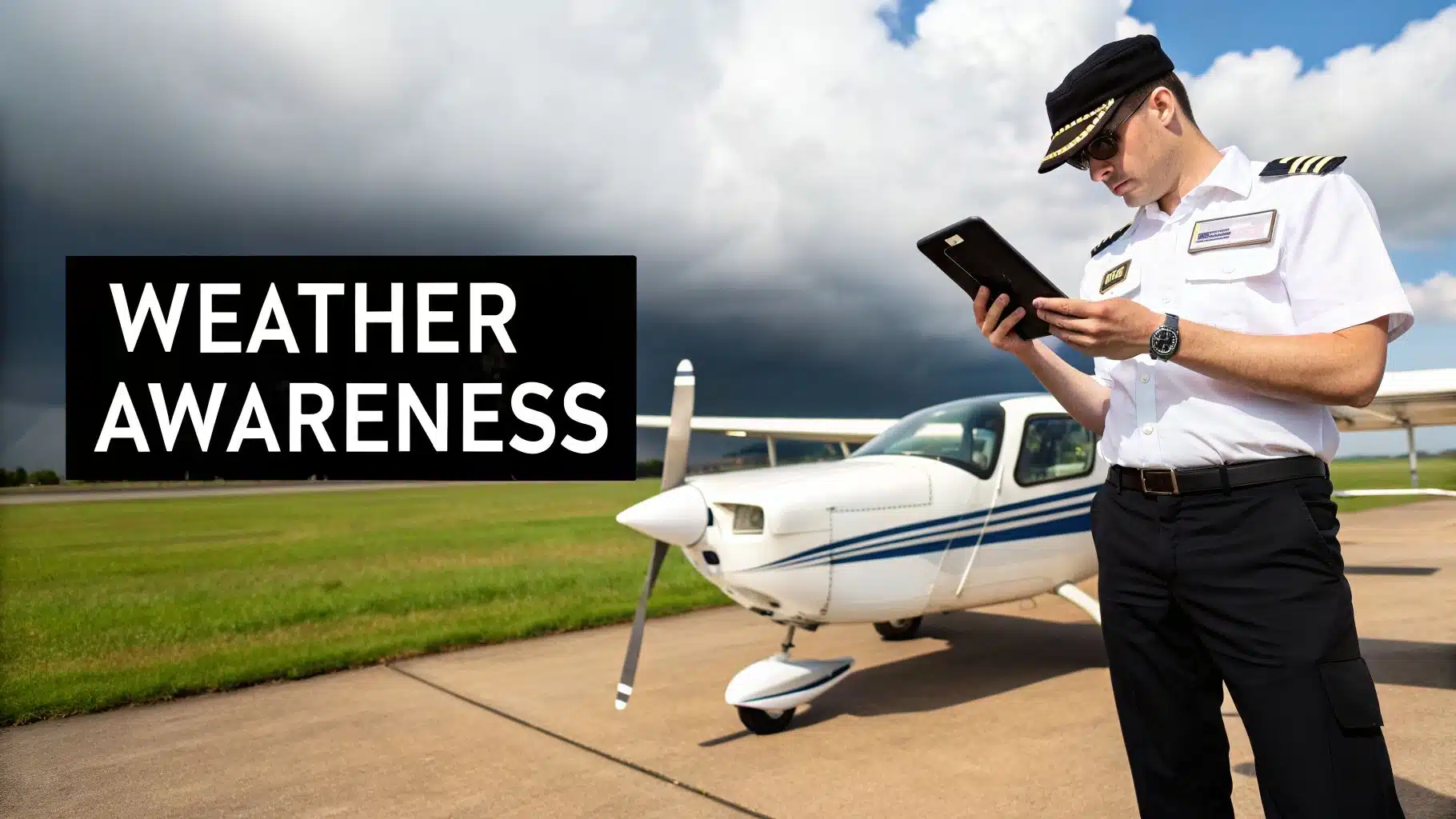
A strong response demonstrates that you see weather as a critical factor in every flight, not an obstacle to be overcome. It involves discussing your thought process for pre-flight planning, in-flight monitoring, and making go/no-go or diversion decisions. Showcasing specific examples where you prudently delayed a flight or diverted due to weather is far more impressive than a story about "toughing it out" through a storm.
How to Structure Your Answer
Frame your response around your decision-making process, supported by specific examples from your training and flight experience. Your goal is to prove you are a safe, methodical, and well-informed pilot.
- Foundation of Knowledge: Start by affirming your understanding of weather theory and information sources (METARs, TAFs, PIREPs, prognostic charts). Mention your process for building a complete weather picture for any flight.
- Specific Examples: Provide a clear example. "During a cross-country flight for my instrument rating, the forecast showed a cold front moving in faster than expected, with PIREPs indicating unforecast icing conditions along my route. I made the decision to divert to a nearby alternate well before encountering the icing layer, refuel, and wait for conditions to improve."
- Personal Minimums: Discuss the concept of personal minimums that are more conservative than legal requirements. This shows maturity and good judgment. For instance, "While legal VFR is 3 miles visibility, my personal minimum for a cross-country flight is 5 miles, and I add a buffer for ceilings, especially in unfamiliar terrain."
Pro Tip: When discussing a weather decision, always conclude with the positive outcome. Emphasize that the choice to delay, divert, or cancel was the correct one because it ensured the safety of the flight, which is always the top priority. This reinforces that you align with the safety culture of the airline.
Buying and Selling Aircraft: A Pilot's Guide
For many aviators, the dream extends beyond the airline cockpit to personal aircraft ownership. Whether buying your first airplane to build hours or selling a trusted helicopter to upgrade, the process requires the same diligence and safety mindset expected in an airline interview. Understanding how to buy an airplane the safe way not only protects your investment but also reinforces the meticulous habits that define a professional pilot.
Tips for People Looking to Buy or Sell Airplanes and Helicopters
- For Buyers: Do Your Homework. The most critical step is the pre-purchase inspection. Never skip it. Hire an independent, reputable A&P mechanic, ideally one with extensive experience on the specific make and model. This inspection should include a thorough logbook review, title search for liens, and a detailed examination of the airframe, engine, and systems.
- For Sellers: Transparency is Key. Prepare your aircraft for sale by organizing all logbooks and maintenance records. Be upfront about any damage history or known issues. A complete and honest presentation builds trust with potential buyers and can lead to a quicker, smoother sale at a fair price.
- Understand the Market. Whether buying or selling, research current market values for similar aircraft. Factors like total time on the airframe and engine (TTAF/SMOH), avionics, paint/interior condition, and damage history all significantly impact price.
- How to Buy an Airplane the Safe Way. Your mantra should be "inspect, verify, and document."
- Define Your Mission: What is the primary purpose of the aircraft? Cross-country travel, local flights, training? This dictates the type of airplane or helicopter you need.
- Set a Budget: Include not just the purchase price, but also the cost of insurance, hangar/tie-down, fuel, and anticipated maintenance.
- Engage Experts: In addition to a mechanic for the pre-buy, consider an escrow service for the transaction and an aviation lawyer to review the purchase agreement.
Successfully navigating an aircraft transaction demonstrates project management skills, financial responsibility, and a deep understanding of aviation mechanics and regulations—qualities that are highly attractive to any airline recruiter.
Your Next Steps: From Interview to Onboarding
The path from the training environment to the airline flight deck is paved with preparation. As we've explored, mastering the most common airline pilot interview questions is less about memorizing scripted answers and more about demonstrating a deep understanding of aviation principles, safety culture, and professional conduct. Your ability to articulate your experiences using frameworks like the STAR method, explain technical concepts with clarity, and convey your commitment to Crew Resource Management (CRM) is what truly sets you apart.
Recruiters are not just hiring a pilot; they are selecting a future captain, a brand ambassador, and a trusted colleague who will uphold the airline's exacting standards. Each question, from "Why do you want to work for this airline?" to "Describe a challenging flight situation," is an opportunity to showcase your judgment, airmanship, and alignment with their operational philosophy. Think of the interview as your final checkride before joining the line.
Key Takeaways for Your Interview Preparation
The insights from this guide boil down to a few core principles that should govern your preparation strategy. Internalizing these will give you a significant advantage.
- Authenticity Over Perfection: Your personal stories and real-world experiences, even those involving mistakes, are your most powerful assets. Airlines want to see how you learn and grow from challenges, not hear a flawless but impersonal narrative.
- CRM is Everything: Whether you're discussing a solo flight decision or a multi-crew simulator session, frame your actions within the context of teamwork, communication, and using all available resources. This mindset is non-negotiable in the modern cockpit.
- Know Their Operation: Generic praise for an airline falls flat. Your research must be specific. Reference their fleet, route structure, recent achievements, or unique company culture. This demonstrates genuine interest and initiative.
Pro Tip: Don't just practice your answers in your head. Record yourself responding to questions aloud. This simple technique helps you identify verbal tics, refine your pacing, and ensure your responses sound as confident and competent as you are.
The structured curriculum and real-world experience gained at DuBois Aviation, from navigating the busy Chino Airport airspace to mastering complex procedures, provide the perfect foundation for every stage of your career. Your career is cleared for takeoff. Continue to study, practice your responses, and fly with precision and purpose.
Ready to build the foundational skills and command presence that airline recruiters are looking for? At DuBois Aviation, our Airline Career Program is specifically designed to prepare you for the real-world challenges of the profession, from your first solo to your final interview. Start your journey with DuBois Aviation today and turn your cockpit aspirations into a successful career.