Your pilot resume is more than a document; it's the flight plan for your entire aviation career. A perfectly crafted resume is your ticket to getting noticed by recruiters, whether you're a fresh graduate from a program like DuBois Aviation's Private Pilot course or an experienced aviator eyeing the captain's seat. Applicant Tracking Systems (ATS) and discerning hiring managers demand precision, clarity, and quantifiable achievements.
This guide provides 8 detailed airline pilot resume examples, each with strategic analysis and actionable tips. We will show you how to showcase your skills, from your first logbook entry to your multi-engine commercial certificate. You'll learn how to present your flight hours, certifications, and experience in a way that aligns directly with the needs of major airlines and specialized operators.
We'll break down resumes for every career stage:
Two practical options worth comparing
These are specific products pilots commonly compare for this type of flying. Confirm compatibility with your aircraft and instructor before ordering.
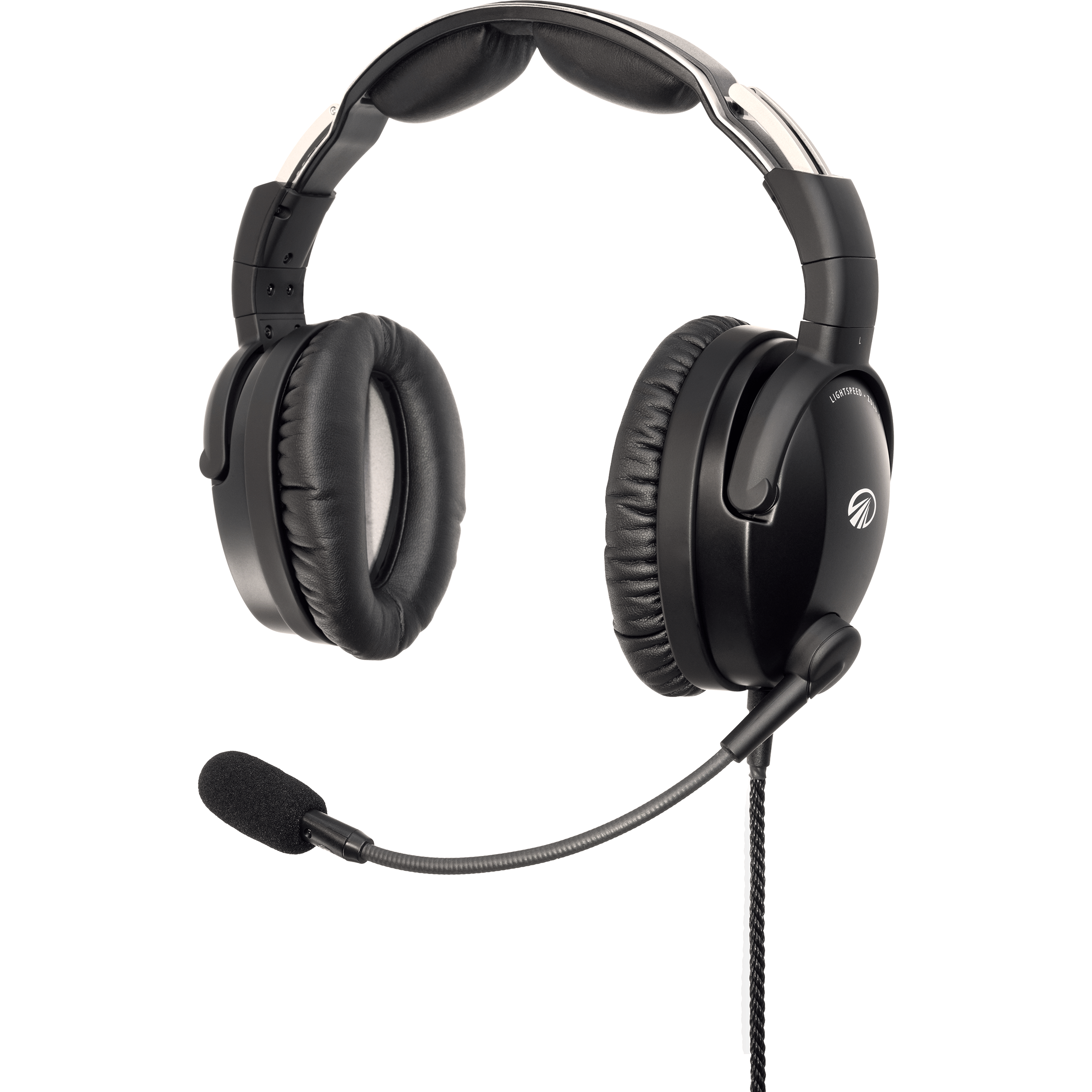 Premium ANR headsetLightspeed Zulu 4 ANR Aviation Headset - Dual GA PlugCheck current availability on Amazon (paid link)
 Premium headsetBose A30 Bluetooth Aviation Headset - Dual PlugCheck current availability on Amazon (paid link)
- Entry-Level & Certified Pilots: From Private Pilot to Multi-Engine and CFI.
- Specialized Roles: Including helicopter pilots and mature career-changers.
- Accelerated Pathways: Tailoring your resume for programs like DuBois Aviation's Airline Career Program.
We will also touch upon strategies for those looking to buy or sell an airplane, as presenting your credentials professionally is just as important in those high-stakes transactions. Our goal is to move beyond generic advice and provide replicable strategies that help you stand out and land your dream job in the cockpit. To complement the specific examples provided here, you might also find a comprehensive detailed pilot resume guide useful for general strategies. Let's get started on charting your course to success.
1. Private Pilot Resume – Entry-Level Flight Training Graduate
Your journey to the flight deck begins with your first professional document: the private pilot resume. For pilots who have just earned their wings, this resume’s goal is to translate foundational training into professional potential. It showcases not just that you can fly, but how you learned, where you trained, and the quality of your aeronautical decision-making from day one. This document is your first step in building a career narrative, essential for securing roles like banner towing, aerial survey, or even a position that supports aviation operations while you build hours.
Strategic Breakdown
An entry-level resume must compensate for a lack of professional flight hours with rich detail about your training. Unlike experienced captains who summarize thousands of hours, a new private pilot must meticulously document their initial 60-100 hours. The strategy is to highlight the quality and complexity of your training environment, demonstrating a solid foundation in safety, procedures, and airmanship.
Key Takeaway: Your early-stage resume isn't about total time; it's about proving you have high-quality time. Focus on the specifics of your training, the airspace you navigated, and the aircraft you mastered. This detailed approach is a key part of what makes strong airline pilot resume examples so effective, even at the very beginning.
Actionable Takeaways & Examples
To build a compelling private pilot resume, concentrate on these areas:
Detail Your Flight Hours: Don't just list total time. Break it down to show proficiency.
- Example: Total Time: 72 Hours | Piper Cherokee PA-28-140 (N12345): 65 Hours | Cross-Country: 15.5 Hours | Night: 3.5 Hours | Simulated Instrument: 3.1 Hours.
Emphasize Training Environment: Flying out of a busy, towered airport is a significant asset.
- Example: Conducted all training operations at Chino Airport (KCNO), a Class D towered airport with over 150,000 annual operations, developing strong radio communication and ATC coordination skills.
Showcase Aeronautical Knowledge: Mention your training systems and any standout academic achievements.
- Example: Completed intensive ground school using Jeppesen training materials, achieving a 98% on the FAA Private Pilot Knowledge Test.
For those just starting, understanding the complete process is vital. This document is more than a record; it's a testament to your commitment and a foundational tool, whether your next step is buying an airplane or building hours toward a commercial certificate.
2. Instrument-Rated Pilot Resume – Advanced Skill Certification
Earning your Instrument Rating is a significant leap in proficiency, and your resume must reflect this new level of capability. This document moves beyond foundational skills and demonstrates your ability to operate an aircraft in complex airspace and adverse weather conditions. It shows potential employers, charter operators, or flight schools that you possess the discipline, precision, and decision-making skills required for flights under Instrument Flight Rules (IFR). This resume is crucial for securing more advanced time-building roles and positions you as a serious candidate for commercial operations.
Strategic Breakdown
With an Instrument Rating, your resume's strategy shifts from proving you can fly to proving you can think and operate like a professional pilot. The focus moves to IFR proficiency, systems knowledge, and your ability to manage high-workload situations. You must detail your instrument time, including the types of approaches flown and the navigation systems used. The goal is to present a narrative of a safe, methodical, and capable pilot ready for the next challenge.
Key Takeaway: An instrument-rated resume is about demonstrating reliability and precision. Document every aspect of your IFR training-from simulator sessions to actual IMC-to prove you're not just a fair-weather pilot. This detailed evidence of advanced skill is a cornerstone of effective airline pilot resume examples.
Actionable Takeaways & Examples
To make your instrument-rated pilot resume stand out, focus on these specific elements:
Quantify Instrument Experience: Provide a clear and detailed breakdown of your instrument flight time.
- Example: Total Time: 125 Hours | Actual Instrument (IMC): 5.5 Hours | Simulated Instrument: 35.5 Hours | Logged 45+ IFR Approaches (ILS, LPV, VOR, RNAV).
Highlight Advanced Training Environments: Specify the tools and locations that sharpened your IFR skills.
- Example: Completed 20 hours of scenario-based training in a DuBois Aviation Redbird FMX full-motion simulator, mastering emergency procedures and complex IFR flight plans. Practiced holding patterns and the three-approach system at Chino Airport (KCNO).
Showcase Systems Proficiency: List the specific avionics and navigation systems you have mastered, especially modern glass cockpits.
- Example: Proficient with Garmin G1000 and GNS 430/530 avionics suites, including flight plan entry, VNAV, and autopilot-coupled approaches.
This resume is your proof of completing one of aviation’s most demanding ratings and prepares you for the next step, whether that's commercial training or exploring how to buy an airplane for building hours.
3. Commercial Pilot Resume – Pilot-in-Command Professional Certification
Earning a Commercial Pilot License is a major career milestone; it marks the transition from student to professional. This resume demonstrates you are no longer just learning to fly but are now legally qualified to be paid for your piloting skills. It is your primary tool for securing your first professional flying jobs, such as flight instructing, charter operations, or aerial survey missions, which are critical for building the flight time required for an airline career. This document must prove you are a safe, competent, and reliable Pilot-in-Command.
Strategic Breakdown
Unlike the entry-level private pilot resume, the commercial pilot resume shifts focus from training potential to professional capability. Recruiters are now looking for proof of your ability to act as Pilot-in-Command on complex missions. The strategy is to prominently display your total flight time and endorsements while providing specific evidence of your decision-making, systems management, and cross-country experience. A graduate with 280 hours and significant multi-engine time, for instance, must detail that experience to stand out.
Key Takeaway: Your commercial resume is a statement of professional readiness. It must clearly communicate not just your total hours, but the quality and complexity of those hours. Highlighting multi-engine time, complex aircraft experience, and participation in career-focused programs transforms your resume into a compelling narrative, a core component of effective airline pilot resume examples.
Actionable Takeaways & Examples
To create a powerful commercial pilot resume, focus on these elements to showcase your professional qualifications:
Prominently Feature Flight Hours: Place your hour breakdown at the very top, making it impossible to miss.
- Example: Total Time: 280 | PIC: 165 | Multi-Engine: 62 (55 PIC) | Cross-Country: 75 | Instrument (Actual/Sim): 55.
Detail Complex and Multi-Engine Experience: Show you can manage more advanced aircraft.
- Example: Gained 62 hours of multi-engine time in a Piper Apache, mastering engine-out procedures, asymmetric throughst management, and complex systems operations at DuBois Aviation.
Highlight Career Program Participation: Note any structured pathway programs that demonstrate your commitment.
- Example: Selected for and actively participating in the DuBois Aviation Airline Career Program, receiving mentorship and a direct pathway toward regional airline placement.
Showcase Cross-Country and Command Skills: Emphasize your ability to plan and execute long-haul flights.
- Example: Successfully planned and executed over 20 solo cross-country flights exceeding 150 NM, including flights into high-density airspace, demonstrating superior flight planning and fuel management skills.
This resume marks a significant step, showing you're ready for professional roles. For pilots at this stage who are looking toward ownership, learning how to buy an airplane the safe way can be a logical next career move, providing a platform to build hours independently.
4. Multi-Engine Pilot Resume – Advanced Equipment Certification
Earning a multi-engine rating is a major milestone, signaling a pilot's readiness to handle more complex and powerful aircraft. A multi-engine resume must clearly articulate this leap in capability, showcasing your ability to manage asymmetrical throughst, advanced systems, and higher performance profiles. This document is your ticket to more advanced professional flying roles and is a critical step toward a regional airline career, demonstrating you can safely operate the type of equipment that forms the backbone of commercial aviation.
Strategic Breakdown
With a multi-engine rating, your resume strategy shifts from documenting foundational skills to highlighting advanced proficiency. While total hours are still important, the emphasis moves to the quality and recency of your multi-engine time. Recruiters want to see that you are not just certified, but comfortable and competent in a twin-engine environment, especially with emergency procedures like engine failures. The goal is to prove you possess the specialized knowledge and airmanship required for this next level of professional aviation.
Key Takeaway: Your multi-engine resume must prove proficiency, not just certification. Detail your experience with complex systems, asymmetrical throughst management, and emergency procedures. This focus on specific, advanced competencies is a common thread in the most successful airline pilot resume examples for pilots breaking into the professional ranks.
Actionable Takeaways & Examples
To construct a resume that effectively showcases your multi-engine skills, focus on these key elements:
Isolate and Detail Multi-Engine Hours: Create a separate, clear entry for your multi-engine time to make it stand out.
- Example: Multi-Engine Land: 55 Hours | Piper Apache PA-23 (N5678P): 55 Hours | PIC: 12.5 Hours | Cross-Country: 8.0 Hours | Instrument (Simulated): 5.5 Hours.
Highlight Specific Aircraft and Training: Mentioning the exact aircraft, like the Piper Apache used at DuBois Aviation, shows experience with a known training platform.
- Example: Completed rigorous multi-engine training at DuBois Aviation (KCNO) in a Piper Apache PA-23, focusing on Vmc demonstrations, engine-out procedures, and complex aircraft systems management.
Document Advanced Procedural Competence: Go beyond flight hours to list the specific skills you mastered.
- Example: Proficient in asymmetrical throughst operations, single-engine instrument approaches, and emergency gear extension procedures. Achieved a 95% on the FAA Commercial Pilot Knowledge Test.
For pilots who have achieved this rating, the career path becomes clearer, though practical decisions like aircraft ownership may arise. Understanding the process of how to buy an airplane the safe way can be a valuable next step, whether for personal travel or to continue building hours efficiently toward your airline goals. This resume marks your transition from trainee to a capable, professional aviator.
5. Helicopter Pilot Resume – Rotorcraft Specialization
Transitioning into the world of rotorcraft marks a significant specialization, and your resume must reflect this unique expertise. A helicopter pilot resume is designed for pilots who have dedicated their training to the distinct principles of vertical flight. Unlike fixed-wing aircraft, helicopters operate with different aerodynamics, systems, and mission profiles, making it critical to highlight this specialized skill set. This resume is your primary tool for securing roles in scenic tours, electronic news gathering, or utility operations while you build hours for advanced commercial work.
Strategic Breakdown
A successful helicopter pilot resume emphasizes proficiency in a fundamentally different and often more demanding flight environment. While total hours are important, the strategy here is to showcase mastery over helicopter-specific skills like hovering, low-level flight, and pinnacle landings. You must clearly differentiate your rotorcraft experience from any fixed-wing time and detail your familiarity with specific helicopter models and their complex systems. The goal is to present yourself as a specialist, not just a pilot.
Key Takeaway: Your helicopter resume must prove you are a master of the vertical domain. Focus on specific rotorcraft maneuvers, emergency procedure training, and the types of helicopters you've flown. This level of detail is a hallmark of strong airline pilot resume examples and demonstrates a professional, specialized approach.
Actionable Takeaways & Examples
To build a resume that stands out in the rotorcraft industry, concentrate on these specific areas:
Isolate and Detail Helicopter Hours: Create a clear separation between rotorcraft and any other flight time. Be specific about the models.
- Example: Rotorcraft – Helicopter: 85 Hours Total | Robinson R-22: 45 Hours | Enstrom F-28A: 40 Hours | Dual Received: 65 Hours | Pilot-in-Command: 20 Hours.
Highlight Specialized Maneuvers and Training: Emphasize skills that are unique to helicopter operations.
- Example: Completed extensive training in autorotations, hovering, and pinnacle/slope landings. Conducted all flight training at Chino Airport (KCNO), developing precision communication skills in busy Class D airspace.
Showcase Safety and Procedural Knowledge: Document your training in emergency scenarios, a critical component of helicopter operations.
- Example: Proficient in emergency procedures including full-touchdown autorotations and simulated hydraulic failures. Achieved a 96% on the FAA Commercial Pilot – Helicopter Knowledge Test.
For those interested in this unique career path, it's also wise to understand the ownership aspect. As you gain experience, you might consider purchasing your own machine; learning how to buy an airplane or helicopter safely provides critical knowledge about maintenance logs and pre-buy inspections that also makes you a more discerning pilot.
6. Airline Career Program Resume – Accelerated Professional Pathway
Enrolling in a structured airline career program is a significant commitment that signals a serious, professional approach to becoming an airline pilot. Your resume must reflect this dedication. This document goes beyond simply listing ratings; it tells the story of an accelerated, guided journey from zero time to airline-ready. It demonstrates that you haven't just learned to fly, but have been trained from day one with a focus on professional standards, airline procedures, and efficient progression. This resume is built to capture the attention of regional airline recruiters who value candidates from proven, structured training environments.
Strategic Breakdown
Unlike a pilot who builds hours independently over several years, a career program graduate has a concentrated, linear story to tell. The strategy here is to highlight the program's structure, intensity, and direct pipeline to the airlines. Every entry, from your Private Pilot certificate date to your multi-engine hours, should reinforce a narrative of consistent progress and professional development. You are not just a collection of certificates; you are the product of a system designed to create proficient First Officers.
Key Takeaway: Your resume should function as a report card for your entire professional pathway. Emphasize program milestones, mentorship, and your deep understanding of airline hiring standards. This focus on structured training is what distinguishes these airline pilot resume examples from others, showcasing your readiness for the right seat.
Actionable Takeaways & Examples
To construct a resume that truly represents your career program experience, focus on these elements:
Clearly Identify the Program and Your Status: Recruiters recognize top-tier programs. Make it prominent.
- Example: Graduate, DuBois Aviation Airline Career Program, Chino, CA (May 2024). Completed an intensive, full-time professional pilot curriculum from zero experience to Commercial Multi-Engine in 14 months.
Document Milestones with Precision: Show your efficient progression through ratings. Dates matter.
- Example: Private Pilot (PPL): March 2023 | Instrument Rating (IR): August 2023 | Commercial Single-Engine (CSEL): January 2024 | Commercial Multi-Engine (CMEL): May 2024.
Highlight Advanced Training Aircraft and Environment: Mention specific aircraft and the complexity of your home airport.
- Example: Gained 25 hours of complex, multi-engine experience in the Piper Apache (PA-23), mastering engine-out procedures and systems management. All training conducted at KCNO, a busy Class D airport.
Showcase Professionalism and Mentorship: Connect your training to experienced mentors and airline readiness.
- Example: Mentored directly by senior instructors with 10,000+ hours of flight experience, receiving dedicated preparation for airline interview technical questions and TMAAT scenarios.
This structured approach shows that you are not just waiting for an opportunity; you have been preparing for it meticulously. For those considering this pathway, it's also worth investigating the long-term investment, including how to buy an airplane the safe way as a time-building tool after program completion, which can further accelerate your career trajectory.
7. Flight Instructor (CFI) Resume – Advanced Credential for Teaching
Becoming a Certified Flight Instructor (CFI) is a significant milestone, shifting your role from a sole operator to an educator and mentor. This resume must demonstrate a dual competency: your skill as a pilot and your effectiveness as a teacher. For flight schools like DuBois Aviation or charter operators, a great CFI resume proves you can safely build the skills of others, manage student progress, and uphold the highest standards of professionalism. It’s a document that showcases leadership and a deep commitment to aviation safety and education.
Strategic Breakdown
A CFI resume moves beyond personal flight hours to emphasize instructional impact. While your total time is still important, the primary metrics become hours of instruction given, student success rates, and the breadth of your teaching capabilities (CFI, CFII, MEI). The strategy is to quantify your teaching success, showing you can produce competent, safe pilots. You are no longer just a pilot; you are an asset that multiplies the talent pool of an entire flight school.
Key Takeaway: Your CFI resume must tell a story of mentorship and results. Focus on metrics that prove your value as an instructor, such as student checkride pass rates and your ability to train in diverse aircraft and complex airspace. This is a critical component of strong airline pilot resume examples for those on the professional track.
Actionable Takeaways & Examples
To create a powerful CFI resume, focus on these key areas:
Quantify Instructional Experience: Go beyond total time and show your teaching footprint.
- Example: Total Flight Time: 810 Hours | Total Instruction Given: 325 Hours | Dual Given: 275 Hours | Endorsed 12 students for solo flight and 8 for Private Pilot checkrides.
Showcase Student Success: Provide concrete evidence of your teaching effectiveness.
- Example: Maintained a 92% first-time pass rate for students on FAA practical exams (checkrides). Developed a supplementary ground school curriculum for the Piper Apache (PA-23) that increased student knowledge test scores by an average of 15%.
Highlight Advanced Credentials & Environment: Detail your instructor ratings and the complexity of your training environment.
- Example: Certified Flight Instructor (CFI), Instrument (CFII). Conducted over 200 hours of instrument instruction at Chino Airport (KCNO), a busy Class D environment, preparing students for real-world IFR conditions.
This document is your professional calling card, essential for joining top-tier flight schools and building the hours needed for an airline career.
8. Mature/Career-Change Pilot Resume – Second-Career Professional Transition
For professionals entering aviation as a second career, the resume serves a unique purpose. It must skillfully bridge decades of non-aviation experience with new flight qualifications. This document demonstrates that your past professional life, whether in business, technology, or healthcare, has built a foundation of maturity, critical thinking, and reliability that directly applies to the flight deck. The goal is to frame your career change not as a whimsical pivot, but as a deliberate, well-planned move by a seasoned professional ready to commit to a new, long-term aviation career.
Strategic Breakdown
Unlike a pilot who has only known aviation, a career-changer's resume must tell a story of convergence. The strategy is to lead with your hard-earned pilot certificates and ratings while weaving in transferable skills from your previous career. You must prove that qualities like leadership, project management, and calm under pressure are not just newly learned concepts but deeply ingrained professional traits. This approach positions your maturity and diverse experience as a distinct advantage, showcasing a level of professionalism that airlines highly value.
Key Takeaway: Your resume must connect the dots between your past and future. Don't hide your prior career; integrate it. Emphasize how skills honed over years in another demanding field make you a more stable, dependable, and well-rounded pilot today. This narrative is a powerful component of many successful airline pilot resume examples.
Actionable Takeaways & Examples
To create a persuasive career-change pilot resume, focus on these key areas:
Lead with Aviation, Support with Experience: Place your certificates, ratings, and flight hours at the top. Follow with a "Professional Experience" section that highlights your past career, but use bullet points that emphasize transferable skills.
- Example (Former Tech Manager): Managed cross-functional teams of 15+ engineers, ensuring project completion on-time and under-budget, developing skills in resource allocation and complex problem-solving.
Highlight Stability and Commitment: Your prior career shows a proven work ethic. Mentioning your long tenure or significant accomplishments demonstrates you are a reliable long-term investment.
- Example: Maintained a 15-year career at XYZ Corporation, receiving three promotions and leading high-value projects, demonstrating loyalty and a commitment to professional growth.
Frame Maturity as an Asset: Explicitly connect your life experience to the demands of an airline pilot career. Crew resource management, decision-making, and communication are all areas where a mature professional excels.
- Example: Leveraged extensive experience in high-stakes client negotiations to develop superior communication and conflict-resolution skills, directly applicable to crew resource management (CRM) and passenger interactions.
For those making this significant transition, understanding the full scope of the commitment is key. This includes not just training but also the financial aspects of a new career path, from funding your education to eventually considering asset acquisition. Learning how to buy an airplane the safe way is a long-term goal for many, and demonstrating such forward-thinking on your resume can underscore your serious commitment to the aviation industry.
Airline Pilot Resumes: 8-Example Comparison
| Resume Type | Implementation Complexity 🔄 | Resource Requirements ⚡ | Expected Outcomes ⭐📊 | Ideal Use Cases 💡 | Key Advantages ⭐ |
|---|---|---|---|---|---|
| Private Pilot Resume – Entry-Level Flight Training Graduate | 🔄 Low — simple layout highlighting certificate, 60–70 hrs, and endorsements | ⚡ Low — logbook, certificate, medical, school contacts | ⭐📊 Establishes foundational credibility; limited paid opportunities | 💡 New certificants seeking time-building, discovery flights, CFI candidacy prep | ⭐ Shows completed training, safety focus, controlled‑airport experience |
| Instrument-Rated Pilot Resume – Advanced Skill Certification | 🔄 Low–Medium — add instrument hour breakdown, procedures, simulator details | ⚡ Medium — instrument log, simulator records, instructor endorsements | ⭐📊 Demonstrates IFR capability; improves operational scope and employability | 💡 Pilots preparing for advanced roles, CFI/CFII applicants, adverse-weather ops | ⭐ Enables IMC operations, advanced navigation, stronger safety case |
| Commercial Pilot Resume – Pilot-in-Command Professional Certification | 🔄 Medium — emphasize total hours, complex aircraft, checkride outcomes | ⚡ High — 250+ hrs, instrument credential, endorsements, examiner records | ⭐📊 Permits compensated flying; opens flight school, charter, and airline entry roles | 💡 Applicants for paid pilot jobs, airline pathway candidates, instructional roles | ⭐ Legal authorization to be paid, professional skillset, increased marketability |
| Multi-Engine Pilot Resume – Advanced Equipment Certification | 🔄 Medium — detail multi‑engine systems, asymmetric procedures, separate hour splits | ⚡ High — multi‑engine hours, complex aircraft rental/sim time, specialized training | ⭐📊 Strongly enhances hireability for regional airlines, charter, corporate ops | 💡 Candidates targeting regional airlines, charter, corporate or turboprop roles | ⭐ Preferred by operators; proves competence with complex, higher‑performance aircraft |
| Helicopter Pilot Resume – Rotorcraft Specialization | 🔄 Medium — rotorcraft endorsements, low‑level and hover proficiency emphasized | ⚡ High — rotorcraft hours costlier, type‑specific training and endorsements | ⭐📊 Access to niche markets (tours, MEDEVAC, SAR); specialized but narrower demand | 💡 Pilots targeting scenic tours, emergency services, corporate helicopter roles | ⭐ Unique specialization; less direct fixed‑wing competition; specific mission roles |
| Airline Career Program Resume – Accelerated Professional Pathway | 🔄 High — document structured milestones, timelines, mentor relationships | ⚡ Very High — accelerated costs, concentrated time‑building and program fees | ⭐📊 Optimized path to First Officer readiness; stronger airline recognition | 💡 Aspiring airline pilots wanting guided, cohort‑based accelerated progression | ⭐ Structured curriculum, mentorship, efficient progression and industry alignment |
| Flight Instructor (CFI) Resume – Advanced Credential for Teaching | 🔄 High — include instructional hours, student pass rates, teaching philosophy | ⚡ High — CFI/CFII/MEI credentials, extensive flight and instruction hours | ⭐📊 Provides paid time‑building, teaching career pathway, and flight‑school roles | 💡 Pilots seeking paid hour building, flight‑school employment, mentorship roles | ⭐ Earn while building hours, demonstrate instructional ability and leadership |
| Mature/Career-Change Pilot Resume – Second-Career Professional Transition | 🔄 Medium — balance prior career achievements with aviation credentials | ⚡ Variable — training needs depend on prior experience and chosen pathway | ⭐📊 Signals maturity, stability, and transferable skills attractive to employers | 💡 Professionals transitioning to aviation leveraging leadership/technical backgrounds | ⭐ Life experience, leadership, financial stability, strong commitment to career change |
Beyond the Resume: Navigating Your Next Aviation Milestone
Throughout this guide, we've broken down a wide range of airline pilot resume examples, from the initial Private Pilot certificate to the specialized credentials of a Flight Instructor or a career-change professional. The common thread connecting each successful example is a commitment to precision, strategic presentation, and quantifiable achievements. We've seen how powerful action verbs, ATS-friendly formatting, and role-specific bullet points transform a simple logbook of hours into a compelling narrative of competence and reliability.
The key is to view your resume not as a historical document but as a strategic marketing tool. For every application, it must be customized to mirror the airline's values, aircraft, and operational focus. As we analyzed, a resume for a regional carrier emphasizing short-haul efficiency will look different from one targeting a major international airline focused on long-haul, multi-crew coordination. Mastering this customization is what separates an applicant who gets a call from one who gets lost in the digital stack.
Key Takeaway: Your pilot resume is the first and most critical piece of your professional identity. Treat it with the same precision and attention to detail you would a pre-flight checklist. The formatting, language, and data you present must work together to build a clear case for why you are the best candidate for the right seat.
Broadening Your Aviation Horizons
As your flight hours accumulate, your career ambitions will naturally expand. For many pilots, the path to building time or gaining operational independence leads to aircraft ownership. Understanding how to buy an airplane the safe way is a critical skill set that complements your abilities in the cockpit. This process requires a meticulous approach that every pilot should appreciate.
Key steps for a safe aircraft acquisition include:
- A Thorough Pre-Buy Inspection: Never skip this step. Engage a trusted, independent A&P mechanic, preferably one with experience in the specific make and model, to conduct a nose-to-tail inspection.
- Comprehensive Logbook and Records Review: The aircraft’s history is written in its logbooks. Scrutinize them for damage history, consistent maintenance, and compliance with all Airworthiness Directives (ADs).
- Title Search and Escrow: Use a reputable aviation escrow service to perform a title search, ensuring the aircraft is free of outstanding liens or legal claims before any funds are transferred.
For those looking to sell an aircraft or helicopter, preparation is equally important. Organizing maintenance records, addressing any known issues, and presenting the aircraft professionally will ensure a smoother transaction and a better return on your investment. These business-level skills are highly valued in the aviation industry and demonstrate a pilot's broader understanding of operational management.
Finalizing Your Professional Presentation
Your resume is the cornerstone of your application, but your professional brand extends beyond a single document. In an industry built on connections and professional conduct, your online presence is often a recruiter’s next stop. Ensuring your digital footprint is polished is essential. For instance, when navigating your career and making a strong professional impression, remember that your online presence is as crucial as your resume. Consider these 8 Perfect LinkedIn Profile Picture Examples to enhance your professional profile. A clear, professional headshot communicates confidence and attention to detail, reinforcing the message of your carefully crafted resume.
Your journey from aspiring aviator to airline captain is a marathon, not a sprint. Each certificate earned, every hour logged, and each professional connection made is a building block. The airline pilot resume examples and strategies we've detailed are your tools to showcase that hard work effectively. Now, it's time to put that knowledge into action, refine your documents, and take the next confident step toward the flight deck.
Ready to turn your flight training into a direct path to the airlines? DuBois Aviation offers structured career programs and world-class instruction designed to build the skills and flight time that recruiters demand. Visit DuBois Aviation to learn how our accelerated pathways and expert instructors can help you craft the experience needed for a top-tier pilot resume.