

You're probably in one of two places right now. Either you're a student trying to figure out why training feels slower than it should, or you're running instruction and watching good students lose momentum between lessons, weather delays, instructor changes, and scattered notes.
That problem usually doesn't start in the airplane. It starts on the ground, with weak student progress tracking.
At busy schools, a lot of training drag comes from perfectly normal habits that stop scaling. One instructor keeps notes in a paper folder. Another uses the remarks field in a scheduling app. A student has a logbook, a screenshot of endorsements, and a half-remembered debrief from last Tuesday. Everyone is working hard, but the system is loose. Loose systems create expensive confusion in flight training.
The schools that move students efficiently don't just log time. They track milestones, decision points, weak areas, endorsements, and student reflections in one operating rhythm. The biggest improvement comes when students stop acting like passengers in the process and start owning part of the record themselves. That cuts re-teaching, sharpens debriefs, and makes each lesson build on the last one.
There's also a practical endpoint to this. A well-tracked student often becomes a confident renter, then a buyer. That's why student progress tracking shouldn't stop at the certificate. It should prepare people to evaluate airplanes and helicopters with the same discipline they used in training.
Table of Contents
- Why Ad-Hoc Student Tracking Is Costing Your Flight School
- Mapping Your Training Syllabus to Actionable Milestones
- The Modern CFI Toolkit for Progress Logging
- Fostering Student Ownership for Faster Progress
- Beyond Individual Lessons Reporting for School-Wide Success
- From Pilot Certificate to Aircraft Owner A Safe Buying Guide
Why Ad-Hoc Student Tracking Is Costing Your Flight School
A flight school can look organized from the outside and still bleed efficiency every day. Dispatch is moving, airplanes are booked, instructors are flying, and students are showing up. Then the weak spots appear. A student repeats steep turns because the last instructor didn't document why they were below standard. Another shows up ready for solo prep, but nobody flagged a missing endorsement or an incomplete crosswind block.
That isn't a teaching problem first. It's a tracking problem.
Progress monitoring is defined as the ongoing, frequent collection and use of formal data to assess student performance, quantify the rate of improvement or responsiveness to instruction, and evaluate the effectiveness of interventions using valid and reliable measures. It also requires a specific process detailing how data will be collected, stored, and analyzed, as outlined by MTSS4Success on progress monitoring. In aviation, that same discipline separates a school that guesses from a school that knows.
Where ad-hoc systems fail
The common failure mode is simple. Flight hours are tracked, but performance isn't tracked with enough structure to guide the next lesson. A Hobbs entry tells you time accumulated. It doesn't tell you whether the student still flares high, struggles with radio prioritization in the pattern, or needs one more session before supervised solo work.
Three operational costs show up fast:
- Wasted flight time: Instructors reteach because they don't have a clean record of the last lesson's exact stopping point.
- Student frustration: Learners can't see momentum, so training starts to feel random.
- Pricing confusion: When progress is unclear, students stop trusting the path to completion and become more sensitive to cost. That's one reason schools need transparent planning around flight training cost expectations.
Practical rule: If a student can't answer “what am I ready for, what am I blocked on, and what happens next,” your tracking system is too loose.
What a professional standard looks like
Good student progress tracking is not a bigger pile of paperwork. It's a repeatable operating method. Every lesson should produce the same core outputs: what was planned, what was performed, how it graded against the training standard, what still blocks advancement, and what the student should review before the next flight.
That standard also protects instruction quality. If one CFI is sick, another can pick up the student without losing context. If weather cancels a flight, the student can still use the downtime productively because the next milestone is visible. If a student plateaus, the school can adjust earlier instead of letting delays compound for weeks.
The shift is cultural as much as technical. Schools stop relying on memory and start relying on a system.
Mapping Your Training Syllabus to Actionable Milestones
A syllabus by itself isn't enough. Most schools already have one. The issue is that many syllabi live as reading assignments and lesson labels instead of becoming a visible roadmap that instructors and students use every day.
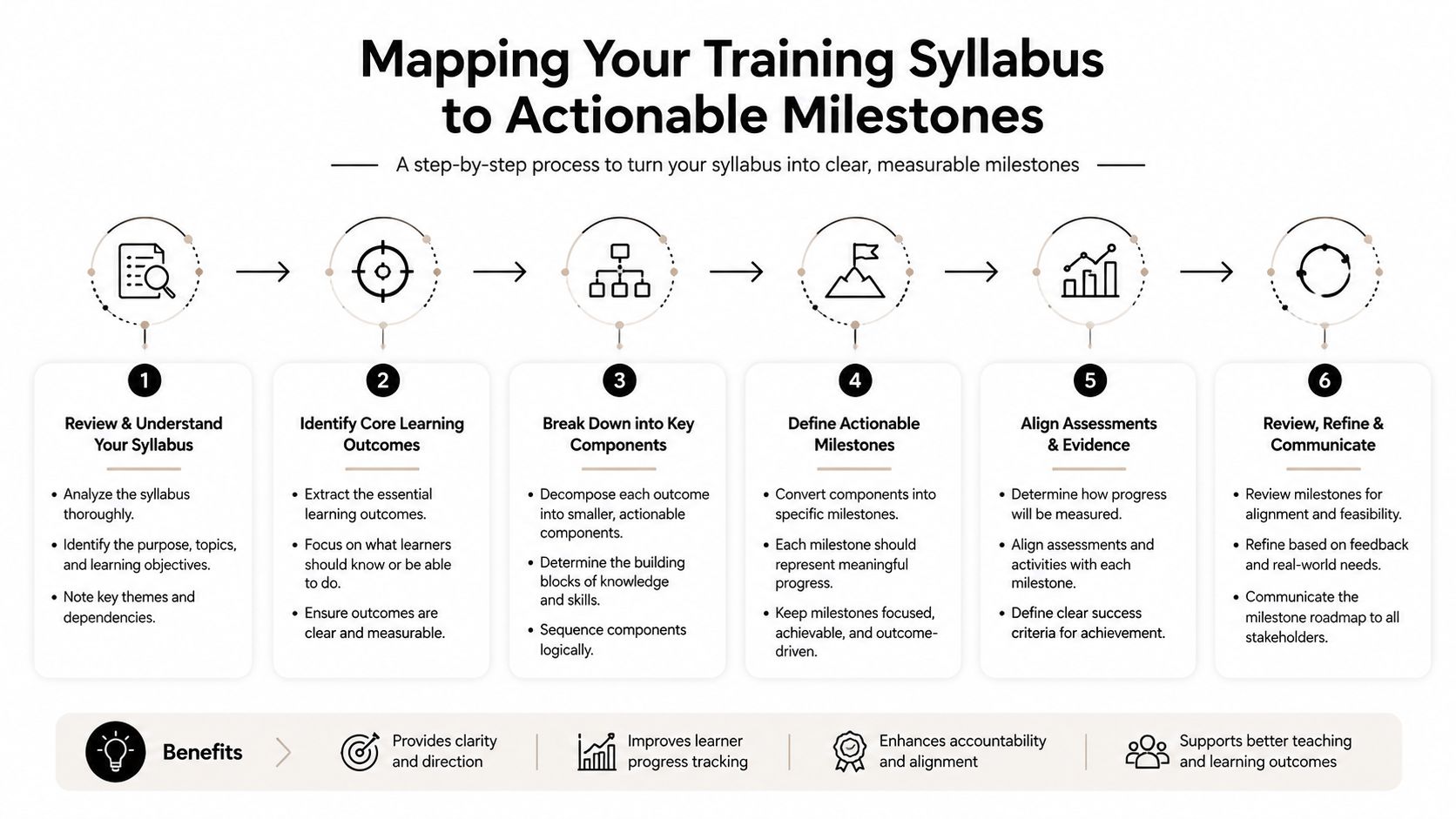
The fix is to turn the syllabus into milestones that answer one question clearly: what must this student demonstrate before moving forward?
Start with phases, not lesson titles
For private pilot training, I'd map the course into operational phases rather than textbook chapters. That makes the path obvious to both the instructor and the student.
A simple phase structure often looks like this:
- Pre-solo foundation: Aircraft control, checklist discipline, pattern work, normal and crosswind takeoffs and landings, basic emergency procedures.
- Solo readiness: Endorsements, local area judgment, consistent pattern performance, runway control, radio competence.
- Cross-country development: Planning, navigation, diversions, solo cross-country execution, weather decisions.
- Checkride preparation: ACS-level polishing, oral prep, weak-area cleanup, mock practical test work.
Each phase should have completion standards, not vague impressions. That's where many schools get stuck. “Doing better” is not a milestone. “Consistently lands within standard in varying pattern conditions under instructor observation” is a milestone.
Build milestones around real gate checks
The strongest framework is tied to specific stage gates. Effective tracking in flight training involves breaking down the 40-hour minimum private pilot requirement into granular gates such as 3 hours of instrument training and 5 hours of solo cross-country, with each gate requiring specific endorsements, according to FlightLogger's guide to student progress tracking. That structure gives instructors a practical checklist and gives students a visible map.
Here's how that looks in practice:
| Training phase | Milestone example | What gets tracked |
|---|---|---|
| Pre-solo | Pattern consistency | ACS-linked maneuver grading, instructor notes, repeat items |
| Instrument exposure | Required instrument block complete | Logged time, procedures covered, scan quality |
| Solo cross-country | Solo XC gate met | Planning accuracy, endorsements, route execution |
| Night training | Night block complete | Landings, visual adaptation, checklist discipline |
Outside goal-setting methods offer a valuable approach. Teams in other fields use milestone boards because how goals improve team productivity comes down to visibility, accountability, and shorter feedback loops. Flight training works the same way when the goals are concrete and operational.
Don't map your syllabus around “what was taught.” Map it around “what was demonstrated.”
A good milestone board also needs blocked states. Students shouldn't just see completed items. They should see items that are ready, in progress, needs review, or waiting on endorsement. That single change reduces a lot of scheduling waste because the next lesson type becomes obvious.
One more point matters. Keep the milestones small enough to diagnose, but not so tiny that the system becomes annoying to maintain. If instructors feel like they're feeding a machine instead of teaching, they'll stop updating it carefully. The right level is usually one line above the maneuver and one line below the broad phase. Think “short-field landing consistency” rather than “landing practice,” and not “left hand touched flap lever at the right time.”
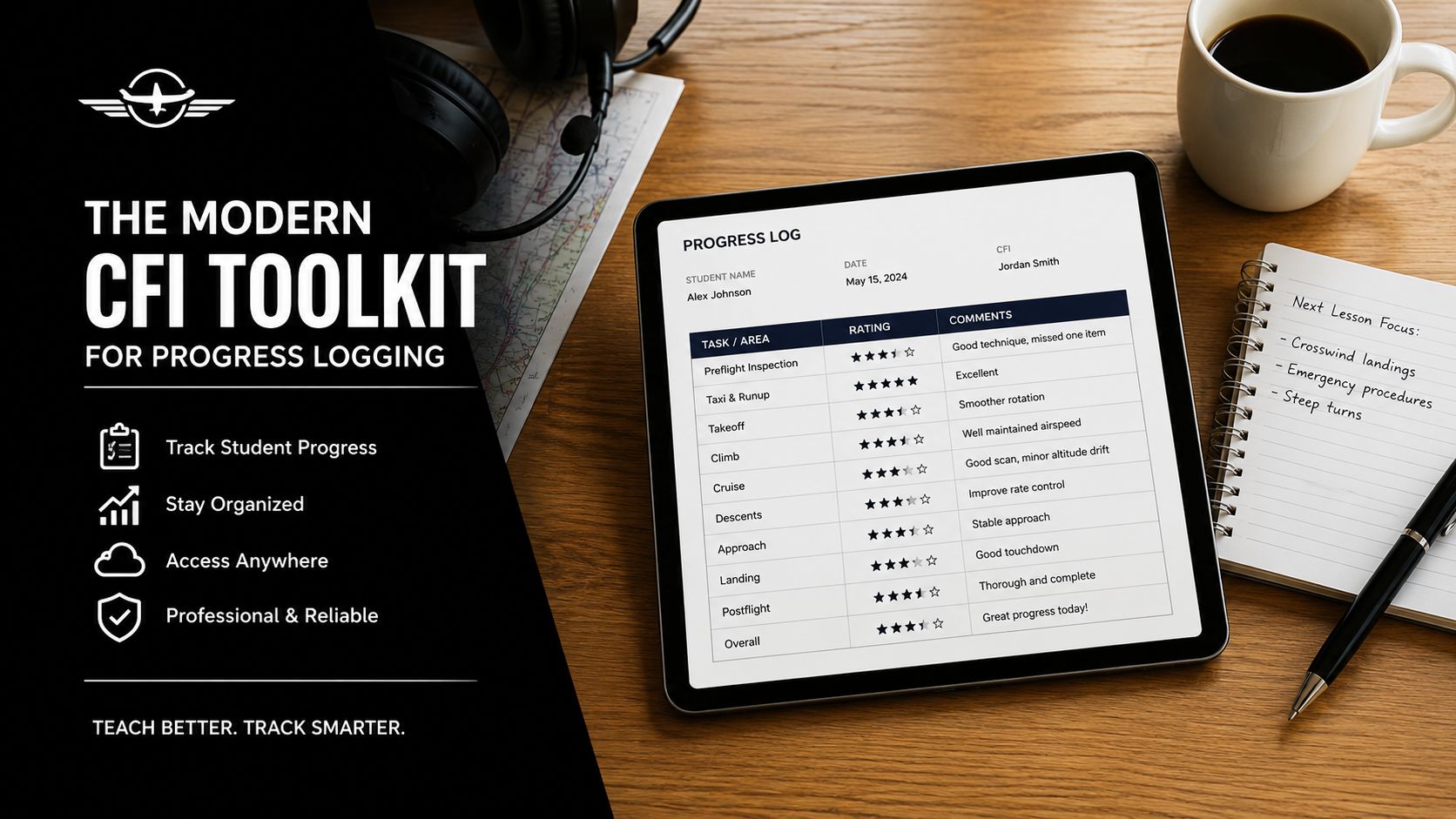
The Modern CFI Toolkit for Progress Logging
The tool matters less than the workflow, but the wrong tool will still slow your instructors down. A progress system only works if a CFI can update it quickly between flights and another instructor can understand it at a glance.
What each tool does well and where it breaks
Different schools need different levels of software. The mistake is pretending every school needs the same stack.
| Tool type | Best use | Main weakness |
|---|---|---|
| Spreadsheet | Small school, low budget, custom fields | Breaks with multiple instructors and inconsistent entries |
| Dedicated flight training platform like FlightLogger | Syllabus tracking, endorsements, lesson status, shared visibility | Requires setup discipline and staff buy-in |
| Digital logbook only | Personal record and time capture | Too narrow for full training management |
| Paper folder plus logbook | Very small operation, one-instructor continuity | Hard to search, easy to lose context, poor handoff |
Spreadsheets are useful when you're building the first version of your system. They force you to decide what matters. But they also rely on naming discipline, version control, and consistent habits. Once a school has several instructors rotating across a fleet, spreadsheet drift becomes a real problem.
Dedicated tools solve visibility better. They're designed around syllabus movement, endorsements, and common training checkpoints. If you want a simple example of a digital format built around pilot development, pilot training tracker tools show why structured tracking beats scattered notes.
For schools that want inspiration outside aviation, Coachful's progress tracking is a useful example of how shared check-ins and visible movement can keep a learner engaged without overcomplicating the interface.
A daily workflow that actually gets used
The best system is the one your instructors can complete in a few minutes without resentment. This workflow works because it matches the rhythm of a training day.
Before the lesson:
The CFI opens the student record and reviews three items only. The current phase, the last weak area, and the next milestone gate. That prevents random lesson planning.
During the lesson:
The instructor grades maneuvers against the school's chosen standard, often aligned to ACS task language. Notes should be short and operational. “Late rudder in flare.” “Fixated on centerline after bounce.” “Good recovery from unusual attitude after prompt.”
After shutdown:
The debrief produces two records. The instructor logs performance and assigns next-step study or simulator work. The student logs what clicked, what didn't, and what needs review before the next flight.
A clean post-flight entry should capture:
- What was attempted: Specific maneuvers, procedures, or mission profile.
- What met standard: Not praise, but demonstrated competence.
- What blocked progress: The one or two limiting items.
- What comes next: Review topic, sim task, or next flight objective.
A progress note should help the next instructor teach. If it only proves that a lesson happened, it's too weak.
Simulator sessions should live in the same record. If a student fixes instrument scan issues in the sim, that belongs in the progression picture. If radio work improves during ground scenarios, that belongs there too. A school that separates flight, ground, and sim notes into different silos forces instructors to reconstruct the student every time.
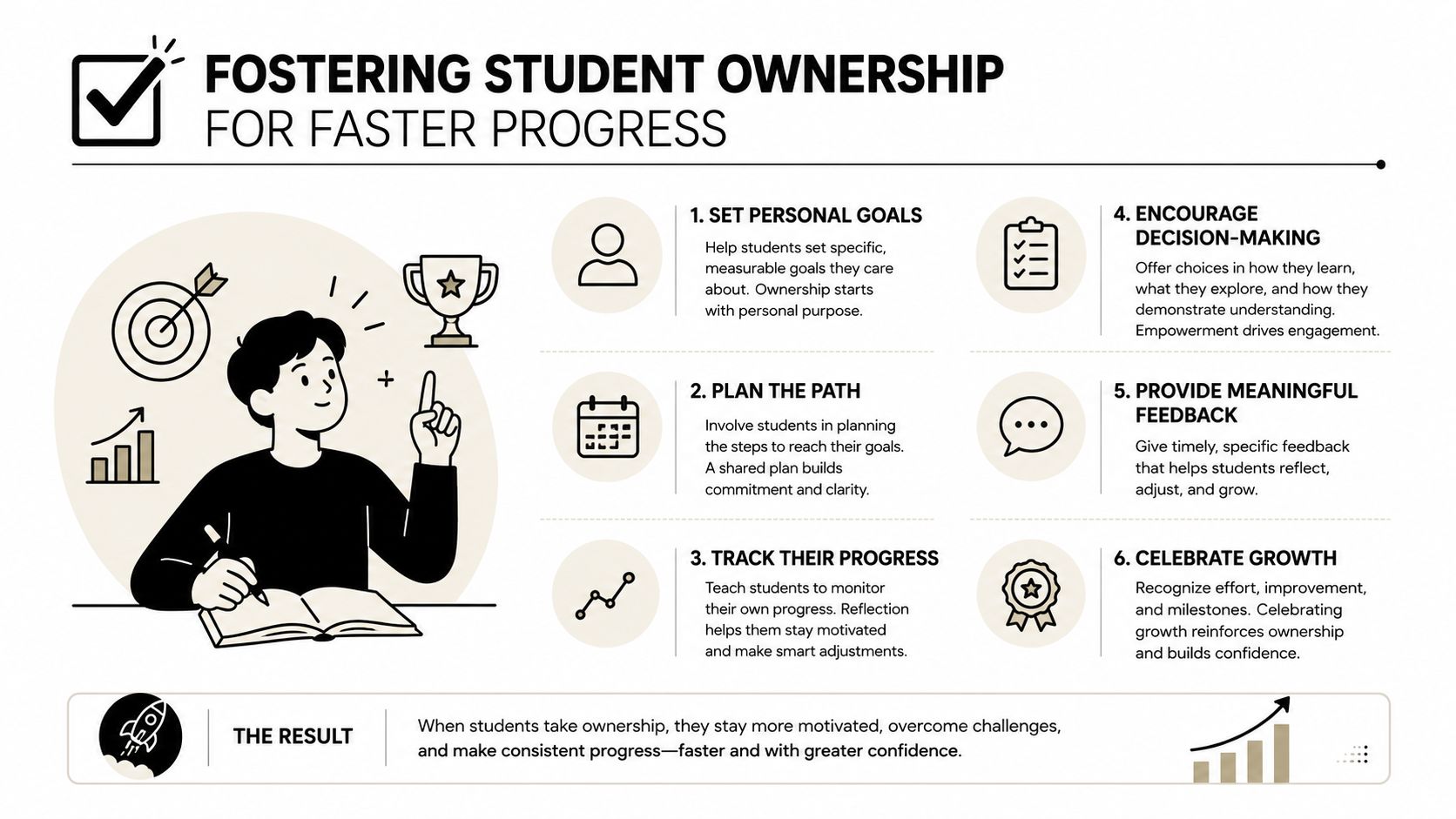
Fostering Student Ownership for Faster Progress
The fastest students aren't always the most naturally talented. They're often the ones who stay mentally connected between lessons. That's why instructor-only tracking leaves too much value on the table.
Why instructor-only tracking falls short
A pilot community study found that logbooks record hours but “lack the capability to capture the insights gained during those hours, the lessons learned, key takeaways, and the memories created”, as documented in the ROSA P pilot community study. That observation matches what flight instructors see every week. A student can fly a solid lesson, then forget the exact correction that fixed the problem by the next booking.
When students track their own objectives, they retain more of the lesson and usually need less re-teaching. That doesn't mean they become their own instructors. It means they carry the lesson forward instead of resetting between flights.
The biggest gains come from three habits:
- Reflection after shutdown: Students write down what changed in their performance that day.
- Objective review before the next lesson: They reopen the last notes instead of relying on memory.
- Personal goals: They arrive with one focused item they want to improve.
Post-flight prompts that improve retention
Most student reflections fail because they're too broad. “How did it go?” gets a vague answer. Better prompts create usable records.
Use prompts like these after every lesson:
- What was the most repeatable correction today? Example: add right rudder earlier in climb.
- Where did workload spike? Example: turning downwind while managing spacing and radio calls.
- What did the instructor say that changed the outcome? Write the exact coaching cue in plain language.
- What needs chair-flying before the next lesson? One maneuver or sequence only.
- What is the next gate? Solo prep, night pattern work, cross-country planning, oral review.
A student-owned record should be short. It isn't a diary. It's a memory anchor.
The best debrief note from a student is often one sentence long and specific enough to use in the next cockpit brief.
There's a cultural benefit too. Students who can see their own movement through the syllabus stop treating progress like something hidden inside the instructor's notebook. They understand where they stand. That lowers anxiety and makes setbacks easier to process because the student can see whether the issue is a temporary stumble or a genuine training block.
This collaborative model also helps when instructors rotate. The student becomes a stable part of the continuity chain instead of a passive recipient of whoever is flying with them that day.
Beyond Individual Lessons Reporting for School-Wide Success
Individual records matter, but the school-level view is where student progress tracking becomes a management advantage. Once lesson data is structured, a chief instructor or owner can spot patterns that no single CFI can see from the cockpit.
What to aggregate across the school
At the system level, effective student data tracking connects the individual record to broader decision-making and supports consistency, accuracy, and accessibility over time, as explained in Education Advanced's overview of student data tracking. In a flight school, the same principle applies even though the environment is different from K-12 education.
The useful categories are straightforward:
| School-wide signal | What it may reveal |
|---|---|
| Repeated delays before solo | Inconsistent pre-solo standards, dispatch bottlenecks, weak pattern sequencing |
| Frequent trouble in one maneuver block | A syllabus gap, uneven instructor technique, or aircraft-specific training friction |
| Endorsement timing issues | Admin process weakness rather than student weakness |
| Sim-heavy students who still stall in flight | Poor transfer from ground or sim to cockpit execution |
If you want a non-aviation example of how platforms organize learner movement, tools that track enrollments and student progress are useful reference points. The lesson isn't to copy tutoring software. It's to notice how much easier decisions become when status, progression, and bottlenecks are visible in one place.
How schools use trends without weaponizing them
A lot of schools hesitate to aggregate data because instructors worry they're being monitored for punishment. That's the wrong use.
Good school-wide reporting is for system improvement. If several students stall at the same point, the first question shouldn't be “who taught this badly?” It should be “what in the training flow is creating drag?” Sometimes the answer is instructional. Sometimes it's scheduling. Sometimes it's aircraft availability. Sometimes one airframe has a subtle issue that makes it harder to teach a task consistently.
Schools operating under a structured environment like a Part 141 flight school model already understand the value of standardization. Even schools outside that framework benefit from the same discipline when they analyze progression patterns.
A strong monthly review usually asks:
- Which phase produces the most delays?
- Which readiness gates are being signed off smoothly, and which are not?
- Where are students requiring repeated remediation?
- Are instructor notes specific enough to support handoffs?
When those answers come from actual records instead of hallway impressions, the school can refine a lesson sequence, retrain a briefing method, or tighten an endorsement workflow without guessing.
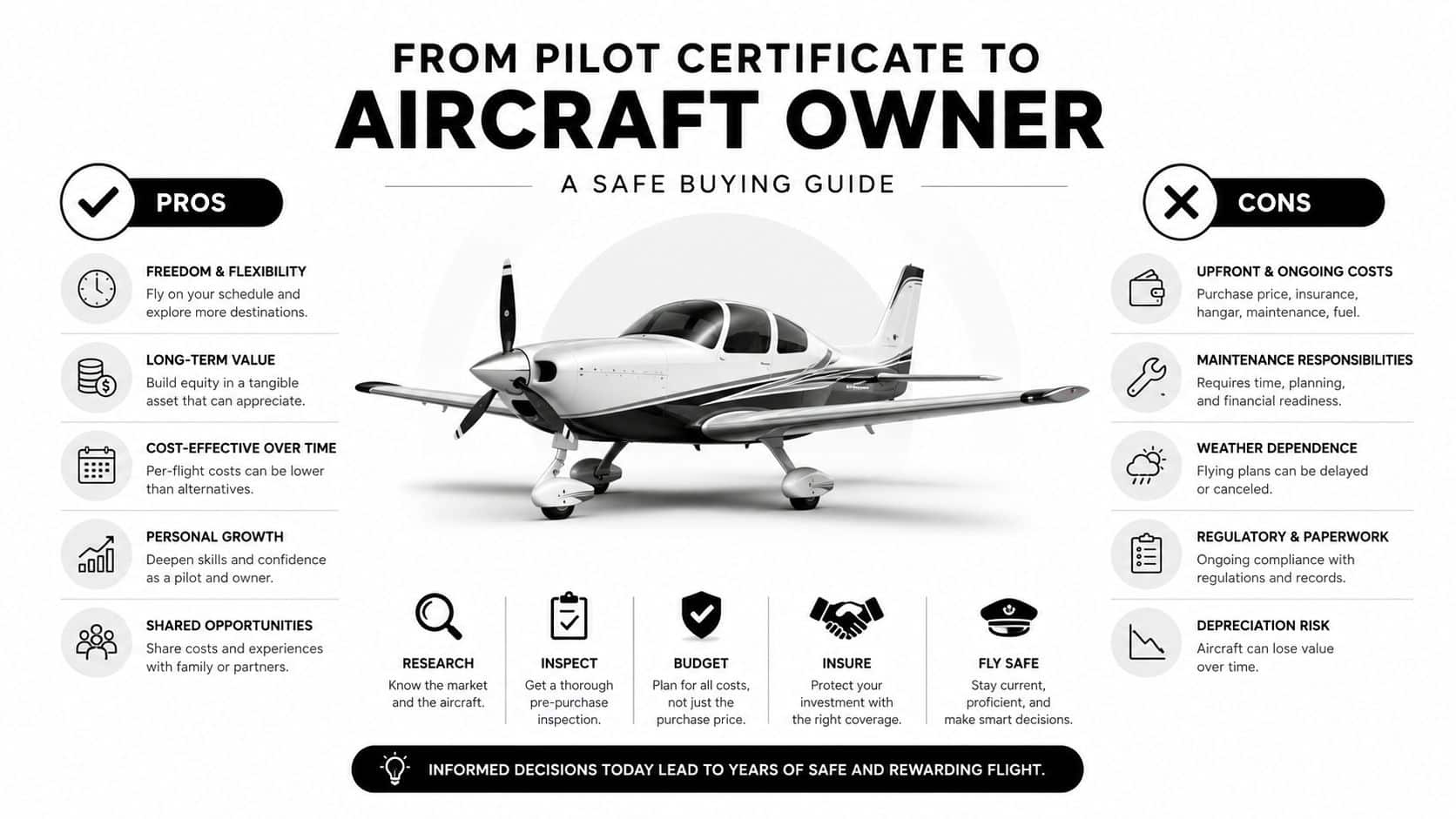
From Pilot Certificate to Aircraft Owner A Safe Buying Guide
A lot of students finish a rating and start asking the next question. Should I keep renting, join a club, buy an airplane, or even buy a helicopter? That's a natural step, especially for people planning frequent travel, time-building, or long-term personal flying.
The same discipline that makes training efficient should carry into aircraft ownership. Buying on emotion is common. Buying safely takes process.
The inspection items that are not optional
A safe aircraft purchase requires a pre-purchase inspection by a mechanic unaffiliated with the seller, and that inspection must include a differential compression check on each engine cylinder plus a thorough review of logbooks for FAA Form 337 and Airworthiness Directive compliance, according to AOPA's guidance on buying used aircraft. That rule applies whether you're looking at an airplane or helicopter. Neutral eyes matter.
Buyers get into trouble when they treat the pre-buy like a courtesy glance instead of a decision tool. The mechanic needs room to say, “walk away,” and that only happens when the mechanic isn't tied to the seller.
Review these items carefully:
- Logbook continuity: Missing records create uncertainty that can affect both safety and value.
- Form 337 history: Major repairs or alterations need to be documented clearly.
- AD compliance: Don't accept vague assurances. You need a clean compliance picture.
- Serial number verification: Confirm aircraft and component records match what's physically installed.
Buy the inspection before you buy the aircraft.
If you're shopping for a helicopter, apply the same mindset. The platform is different, but the buying discipline is the same. Independent mechanic. Record review. Condition verification. No shortcuts because the paint looks clean or the seller sounds credible.
How to avoid buying a flying project
A separate ownership trap is underestimating refurbishment. Major items that hit safety, dispatch reliability, and value are the engine, paint, and avionics, and each of those big-ticket areas typically costs at least $25,000 if not already completed, based on the buying advice discussed in this pilot community thread on purchasing an airplane. That doesn't mean every aircraft needs all three done. It means buyers need to price reality, not hope.
A practical screen looks like this:
| Item | What to ask |
|---|---|
| Engine | Is condition supported by inspection and records, not seller opinion? |
| Paint | Cosmetic only, or hiding corrosion and deferred care? |
| Avionics | Functional for the missions you actually plan to fly? |
Many first-time buyers make the same mistake students make in weak training systems. They focus on the visible top layer and miss the structure underneath. In training, that means chasing flight hours instead of proficiency markers. In ownership, it means chasing a low asking price while ignoring inspection findings and deferred capital items.
The safer approach is boring on purpose. Define your mission. Shortlist aircraft or helicopters that fit it. Use an independent mechanic. Review the records line by line. Assume every unresolved discrepancy will cost more time and money than the listing suggests. If one or two major refurbishment items are already done, that often reduces downtime and keeps you flying instead of sitting in a maintenance queue.
People looking to buy or sell airplanes and helicopters benefit from the same advice. Sellers who organize records, document compliance clearly, and present a realistic picture of engine, paint, and avionics condition make serious buyers more comfortable. Buyers who perform disciplined pre-buys avoid turning a dream purchase into a maintenance project.
If you want structured training with clear milestones, personalized instruction, and a practical path from first lesson to confident aircraft use, DuBois Aviation is a strong place to start. The school offers airplane and helicopter training, rental access, simulator support, and the kind of day-to-day flight environment that rewards disciplined progress from the beginning.


