The median cost for a Private Pilot License has stabilized at about $14,000 in 2025, which makes this a more predictable time to plan your budget. If you're trying to figure out whether learning to fly is financially realistic, that number is a useful starting point, not the whole story.
Those who call a flight school aren’t asking only one question. They’re really asking three at once. What will it cost to start, what will it cost to finish, and how do I avoid wasting money along the way?
At a school environment like KCNO, those questions matter because your budget is shaped by the way you train, not just by the posted hourly rate. A busy towered airport, a mixed fleet, simulator access, and the type of rating you’re pursuing all change the final flight training cost. The student who flies regularly, shows up prepared, and uses the right training tools usually spends very differently from the student who trains inconsistently and repeats lessons.
Two practical options worth comparing
These are specific products pilots commonly compare for this type of flying. Confirm compatibility with your aircraft and instructor before ordering.
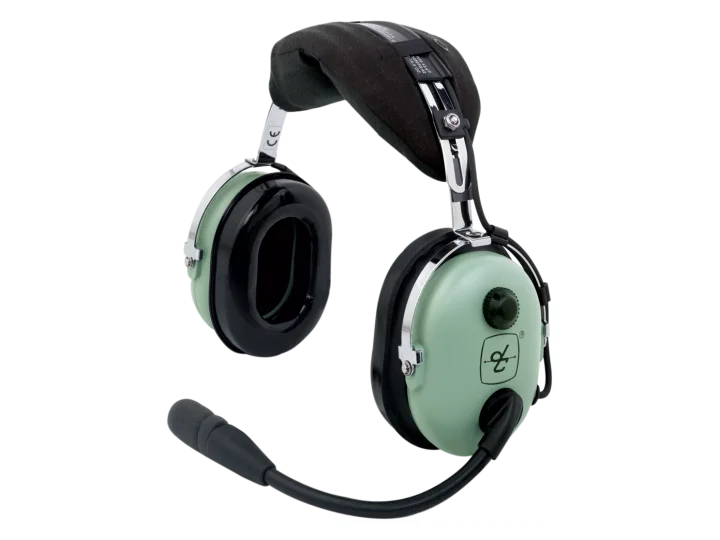 Student headsetDavid Clark H10-13.4 Aviation HeadsetCheck current availability on Amazon (paid link)
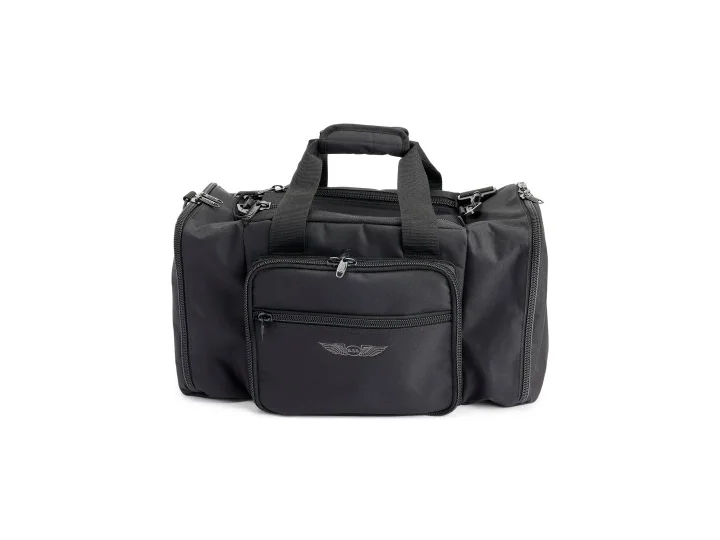 OrganizationASA Flight BagCheck current availability on Amazon (paid link)
I’m going to walk through this the same way I would with a new student sitting across the desk after a discovery flight. We’ll start with the basic parts of the bill, then move through airplane and helicopter pathways, the airline track, ways to control costs, and finally the bigger question some pilots ask after training starts: should I keep renting, or should I buy an airplane the safe way?
Decoding Your Pilot License The Core Cost Components
Flight training cost makes more sense when you stop looking at it as one giant number and start looking at it as four separate buckets. I like to compare it to building a house. The slab, framing, wiring, and finishing work all matter, and if you misunderstand one piece, the total budget surprises you later.
For pilot training, those four pieces are aircraft rental, instructor time, learning materials, and testing fees. If you can read those four lines clearly on a price sheet, you can compare schools much more intelligently.
Aircraft rental is the biggest lever
Aircraft rental is usually the largest part of the bill. It constitutes 50 to 70% of total flight training costs, and the FAA requires a 40-hour minimum for a Private Pilot License, while students typically fly 60 to 70 hours in real life, according to US Aviation Academy’s breakdown of flight training cost.
That’s why small inefficiencies matter so much. If weather cancels lessons, if you train too infrequently, or if you need repeated review flights because you forgot material between sessions, the airplane meter keeps running. In practical terms, the airplane doesn’t care whether you’re learning something new or relearning something old.
Instructor time is not just a fee
New students sometimes focus on the instructor rate as if it’s purely an expense to minimize. That’s understandable, but it misses the bigger point. Instructor time buys structure, correction, and sequencing.
A good instructor helps you avoid expensive habits like chasing landings without fixing your approach setup, or jumping into cross-country planning before your basic procedures are solid. That’s why I tell students to think about instruction as efficiency, not just hourly billing.
Practical rule: The cheapest lesson on paper can become the most expensive lesson if it leaves you confused and needing to repeat it.
For students comparing options, it helps to look at a school’s materials, syllabus discipline, and scheduling process in the same way a business owner might look at identifying the true cost of a service. The posted rate matters, but hidden inefficiency matters too.
Materials and supplies are smaller, but they still count
This category includes the things students often forget to budget for early. Think headset, books, charts, logbook, E6B or digital planning tools, and written-test prep materials.
These aren’t usually the biggest part of flight training cost, but they affect readiness. The student who buys the right materials once and uses them consistently tends to progress more smoothly than the student piecing everything together on the fly.
If you want a school-specific view of how private training expenses are usually organized, this guide to private pilot license cost is a useful reference point.
Testing fees are the finish line costs
Testing fees show up late enough that students sometimes forget to reserve cash for them. These include your knowledge test and your practical test costs.
That final phase can feel frustrating because you’re almost done and suddenly another set of bills appears. The fix is simple. Build those finish-line expenses into your plan from day one, not the week before your checkride.
| Core cost component | What you’re paying for | Why it matters |
|---|---|---|
| Aircraft rental | The airplane or helicopter itself | Usually the largest cost driver |
| Instructor time | Flight and ground instruction | Prevents wasted training time |
| Materials and supplies | Books, headset, study tools | Supports preparation and consistency |
| Testing fees | Written and practical exams | Required to complete the rating |
Airplane and Helicopter Training Pathways Price Breakdowns
You schedule a discovery flight at KCNO, fall in love with flying, and then ask the question every instructor hears next: “What does the full path cost?” The honest answer depends on which path you choose, how consistently you train, and what aircraft you train in.
Airplane training and helicopter training do not run on the same budget logic. They are two different machines, two different skill tracks, and often two different hourly cost structures. A student planning for a private airplane certificate in a single-engine trainer is solving a different money problem than a student starting in a helicopter.
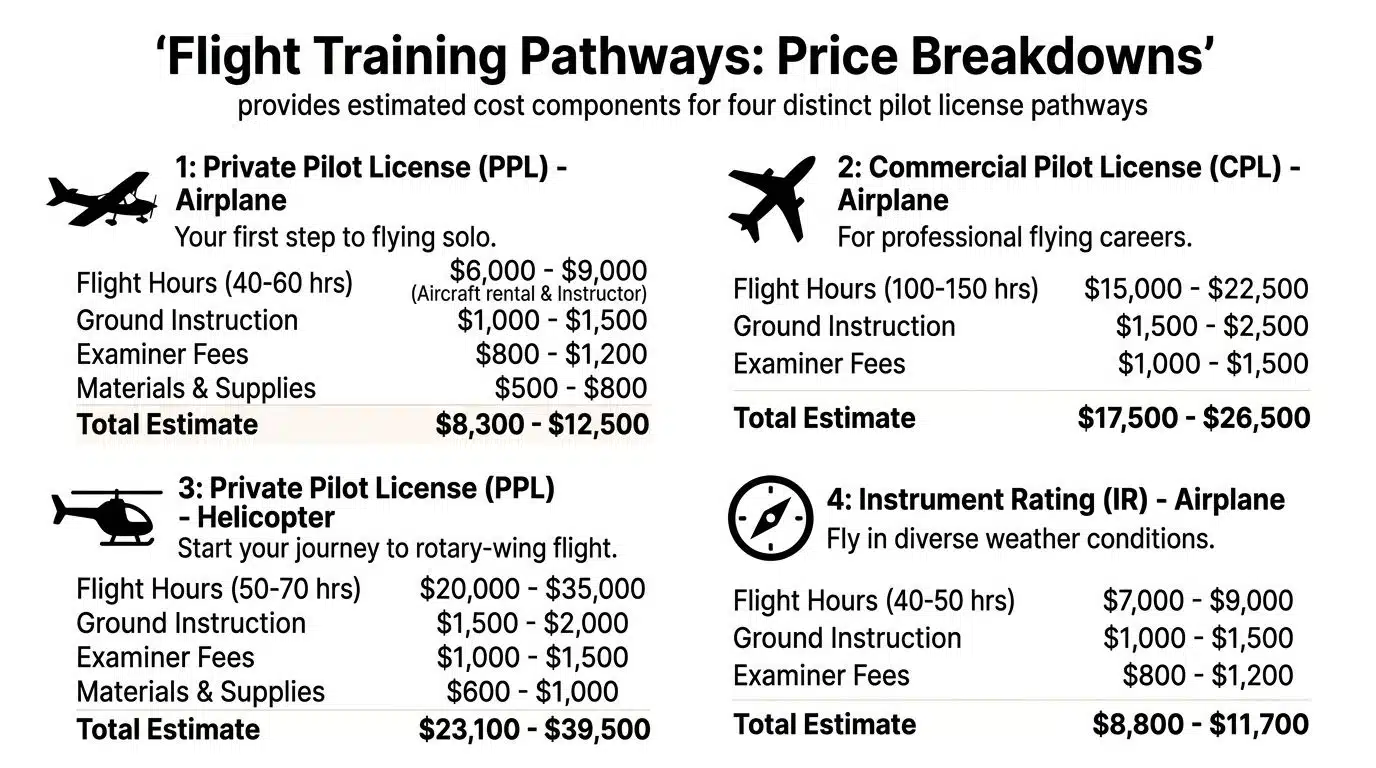
What private pilot training usually looks like
Private pilot training is the first point where the budget becomes real. Early lessons feel straightforward on paper: preflight, taxi, takeoffs, landings, basic maneuvers, emergency procedures, then solo and cross-country work. In practice, the cost comes from repetition and refinement. One extra lesson here or there is normal. A long gap between lessons usually costs more because the next flight starts with relearning.
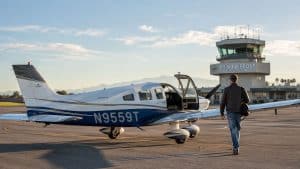
At a school like DuBois Aviation at KCNO, students often train in aircraft such as a Piper Cherokee. That matters financially. A stable single-engine trainer keeps the operating profile more predictable than a more complex aircraft would. Training at a towered airport also adds value that students can miss at first. You are paying for flight time, but you are also building comfort with radios, sequencing, and real traffic flow from day one.
A good way to picture private training is to compare it to learning to drive in city traffic instead of an empty parking lot. It feels busier at first, but the experience can make you more capable sooner.
Students who fly regularly, show up prepared, and study between lessons usually spend less than students who train sporadically. The airplane still runs by the hour. So does instructor time. Efficiency matters.
Compare training totals carefully. The student who finishes for less often flew more consistently, reviewed at home, and avoided paying for repeated catch-up lessons.
Instrument training changes what you are paying to practice
Instrument rating training shifts the budget from basic stick-and-rudder learning to procedure-heavy repetition. You are practicing scan, course tracking, approaches, holds, cockpit workflow, and decision-making without outside visual reference.
That changes how training time can be used. Some tasks are worth doing in the airplane because you need the actual aircraft, actual motion, and actual ATC environment. Other tasks improve well in a simulator because the goal is repetition, not sightseeing. A simulator works like a practice field for procedures. It lets students repeat clearances, approach flows, and instrument scans in a lower-cost setting before taking those same tasks to the aircraft.
That is one reason instrument students often see better cost control when their training plan uses both airplane time and simulator time intentionally. You are not trying to replace the airplane. You are trying to save the airplane for the parts of training that must be performed in it.
Students comparing airplane and rotorcraft tracks should also study the aircraft side of the equation early. The aircraft, maintenance profile, and hourly burn rate all shape the budget. If you are evaluating rotorcraft as a primary path, DuBois Aviation’s helicopter pilot training program gives a useful picture of how that track differs from airplane training.
Commercial and multi-engine training bring a new kind of expense
Commercial training is less about access to flying and more about precision. The standards tighten. The maneuvers must be cleaner. The flying has to look intentional, not just safe enough. That usually means more focused practice and, for many career-minded students, more time building before the checkride.
Students sometimes get surprised, as the certificate itself is only part of the bill. Total time requirements matter too. If you need additional hours to qualify, those hours have to be purchased somewhere, usually in the same kind of single-engine aircraft you have already been using unless a different training strategy makes more sense.
Multi-engine training creates a sharper cost jump. A twin such as a Piper Apache costs more to operate than a single-engine trainer because you are paying for more engine, more fuel flow, more maintenance complexity, and a different level of aircraft systems training. The lessons are shorter in number than private training, but each hour tends to carry more financial weight.
Helicopter students should plan from a separate template
Helicopter budgeting deserves its own worksheet. Trying to estimate rotorcraft costs by starting with airplane assumptions usually leads to disappointment.
The flying itself is different. The aircraft are different. The pace of early progress can feel different too. Hover work alone can make a first block of helicopter lessons feel more intense than early airplane training. That does not make helicopter training worse. It means the learning curve and the hourly expense need to be planned as their own category.
At the school level, an operational view is essential. Aircraft type is not a minor detail. It drives hourly rental cost, maintenance scheduling, fuel burn, and availability. For a student building a long-term budget, that school-specific reality matters more than a generic national average.
| Certificate / Rating | Aircraft Used | Estimated Hours | Estimated Cost Range |
|---|---|---|---|
| Private Pilot Airplane | Piper Cherokee or similar single-engine trainer | Varies by student proficiency | Usually the lowest-cost entry point among the pathways listed here |
| Instrument Rating Airplane | Single-engine trainer plus simulator where appropriate | Varies by training pace | Often more controllable when procedure practice is split wisely between sim and aircraft |
| Commercial Pilot Airplane | Single-engine trainer, time-building aircraft | Higher total time requirement | Usually a clear step up because total hours matter as much as lesson complexity |
| Multi-Engine Add-On | Piper Apache or similar twin | Focused rating-specific training | Higher hourly operating cost than single-engine training |
| Private Pilot Helicopter | Training helicopter such as an Enstrom or Robinson platform | Varies by student proficiency | Should be budgeted on its own, not as a small variation of airplane training |
The Airline Career Pathway From Zero to Airline Pilot
A career pilot usually doesn’t experience training cost as one giant invoice. It arrives in layers.
Start with a student at zero time. The first milestone is the private certificate. That gives the student basic privileges and the foundation to continue. Then comes the instrument rating, where flying becomes more procedural and more career-relevant. After that, the commercial certificate turns flying skill into professional-level performance.
That sequence adds up quickly. Pursuing a full career path to airline readiness typically costs $70,000 to $100,000 in the US, with a cumulative breakdown showing $16,863 for private, $13,375 added for instrument, and $28,450 added for commercial, bringing the running total to more than $58,000 before multi-engine and CFI ratings, according to Flight Sim Coach’s cost analysis.
A realistic career progression
Think of a hypothetical student named Alex. Alex starts with a discovery flight, commits to training, finishes private, and realizes that the dream isn’t weekend flying. It’s a cockpit career.
At that point, the money question changes. Alex is no longer asking, “Can I afford flying lessons?” Alex is asking, “How do I build a complete training pipeline without stalling out halfway?” That’s a very different budgeting problem.
A career-track student has to think in stages:
- Private pilot gives access to solo and cross-country experience.
- Instrument rating builds the procedural discipline employers expect.
- Commercial pilot turns the skill set into a professional certificate.
- Multi-engine training expands aircraft capability and career readiness.
- CFI becomes a practical way to build time while working in aviation.
Why many pilots add CFI
The cost of training matters, but so does what comes after training. Most airline-bound pilots need a workable hour-building strategy. For many, instructing is the bridge between certificate completion and airline minimums.
That’s why I rarely view the CFI as “one more expensive rating.” I view it as a pivot point. It can turn your training investment into a way to keep flying regularly, sharpen your own skills, and begin earning in the field.
The students who plan the whole pathway early usually make calmer decisions later. They know which rating is next, what it’s for, and why they’re paying for it.
If your goal is the airlines, don’t budget certificate by certificate in isolation. Build one long-range roadmap, even if you pay for it in phases.
Smart Strategies to Reduce Your Flight Training Cost
A lot of students assume the final price is set by the school’s hourly rate. In practice, the bigger driver is training efficiency. Two students can rent the same airplane, fly with the same instructor, and finish with very different totals because one trains with momentum and the other keeps paying to relearn old material.
That is the part you can influence.
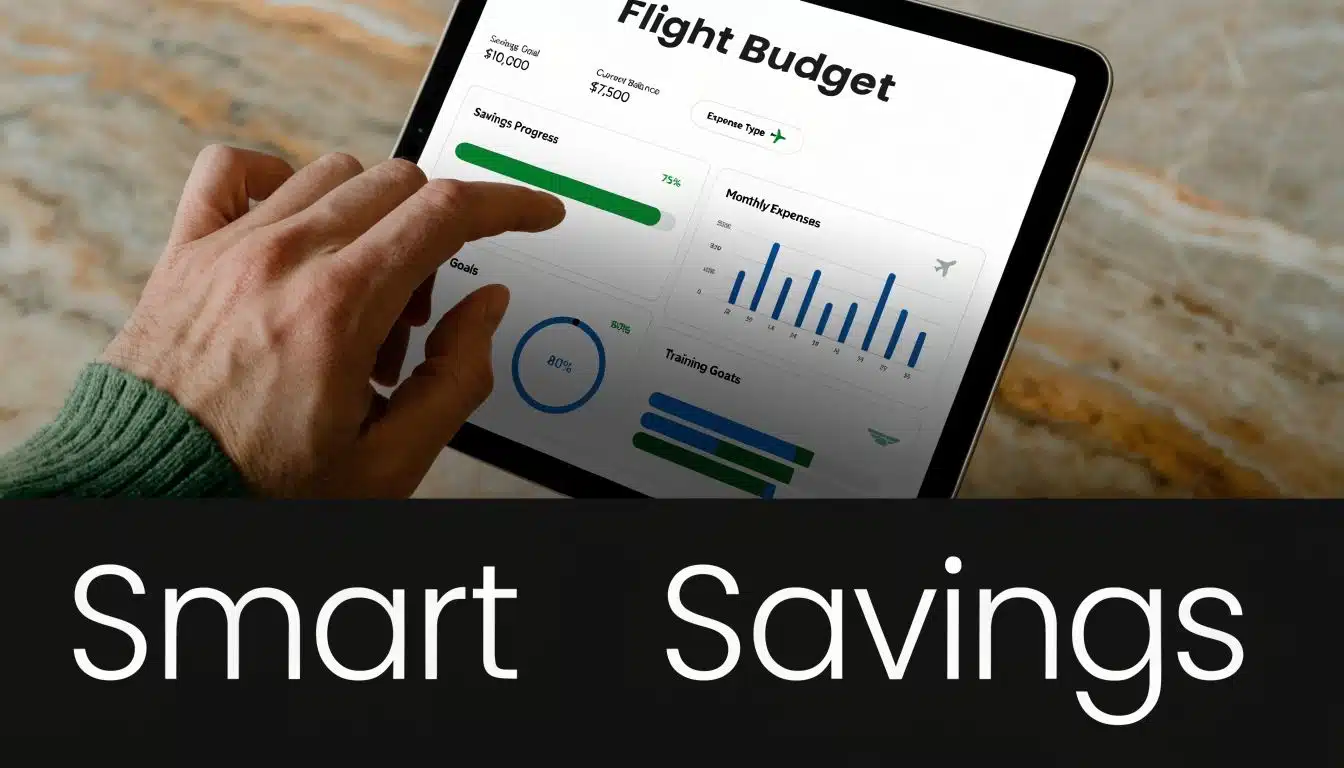
Train often enough that each lesson starts ahead of the last one
Flying once in a while feels cheaper because you are spending money less often. It usually costs more in the long run. Flight training works like learning a musical instrument. If you practice regularly, each session builds on the last one. If you disappear for two or three weeks, part of the next lesson becomes review.
I see this most clearly in landing practice, radio work, checklist flow, and instrument scan. Those skills fade faster than students expect. Then a one-hour lesson turns into 0.4 hours of progress and 0.6 hours of catching up.
A steady weekly schedule usually protects your budget better than sporadic flying, even if the monthly spending feels higher at first.
Use simulator time where it saves real airplane money
A simulator cannot replace every lesson, but it can replace the expensive parts that do not need a running engine or airborne time. That matters.
Use it for procedures, flows, holds, approach setup, navigation tasks, radio sequencing, and abnormal scenarios. Then use the aircraft for sight picture, control feel, takeoffs, landings, and the parts of training that require the live environment. That split is how many students keep aircraft hours from drifting upward unnecessarily.
At KCNO, students who have access to both aircraft and an in-house simulator can often prepare more efficiently because they are not burning airplane time on tasks that can be practiced well on the ground.
Prepare for one lesson, not for “flying in general”
Broad studying feels productive. Specific preparation saves money.
If tomorrow’s lesson is slow flight and stalls, review the setup, the tolerances, the recovery sequence, and the mistakes instructors usually see. If it is a cross-country lesson, show up with the nav log, weather review, performance numbers, and route planning already done. If it is instrument work, chair-fly the clearance, departure, intercepts, and missed approach at home.
One habit that saves money: Chair-fly the lesson before you fly the lesson.
That single habit cuts down on hesitation in the cockpit. Less hesitation usually means fewer repeated explanations, cleaner execution, and better use of Hobbs time.
This video gives a useful visual perspective on planning and managing training expenses before small overruns become big ones.
Ask cost questions that reveal how the school actually operates
A school may quote a fair hourly rate and still cost you more if scheduling is inconsistent, maintenance frequently interrupts training, or students bounce between aircraft without a plan. The right questions help you spot that early.
Ask about the day-to-day operation, not just the brochure version:
- What aircraft will I use most of the time? Frequent aircraft changes can slow progress.
- How is the syllabus tracked? Clear lesson progression reduces repeated training.
- How are simulator sessions assigned? You want a school that uses the sim for specific tasks, not as an afterthought.
- What happens when weather cancels a lesson? Strong rescheduling habits help students keep momentum.
- How is ground instruction billed and delivered? Unstructured ground time can add up.
Here is the simple rule I give prospective students. Do not chase the cheapest hour. Chase the cleanest path from lesson one to checkride.
Protect your budget by treating training like a standing commitment
Students often budget for the airplane and forget the surrounding costs. Then training pauses because the headset, written test, medical, or examiner fee was not planned for. That kind of stop-and-start pattern adds cost fast.
A better approach is to build a training reserve before you begin and then protect a consistent weekly block for flying and study. Even a modest reserve helps you absorb weather delays, an extra lesson before solo, or a checkride that gets pushed.
Cutting corners is not the goal. Consistent preparation, smart simulator use, and a school with organized operations are what usually bring the total cost down.
Beyond Training The Costs of Buying Your Own Aircraft
At some point, many pilots shift from “How much does training cost?” to “Would it make sense to own?” That question comes up with people who train often, rent regularly after certification, or want a specific mission profile that rental fleets don’t always support.
Ownership can be rewarding, but it’s also where people make expensive mistakes by shopping emotionally. If you’re thinking about buying an airplane or helicopter, the safest purchase is almost never the fastest one.
When ownership starts to make sense
Ownership can make sense when you need frequent access, when you want scheduling control, or when you’re committed to a specific airframe for travel, proficiency, or time building. It can also make sense if you plan to keep flying steadily after training rather than tapering off.
But don’t compare only the purchase price to rental rates. Ownership includes ongoing obligations that continue whether you fly or not. A tied-down airplane that sits for long stretches can still cost real money.
Here’s the mindset shift I recommend. Renting is a use cost. Ownership is a use cost plus a responsibility cost.
How to buy an airplane the safe way
If you remember one thing from this section, remember this: never buy an aircraft based on photos, paint, or seller confidence.
Use a disciplined buying process:
Define the mission clearly
Are you buying for primary training, personal travel, time building, back-country use, helicopter operations, or multi-engine proficiency? A poor mission match becomes an expensive ownership lesson.Review the logs before you fall in love
Logbooks reveal the true story. Look for maintenance continuity, damage history, recurring issues, and signs that required work was handled correctly.Get an independent pre-buy inspection
This is not optional. Hire a trusted A&P mechanic who works for you, not for the seller. A proper pre-buy can expose corrosion, deferred maintenance, poor repairs, or paperwork problems before money changes hands.Treat missing paperwork as a serious problem
Gaps in records lower confidence and can complicate insurance, resale, and maintenance planning.Understand the engine and propeller picture
Even if an aircraft flies well today, major future maintenance can reshape the economics of the deal quickly.
Buy the airplane with the best records and maintenance culture you can afford, not the shiniest paint.
Don’t forget the ownership costs after the purchase
First-time buyers are often surprised, as the purchase itself is only the front door. After that, you’ll need to think about insurance, storage, inspections, unscheduled maintenance, and reserves for major work.
For helicopters, this becomes even more important because parts, support, and mission use can vary a lot by model. A buyer needs a mechanic who knows that aircraft family, not just a general opinion from another pilot.
A practical ownership checklist
| Ownership question | Why it matters |
|---|---|
| Does this aircraft match my real mission? | Prevents buying too much or too little airplane |
| Are the logbooks complete and readable? | Protects value and reveals maintenance history |
| Has an independent mechanic inspected it? | Reduces the chance of an unsafe or overpriced purchase |
| Can I handle storage and insurance costs? | Ownership continues between flights |
| Do I have a reserve for major maintenance? | Prevents financial shock after purchase |
If you’re selling instead of buying, the same principles apply in reverse. Organized logs, transparent maintenance history, and a realistic understanding of the aircraft’s condition make the sale cleaner and safer for everyone.
Financing Your Dream Scholarships Loans and Payment Plans
Most students don’t pay for training one giant check at a time. They build a funding strategy. That’s the smarter approach anyway, because flight training is easier to sustain when the money plan is clear before the lesson plan starts.
The first question isn’t “What lender should I use?” The first question is “How much risk am I comfortable carrying while I train?” Your answer shapes every funding decision after that.
Start with money you control
Savings are the cleanest funding source because they don’t add interest or debt pressure. If you can pre-fund even part of your training, you give yourself more flexibility when weather, schedule changes, or extra practice appear.
Some students combine savings with a monthly training budget. That can work well if the schedule is realistic and the student isn’t constantly stopping and restarting.
Scholarships deserve more effort than most students give them
Scholarships take time. Applications can be tedious. Essays can feel repetitive. Apply anyway.
Aviation groups, women-in-aviation organizations, youth programs, and pilot associations often support students at different stages. The students who win aren’t always the most advanced. Often they’re the ones who applied, followed instructions, and explained a clear training plan.
If you’re looking for a starting point, this list of grants for flying lessons can help you organize the scholarship side of your search.
Loans can be useful, but only if the plan is specific
Loans make sense for some students, especially career-track pilots with a defined pathway and timeline. They make less sense for students training casually without a completion schedule.
Before borrowing, answer these questions sincerely:
- What rating am I funding first? Borrowing without a training milestone can get messy.
- How will I make payments if training takes longer than expected? Build margin into the plan.
- Is this recreational training or career training? The return picture is very different.
- Do I understand all non-tuition costs? Don’t borrow only for aircraft time and forget the rest.
Payment plans are about stability
Some schools and training programs structure payment over time, and some students prefer block funding because it keeps training moving without constant financial interruptions. The main advantage isn’t just convenience. It’s continuity.
A workable funding plan does more than pay bills. It protects your training rhythm.
Veterans should also ask directly about eligible benefits and approved training structures. That part of the funding conversation is too important to leave for later.
Frequently Asked Questions About Flight Training Costs
A student walks into DuBois Aviation at KCNO after a discovery flight and asks a fair question: “What should I budget?” The honest answer starts with sorting three different numbers that often get mixed together. There is the legal minimum, the typical real-world completion range, and your personal result based on how consistently you train.
That distinction matters because flight training costs work a lot like building time in stages. The certificate is the destination, but the bill is created one lesson, one review flight, one weather delay, and one checkride step at a time.
Common cost questions
| Question | Answer |
|---|---|
| Is the FAA minimum the amount I should budget for? | Budget above the minimum. FAA minimums describe legal eligibility, not the amount of training every student needs to become checkride-ready. |
| Why do two students finish the same certificate at different costs? | Skill develops at different rates, but cost usually shifts more because of training rhythm. A student flying regularly often spends less than a student who takes long breaks and needs repeated review. |
| Is renting always cheaper than owning? | Renting is usually the simpler starting point. Ownership can make sense for some high-usage pilots, but only after you include maintenance, insurance, storage, inspections, and downtime. |
| Should I buy my own airplane to finish training? | Sometimes. The decision only works if the airplane fits the training mission, has a clean maintenance story, and does not create surprise expenses that wipe out any hourly savings. |
| Are helicopter ratings budgeted the same way as airplane ratings? | No. Helicopter training has a different cost structure because the aircraft, maintenance, and hourly operating expenses are different from airplane training. |
| What’s the biggest financial mistake students make? | Inconsistent training. A two-week gap may be manageable. A longer break often means paying to relearn skills you already covered. |
| How do I avoid hidden costs? | Ask for a full training map. That should include aircraft time, instructor time, ground instruction, materials, knowledge test fees, examiner fees, and any likely aircraft transitions between ratings. |
One more question should be on that list. “What does a realistic budget look like at my school, in my aircraft, for my goal?” That is the right question because a Cessna-based private pilot plan at KCNO will not look the same as a helicopter track or an accelerated career program.
A final budgeting mindset
Use published ranges as planning tools, not promises. Then add margin. Weather changes schedules. Checkrides sometimes require an extra polish flight. Some students need more ground help in one phase and less in another.
A good training budget works like a fuel reserve. You hope not to use all of it, but you are glad it is there.
The people who do this well start with real numbers, not guesswork. They ask what the aircraft rate is, what the instructor rate is, how often they should fly, what fees show up near the checkride, and how cost changes if training gets interrupted.
The goal is to become a safe, proficient pilot while spending with a plan.
If you want help mapping out your own flight training cost, certificate path, or aircraft ownership questions, talk with DuBois Aviation. Clear aircraft rates, a realistic lesson schedule, and honest discussion about airplane or helicopter options make the financial side of training much easier to understand.