For many aspiring aviators, the dream of earning their wings feels exhilarating yet financially daunting. The significant cost of flight training is a real hurdle, but it doesn't have to be the end of the journey. A robust network of financial aid is available, created specifically to help people like you become pilots. This guide provides a direct, actionable roadmap to finding and securing grants for flying lessons.
This isn't just a simple list. We've compiled the most valuable national scholarship programs from organizations like AOPA, EAA, and Women in Aviation International, providing direct links, eligibility details, and application advice for each. Whether you're aiming for a Private Pilot License, pursuing an accelerated airline career path, or training in helicopters, these resources are your first step toward funding. We will cover key programs, including:
- AOPA Foundation Flight Training Scholarships
- EAA Scholarships, including the Ray Aviation Scholarship
- Women in Aviation International (WAI) Scholarships
- The Ninety-Nines (AEMSF & First Wings Awards)
- Whirly-Girls International for helicopter pilots
We’ll explore each opportunity with a practical focus, helping you understand which grants fit your specific goals, from initial training at a school like DuBois Aviation (KCNO) to advanced ratings. To provide a complete picture of your aviation career path, we'll also touch on the crucial next steps after you're certified, such as the process of safely buying your first airplane or helicopter. This resource is designed to help you organize your funding strategy and turn your pilot ambitions into a well-defined plan.
1. AOPA Foundation Flight Training Scholarships
The Aircraft Owners and Pilots Association (AOPA) Foundation stands as a cornerstone resource for aspiring aviators, offering one of the most substantial and accessible pools of grants for flying lessons in the nation. Each year, they award over $1 million to hundreds of student pilots. This makes it a primary destination for anyone serious about funding their flight training, from a Private Pilot License (PPL) to advanced ratings like Instrument or Commercial Pilot.
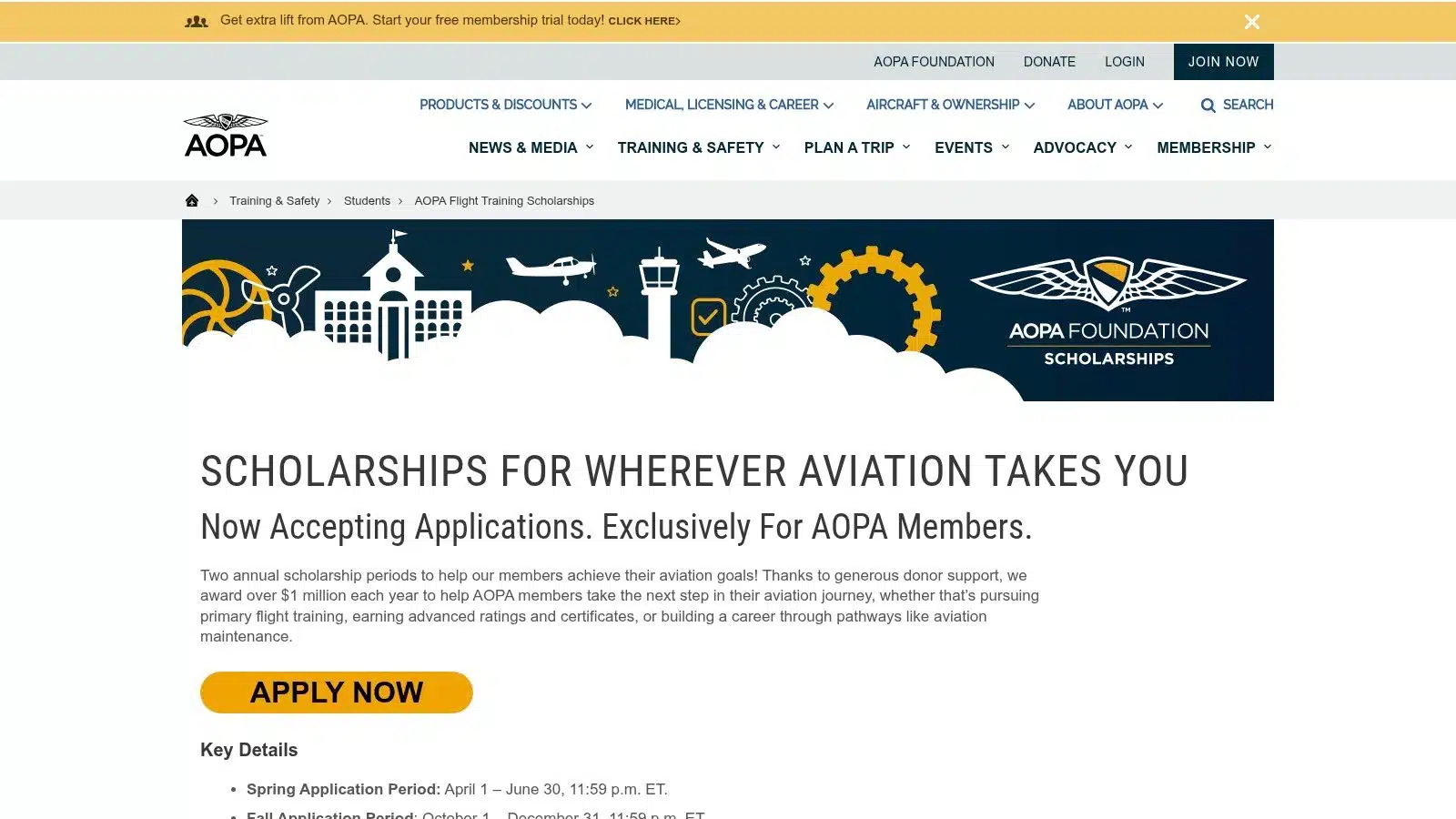
What sets AOPA's program apart is its flexibility. Unlike scholarships tied to a specific institution, AOPA funds are disbursed directly to recipients via a prepaid expense card. This gives you the freedom to train at nearly any Part 61 or 141 flight school in the United States, including DuBois Aviation. This approach is ideal for students who have already selected a local school that fits their needs. While this funding is focused on training, AOPA also provides extensive resources for those looking to buy an airplane, offering guidance on how to complete the purchase process safely and effectively.
Key Details and Application Strategy
- Funding Focus: Primary training (Sport, Private), advanced ratings (Instrument, Commercial, CFI, Multi-Engine), and even programs for high school students and teachers.
- Access Requirements: The main application window is once a year, typically opening in the fall and closing in early spring. Some scholarships require an AOPA membership, which is a worthwhile investment for the resources provided.
- Pros: Large award amounts, high number of recipients, and flexibility in choosing your flight school.
- Cons: Highly competitive with strict application deadlines and a 12-month timeline to use the funds.
To succeed, prepare your application well before the deadline. AOPA uses a standardized online portal, so gather your recommendation letters, essays, and any required documentation early. Exploring the different scholarship tracks is a critical first step, as many applicants find they are eligible for more than one category. For a deeper look at combining scholarships with other funding methods, you can find more information about financial aid for pilot training.
Website: AOPA Foundation Flight Training Scholarships
2. EAA Flight Training Scholarships
The Experimental Aircraft Association (EAA) offers a robust scholarship program that provides critical grants for flying lessons to aviation newcomers and advancing pilots alike. EAA consolidates dozens of individual named scholarships into a single application, streamlining the process for applicants. This approach makes it an essential stop for EAA members, particularly those who have participated in the Young Eagles program, as many awards are earmarked for this pathway.
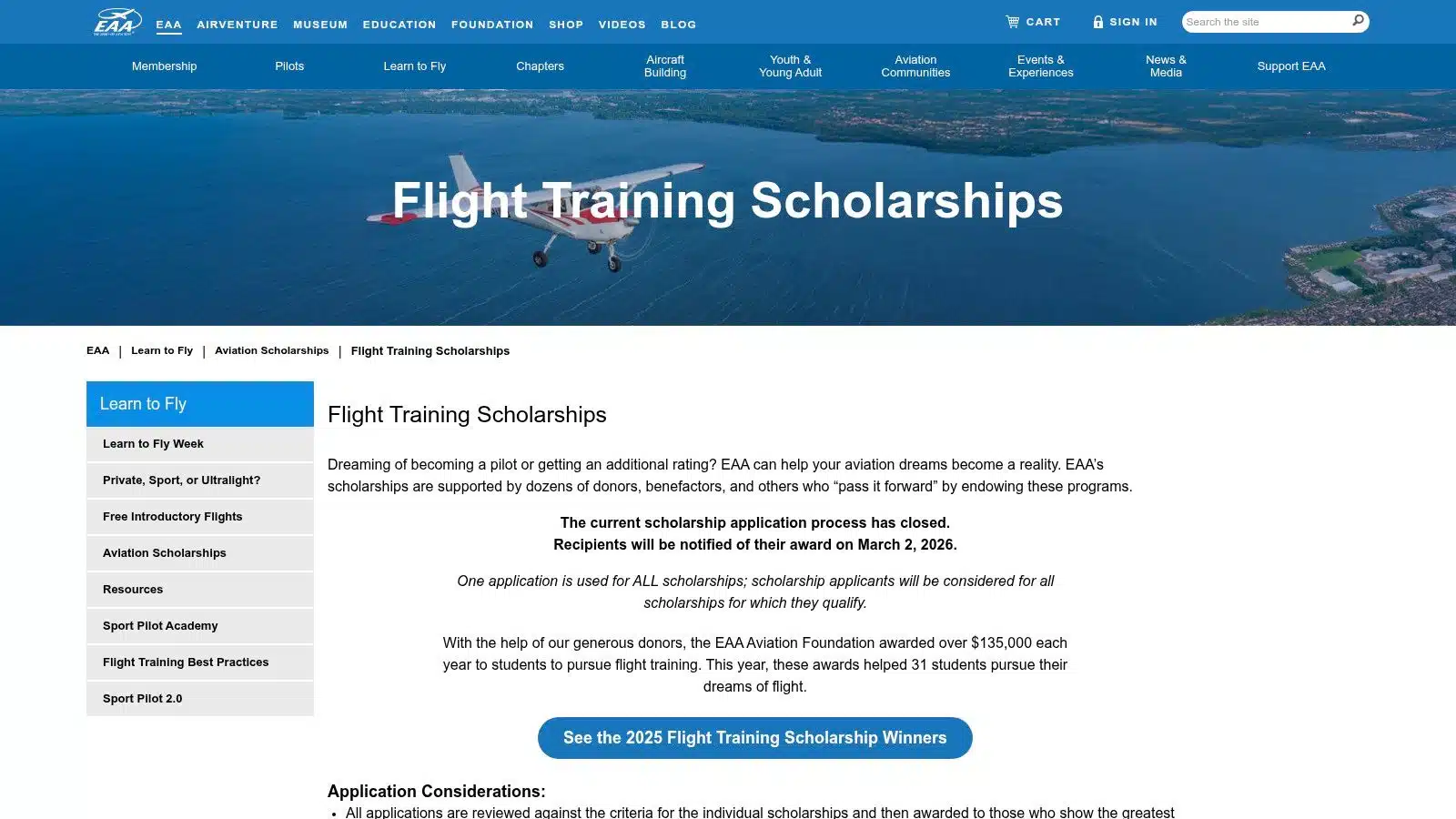
A unique feature of the EAA program is its disbursement method, which is often tied to training milestones. This ensures funds are used as intended and keeps students on track. The scholarships are flexible, allowing training at programs in both the United States and Canada, including independent schools like DuBois Aviation. While the funding is dedicated to training, EAA is also a premier resource for members looking to buy an airplane, offering extensive guidance on navigating the complex purchase process. This holistic support makes EAA a valuable partner throughout an aviator's entire journey.
Key Details and Application Strategy
- Funding Focus: Primarily supports primary flight training (PPL), but some funds are available for advanced ratings. Strong emphasis on supporting youth and Young Eagles alumni.
- Access Requirements: EAA membership is typically required. The main application cycle runs from fall to early winter, so planning ahead is crucial. International students may be eligible if training in the U.S. or Canada.
- Pros: Single application enters you into a pool for multiple scholarships; excellent support for youth and Young Eagles.
- Cons: Highly competitive; requires careful documentation of training milestones to receive funds and adheres to strict application windows.
To stand out, your application should highlight your passion for aviation and any involvement with EAA chapters or programs. Since one application is considered for many awards, carefully detail your goals and background to match with the specific intent of different named scholarships. Be prepared to submit progress reports to the EAA to unlock funding installments.
Website: EAA Flight Training Scholarships
3. EAA Ray Aviation Scholarship
The Experimental Aircraft Association (EAA) offers a powerful pathway for young aviators through its Ray Aviation Scholarship program. This initiative stands out by providing up to $12,000 in grants for flying lessons, but its core value lies in the structured mentorship that accompanies the funds. The program is a collaboration between the national EAA organization and its local chapters, creating a community-based support system designed to guide scholars from their first lesson to their checkride.
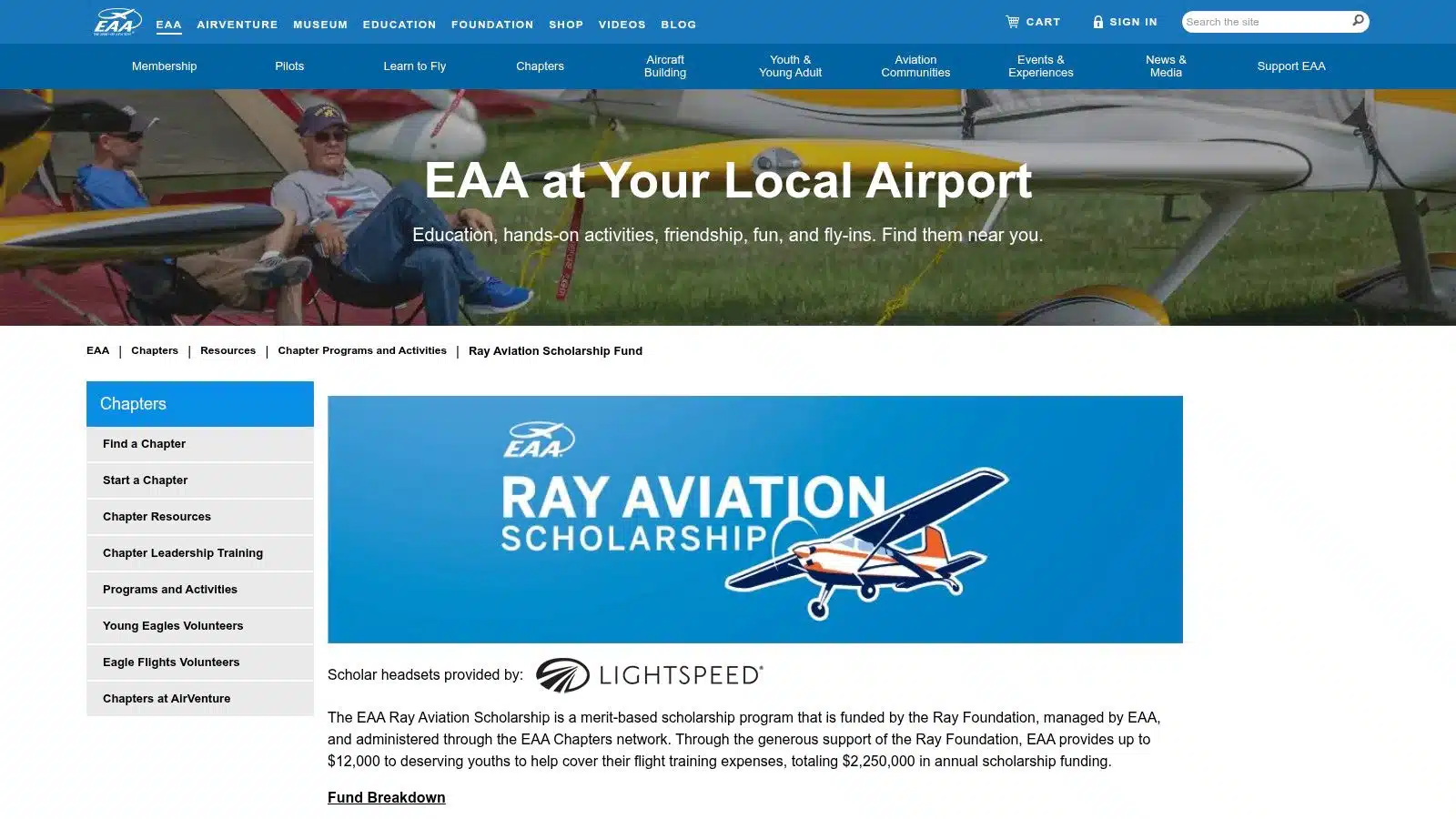
Unlike grants that simply provide money, the Ray Aviation Scholarship is a goal-oriented program. Funding is disbursed based on reaching specific milestones, such as passing the written exam or completing a solo flight. This model ensures scholars stay on track and are fully supported by a local EAA chapter mentor who provides guidance and encouragement. While the grant is for training, the EAA community is also an invaluable resource for individuals interested in learning how to buy an airplane, offering a network of experienced owners who can share practical advice on the process.
Key Details and Application Strategy
- Funding Focus: Primarily for completing a Private Pilot License (or Sport/Glider certificates at a lower cap). Intended for students aged 16–19 at the time of application.
- Access Requirements: Applicants must be nominated and sponsored by a participating local EAA chapter. This requires actively engaging with your local chapter to secure their support before the application.
- Pros: Significant award amount that can cover most primary training costs, and built-in mentorship greatly increases the likelihood of completion.
- Cons: Strict age restriction and the requirement for chapter sponsorship makes it less accessible for those not already involved with EAA. The milestone-based funding has firm deadlines.
To pursue this scholarship, your first step is to connect with a local EAA chapter. Attend meetings, volunteer, and demonstrate your passion for aviation. Building a strong relationship with the chapter is essential for securing a nomination. Once selected, you'll need to maintain consistent progress to meet the program's milestones.
Website: EAA Ray Aviation Scholarship Fund
4. Women in Aviation International (WAI) Scholarships
Women in Aviation International (WAI) offers one of the most powerful centralized platforms for women seeking grants for flying lessons and other aviation career paths. WAI’s portal aggregates dozens of distinct scholarships funded by various donors, covering everything from primary flight training and helicopter ratings to maintenance, dispatch, and professional development. This makes it a critical resource for female aviators at any stage of their journey.
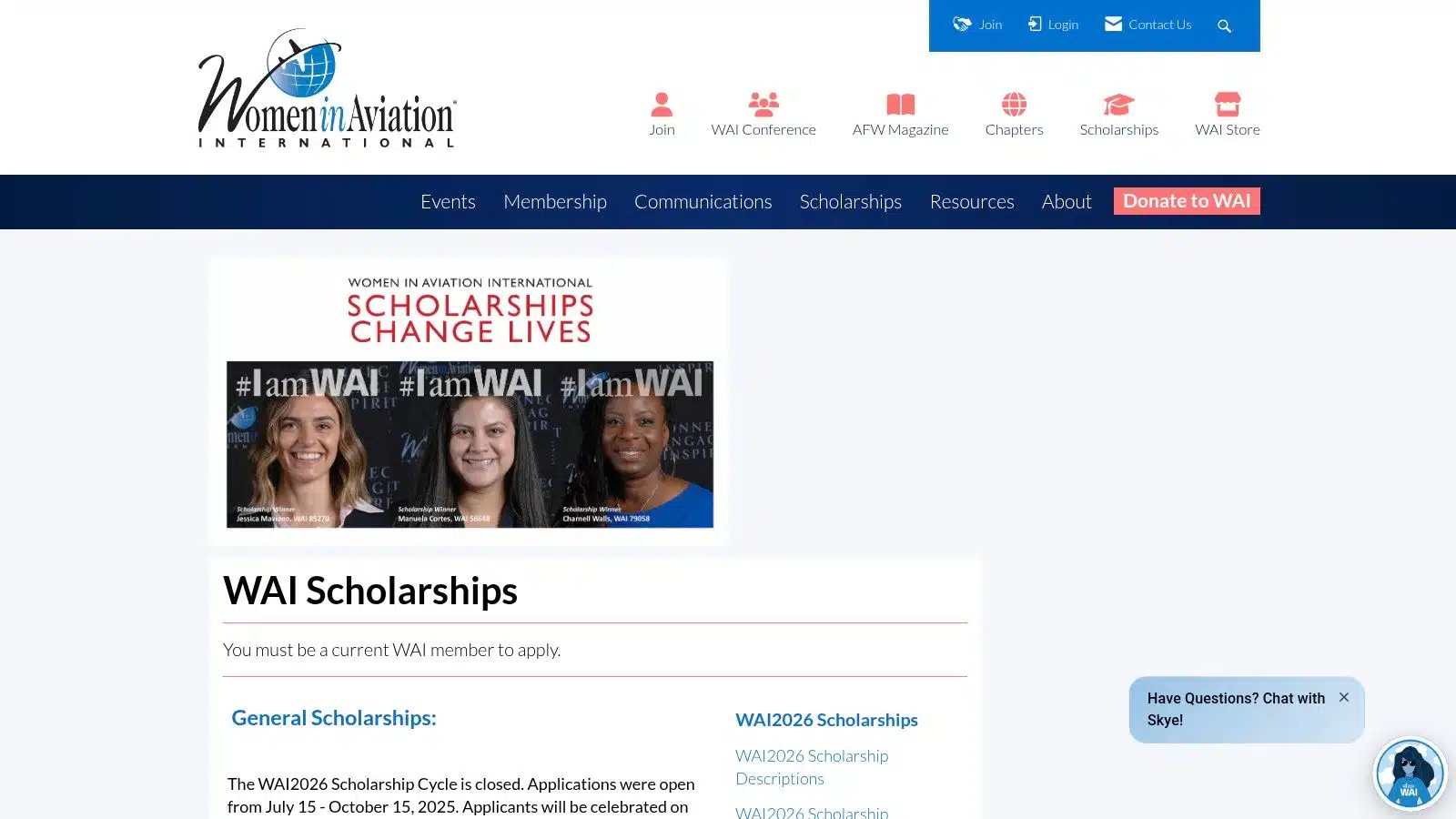
The strength of the WAI program lies in its diversity. While some scholarships offer direct funding for flight training at schools like DuBois Aviation, others provide type ratings, conference attendance, or career-specific training. This breadth means applicants can find awards that precisely match their goals. The organization's strong industry ties also mean that a WAI scholarship carries significant recognition and provides exceptional networking opportunities, particularly at their annual conference. Beyond training, WAI's community is a valuable resource for women navigating the process of buying an airplane, connecting members with experienced owners and mentors for guidance.
Key Details and Application Strategy
- Funding Focus: Primary and advanced flight training (including helicopter), maintenance, dispatch, engineering, and career development for women in aviation.
- Access Requirements: An active WAI membership is required for nearly all scholarships. The application window typically opens in the summer and closes in the fall.
- Pros: Wide variety of award types, meaningful funding amounts, and outstanding networking benefits within the aviation industry.
- Cons: Highly competitive, requires a paid membership, and each scholarship has unique documentation and essay requirements set by its donor.
To maximize your chances, join WAI early and thoroughly review all available scholarships, as you may be eligible for several. Each application is distinct, so tailor your essays and supporting documents to the specific donor's mission and criteria. Start gathering your materials well ahead of the autumn deadline, as the portal manages numerous individual applications.
Website: Women in Aviation International (WAI) Scholarships
5. The Ninety-Nines (AEMSF & First Wings Awards)
The Ninety-Nines International Organization of Women Pilots offers some of the most respected and substantial grants for flying lessons available exclusively to women. Through its two primary scholarship tracks, the organization supports female aviators at every stage of their journey, from their very first solo to advanced professional ratings. This long-standing commitment makes The Ninety-Nines a vital resource for women pursuing a future in the cockpit.
The program's strength lies in its dual-track approach. The "First Wings Awards" are designed for student pilots, providing up to $6,000 to help them achieve their first pilot certificate. For licensed pilots aiming higher, the Amelia Earhart Memorial Scholarship Fund (AEMSF) offers awards up to $20,000 for advanced training, such as an Instrument Rating, Commercial Pilot License, or even specialized endorsements. The program also fosters a powerful sense of community through its national chapter network. While this funding is for training, the organization's network provides invaluable mentorship for members looking to buy an airplane, offering guidance from experienced owners.
Key Details and Application Strategy
- Funding Focus: Initial pilot certificates (First Wings Award) and advanced training, ratings, and academic degrees (AEMSF).
- Access Requirements: Membership is required. The AEMSF has a January 1st deadline, while First Wings applications are due April 1st and October 1st. Be prepared for detailed applications that may require endorsements from Ninety-Nines members.
- Pros: Significant funding amounts, dedicated support for both new and advanced women pilots, and an exceptional peer and mentoring network.
- Cons: Membership and tenure requirements apply, application process is detailed, and competition is strong within fixed deadlines.
To create a strong application, connect with your local Ninety-Nines chapter early. Building relationships can provide mentorship and the necessary endorsements for your scholarship package. Carefully review the eligibility for each award, as some require a certain amount of recent flight time or time as a member.
Website: The Ninety-Nines Scholarships
6. Civil Air Patrol (CAP) Cadet Wings via CadetInvest
For young people already involved in aviation, the Civil Air Patrol (CAP) offers a structured and potentially fully funded path to a pilot certificate through its Cadet Wings program. Administered via the CadetInvest portal, this initiative is a prime source of grants for flying lessons specifically for CAP cadets. It's a needs- and merit-based program designed to guide cadets through earning their Private Pilot Certificate in an airplane, glider, or balloon.
The program's distinction lies in its integrated approach, which combines funding with strong oversight, mentorship, and a focus on safety culture. Unlike open-market scholarships, Cadet Wings provides a structured training environment within the CAP framework, ensuring cadets receive consistent guidance. While this is an excellent path to a pilot certificate, CAP also offers resources that extend into other areas, including aerospace education and leadership, which are valuable even for those who later decide to buy an airplane and fly recreationally.
Key Details and Application Strategy
- Funding Focus: Primary training for a Private Pilot Certificate for active CAP cadets.
- Access Requirements: Must be an active CAP cadet in good standing, typically between 16 and 23 years old, and meet specific readiness and medical prerequisites. Applications are managed through the central CadetInvest portal, which has a fixed annual window.
- Pros: Potential to fully fund a PPL, integrated mentorship, and access to the extensive CAP network and leadership opportunities.
- Cons: Highly competitive and restricted to active CAP cadets. The program has strict milestone requirements and progress checks that must be met.
To be a successful applicant, cadets must demonstrate a strong commitment to the CAP program and maintain excellent academic and leadership records. Start the application process early by ensuring all prerequisites are met and your CAP resume is up-to-date. Strong recommendations from squadron leaders are critical.
Website: Civil Air Patrol
7. NGPA Scholarships (National Gay Pilots Association)
The National Gay Pilots Association (NGPA) offers a powerful and inclusive scholarship program supported by major airlines, manufacturers, and industry leaders. Each year, NGPA administers a significant portfolio of donor-funded awards, making it a critical resource for aspiring pilots looking for grants for flying lessons. The organization’s mission of promoting diversity and inclusion in aviation has attracted strong partnerships, resulting in a wide array of scholarships for every stage of training.
The NGPA program is distinctive because it aggregates numerous individual awards into a single, centralized application portal. This simplifies the search process, allowing applicants to apply for multiple opportunities at once. Funds are available for everything from initial Private Pilot certification to advanced ratings like CFI and ATP, with scholarships awarded based on a mix of merit, need, and specific donor criteria. While the funding is for training, the NGPA also creates strong community and networking opportunities, which are valuable for long-term career success.
Key Details and Application Strategy
- Funding Focus: Primary and advanced flight training, academic degrees in aviation, and maintenance technician training.
- Access Requirements: The main application cycle is annual, typically opening in the summer and closing in the fall. Membership in NGPA is required to apply, and some awards may require U.S. work authorization.
- Pros: Access to a large, diverse pool of scholarships through one application, strong industry backing, and awards for various training goals.
- Cons: Highly visible program leads to significant competition, and the annual application cycle has a strict deadline.
To build a strong application, focus on clearly articulating your career goals and your commitment to the NGPA's mission of an inclusive aviation community. Review the list of available scholarships carefully, as many are sponsored by specific airlines or companies and may have unique requirements. Gathering your flight logs, recommendation letters, and essay responses early will ensure a polished submission before the deadline.
Website: NGPA Scholarships
8. OBAP Scholarships (Organization of Black Aerospace Professionals)
The Organization of Black Aerospace Professionals (OBAP) offers a vital pathway for aspiring aviators, focusing on building a more diverse and inclusive industry. Their program goes beyond just providing grants for flying lessons; it creates a powerful ecosystem of mentorship, networking, and career development. For many, OBAP is not just a funding source but a lifelong professional community, connecting students with seasoned pilots and airline executives.
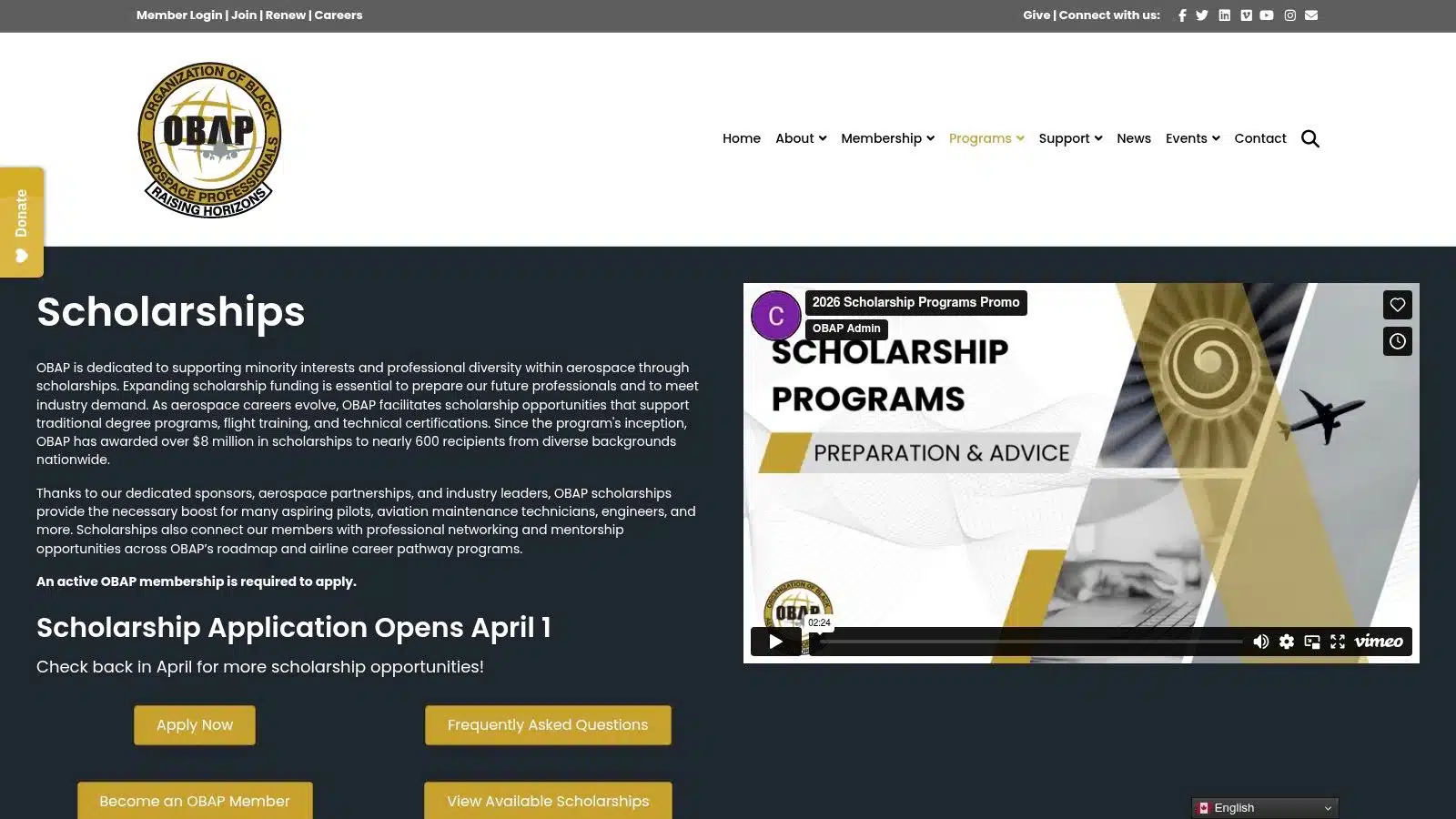
What makes OBAP unique is its holistic approach. Scholarships are often tied to specific flight ratings, but the real value comes from the mentorship and industry pipelines established through partnerships with major airlines and aerospace companies. This structure provides a clear route from initial training to a professional career. Similar to AOPA's support for aircraft acquisition, OBAP provides the foundational career guidance needed to navigate the complex process of becoming an airline pilot, from building hours to acing interviews.
Key Details and Application Strategy
- Funding Focus: Primary and advanced flight training, university aviation programs, and aircraft maintenance technician (AMT) training.
- Access Requirements: Application cycles are announced annually, with specific windows and eligibility criteria for each scholarship. A student membership in OBAP is often required to apply.
- Pros: Strong emphasis on mentorship and career networking, creating direct pipelines to airline careers. Long-standing reputation in promoting aviation diversity.
- Cons: Highly competitive with specific application windows. Some scholarships may have partner-specific requirements or be tied to certain academic institutions.
Success with OBAP requires engaging with the organization's mission. Applicants should clearly articulate their career goals and how they align with OBAP's vision for a more inclusive aerospace community. Networking at OBAP conferences and events can also provide a significant advantage, demonstrating your commitment and allowing you to connect with the role models who often review applications.
Website: OBAP Scholarships
9. Whirly-Girls International Helicopter Scholarships
For women aspiring to fly helicopters, Whirly-Girls International offers one of the most dedicated and substantial sources of grants for flying lessons. This organization, founded in 1955, is singularly focused on advancing women in the rotorcraft industry. Each year, it provides dozens of scholarships funded by major manufacturers, operators, and industry leaders, covering everything from initial training and add-on ratings to specialized courses like turbine transitions and safety programs.
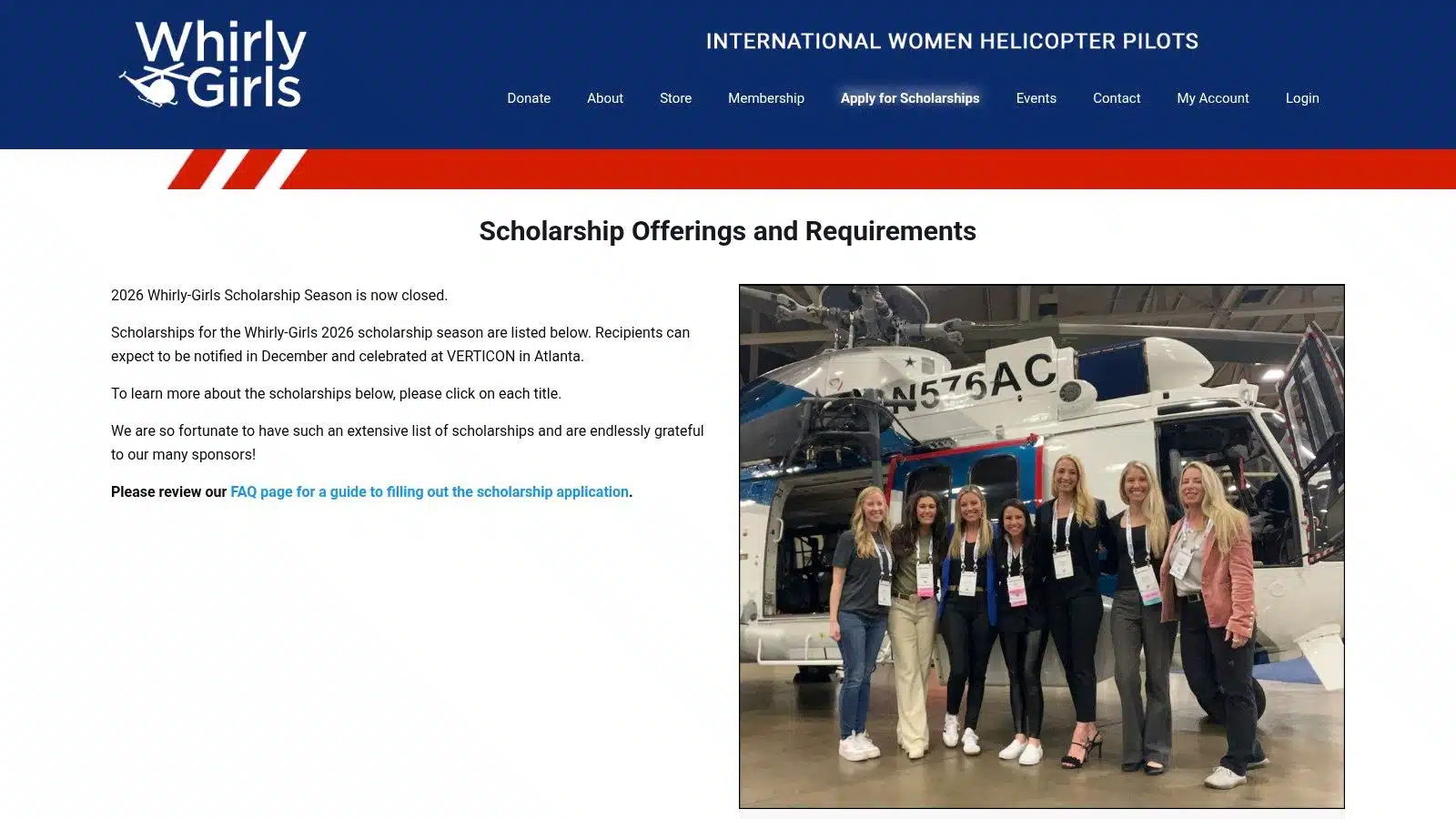
What makes the Whirly-Girls program exceptional is its deep industry integration and robust community support. Winning a scholarship not only provides funding but also grants access to a powerful network of female pilots and mentors. This community aspect is a critical benefit, offering guidance and career connections long after training is complete. While the focus is on training, the network also provides valuable insights for those looking to buy a helicopter, offering experience-based advice on navigating the complex purchase process.
Key Details and Application Strategy
- Funding Focus: Initial and add-on helicopter ratings, advanced training (Instrument, CFI), turbine transitions, and manufacturer-specific courses.
- Access Requirements: Applicants must be Whirly-Girls members in good standing. Scholarship requirements vary, with some being highly specific regarding experience level or training goals. Applications are typically due in the fall.
- Pros: Significant funding specifically for rotorcraft training, strong industry recognition, and an invaluable peer mentorship network.
- Cons: Membership is required, and the application process can be detailed. Some awards stipulate the training provider or location.
To prepare a strong application, join Whirly-Girls well in advance and carefully review the eligibility criteria for each scholarship. The organization lists all available awards transparently on its website, so you can identify which ones best match your career path. Tailor your essays and gather your documents for each specific award to demonstrate your commitment to the rotorcraft industry.
Website: Whirly-Girls International Helicopter Scholarships
10. Vertical Aviation International (VAI) Scholarships
For aspiring pilots with their sights set on a career in vertical lift, the Vertical Aviation International (VAI) scholarships are an essential resource. Formerly known as Helicopter Association International (HAI), VAI is a leading industry organization dedicated to advancing the helicopter community. Their annual scholarship program provides critical grants for flying lessons, specifically targeting pilots who are progressing toward commercial rotorcraft credentials and other advanced training.
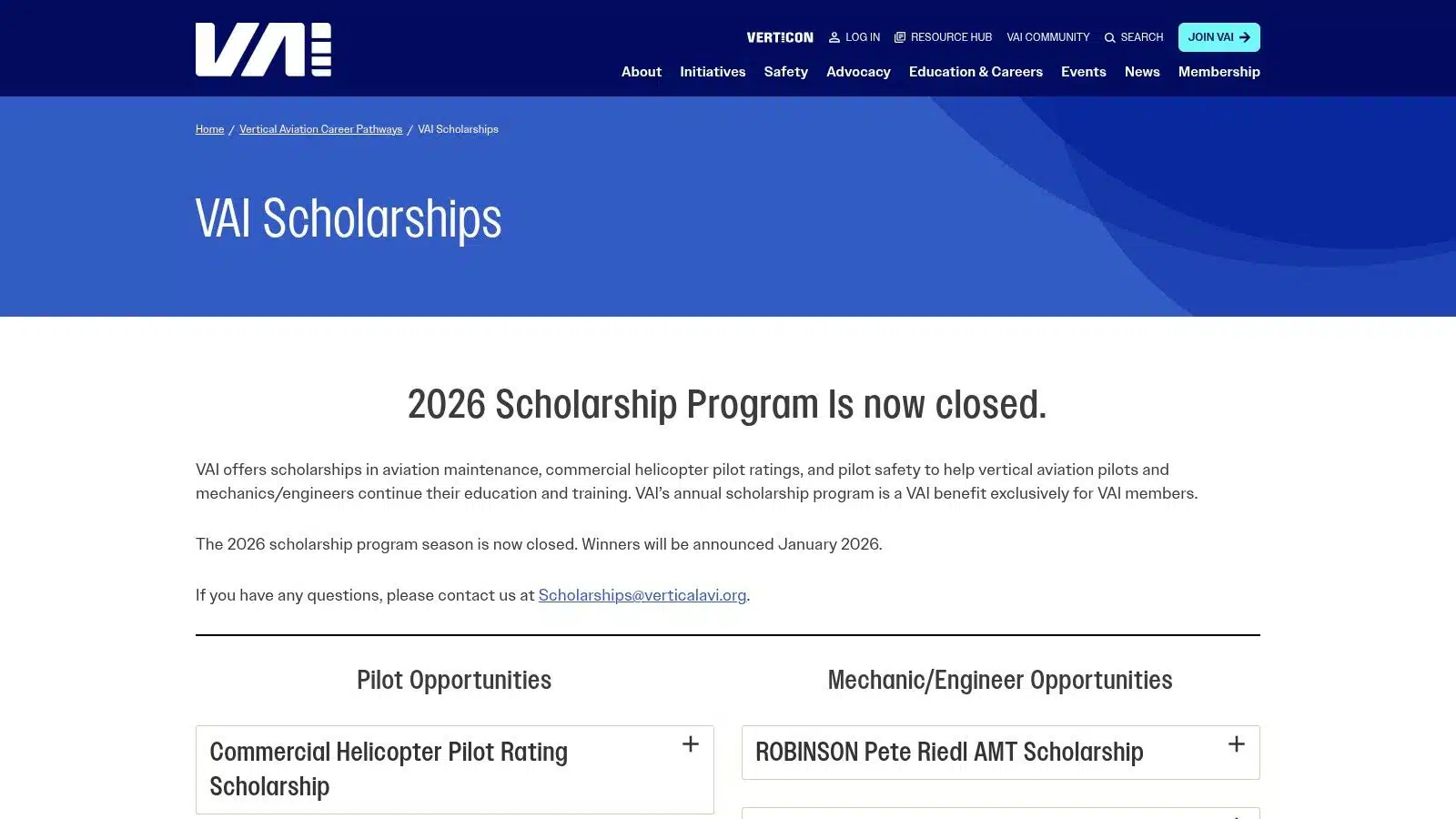
What makes the VAI program unique is its strong emphasis on career-oriented, safety-focused helicopter training. These are not typically entry-level awards for an initial private license. Instead, they are designed to support pilots who have already demonstrated commitment to the field and need funding for commercial ratings, maintenance certifications, or safety courses. An award from VAI is not just financial aid; it's a significant industry endorsement that can improve a pilot's employability within the competitive vertical-lift sector.
Key Details and Application Strategy
- Funding Focus: Commercial helicopter pilot ratings, maintenance training, and specialized safety education.
- Access Requirements: Applications are submitted annually through the VAI website. Most scholarships require strong recommendations from flight instructors or aviation employers, highlighting the applicant's skill and dedication.
- Pros: Highly respected, industry-backed awards that add significant value to a resume. Funding can cover specialized courses beyond standard flight training.
- Cons: Primarily for pilots already in training, not for initial lessons. The application window can be short, and deadlines may close early.
To build a strong application, focus on showcasing your long-term career goals within the helicopter industry. Secure detailed letters of recommendation that speak to your professionalism and airmanship. Since these scholarships are competitive, preparing your materials well in advance of the deadline is crucial. Aligning your application with VAI's mission of promoting safety and professionalism will give you a distinct advantage.
Website: Vertical Aviation International (VAI) Scholarships
11. LeRoy W. Homer Jr. Foundation Flight Training Scholarship
The LeRoy W. Homer Jr. Foundation honors the legacy of its namesake, the first officer of United Airlines Flight 93, by supporting the next generation of pilots. This mission-driven nonprofit provides grants for flying lessons specifically to young, aspiring aviators who are committed to earning their Private Pilot License. The award is designed to cover the full cost of training, making it a life-changing opportunity for its recipients.
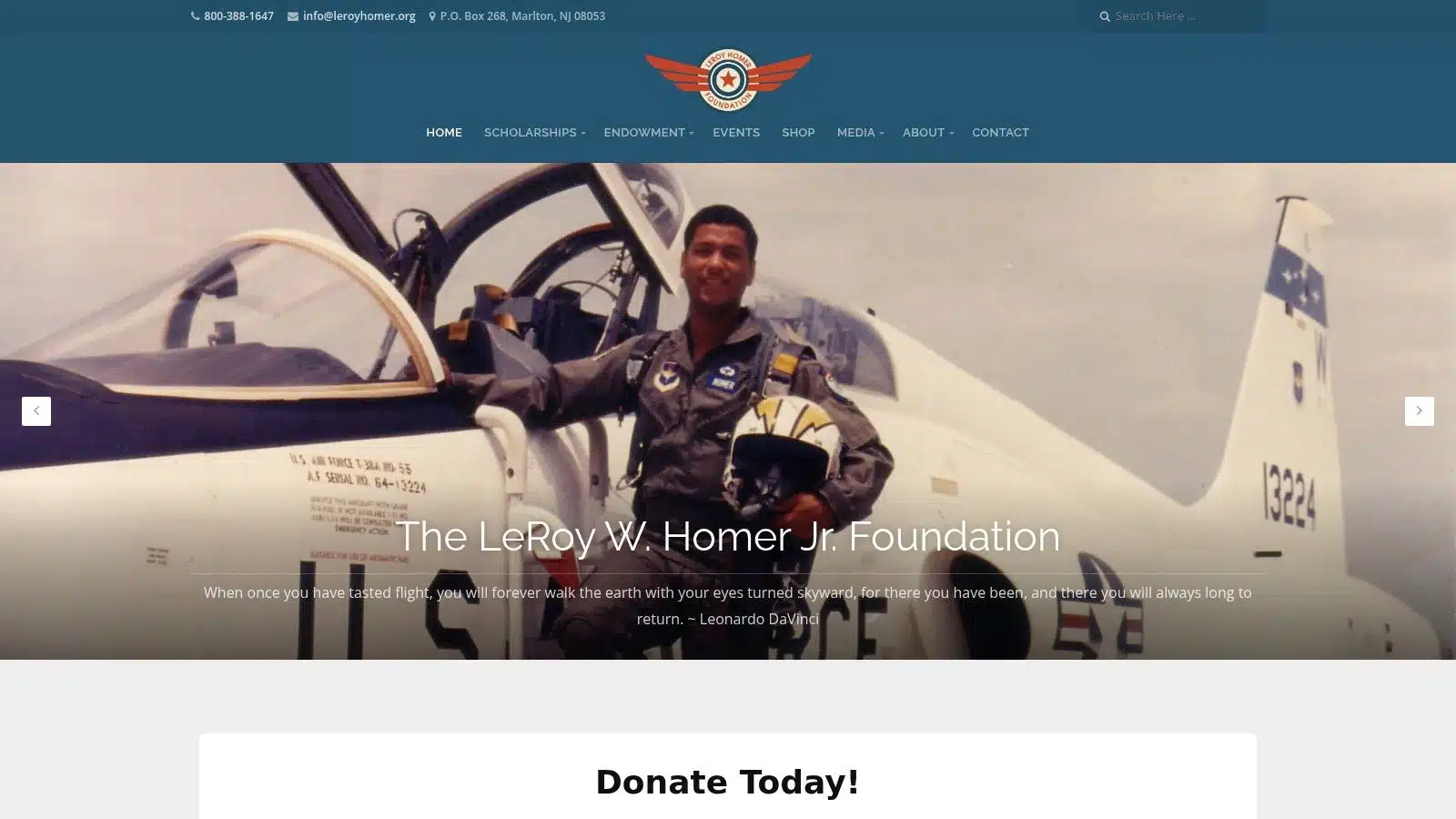
What makes this foundation special is its clear, goal-oriented approach. The scholarship is not just a financial award; it is an entry into a supportive community with a strong sense of purpose. Recipients are expected to complete their training within the award year, a requirement that encourages focus and dedication. While the foundation's primary goal is flight training, its supportive network can also be a resource for career guidance. This includes advice for those who later decide to buy an airplane, helping them understand how to complete the purchase process safely.
Key Details and Application Strategy
- Funding Focus: Full Private Pilot Certificate (PPL) training for young adults.
- Access Requirements: Applicants are generally between the ages of 16 and 23 and must be U.S. citizens or permanent residents. The application window is annual and very specific.
- Pros: Respected legacy foundation with a supportive alumni community, and a clear, goal-oriented award that fully funds PPL training.
- Cons: Highly competitive with a limited number of awards, strict age restrictions, and an aggressive completion timeline.
To build a strong application, focus your essays on your passion for aviation and your commitment to honoring LeRoy Homer's legacy. Highlight your character, determination, and ability to meet the rigorous training schedule. Since there are few awards given, your application must be exceptional and demonstrate a clear plan for completing your Private Pilot License at a school like DuBois Aviation within the one-year timeframe.
Website: LeRoy W. Homer Jr. Foundation
12. Flying Musicians Association (FMA) Solo Program
The Flying Musicians Association (FMA) offers a unique and supportive entry point into aviation by connecting the disciplines of music and flight. Its Solo Program is designed to give talented high-school musicians the initial push they need to achieve their first major milestone: the first solo flight. This program is not just a source for grants for flying lessons; it's a mentorship-driven community that builds momentum and confidence for aspiring pilots.
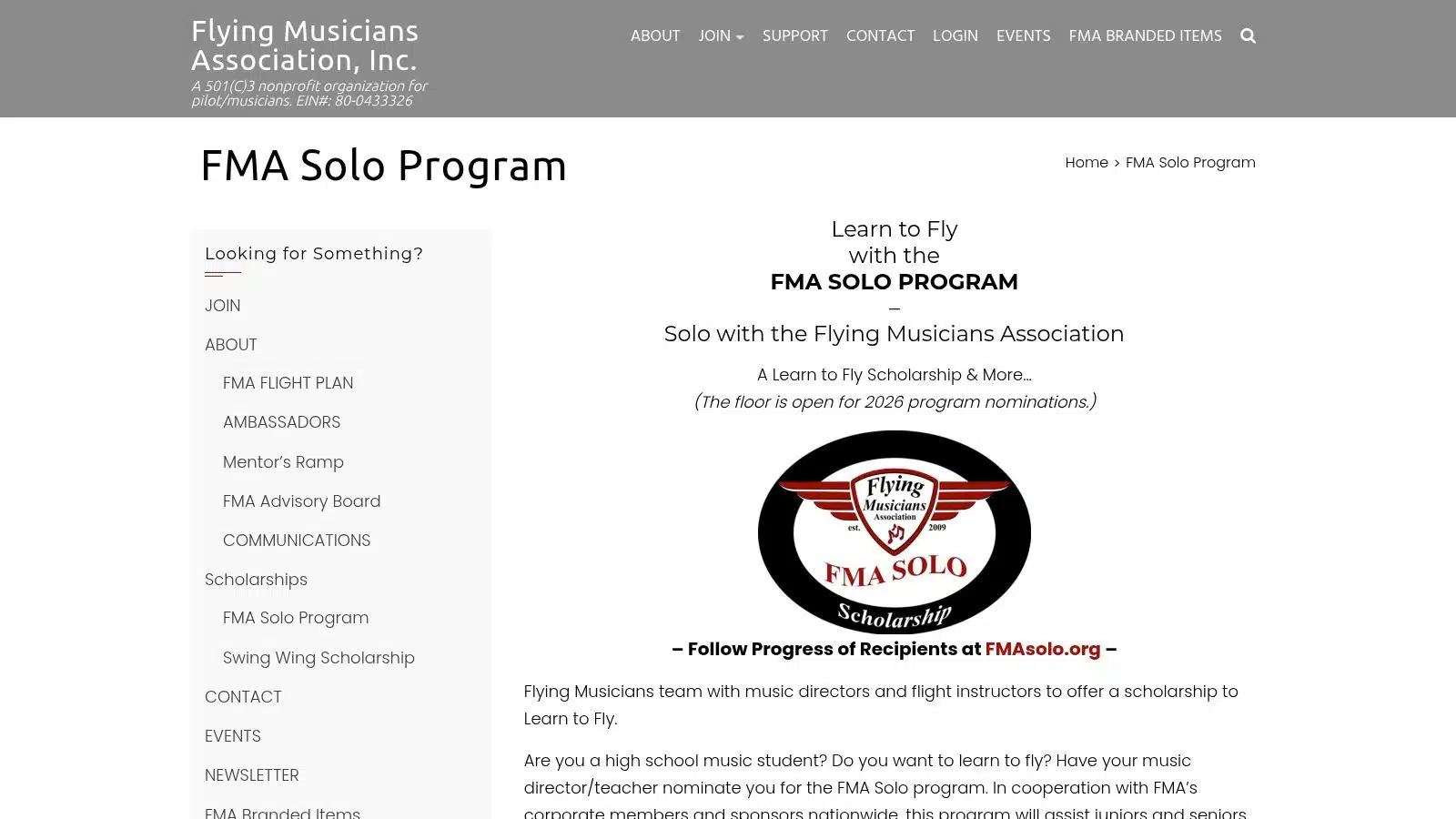
What makes the FMA Solo Program special is its on-ramp approach. Instead of funding an entire PPL, it concentrates resources on getting a student through the first 15 hours of training to solo. This accomplishment is a huge motivator and often provides the necessary encouragement for students to seek further funding to complete their license. The association's network of mentors, who are often both musicians and pilots, provides invaluable guidance, creating a powerful support system. While the FMA focuses on initial training, their community can also be a resource for connecting with experts on topics like how to buy an airplane later in your aviation journey.
Key Details and Application Strategy
- Funding Focus: Ground and flight training costs necessary to achieve a student pilot’s first solo flight.
- Access Requirements: Applicants must be high-school band, orchestra, or choir students and must be nominated by their music director. The application window is typically in the fall.
- Pros: Unique pathway for student musicians, strong mentorship component, and creates early, tangible progress toward a Private Pilot License.
- Cons: Highly niche; restricted to nominated high-school musicians. Funding only covers training to the first solo, requiring students to find additional funds to finish their PPL.
Success with this program hinges on building a strong relationship with your high-school music director, as their nomination is the first step. Prepare to articulate the connection between your musical discipline and your desire to fly in your application essays. Emphasize commitment, practice, and the structured learning process common to both fields.
Website: Flying Musicians Association (FMA) Solo Program
12 Flight Training Grants Compared
| Program | Core & Eligibility | Value (💰) | Competitiveness (★) | Audience (👥) | USP (✨🏆) |
|---|---|---|---|---|---|
| AOPA Foundation Flight Training Scholarships | National program; multiple tracks (youth, adult, teachers); usable at most U.S. schools | 💰 Large; funds often cover big portion of PPL/ratings; prepaid card | ★★★★ — annual window, competitive | 👥 Youth, adults, teachers | ✨ Flexible use at many schools; fast disbursement 🏆 |
| EAA Flight Training Scholarships | Single application for many named funds; U.S. & Canada eligible | 💰 Moderate→High; milestone-based installments | ★★★★ — milestone tracking required | 👥 Young Eagles participants, students | ✨ One-app access to many funds; chapter pathways |
| EAA Ray Aviation Scholarship | Chapter-administered; age 16–19; mentorship & milestones | 💰 Up to ~$12k for PPL (high primary funding) | ★★★★ — age and chapter sponsorship limits | 👥 16–19 aspiring private pilots | ✨ Strong local mentorship and high award amounts 🏆 |
| Women in Aviation International (WAI) Scholarships | Central portal with dozens of donor awards; includes helicopters | 💰 Varied; many meaningful awards | ★★★ — high competition; membership usually required | 👥 Women pursuing flight, maintenance, dispatch | ✨ Broad women-specific awards + conference networking 🏆 |
| The Ninety‑Nines (AEMSF & First Wings) | Two tracks: First Wings (first cert) & AEMSF (advanced) | 💰 First Wings up to ~$6k; AEMSF up to ~$20k | ★★★★ — membership/endorsements often required | 👥 Women student & advancing pilots | ✨ Established chapters, mentorship, clear deadlines 🏆 |
| Civil Air Patrol (CAP) Cadet Wings (CadetInvest) | Needs/merit-based for CAP cadets to earn PPL/glider/balloon | 💰 Can fully fund PPL for selected cadets | ★★★★ — selective, CAP prerequisites | 👥 Active CAP cadets | ✨ Structured CAP oversight, mentorship, leadership pipeline |
| NGPA Scholarships | Central portal with donor-funded awards and industry partners | 💰 Varied; airline/OEM partner funding available | ★★★ — competitive; some doc/work‑auth limits | 👥 LGBTQ+ pilots & allies, broad applicants | ✨ Inclusive program with industry networking |
| OBAP Scholarships | Portfolio: university, flight ratings, mentorship, pipeline programs | 💰 Varied; recurring cycles with airline partners | ★★★ — deadline/partner constraints | 👥 Black and underrepresented aspiring aviators | ✨ Mentorship, ACE Academies & hiring pipeline 🏆 |
| Whirly‑Girls Helicopter Scholarships | Rotorcraft-specific scholarships for women (primary → advanced) | 💰 Substantial rotorcraft funding; OEM donors | ★★★ — membership/eligibility varies | 👥 Women rotorcraft students & pros | ✨ Deep helicopter focus, strong peer network 🏆 |
| Vertical Aviation International (VAI) Scholarships | Rotorcraft-focused; commercial & safety/maintenance emphasis | 💰 Targeted for commercial/advanced rotorcraft training | ★★★ — aimed at progressing pilots, competitive | 👥 Aspiring/working helicopter professionals | ✨ Industry-backed safety and type-specific awards |
| LeRoy W. Homer Jr. Foundation | PPL-focused; ages ~16–23; US citizens/permanent residents | 💰 Focused PPL funding; limited awards | ★★★★ — selective, strict completion timeline | 👥 Ages 16–23 (US citizens/PR) | ✨ Mission-driven legacy foundation with alumni support |
| Flying Musicians Association Solo Program | Nomination by high‑school music directors; funds to first solo (~15 hrs) | 💰 Limited — funds to solo only (on‑ramp to PPL) | ★★★ — narrow eligibility, lower applicant pool | 👥 Nominated high‑school musicians | ✨ Unique music‑to‑aviation pathway and mentorship |
From Training to Ownership: Your Next Steps in Aviation
You have navigated the complex but rewarding world of aviation scholarships, from the broad support of the AOPA and EAA to specialized funds like those from The Ninety-Nines and the Whirly-Girls. Securing one of these grants for flying lessons is a massive accomplishment, one that turns the distant dream of flight into a tangible, achievable plan. This guide has armed you with the resources, application strategies, and financial frameworks to fund your training, but the journey doesn't stop once you earn your certificate. The end of your initial training is the true beginning of your life in aviation.
The most critical takeaway is that persistence and preparation are your greatest assets. The scholarship application process is competitive, requiring diligence, a compelling personal story, and a clear vision for your aviation future. Whether you are a teen aiming for the EAA Ray Aviation Scholarship, a woman applying to WAI or The Ninety-Nines, or a helicopter enthusiast targeting VAI funds, the core strategy remains the same: start early, tailor each application, and showcase your passion. Your commitment is the currency that scholarship committees value most.
Planning Beyond the PPL: The Path to Aircraft Ownership
Many newly minted pilots quickly realize that consistent, affordable access to an aircraft is key to building hours and maintaining proficiency. While renting is an excellent starting point, ownership offers unparalleled freedom and can even be a financially sound decision in the long run. Thinking about this next phase while you are still training at a school like DuBois Aviation allows you to create a seamless transition from student pilot to aircraft owner.
But how do you buy an airplane or helicopter the safe way? It’s a process that requires as much diligence as applying for a grant.
A Guide to Safe Aircraft Acquisition
Approaching an aircraft purchase without proper guidance can be risky. Here are the essential steps to protect your investment and ensure you get a safe, reliable aircraft.
- The Pre-Buy Inspection: This is the most important step. A thorough pre-buy inspection, conducted by a trusted, independent mechanic who specializes in that specific aircraft model, is non-negotiable. This inspection goes far beyond a standard annual and can uncover hidden corrosion, unlogged damage history, or impending costly maintenance needs. Never use a mechanic recommended solely by the seller.
- Logbook Forensics: An aircraft's logbooks tell its life story. Scrutinize them for complete records, signs of damage history, and consistent maintenance. Gaps in the logs or missing entries are significant red flags that could indicate a troubled past.
- Navigating Title and Escrow: Use a reputable aviation title and escrow company. They will conduct a title search to ensure there are no hidden liens on the aircraft and will hold the funds securely until the bill of sale is signed and the aircraft is registered in your name with the FAA. This protects both the buyer and the seller.
- Understanding Ownership Costs: The purchase price is just the beginning. Create a detailed budget that includes fixed costs (insurance, hangar or tie-down fees, annual inspection) and variable costs (fuel, oil, engine reserves, unexpected maintenance). A common rule of thumb is to budget a significant portion of the purchase price for annual operating expenses.
- Partnerships and Leasebacks: Sole ownership isn't the only option. An aircraft partnership allows you to split the costs and responsibilities with one or more other pilots. A leaseback arrangement, where you lease your aircraft back to a flight school like DuBois Aviation, can generate revenue to offset ownership costs, though it comes with higher maintenance demands.
By starting your research on aircraft ownership now, you can budget accordingly, build relationships with mechanics and insurers, and be ready to act when the right opportunity arises. This proactive mindset, which you've already applied to finding grants for flying lessons, will serve you well as you take the next exciting step from pilot to owner, keeping your momentum and your head in the clouds.
Ready to put your scholarship funds to work or start your flight training journey? At DuBois Aviation, we guide aspiring pilots through every step, from their first Discovery Flight to earning advanced ratings, all while helping them maximize their funding opportunities. Visit DuBois Aviation to see how our expert instructors and diverse fleet at Chino Airport (KCNO) can help you achieve your aviation goals.