So, you're dreaming of earning your wings but the thought of the cost is keeping you grounded. I get it. The key isn't to find a cheap flight school—it's about finding smart, efficient training that gives you incredible value for every dollar you spend.
And here’s some good news: the entire aviation industry is scrambling for pilots, which puts you in a fantastic position.
What Affordable Flight Training Really Looks Like in 2026
Let's be clear: "affordable" doesn't mean cutting corners or settling for subpar training. It means finding a school that offers high-quality instruction, a reliable fleet of aircraft, and the real-world skills you need for a career, all without an astronomical price tag.
Right now is one of the best times to start your journey. The massive global pilot shortage has flight schools competing to attract and train new students, and that's a huge advantage for you.
Why Pilot Demand Is Your Best Friend
This isn't just a small hiring bump; it's a seismic shift. The intense demand for new pilots is forcing the training industry to get more efficient. For anyone looking to start their training, this translates into some real-world benefits:
- More Choices: Schools are rolling out all kinds of programs to fit different budgets and schedules.
- Greater Accessibility: The career path to becoming a pilot is more attainable than it's been in decades.
- A Focus on Value: With so much demand, schools are incentivized to streamline their programs, which ultimately saves you time and money.
The numbers don't lie. The global flight training market was valued at $10.61 billion in 2025 and is on track to hit a staggering $24.86 billion by 2032. This explosive growth is fueled by one thing: an insatiable need for pilots.
Boeing’s latest Pilot and Technician Outlook drives this point home, projecting a need for 674,000 new commercial pilots over the next two decades. A huge chunk of that—123,000 pilots—is needed right here in North America. You can dive into the full aviation career demand outlook to see just how big this opportunity is.
The Strategic Edge of Non-Major Airports
Here's one of the best-kept secrets for saving a serious amount of cash: avoid training at massive international airports. Sure, it sounds cool, but you’ll pay a premium for it. You’ll also spend a lot of your precious (and expensive) flight time just waiting in line to take off, navigating complex taxiways, and dealing with air traffic control delays.
A much smarter move is to find a school at a busy, but not overwhelming, airport. For example, a place like DuBois Aviation at Chino Airport (KCNO) hits the sweet spot. You get all the realistic experience of flying in a dynamic airspace without the hefty price tag and frustrating ground delays. Every minute your engine is running is a minute you're learning, not waiting.
Deconstructing Flight School Costs: What You’re Really Paying For
When you first see a flight school’s hourly rate, it’s easy to get excited. But I can tell you from experience that the number on the website is almost never the full story. To find a truly affordable path into the cockpit, you have to dig deeper and understand every single line item that will make up your total training cost.
The good news? The pilot training market is booming, driven by massive demand for new pilots. This means more schools are competing for your business, which leads to better programs and more transparent pricing if you know what to look for.
Beyond the Hourly Rate: What’s Actually Included?
The first question you should ask any flight school is a simple one, but it's critical: "Is your aircraft rental rate wet or dry?" The answer can change your total cost by thousands of dollars.
- Wet Rate: This is what most schools use. The price you see includes the cost of fuel. It makes budgeting much more predictable because you aren’t at the mercy of fluctuating fuel prices.
- Dry Rate: This rate is for the airplane only. You pay for fuel separately every time you fill up. This can sometimes be cheaper if fuel prices drop, but it makes it much harder to stick to a budget.
Then there’s your instructor’s time. It's not just for the time you're wheels-up. You'll be billed for their time on the ground, too—for the pre-flight briefings and the post-flight debriefs. These are absolutely essential parts of your training where the real learning often happens.
A Tip from Experience: Always ask if the instructor's rate for ground instruction is the same as their flight instruction rate. Some schools offer a lower ground rate, which is a fantastic way to save money over the course of your training.
The Hidden Fees That Sneak Up on You
What really catches most student pilots off guard are the smaller costs that pile up. These aren't usually included in the school's "total cost" estimate, but they are very real expenses.
Here's a quick checklist of things you'll almost certainly need to budget for:
- Ground School Materials: This isn't just one book. It’s a whole kit: textbooks, flight charts, a plotter, an E6B flight computer, and maybe access to an online course.
- Aviation Headset: You can often rent one, but they're usually old and uncomfortable. Do yourself a favor and invest in a good quality headset. Your ears will thank you.
- Examiner’s Fee: Your final exam, the checkride, is done with a Designated Pilot Examiner (DPE). They are independent and set their own fee, which can be anywhere from $800 to over $1,500.
- Knowledge Test Fee: Before the checkride, you have to pass the FAA written exam. This is taken at a proctored testing center, and there’s a fee for that, too.
The chart below gives you a sense of why this is such an exciting time to get into aviation. The projected growth is staggering, and it's forcing schools to get more competitive and efficient.
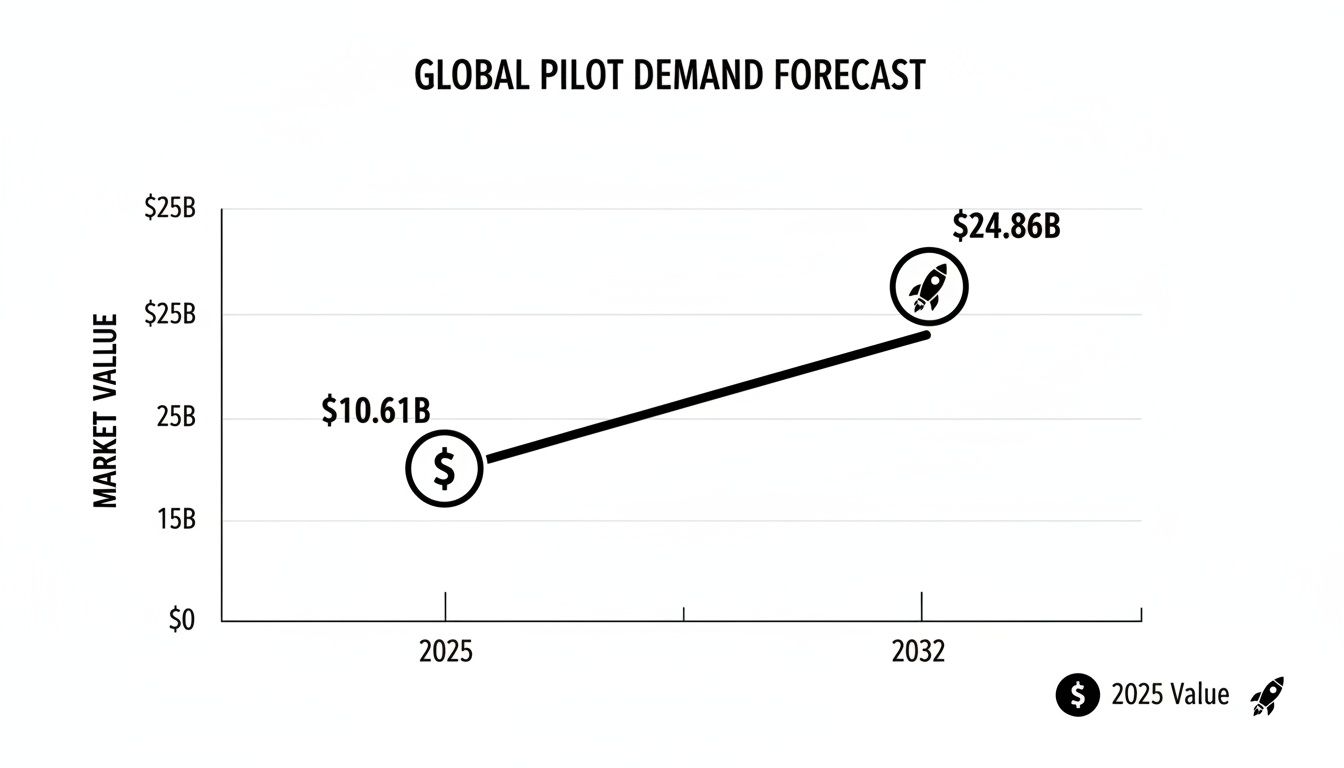
This incredible demand—with the global pilot training market valued at $10.74 billion and projected to hit $29.71 billion by 2034—is your advantage. In the U.S., schools are pushing accelerated programs and more efficient training models to meet the need for pilots. That trend directly helps students like you find more affordable ways to earn your wings. You can dig into the numbers yourself in this full market research on flight training.
Strategic Pathways to Lower Your Training Bill
Finding an affordable flight school is about more than just a low hourly rate. It’s about training smart. If you're strategic about how you approach your training, you can dramatically reduce the final bill without cutting a single corner on the quality of your education. It all boils down to efficiency.
One of the first big decisions you'll face is whether to train under a Part 61 or a Part 141 program. Part 141 programs are very structured, following a rigid, FAA-approved syllabus. But for many students, the flexibility of a Part 61 program is where the real cost savings are found.
This flexibility allows your instructor to build the curriculum around you. If you nail steep turns in one lesson, you can move on. You're not stuck repeating a task just to check a box in a syllabus. This tailored approach often means finishing your license in fewer hours, which translates directly to less money spent.
Maximize Every Hour in the Air and on the Ground
How often you fly is one of the single biggest levers on your final cost. Flying once a month is a surefire way to pay for the same lesson over and over again. To build real momentum and retain what you’re learning, you should be flying at least 2-3 times per week.
The goal is to spend less time re-learning and more time learning. Consistent training builds muscle memory and keeps concepts fresh, which means you’ll progress faster and spend less money repeating maneuvers you forgot from two weeks ago.
Another fantastic way to keep costs down is by using a flight simulator. Modern sims are incredibly realistic and are the perfect place to practice procedures, instrument flying, and emergency scenarios without paying for fuel and engine time. A school with an in-house simulator is a huge plus—you can practice with your instructor at a fraction of the cost of being in the actual airplane.
Smart Choices That Add Up
Even the airport you choose for training can impact your wallet. Flying out of a busy, towered airport like Chino (KCNO) offers invaluable experience talking to air traffic control, but without the crippling delays you’d find at a major international airport. Less time sitting on the taxiway with the engine running means more of your rental hour is spent actually flying.
Here are a few other practical tips that really make a difference:
- Join a Flying Club: Schools like DuBois Aviation often have flying clubs that give you access to discounted rental rates and a great community of fellow pilots.
- Choose the Right Aircraft: There's no reason to learn the basics in a complex, high-performance machine. Start your journey in a cost-effective trainer like a Cessna 150 or a Piper Cherokee. It gets the job done for less.
- Factor in Living Costs: If you're relocating for school, don't forget to budget for housing and travel. Look for opportunities like student travel discounts that can help ease the financial burden of getting to and from your training location.
Every one of these small decisions compounds. For example, if you know your end goal is to be an instructor, you can start planning that path from day one. You might find our guide on how to become a flight instructor helpful for mapping out that journey. By being deliberate about your program, flight frequency, and school, you are the one in control of your budget.
Financing Your Dream with Scholarships, Grants, and Loans
Let's talk about the elephant in the room: the cost. Seeing the total price tag for flight training can feel daunting, but it absolutely doesn't have to be a dealbreaker. The smartest approach isn't just about finding one big loan. It’s about building a funding plan piece by piece from several different sources.
This strategy shifts your focus from just finding the cheapest hourly rate to lowering your actual, out-of-pocket cost. And the good news? The aviation world is full of people and organizations that want to help you succeed.
Tapping into Aviation-Specific Funding
You'll quickly discover that many of the big aviation organizations are heavily invested in supporting the next generation of pilots. These aren't just academic scholarships for the 4.0 GPA crowd; they're often looking for passion, drive, and a clear sense of purpose.
Your search should start with these major players:
- Aircraft Owners and Pilots Association (AOPA): AOPA is a fantastic resource for students, offering a huge list of scholarships for every stage of training, from your first solo to advanced ratings.
- Experimental Aircraft Association (EAA): The EAA's scholarship program is all about backing people with a genuine love for flight, whether you're aiming for a career or just want to fly for the joy of it.
- Women in Aviation International (WAI): WAI provides an incredible array of scholarships for women who are building careers in every part of the aviation and aerospace industry.
A little insider advice for your applications: tell your story. Seriously. Scholarship committees sift through hundreds of essays. Make yours memorable by showing them why you want to fly. Be authentic and let your passion come through—it matters more than you think.
Uncovering Local Grants and Loan Options
While the national scholarships are great, don't forget to look in your own backyard. Many local EAA chapters, flying clubs, and community foundations have smaller grants that most people don't even know exist. The applicant pool is much smaller, which can dramatically boost your odds.
When loans enter the picture, it's vital to know what you're signing. A standard personal loan from a bank might seem like the easiest path, but loans designed specifically for pilot training usually offer better terms. They're built with the unique timeline and costs of flight school in mind.
The pilot training industry is growing, which is great news for students. In the U.S. alone, the number of flying schools is projected to hit 1,105 businesses by 2025—that's an increase of 5.4% per year since 2020. This competition helps keep costs in check, with top programs in the U.S. averaging around $31,000 USD annually, a bargain compared to many other countries, as noted in a report by ibisworld.com.
As you compare financing, look closely at interest rates and repayment plans. Some loans even let you defer payments until after you’ve graduated and are working, which can be a lifesaver. For a deeper dive, check out our guide on financial aid for pilot training. With a solid plan, you can make it happen.
How to Buy an Airplane Safely and Smartly
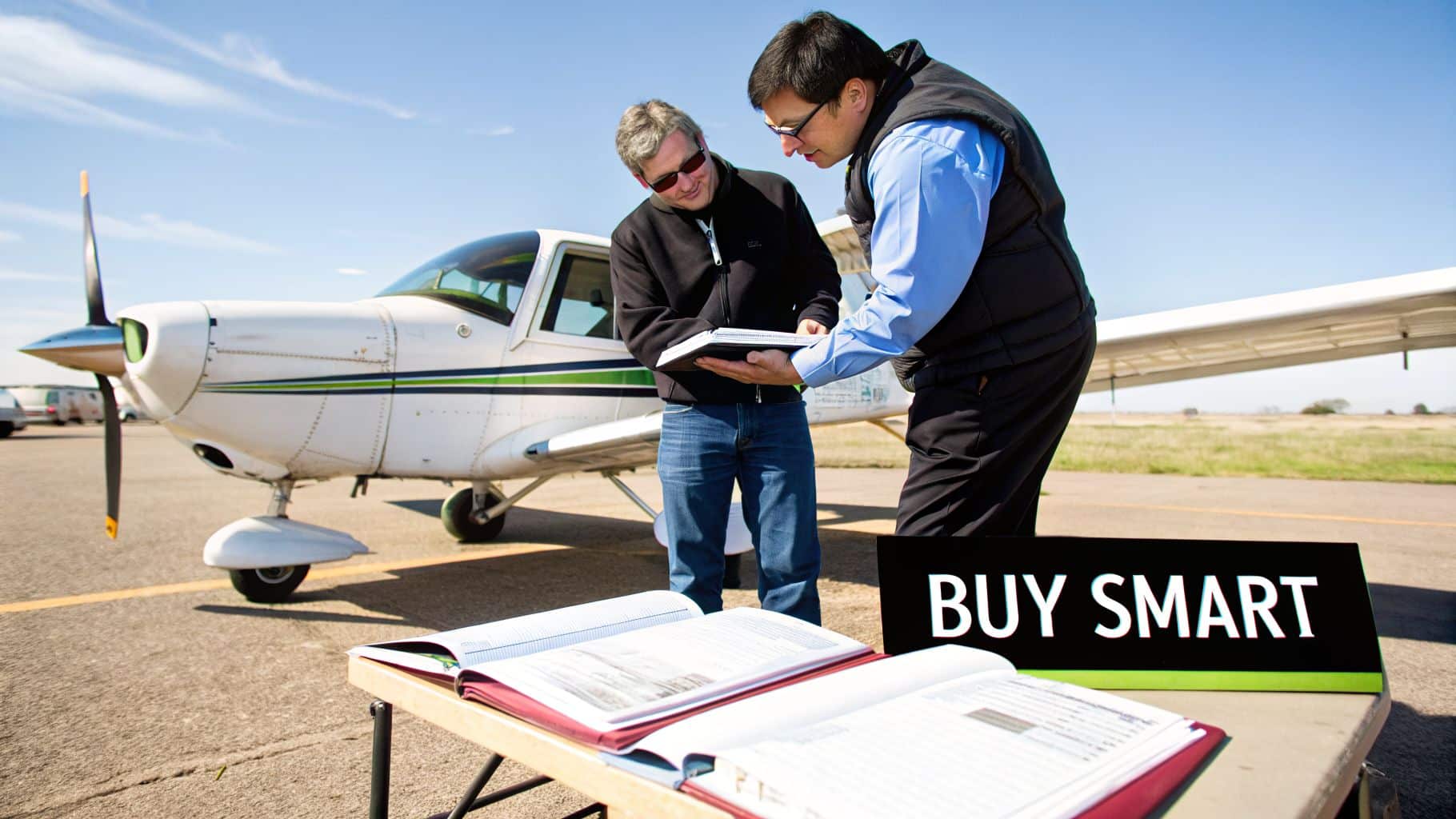
For many pilots, owning an airplane is the ultimate goal. It means flying on your own terms, not the rental counter's. If you fly often, ownership can even make more financial sense than renting in the long run. But jumping into the market without a solid game plan is a classic, and costly, mistake.
Before you even start browsing listings, the most important thing you can do is define your mission. And be honest with yourself. What will you really use the plane for? Are you picturing weekend getaways with the family, grinding out hours for your instrument rating, or just making quick breakfast runs to nearby airports? Your answer will determine whether you need a fast, complex aircraft or a simple, reliable workhorse.
Look Beyond the Purchase Price
That shiny price tag you see on an aircraft listing? That’s just the down payment on your total investment. The real cost of aircraft ownership comes from the recurring expenses you'll face month after month, year after year. Not budgeting for these is how a dream of flight quickly becomes a financial nightmare.
Your true cost of ownership is a combination of several key expenses:
- Hangar or Tie-Down: You need a place to park. A hangar provides the best protection from sun, hail, and wind but costs more. An outdoor tie-down is cheaper but leaves your plane exposed to the elements.
- Insurance: This is a major annual cost. It's calculated based on the aircraft type, its value, and, most importantly, your own experience and ratings.
- Annual Inspection: Every year, your aircraft needs a thorough "annual" by a certified mechanic. This inspection alone can run into thousands of dollars, and that's before factoring in the cost of any issues the mechanic finds that must be fixed.
- Maintenance Fund: Things break. Even with perfect care, you’ll have routine costs like oil changes and unexpected repairs. Smart owners set aside a specific amount of money for every single hour they fly to cover both planned and unplanned maintenance.
Deciding between buying and leasing is a major fork in the road for many aspiring owners. To help you weigh the pros and cons of each approach, it’s worth asking: Is Leasing Equipment Better Than Buying It?
The Indispensable Pre-Buy Inspection
If you remember just one thing from this guide, make it this: never, ever buy an aircraft without a comprehensive pre-buy inspection. This isn't a quick walkaround. It’s a deep-dive examination of the airframe, engine, systems, and logbooks.
And here’s the crucial part: it must be done by an Airframe & Powerplant (A&P) mechanic that you hire and trust. Do not, under any circumstances, use the seller's mechanic. The pre-buy is your single best defense against buying someone else's problems or a plane with a checkered past.
Your mechanic's job is to hunt for red flags. They will scrutinize the logbooks for gaps, a history of major damage, and ensure all Airworthiness Directives (ADs) are complied with. A complete and organized set of logs is a good sign; a messy or incomplete history is not.
Don't be afraid to ask the seller direct questions. What is the full damage history? Why are they selling? Can you see all the logbooks right now? When you find a plane that checks all the right boxes, getting expert help to seal the deal is invaluable. Our partners can walk you through the entire acquisition process. You can learn more about aircraft sales and management services from our affiliate, Threshold Aviation Group, which is also conveniently based right here at Chino Airport.
A Few Final Questions Pilots Ask About Affordable Flight Schools
When you're trying to find a flight school that fits your budget, a few key questions always seem to pop up. Let's tackle them head-on, because getting straight answers is the only way to make a smart decision and avoid any expensive surprises down the road.
I often get asked if you can really get quality training without breaking the bank. The answer is absolutely yes, but you have to stop looking for the "cheapest" school and start looking for the best value.
A school with a slightly higher hourly rate might actually save you thousands in the long run if they have experienced instructors, well-maintained planes, and an efficient schedule. A disorganized school with a rock-bottom advertised price often ends up costing you more because of canceled lessons and repeated flights.
Is It Better to Pay as I Go or Get a Loan?
This is a really personal decision, but from what I've seen, a hybrid approach often works best. Paying out of pocket gives you total control, but your progress can grind to a halt if you constantly have to pause training to save up. That stop-and-start cycle is a real cost-killer, almost always forcing you to repeat lessons.
Taking out a small loan can be a smart move if it lets you fly consistently—say, 2-3 times a week. This momentum helps you finish your license faster and for less total money. Many students I've worked with find success by combining a small loan with their personal savings to build a realistic plan.
The single most effective way to lower the total cost of your license is to fly consistently. Maintaining your momentum means you spend less time re-learning and more time progressing.
What Should I Do if I Can't Afford to Train Consistently?
Look, sometimes life gets in the way and flying multiple times a week just isn't in the cards financially. If that's your reality, don't give up. You just have to be disciplined about staying sharp between lessons.
Here’s what you can do to keep the rust off and make every dollar count when you do get in the cockpit:
- Chair Fly Like a Pro: This isn't a joke—it's what professional pilots do. Sit in a quiet room, close your eyes, and walk through an entire flight in your head. Touch imaginary controls, say your radio calls, and run through every single checklist from pre-flight to shutdown.
- Hit the Books—Hard: Use the downtime to become an expert on the ground. When you show up for your next lesson, you should already be an expert on the weather, regulations, and aerodynamics you'll be covering.
- Use a Home Simulator: You don't need a fancy setup. A basic flight simulator on your computer is a fantastic tool for practicing instrument scans and procedures. It keeps your mind wired for flying, even when you're at home.
When you put in this work on the ground, you ensure your expensive time in the air is spent pushing your skills forward, not just shaking off the cobwebs.
Ready to train in a supportive, efficient, and cost-effective environment? DuBois Aviation at Chino Airport (KCNO) specializes in personalized training plans designed to get you to your goals without wasting a minute of your time or a dollar of your budget.
Come see the difference for yourself. Book a discovery flight with us at https://duboisaviation.com.