
When you first type "aviation camp near me" into a search bar, you're not just looking for a summer hobby; you're taking the first step on a journey that could lead to an incredible career as an airline or helicopter pilot. These camps are your first real look into the professional world of aviation, providing the foundational training needed for a future in the flight deck.
Pinpointing the Right Aviation Camp for Your Career Goals
Finding the right flight training program is less about proximity and more about matching your ambition. Are you aiming for a career with a major airline, or does the specialized world of helicopter piloting call to you? The most important first step is to identify what kind of program fits your long-term career goals as a professional pilot.
You'll quickly find there are two main paths: short-term discovery camps and full-time flight schools designed for career-track students.
Think of a discovery camp as the ultimate test flight for your career interest. These are often summer programs designed to give you a solid overview of flight principles, aerodynamics, and the feel of the controls during an introductory flight. It's the perfect, low-commitment way to decide if aviation is truly your passion before you dive into a more rigorous program.
A dedicated flight school, on the other hand, is your direct route to a professional pilot license. These schools offer structured, year-round training that builds the foundation you need for a career. Most focus on fixed-wing aircraft, which is the standard path for anyone dreaming of becoming an airline pilot. Others specialize in helicopter flight training, opening doors to exciting fields like search and rescue, medical transport, or corporate aviation.
Making the call between fixed-wing and rotary-wing training is a huge decision. It really sets the course for your entire career. Airline jobs almost always require fixed-wing experience, while helicopter pilots carve out niches in very different, specialized sectors.
This process flow gives you a good idea of how most students move from initial curiosity to choosing a specific training track for their career.
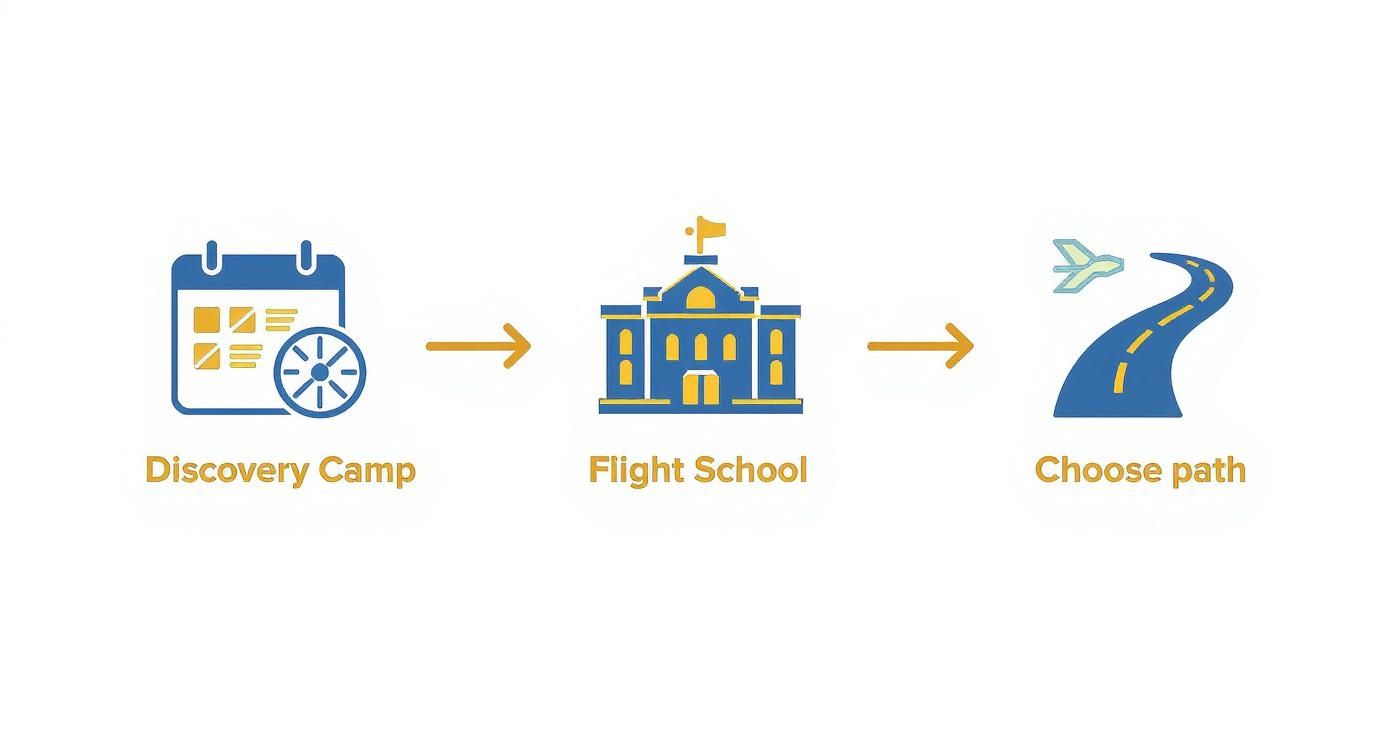
As you can see, starting with a discovery camp can give you the confidence and clarity to pick the right flight school and career path down the road.
Comparing Local Aviation Program Types
Here's a quick look at common aviation camp formats to help you find the best fit for your professional goals.
| Program Type | Ideal For | Common Duration | Primary Outcome |
|---|---|---|---|
| Discovery Flight/Camp | Students testing their interest in a pilot career. | A few hours to 1-2 weeks | Hands-on experience, confirms passion for aviation. |
| Dedicated Flight School | Aspiring career pilots committed to getting certified. | 12-24 months (full-time) | Professional pilot license (e.g., PPL, CPL). |
| Fixed-Wing Program | Students aiming for careers with airlines or corporate jets. | Varies by license | FAA certifications for airplanes. |
| Helicopter Program | Students interested in specialized roles like EMS or tourism. | Varies by license | FAA certifications for rotorcraft. |
Each path offers a unique experience and leads to different career opportunities, so it's all about what you want to achieve in the cockpit.
Ready to take the next step beyond just exploring? You can dive into the details of specific programs and see what it takes to get started by checking out an aviation camp registration page. This is where your dream really begins to take shape.
Fixed-Wing vs. Helicopter Programs: Knowing What Matters
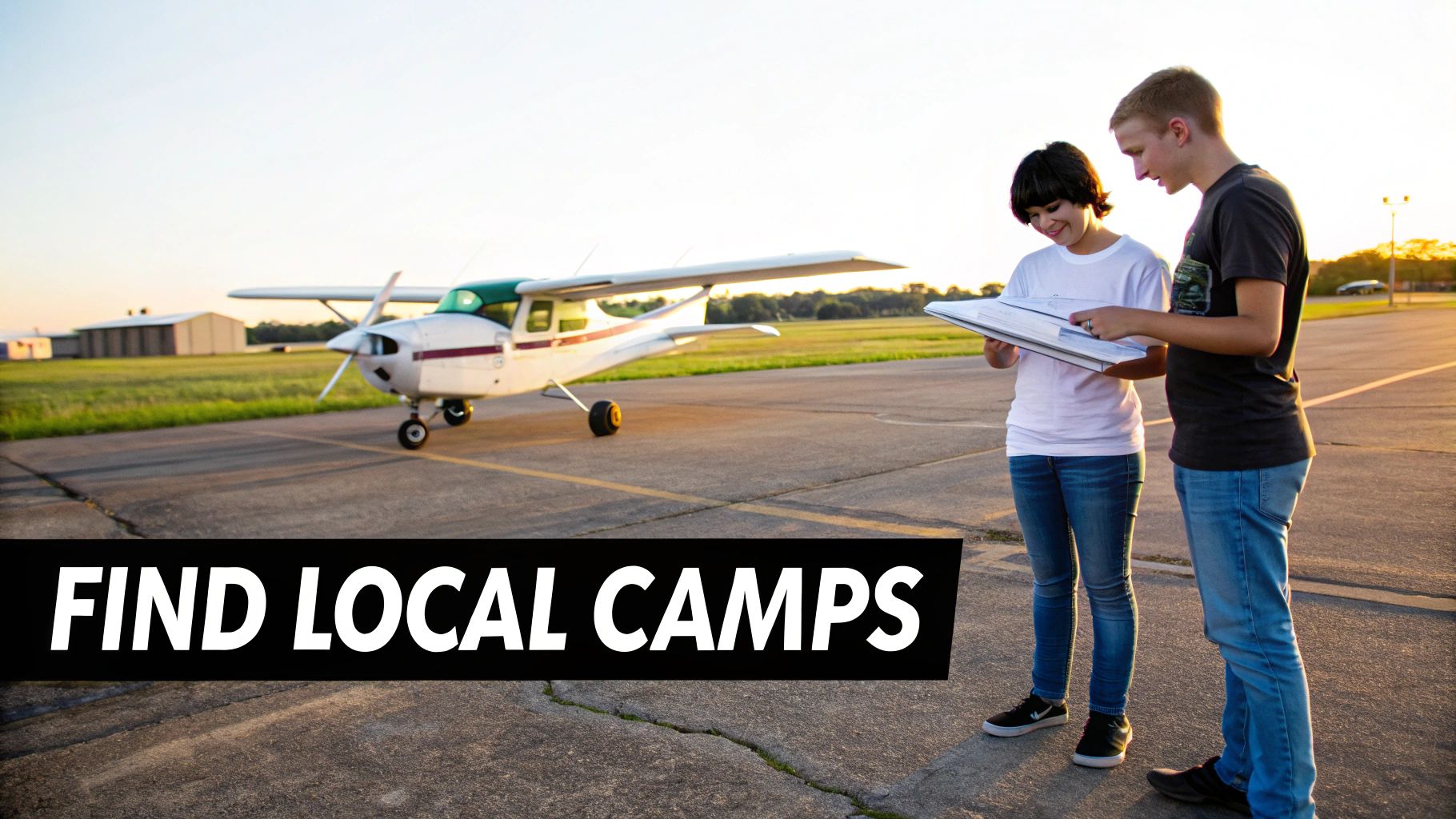
Once you've got a shortlist of local camps, the real work begins. It’s time to look past the glossy brochures and figure out what separates a decent program from one that can genuinely launch your career as a professional pilot.
Not all flight training is the same, and the details really matter. You need to get a feel for the quality of instruction, the fleet of aircraft you'll be flying, and, most importantly, the school's safety culture. These are the things you can't compromise on.
For Future Airline Pilots: It’s All About the Glass
If your dream is to fly for the airlines, your path is through a fixed-wing program. When you compare schools, zoom in on the type of aircraft they use for training. You want to see planes equipped with modern glass cockpits—the digital flight instrument systems like the Garmin G1000.
Getting comfortable with this technology from day one gives you a huge leg up. It's the same system architecture you'll find in modern airliners, making your eventual transition to a professional flight deck feel natural, not overwhelming.
Helicopter Training: A Different Beast Entirely
Helicopter training is a whole other world. The skills you need to master, from hovering and autorotations to tricky low-altitude maneuvers, require a curriculum built around precision and constant situational awareness.
A solid helicopter program will have instructors who didn't just learn to teach—they have deep, real-world experience. Look for pilots who have flown in fields like emergency medical services (EMS), tourism, or utility work. They bring lessons to the cockpit that you just can't get from a textbook.
Key Questions to Ask Any Flight School
Whether you're aiming for a 737 or a Bell 407, there are some tough questions you need to ask before you sign anything. Don't be shy; a good school will welcome your diligence.
- Who are the instructors? Go beyond their basic certifications. Ask about their total flight hours and the kind of flying they've done professionally.
- How are the aircraft maintained? Ask if you can see the maintenance logs. A school that’s proud of its safety and maintenance standards will have nothing to hide.
- What's the safety record? Inquire about their safety record and their Safety Management System (SMS) protocols. This isn't about looking for a perfect record; it's about seeing a proactive, structured approach to safety.
A great training program does more than just help you log hours. It builds the mindset of a professional pilot from your very first flight, instilling discipline, sharp decision-making, and an absolute commitment to safety. That foundation is what sets you up for a long, successful career.
The demand for skilled pilots is a global phenomenon, which has pushed the civil aviation flight training market to grow. In places like Europe, regulatory bodies such as EASA have set high standards that have improved training quality everywhere. To get a better sense of these industry-wide trends, you can check out this comprehensive report on civil aviation flight training.
How Simulators and Modern Tech Shape Better Pilots
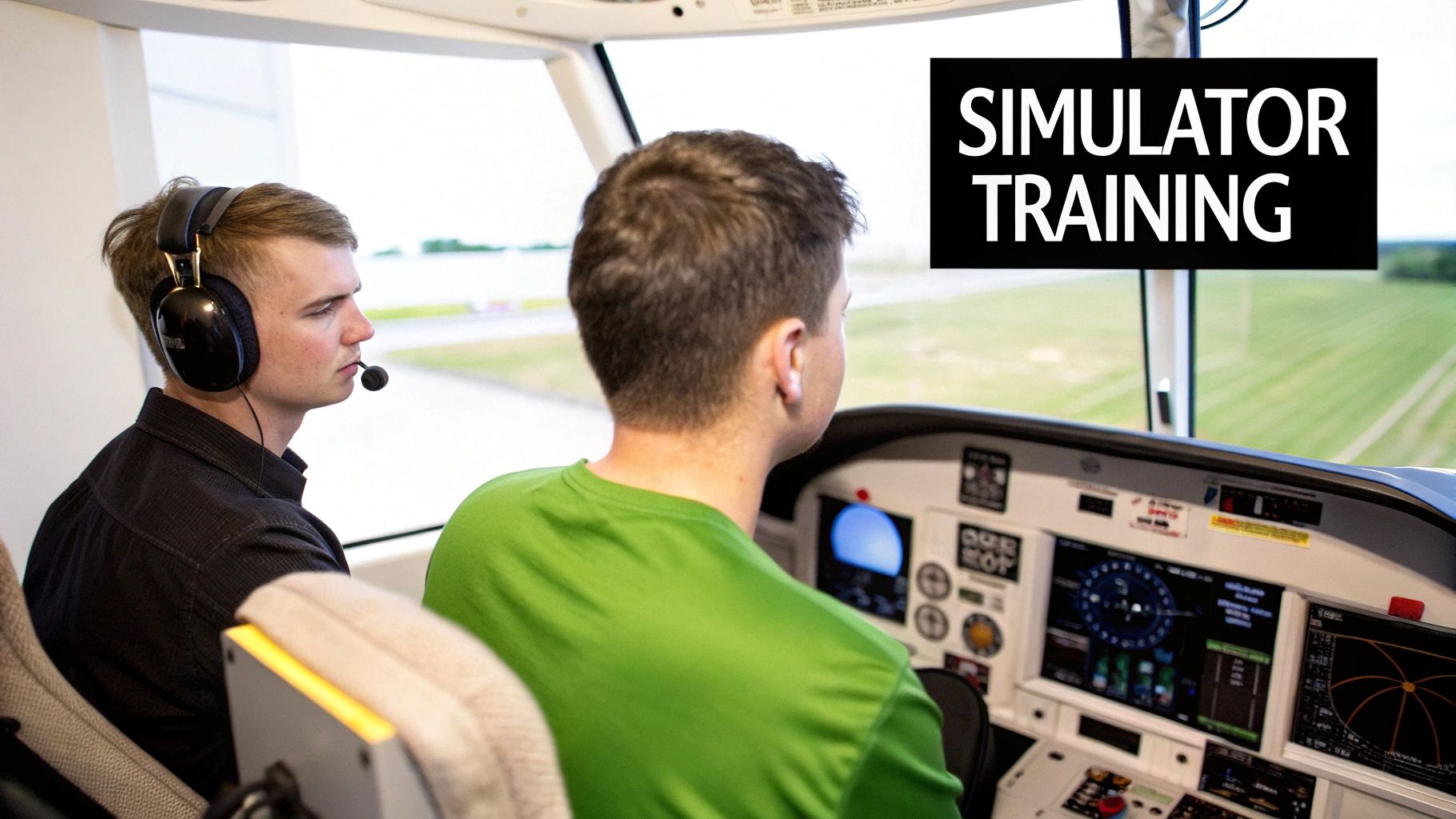
When you're searching for an "aviation camp near me," don't just look at the airplanes. The quality of their ground-based technology, especially their flight simulators, can tell you a lot about the program. Top-tier camps for aspiring airline and helicopter pilots know that some of the most critical learning happens before the engine ever starts.
Let’s be clear: these aren't video games. We're talking about sophisticated training devices that meticulously replicate the cockpit environment. They’re designed to help students master complex procedures and emergency situations that are just too dangerous to practice for the first time in a real aircraft.
Training for the Unexpected
Think about it. Where else can you safely practice an engine failure right after takeoff or navigate through a storm with zero visibility using only your instruments? Simulators provide a zero-risk environment to build that crucial muscle memory and decision-making skill under pressure. It's about preparing you for real-world challenges long before you ever have to face them.
This kind of hands-on practice is priceless for both airplane and helicopter pilots. For those learning to fly helicopters, a simulator is the perfect place to drill difficult maneuvers like autorotations—a critical emergency procedure that's incredibly complex to master.
One of the biggest wins with simulator training is the ability to hit "pause." An instructor can stop a scenario, talk you through what's happening, and then let you try it again. That immediate feedback loop is what truly accelerates learning and cements a deep understanding of the aircraft.
The Value of Modern Training Tools
A camp's investment in technology is a direct reflection of its commitment to producing truly competent pilots. It shows they get what the modern aviation industry demands.
- Smarter Skill Building: Simulator time costs a fraction of actual flight time, which can make your overall training much more affordable without cutting corners.
- Mastering the Instruments: Simulators are the ideal environment for getting your instrument flight rules (IFR) skills dialed in, which is a must-have for any professional pilot.
- Training in Any Weather: You can fly through simulated blizzards or dense fog, meaning bad weather will never put your training on hold.
The global push for this technology is massive. The aviation training system market is projected to hit $1189.1 million by 2025, driven by these very advancements. Industry giants like Boeing and CAE are constantly raising the bar, and you can read more about these advancements in aviation training technology. To see how this works in a real curriculum, you can explore how an in-house flight simulator is used in professional training.
A Pilot's Guide to Buying and Selling Aircraft
While your immediate search is for an "aviation camp near me," many career pilots eventually consider owning their own aircraft. Understanding the aircraft sales market—whether you're looking to buy a first plane or sell a trusted helicopter—provides valuable industry insight.
The first big decision every prospective owner faces is whether to buy new or used. A factory-fresh aircraft is tempting—it comes with all the latest avionics and a full warranty. But that shine comes with a hefty price tag. The pre-owned market, on the other hand, is vast and offers far more variety for those with a tighter budget.
Navigating the Purchase and Sale Process
Whether you’re buying a Cirrus airplane or selling a Robinson helicopter, one step is absolutely critical: a thorough pre-buy inspection. This isn’t a casual walk-around. It’s an exhaustive review of the aircraft’s entire history—maintenance logs, airframe integrity, and engine condition—all done by a neutral, third-party mechanic who has the buyer's best interests at heart.
On the flip side, if you're selling, having complete and meticulously organized maintenance logs is your single best sales tool. It demonstrates a history of care and transparency, building trust with potential buyers and justifying your asking price.
Beyond the sticker price, owners must budget for the true cost of ownership. These are the expenses that keep you flying safely.
- Hangar or Tie-Down Fees: Shelter from the elements is essential for preserving the aircraft's value.
- Annual Inspections: Every year, the aircraft undergoes a mandatory, in-depth inspection to remain airworthy.
- Insurance: This is non-negotiable for protecting your asset and covering liability.
- Fuel and Maintenance: From oil changes to unexpected repairs, these costs are a constant.
Owning an aircraft is an incredible achievement, but it's as much a financial responsibility as it is a joy. A detailed budget that anticipates these ongoing costs is just as important as your initial flight training. This foresight separates successful owners from those who are caught by surprise.
Your Career Path from First Flight to Airline Pilot
Think of aviation camp as the launchpad. It’s where the passion catches fire, but the actual journey to the flight deck of a major airline is a structured climb, one certification at a time. The skills you pick up at camp are the absolute bedrock for everything that comes next.
Let's map out what that career path looks like for a student pilot.
It all starts with your Private Pilot License (PPL). This is your ticket to the skies, the foundational license that lets you fly on your own and even take friends and family up with you.
Once you have your PPL, the next crucial step for any career pilot is earning an Instrument Rating (IR). This is non-negotiable for a professional career. The IR trains you to fly the aircraft by relying solely on your instruments, allowing you to navigate safely through clouds and low visibility—conditions that would ground a non-instrument-rated pilot.
Building Your Professional Credentials
With your PPL and IR in hand, you’re ready to aim for the Commercial Pilot License (CPL). This is the big one—it’s the license that legally allows you to get paid for flying. Getting here means logging more flight hours and proving you can operate the aircraft with a much higher degree of precision and knowledge.
The final peak to climb for anyone dreaming of flying for the airlines is the Airline Transport Pilot (ATP) certificate. This is the highest level of pilot certification and requires a minimum of 1,500 flight hours. It's the mandatory credential for flying for a major airline.
Each step builds directly on the one before it, methodically growing your skills, confidence, and qualifications. You can get a deeper look into what each stage entails by exploring the different pilot certification levels.
The road from student pilot to airline captain demands serious dedication, but the opportunities waiting at the end have never been better. A clear, structured training plan is the key to navigating the path safely and efficiently.
Right now is an incredible time to be starting a pilot career. The aviation industry is staring down a significant pilot shortage, with some projections estimating a need for around 123,000 new pilots by 2044, thanks in large part to a wave of mandatory retirements.
This massive demand creates a fantastic environment for anyone just starting their journey. You can dive deeper into the data on the global pilot training market on Fortune Business Insights.
Answering Your Top Questions About Local Aviation Camps

I get it. Deciding to pursue a pilot career is a huge step, and it naturally comes with a long list of questions. From "Am I old enough?" to "Which aircraft should I learn in?", getting solid answers upfront is key. Let's walk through some of the most common questions I hear from aspiring pilots.
One of the first things students ask is about age. While some introductory camps are great for students as young as 14 or 15, the Federal Aviation Administration (FAA) has some hard-and-fast rules for licensing.
You have to be at least 16 years old to fly an airplane solo. To earn your full Private Pilot License, you need to be 17. Helicopter rules are similar, letting you get a feel for things early but saving the major milestones for those specific ages.
Airplanes or Helicopters: Which Path Is Right for Your Career?
This is a big one, and the right answer really depends on where you see your career in the future.
If your dream is to one day sit in the captain's seat of an airliner, then fixed-wing (airplane) training is your non-stop ticket. It’s the standard route for nearly all commercial and corporate pilot careers.
On the other hand, if you're drawn to more specialized missions—think search and rescue, news gathering, or flying tours over stunning landscapes—then helicopter flight training is where you should be looking. Both are incredible career paths, but you want to make sure your training aligns with your end goal from day one.
A crucial question I always tell students to ask is: "Will these flight hours actually count?"
The good news is that they almost always do, if the camp is run by an FAA-certified flight school (under Part 61 or Part 141 rules). Any time you log with a Certified Flight Instructor (CFI) goes into your logbook and counts toward your license. Just make sure to confirm this with the camp provider before you sign up.
The Financial Side: Training Costs and Aircraft Ownership
Let's talk money. The cost of an aviation camp can be all over the map. A week-long "discovery" camp might run a few thousand dollars, while a more intensive program that racks up serious flight time will be a much bigger investment. It all comes down to the camp's length, location, the type of aircraft you're flying, and how many hours you'll actually be in the air.
Thinking long-term, many pilots start to explore buying their own aircraft. It’s a complex world involving pre-buy inspections, insurance, ongoing maintenance costs, and eventually, knowing how to sell an aircraft. Getting a handle on these concepts early gives you a huge advantage and a real-world perspective on the industry, even if ownership is just a distant dream.
Ready to stop wondering and start flying? At DuBois Aviation, we provide clear pathways for both aspiring airline pilots and helicopter professionals. Visit our website to explore our training programs and take the first step toward the cockpit.