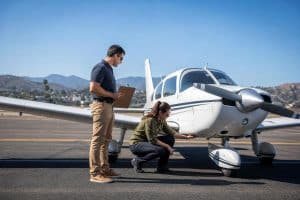

To get your commercial pilot license, you'll need to hit several key milestones set by the FAA. You have to meet age and language requirements, already hold a Private Pilot License, and pass a medical exam. The biggest part is logging the required flight hours—a minimum of 250 total hours for airplanes or 150 for helicopters under Part 61 rules. Once you've done that, you'll face some tough written and practical tests.
Passing that final checkride is what officially allows you to get paid for flying, turning your passion into a profession.
Two practical options worth comparing
These are specific products pilots commonly compare for this type of flying. Confirm compatibility with your aircraft and instructor before ordering.
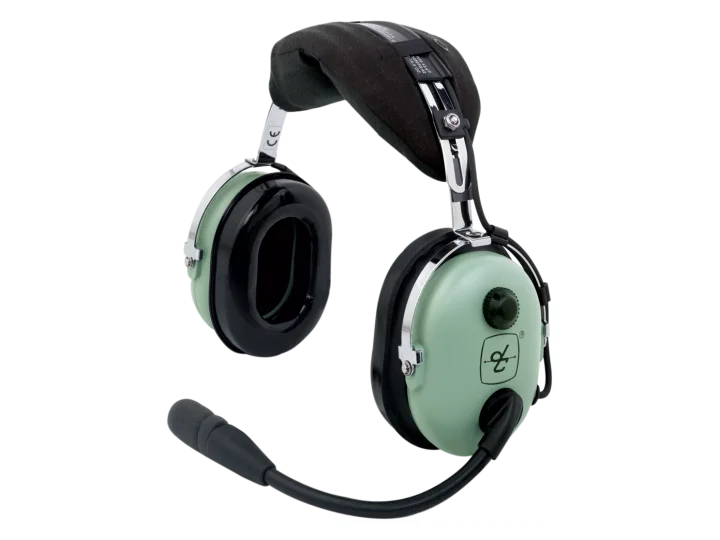 Student headsetDavid Clark H10-13.4 Aviation HeadsetCheck current availability on Amazon (paid link)
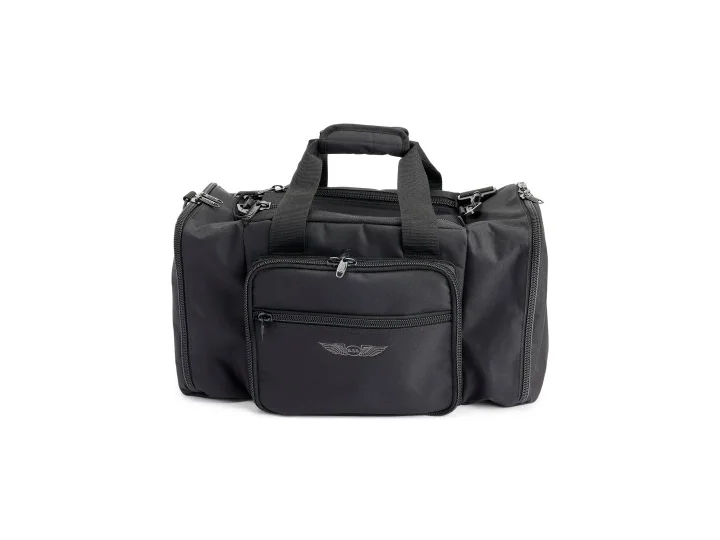 OrganizationASA Flight BagCheck current availability on Amazon (paid link)
Commercial pilot eligibility checklist
FAA commercial pilot license requirements at a glance
A commercial certificate allows a pilot to exercise commercial privileges, but the certificate alone does not authorize every kind of paid flying. The job, aircraft, medical certificate, and operating rules must all permit the operation.
- Be at least 18 and be able to read, speak, write, and understand English.
- Hold the required pilot certificate and receive the applicable ground and flight training endorsements.
- Meet the aeronautical experience requirements. Under Part 61, the commonly referenced totals are 250 hours for airplane and 150 hours for helicopter commercial applicants, with detailed experience requirements inside those totals.
- Pass the FAA knowledge test and practical test for the category and class sought.
- Plan for the appropriate medical certificate. Career-track students commonly obtain a second-class medical early because it is generally required when exercising commercial pilot privileges.
An instrument rating is normally completed before or during a professional airplane training path. Without the appropriate instrument rating, a commercial airplane certificate can carry limitations that significantly restrict professional opportunities. A tailored record review with an instructor is the best way to identify which cross-country, night, instrument, and pilot-in-command requirements you still need.
Your Journey to the Flight Deck Starts Here
Becoming a professional pilot is a serious commitment, but for a student pilot dreaming of an airline career, it's an incredibly rewarding path built on skill, dedication, and a solid grasp of aviation. The Commercial Pilot License (CPL) is your non-negotiable ticket to this career. It's the FAA's way of saying you have the advanced skills and knowledge to fly for compensation or hire.
Think of it this way: your Private Pilot License is like a standard driver's license, letting you fly for fun. The CPL is the equivalent of a Commercial Driver's License (CDL)—it opens the door to getting paid for your skills in the cockpit.
For any student pilot aiming to fly an airliner or pilot a helicopter on commercial missions, the CPL is the central goal. It unlocks a ton of opportunities, and there's never been a better time to get started. The aviation industry is facing a massive pilot shortage due to a wave of retirements and a huge spike in global travel. Projections show a need for around 674,000 new pilots worldwide over the next 20 years. Take a look at the pilot career demand outlook to see just how big the opportunity is. This isn't just a job; it's an investment in a secure and exciting future.
Charting Your Course to a CPL
Getting your CPL isn't a mystery—it's a series of well-defined steps, each one building on the last. It’s less like navigating a maze and more like running a pre-flight checklist. You complete each item in order to ensure a successful outcome, guaranteeing every commercial pilot meets a high standard of safety and competence.
The timeline below breaks down the main stages you’ll go through on your way to earning your commercial license.
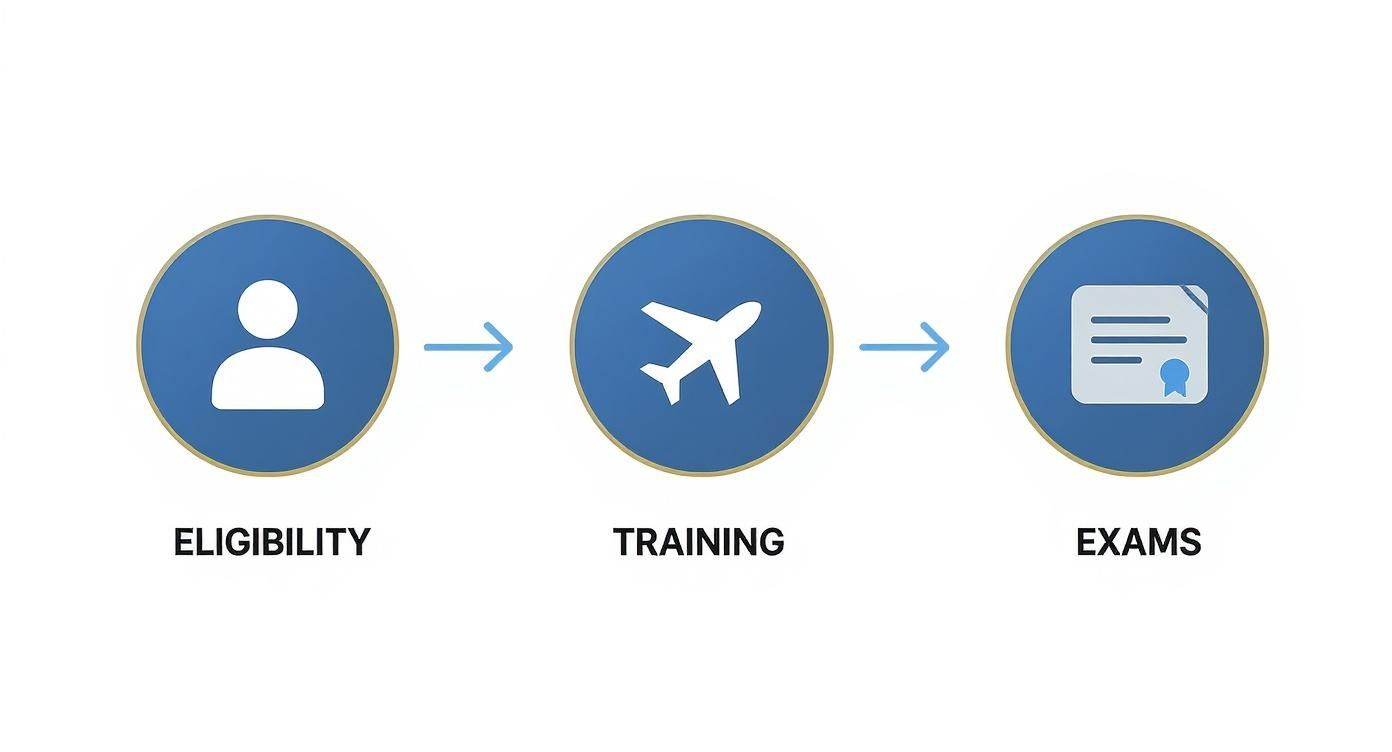
As you can see, the journey is broken down into three core phases: hitting the basic requirements, completing your flight training, and passing the final exams.
FAA Commercial Pilot License Requirements At a Glance
To make things even clearer, here’s a quick summary of the core FAA requirements for both airplanes and helicopters. This table gives you a side-by-side look at what a student pilot will need to achieve.
| Requirement Category | Airplane (Single-Engine) | Helicopter |
|---|---|---|
| Minimum Age | 18 years old | 18 years old |
| Language | Read, speak, write, and understand English | Read, speak, write, and understand English |
| Pilot Certificate | Must hold a Private Pilot License | Must hold a Private Pilot License |
| Medical Certificate | Second-Class Medical Certificate | Second-Class Medical Certificate |
| Total Flight Time (Part 61) | 250 hours | 150 hours |
| Pilot-in-Command (PIC) Time | 100 hours | 35 hours |
| Cross-Country Time | 50 hours | 25 hours |
| Instrument Training | 10 hours | Not required for CPL, but for IFR rating |
Keep in mind these are the minimums under Part 61 of the Federal Aviation Regulations, which is the most common path for pilots training at local flight schools. Part 141 schools have different, often lower, hour requirements but follow a more structured curriculum ideal for career-focused students.
From Aspiration to Aircraft Ownership
Once you have your license, your aviation career is just getting started. Many pilots eventually decide to buy or sell airplanes and helicopters, whether it’s to build hours, for personal travel, or for business.
Navigating that market involves its own set of challenges, from pre-buy inspections to understanding the true cost of ownership. It’s a logical next step for pilots who want total control over their flying. This guide will give you the knowledge to get started, from meeting the initial commercial pilot license requirements to one day taking the keys to your own aircraft.
Meeting the Foundational FAA Requirements
Before a student pilot can even think about logging flight hours for a career, you have to get through a few key checkpoints set by the Federal Aviation Administration (FAA). These are the non-negotiable first steps. Think of them as building the foundation for your house—every aspiring professional pilot has to start with this same solid base of health, skill, and knowledge.
The most basic requirements are pretty simple: you must be at least 18 years old to hold a Commercial Pilot Certificate. You also need to be fluent in English—able to read, speak, write, and understand it without a problem. This is a huge deal for safety, ensuring crystal-clear communication with air traffic control and your crew.
The First Building Block: Your Private Pilot License
Your path to getting paid to fly doesn't start with commercial training. The first real milestone you have to hit is earning your Private Pilot License (PPL). A good way to think about it is like getting your high school diploma in aviation. It's the essential prerequisite before you can move on to the more advanced, "college-level" work of commercial training.
Earning your PPL proves you've mastered the fundamentals of flying, navigating, and making sound decisions in the air. You simply can't start working towards your CPL without it. To see how everything fits together, it helps to look at the different pilot certification levels and see the clear path from student to professional.
The Critical FAA Medical Certificate
Getting an FAA Medical Certificate is probably one of the most important first steps you'll take. This isn't just another piece of paper. It's a full-on health assessment confirming you're physically and mentally fit to handle an aircraft safely. For commercial flying, the minimum you’ll need is a Second-Class Medical Certificate.
But let's be practical. If your goal is to one day fly for an airline, you should aim for a First-Class Medical Certificate right from the start. Major airlines demand it. Getting it early in your training is a smart move because it confirms you meet the highest health standards, preventing any heartbreaking surprises that could derail your career later on.
An FAA Medical Certificate is more than a requirement; it's an assurance. It verifies that a pilot meets the health and fitness standards necessary to manage the physical and mental demands of flying, protecting themselves, their passengers, and the public.
To get your medical, you'll need an exam from a specially designated Aviation Medical Examiner (AME). You can easily find an AME near you through the FAA's online database.
Preparing for Your AME Exam
If you're in good general health, passing the medical exam is usually no big deal. The AME will focus on a few key areas to make sure you're fit to fly.
- Vision: They'll check your eyesight for sharpness, color vision, and your peripheral range. Don't worry, wearing glasses or contacts is perfectly fine.
- Hearing: You’ll need to prove you can hear an average conversational voice from six feet away in a quiet room.
- General Health: The examiner will go over your medical history and perform a physical, paying close attention to your cardiovascular and neurological health.
Being completely honest about your medical history is critical. Many conditions are perfectly manageable and won't disqualify you, but you have to be upfront with your AME.
Once you’ve cleared these initial hurdles—age, language, your PPL, and the medical certificate—you'll have built the strong foundation you need to chase that commercial pilot license.
Mastering the Skies with Required Flight Hours
The foundational requirements get you in the door, but the cockpit is where a professional pilot is truly made. For a student pilot, logging flight hours is the very heart of commercial training—it’s where you’ll turn all that book knowledge into real-world judgment and skill. This phase isn't about passing a test; it's about becoming the kind of pilot who can handle any situation with a calm, confident hand.
Think of it as an apprenticeship. You wouldn't trust a surgeon who only read books, and you certainly wouldn't hire a pilot who only passed a written exam. The FAA mandates very specific flight experience to make sure every single commercial pilot has been tested and proven in the demanding, ever-changing environment of the skies.
Decoding the Flight Hour Requirements for Airplanes
For students dreaming of the airlines, the magic number under FAR Part 61 is 250 total flight hours. But here’s the thing: it’s not just about sitting in a plane for 250 hours. It’s all about the quality and variety of that time.
The FAA has a very deliberate breakdown of these hours, with each category designed to build a different, critical skill set. This isn't just bureaucratic box-checking; it's a structured approach designed to forge a well-rounded aviator.
Here’s a clear look at what you’ll need to have in your logbook for your airplane CPL:
- 100 hours in powered aircraft, with at least 50 of those hours in airplanes.
- 100 hours of pilot-in-command (PIC) time. This is when you are the one flying the plane, making the decisions, and are ultimately responsible for the flight. At least 50 hours of this must be in airplanes.
- 50 hours of cross-country flight time in airplanes, including one long cross-country flight of over 300 nautical miles.
- 20 hours of specific training covering instrument flying, complex aircraft operations, and advanced cross-country techniques.
- 10 hours of solo flight time in a single-engine airplane. This is where you prove you can handle it all on your own.
This kind of intensive training is the global standard. Worldwide, aspiring commercial pilots log an average of 250 flight hours, backed by extensive ground school and simulator sessions. In fact, this hands-on flight training accounts for a massive 55% of the entire flight training market, which shows just how crucial it is. You can dig into more data on the global flight training market to see just how big this industry is.
Helicopter Commercial Pilot License Requirements
If your passion is rotorcraft, the path has its own unique set of benchmarks. The flight hour requirements for a helicopter CPL are different, reflecting the distinct skills needed to master these incredible machines. For a student pilot focused on a helicopter career, the training is every bit as rigorous.
The total requirement is 150 hours of flight time. That breaks down into:
- 100 hours in powered aircraft, with at least 50 hours in helicopters.
- 100 hours of pilot-in-command (PIC) time, including at least 35 hours in helicopters.
- 10 hours of cross-country flight time as PIC in a helicopter.
- 20 hours of training that focuses on the specific maneuvers and procedures for helicopters.
- 10 hours of solo flight time in a helicopter, which must include a cross-country flight with landings at three different points.
The flight hour breakdown isn't just a regulatory checklist. It's a carefully designed curriculum. Each hour of PIC, cross-country, and instrument time layers on new skills, building the muscle memory and decision-making framework of a professional pilot.
Part 141 and Your Flight Training Path
Now, all the hours I just listed are for Part 61 training—the more flexible, self-paced route many people take. But it's not your only option.
Many career-focused students choose a structured Part 141 flight school because its curriculum is pre-approved by the FAA. These programs are often more efficient and can have lower flight hour minimums, making them a fantastic choice if you're a full-time student with your sights set on an airline career.
Thinking Ahead to Aircraft Ownership
As you start accumulating hours, you'll develop a real feel for the aircraft you fly. It's a natural next step for many pilots, after earning their commercial license, to start thinking about owning their own airplane or helicopter. It can be a smart move to build time more affordably or even to start a small aviation business.
Whether you're looking to buy your first aircraft to fast-track your career or eventually sell one to upgrade, understanding the market is key. Spending time on sites with listings for buying or selling airplanes and helicopters will give you priceless insight into pre-buy inspections, operating costs, and market trends. It's a great way to prepare for the next exciting chapter in your aviation journey.
Navigating Your Written and Practical Exams
All those hours in the cockpit are crucial, but flying skill is only half the battle. To become a commercial pilot, you also need to prove you have the deep theoretical knowledge to match—and that you can perform flawlessly when the pressure is on.
After all your training, two final tests stand between you and your license. These exams are the FAA's way of ensuring every commercial pilot meets the incredibly high standards for safety and expertise that the job demands. First up is the written knowledge test, followed by the grand finale: the practical exam, better known as the checkride.
Conquering the FAA Written Knowledge Test
Before you can even think about scheduling your checkride, you have to pass the FAA's 100-question, multiple-choice written test. It’s basically the final exam for all your ground school studies, covering a huge range of subjects that are absolutely essential for safe commercial flying.
To even sit for the exam, you'll need an official endorsement from your flight instructor. You need a score of 70% or higher to pass, and once you do, that result is good for 24 months, giving you a clear window to complete your practical test.
The test hits on the core knowledge every professional pilot needs, whether you're flying airplanes or helicopters. You can expect to be tested on:
- Regulations: A deep dive into the rules that govern commercial aviation.
- Aerodynamics: The advanced principles that keep an aircraft flying safely and efficiently.
- Weather: How to read and interpret complex weather data to make smart go/no-go decisions.
- Aircraft Systems: An in-depth understanding of your aircraft's mechanical and electrical systems.
- Navigation: Advanced techniques for planning and executing cross-country flights.
The written exam isn't about just spitting back memorized facts. It’s designed to test your ability to apply that knowledge to real-world scenarios. The FAA needs to know you have the foundation to make safe, sound decisions as a pilot-in-command.
Demystifying the Checkride: Your Practical Exam
The checkride is it. This is the final, most demanding hurdle in your journey to becoming a commercial pilot. It's a two-part test, administered by an FAA-Designated Pilot Examiner (DPE), that puts both your knowledge and your hands-on flying skills under the microscope.
It starts with an oral exam. You and the DPE will sit down for a one-on-one grilling session where they'll fire off in-depth questions about regulations, flight planning, weather, and aircraft systems. They're making sure your knowledge isn't just book-smart; they want to see a practical, working understanding you can actually use in the cockpit.
Once you pass the oral portion, you head out to the aircraft for the flight exam. This is where you prove you can fly the plane to commercial standards. The DPE will have you perform a series of advanced maneuvers with precision and control, judging you against the strict criteria in the FAA's Airman Certification Standards (ACS). Think lazy eights, chandelles, and power-off 180-degree accuracy landings. For helicopter pilots, this means demonstrating things like autorotations and confined area operations. There's no room for error here.
For many pilots, a single-engine CPL is just the beginning. It's smart to look ahead at what's next, like the multi-engine rating requirements, especially if you're aiming for the airlines. This add-on is your ticket to flying larger, more complex aircraft and is a logical next step after you ace your checkride and get that commercial license in hand.
Budgeting for Your Commercial Pilot License
https://www.youtube.com/embed/gO7sw1X7iME
Starting your flight training is an incredible feeling, but for a student pilot, it's also a major financial undertaking. Before you even think about stepping into the cockpit, you need a solid financial plan. Getting your commercial pilot license is more than just paying for flight hours; the total cost includes everything from your instructor's time and ground school tuition to study materials and exam fees.
Think of building a budget as your financial pre-flight check. Whether you dream of flying for the airlines or piloting specialized helicopter missions, mapping out the costs from day one helps you anticipate expenses and find smart ways to make it happen.
Breaking Down the Costs for Your CPL
The final price tag for your commercial pilot license can swing pretty dramatically depending on a few key factors: the school you choose, your location, and the type of aircraft you'll be flying. A highly structured Part 141 program often has a different cost structure and timeline than a more flexible Part 61 flight school.
One thing for student pilots to keep in mind is that helicopter training is almost always more expensive per hour. This is simply due to the higher operating and maintenance costs that come with rotorcraft.
The sheer size of the commercial pilot training market—valued at USD 9.37 billion and expected to hit USD 24.86 billion by 2032—shows just how much is invested in creating qualified pilots. This demand exists even with training costs that can run anywhere from USD 70,000 to USD 150,000. You can dig deeper into the pilot training market's financial dynamics to see the numbers for yourself.
To give you a clearer picture of where the money goes, here’s a sample breakdown of the expenses you can expect to encounter while training for your CPL in an airplane.
Estimated Cost Breakdown for Commercial Pilot License Training
| Expense Category | Estimated Cost Range (Airplane) | Notes |
|---|---|---|
| Flight Time (Dual & Solo) | $50,000 – $90,000 | The largest expense, covering aircraft rental and instructor fees for required flight hours. |
| Ground School & Materials | $2,000 – $5,000 | Includes tuition for classroom instruction, textbooks, online courses, and flight simulators. |
| Exam & Checkride Fees | $1,500 – $3,000 | Covers written knowledge tests, the practical exam (checkride), and examiner fees. |
| Pilot Supplies | $1,000 – $2,500 | Headset, flight bag, charts, plotter, E6B flight computer, and other essential gear. |
| Medical Certificate | $150 – $300 | Cost for the required FAA medical examination, which varies by class and provider. |
Remember, these figures are just estimates. Your actual costs will depend on your training pace, location, and the specific flight school you choose.
Smart Financing Options for Your Flight Training
The steep price of flight school shouldn't ground your career ambitions before they ever get off the ground. Fortunately, most student pilots piece together their funding from a few different sources to make their professional goals a reality.
Here are a few common routes to explore:
- Aviation Loans: Many banks and specialized lenders offer loans created specifically for flight training. Their terms are often better suited for student pilots than a standard personal loan.
- Scholarships: Don't overlook free money! Countless aviation organizations, like the Aircraft Owners and Pilots Association (AOPA) and Women in Aviation International, offer scholarships to help lighten the financial load.
- Personal Savings: It’s a classic for a reason. Many pilots save up for a significant portion of their training or use a "pay-as-you-go" approach to avoid taking on too much debt at once.
From Training to Ownership Considerations
Down the road, you might start thinking about buying your own aircraft. It's a huge step, whether you're looking to build hours efficiently, travel on your own schedule, or even start a business. For pilots ready to explore that next chapter, resources for buying and selling airplanes and helicopters are invaluable. They offer a real-world look at market prices and the true cost of ownership, helping you plan for the next big investment in your aviation career.
From Pilot to Owner: Buying and Selling Aircraft
Getting your commercial pilot license is a huge milestone. It’s the ticket to a professional career, but as you log more hours in the cockpit, a new idea often takes root: owning your own aircraft. It could be a trusty Cessna 172 for building time or a versatile Robinson R44 helicopter to support a business. Making the leap from pilot to owner is a major step, but it can be an incredibly rewarding one.
And this isn't just a dream for seasoned pros. For ambitious student pilots with airline aspirations, owning can be a brilliant strategic move. It puts you in control of your training schedule, accelerates your hour-building, and can even trim down your long-term costs. The market for used aircraft is always humming, but you need a solid game plan to navigate it successfully.
Your Guide to Buying an Aircraft
Here’s the first thing to understand: buying an airplane or helicopter is nothing like buying a car. It’s a complex process that requires a careful, step-by-step approach to make sure you end up with a safe, reliable machine that actually fits your needs—not a money pit with wings.
Everything starts by defining your "mission." What's the main reason you need this aircraft? A helicopter student might look for a Robinson R22 to practice maneuvers, while a future airline pilot would be better off with a Piper Cherokee for logging cross-country hours. Figure out the mission, and you’ll know what type of aircraft to look for.
After you’ve zeroed in on a few potential models, you've arrived at the single most important step: the pre-buy inspection.
A pre-buy inspection is an exhaustive, top-to-bottom review of the aircraft and all its logbooks, performed by an independent, trusted mechanic you hire. Cutting corners here is, without a doubt, the fastest way to make a costly mistake.
But the aircraft's physical health is only half the story. You also need to dig into its paperwork. A title search is essential to uncover any hidden liens and confirm the seller actually has the right to sell it. To protect your money during the sale, it's also smart to use a neutral escrow service. This ensures the funds and the title change hands smoothly and securely.
Understanding the True Cost of Ownership
The sticker price is just the entry fee. The real cost of owning an aircraft is in the recurring expenses, and you absolutely have to budget for these before you buy.
- Insurance: This can vary wildly depending on the aircraft type, your pilot experience, and its intended use.
- Maintenance: You'll have predictable costs, like the annual inspection, but you also need a fund for unexpected repairs that will inevitably pop up.
- Hangar or Tie-Down Fees: You need a place to park it. A hangar offers the best protection from the elements but costs more than an outdoor tie-down spot.
- Fuel and Oil: These are your most common operating costs and will fluctuate with how much you fly.
Strategies for Selling Your Aircraft
When you're ready to sell, a little preparation goes a long way toward getting a better price and attracting serious buyers. First things first: get all your logbooks and maintenance records in order. Clean, complete, and organized paperwork is a massive selling point that screams "well-maintained aircraft."
Nailing the right price is crucial. Spend some time on sites like Controller.com to see what similar airplanes or helicopters are listed for. This will give you a realistic idea of the current market value. Finally, take some high-quality photos and write an honest, detailed description. Transparency and good preparation are what make a sale go smoothly for everyone involved.
Your Top CPL Questions, Answered
As you start looking into a professional pilot career, a lot of questions pop up. It’s completely normal. You're mapping out a major life path, and the details matter. Let's break down some of the most common things aspiring pilots ask about, for both airplanes and helicopters, so you can move forward with a clear head.
Do I Really Need a College Degree to Get My CPL?
Nope. The FAA doesn't require a college degree for you to earn a Commercial Pilot License. The license is all about your flight skills, your knowledge, and proving you can meet the FAA's standards in the cockpit.
But here's the catch: if your dream is to fly for a major U.S. airline, a four-year bachelor's degree is practically a must-have. Most legacy carriers either require it outright or heavily favor applicants who have one. Think of it this way—the degree isn't for the license, but it's a huge factor in being a competitive candidate for those big airline jobs down the road.
Part 61 vs. Part 141 Flight Schools: What’s the Real Difference?
This is probably one of the most common questions out there, and it really boils down to one thing: structure versus flexibility.
- Part 141 schools are built on a highly structured, FAA-approved curriculum. It’s like a formal academic program where every single lesson is laid out in a specific order. This rigid path can sometimes let you meet your commercial pilot license requirements with fewer flight hours, making it a great option for full-time students aiming for the airlines.
- Part 61 schools offer a much more flexible approach. You and your instructor tailor the training schedule and lesson sequence to your life. It's the perfect setup if you're working another job or have other commitments to juggle.
At the end of the day, both paths get you to the exact same FAA checkride and the exact same license. The best choice is simply the one that fits your schedule, learning style, and budget.
It's easy to get the idea that one type of school is "better" than the other, but that’s just not true. Both Part 61 and Part 141 produce fantastic, safe, professional pilots. The right path is the one that works for you.
Are the Requirements Different for a Helicopter CPL?
Yes, they absolutely are. While the overall process is similar—you'll still need a medical certificate, a written exam, and a practical test—the flight hour requirements for a helicopter CPL are completely different from an airplane's.
Under Part 61, for instance, the total flight time needed for a helicopter CPL is 150 hours, much less than the 250 required for an airplane. More importantly, the training itself is focused entirely on helicopter-specific skills. You'll master maneuvers like autorotations, hovering, and operating in confined areas—skills that are unique to the world of rotorcraft.
How Long Is a Commercial Pilot License Good For?
Great news: your Commercial Pilot License itself never expires. Once you've earned it, that certificate is yours for life.
However, to actually use your license to get paid to fly, you have to stay "current." This means you need to keep up with a few things:
- Hold a valid FAA medical certificate (this is typically renewed every year for commercial pilots under 40).
- Complete a flight review with an instructor every 24 calendar months.
- Meet the recent flight experience rules if you plan on carrying passengers (three takeoffs and landings in the last 90 days).
Ready to stop wondering and start flying? At DuBois Aviation, our experienced instructors and incredible fleet of airplanes and helicopters are ready to help you nail your commercial pilot license requirements. Learn more about our professional pilot programs and get started today!