
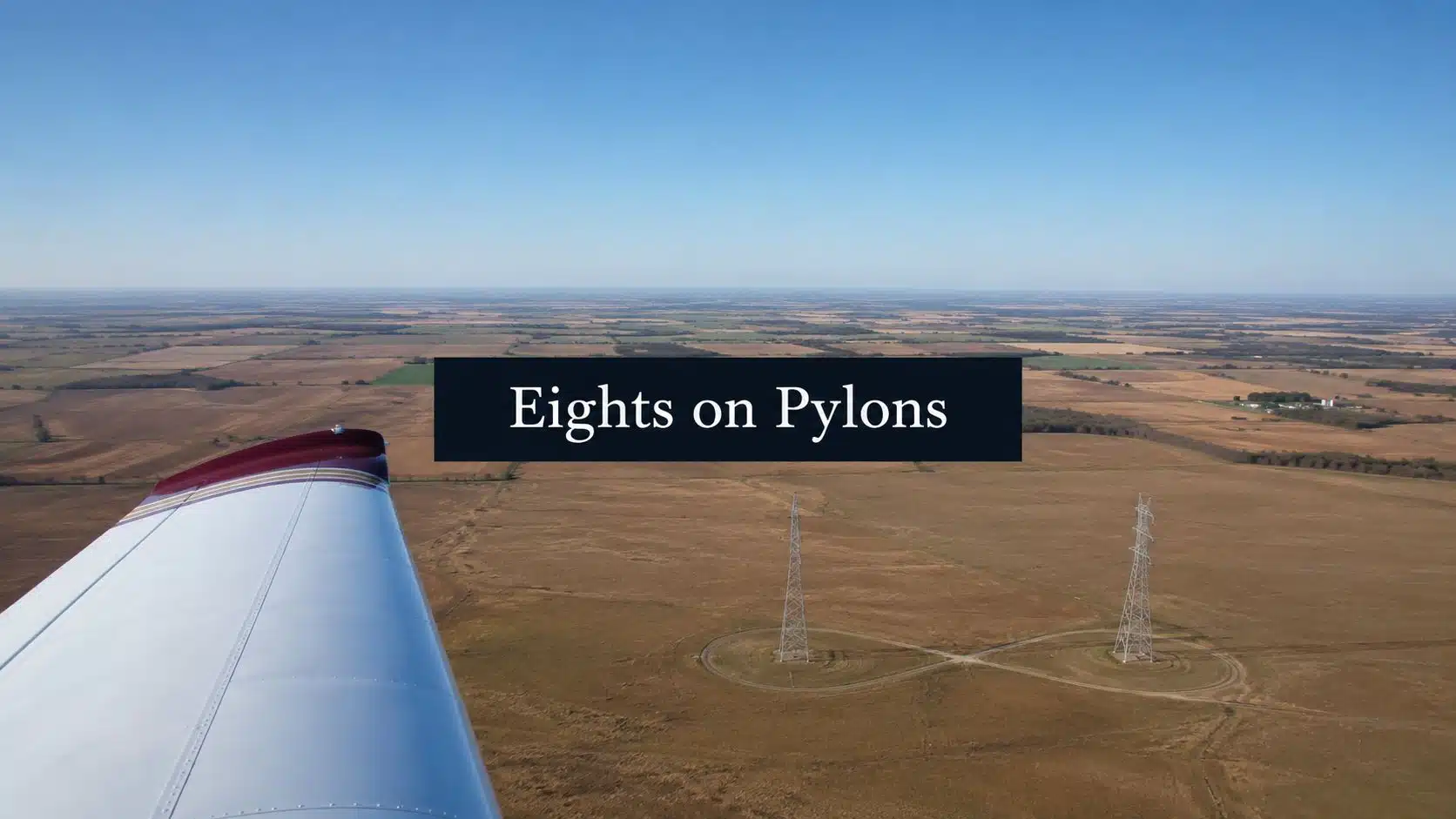
You're probably here because Eights on Pylons still feels slippery. You've read the handbook, memorized the critical altitude formula, maybe even flown the maneuver a few times, and yet the pylon still seems to wander when the wind changes. That's normal.
At a busy training airport like KCNO, that pressure feels even sharper. You're trying to fly a precise commercial maneuver while keeping your head outside, listening for traffic, staying coordinated, and not letting the whole thing turn into a rushed series of corrections. The good news is that this maneuver gets much easier once you stop treating it like a mystery and start seeing the geometry, sight picture, and timing as one connected system.
Why Eights on Pylons Matter More Than You Think
A lot of commercial students treat Eights on Pylons like a checkride obstacle. They want to survive it, move on, and never think about it again. I get that. It can feel awkward because it asks you to do something that seems backward at first. You don't hold altitude constant. You change altitude on purpose to keep the visual line to the pylon steady.
That's exactly why it matters.
Eights on Pylons is a required maneuver for the commercial certificate, and one verified data point often gets students' attention: approximately 65% of commercial pilot students initially fail this specific maneuver during their first practical flight test attempt, primarily because they misjudge reference altitude. That requirement and failure figure appear in the verified material for this topic, and this article cites that fact only here as directed.
It reveals real airmanship
This maneuver exposes whether you can connect what the airplane is doing to what you're seeing outside. A pilot who can fly Eights on Pylons well usually understands:
- Wind drift and how it changes the ground track
- Coordination and why sloppy rudder use ruins precision
- Pitch discipline when the natural urge is to chase the sight picture
- Division of attention in a real traffic environment
Those are not checkride-only skills. They show up in pattern work, aerial observation, photo flights, and any situation where holding a stable visual relationship to the ground matters.
Practical rule: If the maneuver feels hard, that doesn't mean you're bad at it. It usually means the airplane is honestly showing you where your outside scan, wind planning, or pitch control still need work.
It teaches precision under pressure
At KCNO, students don't get the luxury of pretending the world stops during a maneuver. You're working near active runways, tower communications, and busy training traffic. That environment rewards pilots who can stay ahead of the airplane, not pilots who freeze when the picture changes.
Eights on Pylons also builds judgment. You learn to pick better reference points, enter with a plan, and recognize early when setup is wrong. That's commercial-level flying. Not because it looks fancy, but because it demands accuracy without drama.
The Science Behind the Perfect Turn
Before the maneuver feels smooth, it has to make sense.
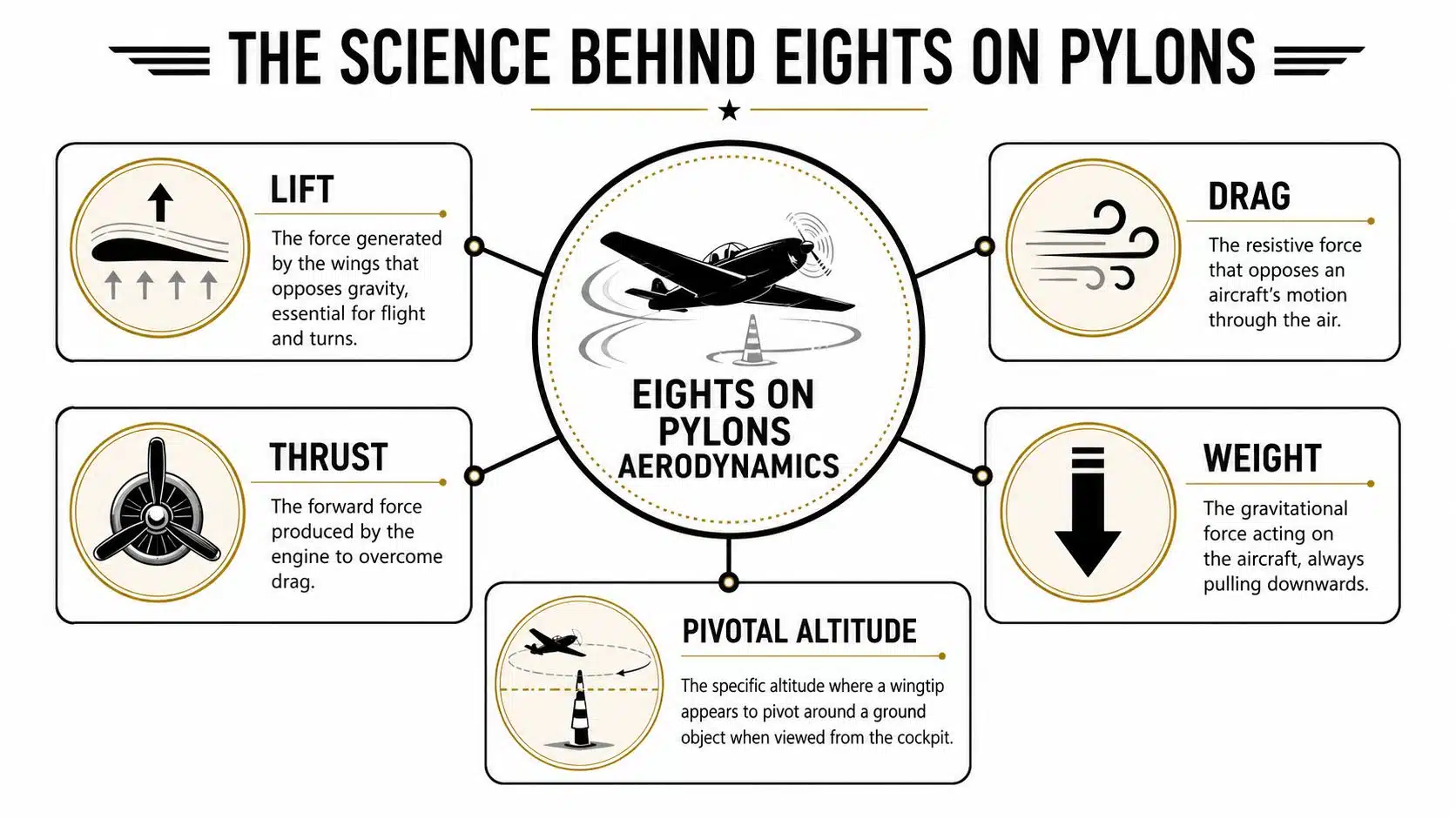
The core idea is the reference altitude. That's the altitude where the pylon appears to stay fixed relative to a reference point on the airplane, usually the wingtip, as you turn. The key detail students miss is that the reference altitude depends on groundspeed, not airspeed. If groundspeed changes, the correct reference altitude changes too.
The standard formula in knots is Groundspeed² / 11.3. At 100 knots, critical altitude is 885 feet above ground level. That relationship comes directly from the verified data for this topic. If you want a stronger foundation for why control pressures and wing loading matter in any maneuver, it helps to review angle of attack and how it affects lift.
Why pitch matters more than students expect
In steep turns, many pilots think first about bank. In Eights on Pylons, pitch is what keeps the sight line working.
If the pylon appears to move ahead of the wingtip, you're below the correct altitude and need to climb. If the pylon appears to move behind the wingtip, you're above the correct altitude and need to descend. That's the visual language of the maneuver.
Think of it this way. Your groundspeed changes as wind helps or hurts you around the turn. The airplane then needs a different altitude to keep the same visual pivot point. Pitch is how you match the airplane to that new requirement.
What bank is doing
Bank still matters, just in a different way. Bank controls the arc around the pylon. Wind changes how fast the airplane moves over the ground, so the bank angle can't stay frozen if you want the track to stay smooth. In practice, pilots vary bank to manage the turn while using pitch to preserve the wingtip-to-pylon relationship.
A useful mental split is this:
| Control input | Primary job in the maneuver |
|---|---|
| Pitch | Correct the pylon's apparent fore-aft movement relative to the wingtip |
| Bank | Shape the turn around the pylon and respond to drift |
| Rudder | Keep the airplane coordinated so the sight picture stays clean |
The maneuver gets simpler when you stop asking one control to do every job.
Why wind makes the geometry feel strange
Students often get confused because the same pylon doesn't look the same all the way around. That's because your groundspeed changes continuously with wind. On the faster side of the maneuver, the required altitude is higher. On the slower side, it's lower. So the right answer is not “hold altitude.” The right answer is “adjust altitude smoothly as the groundspeed picture changes.”
Once you understand that, Eights on Pylons stops feeling like magic and starts feeling like disciplined visual flying.
Setting Up for Success Before You Begin
Most bad Eights on Pylons begin before the first turn. The setup is where students develop the problems they later try to fix with aggressive control inputs.
The FAA guidance reflected in verified material is straightforward: choose two pylons perpendicular to the wind, and set them so the straight segment between turns lasts about 3 to 5 seconds, which typically means roughly 3/4 to 1 mile apart at common training speeds, as explained in Gleim's discussion of Eights on Pylons and pivotal altitude.
Pick pylons that help you
Not every pair of objects on the ground makes a good setup. Good pylons share a few traits:
- Similar elevation so your visual reference and altitude picture stay consistent
- Easy visibility from both sides of the figure eight
- Perpendicular alignment to the wind so the maneuver develops the way it should
- Enough spacing that you don't have to crank in steep bank just to save it
At KCNO, this matters even more because workload rises quickly when you're managing traffic awareness and radio timing. If you choose weak reference points, your attention goes to hunting and recovering instead of flying.
Build a pre-maneuver routine
I like students to have a short, repeatable briefing in their head before entry:
- Clear the area. Do proper clearing turns and keep scanning outside.
- Confirm the wind. Use visual drift, groundspeed awareness, and what you already know from the area.
- Select pylons. Don't settle for the first pair you notice.
- Calculate reference altitude. Start with current groundspeed, not a guessed airspeed.
- Decide your entry. You want to arrive organized, not rushed.
That routine reduces the “I'm already behind” feeling that causes so many unstable first turns.
A simple setup example
Say you're flying a standard trainer and your groundspeed suggests a reasonable calculated altitude for the conditions. You identify two clear points on similar terrain, spaced so the rollout segment won't disappear instantly, and you approach downwind at the planned altitude. Now the maneuver has a chance.
If instead you choose pylons that are too tight, too hard to see, or badly oriented to the wind, the airplane will start asking for corrections before you've even settled the sight picture.
Good setup makes the maneuver feel possible. Bad setup makes a good pilot look late.
What students usually overlook
Students often obsess over the formula and ignore the environment. But setup also means asking practical questions:
- Is the sun making one pylon hard to pick up?
- Is the ground texture making depth judgment harder?
- Is nearby traffic going to distract you at the worst moment?
- Are these the best pylons, or just the first available ones?
That kind of thinking is commercial-level preparation. It isn't glamorous, but it saves maneuvers.
Executing the Maneuver Like a Pro
Once you're set up well, the maneuver should feel deliberate, not hurried. You're not drawing two circles. You're flying one continuous, flowing figure eight with a changing pitch picture and a controlled bank picture.
A broader review of ground reference maneuvers and how they build visual flying skills can help if Eights on Pylons still feels disconnected from earlier training.
The entry and first pylon
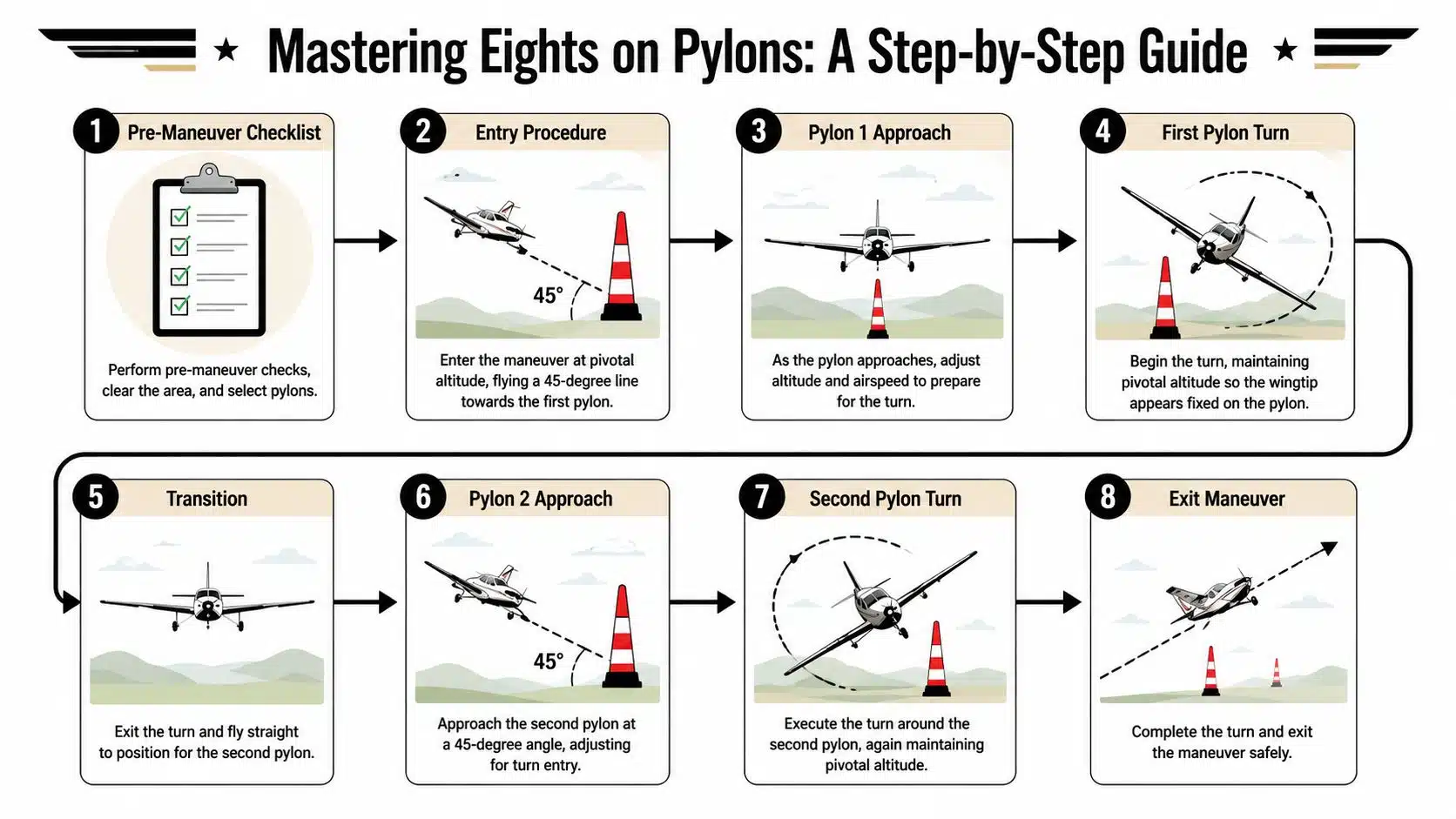
You enter downwind at the correct maneuvering altitude and aim to begin the turn when you're on about a 45-degree line to the first pylon. That entry matters because it sets the rhythm. If you start early or late, you'll spend the first half of the maneuver repairing geometry instead of flying it.
As the pylon moves toward your reference line, roll smoothly into the turn. Keep your eyes outside. The goal is to make the pylon appear fixed on the wingtip reference while the airplane arcs around it.
The formula behind your starting point is Groundspeed² in knots divided by 11.3. The visual correction is just as important: if the pylon moves ahead of the wingtip, climb; if it moves behind, descend. That verified relationship is included here qualitatively without a repeated source link, because the source URL assigned to that fact may appear only once in the article.
What it feels like from the cockpit
Students often overcontrol during this maneuver. They see the pylon drift and make a quick pitch correction, then another, then another. The maneuver becomes jerky.
A better rhythm sounds like this in your head:
- The pylon is sliding forward. I'm low. Ease the nose up.
- The pylon is stabilizing. Hold the correction.
- Groundspped is changing. Let the altitude trend with it.
- The turn is tightening. Adjust bank smoothly, stay coordinated.
That's the pro version. Calm, early, and small.
Here's a visual walk-through if you want to watch the flow from another angle:
The transition and second pylon
After the first turn, roll out cleanly and let the airplane cross the midpoint in brief straight-and-level flight. This segment should feel intentional, not accidental. You're repositioning for the mirror image on the other side.
Then approach the second pylon with the same discipline. Don't rush because the first side went well. A lot of students fly one good half and then hurry the second because they're thinking about finishing.
Fly the second pylon as if it's the only one the examiner will see.
What smooth execution looks like
A strong performance usually has these characteristics:
- The entry is stable
- The eyes stay outside
- Pitch changes are small
- Bank changes are gradual
- Rudder keeps the airplane coordinated
- The rollout between pylons is organized
If you do those things, the maneuver starts looking less like work and more like control.
Common Errors and How to Correct Them Instantly
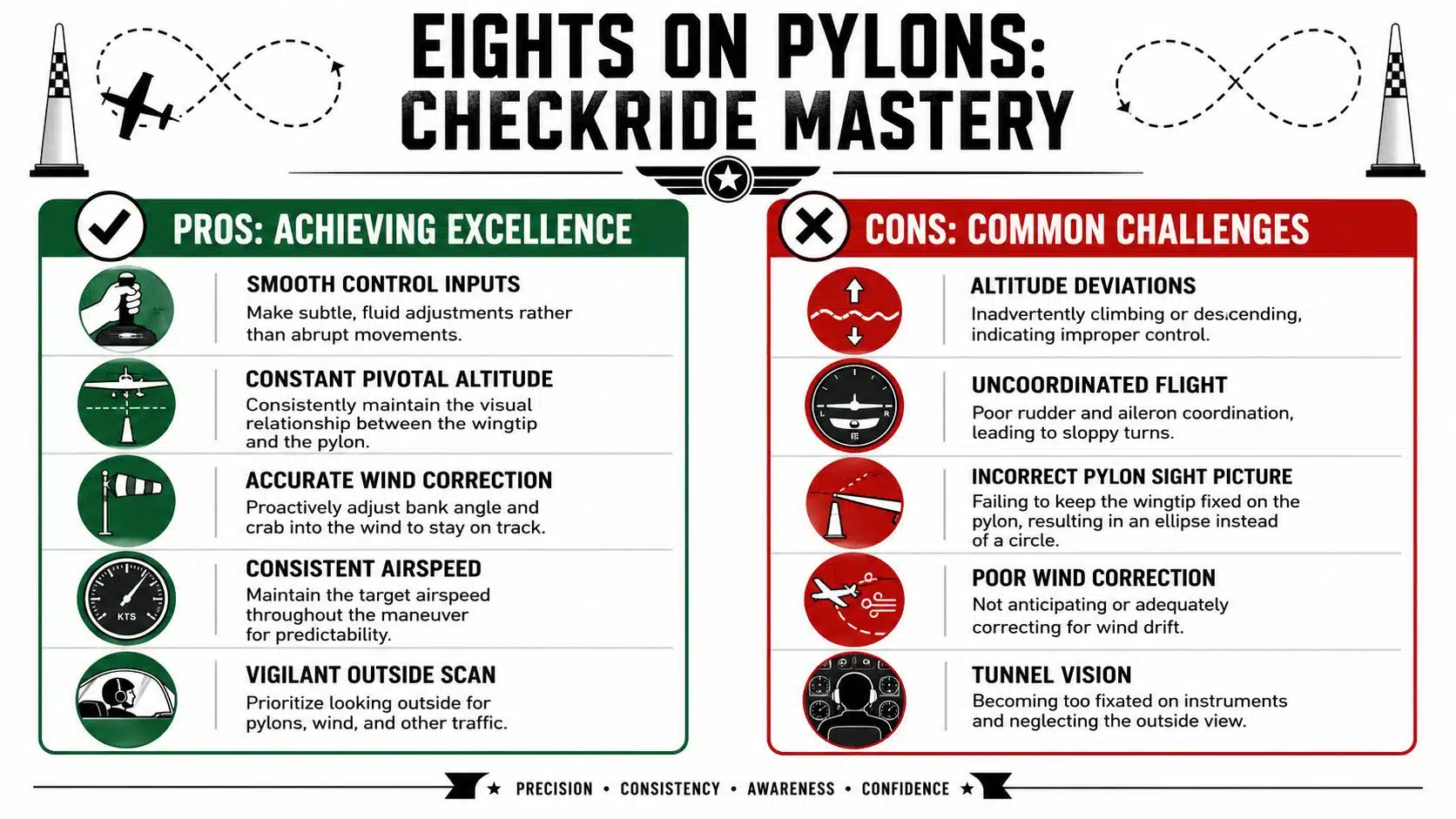
Students often label a maneuver “bad” when it's giving them clear information. Eights on Pylons is one of the best diagnostic maneuvers in commercial training because each mistake points to a specific cause.
One safety limit is absolute: bank must not exceed 40 degrees, and the FAA permits up to 40 degrees of bank but no more, as emphasized in this FAA-based video explanation of the maneuver. If your bank keeps creeping beyond that, don't just call it a bad turn. Ask why the airplane needed that much bank in the first place.
Error signs and what they mean
| What you see | What it usually means | Immediate fix |
|---|---|---|
| Bank angle getting too steep | Pylons are too close, entry is too fast, or you're trying to save bad spacing | Reduce pressure to rescue the turn. Reposition and choose better pylons |
| Pylon racing ahead of wingtip | You're below pivotal altitude | Smoothly climb |
| Pylon dropping behind wingtip | You're above pivotal altitude | Smoothly descend |
| Slip or skid feeling sloppy | Rudder and aileron aren't working together | Re-center coordination and stop forcing the bank |
| Jerky corrections | You're reacting late and chasing the sight picture | Soften inputs and look farther ahead in the turn |
The bank angle trap
Many students think excessive bank is a turning problem. Often it's a planning problem.
If the pylons are too tight, or if the spacing and groundspeed don't match the day's wind, the airplane will demand a steeper turn than the maneuver allows. The correct answer isn't to muscle it around. The correct answer is to recognize that the setup is bad and reset.
If coordination is part of the issue, spend time reviewing adverse yaw and how to manage rudder during turning flight. A clean sight picture depends on a coordinated airplane.
Stop chasing the pylon
The worst correction style is reactive and sharp. Students see motion, jab the pitch, then reverse the correction. The airplane never settles.
Try this instead:
- Make one small correction.
- Wait long enough to see the result.
- Adjust again only if the trend continues.
The pylon doesn't need a rescue. It needs a patient pilot.
Wind errors don't look dramatic at first
A lopsided figure eight often starts with weak wind thinking. One side feels rushed, the other dragged out, and the student assumes they just flew poorly. In reality, the wind was changing the groundspeed picture and the pilot didn't anticipate it.
That's why commercial pilots don't just memorize steps. They interpret what the airplane is telling them and correct with intention.
Advanced Insights for Acing Your Checkride
The hardest part of Eights on Pylons usually isn't the math. It's the brain lag between what your eyes notice and how quickly you interpret it.
That's why many technically prepared students still struggle. Verified material for this topic states that 68% of commercial students fail Eights on Pylons because of “visual lag,” meaning they can't process the pylon's lateral movement against the wingtip in real time, as referenced in the FAA Airplane Flying Handbook chapter cited in the verified data.
Why visual lag beats good students
Good students often know exactly what to do in a briefing room. In the airplane, though, the picture moves before they're mentally ready. By the time they decide “the pylon is moving forward,” the airplane already needs the correction they're just beginning to make.
That delay causes overcorrection. Then the student reacts to the overcorrection. The cycle repeats.
How to train the visual side
You can improve this. The best method is to reduce mental clutter and simplify what you're watching.
Try these habits:
- Use one wing reference. Don't keep changing where you “pin” the pylon.
- Scan in a rhythm. Pylon, horizon, coordination, traffic, back to pylon.
- Think trend, not snapshot. Ask whether the pylon is drifting forward or aft over time.
- Correct early and lightly. Small inputs made sooner beat large inputs made late.
At KCNO, this matters because checkride-level flying also includes awareness beyond the maneuver. A designated pilot examiner wants to see that you're controlling the airplane and still acting like a pilot in real airspace.
What examiners are really judging
A DPE isn't looking for robotic perfection. They want to see command.
That usually shows up as:
- A prepared setup
- Smooth, coordinated control
- Calm visual discipline
- Awareness of traffic and airspace
- A pilot who notices small deviations before they become big ones
The strongest checkride performances look quiet from the right seat.
If you're tense, narrow your goals. Don't try to “nail the whole maneuver.” Just keep the pylon trend recognizable, the controls smooth, and the airplane coordinated. Confidence on a checkride usually comes from reducing the task to a few repeatable priorities.
From Student to Owner Your Next Aviation Step
Getting comfortable with Eights on Pylons marks a real shift in how you fly. You stop depending on memorized steps and start trusting observation, planning, and judgment. Those same habits matter when you move into aircraft ownership.

How to buy an airplane the safe way
People looking to buy or sell airplanes and helicopters often focus first on the purchase price. That's understandable, but it's not the safest way to evaluate an aircraft. The safer approach is slower and more disciplined.
A smart buyer should think about:
- Mission first. Don't buy speed, seats, or complexity you won't use.
- Records before emotion. Logbooks, maintenance history, damage history, and equipment status matter more than paint.
- A true pre-buy inspection. Use a qualified mechanic who knows the make and model.
- Insurance and operating costs. The airplane you can buy isn't always the airplane you can comfortably own.
- Training transition. A Mooney M20B, Piper Apache, or Robinson helicopter each brings a different workload and learning curve.
Sellers also benefit from preparation. Clean records, realistic pricing, and a clear understanding of the aircraft's condition help avoid wasted time and bad deals.
Airplanes and helicopters need different buying questions
A fixed-wing buyer may prioritize avionics, useful load, corrosion history, and engine time. A helicopter buyer also has to pay close attention to component times, maintenance requirements, and mission suitability. In both cases, the safest purchase is the one that survives close scrutiny without surprises.
If you've built the discipline to fly commercial maneuvers well, you already have the right mindset for ownership. You know how to slow down, verify details, and make decisions based on evidence instead of impulse.
If you're training toward your next rating, exploring aircraft rental, or thinking about buying or selling an airplane or helicopter, DuBois Aviation offers the kind of one-on-one guidance that helps pilots make smart decisions in the air and on the ground.