TL;DR: A standard rate turn is a turn made at 3 degrees per second. If you keep that rate, a full circle takes 2 minutes. At DuBois Aviation, students learn it as a practical cockpit skill, not just a definition, because it shows up anytime you need to turn to a heading smoothly while keeping the airplane organized under instrument scan.
You can see why this matters on a typical lesson out of Chino Airport. You depart KCNO in a Piper Cherokee, get settled into the climb, then your instructor has you lower the hood and says, "Turn right standard rate to heading 180." All at once, the airplane feels busier than it did a moment ago. Your eyes move from attitude indicator to turn coordinator to heading indicator, and you start to notice how easy it is to chase one instrument and disturb another.
That moment is where many DuBois Aviation students start to understand instrument flying in a more serious way. A standard rate turn works like a metronome for heading changes. It gives you a steady, predictable pace, which is exactly what you want in a training environment where radio calls, traffic around KCNO, and cockpit workload can stack up quickly.
If you're building those skills in instrument flight training at DuBois Aviation, this maneuver becomes part of your everyday language in the cockpit. Students flying Cessnas, Cherokees, and helicopters all meet the same idea here. The target is the rate of turn. How the aircraft gets there is the part you learn to manage with precision.
The Foundation of Instrument Flying
A standard rate turn matters most when outside visual references disappear. In visual flying, you can often feel the airplane turning and confirm it by looking at the horizon. Under instrument conditions, that backup goes away. You have to trust what the panel tells you.
That’s why instrument students spend so much time learning this maneuver. The turn gives you a predictable way to change heading when you're in cloud, under a hood, or flying at night with limited outside cues. It becomes part of your basic vocabulary for controlled flight.
In practice, this is the common language of IFR. Air traffic control expects pilots to make heading changes in a way that matches published procedures, holding entries, intercepts, and vectors. A standard rate turn creates that predictability. If you’re building those skills during instrument flying training, you’re learning more than a checkride task. You’re learning how to make the airplane do something precise, on demand, without guesswork.
Why students get confused
Most confusion starts here. Students hear "standard" and assume it means a single bank angle. It doesn’t.
The rate of turn is standardized. The bank angle changes with speed. A slower trainer can make the same standard rate turn with a shallower bank than a faster airplane.
A good way to think about it is this. The aviation system doesn't care what the bank looks like from the cockpit. It cares that the airplane changes heading at a predictable rate.
Why instructors care so much about it
A standard rate turn reveals a lot about your flying. It shows whether you can:
- Control pitch while banking: Many students climb or descend as soon as they roll in.
- Divide attention properly: You can't stare at one instrument and ignore the rest.
- Stay coordinated: Rudder use still matters, even when the primary goal is turn rate.
- Roll out on time: Starting the rollout late is one of the most common errors.
This is why the maneuver shows up so often in training. It’s small, but it exposes habits quickly.
Defining the Standard Rate Turn
You are in the soup over Chino, ATC gives you a heading change, and the airplane still has to move in a way the system expects. That is where the standard rate turn earns its place in instrument training.
A standard rate turn means the aircraft changes heading at 3 degrees per second. Keep that rate going and you will complete a full circle in 2 minutes. In the cockpit, that gives you a reliable clock for heading changes. A 30-degree turn takes about 10 seconds. A 90-degree turn takes about 30 seconds.
At DuBois Aviation, this is one of the first ideas we work to make practical, not just memorized. In a Piper Cherokee or Cessna flying out of KCNO, you will see quickly that the airplane does not need a dramatic bank to produce a standard rate turn. In a helicopter, the sight picture and control feel are different, but the target rate is the same. The job is to make the heading change predictably.
Why this rate matters in the IFR system
Instrument flying depends on shared expectations. Procedure designers, controllers, examiners, and pilots all need a common reference for how quickly an aircraft can turn. Standard rate gives them that reference.
It works like using the same tempo in a marching band. Each player may hold a different instrument, but everyone stays together because the timing matches.
That same idea shows up in IFR procedures such as:
- Holding patterns
- Procedure turns
- Course intercepts
- Radar vectors
- Approach and departure maneuvering
At a busy airport like Chino, where you may be managing traffic, radios, and training workload at the same time, that predictability matters. A standard rate turn helps keep your actions smooth and expected, even when your outside view disappears.
What students usually mix together
At DuBois Aviation, I see the same point of confusion over and over. Students hear "standard" and assume there must be one standard bank angle. There is not.
Here is the clean separation:
| Term | What it means |
|---|---|
| Rate of turn | How fast the heading changes |
| Bank angle | How steeply the aircraft is tilted in the turn |
| Turn radius | How large the turn is across the ground |
The standard applies only to the rate of turn.
That is why a Cherokee at training speed may need only a modest bank, while a faster airplane needs more bank to get the same heading change per second. If you have been studying how angle of attack changes with attitude and loading in flight, this is a good place to connect the dots. The airplane is still balancing lift, bank, and control pressure. You are just using those forces to hit a specific turning rate.
What it looks like in real training
In instrument lessons, the maneuver shows up everywhere. You use it in timed turns, during partial-panel work, after unusual attitude recoveries, and any time you need a disciplined heading change without overcontrolling.
Students at DuBois Aviation often make one of two mistakes. They either bank too aggressively because they want the turn to happen now, or they baby the controls and never quite get to standard rate. Both errors come from chasing the result instead of setting the airplane properly and confirming it on the instruments.
A well-flown standard rate turn feels calm. You roll in smoothly, hold altitude, keep the aircraft coordinated, and roll out early enough to stop on heading without a correction. That is why this maneuver tells an instructor so much. It shows whether your scan is starting to work as a system instead of as a collection of separate instrument checks.
The Physics and Formulas of a Perfect Turn
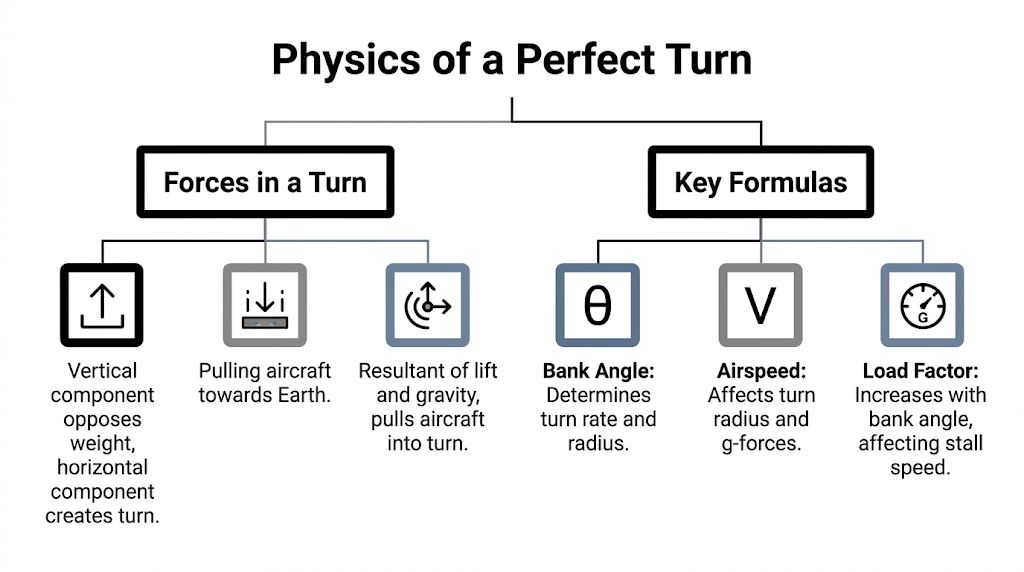
A standard rate turn starts with a simple force problem. The airplane is still making lift, but once you bank, that lift no longer points straight up. Part of it keeps the airplane from descending. The rest pulls the aircraft into a curved path.
That is the whole maneuver in plain language.
A student at DuBois Aviation usually feels this first in the practice area after departing busy Chino Airport. You roll a Cherokee or Cessna into what looks like a modest bank, and the nose suddenly seems eager to drop unless you support the turn correctly. In the helicopter, the picture is a little different in the controls, but the same physics still apply. Banking redirects lift. A turn is the result of that redirected lift acting over time.
A banked airplane works like a cyclist leaning into a corner. The rider does not turn by wishing the bike around. The lean changes where the supporting force points, and the path curves. Your airplane does the same thing with the lift vector.
The rule of thumb pilots actually use
In the cockpit, especially during instrument training, you need a usable shortcut rather than a long formula. A common estimate for the bank angle that will produce a standard rate turn is:
- Divide true airspeed by 10 and add half that value
- Or use 10 percent of TAS plus 5 degrees
Both shortcuts get you close enough to set an initial bank, then confirm the actual rate on the instruments. In the trainers students fly at DuBois Aviation, that usually looks like this:
| True Airspeed (Knots) | Approximate Bank Angle (Degrees) |
|---|---|
| 80 | 12 |
| 100 | 15 |
| 120 | 18 |
| 200 | 25 |
Notice what that table teaches. Standard rate is often shallower than new students expect in a training airplane. If you are used to steep visual turns in the pattern, an instrument standard rate turn can feel almost too gentle at first.
Why speed changes the bank you need
The rate of turn stays the same only if the heading changes at the same pace. A faster airplane covers more distance in each second, so it needs more bank to curve enough to keep that same heading change.
That is why the same maneuver looks different in different aircraft at KCNO. A Cherokee at training speed may need only a mild bank for standard rate. A faster airplane needs more. In many instrument procedures, pilots also limit bank to a practical maximum and accept whatever bank meets the procedure safely.
Students often mix up rate of turn and radius of turn. They are connected, but they are not the same. You can keep the same standard rate and still make a larger circle if your speed is higher. That confusion shows up all the time in training, especially when a student says, “I used the right bank, so why did the turn feel wide?” The answer is usually speed.
What this means in the cockpit
Your job is to set a reasonable bank, then hold the airplane together as a system. If altitude starts to slip, you need a little more back pressure. If coordination drifts off, rudder input needs attention. If the rate is not standard, adjust the bank slightly and verify it on the instruments.
This is also where students can connect turning flight to how angle of attack changes with attitude, loading, and control pressure in flight. In a bank, the wing is doing more than one job at once, so your pitch control matters. You are not just turning. You are asking the wing to turn and keep the airplane supported.
Instructors at DuBois Aviation teach this as a calm setup problem, not a dramatic control input problem. In the soup, or even under the hood with SoCal traffic nearby, the best standard rate turns are the quiet ones. Smooth roll-in, small corrections, steady scan, and a rollout that stops right on heading.
How to Read Your Turn Coordinator
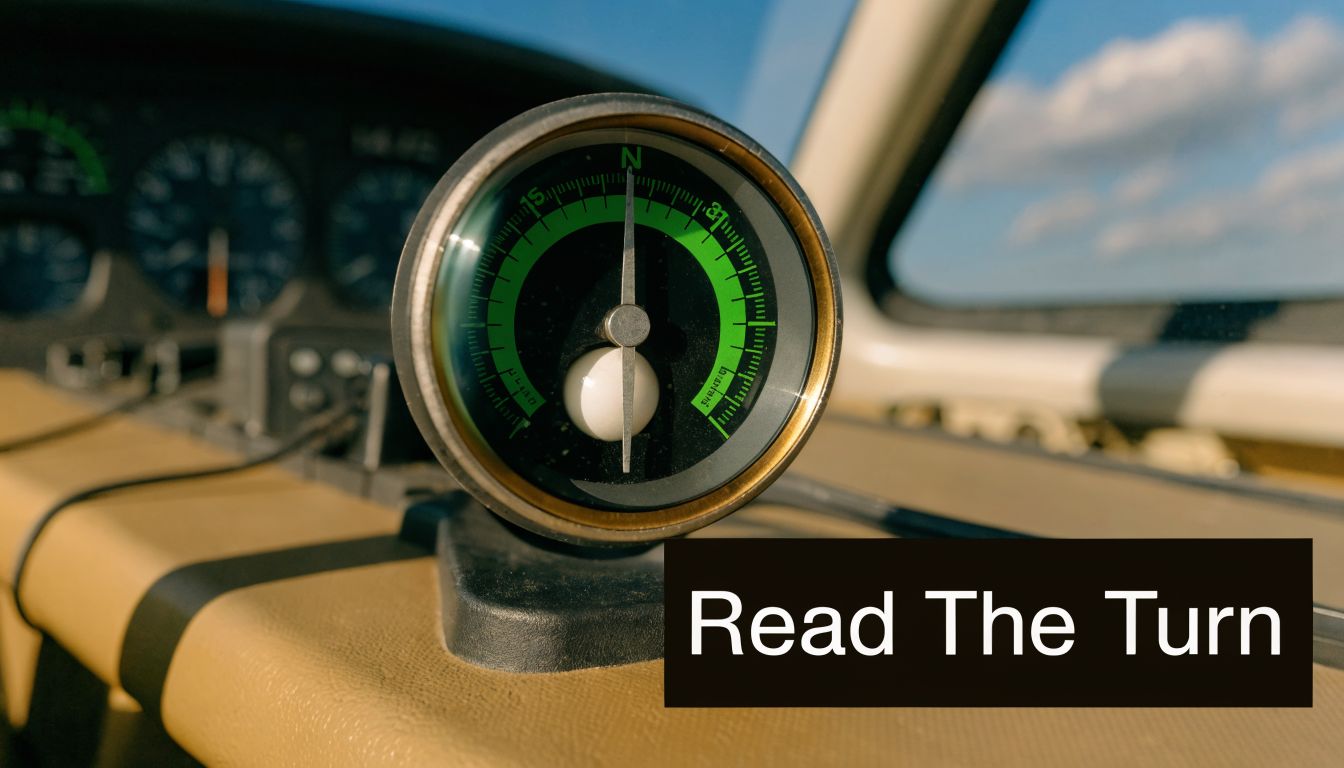
The turn coordinator is one of the most misunderstood instruments in primary and instrument training. Students often glance at it, see the miniature airplane tilt, and assume it’s just another bank display. It isn’t. Its main job is to show rate of turn.
What the top part is telling you
On a traditional turn coordinator, the miniature airplane or needle moves relative to standard rate markings. When the indicator lines up with the standard mark, you’re turning at the standard rate.
That doesn’t mean your bank angle is automatically correct in some visual sense. It means your heading is changing at the correct rate. That distinction matters.
A simple way to use it is this:
- Roll into the turn smoothly
- Check the turn coordinator for standard rate
- Fine-tune bank as needed
- Keep scanning attitude, altitude, and heading
Students often reverse that order. They pick a bank angle first, then hope it becomes standard rate. The instrument should confirm the rate, not your guess.
What the ball is telling you
The inclinometer, usually called the ball, tells you whether the turn is coordinated. It does not tell you whether the rate is standard.
If the ball is centered, the airplane is coordinated. If it moves off center, you’re slipping or skidding. In plain terms, the airplane isn't balanced in the turn.
Common corrections are simple in concept and harder in execution:
- Ball off to one side: use rudder pressure to re-center it
- Nose wandering while you fix the ball: reduce your control aggression
- Altitude changing at the same time: widen your scan, don’t fixate
Keep the turn rate where you want it, then use rudder to keep the ball centered. Those are related tasks, but they are not the same task.
Enter, hold, exit
A standard rate turn usually falls apart during transitions, not during the middle.
Use this cockpit flow:
- Entry: Roll in at a controlled pace. Don't snap to the bank angle.
- Stabilize: Confirm standard rate on the instrument, then trim your attention across pitch, altitude, and coordination.
- Exit: Start the rollout early enough to stop the turn exactly on heading.
That last part is where students most often miss. They wait until the heading bug or heading indicator reaches the target, then start rolling out. By then, the airplane keeps turning and overshoots.
A helpful visual explanation is below.
Glass panels present it differently
On a modern primary flight display, the same information may appear as turn rate tick marks rather than a standalone vacuum-era instrument face. Some displays also show half-standard and full-standard rate references. The presentation changes, but the interpretation does not. You still need to know whether you’re turning at the assigned rate and whether the airplane is coordinated.
The errors I see most often as a CFI
- Staring at the heading indicator: the student notices the overshoot too late.
- Using too much bank on entry: the turn starts fast, then gets corrected back and becomes sloppy.
- Ignoring trim and back pressure: altitude starts drifting.
- Stepping on the wrong rudder: the ball moves farther out instead of centering.
When a student learns to separate these cues, the panel starts making sense. The turn coordinator tells you the turn’s pace. The ball tells you the turn’s quality.
Practice Drills for Students at DuBois Aviation
A standard rate turn starts to matter the moment a DuBois student leaves the runway environment at Chino and the cockpit gets busy. You are tracking a heading, listening for the next call, scanning for traffic near the practice area, and trying not to let altitude drift while the airplane turns. The goal is not to make the maneuver dramatic. The goal is to make it steady enough that it feels routine.
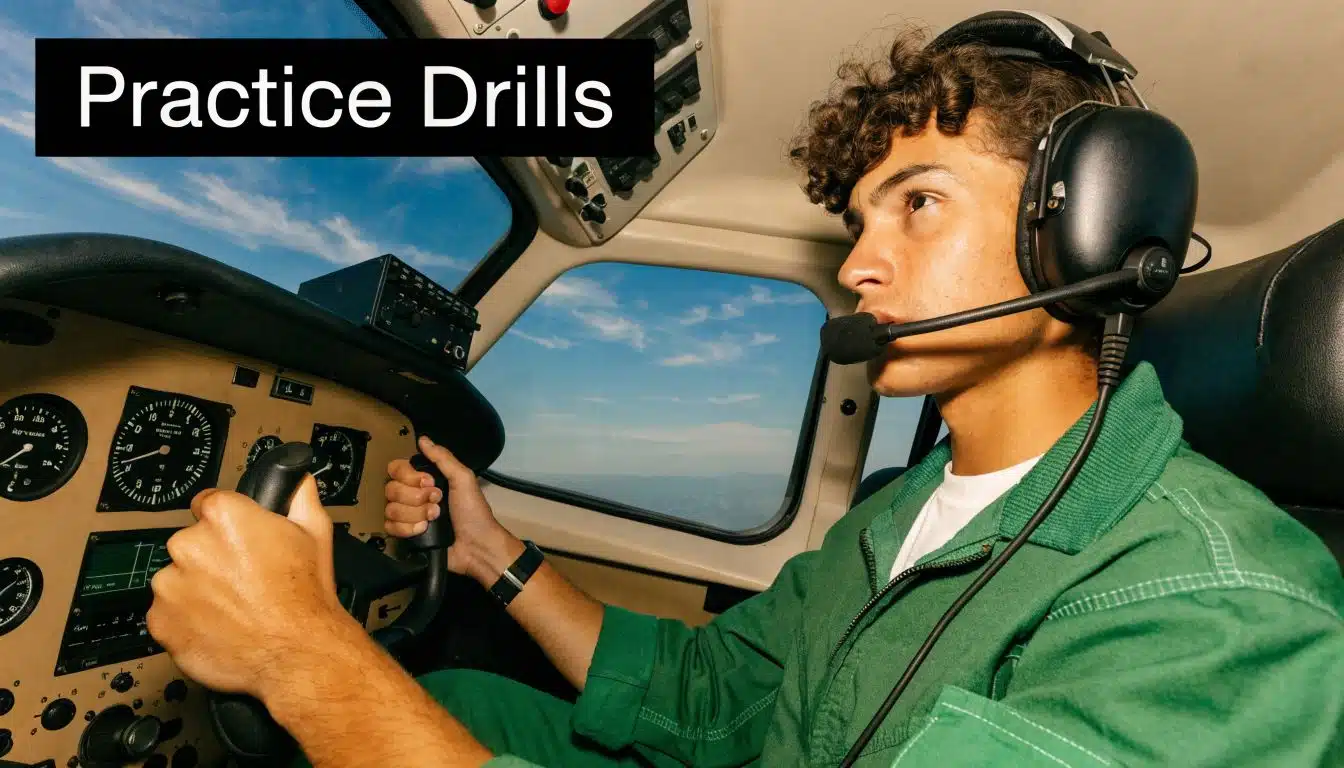
At DuBois Aviation, I want students to practice this until the turn feels like driving through a familiar curve in the road. You are not guessing your way through it. You know what the entry should look like, what the scan should sound like in your head, and when the rollout should begin. That matters even more at KCNO, where radio work, nearby traffic, and airspace awareness can steal attention fast.
A drill we use in our trainers
In one of our Piper Cherokees, or in a Cessna on a training flight out of Chino, start with the airplane fully settled before you ask it to turn. Students often rush this part. Then they spend the next thirty seconds correcting a setup problem they created themselves.
Use this sequence:
Stabilize first
Trim the airplane, hold altitude, and confirm a cruise attitude you can maintain without wrestling the yoke.Choose a clear heading change
Pick something specific, such as a 90 degree turn, so you know exactly where the rollout belongs.Roll in gently
Add bank with patience, then confirm the turn rate on the instrument instead of chasing what your body feels.Keep the scan moving
Turn coordinator, attitude, altitude, heading. Then repeat. Students who lock onto one instrument usually start wandering somewhere else.Start the rollout early
The airplane needs time to stop turning. If you wait until the target heading is under the nose, you are already late.
I tell students to treat the rollout like braking for a stop sign. If you wait until the bumper reaches the line, the car goes past it. The same habit causes heading overshoots in the cockpit.
Make the drill specific to Chino
Generic practice has value. Local practice works better.
Out of KCNO, we are not training in empty sky. We are training in a real Southern California environment where traffic, frequency changes, and compressed workload are part of the lesson. A good drill is to perform a series of standard rate turns while adding one extra task at a time. First, fly the turn cleanly. Next, fly it while making a simulated radio change. Then fly it while identifying a checkpoint or preparing for the next instruction from your instructor.
That progression teaches the actual skill. A standard rate turn is not hard when it is the only thing happening. It becomes useful when you can still fly it accurately while your attention is being divided.
A helicopter version of the same lesson
Students transitioning into rotorcraft notice the difference immediately. In our helicopter pilot training at DuBois Aviation, the turn still has the same goal, but the control feel is more active and less forgiving. The machine asks for smaller corrections and faster feet.
That is why I coach airplane and helicopter students a little differently:
- Cherokee or Cessna students usually need help avoiding late rollouts and altitude sag in the turn.
- Helicopter students usually need help making small inputs instead of constant large corrections.
- Airplane students often overfocus on heading.
- Helicopter students often overfocus on control pressure and stop scanning.
Same maneuver. Different workload.
Use spoken callouts until the rhythm sticks
Quiet students often fall behind their own airplane. Verbal callouts help organize the sequence.
Try this during practice:
- “Stable, starting turn.”
- “Check rate, check altitude.”
- “Ball centered.”
- “Approaching heading, rolling out.”
Those short phrases work like a checklist spoken in real time. They keep your brain ahead of the airplane instead of reacting after the mistake appears.
Common mistakes I correct from the right seat
| Mistake | What I usually see at DuBois | Correction |
|---|---|---|
| Losing altitude in the turn | Student banks first, then notices the nose has dropped | Add light back pressure early and keep the attitude scan alive |
| Overshooting the heading | Rollout starts at the target instead of before it | Begin the rollout sooner and make it one smooth action |
| Underbanking after a bad turn | Student gets timid after one overshoot | Trust the instrument indication and hold the assigned rate |
| Ball out of center | Feet lag behind the bank change | Make small rudder corrections and check coordination again |
| Fixating on one gauge | Eyes stay glued to heading or altitude | Return to a steady cross-check pattern |
Repetition matters more than complexity
A simulator helps because it lets you repeat the same turn until the timing becomes familiar. Then we take that skill back into the airplane over Chino, where the actual lesson begins. If the maneuver is stable, you have attention left for radios, traffic, and the next instruction. That is the standard you want as a student pilot at DuBois Aviation.
Standard Rate Turns in Airplanes vs Helicopters
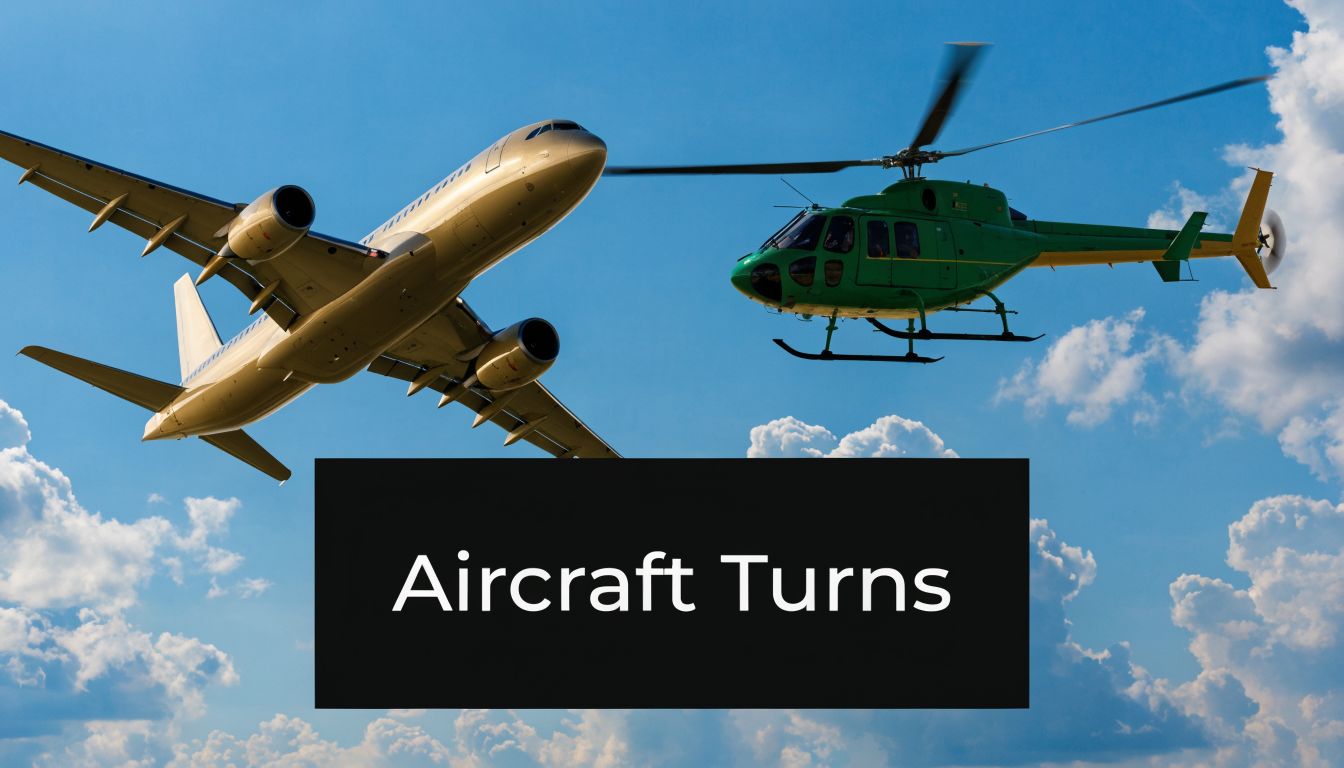
Pilots sometimes assume a standard rate turn is basically the same across every aircraft. The concept is the same. The pilot experience is not.
In an airplane, especially a stable trainer, you bank with aileron, coordinate with rudder, manage pitch, and then monitor the instruments. Once the turn is established, the workload often settles into a rhythm. In a helicopter, the pilot usually feels a more continuous need to manage attitude, pedal input, and overall balance.
Why the distinction matters
This difference teaches an important lesson about aviation judgment. A maneuver definition can stay fixed while the execution changes with the machine. Good pilots respect that. They don’t assume skill in one aircraft automatically transfers without adaptation.
That mindset matters far beyond training. It’s the same discipline you need if you later rent, insure, or buy an aircraft. A safe purchase doesn’t start with paint, avionics envy, or a hopeful sales listing. It starts with understanding what the aircraft asks of the pilot and what condition it’s in.
Comparing the two cockpit experiences
Airplane control feel
The airplane often gives the student a little time. If the trim is close and the speed is stable, the turn can feel settled.Helicopter control feel
The helicopter usually asks for more active hands and feet. Small deviations can grow quickly if the pilot pauses too long.Coordination cues
Airplane students often learn rudder discipline gradually. Helicopter students feel pedal importance much earlier.Workload transfer
A fixed-wing pilot moving into rotorcraft often has to become more comfortable with constant correction. A helicopter pilot moving into airplanes often has to learn not to overcontrol.
For pilots curious about rotorcraft training, helicopter pilot training builds a different kind of precision. It still rewards smoothness. It just asks for it through a different control language.
The safest pilots don't fall in love with the category label. They learn the actual aircraft in front of them.
That’s also the safest way to think about ownership.
Beyond Training How to Buy an Airplane Safely
A student at Chino often reaches this point sooner than expected. You finish a lesson in a Piper Cherokee or Cessna, you finally hold a clean standard rate turn on the gauges, and on the drive home you start browsing airplane listings. That jump is understandable. Training turns abstract aviation into something you can picture owning.
The useful connection is precision.
A standard rate turn teaches you to stop guessing. You cross-check, confirm, and make small corrections before a minor error grows. Buying an airplane calls for the same habit. The panel may be different from the logbooks, but the mindset is the same at DuBois Aviation. Stay ahead of the airplane, and stay ahead of the purchase.
Buying with the same discipline you use in instrument training
In the cockpit, a standard rate turn is controlled, measured, and verified by reference to reliable indications. A safe aircraft purchase works the same way. You do not buy based on paint, a polished sales pitch, or an avionics photo taken at the right angle. You buy based on records, condition, mission fit, and an honest look at what the aircraft will demand from you as a pilot and owner.
That matters even more around KCNO, where students train in busy airspace and quickly learn that workload is real. An airplane that looks appealing on paper may still be the wrong first ownership choice if it adds maintenance complexity, insurance trouble, or performance that exceeds your current experience.
A careful buyer should:
- Start with a pre-buy inspection from a mechanic who knows that aircraft type and works for you
- Read the logbooks like you read instruments by checking continuity, damage history, recurring discrepancies, major repairs, and long periods of inactivity
- Match the airplane to your actual flying such as local proficiency work, cross-country trips, or future rating plans
- Check insurance early so you know whether your time, ratings, and intended use fit the airplane
- Apply even tighter scrutiny to helicopters because component times, maintenance history, and type support have a direct effect on safety and ownership cost
Students often miss one point at first. A good first airplane is not always the fastest one or the one with the flashiest panel. At DuBois Aviation, that lesson shows up in training every day. The aircraft that helps you build repeatable habits is usually the aircraft that suits you best, whether that is a straightforward Cherokee, a stable Cessna, or, in rotorcraft, a machine with support and maintenance history you can manage.
Use the same question a CFI asks during instrument work. What are you verifying, and what are you assuming?
If too much of the deal rests on assumption, slow down. If the seller is vague about logs, damage, downtime, or maintenance gaps, walk away. Another airplane will come along.
If you want help building these skills in a real training environment, DuBois Aviation offers airplane and helicopter instruction, simulator training, and practical experience in busy Class D airspace at Chino Airport. It’s a strong place to sharpen core maneuvers like standard rate turns, then carry that same disciplined mindset into aircraft rental, advanced ratings, and eventually safe ownership decisions.