Updated October 1, 2026
Best beginner aircraft: choose a trainer you can fly consistently
For a student learning to fly airplanes, a Cessna 172, a Piper PA-28 trainer or a Cessna 150/152 may be a practical starting point when supported by an instructor and available locally. The best choice for you depends on fit, approved equipment, aircraft availability and a realistic total training budget—not a universal ranking or purchase price alone.
Two practical options worth comparing
These are specific products pilots commonly compare for this type of flying. Confirm compatibility with your aircraft and instructor before ordering.
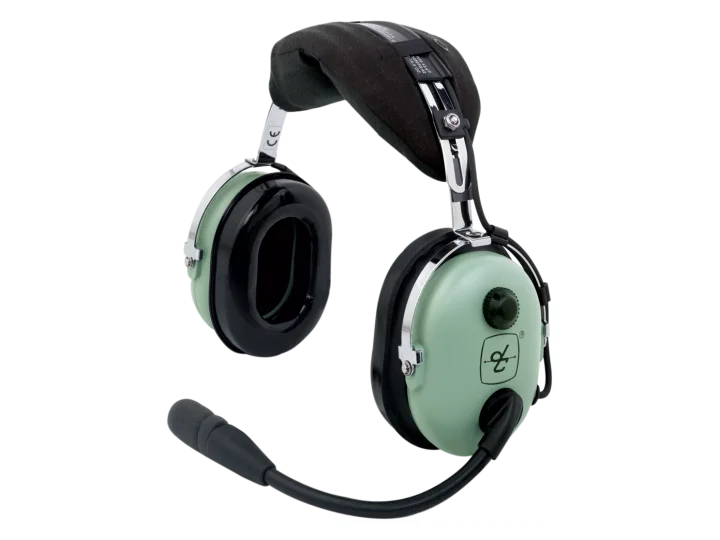 Student headsetDavid Clark H10-13.4 Aviation HeadsetCheck current availability on Amazon (paid link)
This guide compares five airplane choices and one separate helicopter-training option. It does not mean DuBois Aviation offers every model listed. Check our current aircraft fleet, training cost checklist and training programs before choosing a cockpit.
Your First Big Decision: Choosing the Right Cockpit
Many individuals start flight training with the wrong question. They ask which airplane is fastest, coolest, or cheapest, when the better question is simpler: which aircraft will help you learn well, show up consistently on the schedule, and still make sense if you later decide to rent, buy, or sell?
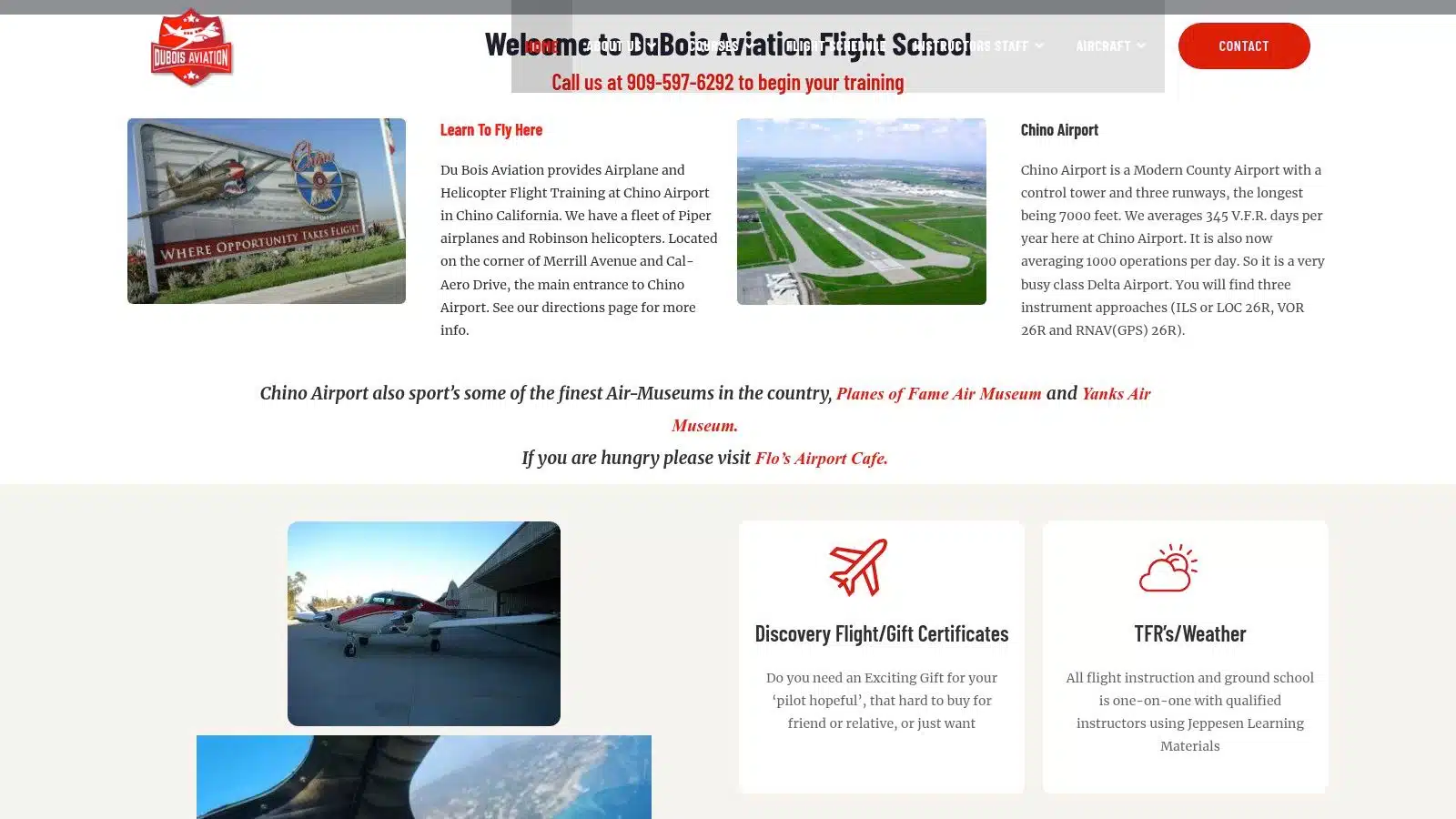
That choice matters more than new students expect. The airplane becomes your classroom. It shapes how you learn landings, crosswind control, checklists, radio work, and emergency habits. At a busy towered airport like Chino, where DuBois Aviation trains, that matters even more because you're not learning in a vacuum. You're learning while managing real traffic, real radios, and real pace.
The good news is that the list of best beginner aircraft is fairly stable. Certain models keep showing up because they work. They forgive honest mistakes, teach the right habits, and don't force a student to fight the machine while trying to absorb the basics.
This guide is also for the student who already sees ownership on the horizon. Renting is usually the smart starting point. Buying too early can lock you into maintenance surprises, insurance headaches, and an aircraft that doesn't match your mission once your training matures. But some trainers do make better first purchases than others, especially if your plan is to keep flying after the checkride instead of letting the certificate sit in a drawer.
You'll find fixed-wing and helicopter options here, plus a plain-English buying section for people thinking about their first aircraft purchase. The goal isn't to crown one perfect airplane for everyone. It’s to help you pick the aircraft that fits your budget, your training path, and the kind of flying you want to do.
1. The Global Standard. Cessna 172 Skyhawk
The Cessna 172 has earned its reputation the old-fashioned way. It keeps working for beginners.
If a student tells me they want the lowest-risk answer to the question of which airplane to start in, the Skyhawk is usually near the top of the list. The airplane is stable, predictable, and roomy enough that most students don't feel cramped or overloaded by the experience. That matters when you're trying to fly, talk, find your way, and remember a checklist at the same time.
Why students learn well in it
The high-wing layout gives you a practical training advantage. It keeps the cabin cooler on the ground, gives you useful downward visibility in turns, and adds a little psychological comfort for students who don't love seeing the runway disappear under a low wing on flare.
The 172 also doesn't punish small errors as harshly as some lighter or more performance-focused airplanes. It tends to give students time to recognize a problem and correct it. For primary training, that's gold.
A good trainer gives you time to think before it demands perfect technique.
That doesn't mean it's lazy or imprecise. A sloppy student can still float, drift, or botch a landing in a Skyhawk. It just means the airplane usually teaches rather than surprises.
Where it fits for training and ownership
For a classic private-to-instrument path, the 172 makes sense because it handles both roles cleanly. It's one of the few airplanes I'd call a safe default choice for almost anyone pursuing a Private Pilot License path.
As a first purchase, the big strength of the 172 isn't glamour. It's liquidity. Buyers understand it, instructors know it, mechanics see it all the time, and future buyers will still want it if you later decide to sell. That's a practical advantage people underestimate.
A few trade-offs come with that popularity:
- Higher buy-in than basic trainers: A 172 usually costs more than an older two-seat trainer, so you're paying for flexibility and market demand.
- Not the cheapest time-builder: If your mission is only to get a private certificate and build hours solo, there are less expensive ways to do it.
- Glass cockpit temptation: Newer avionics are nice, but they can push beginners to obsess over screens before they master attitude, trim, rudder, and airspeed control.
For KCNO-style training, the 172's stability helps. Busy radios, sequencing, and tower instructions can chew up a student's attention quickly. An airplane that gives you a little breathing room is a good partner.
If you're torn between renting one and buying one, rent first. The student who trains steadily in an available rental usually reaches proficiency faster than the student who buys too early and spends energy managing maintenance, paperwork, and unexpected downtime.
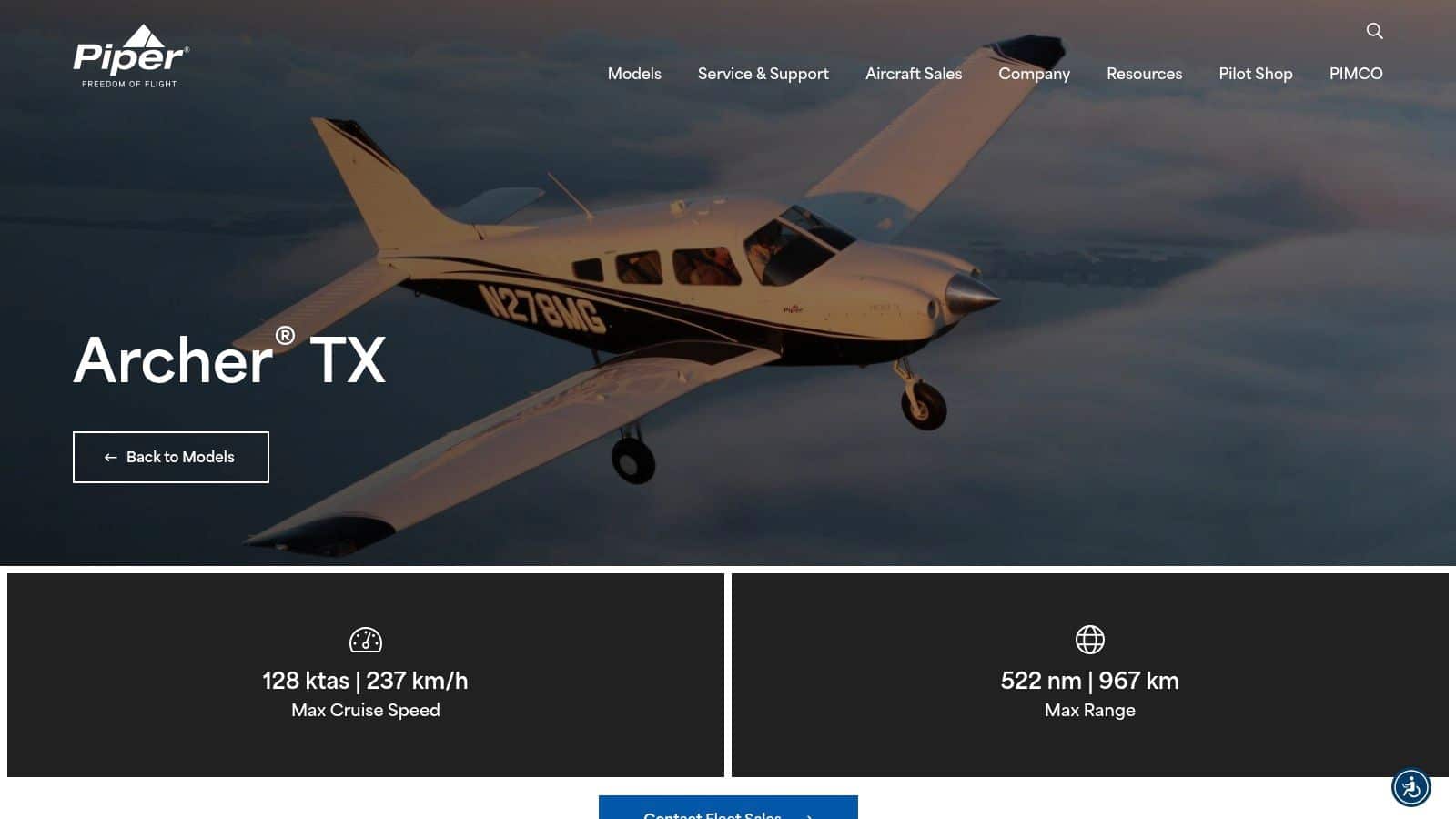
2. The Low-Wing Legend. Piper Archer (PA-28 Family)
The Piper Archer and the broader PA-28 family have trained generations of pilots for a reason. They feel honest.
Some students sit in a low-wing Piper and immediately prefer it. The seating position feels more settled, the cabin can feel more car-like, and the landing picture often clicks faster for pilots who like a more planted feel on approach. That preference is real, and it matters because confidence speeds up learning.
Why the Cherokee family stays in so many fleets
More than 32,000 PA-28 aircraft have been produced since 1960, according to the market analysis cited by Technavio's used aircraft market report. Production scale matters because it points to a long service life, broad parts familiarity, and a training ecosystem that didn't appear by accident.
For a beginner, the practical strengths are straightforward. The airplane tracks nicely, it usually behaves well in the pattern, and it teaches smooth control work. The low-wing design also changes the sight picture in ways that some students prefer during takeoff and landing.
DuBois Aviation leans into that platform with a Piper-heavy fleet. That kind of consistency helps more than students realize. If you can fly the same family of airplane repeatedly instead of bouncing between very different trainers, your early lessons tend to stack more cleanly.
The real trade-offs
The Archer isn't better than the Skyhawk for everyone. It's different.
The single door can be awkward compared with a Cessna cabin. Cabin access isn't the reason to reject a good airplane, but it's something you'll notice every flight. The low wing also changes ground visibility and can make wing inspection and fueling feel different to new renters or owners.
Practical rule: If your school's schedule, instructors, and maintenance support are strongest around one airframe, that usually beats chasing your theoretical favorite aircraft.
The PA-28 family also makes sense for students who think they'll stay in Piper products later. If your long-term path includes stepping into another Piper, starting in the Cherokee or Archer can make that progression feel natural.
Renting, buying, and selling one safely
As a renter, the Archer's value is familiarity. You can build repetition fast. At a school operating multiple similar aircraft, that reduces the friction of scheduling and checkout differences.
As a buyer, the airplane can be a smart first ownership step if your mission is local flying, training, and modest cross-country work. It's a practical platform, and buyers know what they're looking at. That's useful when you eventually sell because market confidence matters almost as much as aircraft condition.
If you're shopping for one, don't get charmed by paint first. Check logs, maintenance history, avionics reality, and how the airplane was used. A shiny airplane with messy records is not a safer buy than an average-looking one with clean documentation and honest upkeep.
For the student training at KCNO, an Archer is a strong fit. Towered-airport repetition in the same airplane family builds comfort fast, and that matters when the goal is to stop feeling behind the airplane.
3. The Budget-Friendly Classic. Used Cessna 150 and 152
A lot of students reach the same point after a few discovery flights. They want more stick time, they want to keep the budget under control, and they are starting to wonder whether the airplane they train in could also be the first one they own. That is where the Cessna 150 and 152 still make a very practical case.
These airplanes are simple, honest trainers. They do not flatter sloppy flying. They reward good speed control, proper rudder use, and disciplined landings.
Why it still belongs on any serious list
The appeal starts with what the airplane asks of a beginner. It is light on the controls, easy to taxi, and slow enough in the pattern that a new student usually has time to think through the next step instead of chasing the airplane. A basic cockpit also helps. In a 150 or 152, students tend to learn attitude, trim, sight picture, and coordination earlier because there is less distraction.
That matters at a place like KCNO. Chino gives students real towered-airport repetition, parallel runway operations, radio work, and busy local traffic. In that environment, a slower, simpler airplane can be an advantage early on. You can devote more attention to spacing, calls, and checklist flow without also managing the pace of a heavier cross-country machine.
The published numbers support that training role. AOPA notes the long production run, broad training use, and the modest performance envelope that made the type a staple in primary instruction for decades, all in one place in its general aviation statistics reference. The larger point for a beginner is straightforward. These airplanes fly in a range that gives you time to build habits correctly.
Best for the student who is cost-conscious and realistic
At DuBois Aviation, the 150 remains relevant for exactly that reason. You can rent a classic trainer in a structured school setting, build repetitions, and learn whether your mission is local flying and time-building or whether you will need more airplane soon. Students comparing fixed-wing options with rotary-wing training can also review DuBois Aviation's helicopter pilot training program if they are still deciding which path fits their goals.
As a rental aircraft, the 150 or 152 makes sense for primary training, solo work, and sharpening fundamentals. As a purchase, it can work well for a first-time owner who wants to fly often, keep costs lower than four-seat alternatives, and accept the cabin and payload limits up front.
That last part matters.
I have seen buyers get excited about the low entry price, then realize a few months later that they wanted to take a friend, carry bags, and make longer trips in summer conditions. A 150 or 152 is a good first airplane only when the mission is honest.
What works and what does not
The strengths are clear:
- Strong trainer behavior: It makes trim errors, poor rudder work, and unstable approaches obvious.
- Lower-cost path to more repetitions: More takeoffs, landings, and pattern work usually matter more than chasing a flashier airframe.
- Good renter-to-owner bridge: The systems are simple, the used market is well understood, and ownership does not feel radically different from training use.
The limits are just as clear:
- Tight cabin and limited useful load: Two adults, fuel, and bags can become a real planning problem.
- Short mission ceiling for many owners: Plenty of pilots outgrow the airplane after private training or early time-building.
- Age-related buying risk: An inexpensive airframe with poor logs, corrosion, or deferred maintenance stops being inexpensive fast.
If you are shopping for one, inspect the records before you admire the paint. On older 150s and 152s, the question is not whether the airplane is old. It is whether it has been maintained consistently, flown regularly, and upgraded sensibly.
For the right student at KCNO, this is still one of the smartest entry points in aviation. Rent it to build fundamentals first. Buy one only if your first-owner mission is as modest and focused as the airplane itself.
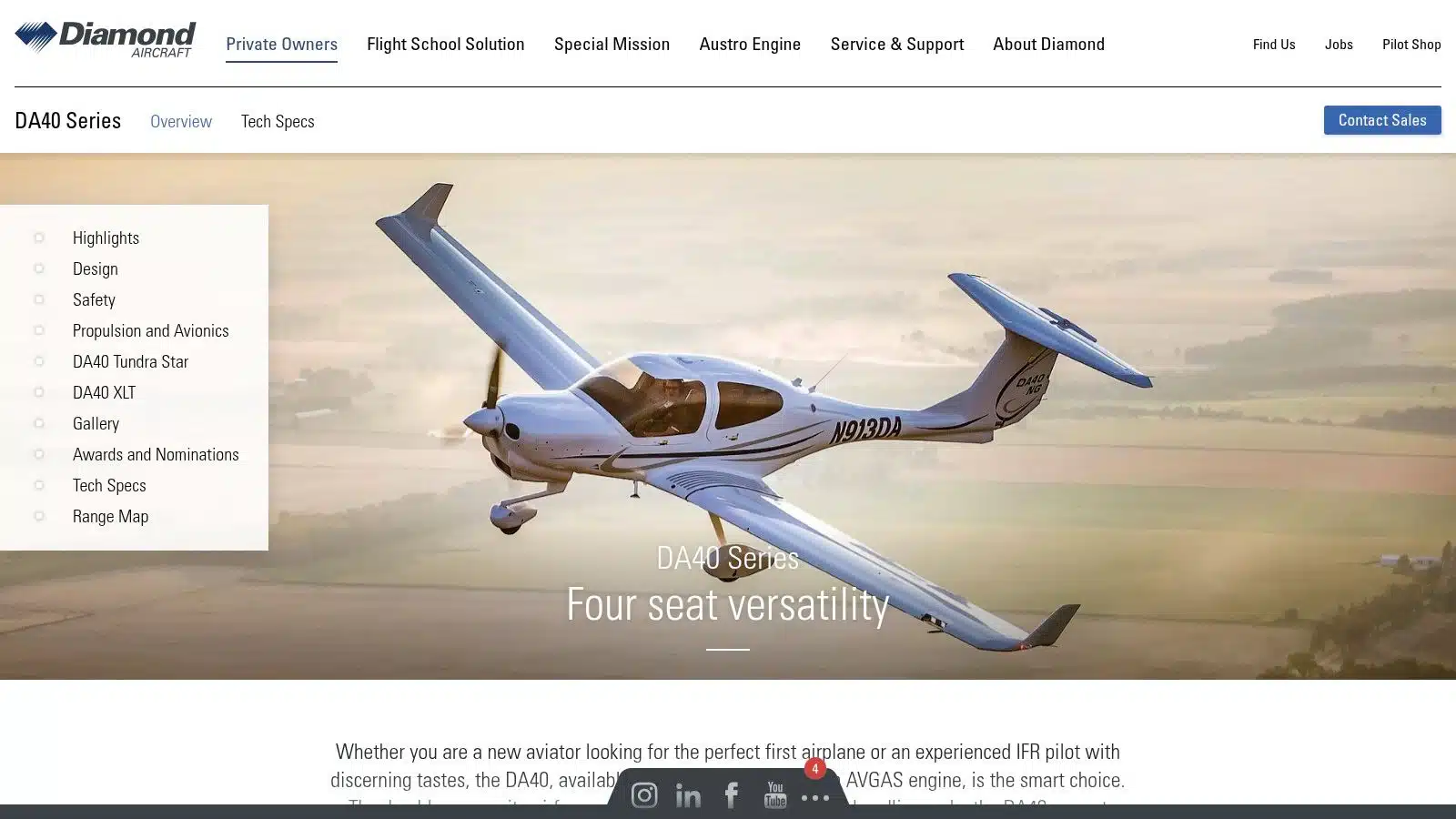
4. Diamond DA40 NG: a modern training option
The DA40 NG appeals to a certain kind of student immediately. If you like modern ergonomics, clean visibility, and a cockpit that feels current instead of nostalgic, this airplane gets your attention fast.
That first impression isn't superficial. The DA40's canopy visibility is excellent, the composite construction gives it a different feel than legacy metal trainers, and the modern engine-management philosophy can reduce workload in ways many beginners appreciate.
Where it shines
For cross-country training and instrument work, the DA40 makes a lot of sense. It feels efficient, purposeful, and modern. Students who know they want to fly technologically current aircraft from the start often find the transition into avionics-heavy environments smoother in a platform like this.
The diesel and Jet-A angle can also matter operationally. Depending on where you fly, fuel logistics may favor that setup. For a beginner, simplified engine management is especially beneficial, allowing them to keep attention on flying tasks instead of juggling legacy habits before they're ready.
Where buyers get surprised
A modern airplane is not automatically the best beginner aircraft for every budget or every school. Composite airframes and specialized engine support can change the ownership picture.
The DA40 often makes more sense as a first purchase for someone with a clear long-range mission, regular cross-country plans, and comfort with higher sophistication. It makes less sense for the student who only needs an affordable trainer and thinks "modern" alone justifies the premium.
Buy modern aircraft because their design matches your mission, not because the panel looks newer.
Practical fit for renters and owners
As a renter, this is a good fit if your school has strong support around the type. That's always the catch with less common aircraft. A great machine with limited availability can slow training if scheduling or maintenance support is thin.
As an owner, the DA40 can be an excellent personal traveling aircraft after training. That gives it an advantage over some pure trainers that feel like stepping stones the moment you pass your checkride.
A few practical ownership realities stand out:
- Excellent visibility and modern cockpit flow: Helpful in training and useful long after training ends.
- Less forgiving on maintenance planning: Specialized support matters more than with older Cessna and Piper fleets.
- Better for a defined mission than a vague dream: If you know how you'll use it, it can be a smart buy. If you don't, rent first.
For many students, the DA40 is aspirational but sensible. That's a good combination. Just don't mistake "I enjoy sitting in it" for "I should own it." Those aren't the same decision.
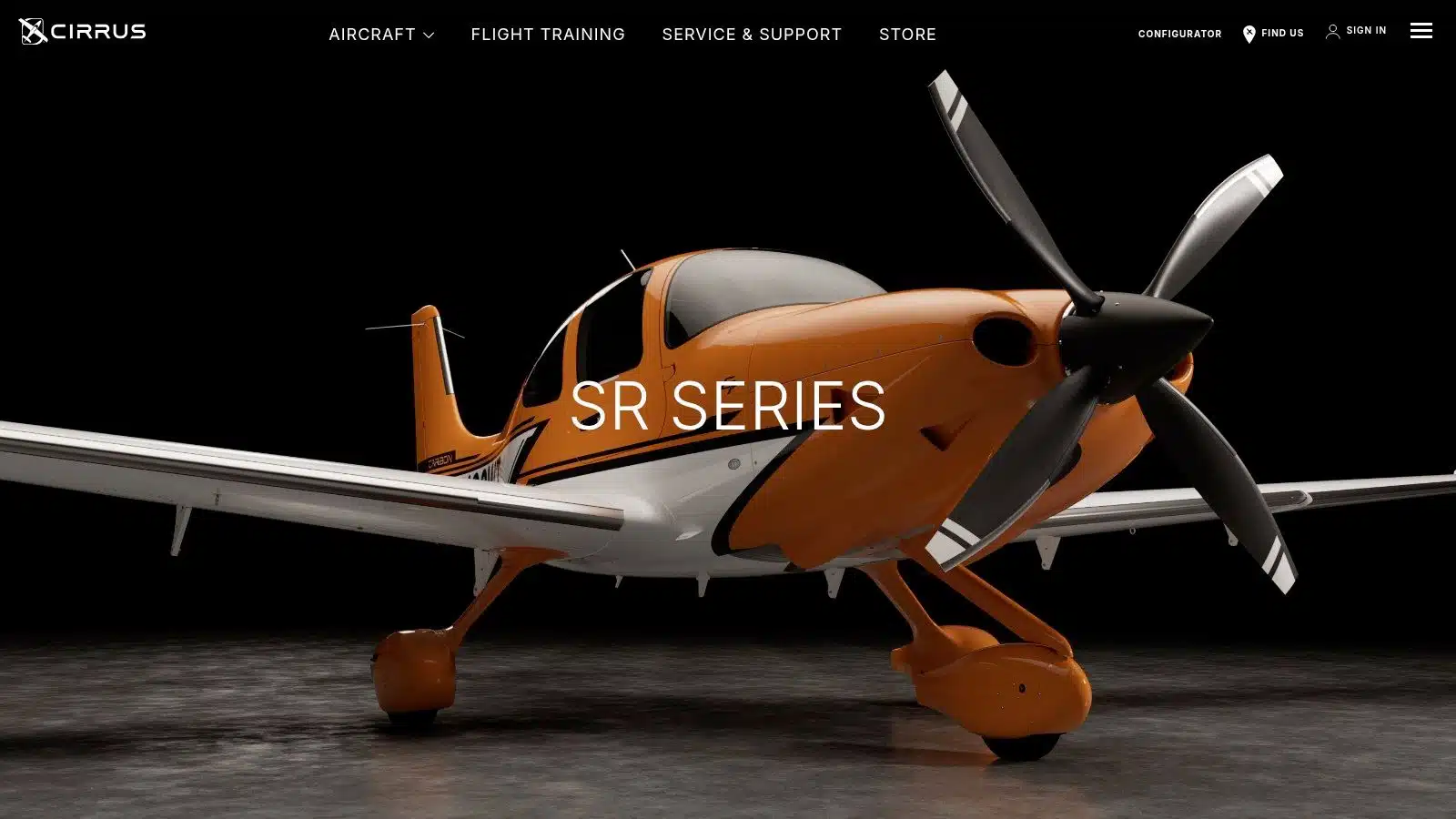
5. Cirrus SR20: a systems-focused training option
The Cirrus SR20 changed what many new pilots expect from a training aircraft. It doesn't feel like a legacy trainer with a few upgrades. It feels like a modern personal aircraft that can also train you.
That difference matters because Cirrus training comes with a philosophy. You are not just learning pitch, power, and pattern work. You're learning systems management, automation discipline, and risk management in a cockpit built around advanced avionics and a whole-airframe parachute system.
Why some beginners thrive in it
For the right student, training in an SR20 makes perfect sense. If you plan to own a Cirrus, fly with a lot of avionics support, or want to build cockpit management habits early, starting there can be smart.
The parachute system also changes the psychology of ownership. It doesn't replace judgment, and it doesn't excuse weak flying, but many owners take real comfort in having that option onboard. For family-minded buyers, that matters.
The cabin environment helps too. Comfortable seating, side-stick controls, and a refined interior lower some of the intimidation factor for adults coming into training later in life.
Why it isn't the universal answer
The SR20 is not where I'd send every new student. Some beginners benefit from starting in a simpler platform where they can master sight picture, trim, rudder, and basic energy management before layering in a high-tech cockpit.
That's the core trade-off. The airplane can accelerate systems familiarity, but it can also tempt students to become screen managers before they become pilots.
If the panel owns your attention, you're behind the airplane no matter how advanced it is.
Ownership costs also tend to be a bigger conversation in this class of aircraft. Insurance, maintenance, and model-specific support all deserve serious planning before purchase. This is especially true for low-time pilots. One insurance angle that doesn't get enough attention is that novice-owner coverage can be dramatically more expensive than renting. For example, annual insurance on a Cessna 172 for a low-time private pilot under 500 hours can exceed $10,000 to $15,000, while school rentals often run $150 to $200 per hour all-in, a gap highlighted in Vref's beginner aircraft discussion. The exact airplane is different, but the ownership lesson is the same.
Best fit
The SR20 is a strong match for the higher-budget student who knows they want a premium, systems-rich aircraft and intends to keep flying actively after training. It can also suit a career-minded pilot who wants early exposure to automation habits.
What doesn't work is buying one because it feels safer on paper while ignoring training quality, instructor quality, and mission fit. The best beginner aircraft is never just the one with the best brochure. It's the one you can train in well, insure reasonably, support properly, and keep flying with discipline.
Separate helicopter-training option: Robinson R22
Helicopter training is a different aircraft-category path, not an interchangeable alternative to an airplane private-pilot program. Discuss its training requirements, instructor qualifications and operating limits with a qualified helicopter instructor.
Fixed-wing instincts do not transfer cleanly into helicopters. That's one reason the Robinson R22 earns respect so quickly. It teaches precision from the first lesson.
If you're pursuing rotary-wing training, the R22 is often the airplane-equivalent answer to "start with the standard trainer." It's compact, sensitive, and demanding in a way that quickly exposes whether you're paying attention. That isn't a flaw. It's part of why many helicopter pilots build strong fundamentals in it.
What the R22 teaches better than comfort-oriented aircraft
The R22 doesn't let you be casual with coordination or control pressure. Hover work, pedal management, and small cyclic corrections all demand finesse. Students who come in expecting brute-force control inputs usually learn very fast that helicopters reward smoothness instead.
That sensitivity makes the aircraft a strong teacher. By the time a student becomes comfortable in an R22, they usually have a much sharper sense of control discipline than they had on day one.
At a school with a dedicated helicopter path, learning in the standard trainer also reduces transition friction later. DuBois Aviation's helicopter program includes the Robinson platform, and students can start with helicopter pilot training in the same kind of aircraft they are likely to see elsewhere in civilian training.
Helicopter students don't need an easy aircraft. They need an honest one.
The ownership side of the equation
For private helicopter ownership, the R22 can be appealing because it's a known quantity and widely recognized in training circles. But ownership questions matter even more in helicopters than airplanes because maintenance discipline and mission honesty are not optional.
Before buying any training helicopter, ask yourself three things:
- Will I fly it enough? Idle aircraft still generate costs and can become a maintenance burden.
- Do I have access to the right maintenance support? Rotary-wing ownership is not the place to improvise.
- Am I buying for training utility or ego? Those are different purchases.
A lot of aspiring helicopter pilots are better served by renting through a school first. It keeps you focused on learning, gives you instructor oversight, and avoids committing to ownership before you know whether your flying habits justify it.
Best student profile
The R22 fits the student who wants serious helicopter training and isn't looking for a cushy introduction. Professional-track students often benefit from that environment because it encourages disciplined scan, disciplined touch, and disciplined procedures early.
It may not feel luxurious, and that's fine. Early helicopter training isn't about luxury. It's about developing control awareness that becomes automatic later. The students who embrace that usually progress better than the ones searching for a machine that makes everything feel easy.
After training: a separate aircraft buying checklist
Owning your first aircraft can be one of the best decisions in aviation. It can also become the most expensive lesson of your flying life if you rush it.
Students often move toward ownership for good reasons. They want schedule control, pride of ownership, and the ability to leave a headset in the airplane they always fly. Those are real benefits. But your first purchase should solve a mission problem, not satisfy a mood.
Rent longer than your ego wants to
This is the advice many new pilots need. Most buyers should spend enough time renting to learn what kind of flying they do, not what they imagine they'll do.
At DuBois Aviation, students train in a fleet that includes Piper Cherokees, a Cessna 150, and more advanced aircraft in a busy Class D environment. That setting gives you a practical sample of different missions before you commit. If you're exploring local training and rental access around Chino, Threshold Aviation at Chino is part of that real-world ecosystem.
The safest buying process
A safe aircraft purchase is a process, not a handshake and a wire transfer. The buyer who skips steps usually pays for it later.
Use this sequence:
- Define your primary mission: Training, local fun, time-building, family trips, business travel, or future instrument work. One airplane rarely does all of these equally well.
- Choose the type before the listing: Decide on the model family first. Shopping random deals leads people into bad-fit airplanes.
- Review logs before travel: Missing records, long gaps, or vague major-work entries are warning signs.
- Use a true pre-buy inspection: Hire a mechanic who knows that type and works for you, not for the seller.
- Treat avionics realistically: Fancy panels don't erase weak compression, poor corrosion control, or neglected maintenance.
- Plan the first year conservatively: Expect surprises. Every new owner finds a few.
Buyer mindset: You're not purchasing a toy. You're assuming responsibility for an airworthy machine and every decision attached to it.
What first-time buyers get wrong
They focus too much on purchase price. Then they get hit by insurance, tie-down or hangar costs, annuals, maintenance catch-up, and downtime. That's where many ownership dreams get stressed.
Another common mistake is buying too much airplane. A beginner who buys for a future version of themselves often ends up with a machine that feels expensive, underused, and intimidating. It's usually better to buy the airplane you can fly often and confidently right now.
Selling matters too. Think about exit before purchase. Popular trainers and practical personal aircraft are generally easier to move than niche projects or highly customized machines. Clean logs, disciplined maintenance, and restrained modification choices help preserve resale appeal.
If you're not ready for those responsibilities, keep renting. That's not a failure. It's good judgment. Renting while building hours and clarity is often the safest way to buy an airplane later.
Beginner aircraft comparison: what to check before a lesson
| Aircraft | Training category | What to verify with the school and instructor |
|---|---|---|
| Cessna 172 | Airplane | Availability, cockpit fit, equipment, rental terms and instructor support. |
| Piper Archer / PA-28 family | Airplane | The exact PA-28 model, approved operating procedures, equipment and current rates. |
| Cessna 150 / 152 | Airplane | Weight-and-balance limits for the actual occupants, weather and intended lesson; equipment varies by aircraft. |
| Diamond DA40 NG | Airplane | Instructor familiarity, aircraft-specific systems, availability and support. |
| Cirrus SR20 | Airplane | Aircraft-specific instruction, avionics workload, operating procedures and budget. |
| Robinson R22 | Helicopter — separate category | Qualified helicopter instruction and aircraft-specific training, weight and operating limits. |
Your Journey Starts with a Single Flight
The best beginner aircraft is usually not the airplane that impresses people on the ramp. It's the one that helps you show up, learn consistently, and build habits that still hold up when the workload rises.
For many students, that points to familiar trainers for a reason. The Cessna 172 remains a smart all-around answer because it's stable, widely understood, and suitable for both primary and instrument training. The Piper Archer and broader Cherokee family make just as much sense for students who prefer the low-wing feel or who train in a Piper-centered fleet and want consistency from lesson to lesson. The Cessna 150 and 152 still deserve respect because they strip flying down to the essentials and often keep cost pressure lower while you build core stick-and-rudder discipline.
If you're heading into helicopters, the Robinson R22 is a different world. It asks for precision early and doesn't hide weak control inputs. That's exactly why it can be such a strong foundation. If you're more interested in modern composite aircraft and efficient cross-country capability, the Diamond DA40 NG gives you a more current cockpit experience and a platform that can make sense well after training. And if your budget and mission point toward a premium personal aircraft from day one, the Cirrus SR20 can be a valid training choice, provided you treat the technology as a tool instead of a substitute for airmanship.
The biggest mistake new pilots make is trying to answer every future question before they start. They worry about the perfect first aircraft purchase, the ideal avionics package, or whether one trainer will still fit five years from now. Most of those questions get easier after you've flown more. Early on, the important things are simpler. Is the aircraft safe? Is it available? Can you afford to fly it consistently? Does the school maintain it well and support your progress?
That last point matters more than aircraft brand loyalty. A well-run school at a real-world airport can accelerate your growth because you're not just learning maneuvers. You're learning how aviation works. At a place like KCNO, that means radios, sequencing, runway changes, pattern awareness, and the kind of operational pace that builds confidence. Pair that with a dependable trainer and a good instructor, and you're in a strong position.
If ownership is on your mind, keep your timeline disciplined. Rent first. Train first. Learn what kind of flying you enjoy. Then buy with a mission in mind, a mechanic in your corner, and enough humility to walk away from the wrong airplane. The safest first purchase is rarely the flashiest one. It's the one with clean records, honest maintenance, manageable operating realities, and a role that matches your life.
In the end, airplanes are tools. Some are better beginner tools than others, but no aircraft replaces consistency, judgment, and instruction. The right trainer helps you progress. The wrong one slows you down, distracts you, or drains your budget before your skills have time to mature.
If you're serious about finding the best beginner aircraft for your situation, don't stay stuck in research mode. Go fly. A discovery flight tells you more in one hour than weeks of online comparison shopping. You feel the seating position, the visibility, the control response, the pace of the cockpit, and the training environment around you. That's where abstract preference becomes real knowledge.
If you're ready to move from reading about airplanes to flying one, DuBois Aviation is a strong place to start. You can train in both airplanes and helicopters at Chino Airport, fly with experienced instructors, and get a realistic sense of which aircraft fits your goals before making a bigger commitment to training or ownership.
Choosing a training provider: FAA pilot-school guidance. Ownership is a separate decision: FAA aircraft-buying guidance. Confirm model-specific details using the actual aircraft’s approved handbook and your instructor.
2026 training perspective
The best beginner airplane is the one that supports consistent training
High wing versus low wing matters less than dependable aircraft access, maintenance, instructor availability, cockpit fit, and whether the airplane supports the next stage of training. A familiar, well-supported trainer usually helps a student build continuity more effectively than frequently changing aircraft.
Before choosing, sit in the airplane, review useful load and operating limitations with an instructor, and compare the actual fleet and scheduling options available to you.
Source: FAA Airplane Flying Handbook. Reviewed August 17, 2026.