

The allure of the sky is powerful, drawing many to seek a future in aviation. But the path from aspiration to career is often complex, filled with questions about flight training, cost, and long-term viability. This guide is designed to provide clarity for students and aspiring aviators, offering a comprehensive look at the best aviation careers available today. Whether you're a prospective student aiming for an airline pilot career, a helicopter enthusiast considering professional flight training, or someone exploring critical ground-based roles, this article details the specific steps needed for success.
We will break down twelve distinct career paths, with a special focus on roles that begin with intensive flight training, such as Commercial Airline Pilot and Helicopter Pilot. For each role, we will outline the required training, typical career progression, and future job outlook. This resource is tailored for those starting their journey, including students in Southern California exploring Airline Career Programs or helicopter training at Chino Airport (KCNO).
Furthermore, we will address practical considerations often overlooked by those new to aviation, such as how to safely buy an airplane or helicopter for personal use or training. Our goal is to equip you with actionable information, removing the ambiguity so you can confidently choose the right aviation career and build a clear roadmap to achieve your goals. Let's explore the opportunities that await.
1. Commercial Airline Pilot
The role of a Commercial Airline Pilot is often seen as the pinnacle of aviation careers, blending technical skill with immense responsibility. For flight training students, this is the ultimate goal: commanding large passenger aircraft for major airlines and ensuring the safe transport of hundreds of people. Their duties extend far beyond just flying; they manage the crew, navigate complex weather systems, and make critical decisions that are the culmination of years of dedicated training.
Path to the Flight Deck
Achieving this career requires a significant investment in flight training, beginning with a Private Pilot License (PPL) and progressing through Instrument Rating (IR), Commercial Pilot License (CPL), and ultimately the Airline Transport Pilot (ATP) certificate, which requires 1,500 flight hours. This structured path is the core of every aspiring airline pilot's journey.
Pro Tip: Many aspiring pilots become Certified Flight Instructors (CFIs) after getting their commercial license. This is a highly effective strategy for students to build the required flight hours for an ATP certificate while earning an income and mentoring new pilots.
Actionable Steps for Aspiring Pilots
- Start Training Early: Begin your flight training as soon as possible to start accumulating the flight hours necessary for airline employment.
- Build Diverse Experience: Log flight time in various weather conditions and different types of aircraft to become a more adaptable and skilled aviator.
- Network Strategically: Attend aviation career fairs and connect with recruiters from regional airlines, which are common entry points for new pilots.
- Maintain Peak Fitness: Uphold stringent medical standards required by the FAA to maintain your medical certificate throughout your training and career.
This career path is demanding but offers unparalleled rewards, including excellent compensation and the prestige of a highly respected profession. For a complete breakdown of the step-by-step process, explore this detailed guide on the airline pilot career path.
2. Aircraft Maintenance Technician (AMT)
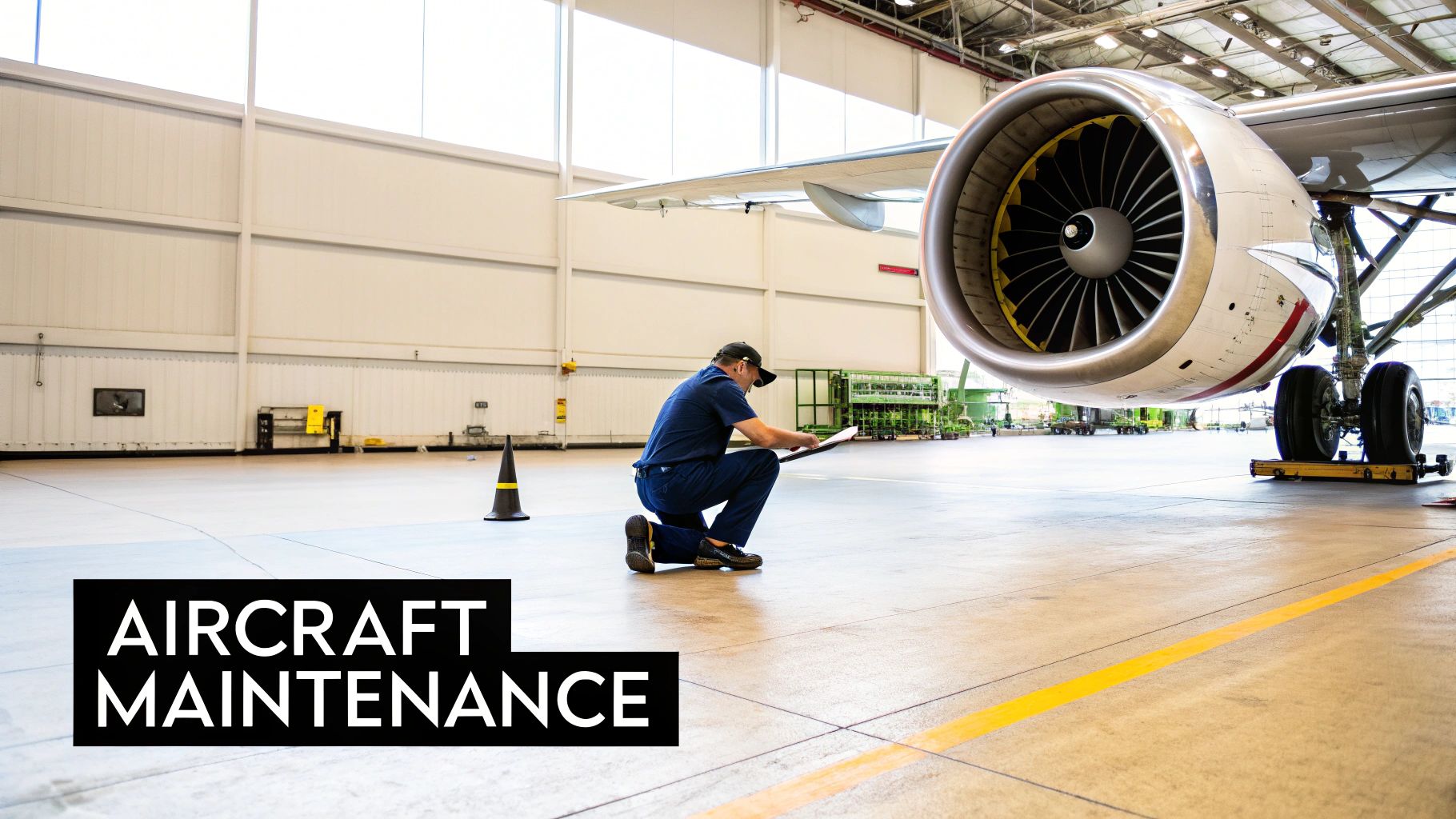
While pilots are in the spotlight, Aircraft Maintenance Technicians (AMTs) are the indispensable heroes behind the scenes, making them a cornerstone of the best aviation careers. These highly skilled professionals are responsible for the inspection, maintenance, and repair of aircraft, ensuring every component meets stringent FAA safety standards. From major airline hangars to local flight schools, AMTs perform critical tasks guaranteeing the airworthiness of every aircraft before it leaves the ground.
Path to the Hangar
The most direct route to becoming an AMT is through an FAA-approved Part 147 aviation maintenance school. These programs provide the structured training necessary to earn Airframe (A) and Powerplant (P) certifications. Graduates are equipped with the foundational knowledge to diagnose, service, and document maintenance on a wide variety of aircraft, from single-engine trainers to massive commercial jets.
Pro Tip: Gaining experience on both fixed-wing and rotary-wing aircraft can significantly boost your career prospects. A technician knowledgeable in both airplane and helicopter maintenance, like those on the Robinson R22 or Enstrom, is exceptionally valuable.
Actionable Steps for Aspiring AMTs
- Enroll in a Part 147 School: This is the most efficient path to obtaining the required A&P certifications.
- Secure an Apprenticeship: Start as a maintenance trainee or apprentice at a local repair shop or FBO to gain crucial hands-on experience.
- Specialize Your Skills: Consider specializing in avionics, composites, or specific aircraft models (like Boeing or Airbus) to increase your earning potential.
- Network with Industry Vets: Connect with experienced AMTs and MRO (Maintenance, Repair, and Overhaul) managers to find job opportunities and mentorship.
3. Air Traffic Controller
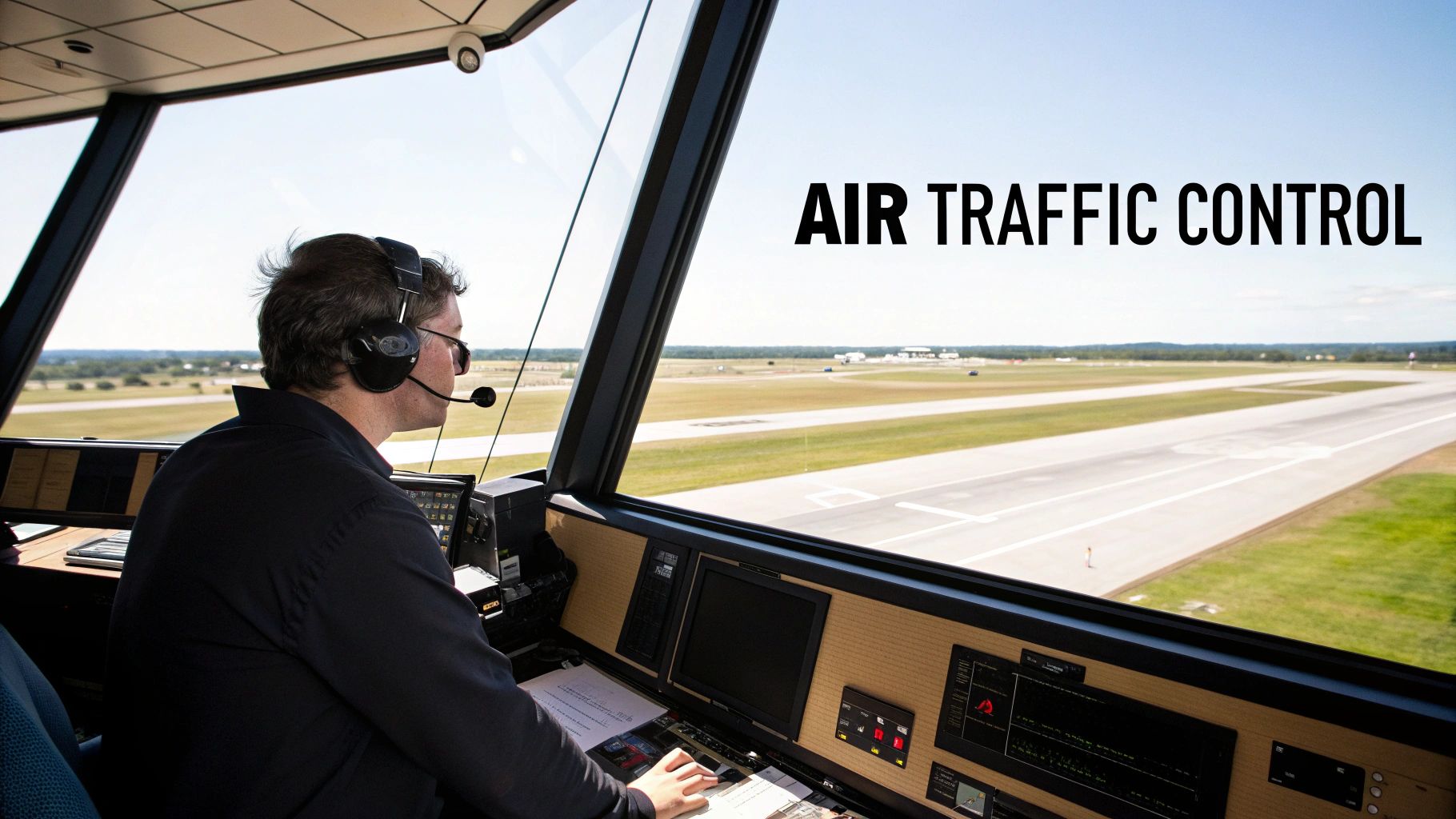
An Air Traffic Controller (ATC) is a crucial component of the aviation ecosystem, serving as the central nervous system for all flight operations. These professionals manage the safe and orderly flow of aircraft in the air and on the ground, directing pilots during takeoff, landing, and en-route flight. Working from control towers at major airports and en-route centers, they prevent collisions and ensure maximum efficiency, making this one of the most demanding yet rewarding and best aviation careers available.
Path to the Control Tower
The journey to becoming an ATC is highly competitive and structured, primarily managed through the Federal Aviation Administration (FAA). Candidates must meet strict age and medical requirements and pass a series of aptitude tests. Successful applicants then undergo intensive training at the FAA Academy in Oklahoma City, a rigorous program that tests their spatial reasoning, memory, and decision-making under pressure.
Pro Tip: Gaining experience in the military as an Air Traffic Controller is a powerful alternative pathway. This background often provides a significant advantage during the FAA's competitive hiring process and equips candidates with foundational skills that translate directly to the civilian role.
Actionable Steps for Aspiring Controllers
- Monitor FAA Hiring Windows: The FAA typically opens hiring windows for a short period once a year. Be prepared to apply immediately when these opportunities are announced.
- Develop Core Competencies: Focus on building skills in clear communication, rapid mental math, and problem-solving. These are essential for success at the FAA Academy.
- Maintain Peak Health: Uphold stringent physical and psychological health standards, as a Class II Medical Certificate is mandatory throughout your career.
- Prepare for Intense Training: Research the demands of the FAA Academy and be ready for a challenging, high-stakes educational environment where performance is key.
This career offers excellent federal benefits, a strong salary progression, and a mandatory retirement age of 56, providing long-term stability and the satisfaction of performing a critical safety role.
4. Aviation Broker (Aircraft Sales)
For those who combine a passion for aviation with sharp business acumen, a career as an aviation broker is an exciting path. These professionals facilitate the complex process of buying and selling aircraft, from single-engine piston planes and helicopters to corporate jets. They act as trusted advisors, guiding clients through market analysis, pre-buy inspections, contract negotiations, and final closings. This role is crucial for anyone—from a flight student buying their first trainer to a corporation upgrading its fleet.
How to Buy an Airplane the Safe Way
A key part of a broker's job is ensuring a safe transaction. A reputable broker will always insist on a thorough pre-purchase inspection by a qualified, independent A&P mechanic. This inspection is non-negotiable; it protects the buyer from hidden mechanical issues and ensures the aircraft's logbooks are complete and accurate. A broker helps navigate this critical step, verifying the aircraft's history, airworthiness, and legal title to prevent costly surprises.
Pro Tip: Specializing in a specific aircraft category, such as turbine helicopters, piston training aircraft, or light business jets, allows a broker to develop deep market knowledge and build a strong reputation within a niche community.
Actionable Steps for Aspiring Brokers
- Build a Strong Network: Success in sales is about relationships. Attend aviation trade shows like EAA AirVenture and NBAA-BACE to connect with owners, pilots, and maintenance shops.
- Gain Technical Knowledge: While not mandatory, having a pilot's license or A&P certificate provides immense credibility and a deeper understanding of the product.
- Understand the Legalities: Familiarize yourself with FAA regulations regarding aircraft registration, title searches, and the intricacies of purchase agreements.
- Master the Market: Continuously study aircraft values, market trends, and what drives demand for different models of airplanes and helicopters.
This career offers significant earning potential and the satisfaction of connecting people with the aircraft of their dreams.
5. Aerospace Engineer
As one of the most intellectually demanding and innovative of the best aviation careers, the role of an Aerospace Engineer is to design the future of flight. These professionals are the architects behind aircraft, spacecraft, and missiles, working for industry giants like Boeing, Airbus, and SpaceX. They apply principles of science and technology to create, test, and improve everything from the structural integrity of a new airliner to the advanced propulsion systems of next-generation spacecraft.
Path to the Design Floor
This career is rooted in a strong academic foundation. The journey begins with a bachelor's degree in aerospace engineering from an ABET-accredited program. This rigorous education covers aerodynamics, propulsion, materials science, and systems integration. Further advancement, especially in research or specialized roles, often requires a Master's or even a Ph.D.
Pro Tip: Landing a competitive internship at a major aerospace firm like Lockheed Martin or NASA during your undergraduate studies is a critical stepping stone. This real-world experience provides invaluable skills and often leads directly to full-time job offers upon graduation.
Actionable Steps for Aspiring Engineers
- Secure an Accredited Degree: Prioritize earning your B.S. in Aerospace Engineering from a university with a strong, ABET-accredited program.
- Master Key Software: Become proficient in industry-standard CAD and simulation software like CATIA, SolidWorks, and ANSYS, as these are essential daily tools.
- Specialize Your Knowledge: Develop expertise in a high-demand niche such as avionics, composite materials, or computational fluid dynamics to increase your marketability.
- Network at Industry Events: Attend major aerospace conferences and career fairs to connect with recruiters and learn about emerging technologies and career opportunities.
This path demands technical mastery but rewards engineers with the chance to contribute to groundbreaking projects that define the boundaries of human exploration and transportation.
6. Flight Attendant
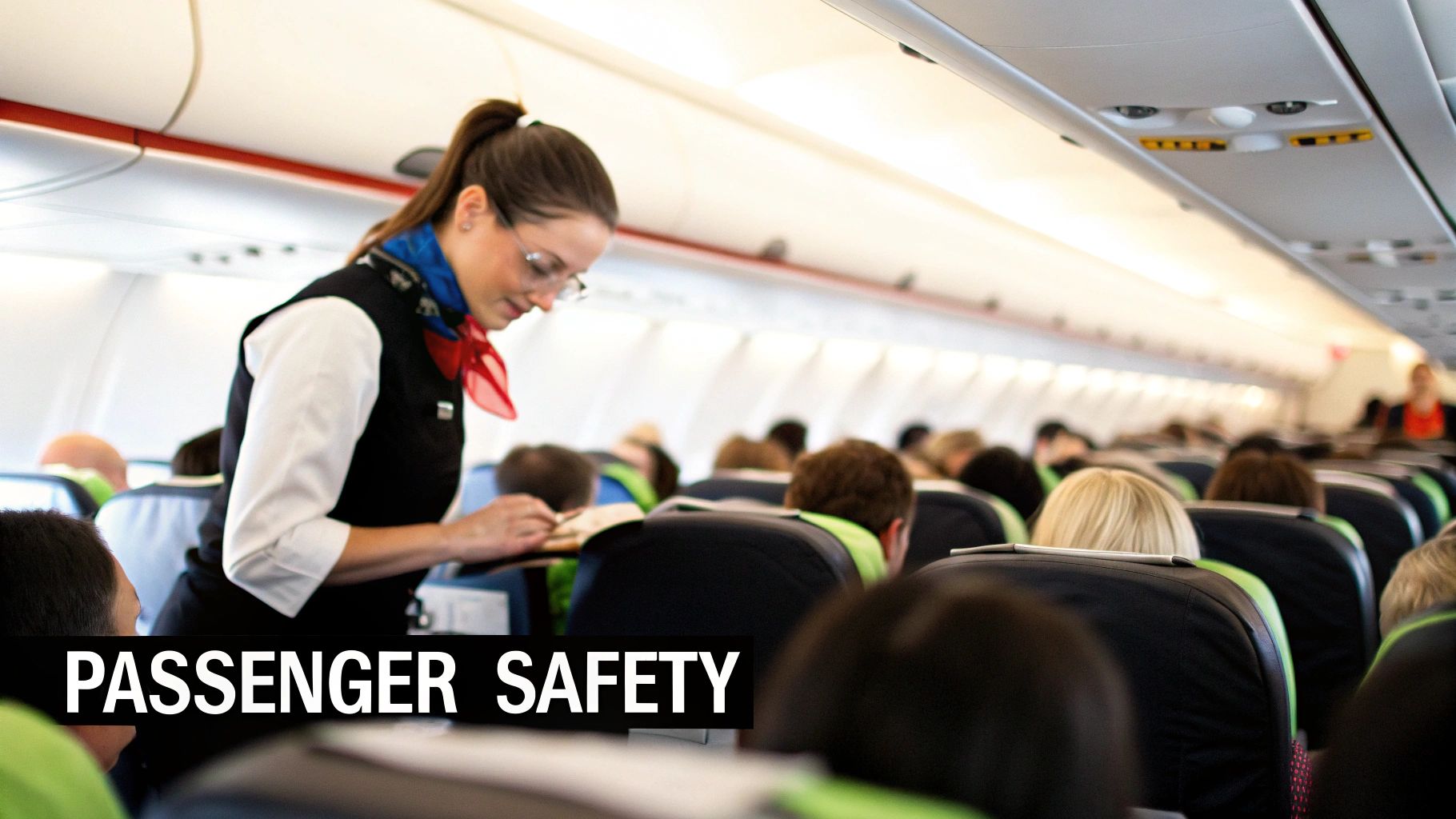
The role of a Flight Attendant is central to ensuring passenger safety and comfort, making it one of the most visible and vital aviation careers. These professionals are the face of an airline, responsible for everything from pre-flight safety demonstrations to in-flight service and emergency response. They are trained to handle a wide range of situations with grace and authority, serving as first responders in the sky for major carriers like Southwest, Delta, and international airlines.
Path to the Cabin
Becoming a flight attendant involves a competitive application process followed by intensive airline-specific training. While a college degree is often preferred, it's not always required; the focus is heavily on customer service skills, poise under pressure, and a commitment to safety. Airlines provide rigorous training programs, typically lasting several weeks, that cover FAA regulations, aircraft-specific procedures, first aid, and security protocols.
Pro Tip: Research the culture of each airline before applying. Some, like Southwest, are known for their vibrant and friendly atmosphere, while others are celebrated for premium service. Aligning your personality with the airline's brand can significantly improve your application's success.
Actionable Steps for Aspiring Attendants
- Highlight Customer Service: Emphasize any experience in hospitality, retail, or healthcare on your resume to demonstrate your ability to manage and assist the public.
- Get Certified: Obtain basic first aid and CPR certifications before you apply. This proactive step shows a serious commitment to passenger safety.
- Network with Insiders: Connect with current flight attendants on professional networks to gain insights into the lifestyle, interview process, and daily responsibilities.
- Prepare for Flexibility: Be ready for an on-call schedule and frequent travel, especially early in your career. Seniority is key to gaining more control over your routes and schedule.
This dynamic career offers incredible travel perks and the opportunity to interact with people from around the world. It’s an excellent choice for those with strong interpersonal skills and a passion for travel and safety.
7. Aviation Medical Examiner (AME)
An Aviation Medical Examiner (AME) is a vital link in the safety chain, serving as a physician designated by the Federal Aviation Administration (FAA) to evaluate the health and fitness of pilots and air traffic controllers. These professionals conduct the required medical examinations and issue the official medical certificates that are mandatory for flight training and operations. They are the gatekeepers ensuring that those in safety-critical roles meet the stringent health standards necessary to perform their duties.
Path to the Examination Room
This career uniquely combines medicine with aviation. To become an AME, one must first be a fully licensed physician (M.D. or D.O.). The next step involves completing a specialized training course provided by the FAA’s Civil Aerospace Medical Institute (CAMI). This training covers aviation physiology, FAA regulations, and the specific protocols for conducting aviation medical exams.
Pro Tip: Physicians with a personal interest or background in aviation, such as being a private pilot themselves, often find this career particularly rewarding. This firsthand experience provides a deeper understanding of the medical challenges and concerns pilots face, fostering greater trust and rapport with their clients.
Actionable Steps for Aspiring AMEs
- Complete FAA Training: Enroll in and successfully complete the required FAA AME Basic Seminar to gain your designation.
- Connect with the Flying Community: Build relationships with local flight schools, FBOs, and pilot organizations like AOPA or EAA to establish a client base.
- Offer Flexible Scheduling: Pilots and flight students often have unconventional schedules. Offering appointments outside of standard business hours can be a significant advantage.
- Stay Medically Current: Continuously update your knowledge on FAA medical standards and waiver protocols, as these regulations evolve over time.
This path offers physicians a unique way to apply their medical expertise within the dynamic world of aviation, directly contributing to the safety of the national airspace system.
8. Avionics Technician
The role of an Avionics Technician is crucial for modern aviation, focusing on the intricate electronic systems that allow aircraft to navigate, communicate, and operate safely. These specialists install, inspect, test, and repair everything from sophisticated flight control systems in airliners to the advanced glass cockpits found in training aircraft. Their work ensures that pilots have reliable information and control, making this one of the most technically demanding and essential aviation careers.
Path to the Hangar
Becoming an Avionics Technician typically begins with a foundational education in electronics or aviation maintenance. Many start by earning an Airframe and Powerplant (A&P) certificate from an FAA-approved school, then specialize in avionics through further training or on-the-job experience. Manufacturer-specific certifications from companies like Garmin and Collins Aerospace are highly valued and often necessary for career advancement.
Pro Tip: Earning a General Radiotelephone Operator License (GROL) from the FCC is a significant advantage. This license is often required to perform certain tests and repairs on communication and navigation equipment, making you a more valuable asset to employers.
Actionable Steps for Aspiring Technicians
- Build a Strong Electronics Foundation: Pursue an associate degree in electronics technology or aviation maintenance technology to grasp core principles.
- Specialize in High-Demand Systems: Gain expertise in modern glass cockpit systems, such as the Garmin G1000, and Automatic Dependent Surveillance-Broadcast (ADS-B) technology.
- Seek Manufacturer Certifications: Complete training courses directly from avionics manufacturers to become certified on their specific equipment, which significantly boosts employability.
- Network with MROs: Connect with Maintenance, Repair, and Overhaul (MRO) facilities and avionics installation shops, which are major employers in this field.
This career is ideal for those with a passion for technology and problem-solving, offering strong job security and the satisfaction of working on cutting-edge aircraft systems.
9. Helicopter Pilot
The role of a Helicopter Pilot offers a dynamic and mission-driven alternative to fixed-wing flying, placing pilots in the center of critical operations. For students drawn to the unique capabilities of rotary-wing aircraft, this career path involves diverse missions like Emergency Medical Services (EMS), law enforcement, and scenic tourism. The intensive helicopter flight training required for this role develops exceptional precision and adaptability, making it one of the most hands-on and best aviation careers.
Path to the Cockpit
Becoming a helicopter pilot involves a distinct flight training path, starting with a Private Pilot Certificate – Rotorcraft and progressing to a Commercial Pilot Certificate. Helicopter flight training focuses on specialized skills like hovering and autorotations, which are fundamentally different from fixed-wing flying. Students must dedicate themselves to mastering these unique maneuvers to succeed.
Pro Tip: Gaining experience as a Certified Flight Instructor (CFI) for helicopters is a proven method for building the flight hours necessary for advanced roles. Teaching not only logs hours but also deeply refines your own mastery of flight maneuvers and emergency procedures.
Actionable Steps for Aspiring Pilots
- Find a Quality Helicopter Flight School: Your initial training is critical. Look for a school with experienced instructors and a well-maintained fleet.
- Build Industry Connections: Network with helicopter operators in sectors that interest you, such as EMS, tourism, or utility work, to understand their specific hiring needs.
- Develop Specialized Skills: Focus on acquiring valuable skills like mountain flying, long-line external load operations, or flying in instrument meteorological conditions (IMC).
- Network in the Helicopter Community: Join organizations like the Helicopter Association International (HAI) to connect with professionals and discover career opportunities.
This career demands a unique skill set but provides an incredibly rewarding path with direct, tangible impact. To get started on this exciting journey, check out this guide on commercial helicopter pilot training.
10. Airport Manager/Operations Manager
Beyond the cockpit, the role of an Airport Manager or Operations Manager is one of the most critical ground-based positions in aviation. These professionals are the command center of the airport, orchestrating everything from safety and security to airside operations and passenger services. They ensure that massive hubs and smaller municipal airfields alike run smoothly, safely, and in compliance with stringent FAA and TSA regulations. Their work is a complex blend of logistics, finance, and public relations.
Path to the Director's Office
Advancing in airport management requires a mix of formal education and hands-on operational experience. A bachelor's degree in aviation management or a related field is a common starting point, often followed by entry-level roles like an operations coordinator. Progressing to a management position involves gaining broad experience across various airport departments, from maintenance and security to finance and tenant relations.
Pro Tip: Pursuing the Accredited Airport Executive (AAE) certification from the American Association of Airport Executives (AAAE) is a significant career accelerator. This prestigious credential demonstrates a comprehensive mastery of airport management and is highly valued by airport authorities.
Actionable Steps for Aspiring Managers
- Start in Operations: Seek entry-level positions like an Airport Operations Agent or Coordinator to gain foundational, real-world experience on the airfield.
- Build Diverse Skills: Actively pursue opportunities in different departments such as finance, marketing, and security to develop a well-rounded understanding of the entire airport ecosystem.
- Network with Authorities: Attend industry conferences and build relationships with current airport directors and officials within aviation authorities to learn from their experience.
- Advance Your Education: Consider a master’s degree in aviation or business administration to develop the strategic planning and financial acumen required for senior leadership.
11. Airline Dispatcher
Often called the "pilot on the ground," an Airline Dispatcher shares 50/50 legal responsibility with the captain for the safety of a flight. These crucial professionals are the nerve center of airline operations, working from control centers to analyze weather, plan flight routes, calculate fuel loads, and communicate real-time updates to flight crews. They ensure every aircraft operates safely and efficiently from gate to gate. This role is one of the highest-paying and most respected non-flying aviation careers.
Path to the Operations Control Center
The journey to becoming a dispatcher is focused and highly regulated. It requires completing an intensive FAA-approved training program, typically lasting 5-6 weeks, followed by passing a comprehensive written, oral, and practical exam. Unlike pilots, dispatchers do not need flight time, but a deep understanding of aerodynamics, meteorology, and regulations is essential for success.
Pro Tip: While not required, a Private Pilot License provides a significant advantage. The practical flight experience gives dispatch candidates a deeper understanding of the pilot's perspective, making them more effective decision-makers and highly sought-after by airlines.
Actionable Steps for Aspiring Dispatchers
- Complete an FAA-Approved Course: Enroll in and graduate from a certified dispatcher program to become eligible for the FAA exams.
- Master Weather Interpretation: Develop expert-level skills in reading and interpreting complex weather charts, forecasts, and data.
- Strengthen Analytical Skills: Sharpen your ability to quickly analyze vast amounts of data, manage logistics, and make sound decisions under pressure.
- Network in Operations: Connect with dispatchers and operations managers at airline career fairs or through professional organizations like the Air Line Dispatchers Federation.
This career is ideal for those who love the complexity of aviation but prefer a ground-based role, offering excellent compensation and the satisfaction of being integral to every flight's safety.
12. Unmanned Aerial Vehicle (UAV/Drone) Pilot
The role of a UAV Pilot has exploded into one of the most dynamic and fastest-growing sectors in aviation. These professionals operate drones for a vast array of commercial and public safety applications, including agricultural monitoring, infrastructure inspection, and filmmaking. The field blends precise remote piloting skills with data analysis, offering a modern entry point into the world of aviation without stepping into a physical cockpit.
Path to Commercial Operations
Unlike traditional pilot roles, becoming a commercial drone pilot is highly accessible. The primary requirement is obtaining the FAA's Part 107 Remote Pilot Certificate, which involves passing a written knowledge test. This certification allows for legal commercial operations and opens the door to specialized work. Building a strong portfolio showcasing specific skills, like aerial mapping or thermal imaging, is crucial for career advancement and securing high-value contracts in this competitive market.
Pro Tip: Specialize in a high-demand niche like agricultural surveying or critical infrastructure inspection. This focused expertise allows you to command higher rates and establishes you as an expert, setting you apart from generalist aerial photographers.
Actionable Steps for Aspiring UAV Pilots
- Secure FAA Certification: Study for and pass the Part 107 exam to legally operate drones for commercial purposes.
- Invest in Quality Equipment: Purchase a reliable drone and the necessary software for data processing and video editing to deliver professional results.
- Build an Industry-Specific Portfolio: Create a collection of work that demonstrates your skills in a specific niche, such as creating 3D models from survey data.
- Stay Abreast of Regulations: Continuously monitor FAA rule changes and understand how to apply for operational waivers for advanced missions like flying beyond visual line of sight.
This innovative career path is one of many exciting options in the modern aviation landscape. For those considering various entry points, exploring comprehensive aviation training programs can provide a clearer picture of all available opportunities.
Top 12 Aviation Careers Comparison
| Role | Implementation Complexity 🔄 | Resource Requirements ⚡ | Expected Outcomes 📊 | Ideal Use Cases 💡 | Key Advantages ⭐ |
|---|---|---|---|---|---|
| Commercial Airline Pilot | High 🔄 Extensive multi‑phase training, ATPL, long checkrides | Very high ⚡ Costly training ($250k–$500k), 1,500+ flight hours | Strong pay 📊 Avg ~$130k; steady demand (5–7%); high responsibility | Major airlines, scheduled passenger routes, international operations | Career progression, high pay, prestige ⭐ |
| Aircraft Maintenance Technician (AMT) | Moderate 🔄 Technical training, A&P exams, hands‑on licensing | Moderate ⚡ Part‑147 school costs ($5k–$15k), apprenticeship hours | Solid pay 📊 Avg ~$62k; strong job growth (8–10%) | Airline & MRO shops, regional and military maintenance | Job security, hands‑on satisfaction, transferable skills ⭐ |
| Air Traffic Controller | Very high 🔄 Intensive FAA academy, on‑the‑job certification, high cognitive load | High ⚡ Strict medical/security clearance, residency/citizenship requirements | Very high pay potential 📊 Avg ~$122k; federal benefits; limited growth (4–5%) | Major airport towers, en‑route centers, busy airspace management | Excellent benefits, federal pension, high responsibility ⭐ |
| Aviation Broker (Aircraft Sales) | Moderate 🔄 Sales/negotiation skills, networking, market knowledge | Low-Moderate ⚡ Low entry cost, strong network is key resource | High pay potential 📊 Commission-based, avg ~$100k+ | Aircraft dealerships, individual brokering, fleet acquisition | Entrepreneurial opportunity, high earning potential, deals-driven ⭐ |
| Aerospace Engineer | High 🔄 Rigorous technical work, design & certification processes | High ⚡ Bachelor's (often advanced degrees), CAD/simulation tools | Competitive pay 📊 Avg ~$118k; project‑based growth (3–5%) | Aircraft/spacecraft design, OEMs, R&D, certification programs | Intellectual challenge, innovation, high salary ⭐ |
| Flight Attendant | Low‑Moderate 🔄 Airline training (weeks), customer‑service & safety protocols | Low ⚡ Short training (4–8 weeks), passport; lower entry cost | Moderate pay 📊 Avg ~$50k; strong job growth (8–10%) | Passenger service, in‑flight safety, international routes | Travel perks, flexible scheduling, customer interaction ⭐ |
| Aviation Medical Examiner (AME) | Moderate 🔄 Medical training + FAA AME authorization, regulatory knowledge | Very high ⚡ Medical degree (M.D./D.O.), malpractice insurance | High pay 📊 Avg ~$160k; part‑time flexibility; niche demand | Medical certification for aircrew, aviation clinics, regional services | High earnings, medical authority, flexible practice ⭐ |
| Avionics Technician | Moderate 🔄 Specialized electronics training, precise diagnostics | Moderate ⚡ A&P + avionics certifications, manufacturer courses | Good pay 📊 Avg ~$72k; growing demand (7–9%) | Avionics shops, business jets, upgrade/modernization programs | Specialized skill premium, strong demand, higher pay vs general mech ⭐ |
| Helicopter Pilot | High 🔄 Specialized rotary training, type ratings, challenging maneuvers | High ⚡ Expensive training ($50k–$100k+), 1,000+ hrs typical | Good pay 📊 Avg ~$95k; niche demand (4–6%) | EMS, law enforcement, offshore transport, search & rescue | Mission‑critical roles, specialized skills, rewarding work ⭐ |
| Airport Manager / Operations Manager | High 🔄 Broad operational leadership, regulatory/commercial coordination | High ⚡ Degree + 5+ yrs ops experience, budgeting & crisis skills | Very high pay 📊 Avg ~$125k; strategic influence; variable growth (2–3%) | Airport operations, infrastructure management, executive roles | Executive salary, leadership scope, diverse responsibilities ⭐ |
| Airline Dispatcher | Moderate 🔄 FAA dispatcher training, real‑time operational decision making | Low‑Moderate ⚡ 80–160 hour training, licensing, operational tools | Good pay 📊 Avg ~$92k; steady role in operations (3–4% growth) | Flight planning, operations control centers, airline OCCs | Central role in safety/efficiency, predictable work environment ⭐ |
| UAV / Drone Pilot | Low‑Moderate 🔄 Part 107 exam, mission planning, evolving regs | Low ⚡ Low training cost, equipment investment varies; quick certification | Variable pay 📊 Fast entry to work; high industry growth across sectors | Surveying, inspection, film, agriculture, public safety | Low barrier to entry, entrepreneurship opportunities, rapid demand ⭐ |
Final Thoughts
Embarking on a journey into the sky is more than just choosing a job; it's about embracing a lifestyle defined by precision, passion, and purpose. Throughout this guide, we've explored the diverse landscape of the best aviation careers, with a special emphasis on the paths that begin with dedicated flight training for students. Each role represents a critical piece of the complex, interconnected ecosystem that makes modern flight possible.
The key takeaway is that the "best" career is entirely subjective; it depends on your unique skills, aspirations, and what truly ignites your passion. Whether you're a student drawn to the structured progression of a Commercial Airline Pilot, the innovative challenges of Aerospace Engineering, or the dynamic freedom of a Helicopter Pilot, the opportunities are as vast as the sky itself.
Charting Your Personal Flight Path
As you reflect on these potential careers, the next step is to move from aspiration to action. Your journey doesn't begin with a single, massive leap but with a series of deliberate, well-planned steps. Consider this your pre-flight checklist for launching one of the most rewarding careers available today:
- Self-Assessment: Honestly evaluate your strengths. Do you excel in high-pressure situations, or are you more analytical and detail-oriented? Aligning your natural talents with a career path is the first step toward long-term success.
- In-Depth Research: Go beyond salary and job outlook. Talk to people currently working in your fields of interest. Understand the day-to-day realities of the job. A career as an airline pilot, for example, is the result of years of disciplined training and study.
- Get Hands-On Experience: There is no substitute for direct experience. For aspiring pilots, this means taking a discovery flight. This initial flight is not just about the thrill; it's a crucial diagnostic tool to see if the cockpit is truly where you belong. It provides invaluable clarity that no amount of reading can replicate.
A Special Note for Future Pilots and Owners
For those specifically aiming for a pilot career, whether in fixed-wing aircraft or helicopters, the quality of your initial training sets the foundation for everything that follows. Similarly, if your path leads to aircraft ownership, navigating the complexities of buying an airplane or helicopter requires expert guidance to ensure a safe and sound investment. The right partner can make all the difference, transforming a daunting process into a confident next step. The aviation industry is built on a foundation of trust, expertise, and mentorship. Finding the right school and the right advisors is paramount.
Ready to take the controls of your future? At DuBois Aviation, located at Chino Airport (KCNO), we specialize in turning aspirations into achievements, offering premier fixed-wing and helicopter flight training for every goal, from private ratings to a professional airline career. DuBois Aviation is your dedicated partner in navigating the path to the best aviation careers.
2026 aviation-career update
Career demand extends beyond scheduled airlines
BLS projects 4% overall growth for airline and commercial pilots from 2024 to 2034, with commercial-pilot employment projected to grow 5%. The agency expects demand from passenger travel, cargo activity, private charter flying, and replacement of workers who leave the occupation.
Training choices should match the work you want to pursue. Airline, charter, corporate, instruction, rotorcraft, public-service, and technical aviation careers can require different certificates, experience, schedules, and lifestyle tradeoffs.
Source: U.S. Bureau of Labor Statistics pilot outlook. Reviewed August 17, 2026.


