
Becoming an airline or helicopter pilot isn't just about learning to fly; it's about following a structured path from the ground up, one certification at a time. Whether you dream of flying airliners or helicopters, every professional career starts with a series of well-defined aviation training programs that build your skills, knowledge, and confidence.
Your Flight Plan to a Career in the Sky
Starting your journey into the cockpit is an incredible adventure, but for an aspiring student pilot, it can also feel overwhelming. This guide is designed to be your co-pilot, clearing up the confusion and mapping out the route from your very first lesson to a professional career in the airlines or helicopter industry.
Think of it as your high-level flight plan. We'll show you the entire career trajectory from start to finish, breaking down each critical milestone so you know exactly what to expect as a student pilot.
The Stepping Stones of a Pilot Career
You don’t just decide to be an airline pilot one day and show up at an airline the next. It’s a process of earning licenses and ratings, with each one acting as a building block for the next. The path for an airplane pilot is quite different from that of a professional helicopter pilot, but both start with the same idea: mastering the fundamentals first.
For any student pilot with their sights set on an airline career, the progression is a classic one:
- Private Pilot License (PPL): This is your foundational "driver's license" for the sky. It lets you fly for fun, but not for hire.
- Instrument Rating (IR): A critical add-on that teaches you to fly purely by reference to your instruments, allowing you to fly through clouds and in low visibility—a must for any airline job.
- Commercial Pilot License (CPL): This is the ticket that finally allows you to get paid for your flying skills.
- Airline Transport Pilot (ATP) Certificate: The highest level of pilot certification, and a mandatory requirement to fly as an airline captain.
The Vertical Ascent for Helicopter Pilots
The world of helicopter flight training follows a similar step-by-step logic but focuses on a completely different set of skills required for rotary-wing aircraft. This specialized training path opens up a hugely diverse range of career options, from flying for emergency medical services and law enforcement to tourism and aerial photography. You'll still earn private and commercial licenses, but your time will be spent mastering maneuvers like hovering, autorotations, and landing in tight, confined areas.
The real goal here is to give you a solid foundation and a clear sense of direction. We want to turn what seems like a complicated process into a series of manageable, exciting steps. This roadmap ensures you understand not just what you need to do, but why each stage is so important for your career.
Navigating the Aircraft Marketplace
As you get further along in your flying career, you might even start thinking about owning your own aircraft. This adds a whole new dimension to your aviation life, bringing in complex decisions whether you are looking to buy or sell airplanes and helicopters. Getting familiar with this market is a skill in itself. For any serious pilot, reading articles about people looking to buy or sell airplanes and helicopters can provide invaluable insights, from pre-buy inspections to writing an effective sales listing.
Understanding Your Core Fixed-Wing Pilot Licenses
Becoming a professional pilot isn't a single leap; it's a series of deliberate steps, much like building a house. Each license you earn is a crucial foundation for the next. For any student dreaming of an airline career, this progression is a well-worn path, with each certificate granting new skills, greater privileges, and bringing you one step closer to the flight deck.
The demand for skilled pilots is soaring. The global pilot training market, currently valued around $9.4–$9.5 billion USD, is expected to hit $10.6–$10.74 billion soon and could reach an incredible $24.86 billion by 2032. This boom is driven by a simple reality: a worldwide pilot shortage combined with over 4.5 billion people traveling by air annually. You can dig into the full pilot training market research to see just how big the opportunity is.
Before we dive into the specifics of each license, it's helpful for aspiring pilots to see the big picture. The journey to becoming an airline pilot is a structured progression, with each license building on the last.
Fixed-Wing Pilot License Progression Overview
| License / Rating | Primary Purpose | Approx. Minimum Hours (FAA) | Key Skills Acquired |
|---|---|---|---|
| Private Pilot License (PPL) | Flying for personal enjoyment and carrying non-paying passengers. | 40 Hours (Part 61) | Basic aircraft control, navigation, takeoffs, landings, emergency procedures. |
| Instrument Rating (IR) | Flying in clouds and low-visibility conditions by referencing instruments only. | 40 Hours (Simulated/Actual Instrument) | Precision navigation, instrument approaches, flying without visual references. |
| Commercial Pilot License (CPL) | Earning money as a pilot (e.g., tours, cargo, instruction). | 250 Hours (Total Time) | Advanced maneuvers, higher precision flying, professional decision-making. |
| Multi-Engine Rating (ME) | Flying aircraft with more than one engine, a requirement for most airlines. | ~10-15 Hours (Rating Specific) | Managing complex systems, handling engine-out emergencies. |
This table outlines the essential building blocks. Now, let's break down what each step really involves for a student pilot.
The Private Pilot License: Your Entry to the Sky
The Private Pilot License (PPL) is your official ticket to the world of aviation. Think of it as your driver's license for the sky—it allows you to fly a single-engine plane and take friends and family up with you. The one catch? You can’t be paid for it.
This initial phase is all about mastering the fundamentals. You’ll learn everything from pre-flight checks and basic flight maneuvers to handling takeoffs, landings, and simulated emergencies. The FAA requires a minimum of 40 flight hours for a PPL, but most students realistically need closer to 60-75 hours to feel truly confident and proficient.
The infographic below shows how the PPL is the first rung on the ladder for aspiring professional pilots.
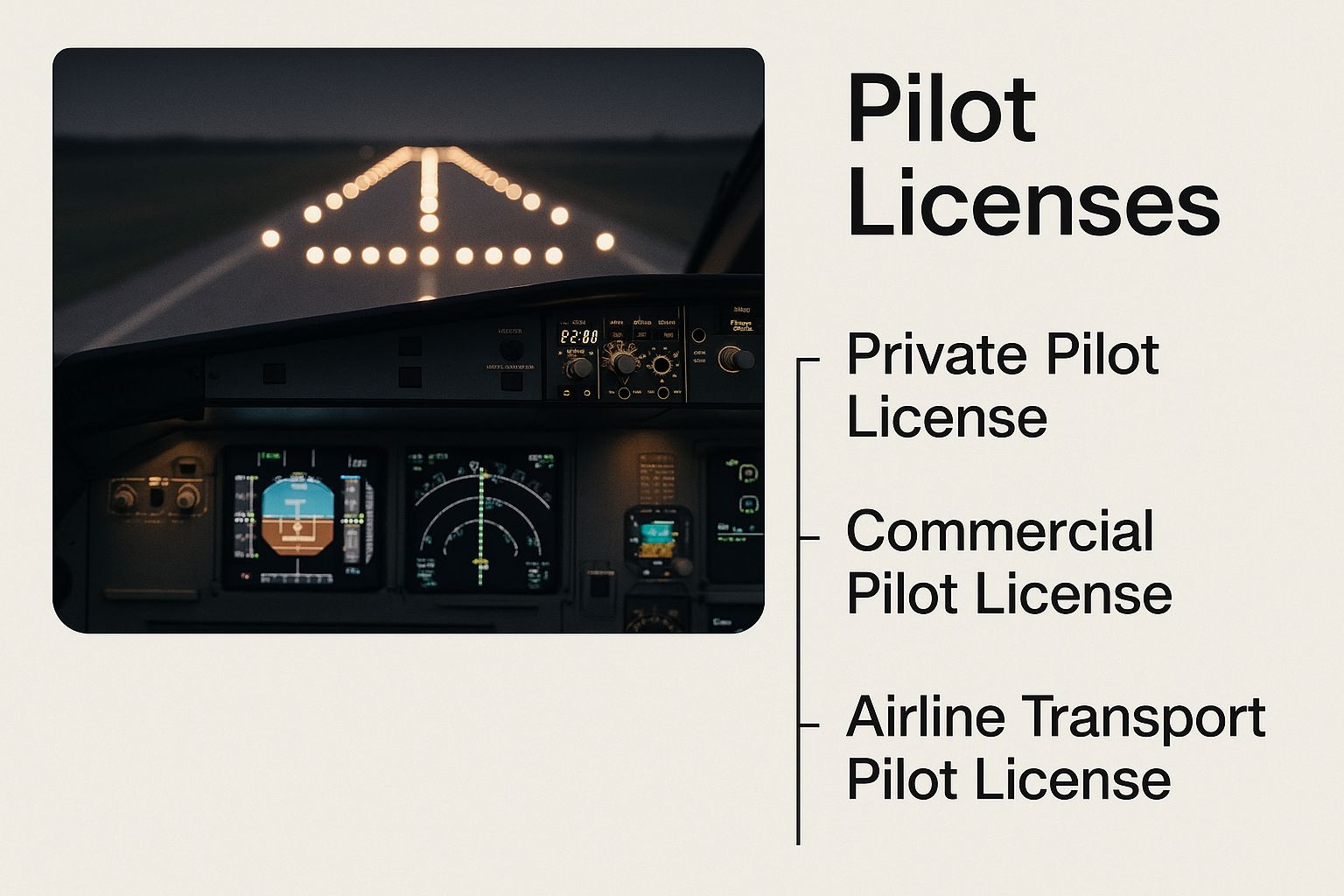
As you can see, each certification is a stepping stone to the next, forming a clear and structured path toward a career in the airlines.
The Instrument Rating: Mastering the Clouds
Once you have your PPL, the next vital step for an airline-bound student is the Instrument Rating (IR). If a PPL gives you the freedom to fly in clear weather, the IR is what lets you safely navigate when you can't see a thing outside your window. It’s the key to flying through clouds and low visibility, relying solely on your cockpit instruments.
This training is intense. It forces you to build unshakable trust in your aircraft's systems and develop extreme precision. You'll master instrument approaches into airports, fly complex holding patterns, and navigate busy airspace without a single glance at the ground. For any pilot with airline ambitions, this rating isn't just recommended—it's absolutely essential.
The Commercial Pilot License: Turning Passion into a Profession
The Commercial Pilot License (CPL) is the one that lets you finally get paid to fly. This is your gateway to a professional career, whether that means flying for charter operations, giving aerial tours, or becoming a flight instructor to build hours.
To earn your CPL, you have to prove you can fly with a much higher degree of skill than what was needed for the PPL. The flight maneuvers are more complex, the standards are tighter, and the FAA is looking for a professional level of competency. You’ll need a minimum of 250 total flight hours to even be eligible, which is why "hour-building" becomes a huge focus for students after they get their PPL and IR.
The Multi-Engine Rating: The Airline Standard
For a career with the airlines, you’ll need a Multi-Engine Rating (ME). This one’s a no-brainer—nearly all commercial airliners have at least two engines, and flying them requires very specific skills. The ME rating teaches you how to manage the complex systems and unique flight characteristics of a multi-engine aircraft.
A huge part of this training is dedicated to handling an engine failure. You will spend hours practicing how to maintain control of the plane if one engine quits—a critical safety skill that is the absolute bedrock of multi-engine flying and a core competency for any airline pilot.
This rating is often one of the final pieces of the puzzle before you start working toward the Airline Transport Pilot (ATP) certificate, the highest license a pilot can achieve. Together, these four certifications form the backbone of your journey from a student pilot to a professional aviator.
Taking Flight Vertically: Helicopter Flight Training Programs
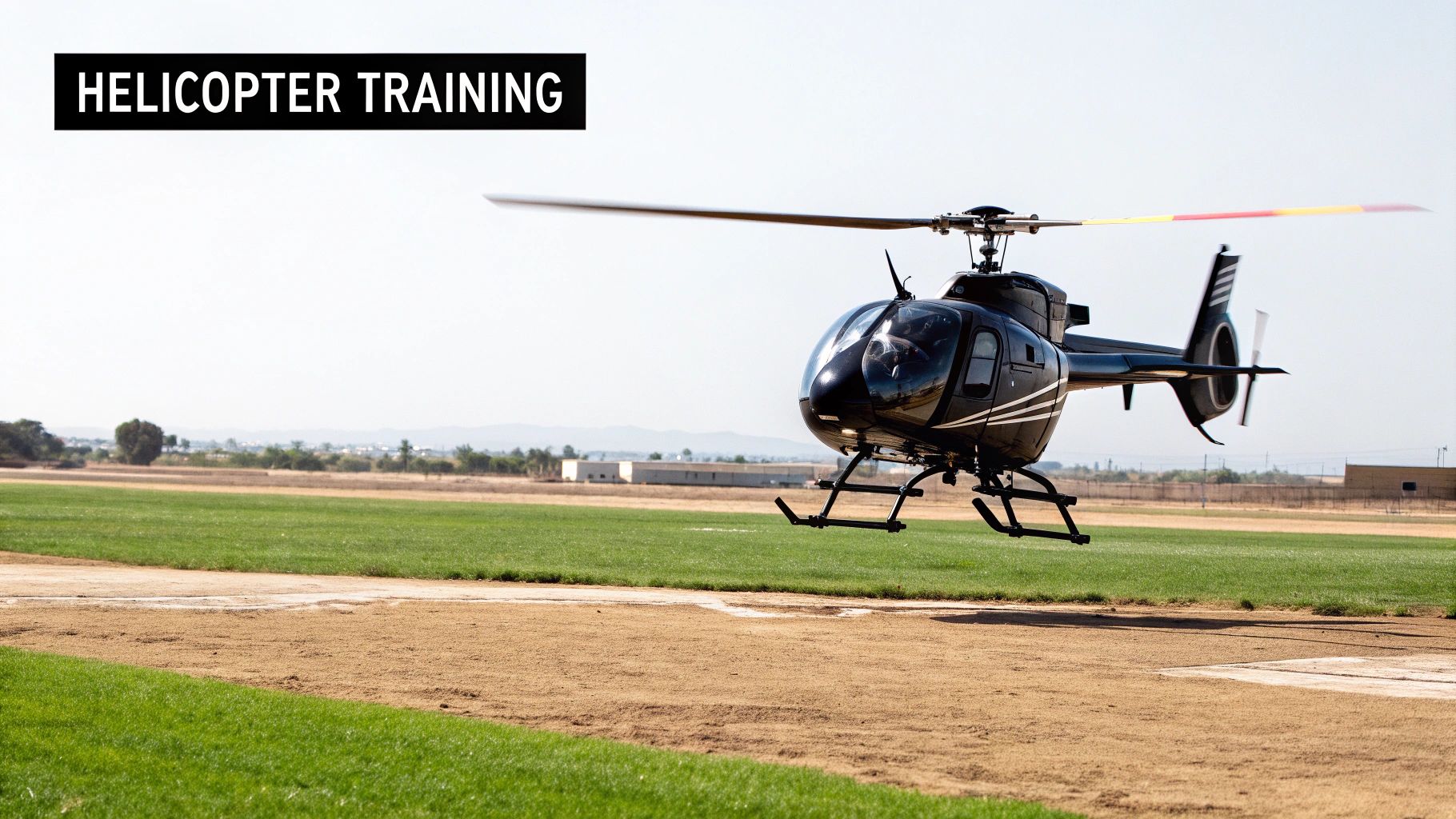
While many student pilots dream of the airline cockpit, another thrilling career path exists in the realm of vertical flight. For those captivated by the incredible agility and unique mission capabilities of rotary-wing aircraft, specialized aviation training programs for helicopters offer a completely different kind of adventure in the skies.
The journey for a student helicopter pilot has a similar structure to fixed-wing training, but the skills are worlds apart. You'll still progress from a Private Pilot-Rotorcraft license to a Commercial Pilot-Rotorcraft certificate, but the focus is entirely on mastering the art of flying an aircraft that can dance in the air.
Mastering Precision in Three Dimensions
Helicopter flight training isn't about cruising at high altitudes. It's about developing an intuitive feel for precision control, often just a few feet off the ground. The curriculum is built around maneuvers that are simply impossible for an airplane.
- Hovering: This is the absolute cornerstone of helicopter flight—learning to hold the aircraft perfectly still in a cushion of air. It’s harder than it looks and requires constant, subtle inputs from the student.
- Autorotation: Think of this as the helicopter's version of gliding. It’s the critical emergency procedure for safely landing after an engine failure, using the airflow through the rotors to control the descent.
- Confined Area Operations: From remote clearings to urban rooftops, helicopter pilots must become experts at landing and taking off from tight spots.
Mastering these skills demands a deep understanding of rotary-wing aerodynamics and a very fine touch on the controls. You can get a better sense of the day-to-day lessons by exploring a dedicated helicopter training curriculum.
The CFI Route: Building Hours in the Helicopter World
Just like their fixed-wing counterparts, newly minted commercial helicopter pilots face the challenge of building flight hours. After getting their license, the most common next step is earning a Certified Flight Instructor (CFI) rating. It's the most reliable way for a new pilot to log the time needed for top-tier jobs.
Becoming a CFI is a rite of passage. It’s not just about logging hours; it’s about achieving true mastery. You have to know every maneuver inside and out to teach it safely and effectively. That process forges the kind of confident, skilled pilot that employers are looking for.
Teaching students allows you to get paid while you build the crucial 500 to 1,000+ hours that entry-level turbine helicopter jobs typically require.
Where Can a Helicopter License Take You?
A commercial helicopter license opens up a world of dynamic careers far beyond just moving people from point A to B. The unique abilities of these aircraft make them essential across many industries.
- Emergency Medical Services (EMS): Flying air ambulances to save lives, often in high-pressure, time-critical situations.
- Law Enforcement: Providing aerial support for police, from search and rescue missions to surveillance.
- Tourism: Giving people the flight of a lifetime with scenic tours over cities, volcanoes, and national parks.
- Offshore Transport: Acting as the lifeline for offshore oil and gas rigs, flying crew and supplies over the open ocean.
- Utility and Construction: Performing aerial crane work, inspecting power lines, and conducting remote surveying.
A Note on Buying or Selling a Helicopter
For some pilots, the ultimate goal is ownership. The process of buying or selling a helicopter, however, is a different beast compared to airplanes. Helicopter parts have hard life limits, meaning they must be replaced after a certain number of hours, no exceptions. This makes meticulous logbook reviews and thorough pre-buy inspections absolutely non-negotiable. Whether you're eyeing a popular trainer like a Robinson R22 or a workhorse like a Bell 206, understanding the market and the machine's maintenance history is key to a smart investment.
Planning Your Training Costs and Timelines
Becoming a pilot is an incredible commitment, but it's one that demands a solid plan for your time and money. For a student pilot, figuring out the investment upfront helps you navigate your aviation training programs with confidence, so you can stay on track from your very first flight to your first job in the cockpit.
The total cost and timeline can swing pretty wildly depending on what you want to achieve. Are you aiming for an airline career? Or is flying helicopters your dream? Each license and rating you add to your certificate tacks on more time and expense, all influenced by things like aircraft rental rates, instructor fees, and the type of flight school you choose.
Part 61 vs. Part 141 Flight Schools
One of the first major decisions you'll face as a student is whether to train at a Part 61 or a Part 141 flight school. This choice has a huge impact on how your training is structured and how much it might cost.
Think of it this way: Part 61 is all about flexibility, while Part 141 is about structure. Neither is "better" than the other—they just serve different needs.
Let's break down exactly what that means in a side-by-side comparison.
Part 61 vs Part 141 Flight School Comparison
| Feature | Part 61 Schools | Part 141 Schools |
|---|---|---|
| Curriculum | Flexible and instructor-led | Highly structured and FAA-approved |
| Pace | Self-paced, ideal for part-time students | Regimented, best for full-time students |
| FAA Oversight | Less direct oversight of curriculum | Regular FAA audits and supervision |
| Hour Minimums | Higher minimum flight hour requirements | Lower minimum flight hour requirements |
For a student on the fast track to an airline career, a Part 141 program often provides a more direct and efficient route. On the other hand, the learn-at-your-own-pace freedom of Part 61 is perfect for students who need to fit flying around work or other commitments.
Realistic Timelines to Become a Professional Pilot
Getting airline-ready is a marathon, not a sprint. It's not just about earning your licenses; it’s about building the flight hours the airlines require. The journey from zero experience to the right seat of a regional jet usually takes a few years.
Most full-time students can expect to complete their core training—from Private Pilot all the way to Commercial Multi-Engine—in about 12 to 18 months.
But that's just phase one. To qualify for an Airline Transport Pilot (ATP) certificate, you need 1,500 flight hours. The most common way pilots build this time is by working as a Certified Flight Instructor (CFI), which typically adds another 1 to 2 years to the journey. A great starting point is understanding how long it takes to get a private pilot license, as that sets the foundation for everything that follows.
Financing Your Dream and Meeting Industry Demand
Let's talk numbers. The total cost to get from zero to airline-ready can range from $80,000 to $100,000, and sometimes more. It's a significant investment, but it's manageable. Aspiring student pilots often use a mix of aviation-specific loans, scholarships, and even airline-sponsored career programs that offer tuition reimbursement to cover the costs.
This investment comes at a time of incredible opportunity. The aviation industry is grappling with a global pilot shortage that's only expected to grow over the next decade. Recent forecasts suggest the world will need hundreds of thousands of new pilots by 2044, with North America alone needing over 123,000. This gap, driven by retiring pilots and post-pandemic travel demand, means skilled aviators are more sought-after than ever. You can learn more about the current pilot demand outlook to see just how strong the job market is.
For those considering ownership as part of their journey, it's wise to read articles about people looking to buy or sell airplanes and helicopters. Understanding the market for aircraft can provide valuable financial perspective, whether you're planning to purchase for time-building or simply want to be informed about the industry's assets.
How to Select the Right Flight School
Picking a flight school is easily one of the biggest decisions a student pilot will make on their journey to the flight deck. This isn't just about finding a place with planes; it's about finding the right environment, the right mentors, and the right path for your specific career goals. The school you choose will shape your entire training experience, your timeline, and your total investment.
Whether you're aiming for the airlines or a career in helicopters, the best aviation training programs fit your learning style, budget, and schedule. The trick is to look past the glossy brochures and dig into what really makes a school great.
Key Factors to Evaluate in a Flight School
Don't get fixated on just the hourly rate. The real value comes from the quality of the instruction, the reliability of the aircraft, and the overall culture of the place.
- Safety Record and Culture: This is non-negotiable. Ask them about their Safety Management System (SMS). A school that is open and proactive about safety is where you want to be.
- Instructor Quality and Availability: Try to meet the instructors. You want people who are not only experienced but also genuinely passionate about teaching. A high instructor turnover rate can be a huge red flag, often signaling bigger problems.
- Fleet Maintenance and Availability: Take a look at the airplanes and helicopters. A well-maintained fleet is a direct reflection of the school's commitment to safety. It also means you'll have fewer lessons canceled because of mechanical issues.
- Job Placement Assistance: If you're career-focused, this is a big one. Ask about their connections to regional airlines or helicopter operators and what their track record looks like for getting graduates hired.
The Importance of a Personal Visit
You can only learn so much online or over the phone. Nothing beats seeing a flight school for yourself. Schedule a tour, walk around, and—most importantly—talk to current students. Get their honest take on what it's really like to train there. This is your chance to see if the environment feels right for you.
For a deeper dive into specific options, our guide on the top 7 best flight schools in California for aspiring airline and helicopter pilots in 2025 can offer some great comparisons.
The single best thing you can do is book a discovery flight. It's more than just a fun introductory lesson; it’s a test drive. You get real, firsthand experience with an instructor and an aircraft, giving you priceless insight into their teaching style and operation.
Remember, as you move through your training, your perspective will broaden. Choosing a school with a diverse fleet and instructors experienced in different areas can open your eyes to the wide world of aviation and better prepare you for whatever comes next in your dynamic career.
A Practical Guide to Buying or Selling an Aircraft
Once you've spent enough time in aviation training programs, that far-off dream of owning your own plane starts to feel a lot more like a real possibility. Whether you're a fresh private pilot looking to build hours without renting or a seasoned aviator upgrading to a new mission, knowing your way around the aircraft market is a skill in itself. Here’s a rundown of what you need to know, whether you're buying or selling.
A smart purchase begins way before you start browsing online listings. The very first question you have to answer is: what's the mission? The plane you need for weekend hundred-dollar hamburgers is a world away from a cross-country workhorse built for family vacations and IFR weather.
Key Steps for Buying an Aircraft
For anyone looking to buy, the process is a tightrope walk between the thrill of the hunt and the nitty-gritty of due diligence. It's easy to get caught up in the excitement and make a costly mistake, but a patient, methodical approach will land you a reliable aircraft that actually fits your life and your budget.
- Figure Out Your Mission: Get brutally honest about how you’ll actually fly. Are you sticking to short, fair-weather hops, or do you need a machine that can handle long hauls in the clouds? Answering this one question will instantly shrink your search from overwhelming to manageable.
- Set a Realistic Budget: The sticker price is just the beginning. The real number you need to consider is the total cost of ownership. This includes insurance, hangar or tie-down fees, the annual inspection, fuel, and—most importantly—a healthy reserve fund for those inevitable maintenance surprises.
- Do Your Homework: Scour reputable online marketplaces, talk to trusted brokers, and just hang around your local airport and ask questions. Whatever you do, don't fall for the first shiny plane you see. Look at several to get a real feel for market values and what you can expect for your money.
- The Pre-Buy Inspection: This is the one step you absolutely cannot skip. Find a sharp, impartial mechanic who knows the specific make and model inside and out, and pay them to conduct a top-to-bottom inspection. It might feel like a big expense upfront, but a thorough pre-buy can easily save you tens of thousands of dollars in hidden problems down the road.
Never, ever skip or cut corners on the pre-buy inspection. It is your single best tool for uncovering a plane's problematic history or expensive airworthiness directives that are lurking in the logbooks. Think of it as an investment in your peace of mind.
Strategies for Selling Your Aircraft
When you're on the other side of the deal, preparation is the name of the game. A clean, well-presented aircraft with immaculate records will always attract serious buyers and fetch a higher price. The goal is to make the whole process feel transparent and professional.
First things first: get your aircraft looking its best. A professional detail, some touch-up paint, and fixing any of those little squawks you've been living with can make a huge difference. In aircraft sales, first impressions are everything.
Next, get your logbooks in perfect order. Complete, chronological, and neatly organized maintenance records are pure gold to a prospective buyer. It’s tangible proof of good ownership and builds immediate confidence in the plane's condition.
Finally, write a great listing. Take high-quality photos from every angle and write a description that’s both detailed and honest. Price it right for the current market, and you'll get the phone ringing. Handling the final legal and financial paperwork correctly is the last step to closing the deal and ensuring a smooth transition to the new owner.
A Few Common Questions About Pilot Training
Stepping into the world of aviation training brings up a lot of questions. If you're a student serious about a career as an airline or helicopter pilot, getting straight answers is the first step in mapping out your journey. Let's tackle some of the most common things people ask.
So, How Long Does It Really Take To Become an Airline Pilot?
From zero experience to being ready for an airline interview, you’re generally looking at a two to four-year commitment for a full-time student. The first part—getting all your licenses from Private Pilot all the way through Commercial Multi-Engine—usually takes about 18 to 24 months.
Once you have your commercial license, the next big hurdle is experience. Airlines require an Airline Transport Pilot (ATP) certificate, and for that, you need 1,500 flight hours. The most common way to build that time is by working as a flight instructor, which typically adds another one to two years to your timeline.
Is There Financial Aid for Flight School?
Absolutely. The cost is a major consideration for students, but there are several ways to manage the investment. Some flight schools partner with universities, which opens the door to federal financial aid. Beyond that, many students look into:
- Aviation-Specific Loans: Lenders who specialize in financing for flight training.
- Scholarships: Don't overlook these! Groups like Women in Aviation International, the EAA, and AOPA offer a ton of support for aspiring pilots.
- Airline Programs: Keep an eye out for regional airlines offering tuition reimbursement or sponsorships. They're trying to build a direct pipeline of new pilots.
Do I Actually Need a College Degree To Fly for an Airline?
This is a classic question for aspiring pilots. The FAA doesn't care if you have a degree; they just care about your skills and knowledge as a pilot. However, most major U.S. airlines either require or strongly prefer a four-year degree. It doesn't always have to be in aviation, but it's a box they want checked.
That said, many regional airlines do not have this requirement. This creates a solid pathway for pilots to get their foot in the door, build invaluable experience, and then make the jump to a major carrier later on.
We often get asked about buying an aircraft for time-building, especially since you see articles about people looking to buy or sell airplanes and helicopters. While it can be cheaper in the long run, owning an aircraft is a huge commitment. You're suddenly responsible for the upfront cost, maintenance, insurance, and hangar fees.
It's a strategy that works for a few, but for most students working on their ratings, renting from a good flight school is still the most practical and headache-free way to go.
Ready to take the first step? DuBois Aviation offers a full range of flight training for both airplanes and helicopters, designed to take you from day one to a professional career. Find out more and schedule your discovery flight at https://duboisaviation.com.