So, how long does it actually take to earn your wings and get a Private Pilot License? For a career-focused student, the timeline can vary. Most aspiring pilots complete their initial training in about six to eight months.
If you're able to dedicate yourself to a full-time, accelerated program, you could even get it done in as little as three months, putting you on the fast track to an airline career.
Two practical options worth comparing
These are specific products pilots commonly compare for this type of flying. Confirm compatibility with your aircraft and instructor before ordering.
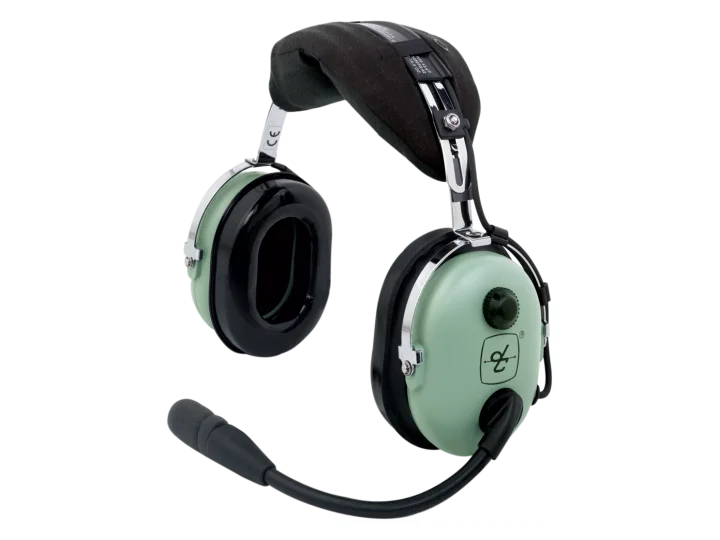 Student headsetDavid Clark H10-13.4 Aviation HeadsetCheck current availability on Amazon (paid link)
 OrganizationASA Flight BagCheck current availability on Amazon (paid link)
Your Timeline for Earning Your Pilot Wings
Whether your goal is to one day fly for the airlines or become a specialized helicopter pilot, understanding the training timeline is your first step. Earning a pilot license isn't just about accumulating flight hours; it's about building a solid foundation of skill and knowledge for a safe and rewarding flying career.
Ultimately, your personal commitment is the biggest factor in how quickly you'll reach this first major milestone on your path to becoming a professional pilot.
Full-Time vs. Part-Time Paths
Deciding whether to train full-time or part-time is one of the most important choices a prospective career pilot will make. It affects everything from your budget to how quickly you progress toward your professional goals.
A full-time schedule is intense and mirrors the demands of a professional aviation career. Students who fly several times a week can often earn their PPL in about three months, making it the ideal option for those on a professional track. On the other hand, fitting flying around a job or other commitments usually means a part-time schedule, which typically stretches the process out to six months or more.
If you're on the fence, one of the best ways to get a real feel for the training environment is by taking one of the many introductory flying lessons available. It’s a fantastic way to experience the cockpit and see which pace is the right fit for your career ambitions.
To help you visualize the difference, here's a quick breakdown of what you can expect from each path.
Private Pilot License Timeline At a Glance
| Training Pace | Weekly Commitment | Estimated PPL Completion Time | Ideal For |
|---|---|---|---|
| Full-Time | 3-5 flight lessons and ground school sessions | 3–4 months | Career-focused students aiming for the airlines or other professional roles |
| Part-Time | 1-2 flight lessons and self-paced ground school | 6–9 months | Students balancing training with a full-time job or school |
Choosing the right pace is all about matching your training to your life and your ultimate aviation goals.
Why the FAA's 40-Hour Minimum Isn't the Full Picture
When you first look into flight training, one number always jumps out: the FAA’s 40-hour minimum flight time requirement. It’s a common misconception to see this as a finish line. In reality, for a career-bound student, it's just the starting block.
Thinking you'll have your license in exactly 40 hours is a bit like expecting to become a concert pianist after the first few lessons. Professional flight training is all about achieving proficiency, not just ticking a box in a logbook. A great instructor is focused on one thing—molding you into a safe, confident pilot who can handle the aircraft solo, not just getting you to a magic number.
It's About Skill, Not Just the Clock
Think about any other demanding skill you might learn, from playing a sport to performing surgery. The goal isn't just to put in the hours; it's to master the craft. Flying is exactly the same. You keep training until you can consistently nail every single maneuver and procedure required for your practical test, often called the checkride.
Because of this, almost no one finishes their training in exactly 40 hours. And that's okay. In fact, it's completely normal for a student pilot.
The national average paints a much clearer picture. A 2023 analysis found that the typical student pilot earns their private pilot license with around 76 flight hours. For a deeper dive into the numbers, check out the data from Flight Training Central.
This gap between the legal minimum and the real-world average isn't a failure. It's a reflection of the incredibly high safety standards that define a professional aviation career.
The Helicopter Factor
This focus on proficiency over hours is even more critical when it comes to helicopter training. Helicopters are mechanically complex and have unique handling characteristics that demand more practice to master, especially for students aiming for professional roles like EMS, tour operations, or utility work.
Skills like hovering and autorotations just take time to perfect. If you're learning to fly helicopters for a career, you should expect your journey to the checkride to go well beyond the 40-hour mark. It's the only way to build the muscle memory and true competence you need to be a safe rotorcraft pilot.
Choosing Your Flight School: Part 61 vs. Part 141
When you're starting out, one of the first big decisions you'll make is what kind of flight school to attend. This choice between a Part 61 and a Part 141 school really shapes your entire training experience and can have a big impact on how long it takes to earn your private pilot license.
Think of it this way: a Part 141 school is like enrolling in a university. These programs follow a very strict, FAA-approved syllabus where every single lesson—both in the classroom and in the cockpit—is mapped out in a specific order. It’s a highly structured path designed for efficiency, making it a popular choice for students aiming for a career with the airlines.
On the flip side, Part 61 is more like a personalized apprenticeship. The training is usually one-on-one with an instructor, and the schedule can be molded to fit your life and how you learn best. It offers incredible freedom, but you have to be disciplined to keep the momentum going.
This infographic gives a great visual breakdown of how the two paths stack up for student pilots.
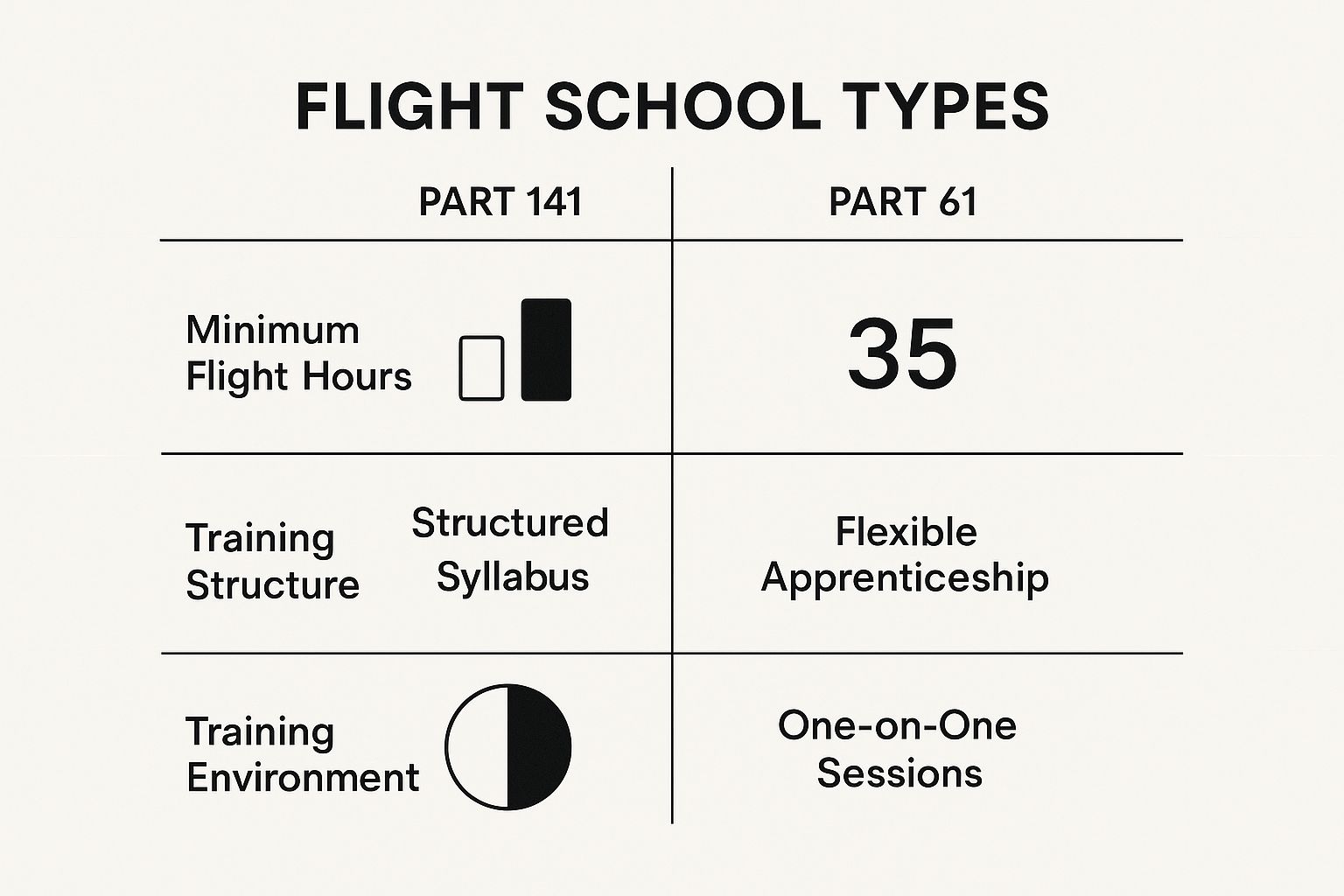
As you can see, the FAA gives Part 141 schools a slight edge with a lower minimum flight hour requirement, a direct result of their structured and closely monitored curriculum.
Which Path Is Right for Your Career Goals?
So, how do you choose? It really comes down to your end goal.
If you’re dreaming of a career in the sky—flying for a major airline or piloting helicopters professionally—a Part 141 program generally offers a more predictable and direct path. The rigid structure ensures you hit every mark systematically, leaving no gaps in your knowledge and often helping you get licensed faster. In fact, many of the best flight schools in California are built around these career-focused programs.
However, a Part 61 school can be a lifesaver if you're juggling flight training with a full-time job or family commitments. The flexibility is its biggest selling point, allowing you to fly whenever your schedule allows. The trade-off is that this same flexibility can stretch out your training timeline if you aren't flying consistently.
The table below breaks down the key distinctions to help you decide which environment is the best fit for your student journey.
Comparing Part 61 and Part 141 Training Programs
| Feature | Part 61 Program | Part 141 Program |
|---|---|---|
| Structure | Highly flexible and less formal. Training is tailored to the student's pace and schedule. | Rigid and highly structured with an FAA-approved syllabus. Every lesson is pre-defined. |
| FAA Oversight | Less direct. The focus is on the instructor ensuring the student meets all requirements for the checkride. | Subject to regular FAA audits and surveillance to ensure compliance with the approved curriculum. |
| Minimum Hours (PPL) | Requires a minimum of 40 hours of flight time. | Requires a minimum of 35 hours of flight time. |
| Best For | Students needing a flexible schedule or those with previous flying experience. | Career-focused students, veterans using GI Bill benefits, or those who thrive in a structured environment. |
| Ground School | Can be done through self-study, online courses, or one-on-one with an instructor. | Integrated into the curriculum with formal classroom sessions and stage checks. |
Ultimately, both paths lead to the same pilot certificate. The "right" choice depends entirely on your personal goals, learning style, and how much time you can dedicate to your training each week.
Key Factors That Shape Your Training Timeline
So, you’ve picked a flight school—that’s a huge step! But what happens next will really determine how long it takes to earn that private pilot license. Your journey as a student pilot is a mix of things you can control and, frankly, some you just can't.
If there's one piece of advice for any aspiring career pilot, it's this: consistency is king. Flying two or three times a week builds muscle memory and keeps the lessons fresh in your mind. If you only fly sporadically, you'll spend the first 20 minutes of every lesson just shaking off the rust and re-learning what you did last time. That's a surefire way to drag out your training and inflate your costs.
Elements You Can and Cannot Control
What you do on the ground is just as important as your time in the cockpit. The students who progress the fastest are the ones who show up prepared. They've done the reading, they've studied the maneuvers for the day, and they're ready to put that theory into practice.
But then there’s the stuff that’s completely out of your hands. Learning to fly means learning to be flexible, because you're guaranteed to run into a few of these common hurdles:
- Weather: This is the big one. High winds, low clouds, or a pop-up thunderstorm can ground you for days at a time, especially depending on the season and where you live.
- Instructor Availability: A good instructor is a busy instructor. Their schedule can fill up fast, and if they're also flying for an airline, their availability might be even tighter.
- Aircraft Maintenance: Airplanes and helicopters need constant, careful attention. Sometimes that means scheduled inspections, and other times it's an unexpected issue that takes your usual training aircraft out of service.
The secret to finishing on time isn't avoiding delays—it's anticipating them. The most successful students are the ones who stay flexible, roll with the punches, and stick to a consistent schedule whenever possible.
It all comes down to finding a balance. Manage what you can, adapt to what you can't, and you'll be well on your way to earning your wings.
Airplane vs. Helicopter PPL Training Timelines
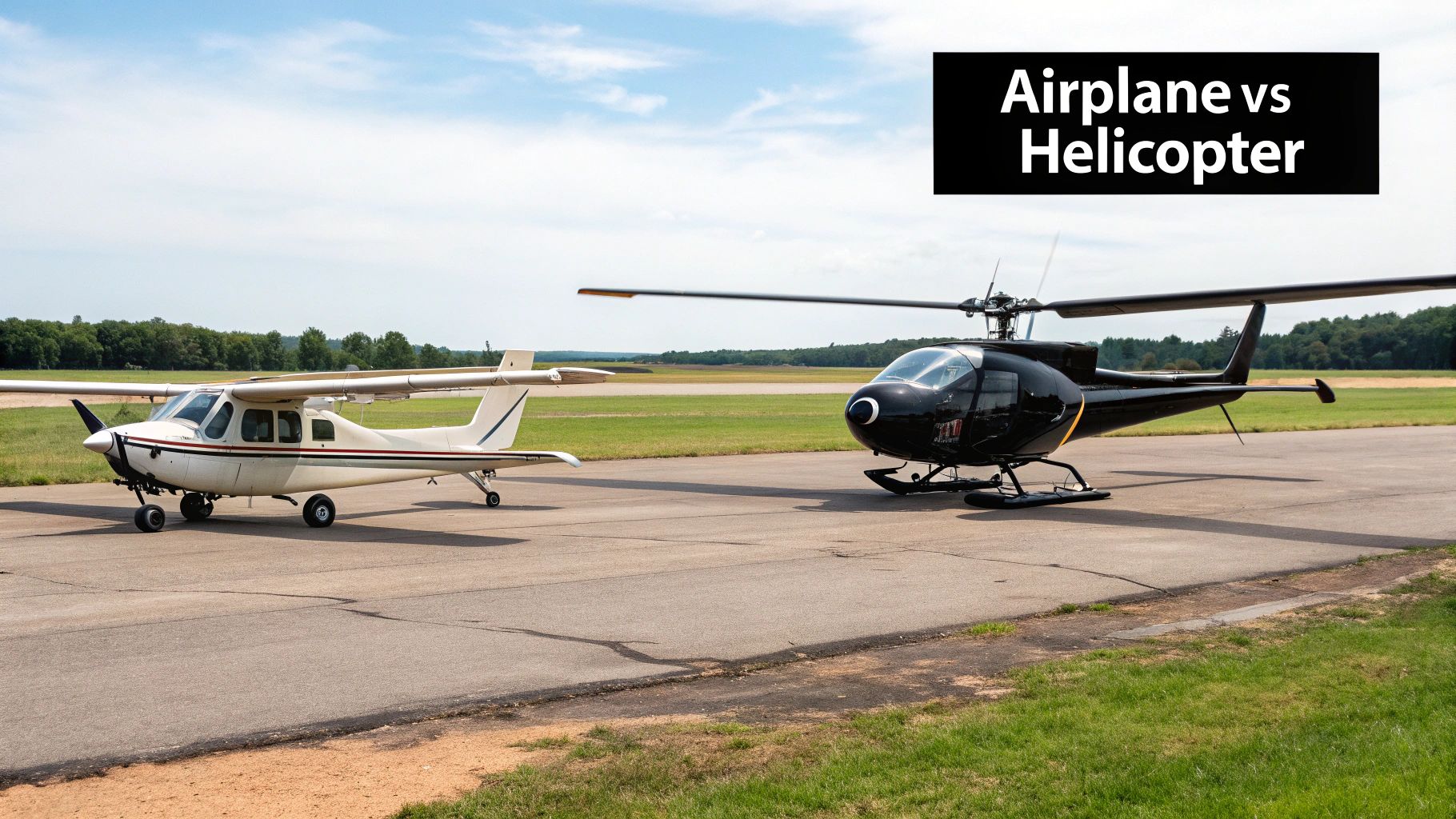
While the destination is the same—a Private Pilot License—the journey for a student pilot in an airplane versus a helicopter couldn't be more different. This is especially true if you’re looking at a professional career. The question "how long does it take?" has a very different answer once rotorcraft enter the picture.
Let's get straight to it: helicopters are mechanically a world apart from airplanes. They demand a completely different set of skills, and mastering maneuvers like hovering requires a kind of finesse that simply takes longer to build. It’s like learning to ride a bicycle versus learning to balance on a unicycle. Both are vehicles, but one requires constant, tiny corrections just to stay still.
Why Helicopter Training Takes Longer for Students
Because of this complexity, you’ll find that almost every helicopter student flies well past the FAA minimum hour requirements. It's not about just ticking a box in a logbook; it's about developing the deep muscle memory needed for maneuvers where the margin for error is razor-thin.
Here’s a breakdown of what takes up that extra time for a student pilot:
- Mastering the Hover: Holding a multi-ton machine perfectly still just a few feet above the ground is one of the hardest things a new pilot will learn. It feels unnatural and takes hours and hours of practice to get right.
- Autorotations: This is the helicopter equivalent of gliding to a safe landing if the engine quits. Practicing this emergency procedure safely and proficiently is non-negotiable and takes time to perfect.
- Higher Operating Costs: There's no way around it—helicopters are expensive to fly and maintain. The higher hourly rate can sometimes mean students fly less frequently, which naturally stretches out the training calendar.
For any student dreaming of a career in emergency services, tourism, or aerial photography, this longer training timeline is a necessary investment. You're building a specialized, high-demand skill set that few pilots have.
Ultimately, the extended timeline isn't a drawback. It's a crucial part of becoming a safe and competent rotorcraft pilot, and it lays the foundation for advanced ratings and a rewarding career in the air.
Your PPL: The First Step to an Airline Career
If you dream of flying for the airlines, think of your Private Pilot License as the launchpad, not the destination. It’s a lot like getting your high school diploma before heading off to college—an absolutely essential first step on a much longer and more rewarding journey. This is the certificate that opens the door to every other rating you'll ever need.
The skills you build now as a student pilot are the very foundation of your entire career. The discipline, precision, and good habits you develop while earning your PPL will directly influence how smoothly you move through more advanced training, like your Instrument Rating, Commercial Pilot Certificate, and eventually, the coveted Airline Transport Pilot (ATP) certificate.
Building Your Career Path
The road from a fresh PPL to the right seat of an airliner is all about building flight hours and mastering increasingly complex aircraft. Once you have your private license, your next logical move is often to get a multi-engine rating, which prepares you for the kinds of planes the airlines fly.
To get a better idea of what that next stage looks like for a student pilot, you can check out our guide on multi-engine pilot training.
Your private license is the first major milestone in a series of qualifications. The habits you form now—consistent study, precise flying, and a professional attitude—set the pace for your entire career trajectory.
The good news is that the demand for new pilots is booming. The global pilot training market was valued at USD 9.37 billion in 2024 and is expected to climb to USD 24.86 billion by 2032. You can dig deeper into what's driving this growth over at Fortune Business Insights.
Let's Talk Timelines: Your Top Flight Training Questions Answered
When you're starting out, it's natural to wonder just how long this whole process will take. Let's break down some of the most common questions I hear from new students so you can set realistic expectations for your journey to the cockpit.
Can I Really Get My License in Just Three Months?
Technically, yes. But you've got to be all in. Think of it as a full-on aviation bootcamp—you'd be flying 4-5 days a week and hitting the books just as hard. This fast-track approach works best if you're laser-focused on a professional career and can treat your training like a full-time job.
For most students juggling work, family, or school, a more practical timeline is somewhere between six and nine months. And that's perfectly fine.
Is Helicopter Training Quicker Than Airplane Training?
It's actually the opposite, and for a good reason. Helicopters are incredibly complex machines. While the FAA minimums look similar on paper, mastering skills like hovering requires a level of finesse and control that just takes more time for a student pilot to build.
Because of this, helicopter students almost always log more flight hours than airplane students, which naturally extends the training timeline. It's about mastering the machine, not just meeting a number.
The Weather Factor: Don't ever forget about Mother Nature. A string of bad weather—high winds, fog, thunderstorms—can throw a real wrench in your schedule. Canceled flights are the single biggest cause of training delays, so it's smart to build some buffer into your plan.
Here at DuBois Aviation, our instructors have guided countless students through both airplane and helicopter training. We know how to tailor a plan that fits your goals and your life. Start your aviation journey with us today!