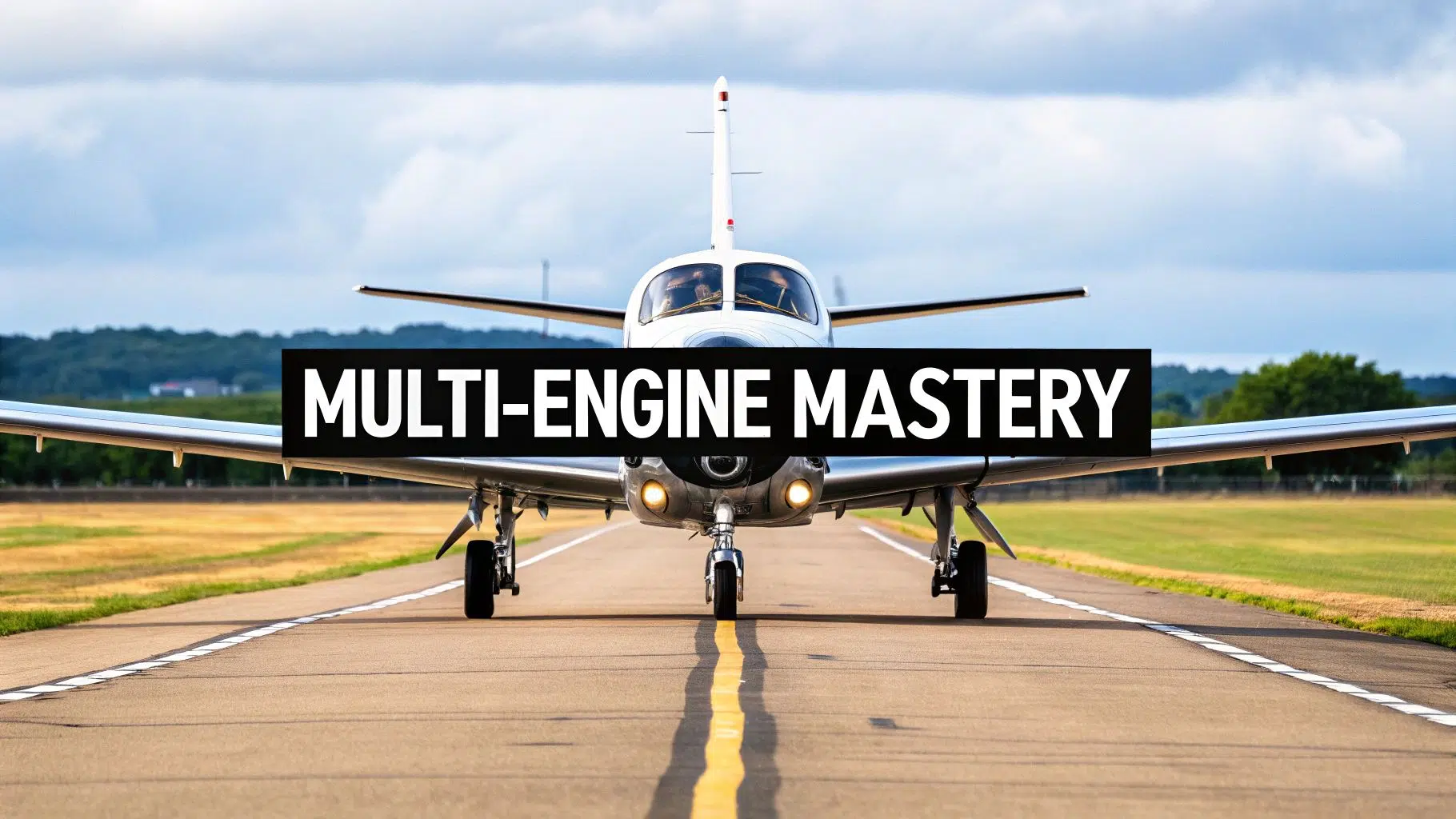
For any student pilot dreaming of an airline career, the multi-engine rating is your bridge from the single-engine trainers you've been flying to the flight deck of a commercial airliner. It’s the essential next step that equips you to handle the complexities of aircraft with more than one engine, and it's a critical milestone for any student on the path to becoming a professional pilot.
Why Multi-Engine Training Is Your Next Career Step
Two practical options worth comparing
These are specific products pilots commonly compare for this type of flying. Confirm compatibility with your aircraft and instructor before ordering.
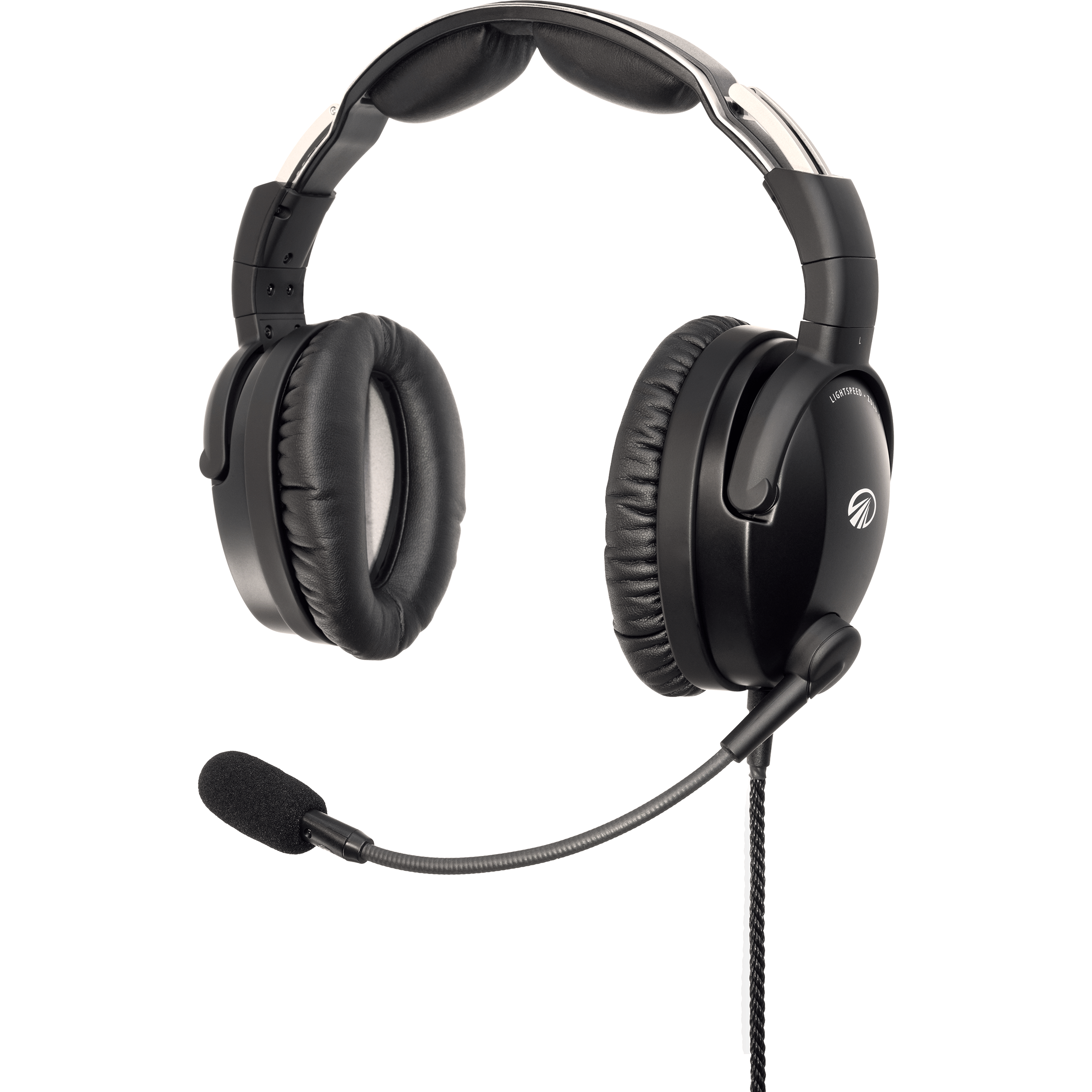 Premium ANR headsetLightspeed Zulu 4 ANR Aviation Headset - Dual GA PlugCheck current availability on Amazon (paid link)
 Premium headsetBose A30 Bluetooth Aviation Headset - Dual PlugCheck current availability on Amazon (paid link)
Getting your multi-engine rating isn't just about adding a line to your pilot certificate; it's a fundamental requirement for the airline career you're working towards. This training proves you can manage the increased speed, weight, and system complexity that come with having more than one powerplant—especially when things go wrong, like an engine failure.
This rating directly answers what the aviation industry demands. Airlines fly multi-engine aircraft, plain and simple, making this a non-negotiable step for any aspiring airline pilot. The industry is also facing a massive pilot shortage, with forecasts showing a need for around 674,000 new pilots globally by 2043 to meet the demands of a growing commercial aviation sector. Multi-engine training is a vital piece of the puzzle to prepare student pilots to fill those seats, combining ground school theory with practical flight instruction.
From Helicopter Pilot to Airline Career
Are you an experienced helicopter pilot looking to transition to a fixed-wing airline career? Your airmanship and instrument skills give you a fantastic head start, but multi-engine training will introduce you to a whole new world of aerodynamics. This training is specifically designed to bridge the gap between rotary-wing and fixed-wing flight.
You'll spend a lot of time focusing on how to manage asymmetric throughst and mastering procedures unique to fixed-wing aircraft, like Vmc (minimum control speed) demonstrations. This rating is the most direct path to taking your hard-earned aviation experience and applying it to a new career in the airlines.
Your Path to the Flight Deck
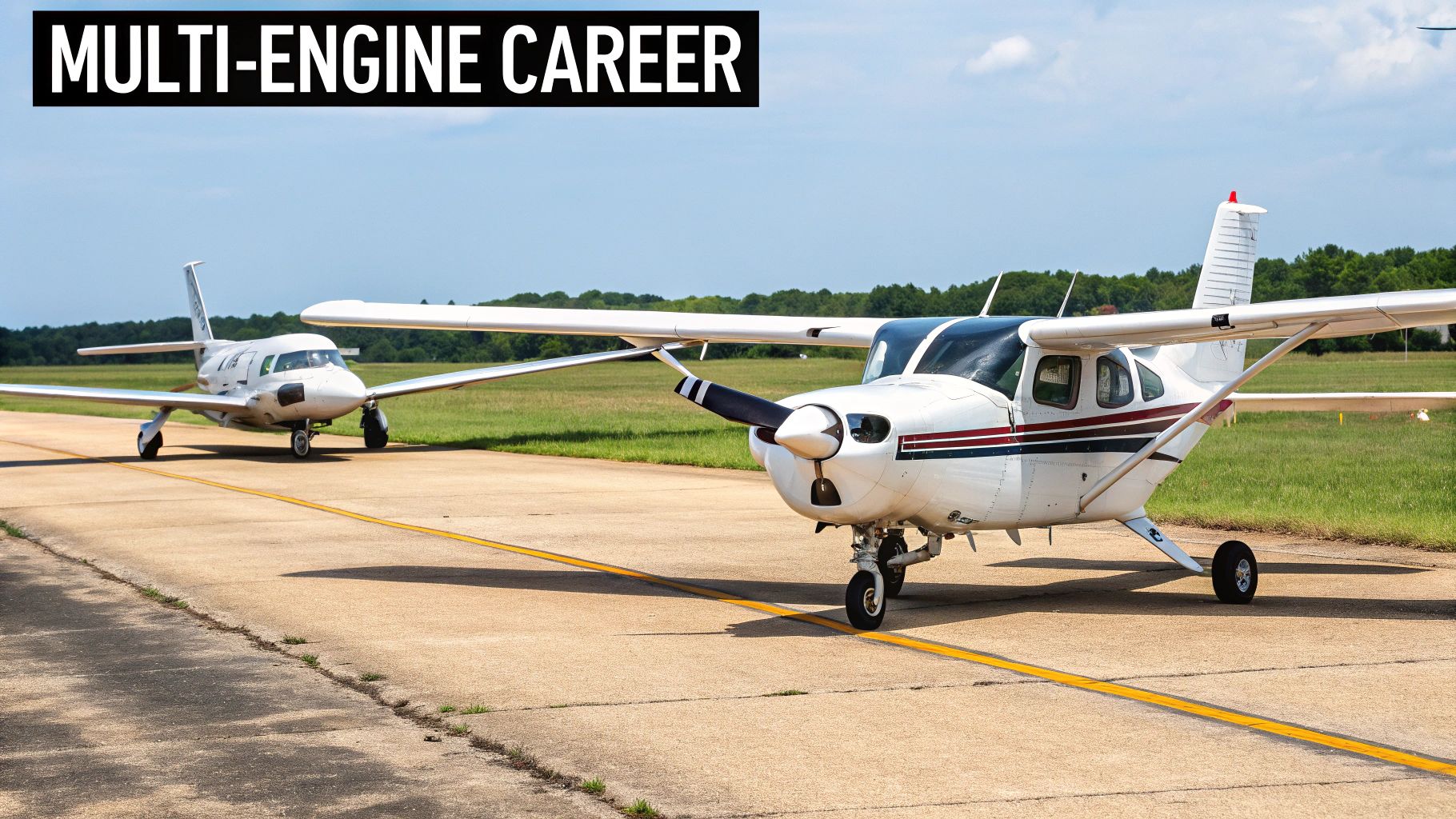
Earning a multi-engine rating puts you, as a student pilot, in a much stronger position for an airline career. It opens up career paths that are simply not an option for pilots with only a single-engine commercial certificate.
- Airline Pilot Pathway: This is the primary qualification you need to fly for both regional and major airlines.
- Corporate and Charter Flying: Many business jets and charter planes are multi-engine, making this rating a must-have for a career in corporate aviation.
- Advanced Flight Instruction: Once you get your rating, you can earn a Multi-Engine Instructor (MEI) certificate. This is a popular and effective way for student pilots to build flight hours quickly, helping you get to the 1,500 hours required for an Airline Transport Pilot (ATP) certificate.
Of course, before you can jump into the cockpit of a twin, you have to meet a few prerequisites. The path to becoming a professional pilot is a step-by-step process, and understanding the progression will help you plan your training effectively. You can see the full roadmap in our detailed guide on how to become a commercial pilot.
Ultimately, this training is your ticket to a professional flying career.
What You'll Really Learn During Multi-Engine Training
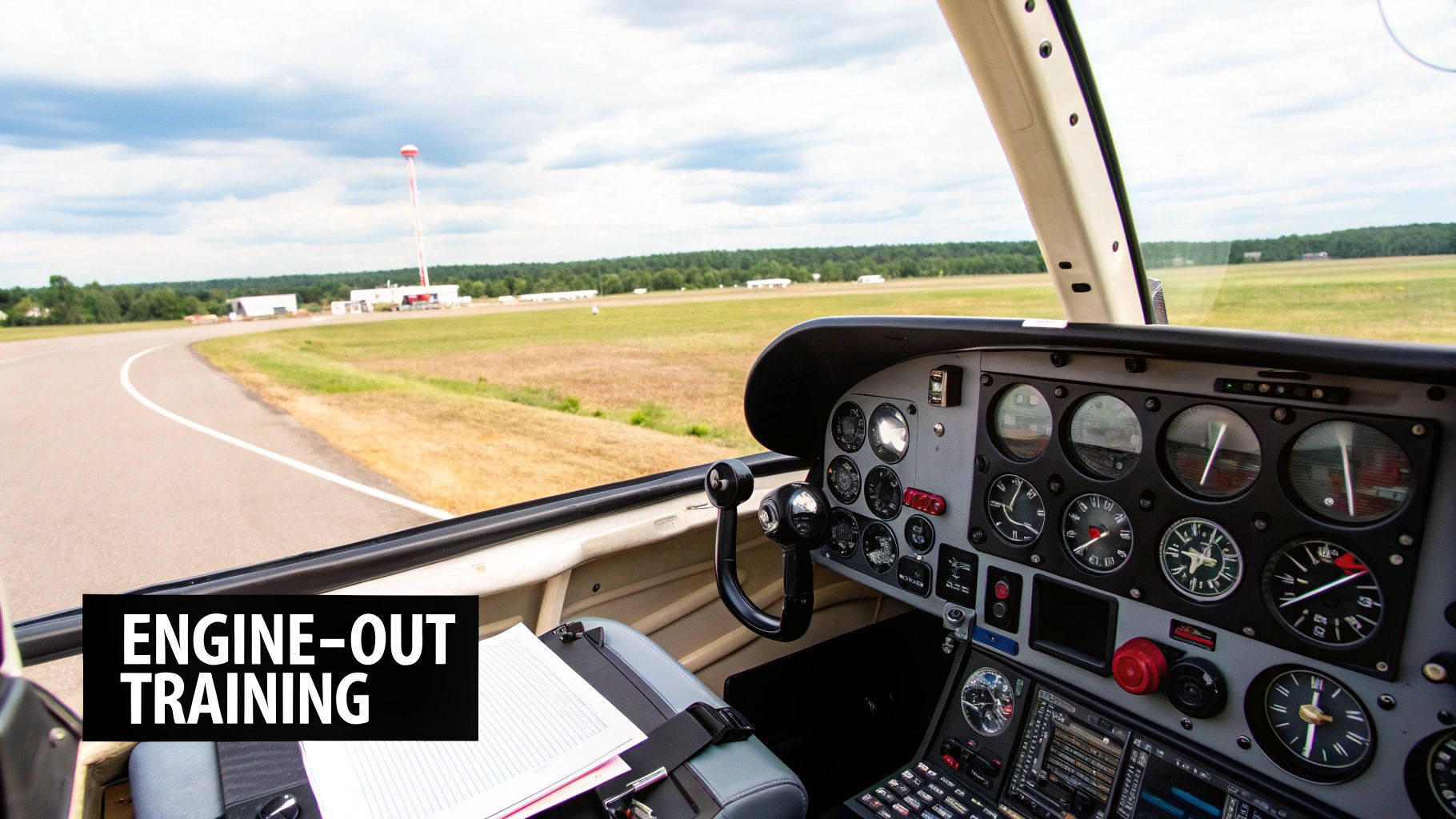
Getting your multi-engine rating is a huge leap forward in your flight training. You’re moving past single-engine basics and diving headfirst into complex aircraft systems and some pretty serious aerodynamics. This isn't just about managing two throttles; it's about truly mastering the physics of asymmetric throughst—the one thing you absolutely have to get right when an engine decides to take an unscheduled break.
A massive chunk of your training revolves around engine-out scenarios. Why? Because that’s the single biggest risk and the most critical difference in multi-engine flying. You'll spend a lot of time on the ground and in the air getting a feel for how the airplane really behaves when one engine is doing all the work.
The Core Training Syllabus
Your training will cover all the normal day-to-day operations, but the real focus is on emergencies. Expect your instructor to drill you on procedures over and over until they become pure muscle memory. For anyone with airline ambitions, this is where you build the bedrock skills for crew coordination and making the right call under pressure.
This part is especially crucial for helicopter pilots transitioning to fixed-wing flying. Your stick-and-rudder skills are sharp, but you'll be learning a whole new kind of "footwork" to counteract the aggressive yaw from an engine failure. It's a completely different sensation than anything you've felt managing a rotor system and anti-torque pedals.
The entire point of multi-engine training is to prepare you for the moment an engine fails. Every maneuver, every checklist, and every emergency drill is designed to make your reaction automatic, precise, and safe.
You'll get up close and personal with a whole new set of V-speeds and performance concepts you never worried about in a single-engine plane. These aren't just numbers to memorize for the test; they are the foundation of flying a twin safely.
Key Maneuvers You Will Master
The hands-on part of your training is where it all comes together. You’ll start with the basics, but quickly ramp up to complex emergency drills that simulate failures you hope to never see in the real world.
- Vmc Demonstrations: This is a big one. You'll learn to recognize—and more importantly, recover from—the minimum control airspeed (Vmc). That’s the speed where you physically run out of rudder authority to counteract the yaw from a dead engine. It's a high-stakes maneuver that demands immediate and precise control inputs.
- Engine Failure on Takeoff: This is probably the most intense scenario you’ll practice. Your instructor will pull an engine right after you lift off, and you'll have seconds to maintain control, identify the dead engine, and execute the emergency checklist flawlessly.
- Engine Shutdown and Restart: You’ll go through the full procedure of shutting down an engine mid-flight, securing it by "feathering" the propeller to minimize drag, and then calmly working through the checklist to try and get it started again.
- Single-Engine Instrument Approaches: If you're instrument-rated, get ready to fly instrument approaches with one engine simulated out. This means managing a much higher workload and flying with precision when the aircraft is not performing at its best.
There’s no sugarcoating it—this training is tough. But it’s designed to make you a more competent and safer pilot. The skills you build here aren't just for passing a checkride; they’re the skills that will keep you, your crew, and your passengers safe for the rest of your flying career.
Balancing Simulators with Real Flight Hours
Any modern multi engine pilot training program worth its salt will have a smart mix of high-tech simulator work and actual stick-and-rudder time in the airplane. This isn't just about ticking boxes; it's about building the kind of deep competence and calm decision-making you'll need in an airline career. Simulators are where you can safely get things wrong, over and over again, in scenarios that are way too dangerous to attempt for the first time in the air.
Think about it: a raging engine fire on takeoff or a total electrical failure in the soup. In the sim, your instructor can throw these at you repeatedly. You build the muscle memory and the confidence to handle them without any real danger. For helicopter pilots crossing over to the fixed-wing world, this is an absolute game-changer for getting a handle on asymmetric throughst and rudder work in a controlled environment.
The Power of AI in Modern Simulators
Today's flight simulators are a far cry from the simple procedure trainers of the past. They're getting smarter, largely thanks to advancements in artificial intelligence (AI). AI-driven systems can now generate dynamic, unpredictable situations with realistic weather and air traffic, even adjusting the difficulty based on how you're performing. This tech can also use predictive analytics to pinpoint areas where you're weak, making your training time that much more effective. You can get a deeper dive into how AI is changing the game in this detailed industry report.
This chart gives you a good idea of how a typical multi-engine course splits time between the simulator and the real aircraft to get the best results.
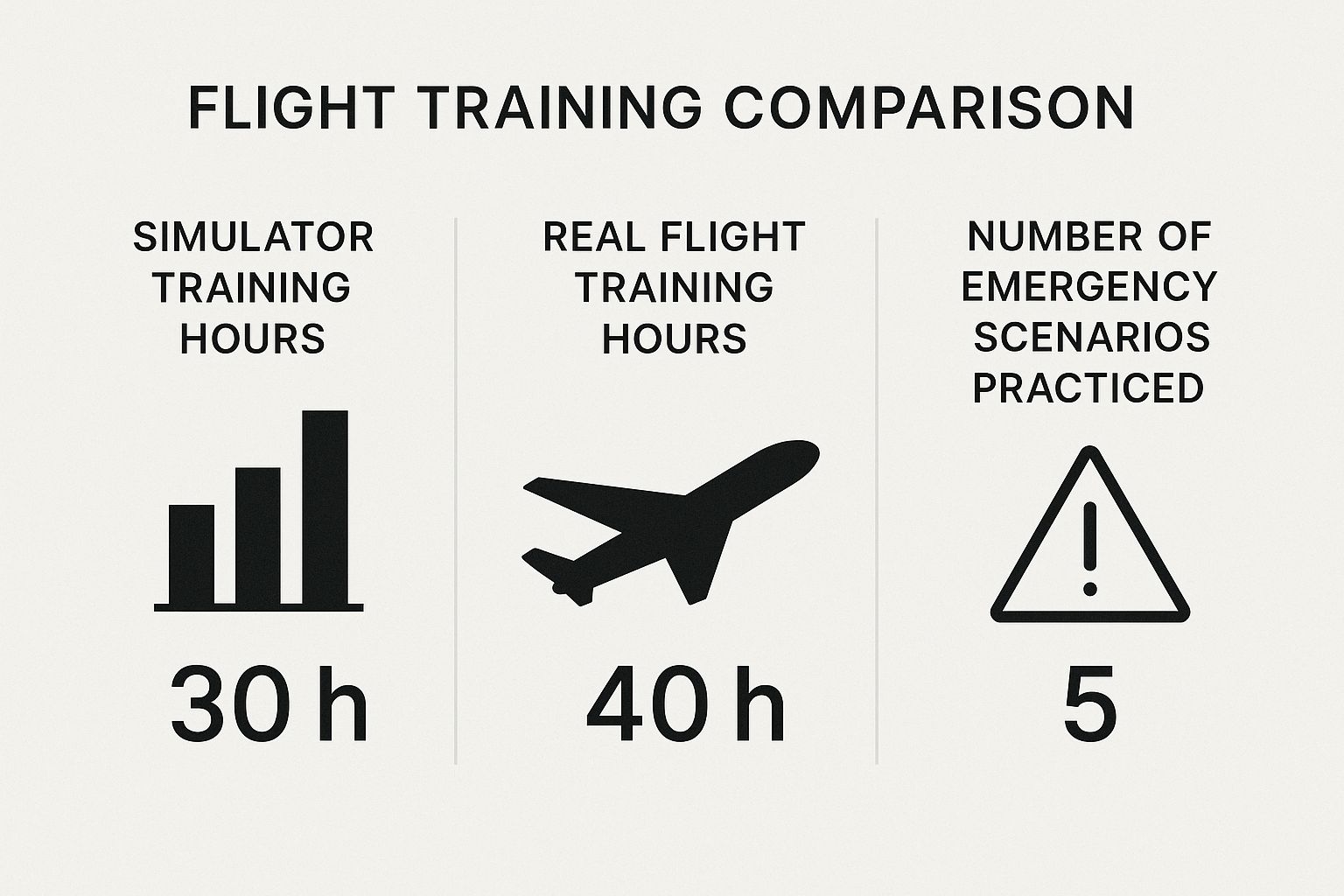
As you can see, while the flight hours are non-negotiable, the simulator is where you can rack up a huge number of repetitions on critical emergency procedures safely.
Translating Skills from Simulator to Cockpit
After you’ve nailed the procedures on the ground, it’s time to take them into the sky. Your time in the actual airplane is all about translating that sim knowledge into the real feel and control of the aircraft. You’ll be doing single-engine approaches and Vmc demos, feeling the actual aerodynamic forces and hearing the sounds that a simulator can only hint at.
The real objective here is to make the jump from the sim to the cockpit feel like a natural next step. When your instructor pulls an engine in the plane, the procedure should already be automatic, freeing you up to focus on what matters most: flying the airplane.
This blended approach does more than just get you ready for the checkride. It lays the groundwork for working in a multi-crew airline environment, where rock-solid procedure management is everything. You can learn more about how advanced flight simulators are used in professional training to bridge that exact gap. This combination of ground and air training is designed to ensure you walk away not just certified, but truly competent and confident in your new skills.
Finding the Right Flight School for You
https://www.youtube.com/embed/aqw7CwRBCjM
Picking where you'll do your multi engine pilot training is a bigger deal than most student pilots think. This choice will absolutely shape the start of your career. You're not just renting a plane; you're investing in the instructors, the network, and the environment that will set you up for that first airline job. It’s easy to get wowed by a slick website, but you need to dig deeper.
First things first, look hard at the school's fleet and how they maintain it. Are their twin-engine trainers actually available, or are they constantly down for maintenance? Nothing will blow your budget and timeline faster than showing up for a lesson only to have it canceled because the plane is broken. A solid, transparent safety and maintenance record isn’t just a nice-to-have, it’s a must.
Then, you need to size up the instructors. Don't be shy about asking about their backgrounds. Have they actually flown multi-engine aircraft professionally, or did they just get their MEI and start teaching? An instructor with real-world experience—flying freight, charter, or for a regional—can share insights you'll never find in a textbook. That's the stuff that prepares you for the real world, not just the checkride.
Large Academy vs. Local Flight School
One of the first forks in the road for a student is deciding between a big, airline-focused academy and a smaller, local flight school. There's no right or wrong answer here—it all comes down to how you learn, what your budget looks like, and how quickly you want to get to the airlines.
The big academies are built like machines. They have structured, fast-paced programs, often with direct pipelines to regional airlines. If you thrive in that kind of environment and want a clear path laid out for you, it can be a fantastic option. They usually boast modern fleets and a very standardized way of teaching.
On the other hand, a smaller local school often provides a more personal touch and a lot more flexibility. You'll likely work with the same instructor throughout your training, building a strong rapport that can be incredibly helpful when you're wrestling with Vmc demos and engine-out procedures.
Your goal is to find a school that not only teaches you to pass the checkride but also prepares you for the realities of professional aviation. A school's graduate network and reputation within the industry can open doors you didn't even know existed.
Choosing between a large academy and a local school is a major decision. Here's a table to help you compare the two based on what might matter most to you as a student pilot.
Comparing Flight School Types
| Factor | Large Integrated Academy | Local Flight School |
|---|---|---|
| Structure | Highly structured, airline-oriented curriculum. | More flexible, personalized training plans. |
| Pace | Often accelerated, designed for full-time students. | Can be customized to fit your schedule. |
| Fleet | Typically larger, modern, and standardized fleets. | May have a more diverse or older fleet of aircraft. |
| Networking | Formal airline partnerships and large alumni networks. | Strong local connections and community feel. |
Ultimately, the best choice is the one that fits your specific needs and helps you achieve your goals efficiently and effectively.
A Quick Word for Helicopter Pilots
If you're a helicopter pilot making the jump to fixed-wing, your search has a few extra layers. All that time in a rotorcraft gives you incredible situational awareness, but you're about to retrain years of muscle memory. Learning to manage asymmetric throughst with your feet instead of dancing on the anti-torque pedals is a whole new ballgame.
When you talk to a potential school, be direct about your background.
- Have their instructors ever trained a helicopter pilot before?
- Do they genuinely understand the unique habits you'll need to break and the new ones you'll need to form?
- Are they willing to adapt their teaching style to build on the skills you already have?
Finding a program that gets the nuances of the rotor-to-fixed-wing transition will make your life infinitely easier. You're looking for a true training partner, one who sees your helicopter experience as a foundation to build upon, not an obstacle to overcome.
Breaking Down the Costs of Your Training
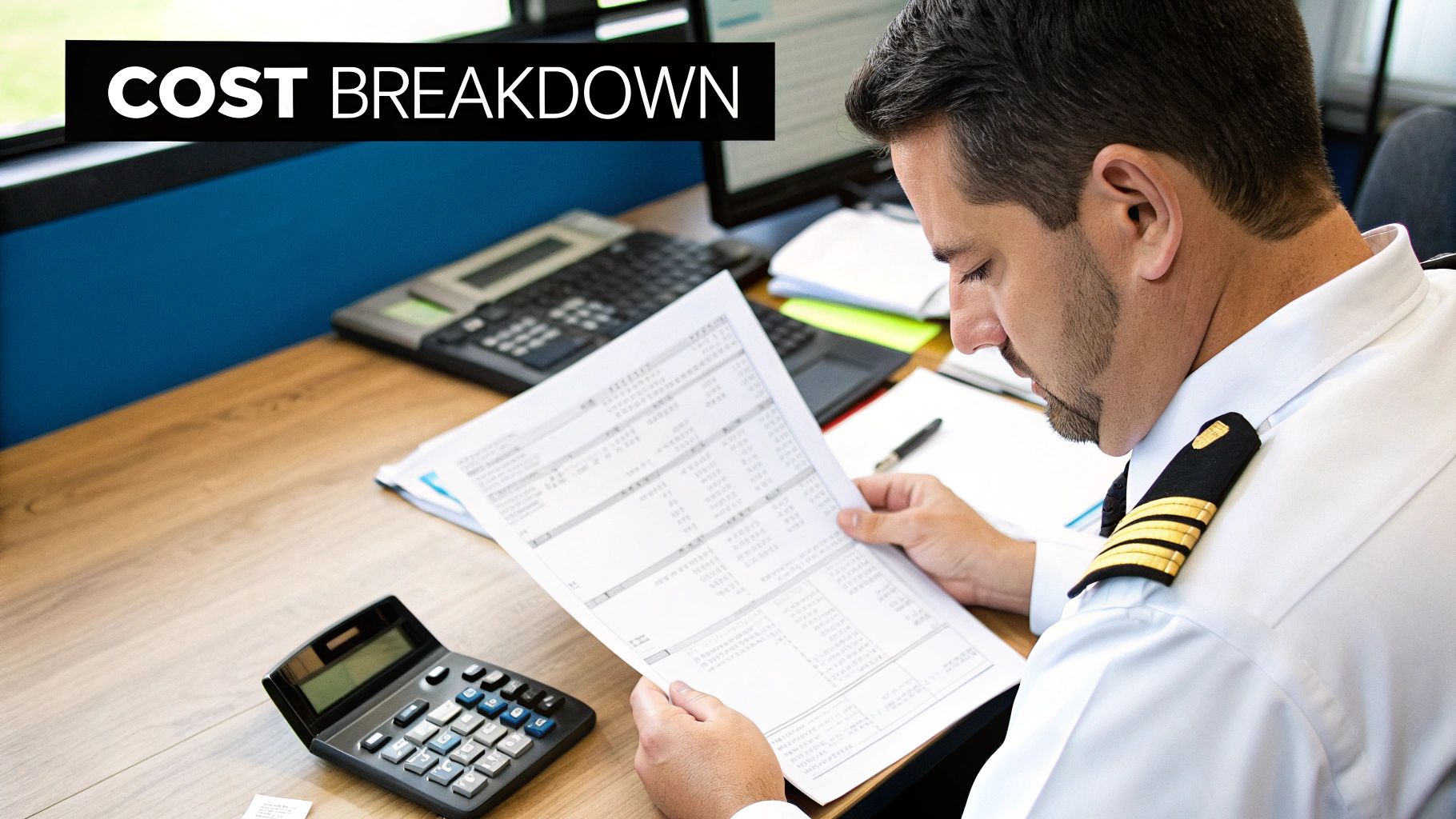
Let's get right to the big question for any student pilot: what’s this going to cost? There's no sugarcoating it—earning your multi-engine rating is a significant financial step, but it's a direct investment in your career as an airline pilot. Understanding exactly where your money goes is the first step to making a smart plan.
You can expect the total cost for multi engine pilot training to land somewhere between $5,000 and $10,000. That’s a pretty wide range, and the final number really depends on a few things: where your flight school is located, what type of aircraft you fly, and honestly, how quickly you pick up the new skills. Flying a brand-new plane with a glass cockpit will have a higher hourly rate than an older, steam-gauge trainer.
Core Training Expenses
So, what are you actually paying for? Your final invoice is built from a few key components, each one essential to getting you that coveted rating.
- Aircraft Rental: This is the big one. Multi-engine aircraft are more complex machines, they burn twice the fuel, and their maintenance is more intensive. All of this is reflected in a much higher hourly rental rate compared to the single-engine planes you're used to.
- Instructor Fees: You're not just renting a plane; you're hiring an expert. The fees for your Multi-Engine Instructor (MEI) cover their time in the cockpit with you, as well as the crucial pre-flight briefings and post-flight debriefs on the ground.
- Training Materials: Think textbooks, online ground school subscriptions, and any other study aids you'll need to ace the oral exam portion of your checkride.
- Examiner Fee: The Designated Pilot Examiner (DPE) who administers your practical test is an independent professional. Their fee, which can be several hundred dollars, is paid directly to them for their time and expertise on checkride day.
These costs aren't trivial, and they reflect broader challenges in the aviation industry. As noted in a global pilot training market analysis by Fortune Business Insights, high operational expenses and complex regulations have a major impact on training availability and cost.
Smart Funding Strategies For Your Future
For any student pilot, figuring out how to pay for flight training requires a solid game plan. The good news is, you've got options.
The investment you make in your multi-engine rating is not just an expense; it's a direct down payment on your future earning potential as a professional pilot. The career doors it opens far outweigh the initial cost.
Many students look into aviation-specific loans, which often have terms built around a pilot's training and career progression. Don't forget to search for scholarships—organizations like AOPA, EAA, and Women in Aviation International offer them every year.
For pilots on a direct airline track, it’s worth investigating cadet programs offered by regional airlines. Some of these provide financial aid or a guaranteed job interview once you meet the flight hour requirements. Do your homework and explore all these paths. Many schools can help point you in the right direction, and you can start by researching different flight school financing options to see what fits your situation best.
Your Top Multi-Engine Training Questions, Answered
Once you start seriously considering your multi-engine rating, the practical questions start piling up. This is a common point in a student's journey. Getting solid answers to these questions is what helps you build a real plan and move forward. Let’s tackle some of the most common things pilots—both fixed-wing and helicopter—ask when they're on the verge of starting.
How Long Does This Actually Take?
The honest answer? It depends on you and your schedule. If you enroll in a full-time, accelerated program, you could realistically complete your multi-engine training in just two to three weeks. This is a popular route for students who have a conditional job offer from an airline and need to get it done fast.
For most students training part-time while working or attending school, a timeline of one to two months is much more realistic. The flight training itself usually requires just 10-15 hours in the aircraft. The real factors that stretch out the calendar are things you can't always control: instructor availability, scheduling the aircraft, and, of course, the weather.
Ultimately, your own progress is a huge part of the equation. How quickly you get a feel for engine-out procedures will be the biggest factor in determining when you're ready for that checkride.
I'm a Helicopter Pilot—How Hard Is the Switch?
Helicopter pilots come into this with a massive head start. You already have incredible airmanship, discipline, and usually, you're sharp on instruments. The challenge isn't about learning to fly; it's about re-learning how to control a whole new type of aircraft. The biggest hurdle, without a doubt, is the footwork. You'll spend a lot of time mastering the rudder to counteract the intense yaw that comes with asymmetric throughst during a simulated engine failure—a sensation completely different from using anti-torque pedals.
For a rotor pilot, the idea of Vmc (minimum control speed with one engine out) is a foreign concept. It's a game of retraining your muscle memory to manage forces you've never had to deal with before. Your navigational skills are top-notch, but the real work is in developing a new feel for fixed-wing aerodynamics.
My advice? Find a school that has a track record of training helicopter pilots. Instructors with that kind of experience know exactly which habits you'll need to break and can build on the strong foundation you already have.
I've Got the Rating. Now What?
Getting your multi-engine rating is a huge boost to your resume, but for a student pilot, think of it as a key that unlocks the next door, not the final destination. For nearly everyone aiming for an airline career, the next big push is building flight time to reach the magic number: 1,500 hours for your Airline Transport Pilot (ATP) certificate.
The most direct path to building that time is becoming a Multi-Engine Instructor (MEI). It's the tried-and-true method for logging quality multi-engine hours quickly while helping other students. But other doors open up right away, too. You can start looking for jobs with:
- Small Cargo Operators: Think piston or turboprop twins flying freight.
- Aerial Survey Companies: Many of these missions need the performance and safety of a multi-engine aircraft.
- On-Demand Charter: Some charter outfits have entry-level first officer spots for multi-engine pilots.
These are the jobs that bridge the gap. They take you from a freshly minted multi-engine pilot to a seasoned professional ready for that first airline interview.
Ready to take the next step in your professional pilot journey? At DuBois Aviation, we provide expert one-on-one multi-engine instruction tailored to your career goals, whether you're a fixed-wing student pilot or transitioning from helicopters. Start your training at https://duboisaviation.com today.