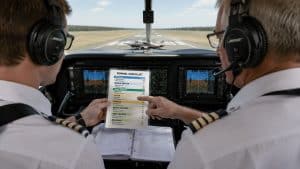
Picture this: You’re soaring high above the Southern California coastline, the iconic Los Angeles skyline stretching out below your wings. That incredible feeling is much closer than you might imagine. Pursuing pilot training in Los Angeles is your ticket to a life-changing skill and career, whether you want to fly for pure enjoyment or for a major airline.
Your Aviation Journey Starts in Los Angeles
Los Angeles isn't just the entertainment capital of the world; it's also a world-class hub for anyone learning to fly. The weather here is a massive advantage. With over 300 flyable days a year, you can spend more time in the air building skills and less time on the ground waiting for clouds to clear—a common frustration in other parts of the country.
But it’s the airspace that truly makes LA a special place to train. From your very first lesson, you’ll be navigating some of the most dynamic and complex skies in the world. That kind of immediate immersion is an incredible confidence-builder and something you just can't get everywhere.
The Chino Airport Advantage
Training at a busy airport like Chino (KCNO) gives you a real head start. It’s a towered Class D airport with three runways and a full suite of instrument approaches. This isn't just a quiet local airstrip; it’s a realistic environment that mirrors what you’ll face as a professional pilot. You'll get comfortable with radio communications and complex procedures from day one, skills pilots from smaller fields have to learn later.
Choosing your training airport is like an athlete choosing their training facility. Learning at a busy, towered field like Chino builds the reflexes and confidence you need to thrive in any professional cockpit.
This kind of hands-on experience in a real-world setting is a huge plus when you’re looking for a job. It shows you’re ready for the demands of a regional or major airline, where that level of skill isn't just a bonus—it's a requirement.
A Career That Really Takes Off
The demand for well-trained pilots has never been stronger, especially in a major aviation market like Los Angeles. That demand is reflected directly in pilot salaries. As of January 2026, the average pilot salary in Los Angeles is an impressive $141,064 annually, which works out to about $67.82 per hour. You can dive deeper into pilot salary trends on ZipRecruiter. These numbers show just how rewarding a career in aviation can be.
Whether you dream of flying a Cessna on weekends, piloting a helicopter over the city, or commanding a commercial airliner, it all begins with that first step. Leading schools like Du Bois Aviation at Chino Airport provide structured programs designed to get you there, from your private pilot license all the way to a full airline career track.
Your Flight Path: From First Solo to Airline Captain
Becoming a pilot isn't a single leap; it's a step-by-step journey where each new certificate and rating unlocks greater freedom and responsibility in the sky. Think of it as an apprenticeship. You start with the absolute fundamentals and progressively build your skills until you've mastered the aircraft, the weather, and the complex environment of professional aviation.
It all starts with the Private Pilot License (PPL). This is your ticket to the sky, the foundational certificate that lets you act as pilot-in-command of a single-engine airplane. With your PPL, you can fly for fun, take family and friends on incredible sightseeing trips, and truly experience the joy of flight.
While you can’t get paid to fly just yet, this is where you build the bedrock of your airmanship—perfecting takeoffs and landings, learning to navigate, and mastering emergency procedures. Earning your PPL is a huge milestone and the gateway to every other rating.
This timeline gives you a bird's-eye view of how a focused training plan can take you from dreaming on the ground to a professional career in the cockpit.
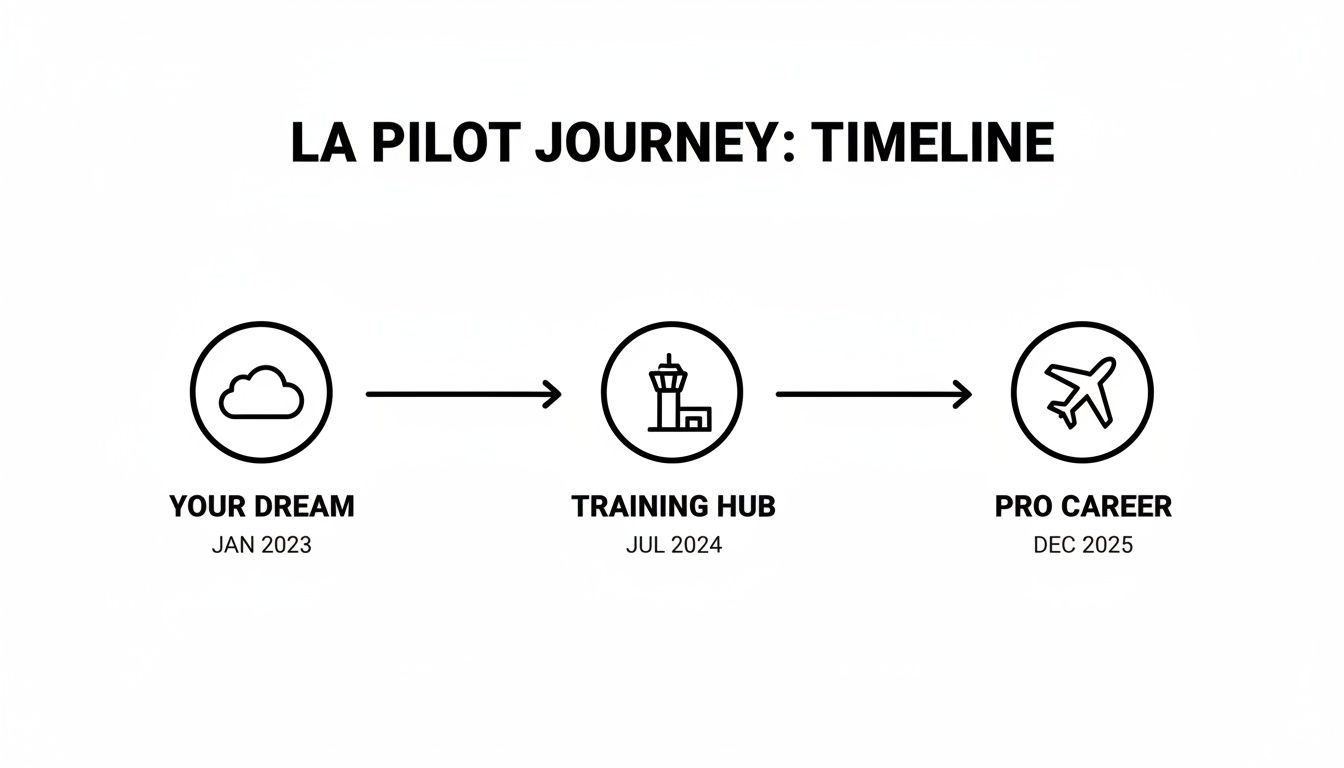
As you can see, a dedicated period at a training hub like Chino Airport is the critical bridge that connects your initial goal to a real, professional outcome.
To give you a clearer picture of this progression, here’s a breakdown of what each certificate allows you to do.
Pilot Certificate and Rating Progression
| Certificate/Rating | Primary Purpose | Typical Flying Scenario |
|---|---|---|
| Private Pilot (PPL) | Fly for personal recreation. | Taking a friend for a scenic flight over the coast on a clear day. |
| Instrument Rating (IR) | Fly in clouds and low visibility. | Flying through the morning marine layer to your destination without delay. |
| Commercial Pilot (CPL) | Fly for hire or compensation. | Working as a flight instructor or flying aerial survey missions. |
| Multi-Engine Rating (MER) | Fly aircraft with more than one engine. | Piloting a twin-engine aircraft, a required step for airline careers. |
Each step builds directly on the last, equipping you with the specialized skills needed for the next level of flying.
Mastering the Clouds with an Instrument Rating
For any pilot serious about a career, the Instrument Rating (IR) is the next essential step. If a PPL lets you fly in good weather, the IR gives you the ability to fly when you can’t see the ground at all. You’ll learn to rely solely on your cockpit instruments to navigate and control the airplane.
This is a non-negotiable skill for anyone pursuing pilot training in Los Angeles. The infamous Southern California "marine layer" can ground VFR-only (Visual Flight Rules) pilots for hours. With an Instrument Rating, you can legally and safely fly right through it, making you a far more capable and reliable pilot.
Turning Your Passion into a Paycheck
This is the big one. The Commercial Pilot License (CPL) is what officially allows you to be paid for flying. It’s the moment your passion can finally become your profession. Getting here requires a higher level of experience—more total flight time and more complex cross-country flights—to prove you’re ready for the responsibility.
Earning your CPL is about much more than just logging hours. It’s about demonstrating a higher standard of precision, airmanship, and professional judgment. You’re no longer just flying for fun; you’re being trusted with the success and safety of a commercial flight.
Once you have your CPL, a whole world of aviation jobs opens up. These are fantastic roles for building the flight time you'll need to get to the airlines. Common first jobs include:
- Flight Instructor: A classic and rewarding way to build hours while sharing your passion.
- Banner Towing: A common entry-level job, especially along the SoCal coast.
- Aerial Surveying: Flying missions for photography, mapping, or pipeline patrol.
- Ferry Pilot: Delivering new or sold aircraft to their owners across the country.
Flying More Complex Aircraft
The final piece of the puzzle for most aspiring airline pilots is the Multi-Engine Rating (MER). This is an "add-on" to your license that certifies you to fly planes with more than one engine. Since every airliner you'll fly has at least two engines, this rating is an absolute must-have.
Multi-engine training is laser-focused on handling the unique challenges of these more powerful aircraft, especially the procedures for safely flying if one engine fails. It’s a critical skill that shows you can manage complexity and are ready for the final push toward the right seat of an airliner.
How to Choose the Right Los Angeles Flight School
Picking a flight school is easily the biggest decision you'll make on your path to becoming a pilot. With dozens of options for pilot training in Los Angeles, it's natural to feel a bit swamped. But remember, the right school isn't just a place to log hours; it’s the partner that will launch your entire aviation career.
It’s tempting to just compare hourly rates, but that’s a rookie mistake. A “cheaper” school with beat-up planes or instructors who are never available will end up costing you a fortune in wasted time and repeated lessons. The real value lies in the things that actually build a great pilot: top-notch instruction, reliable aircraft, and a culture that puts safety above all else.
Evaluate the Instructors and Their Teaching Style
Think of your Certified Flight Instructor (CFI) as your personal guide, mentor, and safety officer, all rolled into one. A truly great CFI doesn't just show you how to perform maneuvers. They get to know how you learn, adapt their teaching style, and give you the confidence to become a safe, competent pilot.
When you tour a school, get past the front desk and ask to meet the actual instructors. Find out what their background is, what drives them to teach, and where they see themselves in five years. An instructor who is genuinely passionate about education—not just logging hours for an airline job—is going to be far more invested in your success. Some of the best schools also use modern tools to create engaging educational videos, which can really help clarify complex topics outside the cockpit.
Inspect the Aircraft Fleet and Simulators
The airplanes you fly are your classroom in the sky, so their condition and availability are critical. A school with a well-cared-for fleet, like the Piper Cherokees and Cessnas at DuBois Aviation, means you can fly when you’re scheduled to fly, not when a plane finally gets out of the shop. When you visit, insist on seeing the aircraft.
Here are a few questions you should definitely ask:
- Maintenance: How often do the planes get inspected? Is maintenance handled on-site or sent out?
- Availability: What’s the student-to-aircraft ratio? Too many students per plane is a recipe for scheduling headaches.
- Variety: Does the school offer different aircraft for advanced ratings, like high-performance or multi-engine planes?
A Note on Simulators: Access to a modern flight simulator is a huge plus. It’s a safe, low-stress, and cost-effective way to practice everything from basic procedures to full-blown emergencies. Mastering instrument approaches in a sim before you even start the engine can save you hundreds, if not thousands, of dollars.
Consider Resources for Future Aircraft Owners
For a lot of pilots, getting a certificate is just the first step. The real dream is owning your own aircraft. A top-flight school understands this and acts as a long-term resource, offering support that goes way beyond your initial training. They can be an amazing ally when you're ready to buy or sell an airplane or helicopter.
The instructors and staff at an established school are deeply plugged into the local aviation scene. They can give you real-world advice on how to buy an airplane safely—from figuring out your budget to finding a trustworthy mechanic for that all-important pre-purchase inspection. That kind of network is priceless, turning your flight school into a true aviation partner for life. To get started, you can explore this curated list of aviation schools in Los Angeles, California that are known for building this kind of community.
The DuBois Aviation Advantage at Chino Airport
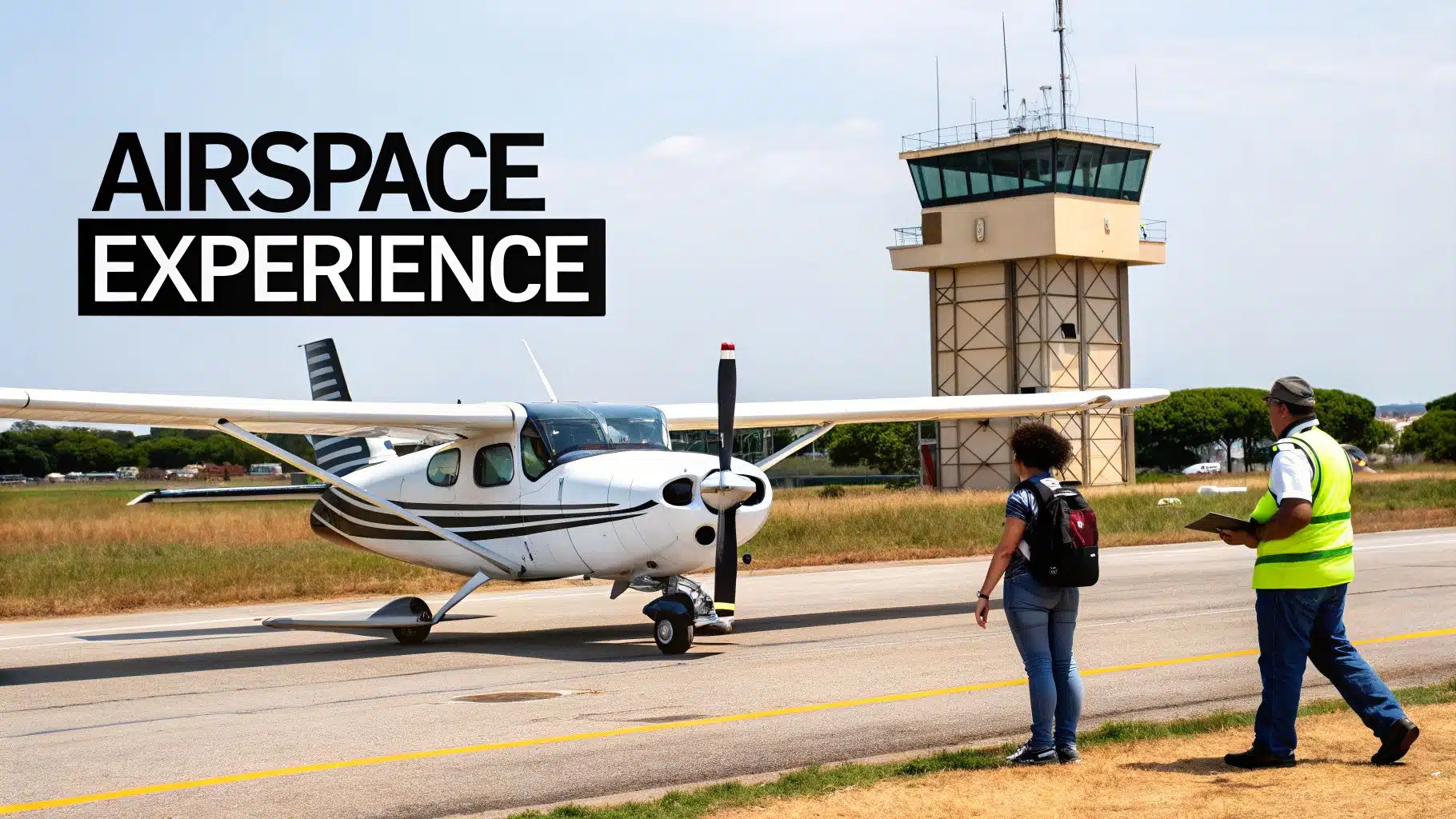
Choosing a flight school is about more than just the curriculum; it’s about finding the right environment to build your skills. This is where training at a busy, towered airport like Chino (KCNO) gives you a serious leg up—an edge you simply won’t get at a quiet, uncontrolled field.
From your very first lesson with DuBois Aviation, you’re not just learning to fly; you’re operating in the real world of aviation. You'll be managing authentic radio calls, navigating complex Class D airspace, and sharing the pattern with general aviation, corporate jets, and even military aircraft. It’s not a simulation. It’s hands-on experience that builds true confidence and sharpens your decision-making when it counts.
This kind of environment is exactly what airlines look for. Pilots who train at dynamic airports like Chino walk into interviews already proven to handle the pressure of a busy terminal area. It makes you a far more competitive candidate right out of the gate.
Pathways Built for Your Pilot Goals
While the airport provides the stage, the right programs turn that experience into expertise. At DuBois Aviation, we’ve developed specialized tracks that are focused, efficient, and aligned with your specific ambitions.
The current airline hiring boom is a huge opportunity, and schools in major hubs like Los Angeles are at the heart of it. For instance, in 2025, ATP Flight School, which recently expanded in LA, saw 983 of its graduates hired by airlines like American and SkyWest—a 30% increase from previous years. With major carriers expecting to ramp up hiring well into 2026, the demand for well-trained pilots is clear.
Here’s how our programs help you meet that demand:
- Airline Career Program: This is our fast track for aspiring airline pilots. It’s a structured path taking you from zero experience to a commercial license with multi-engine privileges, building the exact skills and flight time you need.
- Specialized Helicopter Training: Drawn to rotorcraft? We provide expert instruction on the Robinson R22 and Enstrom F28 models. This program prepares you for a career in a growing field, with opportunities in tourism, law enforcement, and emergency medical services.
- Flyers Club and Youth Programs: Aviation is also a community. Our Flyers Club connects pilots to share stories and keep learning, while our youth camps are all about inspiring the next generation of aviators.
Buying or Selling an Aircraft: A Practical Guide
For many pilots, the journey eventually leads to aircraft ownership. Whether you’re dreaming of buying your first plane or selling your current helicopter, navigating the market can feel overwhelming.
If you’re looking to buy, the first step is always to define your mission. Are you looking for a weekend flyer for short trips? A cross-country machine for business? Your answer will narrow down the type of aircraft that fits your needs and budget.
A pre-purchase inspection by a trusted, independent mechanic is the single most important step in buying an aircraft. Think of it as a home inspection for the skies—it can save you from a catastrophic financial surprise.
This isn't just a quick look-over. A proper inspection is a deep dive into the airframe, engine, logbooks, and all critical components.
Safely Navigating Your Purchase
For sellers, preparation is everything. To get a fair market price, you need to have all your maintenance records complete and organized. Make sure the aircraft is clean and be transparent about any known issues. A well-presented aircraft with immaculate records gives buyers confidence.
Whether buying or selling, having a knowledgeable partner makes all the difference. The experienced instructors and vast network at DuBois Aviation are an invaluable resource long after you’ve earned your ratings. Our deep roots in the local aviation community can connect you with reputable mechanics, brokers, and other owners to help you make informed decisions. You can learn more about what makes the Chino Airport flight school such a unique hub for pilots.
A Guide to Buying and Selling Aircraft in Southern California
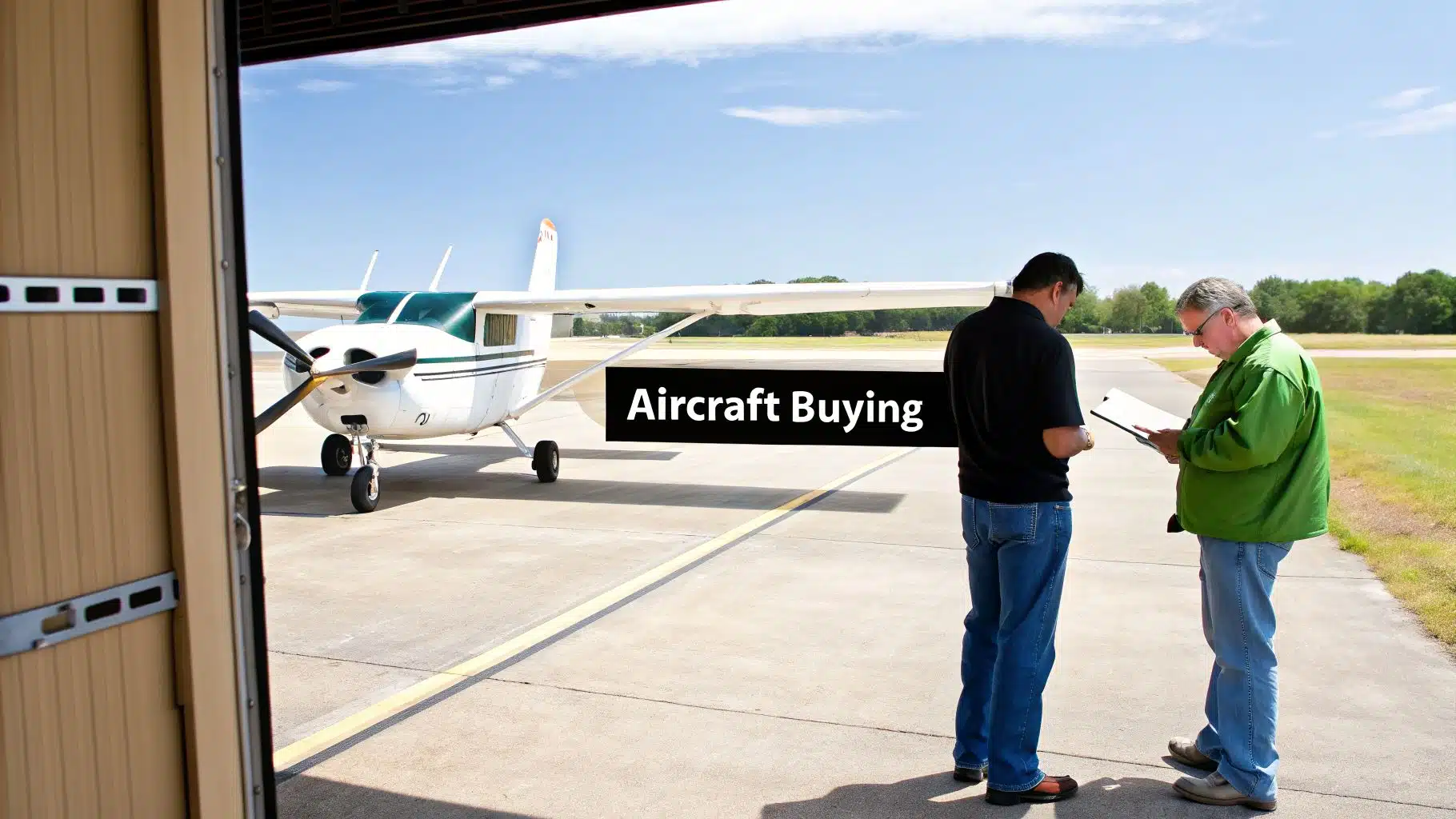
For a lot of pilots, finishing pilot training in Los Angeles isn't the end of the journey—it’s just the start. The real dream for many is aircraft ownership: the ultimate freedom of having your own plane or helicopter, ready to go whenever the sky calls. But jumping into the competitive Southern California aircraft market requires a bit of know-how and a careful plan.
This guide walks you through the practical steps for buying or selling an aircraft without getting burned. Whether you're a first-time buyer fresh out of training or a seasoned owner looking for your next plane, a smart approach is what separates a great investment from a costly mistake.
How to Buy an Airplane the Safe Way
Buying an aircraft is a huge step, and the commitment goes way beyond just the purchase price. Before you even start looking at listings, the most important thing you can do is define your mission. Be brutally honest with yourself about what you'll be doing with the plane 90% of the time.
Is this going to be your weekend ride for breakfast flights to Catalina? Or do you need a serious cross-country machine for business travel or family vacations? Nailing this down helps you avoid buying too much airplane (and paying for it in fuel and maintenance) or too little (and being frustrated with its limitations).
A pre-purchase inspection (PPI) by a trusted, independent mechanic is the single most important step in buying an aircraft. Think of it as a comprehensive home inspection for the skies—it's your best defense against a catastrophic financial surprise.
Once you know what kind of flying you'll be doing, you can build a realistic budget. This is where many first-time buyers get into trouble, because the budget has to cover a lot more than just the sticker price.
- Hangar or Tie-Down: What will monthly storage cost at your home airport? This can vary dramatically across Southern California.
- Insurance: Costs swing wildly depending on your flight hours and the aircraft type.
- Annual Inspection: This mandatory yearly check-up can easily run several thousand dollars, if not more.
- Maintenance and Fuel: You have to budget for regular oil changes and other routine work, plus set aside a fund for unexpected repairs and, of course, the hourly fuel burn.
A thorough PPI is absolutely non-negotiable. This isn’t a quick once-over. A good PPI is a deep dive into the airframe, engine, avionics, and especially the logbooks. It's an expert assessment that can uncover hidden corrosion, a sketchy engine history, or other expensive problems that could save you tens of thousands of dollars down the road.
Preparing to Sell Your Aircraft
If you find yourself on the other side of the deal, preparation is everything. To attract serious buyers and command a fair market price, you need to showcase your aircraft in its best possible light, and that starts with getting organized.
Think of your aircraft’s logbooks as its biography. Having complete, neatly organized, and easily searchable maintenance records is critical. Any potential buyer (and their mechanic) will want to see a crystal-clear history of inspections, repairs, and component times. Disorganized or missing logs are a massive red flag.
Finally, presentation is key. A clean, well-maintained aircraft tells a story of proud ownership and meticulous care. Always be upfront about any damage history or known quirks. Honesty builds trust and ultimately leads to a much smoother, faster, and more successful sale.
Your Flight Training Enrollment and Financing Checklist
Getting started on your pilot certificate is a huge moment. To keep things simple and avoid any turbulence on the ground, it helps to have a clear checklist of what you need. Think of this as your pre-flight walkthrough for becoming a student pilot.
Getting these items sorted out first—from required documents to your financial game plan—ensures you can focus on what really matters: learning to fly.
FAA Requirements and Documentation
Before you can even touch the controls, the Federal Aviation Administration (FAA) has a few boxes you need to tick. These are universal rules for every aspiring pilot in the U.S., designed to keep everyone safe.
- Age: You have to be at least 16 years old to fly an aircraft solo and 17 years old to officially earn your Private Pilot License.
- Medical Certificate: You'll need to get a basic physical from an FAA-approved Aviation Medical Examiner (AME). A Third-Class Medical is all that’s required for most students.
- Proof of Citizenship: Make sure you have a valid U.S. passport or an original birth certificate handy. If you are not a U.S. citizen, you’ll need to get clearance through the TSA’s Alien Flight Student Program (AFSP) before training can begin.
Understanding the Investment and Financing Your Dream
Let's be honest: flight training is a significant financial commitment. But it's also an incredible investment in a career with soaring demand. The North American flight training market is set to more than double, growing from $1.95 billion in 2024 to an estimated $4.23 billion by 2032. This boom is a direct result of new training tech and a pilot shortage that isn't going away anytime soon. You can read more about these North America flight training market trends on fortunebusinessinsights.com.
Funding your pilot training is like planning a long cross-country flight. You need to know your destination (the certificate you want), map your route (your budget), and have alternates ready (financing options) just in case.
When you break it down, the costs become much less intimidating. Your total investment will depend on which ratings you pursue, but you'll need to budget for flight instruction, aircraft time, books, and exam fees. Thankfully, you don't have to fund it all on your own. Here are a few common pathways:
- Flight School Financing: Many flight schools, DuBois Aviation included, have relationships with lenders that specialize in loans for pilot training.
- Personal Loans: A traditional personal loan from your bank or a local credit union is another solid option for covering your costs.
- Aviation Scholarships: Don't leave free money on the table! Groups like the AOPA, EAA, and Women in Aviation International give away millions in scholarships every year.
With a little bit of planning, the financial side is completely doable. For a deeper dive into all the ways you can fund your training, check out our guide on financial aid for pilot training. It’s a great resource to help you map out a clear financial flight plan.
Frequently Asked Questions About Becoming a Pilot in Los Angeles
Deciding to become a pilot is a huge step, and it’s totally normal to have a ton of questions swirling around. Getting good, straight answers is the best way to feel confident about starting your journey. Let's tackle some of the most common questions we hear from aspiring pilots right here in LA.
How Long Does It Take to Get a Private Pilot License?
This is probably the number one question people ask, and the honest answer is: it depends on you. The biggest factor is how often you can fly.
If you go all-in and train like it's a full-time job (flying several times a week), you could potentially earn your Private Pilot License (PPL) in as little as three months under the flexible FAA Part 61 rules. For most people juggling work, school, and life, a more realistic timeline is somewhere between six and nine months.
The real key is consistency. Flying at least once or twice a week keeps the knowledge fresh and your skills sharp. Sporadic lessons tend to drag out the process and can end up costing you more in the long run.
What Is the Best Time of Year to Start Flying in LA?
One of the best things about learning to fly in Los Angeles is the weather. It's fantastic almost all year round. Southern California gives us over 300 days of VFR (Visual Flight Rules) weather, which basically means clear skies perfect for training.
You can really start any time. Summer gives you long daylight hours for more flying time. On the other hand, the winter months often bring smoother air and clearer skies without the summer haze. You’ll hear pilots talk about the "marine layer," which is just a fancy term for the coastal fog we often get on spring and summer mornings. It’s predictable and usually burns off by midday, so it's more of a local quirk than a real roadblock to your training.
What's the Difference Between Part 61 and Part 141?
You'll hear these terms thrown around a lot. "Part 61" and "Part 141" are simply two different sets of FAA regulations that dictate how a flight school can structure its training. Think of them as two different paths to the same destination.
Part 61: This is all about flexibility. The curriculum isn't locked in stone, which allows your instructor to really customize lessons to your learning style and pace. It’s perfect for students who have a busy or unpredictable schedule.
Part 141: This path is highly structured. It follows a rigid, step-by-step syllabus approved by the FAA, with formal stage checks along the way. Because it's so structured, it sometimes allows you to get your license with slightly fewer minimum flight hours, which can be a great fit for full-time students or those using VA benefits.
Many top-tier schools, including DuBois Aviation, are approved to offer both. This gives you the freedom to choose the training style that truly works for you.
Ready to stop asking questions and start flying? At DuBois Aviation, our experienced instructors are here to guide you every step of the way, from your first discovery flight to your final checkride. Take control of your future and learn more at https://duboisaviation.com.