
How long does it take to become a pilot?
A private pilot certificate often takes about three to twelve months, depending on how frequently you fly, weather, aircraft availability and your preparation between lessons. A full-time student can progress faster than someone flying a few times each month.
Two practical options worth comparing
These are specific products pilots commonly compare for this type of flying. Confirm compatibility with your aircraft and instructor before ordering.
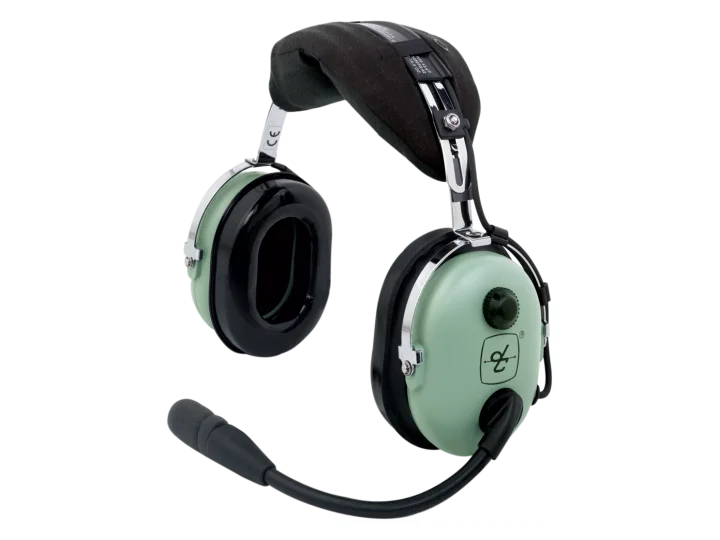 Student headsetDavid Clark H10-13.4 Aviation HeadsetCheck current availability on Amazon (paid link)
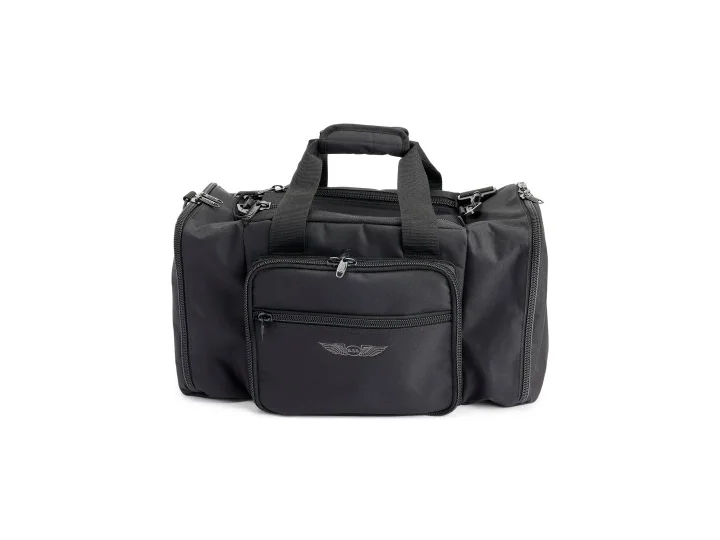 OrganizationASA Flight BagCheck current availability on Amazon (paid link)
| Goal | Common planning range |
|---|---|
| Private pilot | 3-12 months |
| Instrument rating | 2-6 additional months |
| Commercial and instructor certificates | Often 12-24 months from zero in a focused program |
| Airline eligibility | Usually additional time building after certificates; total time varies by path and ATP eligibility |
These are planning ranges, not guarantees. The most reliable way to shorten training is consistent scheduling, arriving prepared and avoiding long gaps. Compare our accelerated flight-training program with a part-time plan based on your availability.
The journey from dreaming of flight to actually commanding an airliner is a marathon, not a sprint. Realistically, you're looking at anywhere from two to five years of dedicated training and hour-building. The exact timeline really boils down to your approach—are you diving into a full-time accelerated program, balancing it part-time, or integrating it into a four-year university degree?
A realistic pilot training timeline
How long does it take to become a pilot?
A private pilot certificate can often be completed in about three to six months with consistent training. Reaching the commercial and instructor stages commonly takes 12 to 24 months, while becoming eligible for most airline jobs often takes two to five years because pilots must build experience after earning their certificates.
| Training stage | FAA baseline | Practical planning range |
|---|---|---|
| Private pilot | 40 flight hours minimum under Part 61 | Many students finish with 50-70 hours over 3-12 months |
| Instrument rating | Instrument experience and cross-country requirements apply | About 2-4 months when training several times per week |
| Commercial pilot | 250 total hours for an airplane certificate under Part 61 | Often reached within 12-24 months from zero experience |
| Instructor and hour building | Certificate-specific training plus ATP experience requirements | Frequently another 12-24 months, depending on flying activity |
Your schedule matters as much as the FAA minimums. Students who fly two or three times each week usually progress more efficiently than students with long gaps between lessons. Weather, aircraft availability, checkride scheduling, finances, and how quickly you master each skill also affect the total time.
Your Pilot Journey: A Realistic Timeline
Think of your pilot training as a series of building blocks. Each certification you earn is a foundation for the next, and this structured progression is what ensures every pilot in the sky is safe, competent, and prepared for the challenges ahead.
You don't just decide to become an airline pilot one day and show up at an interview the next. You have to move through specific pilot certification levels, and each one comes with its own set of knowledge requirements and, most importantly, flight hours.
Key Training Milestones
While everyone learns at a slightly different pace, the major milestones on the path to an airline career are the same for everyone. This isn't just about passing tests; it's about accumulating the hands-on experience in the cockpit that builds real-world skill and judgment.
To give you a clearer picture, most aspiring airline pilots will spend two to three years in dedicated training programs. In the U.S., the Federal Aviation Administration (FAA) also sets a minimum age of 23 to earn an Airline Transport Pilot (ATP) certificate, which is the top-tier license required to fly for major airlines.
For many pilots, the dream doesn't stop at flying for a living. The ultimate goal is often aircraft ownership, which can be a fantastic way to build flight hours or simply experience the pure joy and freedom of flying on your own schedule.
The journey is broken down into these core phases:
- Private Pilot License (PPL): This is your starting point. It’s the foundational license that allows you to fly for personal enjoyment, not for hire.
- Instrument Rating (IR): A crucial add-on that teaches you how to fly solely by reference to your instruments, allowing you to operate safely in clouds and poor weather.
- Commercial Pilot License (CPL): This is the license that turns your passion into a profession, legally permitting you to be paid for your flying services.
Later on, you might find yourself exploring aircraft ownership. This opens up a whole new world, but it's vital to understand the process. Knowing how to buy an airplane safely involves crucial steps like pre-buy inspections and title searches to ensure you're making a sound investment.
Pilot Training Timeline At a Glance
To put it all together, here’s a quick look at what you can expect if you're training on a full-time, dedicated schedule.
| Milestone | Minimum Flight Hours (FAA) | Typical Full-Time Duration |
|---|---|---|
| Private Pilot License (PPL) | 40 hours | 2–3 months |
| Instrument Rating (IR) | 40 hours | 2–3 months |
| Commercial Pilot License (CPL) | 250 hours | 6–9 months |
| Airline Transport Pilot (ATP) | 1,500 hours | 18–24 months (hour building) |
Keep in mind, these are typical timelines. Factors like weather, aircraft availability, and your own study habits can shift the schedule. The key is consistent effort.
Charting Your Course From Zero to 1500 Hours
The journey to an airline cockpit isn't a single jump; it's a series of carefully planned steps. Think of it like a staircase. Each license and rating you earn is another step up, building your skills, knowledge, and confidence for what comes next. This structured progression is how the industry ensures every pilot is truly ready for the responsibility.
Your adventure starts with the foundational license. For most, that means earning a Private Pilot License, which can take about three months if you’re training full-time. From there, you'll tackle your instrument rating, commercial pilot certificate, and multi-engine rating, all while working toward that magic number: a minimum of 1,500 flight hours to qualify for an ATP certificate.
This timeline gives you a bird's-eye view of the major stages, from that unforgettable first solo flight all the way to commanding a commercial airliner.
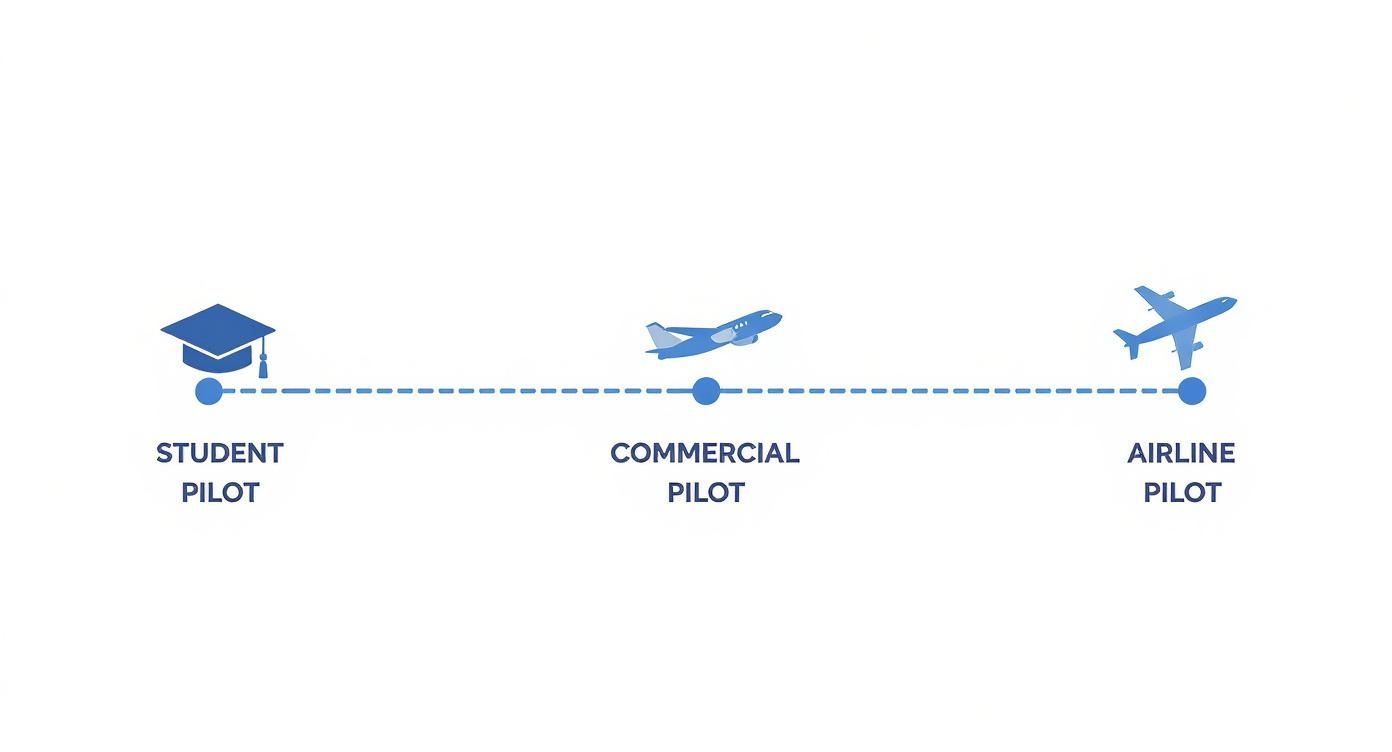
As you can see, this path is a marathon of skill-building, not just a sprint to collect hours in a logbook.
The Core Licenses and Ratings
Think of your first few certifications as the "grade school" of your aviation education. Each one adds a crucial new layer of capability and responsibility, and each one plays a role in how many years it takes to become a pilot.
- Private Pilot License (PPL): This is your official ticket to the sky. It allows you to fly single-engine aircraft for your own enjoyment, but you can't be paid for flying. For a much deeper dive, you can learn more about how long it takes to get a private pilot license.
- Instrument Rating (IR): This is a game-changer. It's a critical add-on that teaches you how to fly solely by reference to your cockpit instruments, without needing to see the ground. This is what allows you to safely fly through clouds or in low-visibility weather.
- Commercial Pilot License (CPL): Once you have your CPL, you can officially turn your passion into a profession. This is the minimum license required to get hired and paid for flying.
Building Hours: The CFI Stepping Stone
After earning your CPL at around 250 hours, you’ll hit the biggest time commitment of your career: bridging the gap to the 1,500 hours required for an Airline Transport Pilot (ATP) certificate. So, how do pilots close that gap? The most common and effective route is to become a Certified Flight Instructor (CFI).
Working as a CFI is the ultimate win-win. You get paid to fly, which helps build your required hours, all while deepening your own mastery of aviation by teaching it to others. It’s a respected role that sharpens you into a more proficient and knowledgeable pilot.
This phase is typically the longest leg of the journey, often taking 18-24 months of consistent work. It's where your logbook really starts to fill up, and you gain priceless real-world experience managing different students, aircraft, and flying conditions day in and day out.
Factors That Shape Your Flight Training Timeline
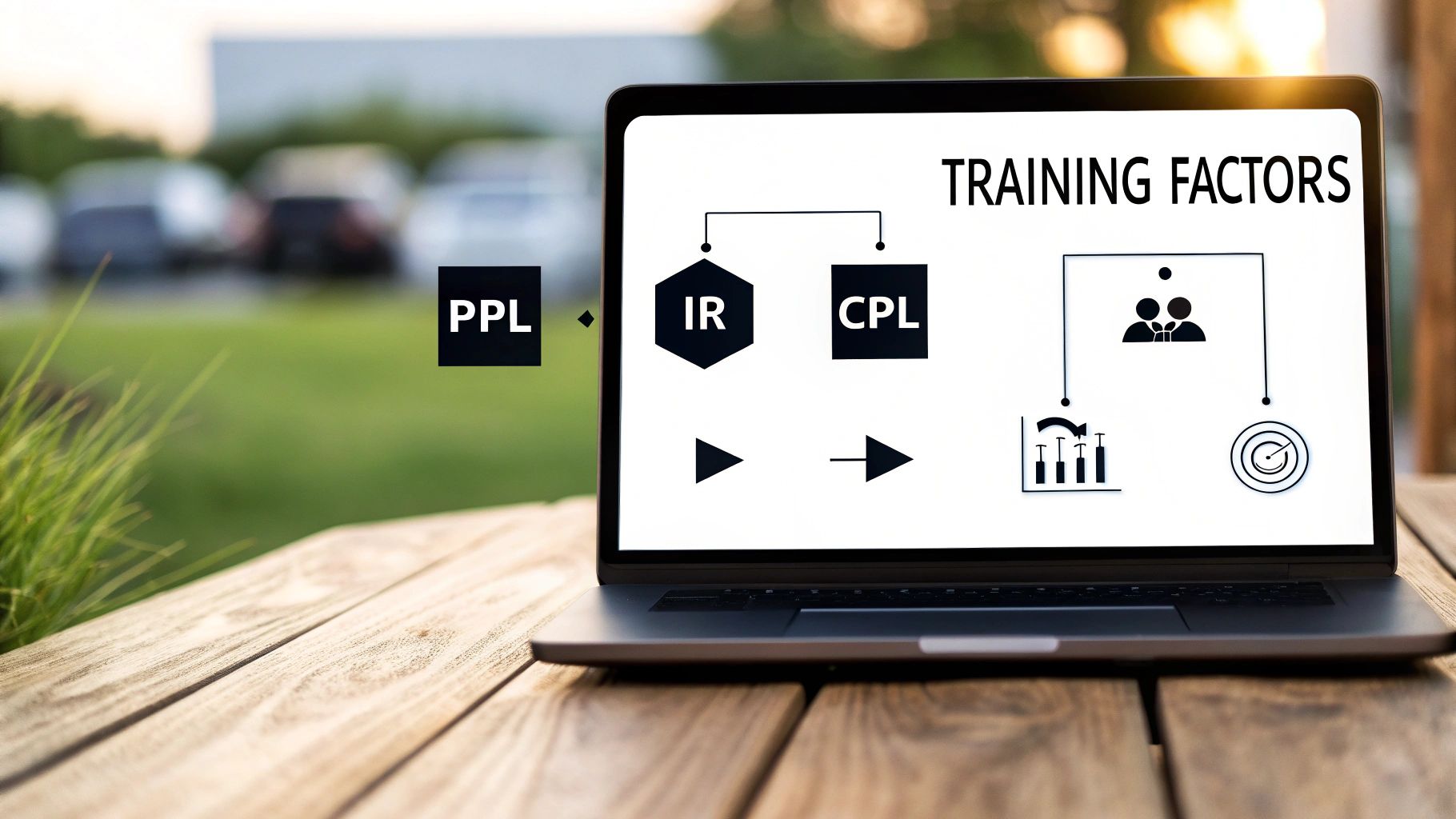
So, how many years does it really take to become a pilot? The honest answer is: it depends. Think of it less like a fixed schedule and more like a road trip. Everyone's heading to the same destination—the cockpit—but the route you take, how often you stop, and the speed you travel will change the arrival time.
Your personal journey is shaped by a handful of key variables that can either put you on the fast track or add a few detours. For instance, some pilots-in-training go the traditional route with a four-year aviation degree, then spend another two to three years building flight hours. Others jump straight into an accelerated program. If you're curious about the official stats, the Bureau of Labor Statistics offers a good overview of professional pilot career paths.
Full-Time vs. Part-Time Training
Your personal schedule is probably the biggest factor in the equation. Going full-time in an accelerated program is the most direct path. You'll be completely immersed, living and breathing aviation every day. It's intense, for sure, but this approach can take you from zero experience to holding a commercial pilot license in under a year.
On the other hand, part-time training offers a ton of flexibility. You can fit in a few flights a week around your job or other commitments. Naturally, this path takes longer, but it also spreads out the cost and lets you learn at a more manageable pace. Many fantastic pilots got their wings this way over the course of several years.
The real secret, no matter which pace you choose, is consistency. Flying regularly, even just once or twice a week, keeps your skills sharp. It prevents you from getting rusty and having to re-learn (and re-pay for) a lesson you’ve already had.
Your Training Path Comparison
Choosing between full-time, part-time, or a university program is a big decision. Each has its own timeline, costs, and benefits. Here’s a quick look at how they stack up.
| Training Path | Typical Total Time | Pros | Cons |
|---|---|---|---|
| Full-Time Accelerated | 9-18 months | Fastest route to a commercial license; immersive learning environment. | High upfront cost; requires a full-time commitment, making it hard to work simultaneously. |
| Part-Time | 2-4 years | Flexible schedule; spreads costs out over time; can maintain employment. | Takes significantly longer; can be harder to maintain proficiency and momentum. |
| University Aviation Program | 4+ years | Results in a bachelor's degree; deep theoretical knowledge; often a direct pathway to airlines. | Most expensive option; longest time commitment before becoming a commercial pilot. |
Ultimately, the best path is the one that aligns with your financial situation, lifestyle, and career goals.
Securing Your Finances
Let's be blunt: flight training is a major investment. Having your funding lined up before you start is crucial for keeping your momentum. One of the most common reasons training gets stretched out is students having to pause to save more money. When you stop and restart, you often have to spend extra time and money just getting back to where you were.
A solid financial plan is your best defense against these kinds of interruptions. Most students use a mix of personal savings, loans, or specialized aviation financing to ensure a smooth, consistent training schedule. If you're exploring your options, our guide on financial aid for pilot training is a great place to start.
The Unpredictable Real-World Variables
Even with a perfect plan, you'll still run into things you just can't control. These are the real-world variables that are simply part of every pilot's story.
- Weather: A string of foggy mornings or stormy afternoons can ground all flights for days, especially depending on the season.
- Instructor Availability: Your CFI’s schedule might not always line up perfectly with yours, and a busy flight school means you're sharing them with other students.
- Aircraft Maintenance: Planes need meticulous, regular maintenance. Sometimes, an unexpected issue can take an aircraft out of service right when you were scheduled to fly it.
Learning to navigate these hiccups is part of becoming a pilot. A good flight school will be your partner in this, helping you work around challenges to keep you moving forward as efficiently as possible.
Navigating the Growing Demand for New Pilots
If you're thinking about becoming a pilot, you couldn't have picked a better time. Right now, the aviation industry is facing a massive, long-term need for fresh talent in the cockpit. This isn't just a temporary blip; it's a fundamental shift that's opening up incredible opportunities for anyone starting their flight training journey.
So, what’s driving this? A big piece of the puzzle is a wave of mandatory retirements. A whole generation of senior airline captains is hitting the required retirement age of 65, which creates a constant flow of open seats that need to be filled. On top of that, global air travel has bounced back with a vengeance and just keeps growing, meaning more planes in the sky and a greater need for pilots to fly them.
A Look at the Numbers
This demand isn't just a hunch—the industry's biggest players are backing it up with hard data. Forecasts paint a very clear picture: airlines around the globe are going to need a huge number of new aviators over the next twenty years.
Take a look at Boeing’s 2024-2043 Pilot and Technician Outlook. It projects a staggering need for 674,000 new pilots worldwide to keep the commercial fleet flying. Just in North America, that number is nearly 123,000. You can dig deeper into these pilot demand statistics to see exactly how these figures break down by region.
This is fantastic news for anyone wondering how many years it takes to become a pilot. It means that if you put in the work, complete your training, and build your flight hours, you’ll be stepping into a job market that's actively hiring and offers clear career paths to the major airlines.
The chart below really brings this to life, showing the projected pilot demand across different parts of the world. It’s a powerful visual of just how big this opportunity is.
This data makes one thing crystal clear: the need for pilots is a global phenomenon, creating a world of possibilities for newly minted professionals.
How Airlines are Responding
Airlines aren't just sitting back and hoping for the best. They’re getting creative and launching new programs to find and keep talented pilots, which is great news for you.
Here’s what that looks like in practice:
- Cadet Programs: Many airlines, both major and regional, have set up cadet or "ab-initio" programs. These create a direct pipeline, guiding you from flight school right into an airline's first officer seat.
- Financial Incentives: To sweeten the deal, some airlines are offering hefty signing bonuses, tuition reimbursement, and other financial perks to attract the right people. This can go a long way in helping with the upfront cost of training.
Understanding this industry backdrop is crucial. It shows that the time and money you invest are pointed toward a career with real, tangible demand. For anyone with the passion and drive, the sky is truly the limit, and the path to becoming a professional pilot is more accessible than it’s been in a long time.
Common Questions on the Path to the Cockpit
If you're thinking about a career in aviation, you've probably got a lot of questions. It's a big decision, after all. Let's tackle some of the most common ones we hear from aspiring pilots.
Am I Too Old to Start Flight Training?
We get this one all the time. The short answer is no—there’s no upper age limit for learning to fly. While the FAA requires you to be at least 16 to fly solo and 17 to earn your private pilot license, we've seen people start their journey in their 30s, 40s, 50s, and even later.
The main things that matter are your medical fitness and your dedication. It's true that major airlines have a mandatory retirement age of 65, so starting later might mean a shorter airline career. But for flying corporate, charter, or just for the sheer joy of it, your age is truly just a number.
Do I Need an Aviation Degree to Become a Pilot?
Absolutely not. While getting a four-year aviation degree is a great, structured way to get into the industry, it's far from the only way. Plenty of fantastic pilots have degrees in business, history, engineering—you name it.
Airlines simply like to see a bachelor's degree because it shows you can commit to and complete a challenging program. What truly qualifies you to be in the cockpit are your pilot certificates and your skill, not what you studied in college.
What's the Real Difference Between Part 61 and Part 141?
This can be a confusing point. Both Part 61 and Part 141 are just different sections of the FAA's regulations that flight schools follow. The license you get at the end is exactly the same.
- Part 141 is like a formal university course. It has a rigid, FAA-approved syllabus that every student follows in a set order. This structure often allows you to get certified with slightly fewer minimum flight hours.
- Part 61 is much more flexible. It gives the instructor the freedom to adapt the training to your personal learning style and schedule. It’s a more customized, one-on-one approach.
Think of it this way: Part 141 is a structured classroom environment, while Part 61 is more like personalized tutoring. Both get you to the same goal, just via different routes.
Ready to stop dreaming and start flying? DuBois Aviation offers personalized flight instruction for airplanes and helicopters right here at Chino Airport. Explore our training programs and book your discovery flight today!