

The journey to becoming an airline pilot is one of the most challenging—and rewarding—careers you can pursue. It's a structured path that takes you from the ground up, starting with basic medical and age requirements, moving through flight school, and culminating in a job in the cockpit. This guide is designed for students ready to start their professional flight training.
It all boils down to three core phases: earning your pilot certificates and ratings, building flight hours, and finally, getting hired. Before you can even think about applying to a major airline, you'll need to log a minimum of 1,500 flight hours. It's a marathon, not a sprint.
Two practical options worth comparing
These are specific products pilots commonly compare for this type of flying. Confirm compatibility with your aircraft and instructor before ordering.
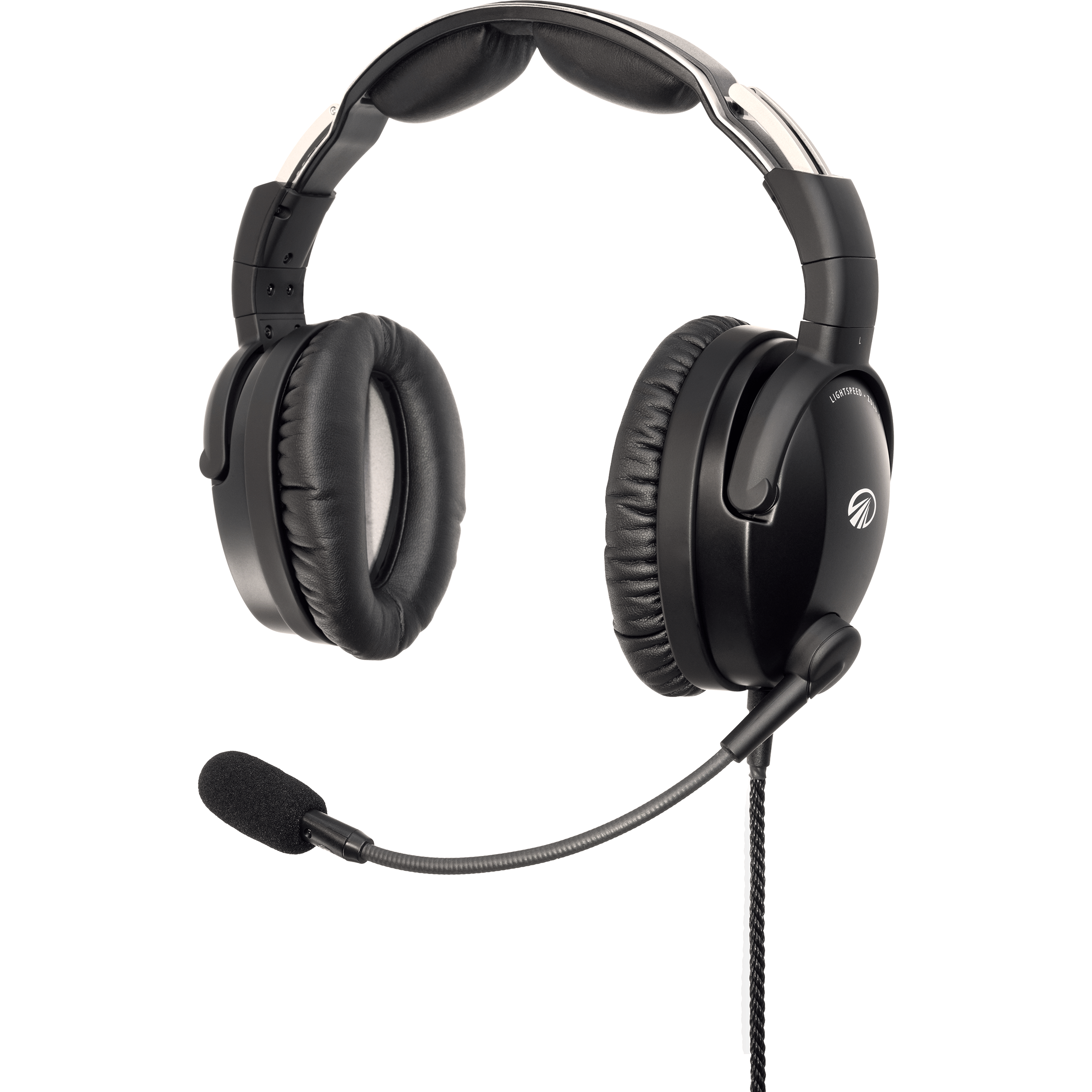 Premium ANR headsetLightspeed Zulu 4 ANR Aviation Headset - Dual GA PlugCheck current availability on Amazon (paid link)
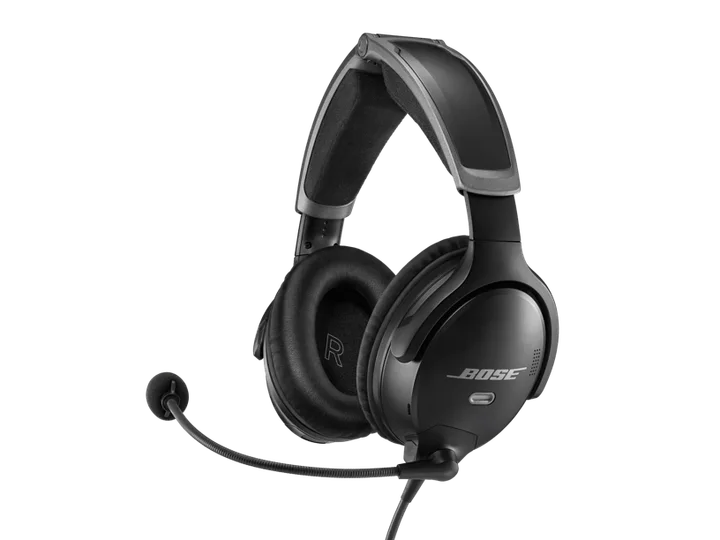 Premium headsetBose A30 Bluetooth Aviation Headset - Dual PlugCheck current availability on Amazon (paid link)
Your Flight Plan to an Airline Career
Committing to an airline pilot career is a huge decision, involving a serious investment of your time and money. But the payoff is incredible. This isn't just about learning to fly an airplane; it's about mastering incredibly complex aircraft, making split-second decisions with lives on the line, and consistently meeting the sky-high standards of the FAA and the airlines themselves.
This guide will walk you through that entire roadmap. We'll start with the non-negotiable first steps, like getting your FAA medical certificate and finding a flight school that fits your ambitions. Then, we’ll break down the purpose of each key rating you'll earn along the way:
- Private Pilot License (PPL): This is your ticket to fly solo and the foundation for everything that comes next.
- Instrument Rating (IR): A crucial add-on that teaches you to fly in the clouds and bad weather, relying solely on your instruments.
- Commercial Pilot License (CPL): The license that legally allows you to get paid for your flying skills.
After you've got your licenses, the real work of building flight experience begins. The good news is that demand is strong. According to the U.S. Bureau of Labor Statistics, we're looking at about 18,500 openings for airline and commercial pilots each year for the next ten years. The ultimate goal for most is the Airline Transport Pilot (ATP) certificate, the highest level of pilot certification, which requires those 1,500 hours of flight time.
The infographic below gives you a great visual of the major milestones you'll hit on your way to the flight deck.
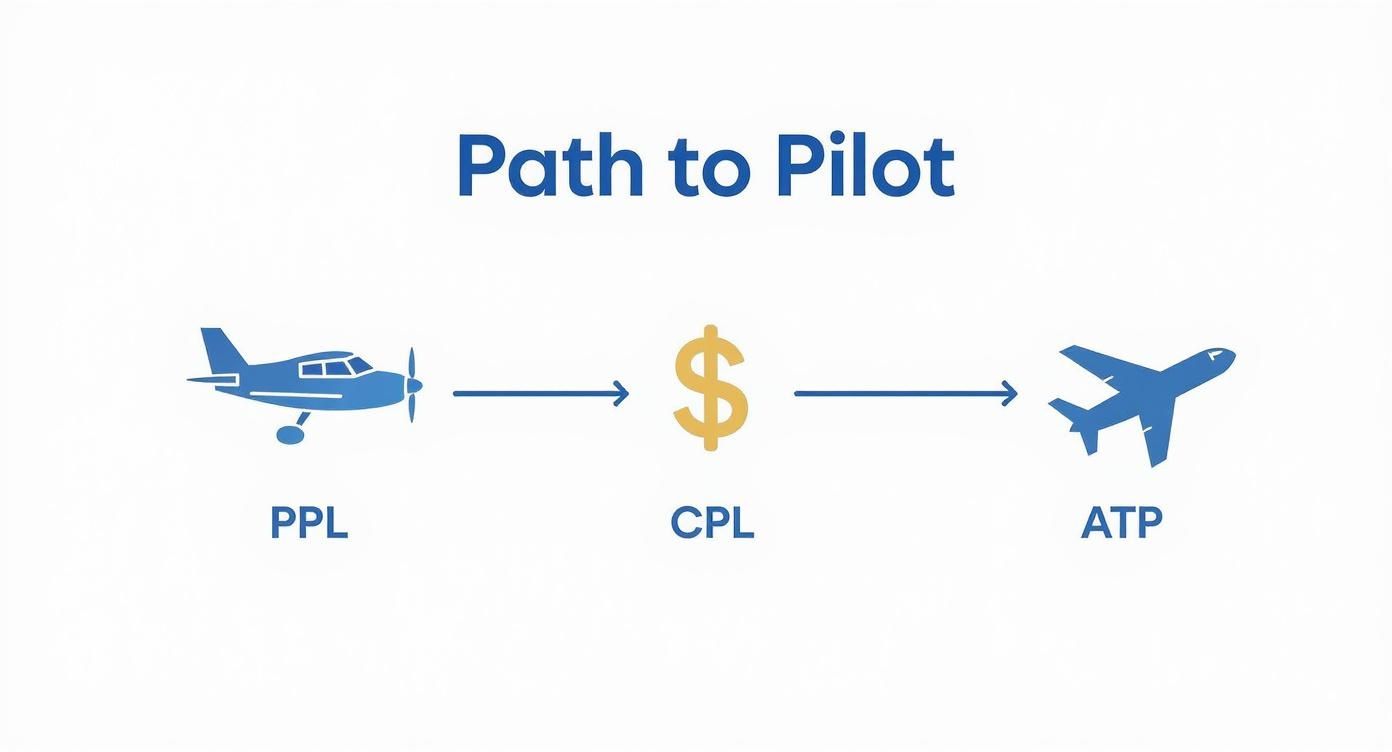
As you can see, each step logically builds on the last, taking you from a student pilot to a seasoned professional. If you want to dig deeper into what each stage really involves, check out our complete guide on the airline pilot career path.
To give you a clearer picture of the commitment involved, here’s a quick overview of the typical timeline and costs you can expect on this journey.
Pilot Career Path at a Glance
| Milestone | Typical Timeline | Estimated Cost Range |
|---|---|---|
| Private Pilot License (PPL) | 3-6 months | $15,000 – $20,000 |
| Instrument Rating (IR) | 2-4 months | $10,000 – $15,000 |
| Commercial Pilot License (CPL) | 6-12 months | $30,000 – $40,000 |
| Flight Instructor/Hour Building | 18-24 months | Varies (often income-generating) |
| Airline Transport Pilot (ATP) | Attained at 1,500 hours | $5,000 – $8,000 (for ATP-CTP) |
| Total to Airline Ready | 2-4 years | $70,000 – $100,000+ |
This table provides a realistic snapshot, but remember that individual paths can vary. Your dedication and the type of flight school you choose will play a big role in your personal timeline and total cost.
The Broader Aviation Landscape
While flying for a major airline is the dream for many, the skills you develop open up a whole world of other opportunities in aviation. You could specialize in helicopter flight training, leading to exciting careers in emergency medical services, news gathering, or offshore transport.
Later in their careers, many pilots get involved in the world of aircraft ownership. Learning to buy or sell airplanes and helicopters is a skill in itself, and knowing how to navigate that complex market safely is invaluable for any aviator with an entrepreneurial spirit.
Ticking the Boxes: Ground-Level Requirements
Before you even dream of getting in the cockpit, there are some fundamental boxes you have to tick. Think of this as the essential groundwork—the pre-flight check for your entire career. Getting these out of the way early on saves a lot of headaches and ensures you're legally, physically, and mentally ready for what's ahead.
First thing's first: the FAA Medical Certificate. This is an absolute must-have, issued only by a certified Aviation Medical Examiner (AME). If your end goal is the airlines, you'll eventually need a First-Class Medical Certificate, which has the strictest health standards and is required to act as an Airline Transport Pilot (ATP).
Don't let that intimidate you, though. You can absolutely start your flight training with a Third-Class medical, which has more relaxed requirements. A lot of students do just that and upgrade as they progress. My advice? Get this done before you spend a dime on flight lessons. It's the best way to uncover any potential medical roadblocks that could derail your plans down the line.
A Quick Look at Medical Certificate Classes
So, what's the real difference between the classes? It all boils down to what kind of flying you want to do.
- First-Class Medical: This is the gold standard for airline pilots. Captains and first officers need it. It’s good for 12 months if you're under 40, and you'll need to renew it every six months once you hit 40.
- Second-Class Medical: Required for pilots flying commercially but not for an airline. Think corporate, charter, or even crop-dusting jobs.
- Third-Class Medical: This is your entry ticket. It’s the minimum for student pilots, recreational flyers, and private pilots who aren't flying for hire.
Next up is a squeaky-clean background check from the Transportation Security Administration (TSA). This is a standard identity verification to ensure you don't pose a security risk. Be upfront about your history; a criminal record, particularly any felonies, can be a major roadblock.
Age, Education, and the "Right Stuff"
You can technically start lessons whenever you want, but the FAA has some hard age cutoffs. You need to be 16 years old to fly solo and 17 to get your Private Pilot License. The big one for the airlines is the ATP certificate, which generally requires you to be 23 years old, though some pathways allow for a restricted ATP at 21.
What about a college degree? This question comes up all the time. While a four-year degree isn't the dealbreaker it once was at major airlines, it is still highly recommended. Having a degree, especially in an aviation-focused field, makes you a much stronger candidate and can sometimes even lower the flight hour requirements for getting your ATP.
At the end of the day, it's not just about the paperwork. Airlines are looking for a certain kind of person. Can you stay cool when things go wrong? Can you communicate with clarity and confidence? Are you a sharp, decisive problem-solver? These traits are just as crucial as your stick-and-rudder skills.
Your journey to the flight deck really does start on the ground. Nailing down these prerequisites clears the way for you to focus on what really matters: learning to fly. It also sets you up to think about the future. Maybe you'll find a passion for helicopter flight training, which shares some of these basics but opens up a whole different career path. Or perhaps one day you’ll be in a position to think about how to buy an airplane the safe way—a decision where understanding all the rules and responsibilities from day one pays off big time.
Choosing the Right Flight Training Path
Deciding where to learn to fly is easily one of the most critical choices you'll make on your way to the flight deck. It’s a decision that will shape your training timeline, your total investment, and even your first job opportunities. You're not just picking a local airfield; you're choosing the foundation for your entire career.
At the core of this choice are two FAA-approved training frameworks: Part 61 and Part 141. One isn't inherently better than the other, but they are built for very different types of students and learning styles.
The Part 61 Advantage: Flexibility and Personalization
Think of Part 61 as the classic, more flexible way to learn to fly. It's less about a rigid, pre-set curriculum and more about building a one-on-one relationship with your flight instructor.
It’s a lot like a mentorship. Your instructor has the freedom to tailor each lesson to how you're progressing, focusing on your strengths and working through your weak spots. This kind of adaptability is a godsend for anyone trying to juggle flight training with a full-time job or family commitments, since scheduling is far more forgiving.
The Part 141 Path: A Structured, University-Style Approach
On the other hand, Part 141 flight schools operate more like a technical college or university. These programs follow a very strict, FAA-approved syllabus where every single lesson and training stage is mapped out and documented down to the last detail.
This structured environment is a huge plus for students who thrive with clear goals and a predictable schedule. For many, this pathway is actually faster because of its intensity and efficiency. If you’re looking to dive in headfirst with a full-time, immersive experience, this is usually the route to take.
Choosing a flight school goes way beyond the curriculum. You have to consider the culture, the condition of the training fleet, and the real-world experience of the instructors. Make it a point to visit the schools you're considering, chat with current students, and find a place that just feels right.
For a much deeper look into the exact questions you should be asking when you tour a school, check out our guide on how to choose a flight school that truly fits your career goals. It’ll help you see past the sales pitch.
A Look at Airline Cadet Programs
The hiring game has changed, and for many aspiring pilots, the best way in is now through an airline cadet program. These are essentially partnerships between flight schools and regional airlines, designed to create a direct pipeline of new pilots.
Airlines are leaning on these programs more and more to fill their cockpits. The path isn't what it used to be. According to Aero Crew Solutions, regional airlines now hire almost exclusively from their established cadet programs, making it incredibly tough for pilots on the outside to get a foot in the door. This is why schools with deep industry connections, like ATP Flight School (which partners with every regional airline), can give their graduates a massive leg up.
What's the appeal? Cadet programs often give students a conditional job offer from an airline while they're still in training. That offers a level of certainty and a clearly defined career track right from the start—a huge weight off your shoulders. Some programs even sweeten the deal with financial aid or tuition reimbursement to attract top-tier candidates.
What About Helicopter Flight Training?
While most of the talk is about airplanes, the world of aviation is much bigger. Helicopter flight training opens up a completely different and incredibly exciting career path. The training structure looks familiar—you'll still earn private, instrument, and commercial ratings—but the skills you learn and the jobs you can get are in a league of their own.
Pilots who go the rotorcraft route find themselves in careers like:
- Emergency Medical Services (EMS)
- Law Enforcement and Search and Rescue
- Tourism and Aerial Photography
- Offshore Oil and Gas Transport
This kind of specialized training unlocks dynamic, challenging roles that are a world away from the typical airline cockpit.
Thinking Ahead: Aircraft Ownership
Much later in your career, you might start thinking about owning your own aircraft for personal travel or even just to build hours more cost-effectively. Understanding how to buy an airplane the safe way is a crucial piece of knowledge to have in your back pocket.
It’s about way more than just the sticker price. You have to factor in ongoing costs for maintenance, insurance, hangar space, and annual inspections. It’s a massive financial commitment, and learning the ropes early on can save you from some very expensive mistakes down the road, whether you’re looking at an airplane or a helicopter.
Earning Your Pilot Licenses and Ratings
With your medical certificate in hand and a flight school picked out, the real adventure begins. This is where you start building your credentials, earning the licenses and ratings that mark your progress from a student to a professional aviator.
Think of this part of your journey as climbing a ladder. Each certificate is a new rung, bringing more responsibility, more freedom, and getting you one step closer to that airline cockpit. It’s a deliberate, structured process designed to build a solid foundation of skill and confidence.
The Foundation: Your Private Pilot License
First up is the Private Pilot License (PPL). This is your ticket to the sky—the foundational certificate that allows you to fly a single-engine airplane on your own or with friends and family. It’s the license that lets you fly for fun, day or night, in good weather.
Earning your PPL is all about mastering the basics: takeoffs, landings, navigation, and handling in-flight emergencies. The FAA requires a minimum of 40 hours of flight time, but realistically, most students need closer to 60-75 hours to feel truly proficient. Once you pass your written, oral, and practical flight exams, you've officially become a pilot.
Mastering the Clouds with an Instrument Rating
After the PPL, your next big challenge is the Instrument Rating (IR). Many seasoned pilots will tell you this was the most demanding—and rewarding—rating they ever earned. It teaches you how to fly the plane solely by referencing your instruments, without looking out the window.
This is what allows you to fly through clouds, rain, and fog, a skill that is absolutely essential for any airline career. Instrument training sharpens your precision and situational awareness to a whole new level. It’s about learning to trust your instruments and your training, even when your senses are telling you something different.
The Instrument Rating is more than just a qualification; it's a mindset. It forces you to manage a high-stakes information flow under pressure, building the kind of deep-seated confidence every professional pilot needs.
Going Pro with a Commercial Pilot License
With your PPL and Instrument Rating secured, it's time to get your Commercial Pilot License (CPL). This is the one that lets you officially get paid to fly.
The training for the CPL takes all the skills you've learned and polishes them to a professional shine. The flight maneuvers are held to much tighter standards, and the overall expectation of professionalism is significantly higher. Passing your CPL checkride is the moment you transition from an enthusiast to a professional aviator, ready for your first job.
You can learn more about the distinct pilot certification levels to see how each one builds on the last.
Adding Multi-Engine and Instructor Privileges
For any aspiring airline pilot, there are two more crucial ratings to get.
First is the Multi-Engine Rating (MER). Since nearly all airliners have at least two engines, this one is non-negotiable. This specialized training focuses on the unique challenges of flying a multi-engine aircraft, especially the critical procedures for handling an engine failure.
The other is the Certified Flight Instructor (CFI) certificate. For most pilots, becoming a CFI is the most practical way to build the flight time required by the airlines. You get paid to teach, which is a fantastic way to log hours while reinforcing your own fundamental knowledge. It's the primary path for bridging the gap to the 1,500 hours needed to fly for a major airline.
This step-by-step progression is designed to ensure you're not just qualified, but truly ready for the demands of an airline career. Each rating is a building block, creating the rock-solid foundation you'll need for your final goal: the Airline Transport Pilot (ATP) certificate.
Navigating Your First Aircraft Purchase
For many pilots, especially those building hours for a professional career, owning an aircraft can seem like a strategic shortcut. It offers the ultimate flexibility to fly on your schedule and can be a cost-effective way to build time if planned correctly. However, a guide for students looking to buy or sell airplanes and helicopters must start with a warning: this is a significant financial undertaking.
Before you even start browsing listings, you need to be clear about your mission. Are you looking for a simple, fixed-wing trainer just to rack up hours for your airline career? Or perhaps you're diving into helicopter flight training and need a specific rotorcraft? Your answer here shapes every other decision, especially the budget.
Creating a Realistic Ownership Budget
That initial purchase price you see on the ad? It's only the tip of the iceberg. The real number you need to focus on is the total cost of ownership, and this is where many first-time buyers get into trouble.
To build a realistic budget, you absolutely must account for these recurring expenses:
- Insurance: This can be a big one, particularly for pilots with low hours or if you're buying a more complex aircraft.
- Maintenance: You'll have the standard annual inspection, but you also need a healthy fund set aside for those unexpected repairs that always seem to pop up.
- Hangar or Tie-Down Fees: Leaving your investment out in the sun and rain is a bad idea. A hangar or covered tie-down is a monthly cost you can't ignore.
- Fuel and Oil: These costs will obviously fluctuate with how much you fly, but they are a constant and significant part of your operating budget.
A good rule of thumb? Plan on budgeting at least 10-20% of the aircraft's purchase price per year just for these operating expenses. Underestimating this is the single most common mistake new owners make.
The Non-Negotiable Pre-Purchase Inspection
I don't care how pristine an aircraft looks or what the seller tells you—never, ever skip a thorough pre-purchase inspection. This needs to be a comprehensive examination by an independent, trusted mechanic who specializes in that exact make and model.
This inspection is your single best defense against buying a "hangar queen" riddled with hidden problems. The cost of a proper inspection is a tiny fraction of what a major, unexpected repair could cost you down the line.
Your mechanic will need to go through the logbooks with a fine-toothed comb. You're looking for a complete maintenance history, proof of compliance with all Airworthiness Directives (ADs), and any documented damage history. Big gaps in the logs or sloppy entries are massive red flags. Following this process is key to how to buy an airplane the safe way, ensuring your new bird is an asset, not a liability.
Exploring the World of Helicopter Training
While the glamour of the airline cockpit captures many aspiring pilots, another corner of the sky offers a completely different kind of challenge and reward. I'm talking about helicopter flight training. It's the gateway to a dynamic career that’s a world apart from flying fixed routes, demanding precision flying and making a tangible impact on the ground below.
The path to becoming a professional helicopter pilot looks similar to the fixed-wing route on paper—you'll still earn a Private Pilot Certificate, an Instrument Rating, and a Commercial Certificate. But the moment you get in the cockpit, you'll feel the difference. Learning to master the intricate dance between the cyclic, collective, and anti-torque pedals is a unique skill that requires a whole new level of finesse.
Career Paths Beyond the Airlines
Once you have that commercial helicopter license, a whole host of exciting and often vital professions open up. Many pilots find their niche in roles where no two days are ever the same.
- Emergency Medical Services (EMS): Imagine flying an air ambulance to help transport a critical patient. It's high-stakes, high-reward work.
- Law Enforcement: You could be supporting police with aerial surveillance, assisting in pursuits, or running search and rescue missions.
- Tourism: This is a popular one—giving passengers breathtaking aerial views of stunning landscapes or city skylines.
- Offshore Transport: A rugged, essential job ferrying crews and vital equipment out to oil and gas platforms in the middle of the ocean.
These careers aren't for the faint of heart. They demand exceptionally sharp stick-and-rudder skills, cool-headed decision-making, and the ability to operate safely in some pretty tough environments.
Comparing Fixed-Wing and Helicopter Training
So, which path is right for you? It really comes down to weighing the differences in training, cost, and the flying experience itself. Helicopter training is, to put it bluntly, more expensive. The hourly rate is higher because rotorcraft have more complex mechanics and higher maintenance costs. You can expect a Private Pilot Helicopter certificate to cost 30-50% more than the equivalent airplane rating.
The control inputs in a helicopter are more interconnected and sensitive. It often requires more initial coordination to master basic maneuvers like hovering, which has no parallel in fixed-wing flight.
Ultimately, both paths lead to incredibly fulfilling careers. While you won't see helicopter pilots flying for major passenger airlines, their specialized skills are always in demand in these niche sectors. The broader aviation industry is always in motion; after a massive post-pandemic hiring surge, things are starting to normalize. Major U.S. airlines hired 2,190 pilots in the first half of 2025, a significant number but a step back from the frantic pace of 2022 and 2023. This points to a more sustainable growth pattern, with a steady need to replace retiring pilots. You can dig into these hiring trends on aopa.org for more details.
Thinking About Aircraft Ownership
Whether you end up flying airplanes or helicopters, the dream of owning your own machine might eventually pop into your head. If it does, you absolutely need to know how to buy an airplane the safe way (the same principles apply to helicopters). It’s not just about the sticker price. The real work involves a deep dive into maintenance logs, a meticulous pre-purchase inspection by a trusted mechanic, and budgeting honestly for insurance, hangar fees, and all the upkeep that comes with ownership. This is critical knowledge for any pilot thinking about their next big move.
Your Pilot Training Questions, Answered
Deciding to become a pilot is a huge step, and it's only natural to have a ton of questions. We get it. Let's break down some of the most common things aspiring aviators ask us.
How Long Does It Really Take to Get to the Airlines?
You'll see accelerated programs advertising you can be airline-ready in under two years. While that's possible, it's not the norm for most people.
A more realistic timeline is anywhere from two to four years. This gives you enough time to earn all your ratings and, just as importantly, build the 1,500 flight hours needed for your Airline Transport Pilot (ATP) certificate. Life, budget, and the type of school you choose will all play a big role in your personal timeline.
Do I Need a College Degree?
Technically, no. The FAA doesn't require a four-year degree to fly a plane.
However, the reality is that most major airlines still give a huge advantage to candidates with a bachelor's degree. It shows them you can handle a tough, academic workload and see a long-term commitment through. Think of it as a major competitive edge.
A degree is also your backup plan. While not mandatory for the license itself, it's a strategic move that strengthens your resume and gives you options if your career path ever changes.
What's the Toughest Part of Flight Training?
The financial side is obviously a major hurdle. But when it comes to the actual flying, most students point to the Instrument Rating as the most challenging part. It forces you to unlearn your natural instincts and trust your instruments completely, which is a massive mental shift.
After that, the long grind of building time—from around 250 to 1,500 hours—is a real test of patience. It’s where many people lose steam, but sticking it out is what separates a student pilot from a professional one.
Can I Train for Both Airplanes and Helicopters?
Absolutely. The skills are different, but the core knowledge of weather, aerodynamics, and FAA regulations overlaps quite a bit. Some pilots get ratings in both to keep their career options as open as possible.
Keep in mind, though, that each is its own dedicated, expensive training path. If your goal is to figure out how to become an airline pilot, your focus should be squarely on fixed-wing (airplane) training.
At DuBois Aviation, we specialize in guiding students through both airplane and helicopter training, from that very first flight all the way to a professional career. You can see how we structure our programs at https://duboisaviation.com.


