
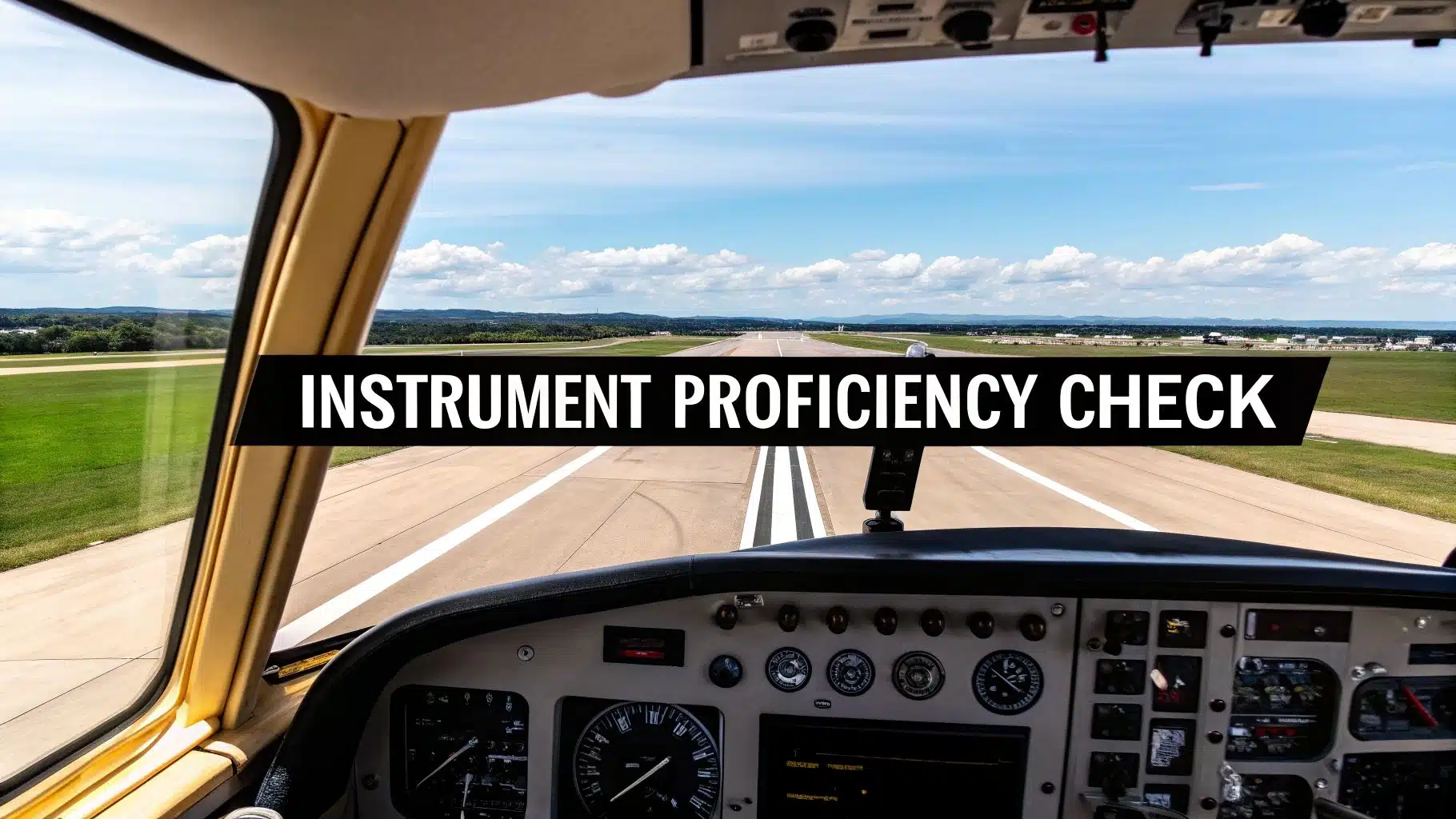
An Instrument Proficiency Check (IPC) is the FAA's system for making sure you’re sharp and safe before you act as pilot in command on an instrument flight plan, especially if you haven't met the currency requirements for a while. It's not a checkride re-do; it's a dedicated session with a Certified Flight Instructor-Instrument (CFII) to dust off the rust and confirm your skills are up to the task.
What an Instrument Proficiency Check Really Means for You
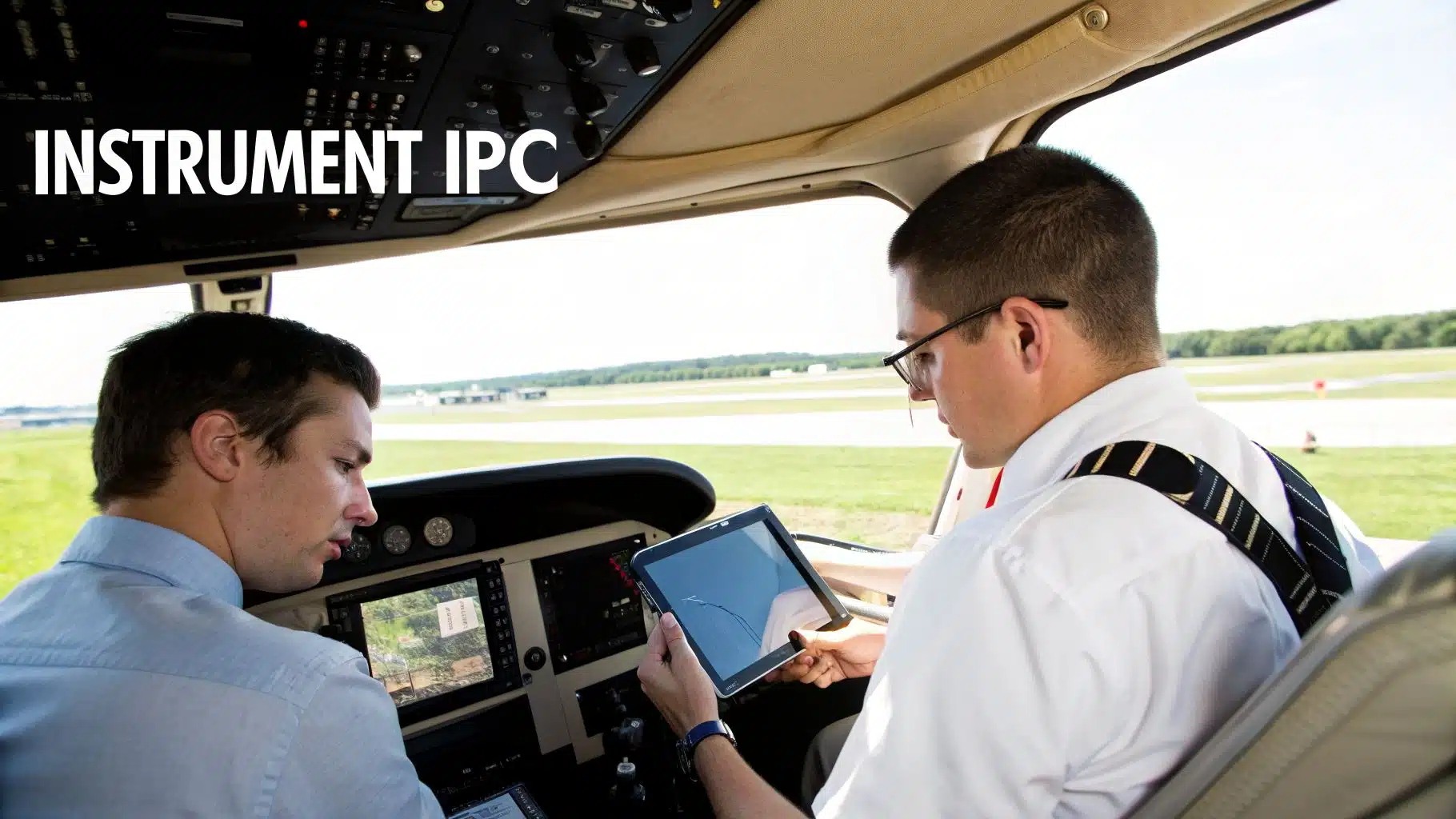
Let's clear the air—the words "Proficiency Check" can sound pretty formal and intimidating. In reality, it’s much more of a collaborative tune-up than a pass/fail test. The whole process is defined in 14 CFR 61.57(d), and its purpose is simple: to ensure a pilot has the knowledge and hands-on skill to fly safely in the IFR system.
Two practical options worth comparing
These are specific products pilots commonly compare for this type of flying. Confirm compatibility with your aircraft and instructor before ordering.
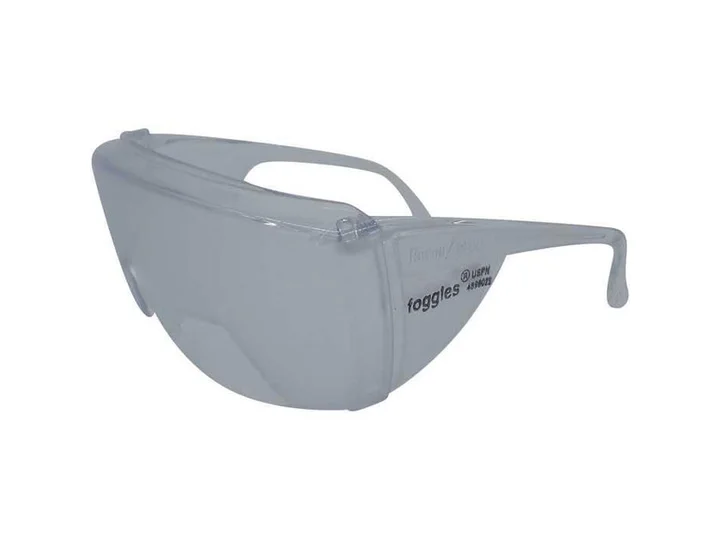 Instrument trainingFoggles Aviation IFR Training GlassesCheck current availability on Amazon (paid link)
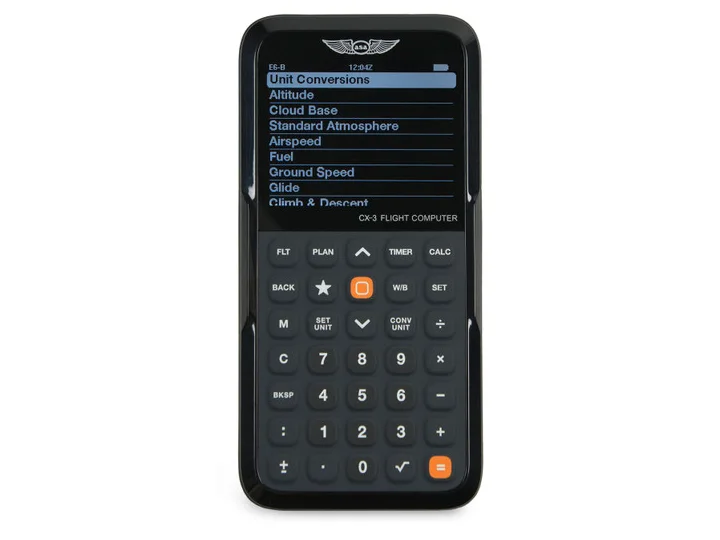 Flight planningASA CX-3 Flight ComputerCheck current availability on Amazon (paid link)
Think of it as a crucial safety net. If you've been out of the IFR game for over a year, the IPC is your structured path back to proficiency and legal currency.
Beyond the Logbook: A Tune-Up for Your Skills
It’s best to think of an IPC like a tune-up for your most vital piloting skills. Your instrument flying abilities are perishable, and just like any high-performance machine, they need regular attention to stay sharp. This check ensures you’re not just legally current, but genuinely proficient and ready to handle a real-world flight in the soup.
This isn’t just about ticking a box. It’s about building the confidence to handle anything from a simple equipment failure to unexpected weather, all while managing the flight from takeoff to a safe landing.
The aviation community is embracing this mindset more than ever. According to 2024 FAA airman statistics, a record 342,400 pilots now hold an instrument rating. That's 69% of all certificated pilots in the U.S.—a significant 10-percentage-point jump from two decades ago when only 59% were instrument-rated. This trend, highlighted in data from AOPA.org, shows a deep, industry-wide commitment to higher standards of safety.
An IPC isn’t a penalty; it’s an opportunity. It's your best tool for staying sharp, confident, and ready for whatever the sky throws at you, reinforcing the habits that keep you and your passengers safe.
The Growing Importance of Owning Your Proficiency
With more pilots earning their instrument rating, the line between simply being "current" and being truly "proficient" has never been more important. An IPC is specifically designed to bridge that gap.
It’s about making sure your skills are so ingrained that you can manage complex IFR procedures and emergencies with competence and calm. True proficiency means being prepared for the unexpected, ensuring every flight in the system is as safe as it can possibly be.
Understanding the Difference Between Currency and Proficiency
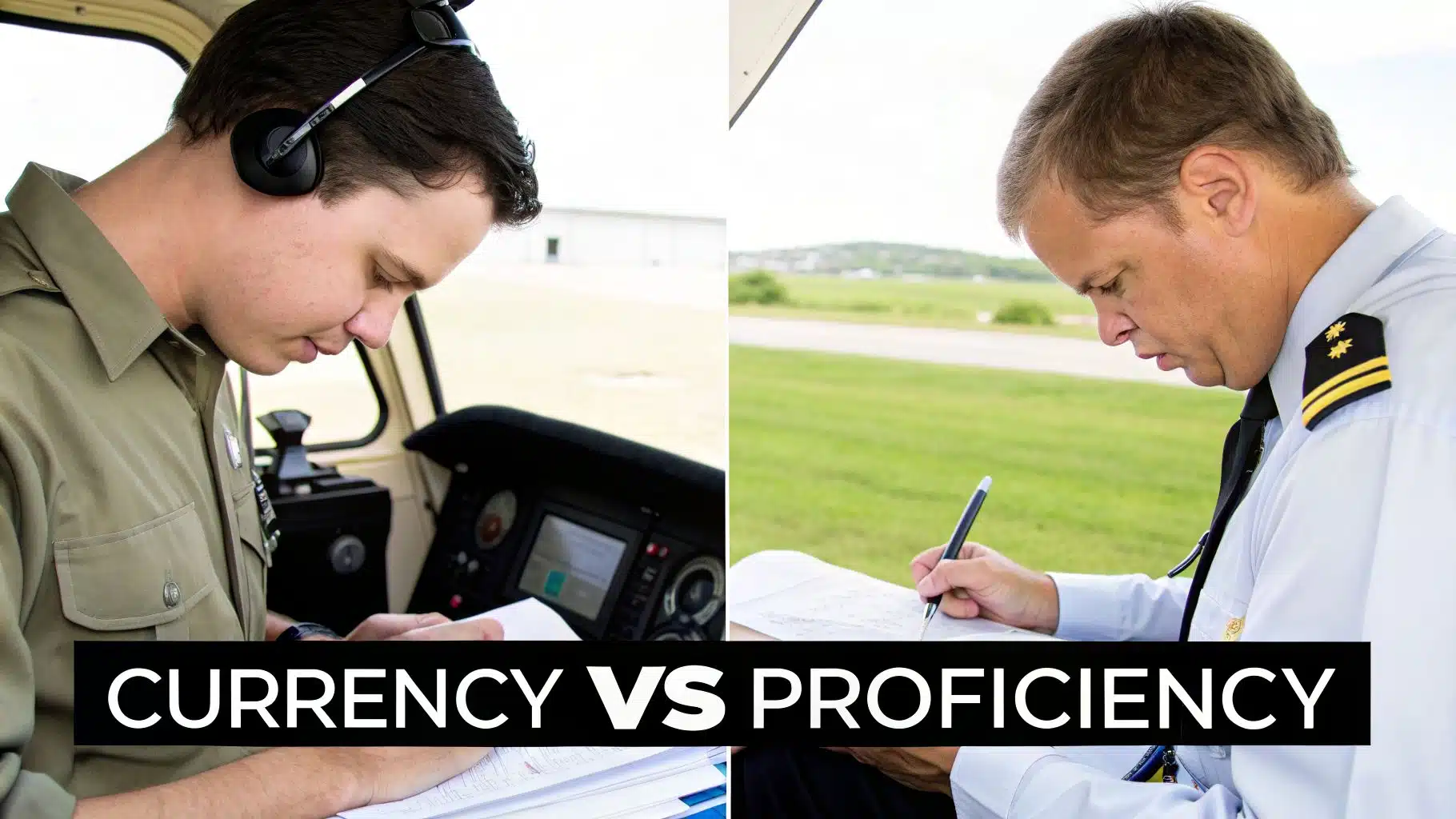
In aviation, we often hear the words "current" and "proficient" thrown around as if they mean the same thing. They don't. Mistaking one for the other is one of the most common traps a pilot can fall into, and it’s a critical distinction for anyone flying in the clouds.
Think of it this way. Currency is the absolute bare-minimum legal requirement the FAA sets for you to act as Pilot in Command (PIC) on an IFR flight plan. It’s purely about legality. Being current means you’ve checked the boxes, but it says nothing about your actual skill. It’s like having a valid driver's license—you're legal to be on the road, but it doesn't mean you're ready to handle a spin on black ice.
Proficiency, on the other hand, is all about your real-world ability. It’s the skill, confidence, and muscle memory to safely manage a flight from start to finish in tough weather, handle emergencies, and make sound decisions when things get busy.
The "6-HITS" Rule for IFR Currency
So, what does it take to be legally current? The FAA outlines this in what's commonly called the "6-HITS" rule. To maintain IFR currency, you must have logged the following within the preceding six calendar months:
- Six instrument approaches.
- Holding procedures and tasks.
- Intercepting and Tracking courses using navigation systems.
If you've done that, you're legal to fly IFR. But let's be honest—logging six simple GPS approaches in clear weather over half a year doesn't prepare you for a hand-flown ILS to minimums in turbulence with a radio issue. That's where proficiency comes in.
Proficiency Is the Real Standard for Safety
An Instrument Proficiency Check (IPC) isn't about checking boxes; it’s about proving you have what it takes when it counts. It's a validation of your genuine ability to fly the plane, manage the systems, and think clearly under pressure.
Proficiency is the quiet confidence that comes from knowing you can safely fly an entire instrument flight, especially when things go wrong. Currency gets you into the air legally; proficiency is what brings you home safely.
This idea of separating the legal minimum from genuine skill is a core safety concept in aviation, much like the goal of a biennial flight review.
To really see the difference, it helps to put the two concepts side-by-side.
IFR Currency vs. Instrument Proficiency Check (IPC)
| Aspect | IFR Currency (14 CFR 61.57(c)) | Instrument Proficiency Check (14 CFR 61.57(d)) |
|---|---|---|
| Purpose | Meets the minimum legal standard to act as PIC under IFR. | Ensures the pilot has the skill, knowledge, and confidence for safe IFR flight. |
| Standard | A quantitative measure: logging specific tasks (6-HITS). | A qualitative measure: demonstrating real-world competence to an instructor. |
| Timeframe | Accomplished over the preceding 6 calendar months. | Demonstrated during a single, comprehensive evaluation (the IPC). |
| Focus | Checking boxes to maintain legal privileges. | Validating practical skill, decision-making, and risk management. |
Ultimately, the FAA created the IPC because they know that just meeting currency requirements isn't enough to guarantee safety. While staying current is your starting point, every instrument pilot's true goal should be to maintain genuine proficiency.
The Hard Truth About Pilot Skill Fade
Let's be honest about something every instrument pilot knows deep down: being legally current and being truly proficient are two very different things. It's an uncomfortable truth, but one that sits at the core of aviation safety. The simple fact is that instrument flying skills are perishable, and they fade much faster than we'd like to admit.
This isn't just a hunch; it's a well-documented issue. Time and again, we see a startling gap between a pilot's confidence in their abilities and how they actually perform when the pressure is on. This "skill fade" is precisely why the FAA established the Instrument Proficiency Check (IPC)—it acts as a vital safety net to catch us when the natural erosion of these complex skills sets in.
A Reality Check From Real-World Data
The numbers paint a sobering picture. Even pilots who diligently meet the "6-HITS" currency requirements often discover their skills aren't sharp enough for the real world.
A landmark study looked at 106 instrument-current pilots who went up for an IPC. The results were shocking: only 45 of them, a mere 42.5%, managed to pass on the first attempt. That statistic highlights a massive chasm between being "legal" on paper and being genuinely ready to handle a demanding IFR flight. You can dig into the full study on pilot readiness and IPC outcomes yourself.
This data isn't here to scare you. It's here to inspire a crucial shift in your mindset—away from asking, "Am I legal?" and toward asking, "Am I actually safe?"
The purpose of an IPC isn't to penalize you for lapsed currency. It's a powerful, proactive tool designed to systematically rebuild and sharpen your skills, making you a safer, more confident pilot.
Reframing the IPC as a Proactive Tool
The key to real airmanship is to stop thinking of the IPC as a pass/fail test and start seeing it for what it is: a dedicated training event. It’s your chance to work one-on-one with a CFII, find the rust in a controlled setting, and polish your skills back to a high shine. At the end of the day, consistent practice and regular check-ins are the bedrock of safe instrument flying.
Buying an Airplane and Maintaining Proficiency
This mindset becomes even more critical if you're looking to buy your own airplane. Ownership gives you incredible freedom, but it also puts the responsibility for proficiency squarely on your shoulders. Before you even start learning how to buy an airplane the safe way, you need a personal plan for staying sharp.
A new-to-you aircraft, whether it's a simple single-engine or a more complex machine, comes with its own quirks and systems. An IPC is the perfect way to kick off your ownership journey, giving you a structured environment to get truly proficient with your new panel and flight characteristics.
Your Step-By-Step IPC Preparation Guide
Showing up for an Instrument Proficiency Check unprepared is a surefire way to have a stressful, and potentially expensive, day. Real success isn't about cramming the night before; it's about a steady, methodical approach to getting your skills sharp again. When you break your preparation into manageable ground and flight segments, you'll build real confidence and walk in ready to fly.
Think of it like building a house—you have to pour a solid foundation before you can put up the walls. That's exactly what this checklist is for. And if you're putting together your own study plan, it helps to know how to create a step-by-step guide that actually gets used.
Ground Preparation: The Foundation of Proficiency
Before you even think about touching the airplane, your ground knowledge has to be dialed in. An IPC is much more than a test of your stick-and-rudder skills. It's an evaluation of your IFR command and decision-making, and your instructor will absolutely expect you to be fluent in the rules of the road.
Kick off your review with these core areas:
- Regulations and Procedures: It's time to crack open that FAR/AIM again. Be ready to talk through IFR currency, what's required on a flight plan, how to choose an alternate, and what to do if you lose comms.
- Flight Planning: Get ahead by planning a sample cross-country flight before you show up. You should be able to walk your instructor through your route choice, altitude selection, fuel burn, and performance calculations.
- Weather and Charts: You need to be able to read and interpret METARs, TAFs, and prognostic charts like the back of your hand. It's also a good time to refresh your memory on all the symbols and minimums on en route and approach plates.
Flight Preparation: Honing Your Skills
Once your ground knowledge is solid, it’s time to get in the air (or the sim) and focus on the maneuvers. These are the hands-on skills you’ll be asked to demonstrate during the flight portion of your IPC. Practice is key—you want these procedures to feel like second nature, not a frantic scramble.
Your flight prep should cover all the tasks outlined in the Instrument Rating Airman Certification Standards (ACS), but pay special attention to these:
- Holding Patterns: Practice getting into and flying various holds. Don't forget to work on making the right wind corrections to stay within the protected airspace.
- Instrument Approaches: Make sure you fly a good mix of approaches. That means precision (ILS), non-precision (LNAV, VOR), and even circling approaches if the weather's good enough.
- Partial Panel Flying: Can you fly straight and level, turn, and navigate with a failed attitude indicator or DG? You need to be comfortable on your backup instruments.
- Unusual Attitudes and Recoveries: It’s a classic for a reason. You must be able to recognize and safely recover from an unusual attitude using only your instruments for reference.
An IPC is your chance to prove you are a safe, competent pilot in command under IFR. It's a comprehensive review designed to find and fix any weak spots before they become a real problem in the soup.
The chart below shows just how fast a pilot's skills can slip, even when they are still legally "current."
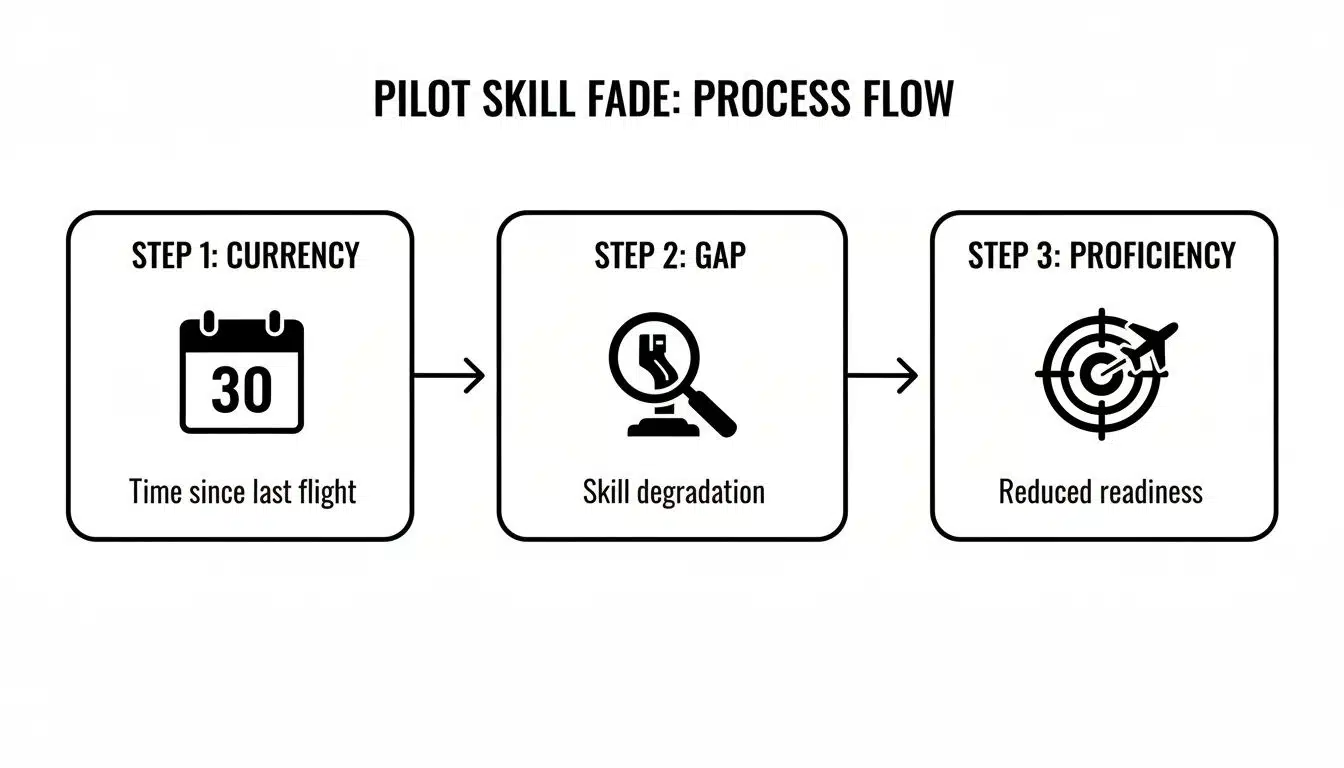
This graphic drives home the critical gap between simply meeting the minimum currency requirements and maintaining true proficiency. An IPC is specifically designed to close that gap.
This skill fade is a known risk with real-world consequences. One study on general aviation accidents found that over half of the instrument approach accidents they looked at happened within three and a half months of the pilot’s last IPC. The median time was just 50 days.
For a lot of pilots, a flight simulator is the most efficient and cost-effective tool for polishing these skills. You can practice holds and shoot approaches over and over without burning a single drop of fuel. You can learn more about how our advanced simulator can help by visiting our simulator page at https://duboisaviation.com/simulator/.
How to Buy or Sell an Aircraft the Smart Way
Whether you're looking to buy your first airplane or sell your current one, a smart, informed process is your best defense against costly surprises. Both buying and selling are major transactions where a business-like approach pays dividends. This is true for both fixed-wing airplanes and helicopters.
How to Buy an Airplane the Safe Way
The dream of ownership is exciting, but a successful purchase requires diligence. The single step you cannot skip is a pre-buy inspection. This is a thorough examination by a trusted, independent A&P mechanic who works for you, not the seller. A good pre-buy can uncover hidden issues like corrosion, damage history, or impending engine trouble—potentially saving you tens of thousands.
The sticker price is just the start. You must understand the total cost of ownership by budgeting for:
- Hangar or Tie-Down Fees: Your aircraft needs a home.
- Insurance: Varies based on aircraft, your experience, and usage.
- Annual Inspections & Maintenance: These are givens in aviation.
- Fuel Costs: Calculate your expected hourly burn.
Finally, protect yourself legally with a professional title search to ensure the aircraft is free of liens. Overwhelmed? Many buyers hire an acquisition consultant to navigate the process, from finding the right airframe to closing the deal.
Selling Your Airplane or Helicopter
When you're ready to sell, your goal is to get a fair price in a reasonable timeframe. A great first step is getting your aircraft professionally detailed. A clean, polished aircraft makes a strong first impression. Next, compile all your logbooks and records in a clear, organized fashion. Complete and transparent logs are a huge selling point.
To set the right price, research comparable aircraft on the market. A recent IPC in the logbooks can also be a powerful tool, showing potential buyers that the aircraft has been actively flown and maintained by a proficient pilot. Finally, be prepared for a pre-buy inspection from the buyer's mechanic—transparency here builds the trust needed to close the deal.
Scheduling Your IPC with DuBois Aviation
Every instrument pilot knows that IFR skills are perishable. If you don't use them, you lose them. When it's time for your next instrument proficiency check, we've got you covered right here at our Chino Airport (KCNO) home base.
We know that every pilot's needs and budget are different. That’s why we offer the flexibility to complete your IPC in one of our meticulously maintained aircraft or in our advanced simulator. Many pilots even find a mix of both works best—nailing down the procedures in the sim before hopping into the plane to demonstrate them.
Aircraft vs. Simulator: Which Is Right for You?
Deciding between the airplane and the simulator for your IPC really comes down to what you want to accomplish. The airplane gives you that undeniable real-world environment, while the simulator is an incredibly efficient tool for honing specific skills and handling situations you’d never want to practice in the air.
Here’s a quick breakdown to help you weigh the options:
| Option | Best For | Key Advantages |
|---|---|---|
| Aircraft | Pilots who want the complete real-world experience or need to train in their specific aircraft type. | Navigating a live ATC environment, feeling actual weather conditions, and managing aircraft systems under real flight pressures. |
| Simulator | Building skills efficiently and practicing emergency procedures that are too risky to perform in a real aircraft. | No fuel costs, the ability to instantly "re-rack" an approach, and safely practicing complex emergencies. |
Flying at Chino Airport (KCNO)
One of the biggest advantages of doing your IPC with us is the airport itself. Chino is a busy, towered Class D airport sitting under a Class C shelf, and it's loaded with instrument approaches. This isn't some sleepy, uncontrolled field where you might make two radio calls an hour.
Flying in and out of KCNO forces you to stay sharp. The complex radio work and constant need for situational awareness in this environment provide invaluable experience that you just can't replicate at a slower airport. It’s the kind of training that truly prepares you for real-world IFR flying.
Time and Cost Estimates for Your IPC
So, how long will it take and what will it cost? The honest answer is: it depends entirely on your current proficiency. A pilot who has been flying IFR regularly might knock it out in a single session. Someone who's been out of the system for a while will naturally need more time to get back up to speed before getting a sign-off.
- Typical Time Commitment: As a general rule, plan for a 2-4 hour block. This gives us time for a solid ground review, the flight or sim session, and a thorough debrief afterward.
- Approximate Costs: The simulator is almost always the most budget-friendly path. Choosing an aircraft will involve the aircraft rental rate on top of the instructor's time.
The best way to get a clear picture is to give us a call. We can talk through your recent experience and put together a personalized plan that makes sense for you.
Common Questions About the Instrument Proficiency Check
Even after you get the basic idea of an Instrument Proficiency Check (IPC), a few practical questions almost always pop up. Let's get those common questions answered so you know exactly what to expect.
What Happens If I Don't Pass an IPC?
This is probably the biggest source of anxiety, so let's clear it up right away: you can't actually "fail" an IPC. It's not a pass/fail test like a checkride.
Think of it as a training flight with a goal. If you don't nail every task on the first go, it's no big deal. The instructor will simply log the flight as dual instruction, debrief with you on the areas that need a little more polish, and you'll continue training until you're sharp. Once you demonstrate proficiency, you'll get the logbook sign-off.
How Much of the IPC Can Be Done in a Simulator?
Simulators are fantastic tools for instrument training, and the FAA recognizes their value. You can use an approved flight simulator or Aviation Training Device (ATD) for a large part of your IPC, and in many cases, you can do the entire thing in the sim.
Using a simulator is an incredibly effective way to practice. We can hit pause, talk through a procedure, and reset a complex approach in seconds—all without spending a dime on fuel. It lets you focus purely on the procedures until they become second nature.
The FAA allows for the entire IPC to be completed in a qualified flight simulator. This is a great way to save money and safely practice complex scenarios that are too risky to perform in a real aircraft.
What if I Want to Buy or Sell an Airplane?
An IPC can be a huge asset in both scenarios. If you're buying an aircraft, especially your first one, doing your IPC in that specific plane is a brilliant move. It helps you regain your instrument currency while getting comfortable with the unique systems and handling of your new bird.
On the flip side, if you're selling your plane, a recent IPC endorsement in the logbook is a powerful selling point. It shows potential buyers that the aircraft has been actively and proficiently flown in the IFR system, adding a layer of confidence to their purchase decision.
Ready to get sharp and confident in the IFR system? Whether you need an IPC, want to rent an aircraft, or are just starting your aviation journey, DuBois Aviation has the instructors, aircraft, and advanced simulator to help you achieve your goals. Visit us online at https://duboisaviation.com to book your flight today.